
Plant Community Ecology Plant Life Histories Life History

- Slides: 17
Plant Community Ecology Plant Life Histories
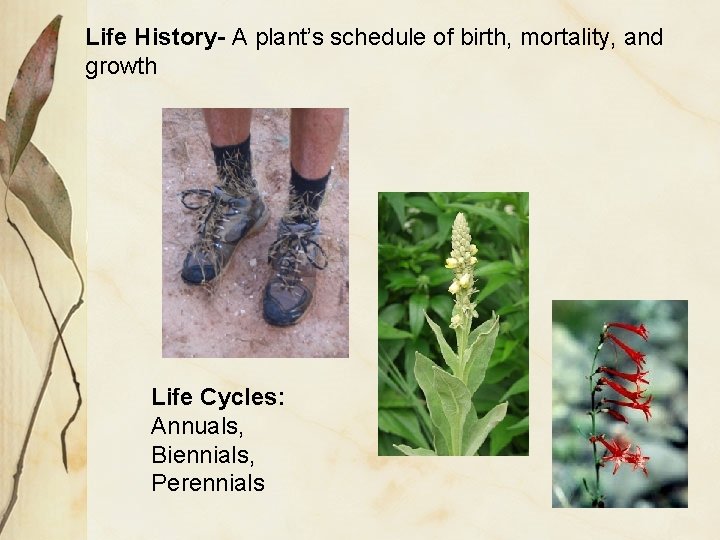
Life History- A plant’s schedule of birth, mortality, and growth Life Cycles: Annuals, Biennials, Perennials
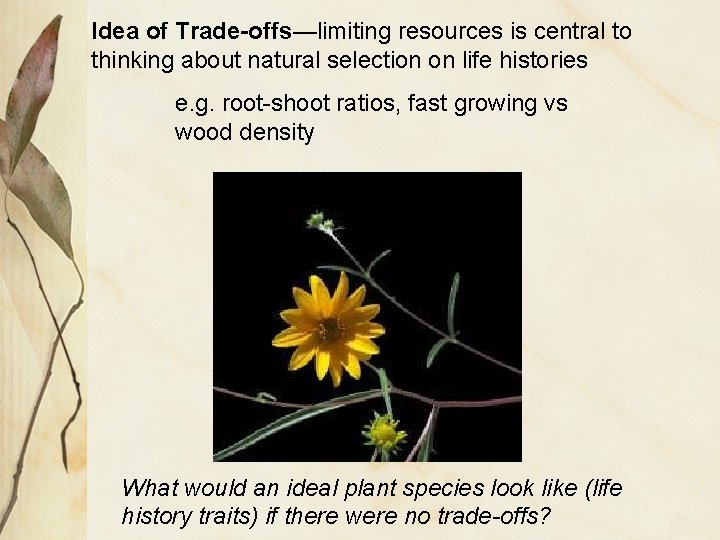
Idea of Trade-offs—limiting resources is central to thinking about natural selection on life histories e. g. root-shoot ratios, fast growing vs wood density What would an ideal plant species look like (life history traits) if there were no trade-offs?
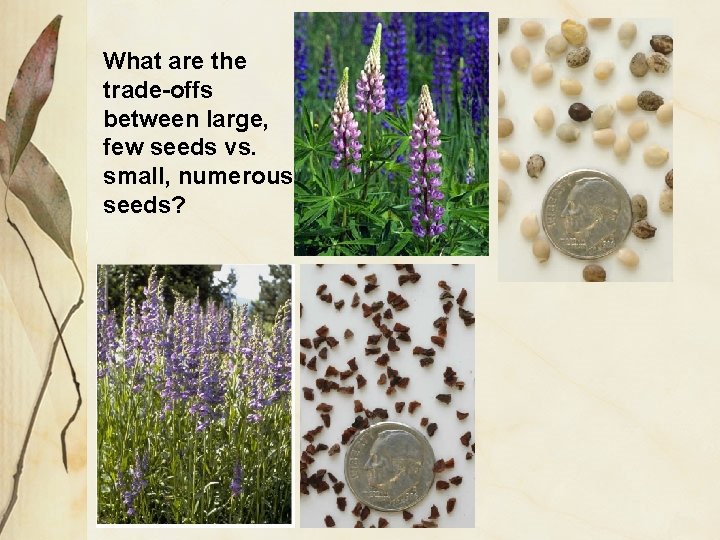
What are the trade-offs between large, few seeds vs. small, numerous seeds?
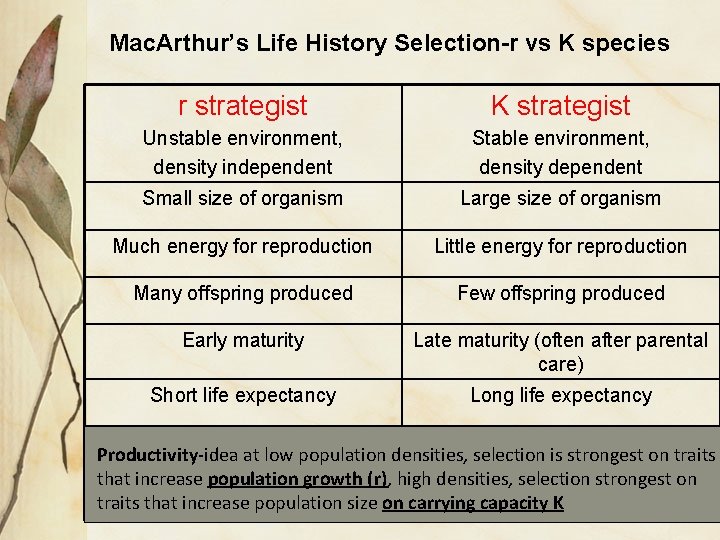
Mac. Arthur’s Life History Selection-r vs K species r strategist K strategist Unstable environment, density independent Stable environment, density dependent Small size of organism Large size of organism Much energy for reproduction Little energy for reproduction Many offspring produced Few offspring produced Early maturity Late maturity (often after parental care) Short life expectancy Long life expectancy Semelparous Iteroparous Productivity-idea at low population densities, selection is strongest on traits that increase population growth (r), high densities, selection strongest on Type III survivorship curve Type I or II survivorship curve traits that increase population size on carrying capacity K
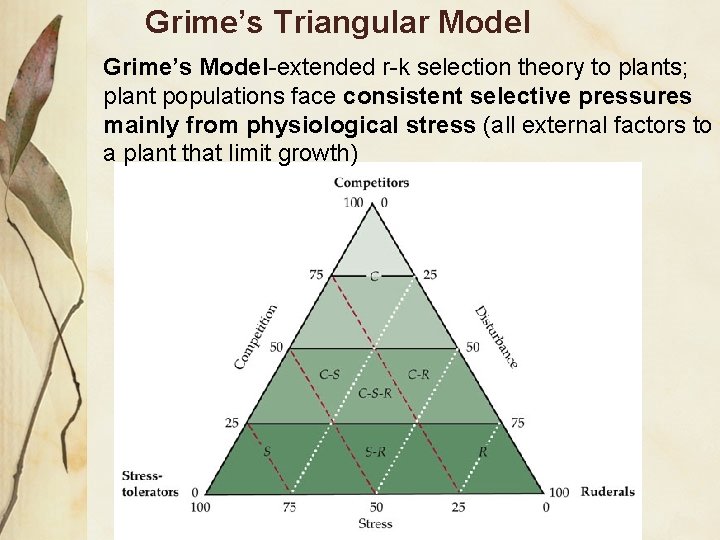
Grime’s Triangular Model Grime’s Model-extended r-k selection theory to plants; plant populations face consistent selective pressures mainly from physiological stress (all external factors to a plant that limit growth)
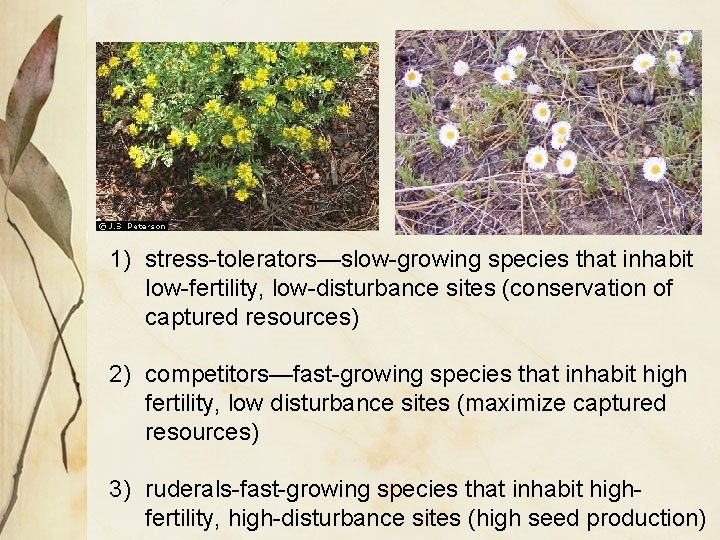
1) stress-tolerators—slow-growing species that inhabit low-fertility, low-disturbance sites (conservation of captured resources) 2) competitors—fast-growing species that inhabit high fertility, low disturbance sites (maximize captured resources) 3) ruderals-fast-growing species that inhabit highfertility, high-disturbance sites (high seed production)
Grime’s Triangular Model
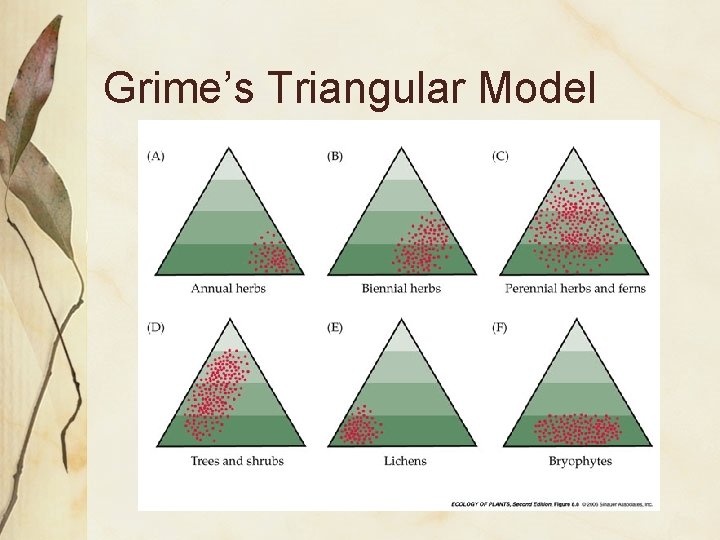
Grime’s Triangular Model
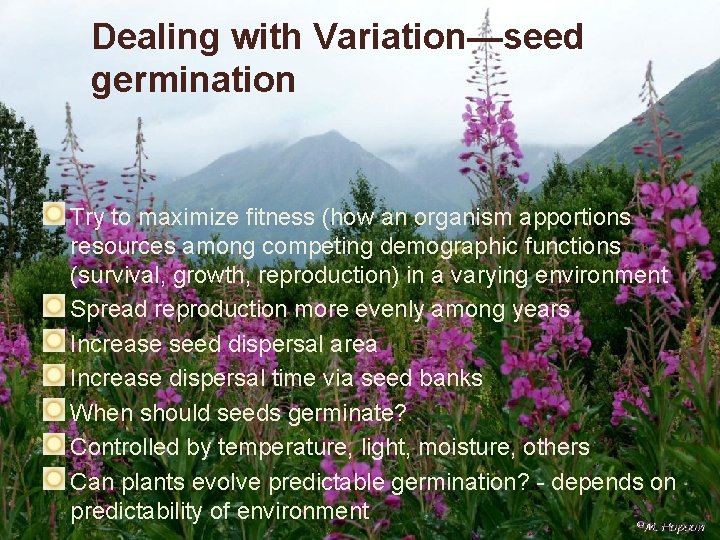
Dealing with Variation—seed germination Try to maximize fitness (how an organism apportions resources among competing demographic functions (survival, growth, reproduction) in a varying environment Spread reproduction more evenly among years Increase seed dispersal area Increase dispersal time via seed banks When should seeds germinate? Controlled by temperature, light, moisture, others Can plants evolve predictable germination? - depends on predictability of environment
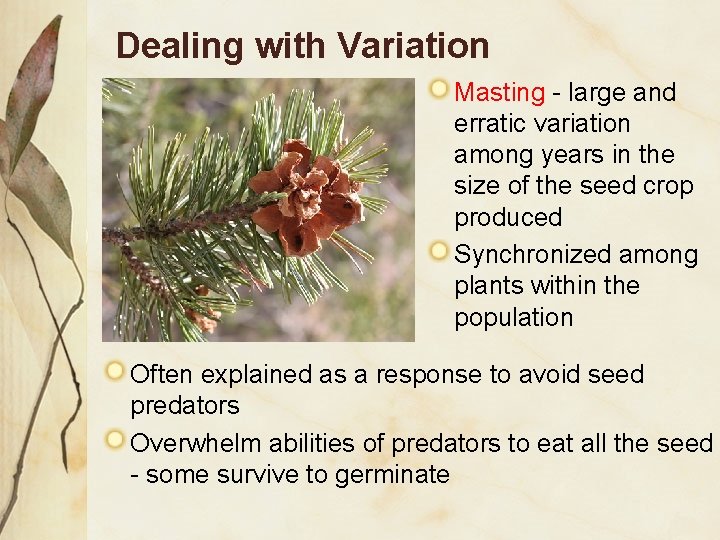
Dealing with Variation Masting - large and erratic variation among years in the size of the seed crop produced Synchronized among plants within the population Often explained as a response to avoid seed predators Overwhelm abilities of predators to eat all the seed - some survive to germinate
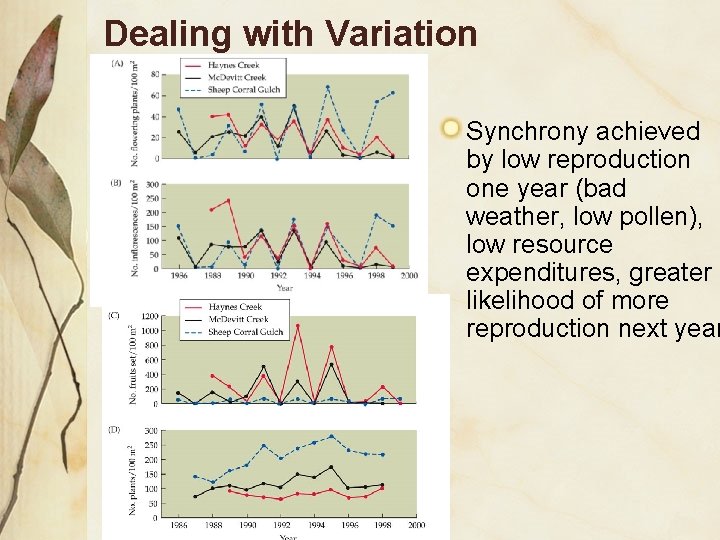
Dealing with Variation Synchrony achieved by low reproduction one year (bad weather, low pollen), low resource expenditures, greater likelihood of more reproduction next year
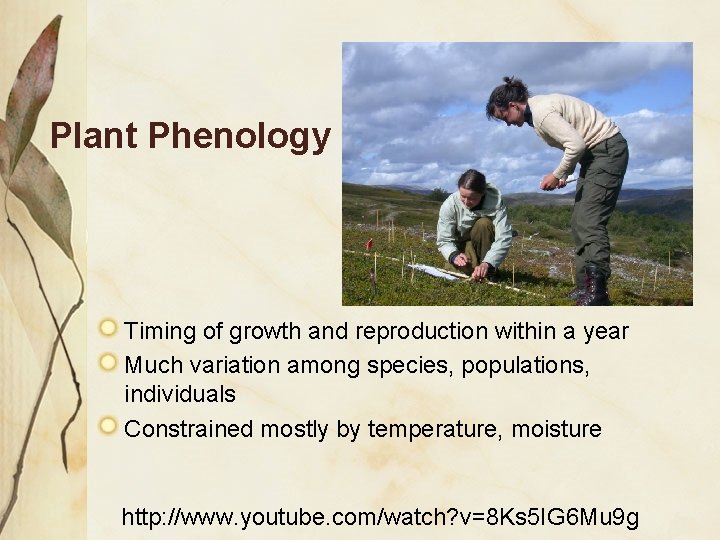
Plant Phenology Timing of growth and reproduction within a year Much variation among species, populations, individuals Constrained mostly by temperature, moisture http: //www. youtube. com/watch? v=8 Ks 5 IG 6 Mu 9 g
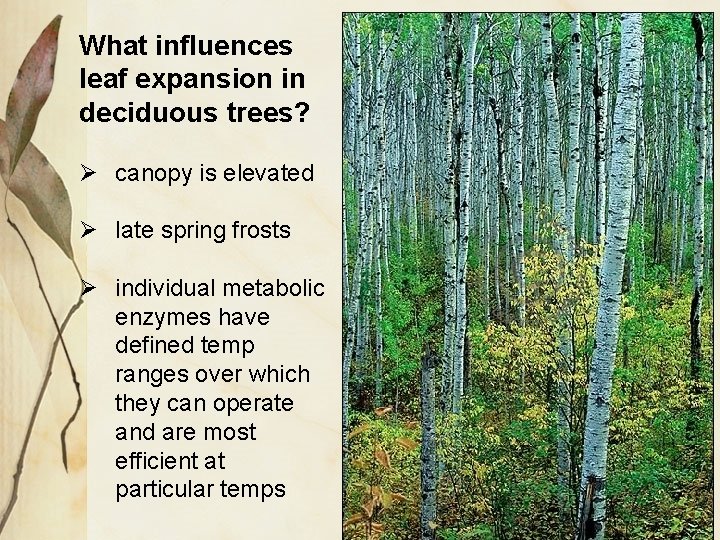
What influences leaf expansion in deciduous trees? Ø canopy is elevated Ø late spring frosts Ø individual metabolic enzymes have defined temp ranges over which they can operate and are most efficient at particular temps
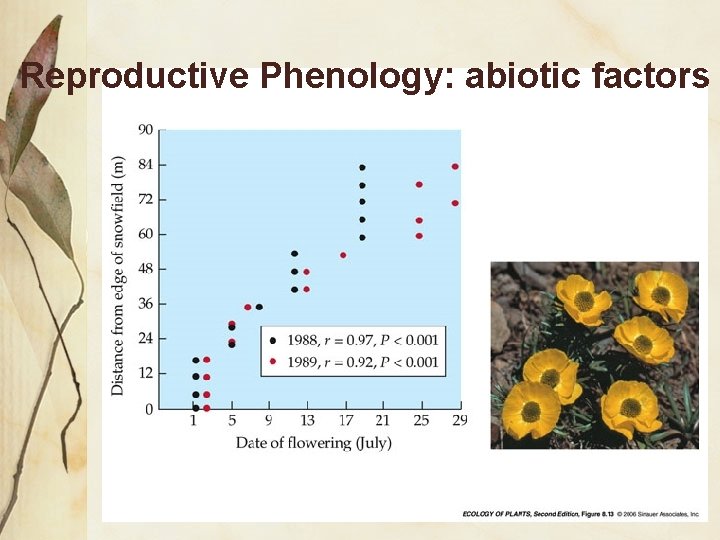
Reproductive Phenology: abiotic factors
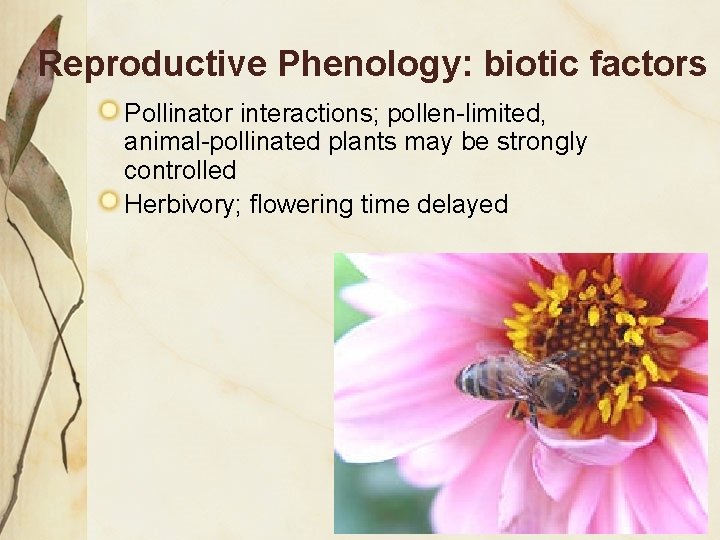
Reproductive Phenology: biotic factors Pollinator interactions; pollen-limited, animal-pollinated plants may be strongly controlled Herbivory; flowering time delayed
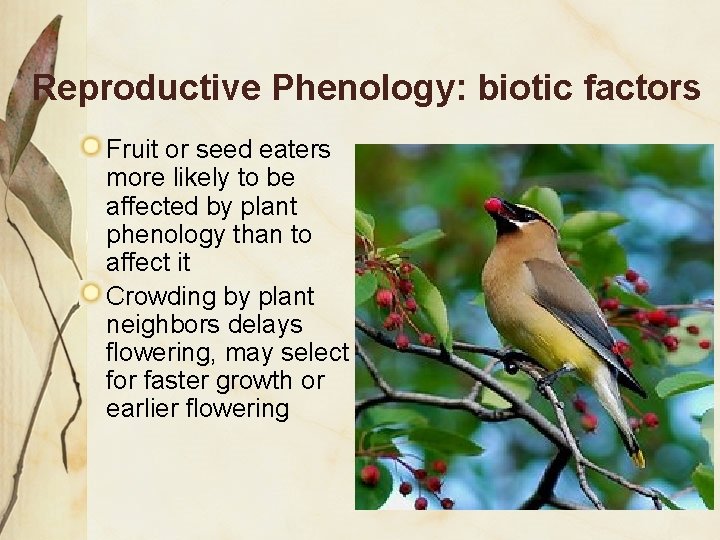
Reproductive Phenology: biotic factors Fruit or seed eaters more likely to be affected by plant phenology than to affect it Crowding by plant neighbors delays flowering, may select for faster growth or earlier flowering