
Plant Community Ecology Plant Interactions competitionfacilitation Competition Reduction

- Slides: 29
Plant Community Ecology. Plant Interactions (competition/facilitation)
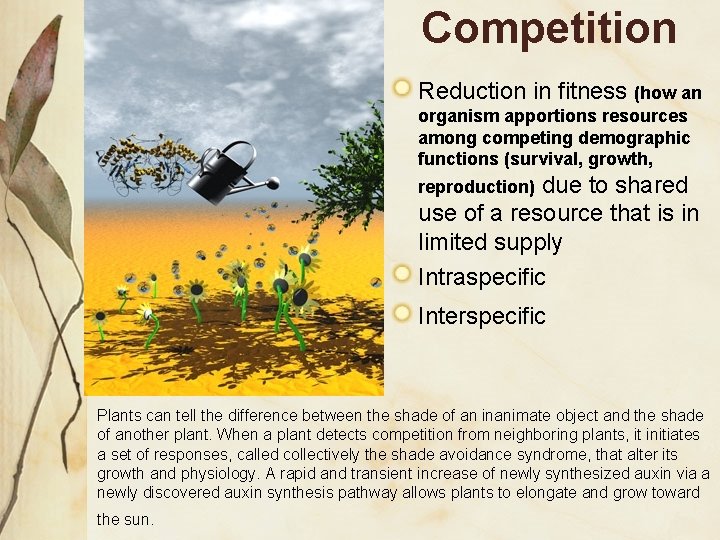
Competition Reduction in fitness (how an organism apportions resources among competing demographic functions (survival, growth, due to shared use of a resource that is in limited supply Intraspecific reproduction) Interspecific Plants can tell the difference between the shade of an inanimate object and the shade of another plant. When a plant detects competition from neighboring plants, it initiates a set of responses, called collectively the shade avoidance syndrome, that alter its growth and physiology. A rapid and transient increase of newly synthesized auxin via a newly discovered auxin synthesis pathway allows plants to elongate and grow toward the sun.
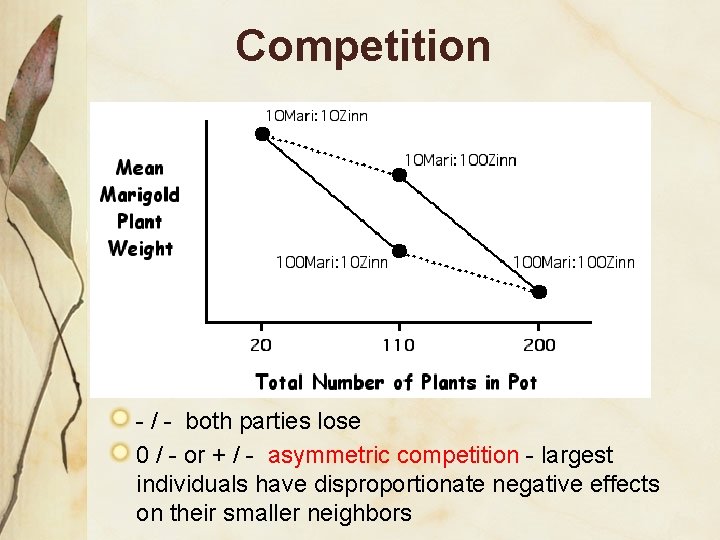
Competition - / - both parties lose 0 / - or + / - asymmetric competition - largest individuals have disproportionate negative effects on their smaller neighbors
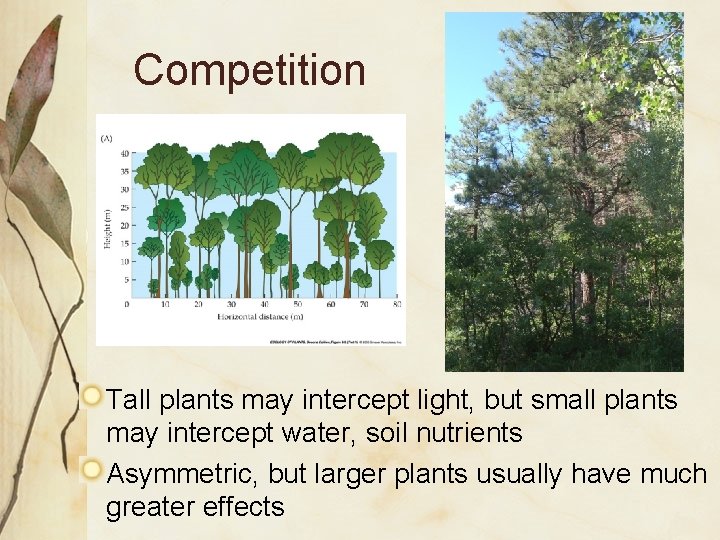
Competition Tall plants may intercept light, but small plants may intercept water, soil nutrients Asymmetric, but larger plants usually have much greater effects
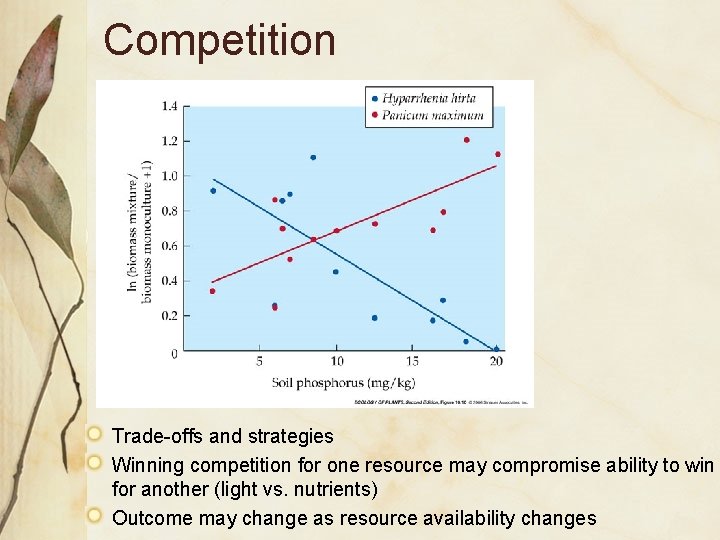
Competition Trade-offs and strategies Winning competition for one resource may compromise ability to win for another (light vs. nutrients) Outcome may change as resource availability changes
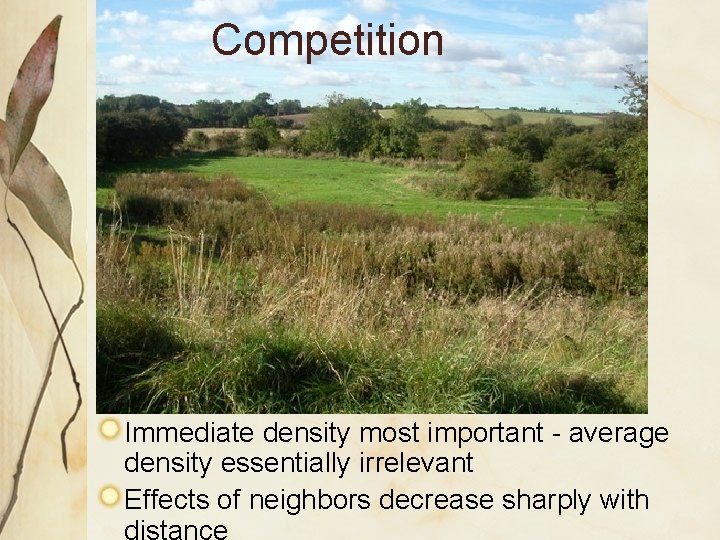
Competition Immediate density most important - average density essentially irrelevant Effects of neighbors decrease sharply with distance
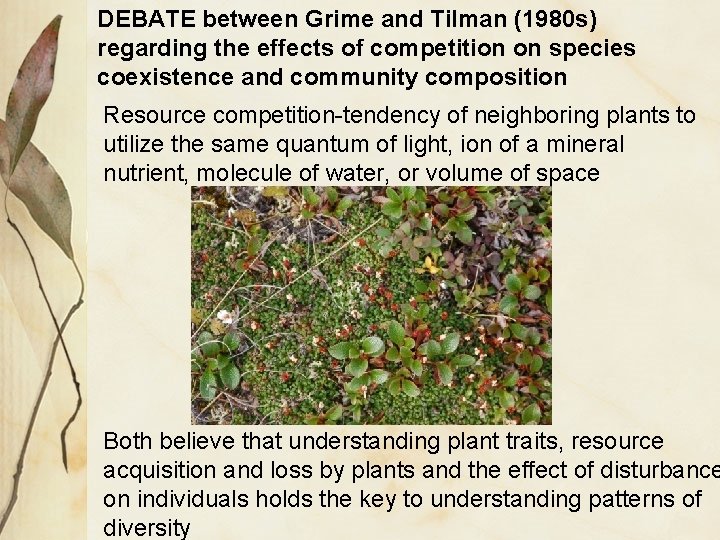
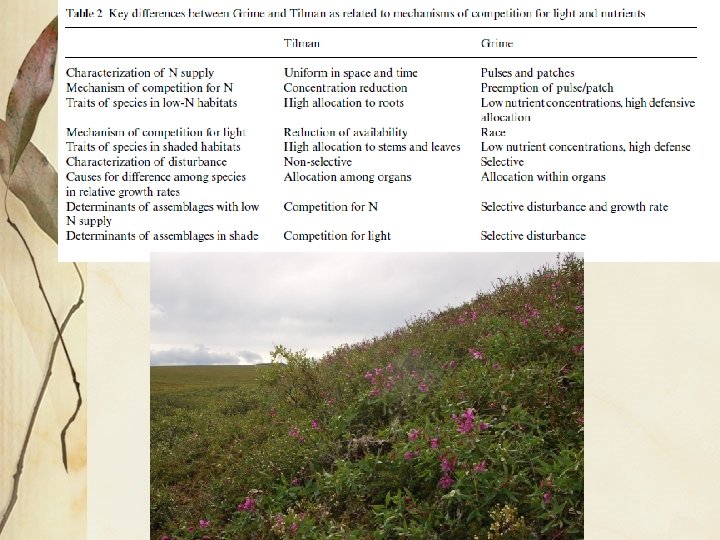
DEBATE between Grime and Tilman (1980 s) regarding the effects of competition on species coexistence and community composition Resource competition-tendency of neighboring plants to utilize the same quantum of light, ion of a mineral nutrient, molecule of water, or volume of space Both believe that understanding plant traits, resource acquisition and loss by plants and the effect of disturbance on individuals holds the key to understanding patterns of diversity
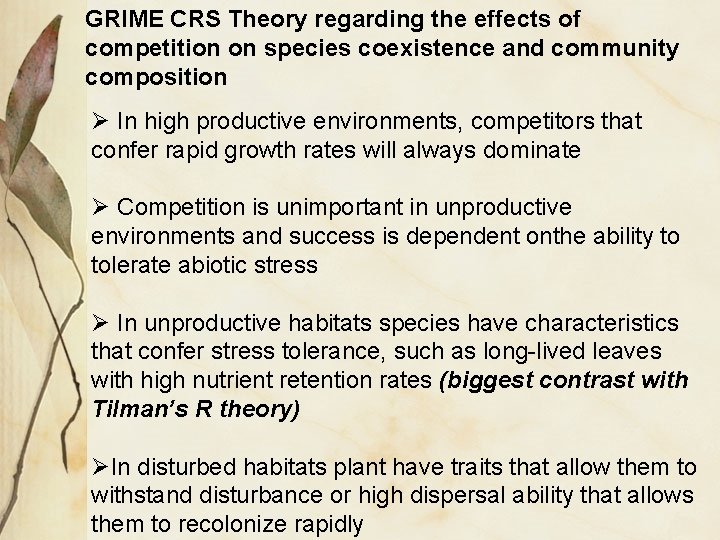
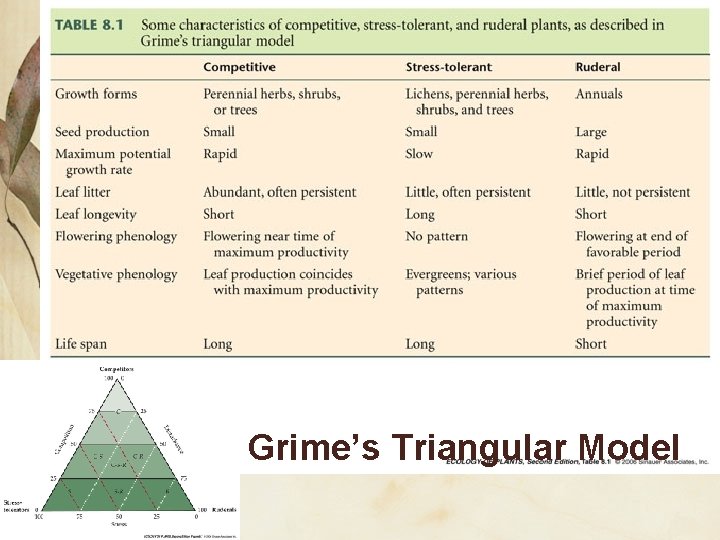
GRIME CRS Theory regarding the effects of competition on species coexistence and community composition Ø In high productive environments, competitors that confer rapid growth rates will always dominate Ø Competition is unimportant in unproductive environments and success is dependent onthe ability to tolerate abiotic stress Ø In unproductive habitats species have characteristics that confer stress tolerance, such as long-lived leaves with high nutrient retention rates (biggest contrast with Tilman’s R theory) ØIn disturbed habitats plant have traits that allow them to withstand disturbance or high dispersal ability that allows them to recolonize rapidly
Grime’s Triangular Model
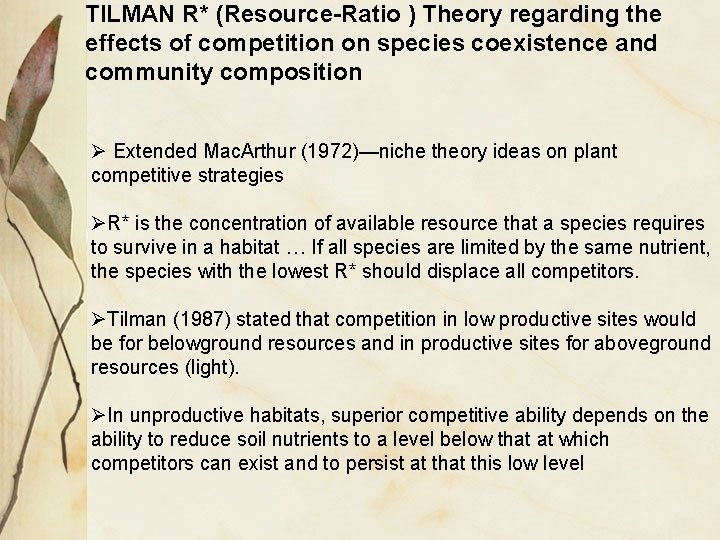
TILMAN R* (Resource-Ratio ) Theory regarding the effects of competition on species coexistence and community composition Ø Extended Mac. Arthur (1972)—niche theory ideas on plant competitive strategies ØR* is the concentration of available resource that a species requires to survive in a habitat … If all species are limited by the same nutrient, the species with the lowest R* should displace all competitors. ØTilman (1987) stated that competition in low productive sites would be for belowground resources and in productive sites for aboveground resources (light). ØIn unproductive habitats, superior competitive ability depends on the ability to reduce soil nutrients to a level below that at which competitors can exist and to persist at this low level
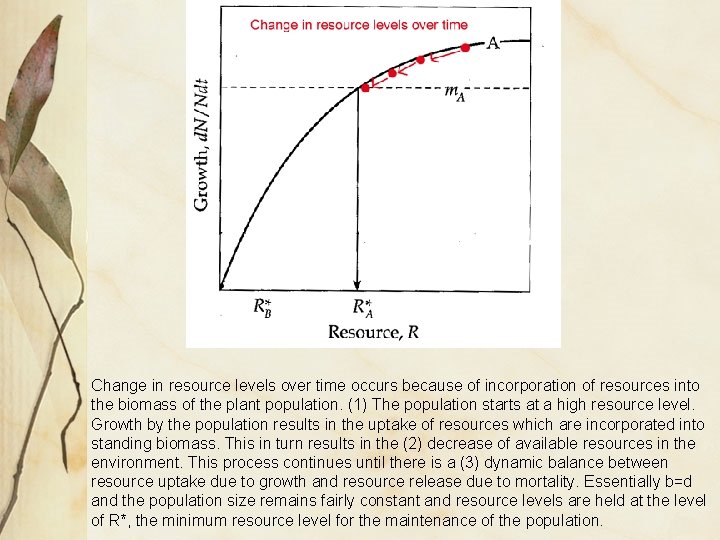
Change in resource levels over time occurs because of incorporation of resources into the biomass of the plant population. (1) The population starts at a high resource level. Growth by the population results in the uptake of resources which are incorporated into standing biomass. This in turn results in the (2) decrease of available resources in the environment. This process continues until there is a (3) dynamic balance between resource uptake due to growth and resource release due to mortality. Essentially b=d and the population size remains fairly constant and resource levels are held at the level of R*, the minimum resource level for the maintenance of the population.
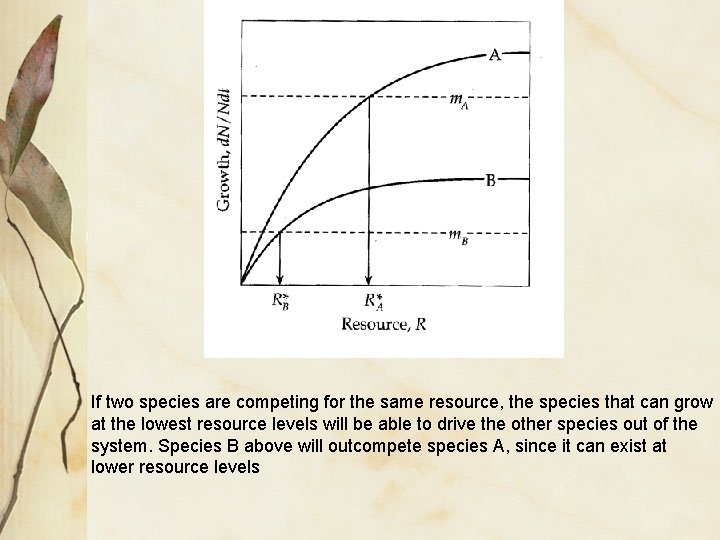
If two species are competing for the same resource, the species that can grow at the lowest resource levels will be able to drive the other species out of the system. Species B above will outcompete species A, since it can exist at lower resource levels
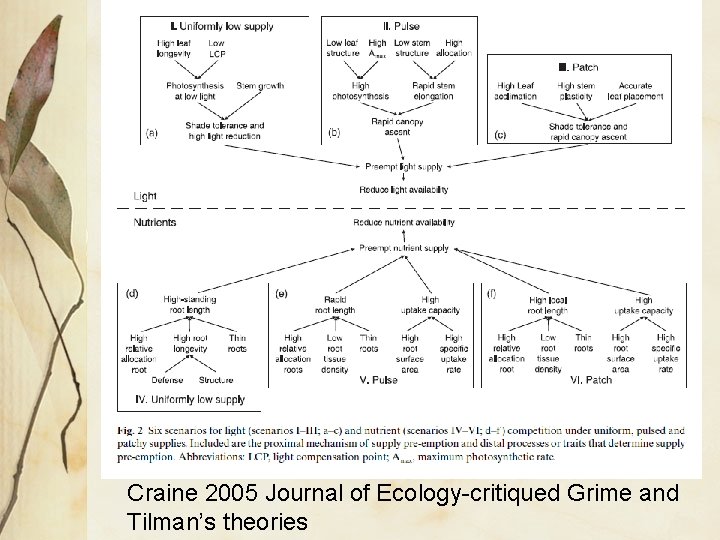
Craine 2005 Journal of Ecology-critiqued Grime and Tilman’s theories
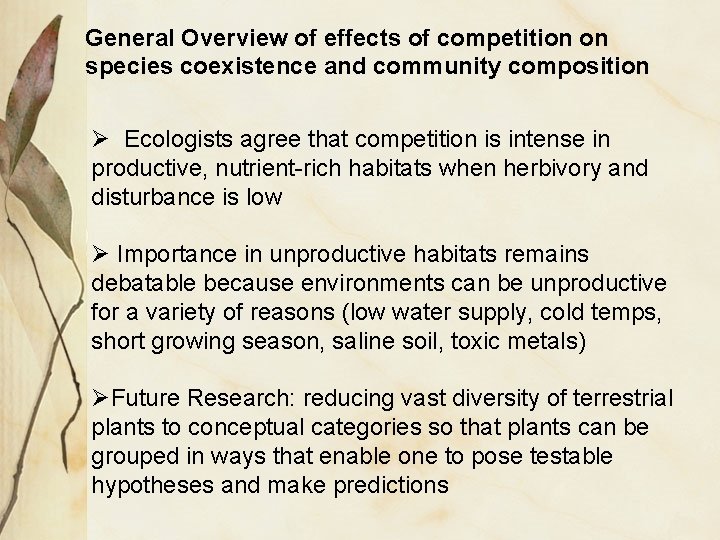
General Overview of effects of competition on species coexistence and community composition Ø Ecologists agree that competition is intense in productive, nutrient-rich habitats when herbivory and disturbance is low Ø Importance in unproductive habitats remains debatable because environments can be unproductive for a variety of reasons (low water supply, cold temps, short growing season, saline soil, toxic metals) ØFuture Research: reducing vast diversity of terrestrial plants to conceptual categories so that plants can be grouped in ways that enable one to pose testable hypotheses and make predictions
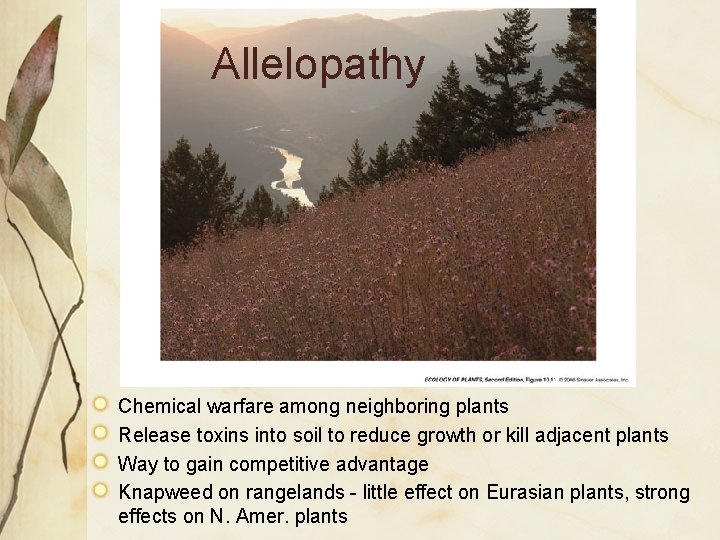
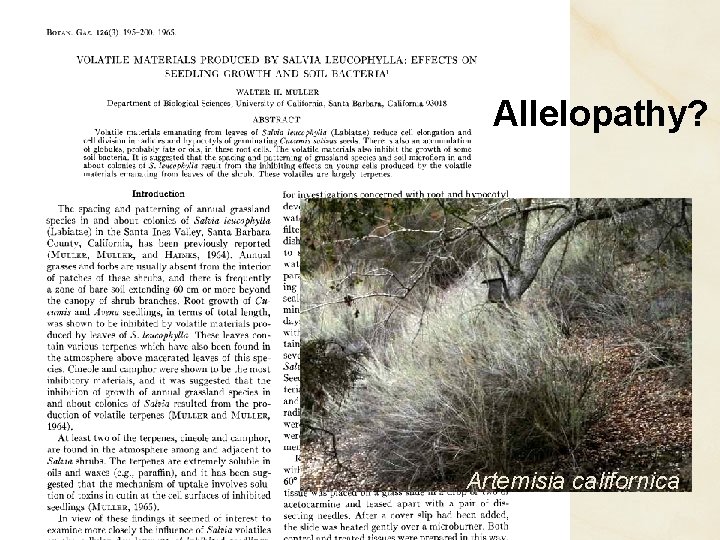
Allelopathy Chemical warfare among neighboring plants Release toxins into soil to reduce growth or kill adjacent plants Way to gain competitive advantage Knapweed on rangelands - little effect on Eurasian plants, strong effects on N. Amer. plants
Plants influence their environments in many ways— altering balance of nutrients, acidifying the rhizosphere, secreting materials, and shedding parts. Plant can also affect soil microbes that affect other plants (indirect)
Allelopathy? Artemisia californica
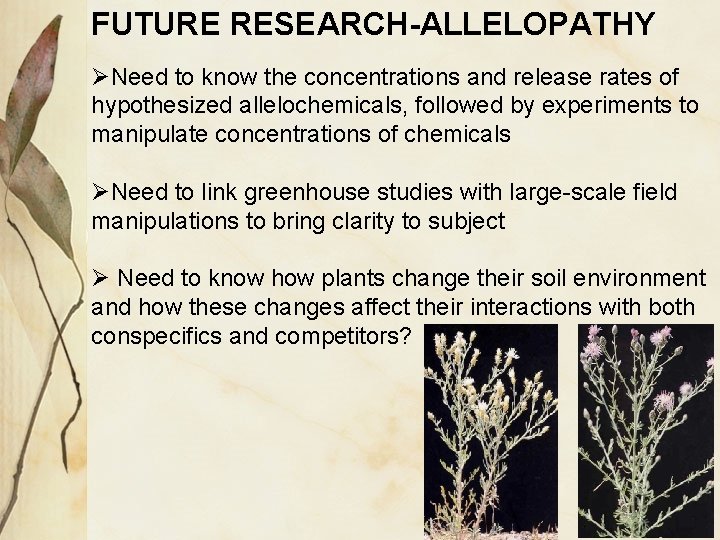
FUTURE RESEARCH-ALLELOPATHY ØNeed to know the concentrations and release rates of hypothesized allelochemicals, followed by experiments to manipulate concentrations of chemicals ØNeed to link greenhouse studies with large-scale field manipulations to bring clarity to subject Ø Need to know how plants change their soil environment and how these changes affect their interactions with both conspecifics and competitors?
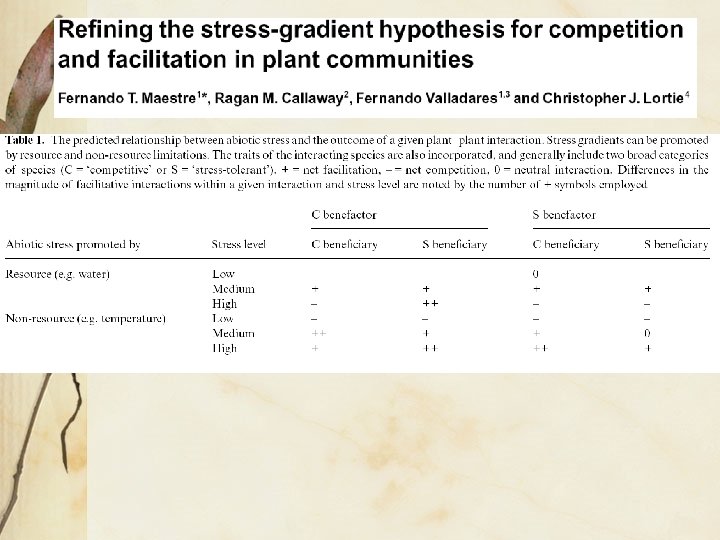
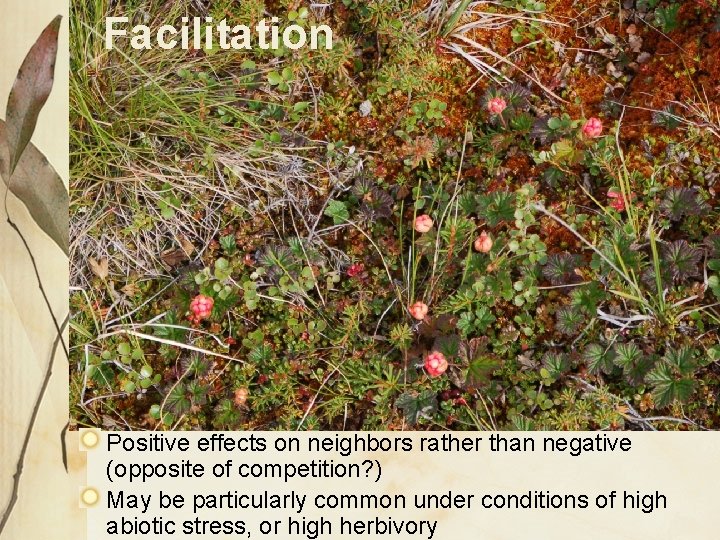
Facilitation Positive effects on neighbors rather than negative (opposite of competition? ) May be particularly common under conditions of high abiotic stress, or high herbivory
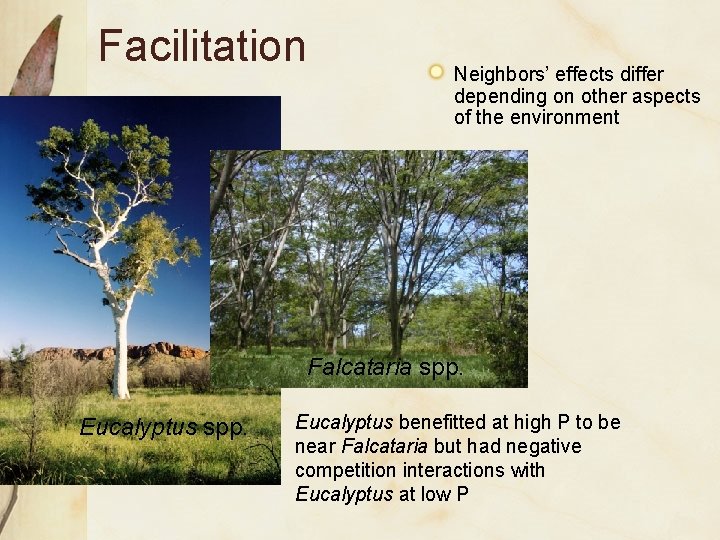
Facilitation Neighbors’ effects differ depending on other aspects of the environment Falcataria spp. Eucalyptus spp. Eucalyptus benefitted at high P to be near Falcataria but had negative competition interactions with Eucalyptus at low P
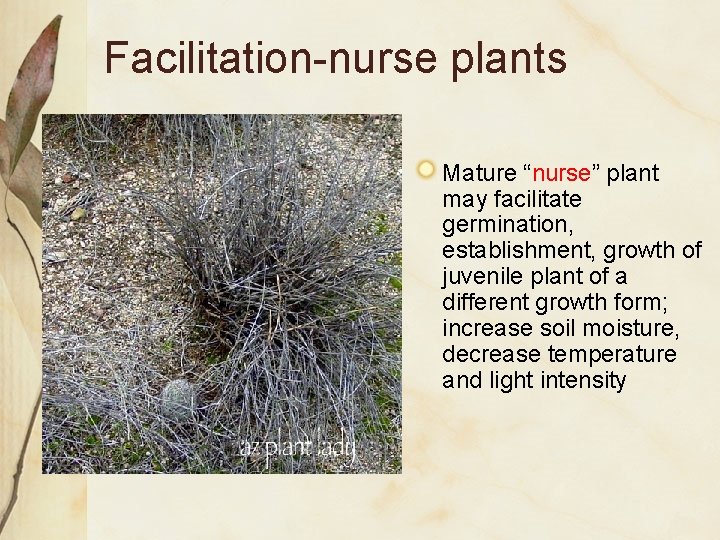
Facilitation-nurse plants Mature “nurse” plant may facilitate germination, establishment, growth of juvenile plant of a different growth form; increase soil moisture, decrease temperature and light intensity
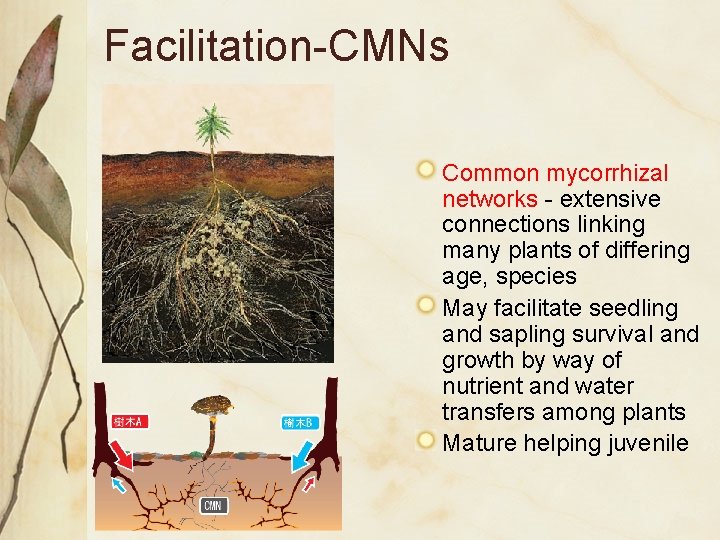
Facilitation-CMNs Common mycorrhizal networks - extensive connections linking many plants of differing age, species May facilitate seedling and sapling survival and growth by way of nutrient and water transfers among plants Mature helping juvenile
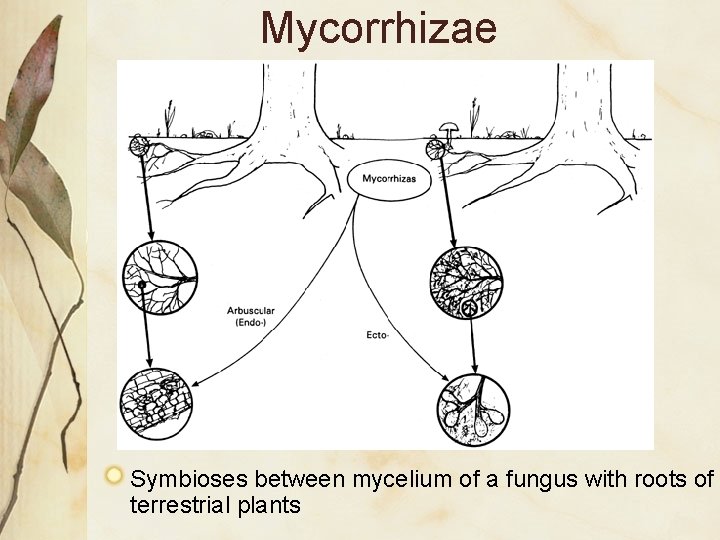
Mycorrhizae Symbioses between mycelium of a fungus with roots of terrestrial plants
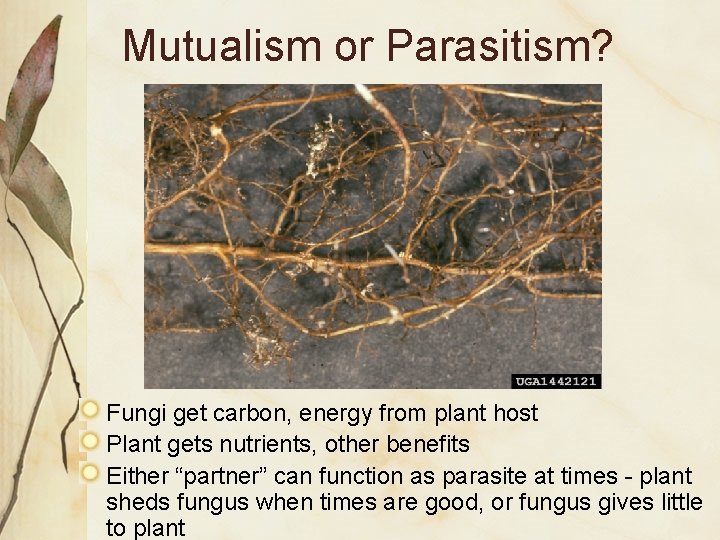
Mutualism or Parasitism? Fungi get carbon, energy from plant host Plant gets nutrients, other benefits Either “partner” can function as parasite at times - plant sheds fungus when times are good, or fungus gives little to plant
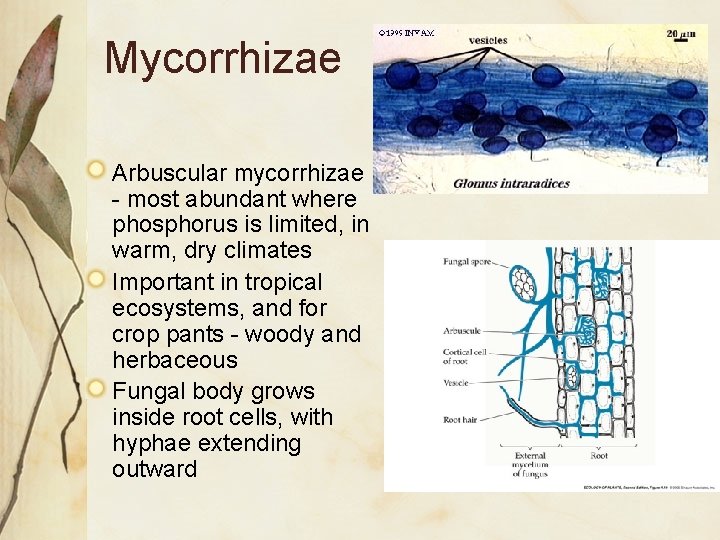
Mycorrhizae Arbuscular mycorrhizae - most abundant where phosphorus is limited, in warm, dry climates Important in tropical ecosystems, and for crop pants - woody and herbaceous Fungal body grows inside root cells, with hyphae extending outward
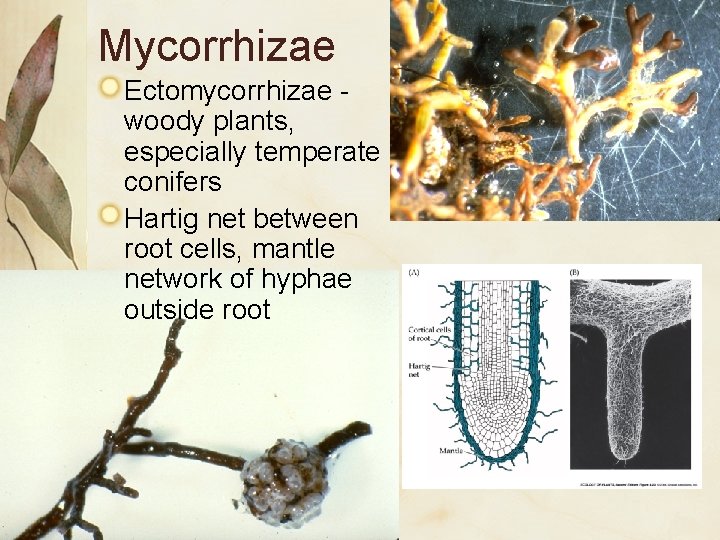
Mycorrhizae Ectomycorrhizae woody plants, especially temperate conifers Hartig net between root cells, mantle network of hyphae outside root
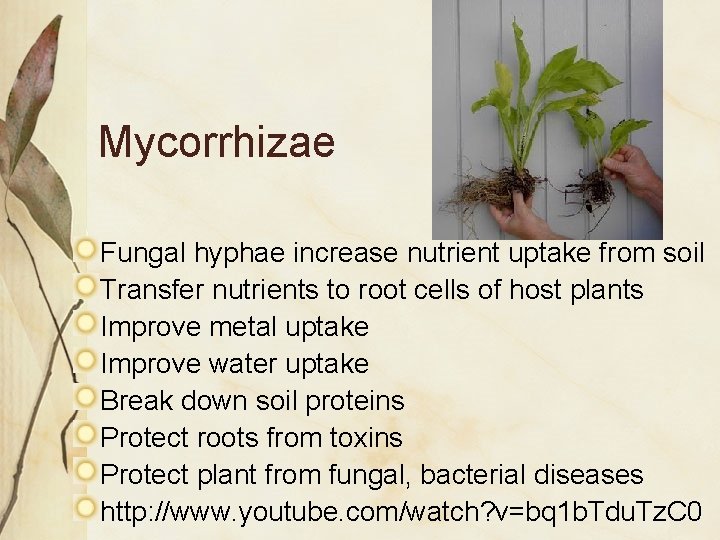
Mycorrhizae Fungal hyphae increase nutrient uptake from soil Transfer nutrients to root cells of host plants Improve metal uptake Improve water uptake Break down soil proteins Protect roots from toxins Protect plant from fungal, bacterial diseases http: //www. youtube. com/watch? v=bq 1 b. Tdu. Tz. C 0