
Plant Classification WHAT IS A PLANT Plants are
- Slides: 39
Plant Classification
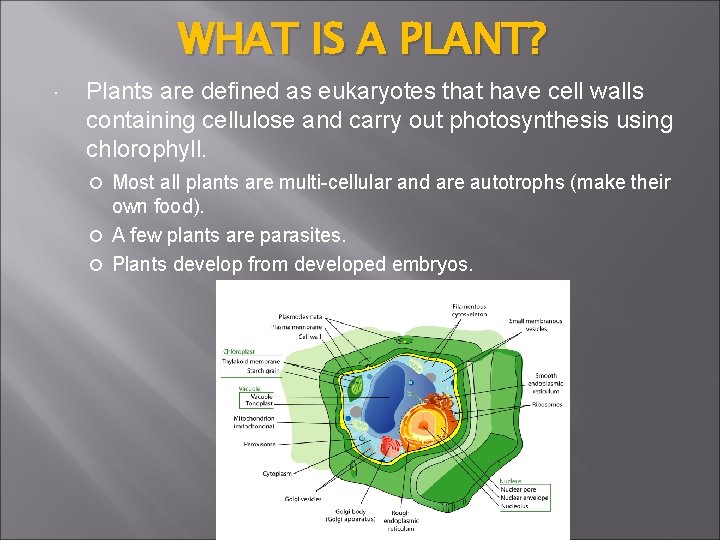
WHAT IS A PLANT? Plants are defined as eukaryotes that have cell walls containing cellulose and carry out photosynthesis using chlorophyll. Most all plants are multi-cellular and are autotrophs (make their own food). A few plants are parasites. Plants develop from developed embryos.
How many plants are there? About 350, 000 plants are known to exist, and new ones are still being discovered. § As of 2004, scientists have named 287, 655 plants. 258, 650 flowering plants. The rest are mosses, ferns, and green algae.
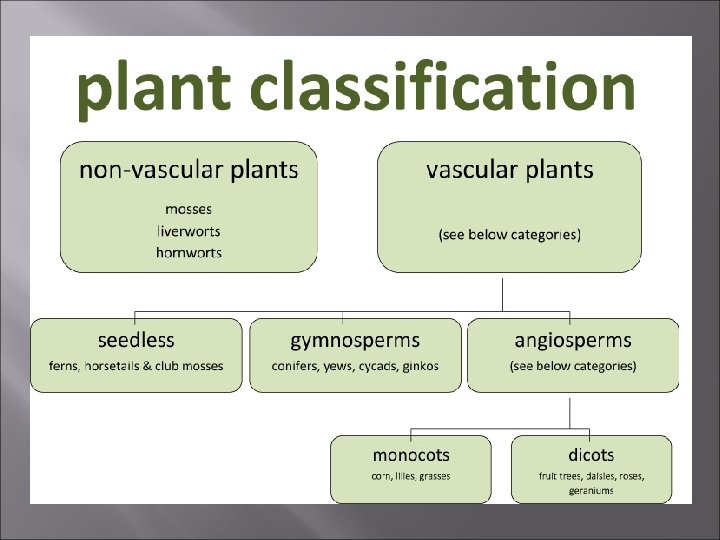
Vascular Plants Understanding how plants grow and develop helps us capitalize on their usefulness and make them part of our everyday lives. In horticulture we tend to focus on vascular and non- vascular plants Vascular plants are those that contain water- and nutrient-conducting tissues called xylem and phloem Non-vascular plants must rely on each cell directly absorbing the nutrients that they need.
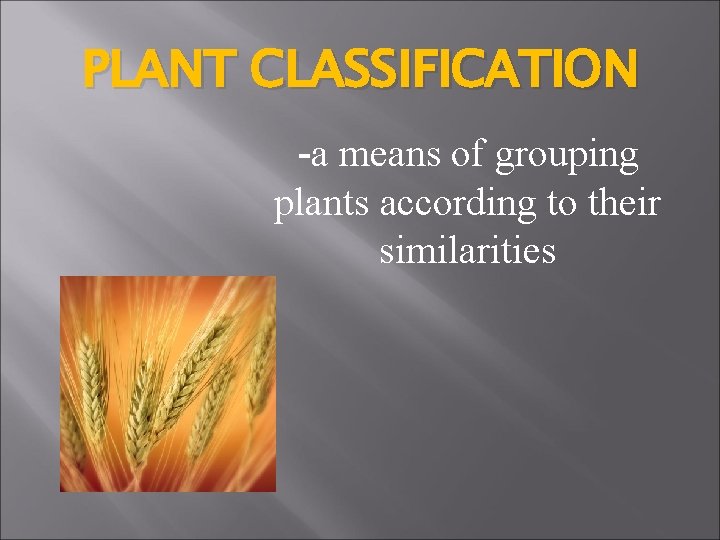
PLANT CLASSIFICATION -a means of grouping plants according to their similarities
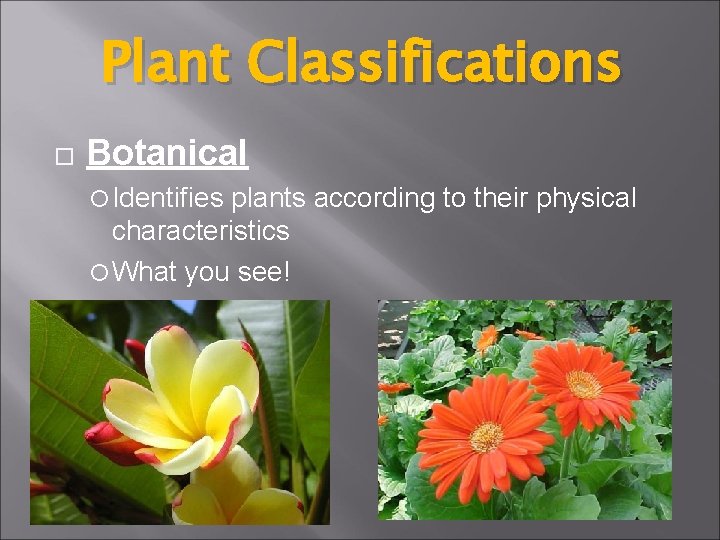
Plant Classifications Botanical Identifies plants according to their physical characteristics What you see!
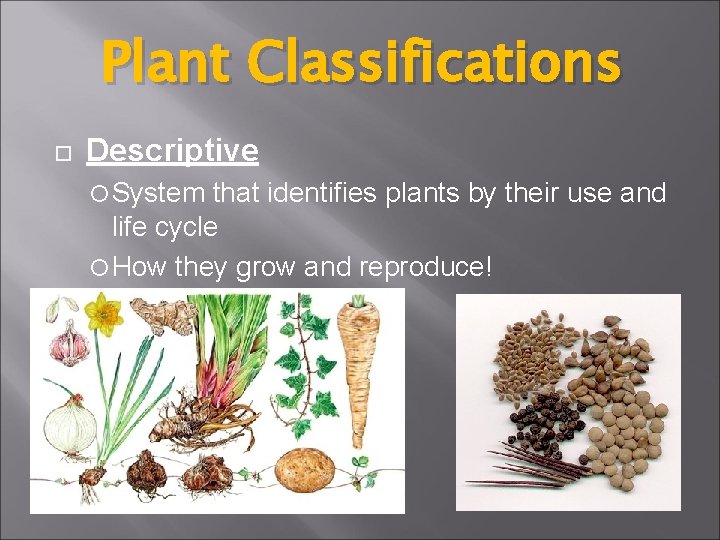
Plant Classifications Descriptive System that identifies plants by their use and life cycle How they grow and reproduce!
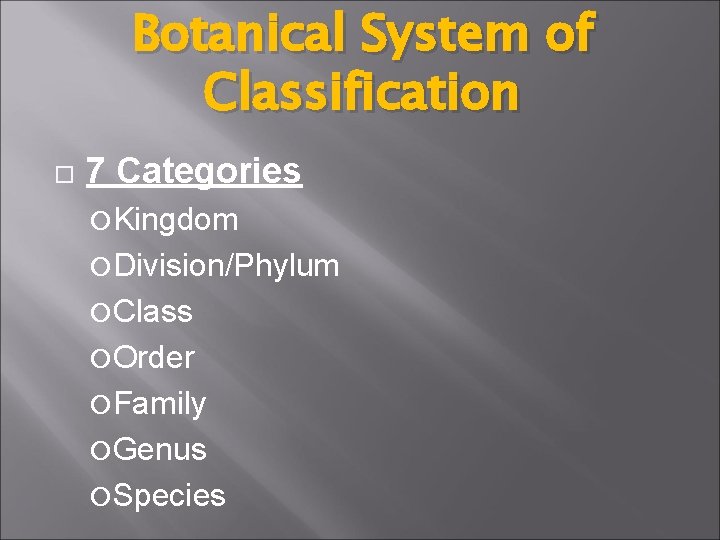
Botanical System of Classification 7 Categories Kingdom Division/Phylum Class Order Family Genus Species
Binomial Nomenclature Botanical nomenclature is the orderly classification and naming of plants. Universal language (Latin) The binomial system specifies that a plant name must have at least two parts. Derived from Latin bi = 2; nomin = name. The requirement for both a genus and a specific epithet to name a species is what defines the system as “binomial”
The Origin of Botanical Names Taxonomy: Area that deals with naming of plants. Carolus Linnaeus: Father of the “Bionomial System” Binomial Systems is has two parts; Genus (last name) - Upper Case species (first name) – Epithet (lower case)
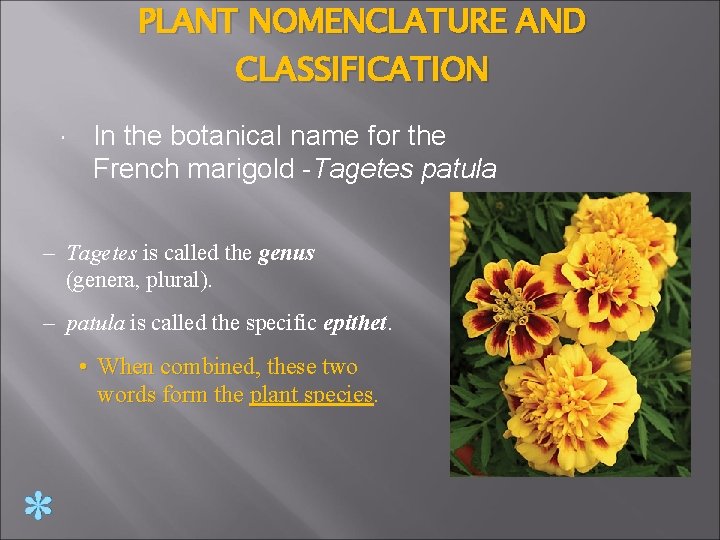
PLANT NOMENCLATURE AND CLASSIFICATION In the botanical name for the French marigold -Tagetes patula – Tagetes is called the genus (genera, plural). – patula is called the specific epithet. • When combined, these two words form the plant species.
Varieties and Cultivars Plants mostly are distinguished by two parts; Genus and species However, through mutations and breeding change occurs. To distinguish a third part is added to the binomial system; Cultivar and Variety
Cultivar & Variety A cultivar is human-made and/or -maintained. The name is short for “cultivated” i. e. seed and seedless grapes Labeled - cv A plant variety is a naturally occurring mutation or offspring different significantly from the parent. i. e. A species with white flowers might spontaneously mutate and a new variety with pink flowers would appear. Labeled - var. or v.
Classification of Plants The plant kingdom has become successful all over the Earth. They have done so by adapting to a wide variety of different conditions and niches. The following are some major groups of plants. Bryophytes: Ferns: Gymnosperms: Angiosperms:
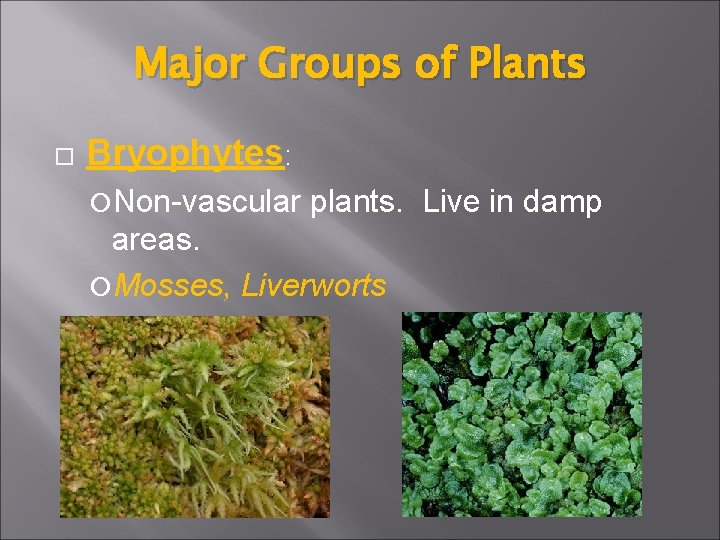
Major Groups of Plants Bryophytes: Non-vascular plants. Live in damp areas. Mosses, Liverworts
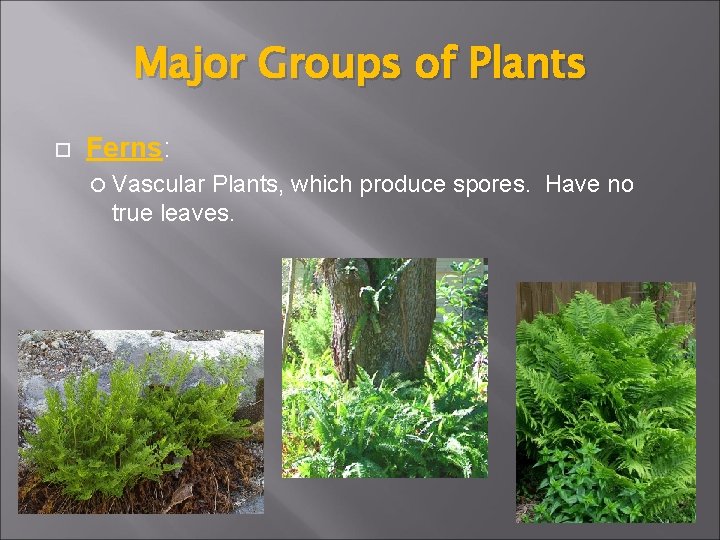
Major Groups of Plants Ferns: Vascular Plants, which produce spores. Have no true leaves.
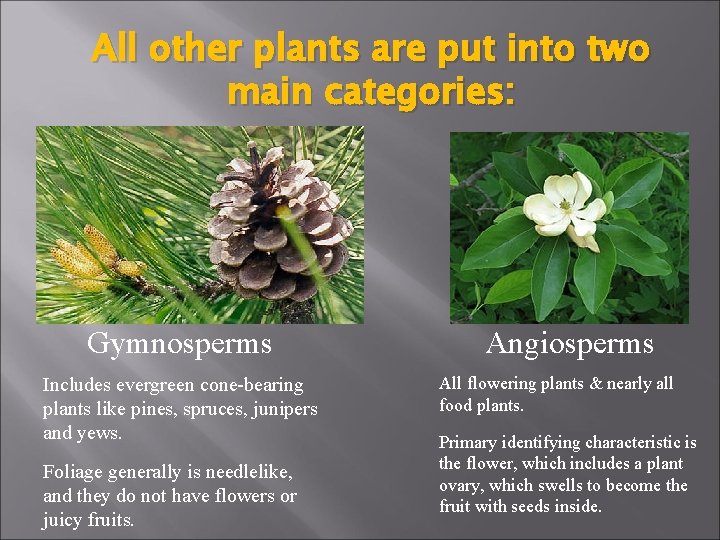
All other plants are put into two main categories: Gymnosperms Includes evergreen cone-bearing plants like pines, spruces, junipers and yews. Foliage generally is needlelike, and they do not have flowers or juicy fruits. Angiosperms All flowering plants & nearly all food plants. Primary identifying characteristic is the flower, which includes a plant ovary, which swells to become the fruit with seeds inside.
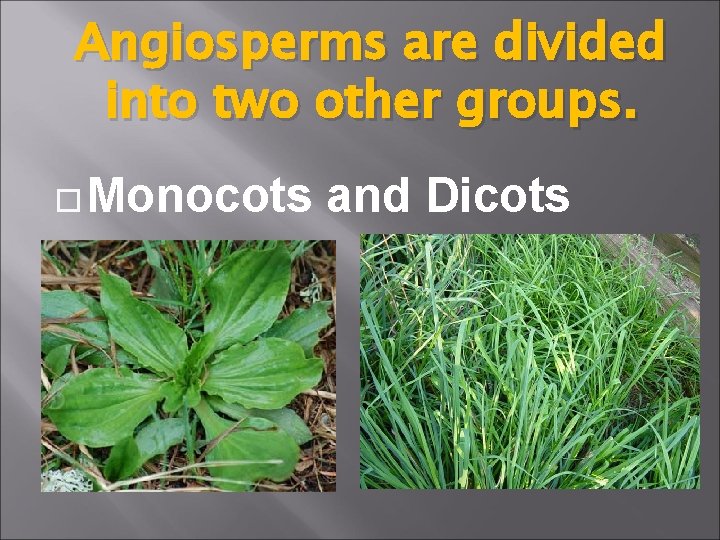
Angiosperms are divided into two other groups. Monocots and Dicots
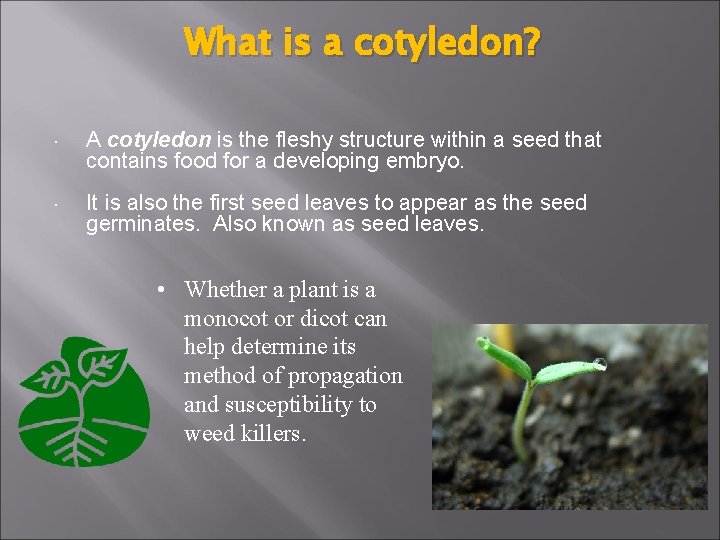
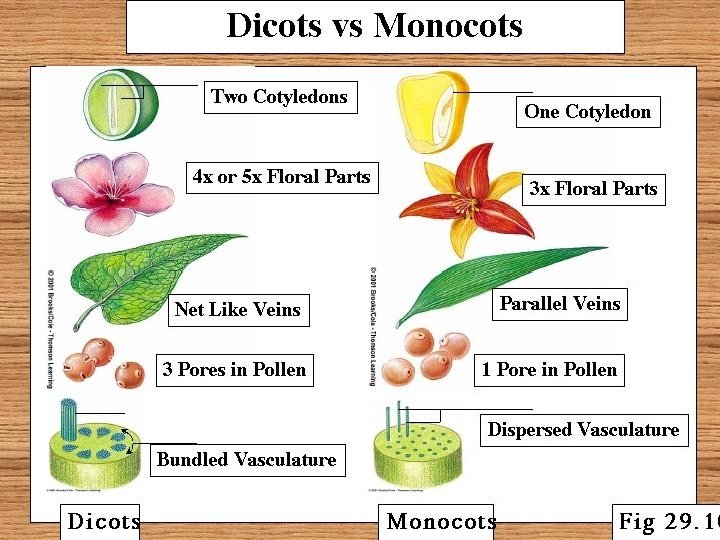
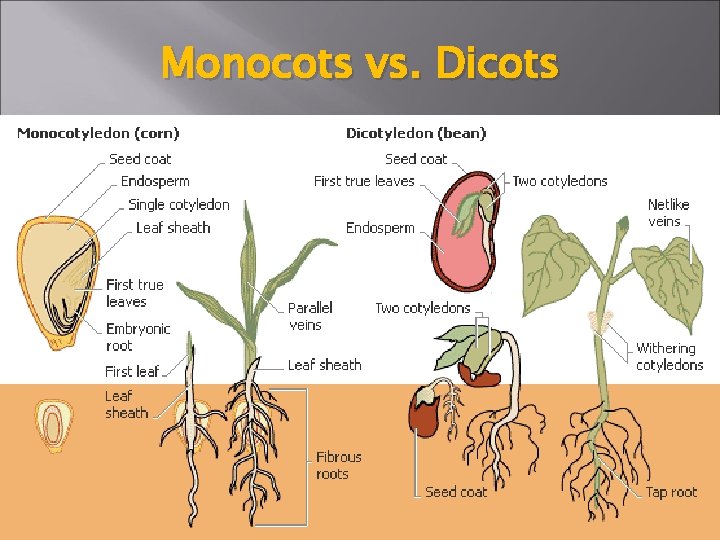
What is a cotyledon? A cotyledon is the fleshy structure within a seed that contains food for a developing embryo. It is also the first seed leaves to appear as the seed germinates. Also known as seed leaves. • Whether a plant is a monocot or dicot can help determine its method of propagation and susceptibility to weed killers.
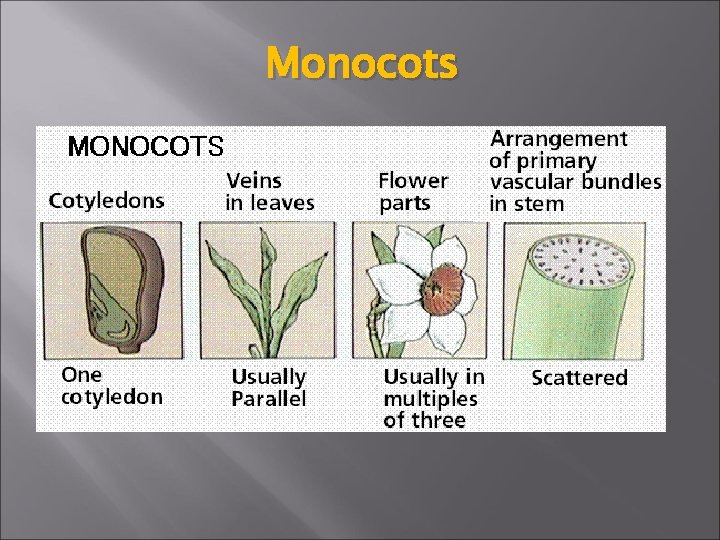
Monocots 1 cotyledon in a seed Long narrow leaves with parallel veins Vascular bundles scattered throughout Non-woody (don’t produce wood) Flower petals in multiples of 3 Roots are fibrous (shallow and small)
Monocots
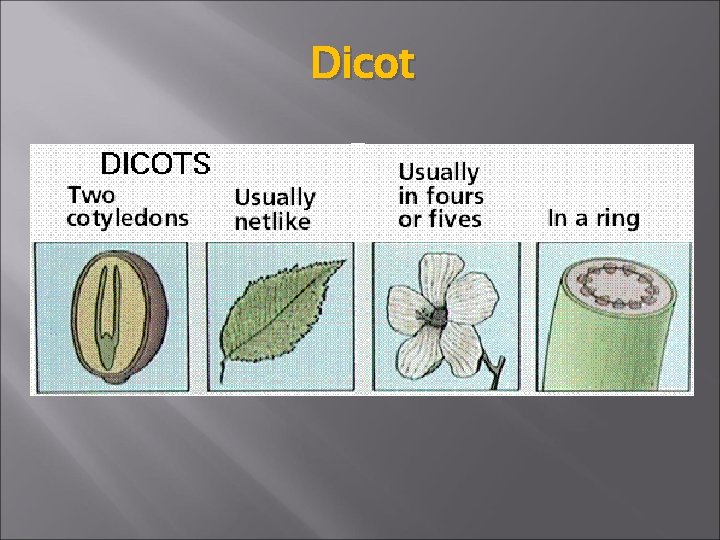
Dicots Seeds with 2 seed leaves or 2 cotyledons Branching veins patterns (webbed or net-like) Flowers parts in multiples of 4 or 5 Woody plants Vascular bundles shape of a ring Root system composed of primary tap root and many root hairs (large and deep)
Dicot
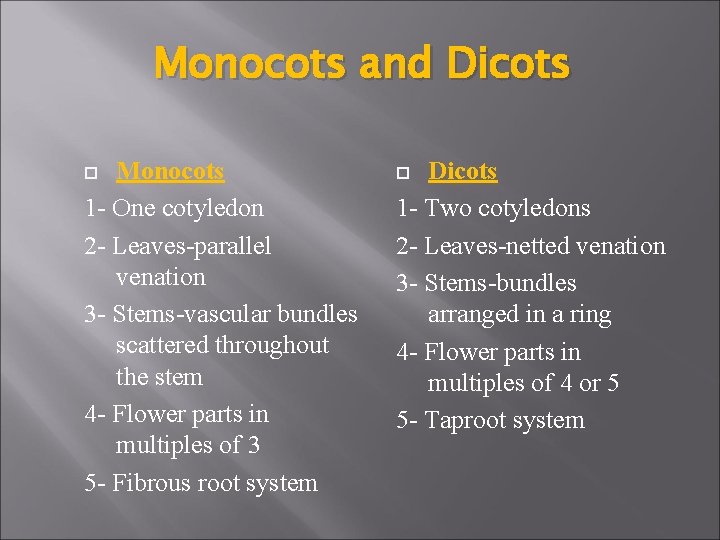
Monocots and Dicots Monocots 1 - One cotyledon 2 - Leaves-parallel venation 3 - Stems-vascular bundles scattered throughout the stem 4 - Flower parts in multiples of 3 5 - Fibrous root system Dicots 1 - Two cotyledons 2 - Leaves-netted venation 3 - Stems-bundles arranged in a ring 4 - Flower parts in multiples of 4 or 5 5 - Taproot system
Monocots vs. Dicots
Plant Classification When classifying plants they are classified more by their stem types, foliage retention and flowering patterns (visual characteristics) Also, plants are classified by their life structures, life cycle and genetics.
Plant Classification The life structure and cycle is based on their; Vegetative Growth (leaves, stem) Period Reproductive Growth Period (asexual, seeds, etc. ) Dormancy Growth Period (winter, summer, fall and spring)
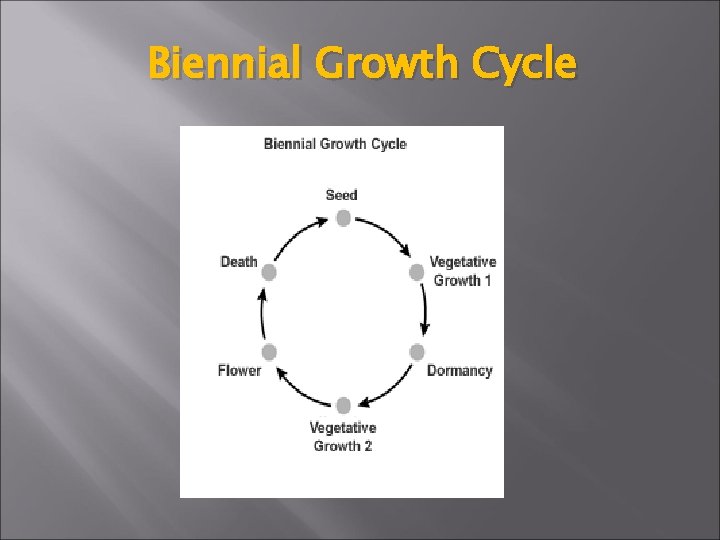
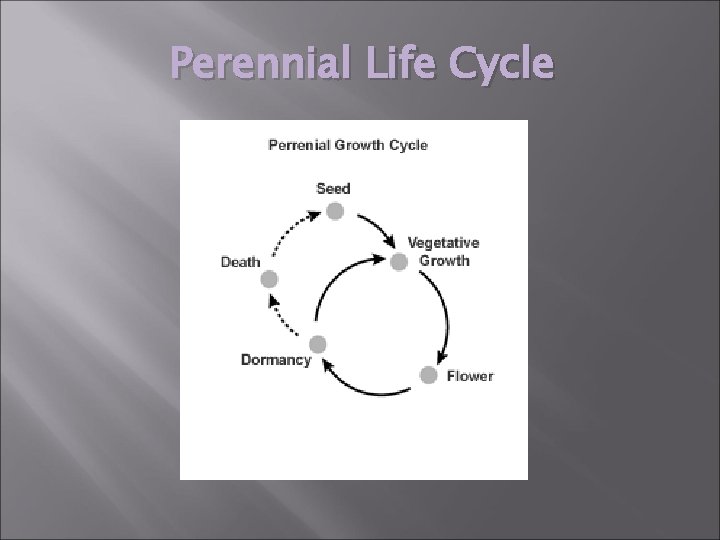
Plant Classification Plants are divided into three (3) life cycles (start to finish). Annuals: Complete their life cycle in one growing season. Biennials: Completes their life cycle in two growing seasons. Perennials: Plants that live for three or more growing seasons.
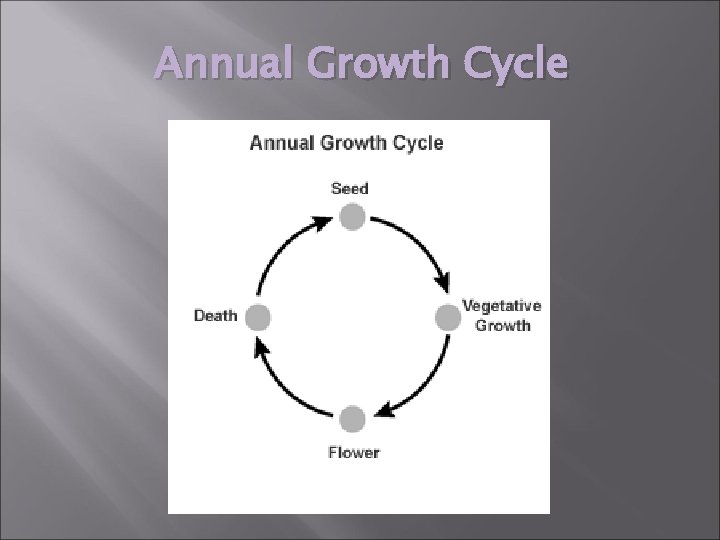
Annual Growth Cycle
Annuals They have to be replanted every year. Have an Herbaceous stem, which is a stem with no woody tissue in it Summer Annuals: Planted in spring, harvested in fall Winter Annuals: Planted in fall, harvested in following summer Petunias, Marigolds, Geraniums, impatiens, etc.
Biennial Growth Cycle
Biennials Complete their vegetative growth in the first year, and then usually flowers during their second season. They must also be replanted every year. Cabbage, beets, carrots, peas, etc… Cool season vegetables
Perennial Life Cycle
Perennials Flower for a short time. They can be both soft (Herbaceous) and hard woody plants. Perennials do not usually have a predetermined age of death. Herbaceous: Shrubs Woody: Maple, Apple, etc.
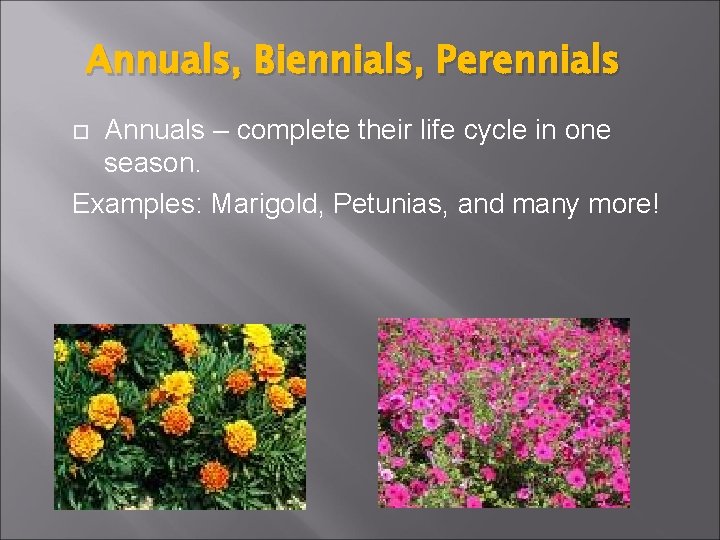
Annuals, Biennials, Perennials Annuals – complete their life cycle in one season. Examples: Marigold, Petunias, and many more!
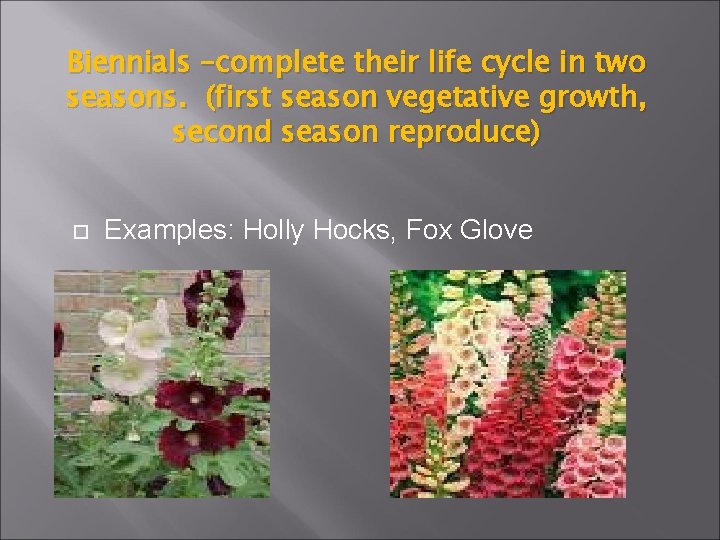
Biennials –complete their life cycle in two seasons. (first season vegetative growth, second season reproduce) Examples: Holly Hocks, Fox Glove
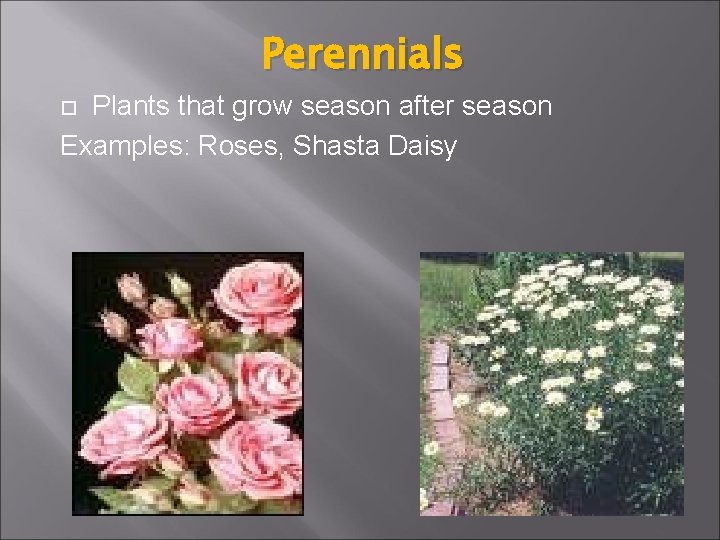
Perennials Plants that grow season after season Examples: Roses, Shasta Daisy