
Plant Classification Using Plant Parts Life Cycles to
- Slides: 11
Plant Classification Using Plant Parts & Life Cycles to Classify Plants
Learning Objectives • List and explain the common plant parts and life cycles used when classifying plants. • Classify plants according to their life cycle: perennial, annual, biennial. • Explain how to identify plants by using a Dichotomous key.
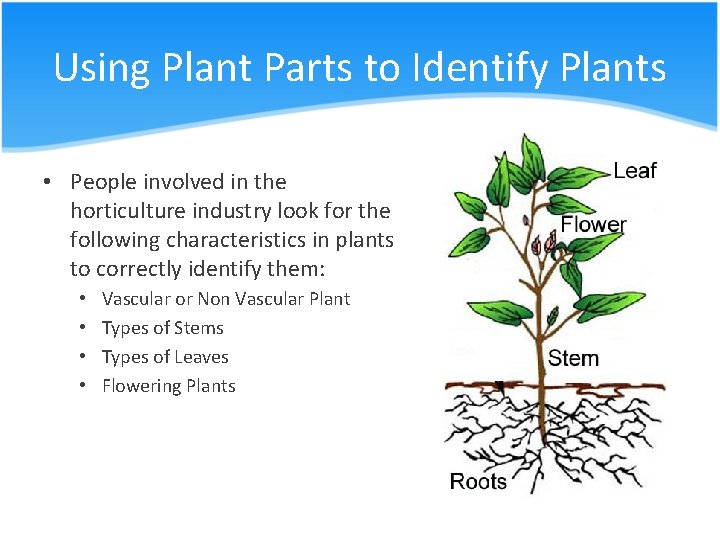
Using Plant Parts to Identify Plants • People involved in the horticulture industry look for the following characteristics in plants to correctly identify them: • • Vascular or Non Vascular Plant Types of Stems Types of Leaves Flowering Plants
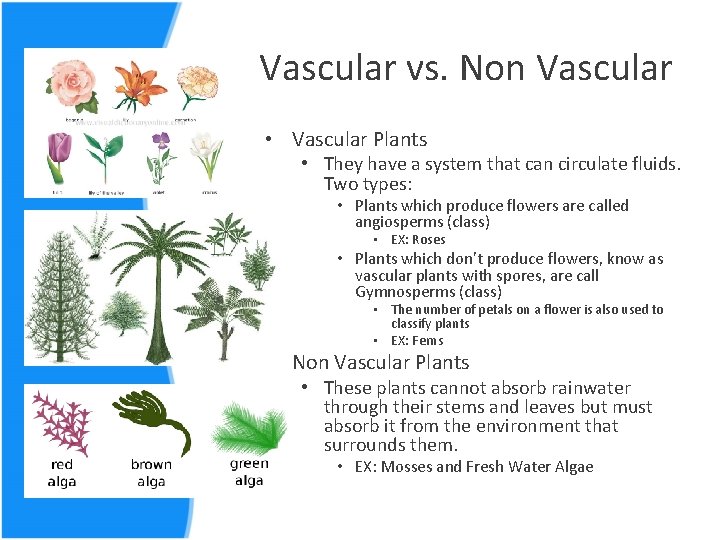
Vascular vs. Non Vascular • Vascular Plants • They have a system that can circulate fluids. Two types: • Plants which produce flowers are called angiosperms (class) • EX: Roses • Plants which don’t produce flowers, know as vascular plants with spores, are call Gymnosperms (class) • The number of petals on a flower is also used to classify plants • EX: Ferns • Non Vascular Plants • These plants cannot absorb rainwater through their stems and leaves but must absorb it from the environment that surrounds them. • EX: Mosses and Fresh Water Algae
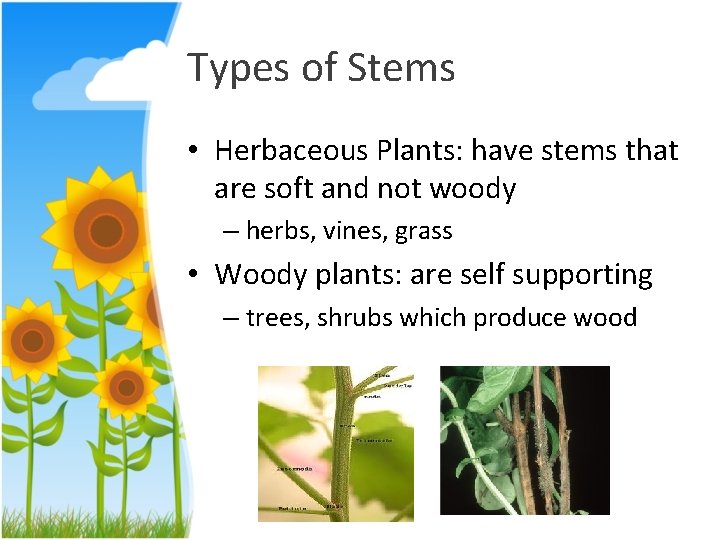
Types of Stems • Herbaceous Plants: have stems that are soft and not woody – herbs, vines, grass • Woody plants: are self supporting – trees, shrubs which produce wood
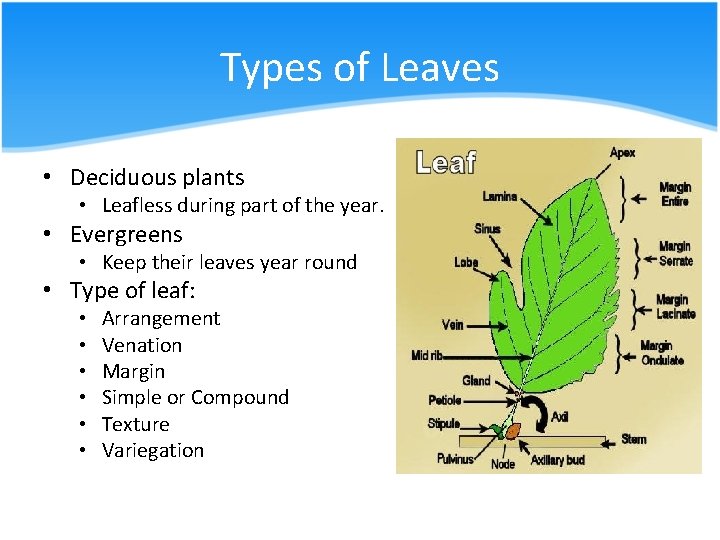
Types of Leaves • Deciduous plants • Leafless during part of the year. • Evergreens • Keep their leaves year round • Type of leaf: • • • Arrangement Venation Margin Simple or Compound Texture Variegation
Plant Phases • Vegetative phase: – when a seed germinates and produces seed, roots, stems, and leaves. • Reproductive phase – flowers and produces fruit. • Dormancy: – inactive or slowed growth (cold, drought, or short daylight)
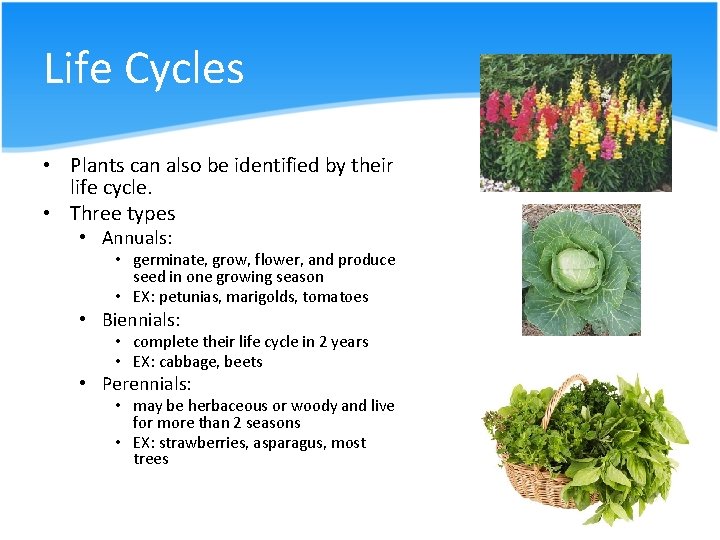
Life Cycles • Plants can also be identified by their life cycle. • Three types • Annuals: • germinate, grow, flower, and produce seed in one growing season • EX: petunias, marigolds, tomatoes • Biennials: • complete their life cycle in 2 years • EX: cabbage, beets • Perennials: • may be herbaceous or woody and live for more than 2 seasons • EX: strawberries, asparagus, most trees
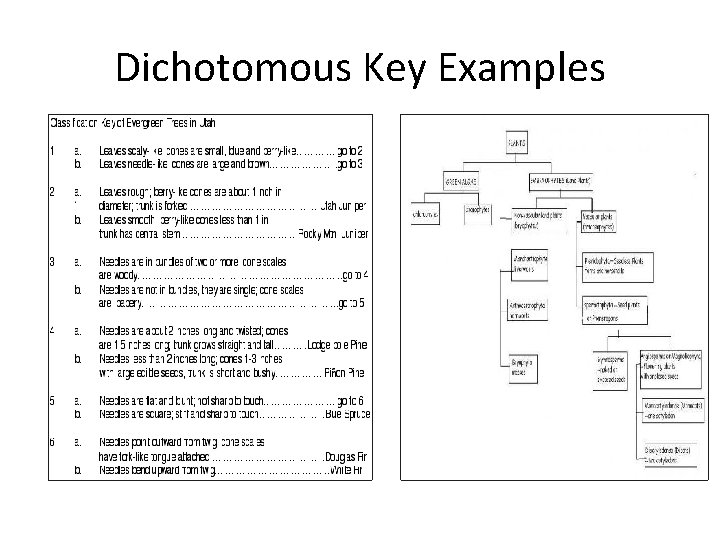
Dichotomous Key • The method for determining the identity of a plant. • Dichotomous means: • Divided into two parts • The key goes through a series of questions that leads the person to the correct name of the item. • At teach step of the process of using the key, the person is given two choices: each alternative leads to another question until the item is identified. • Example of Identifying a Tree: • Questions may be: • Are the leaves flat or needle-like? If the answer was needle like them the next questions may be: • Are the needles in a bunch or are they spread along the branch? • Eventually, when enough questions have been answered, the identity of the tree is revealed.
Dichotomous Key Examples
Exit Ticket! • List the two types of plants used in classification. • What is the difference between an angiosperm and gymnosperm? • How are stems used to classify plants? • List three ways to classify plants by using their leaves. • ____cycle germinates, grows, flowers and produces seeds in one growing season. • ____cycle classify’s plants living more than two growing seasons. • ____cycle plants complete their life cycle in two years. • What is a dichotomous key?