
Plant Classification PLANTS Nonvascular Plants Characteristics 1 Live

- Slides: 40
Plant Classification PLANTS!
Nonvascular Plants Characteristics: 1. Live in MOIST environments • 2. WHY? Absorb WATER and NUTRIENTS from their environment • NO vascular tissue! (thin cell walls)
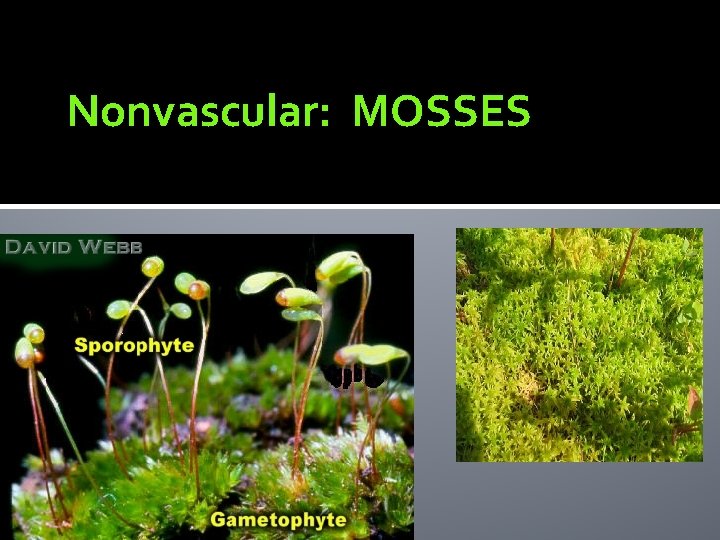
Nonvascular: MOSSES
Nonvascular Plants Examples: 1. Mosses • Gametophyte is green and fuzzy • Sporophyte is long and slender with capsule at the end • Peat moss is used in agriculture and gardening • Peat is used as fuel
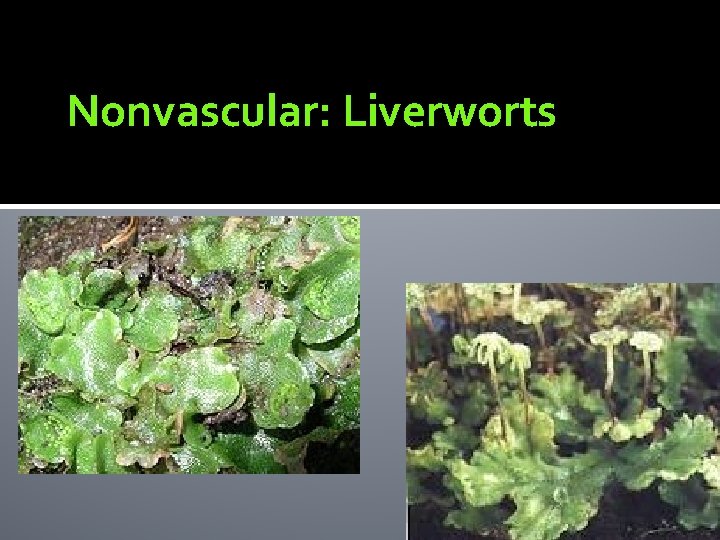
Nonvascular: Liverworts
Nonvascular Plants 1. Liverworts • Found on Moist Rock and Soil beside streams
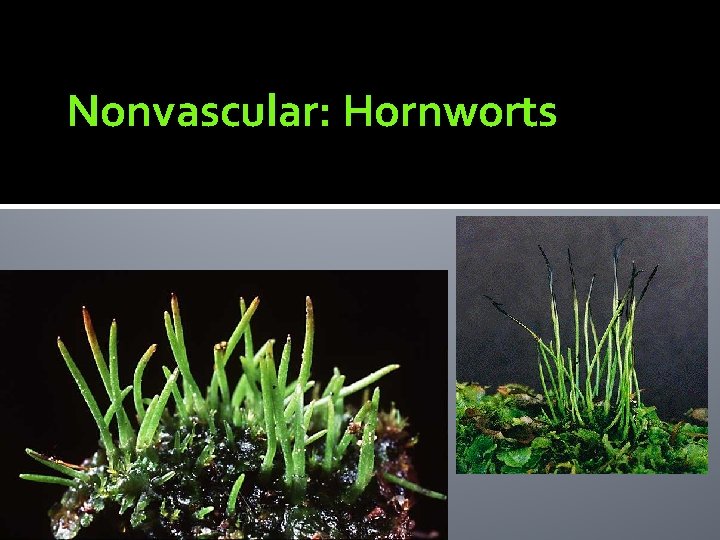
Nonvascular: Hornworts
Nonvascular Plants Examples: 1. Hornworts • Found in Moist Soils
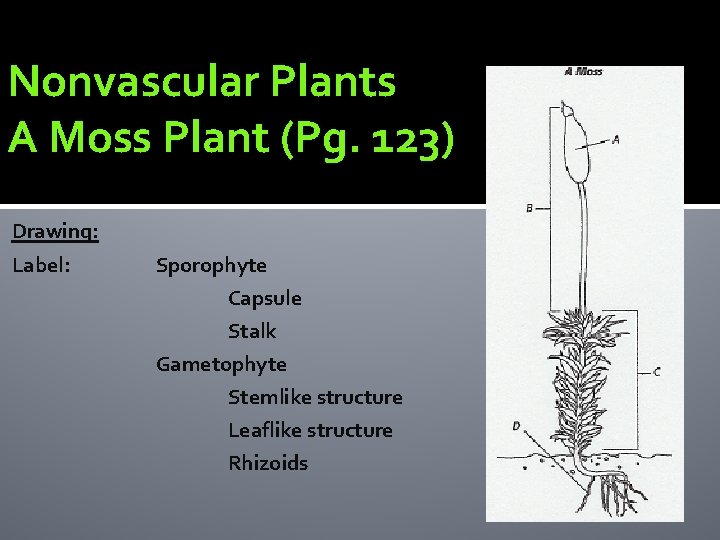
Nonvascular Plants A Moss Plant (Pg. 123) Drawing: Label: Sporophyte Capsule Stalk Gametophyte Stemlike structure Leaflike structure Rhizoids
Sphagnum Moss turns to Peat
Vascular Seedless Plants Characteristics: 1. Have vascular tissue- system of tubelike structures inside a plant that water, minerals, and food move through 2. Do NOT produce seed-reproduce with spores 3. Live in moist surroundings so sperm can swim to eggs
Seedless Vascular Plants Examples: 1. Ferns • Size range is small to 5 meters tall! • Fronds are FERN LEAVES
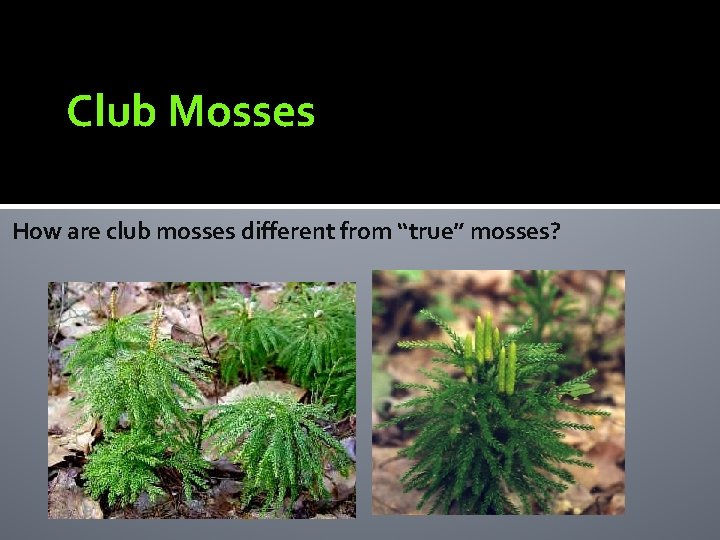
Club Mosses How are club mosses different from “true” mosses?
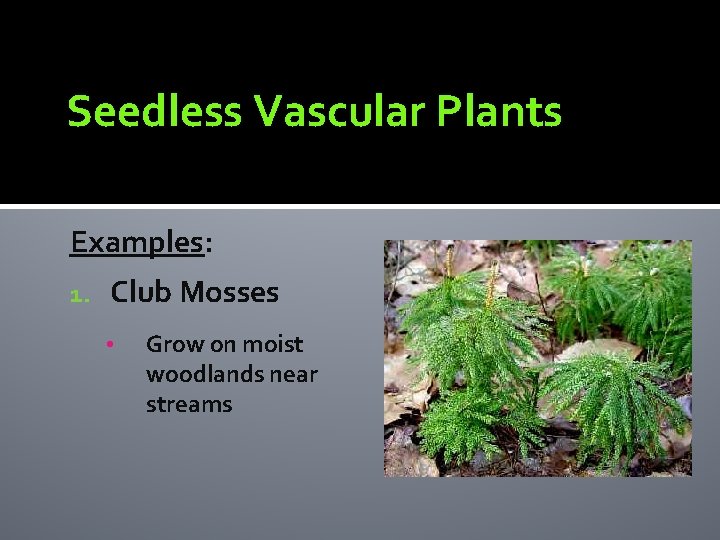
Seedless Vascular Plants Examples: 1. Club Mosses • Grow on moist woodlands near streams
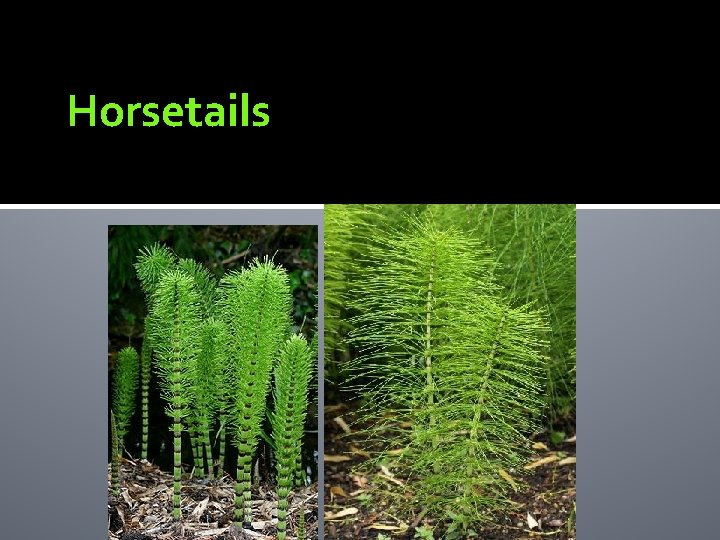
Horsetails
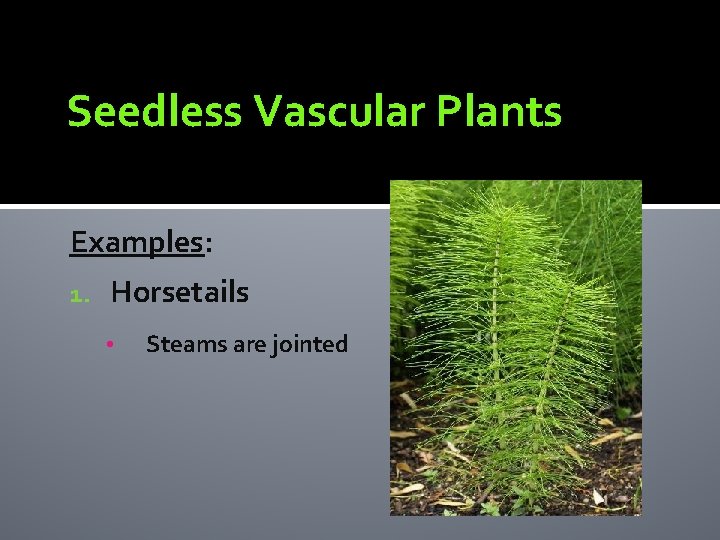
Seedless Vascular Plants Examples: 1. Horsetails • Steams are jointed
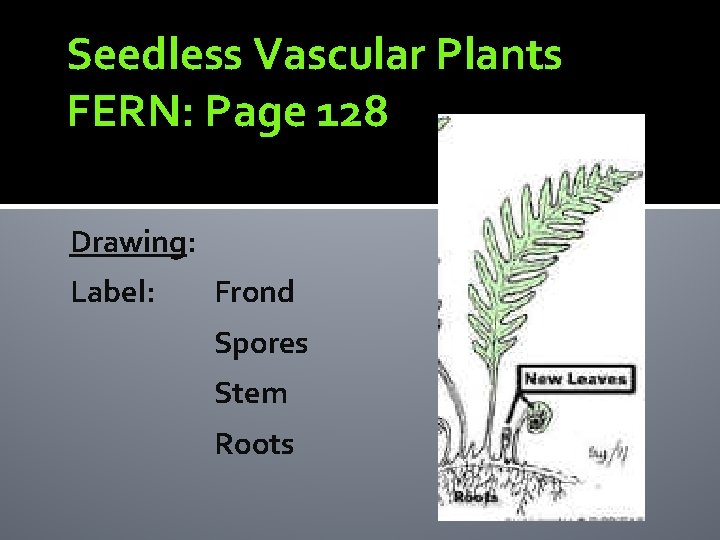
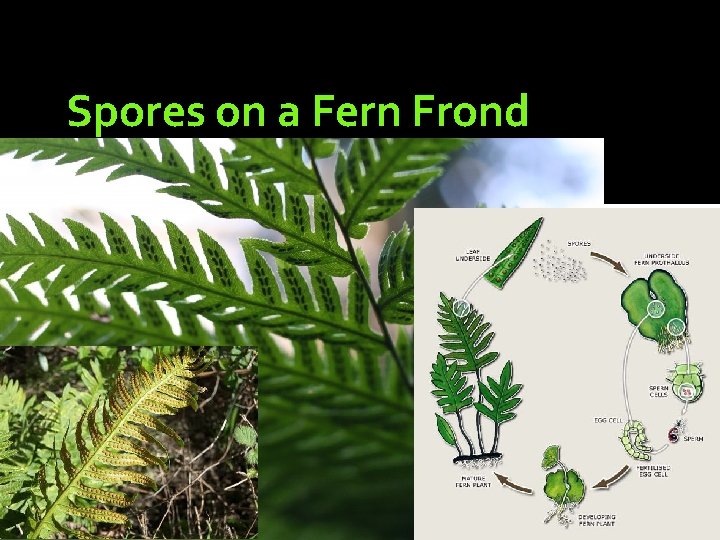
Seedless Vascular Plants FERN: Page 128 Drawing: Label: Frond Spores Stem Roots
Spores on a Fern Frond
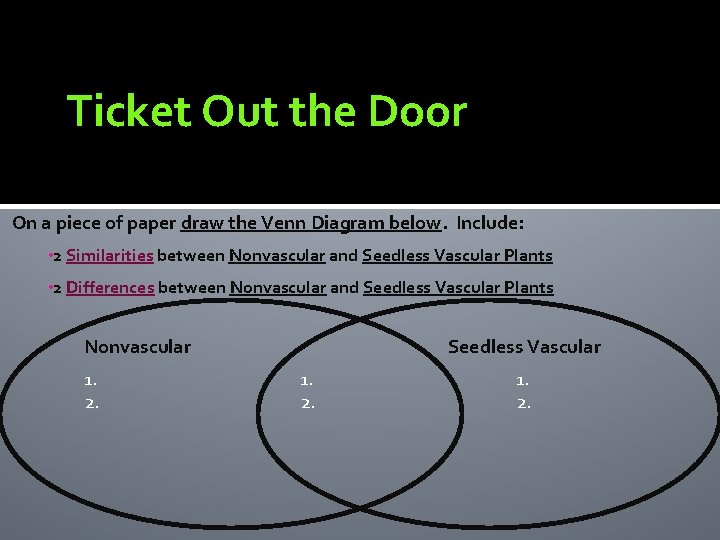
Ticket Out the Door On a piece of paper draw the Venn Diagram below. Include: • 2 Similarities between Nonvascular and Seedless Vascular Plants • 2 Differences between Nonvascular and Seedless Vascular Plants Nonvascular 1. 2. Seedless Vascular 1. 2.
Gymnosperms Characteristics: 1. Seed plant that produce Naked Seeds 2. Have needle-like or scale-like leaves and deep growing roots
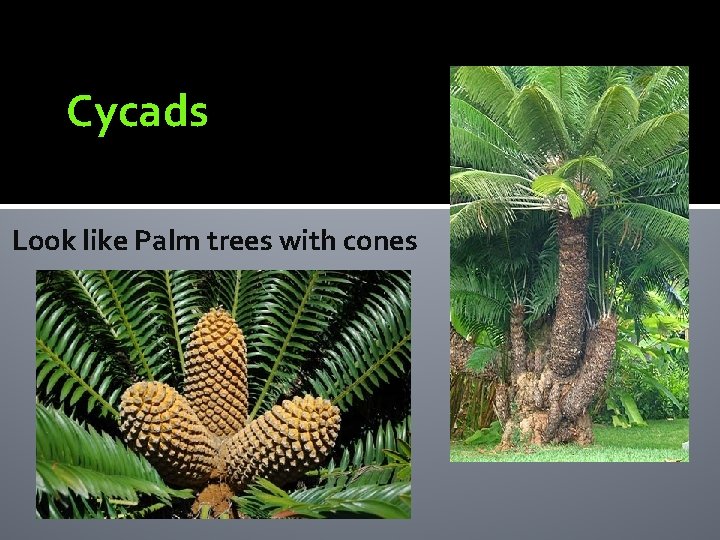
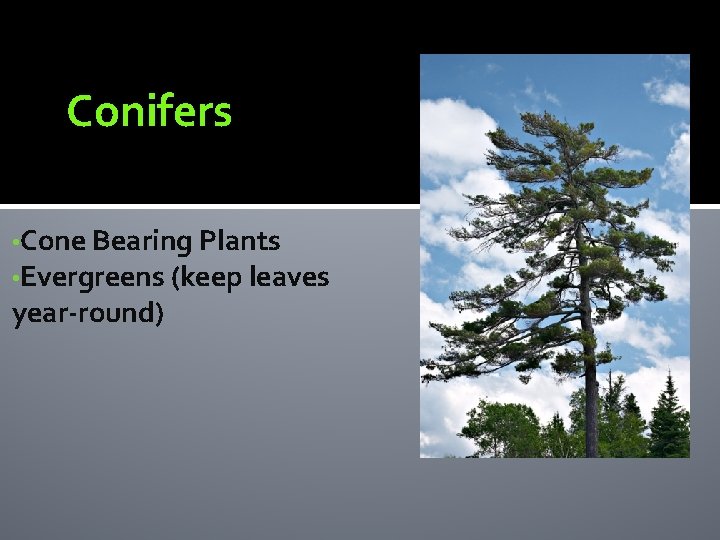
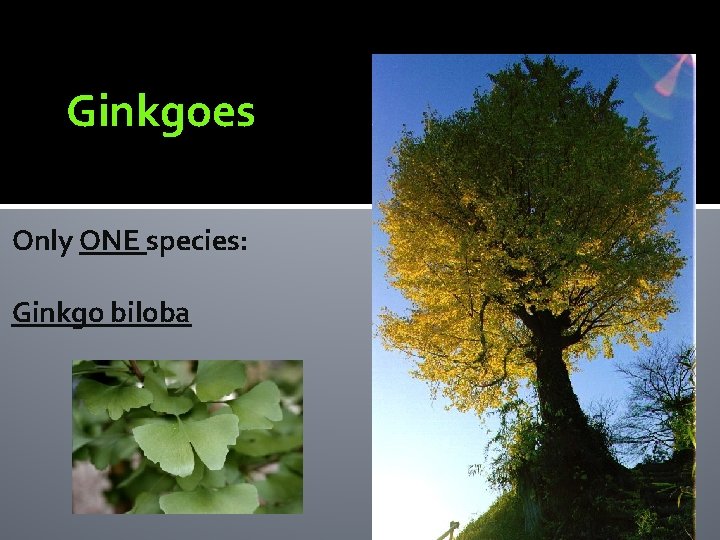
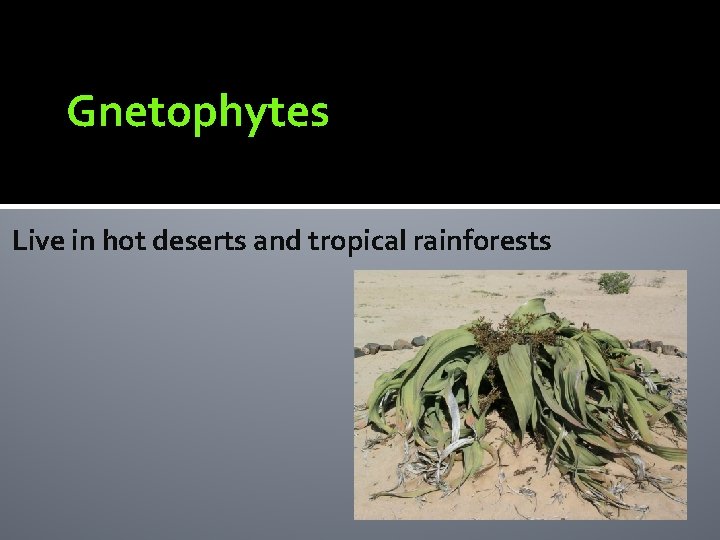
Gymnosperms Examples: 1. Cycads- palm trees with cones 2. Conifers- Cone bearing plants; aka Evergreens because they keep their leaves year-round 3. Ginkgoes- Ginkgo biloba 4. Gnetophytes- live in hot desert and tropical rainforest
Cycads Look like Palm trees with cones
Conifers • Cone Bearing Plants • Evergreens (keep leaves year-round)
Ginkgoes Only ONE species: Ginkgo biloba
Gnetophytes Live in hot deserts and tropical rainforests
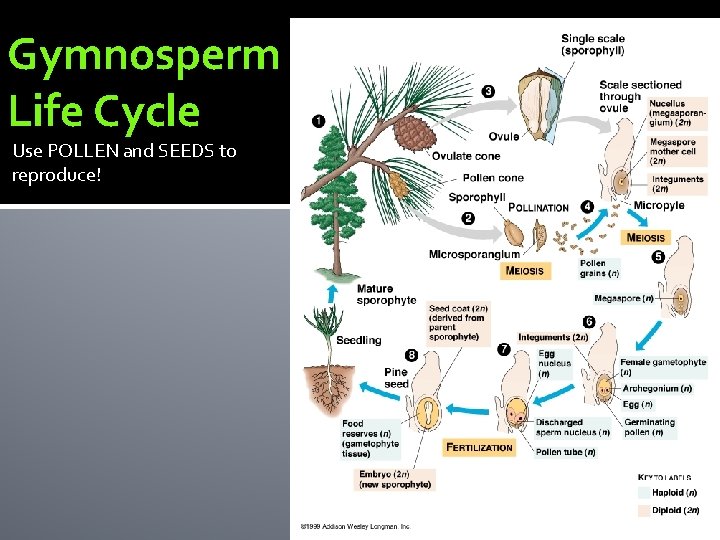
Gymnosperm Life Cycle Use POLLEN and SEEDS to reproduce!
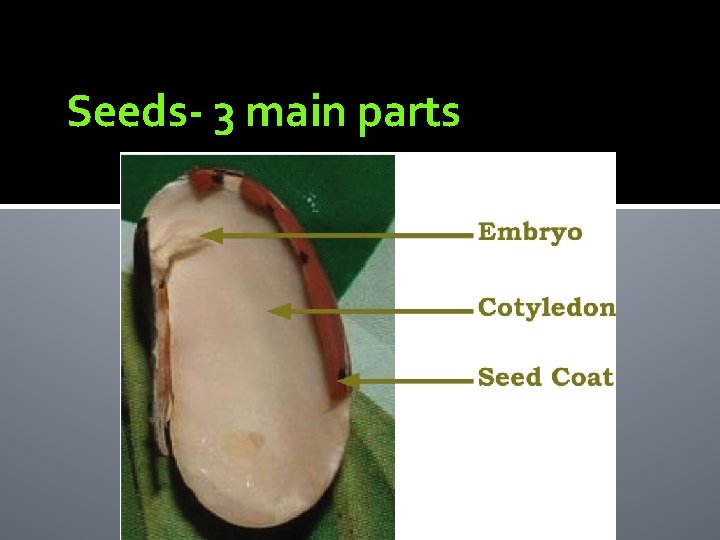
Seeds- 3 main parts
Seed Dispersal The scattering of seeds so they are away from the parent plant.
Seed Dispersal Video 1. What are some ways that seeds are dispersed? 2. What are the 3 parts of a seed?
Angiosperms Characteristics: 1. Produce flowers 2. Seeds are enclosed in fruits
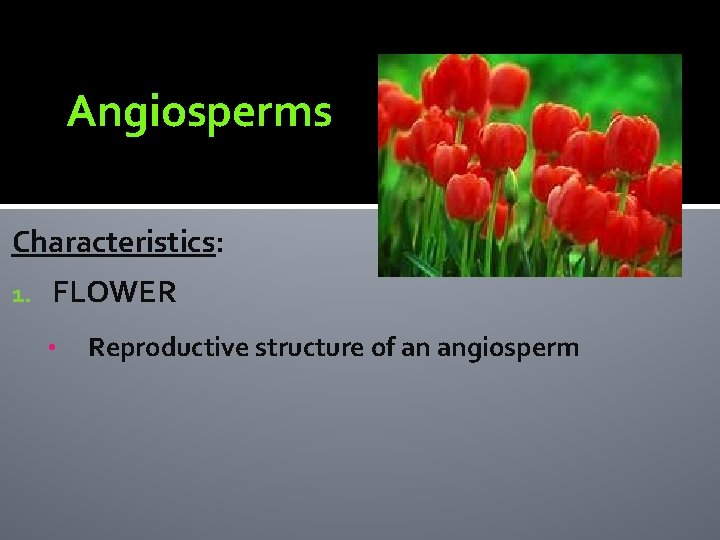
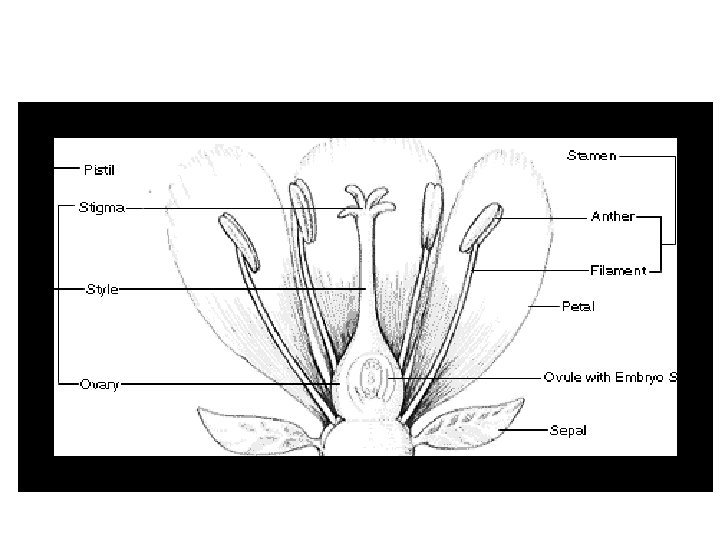
Angiosperms Characteristics: 1. FLOWER • Reproductive structure of an angiosperm
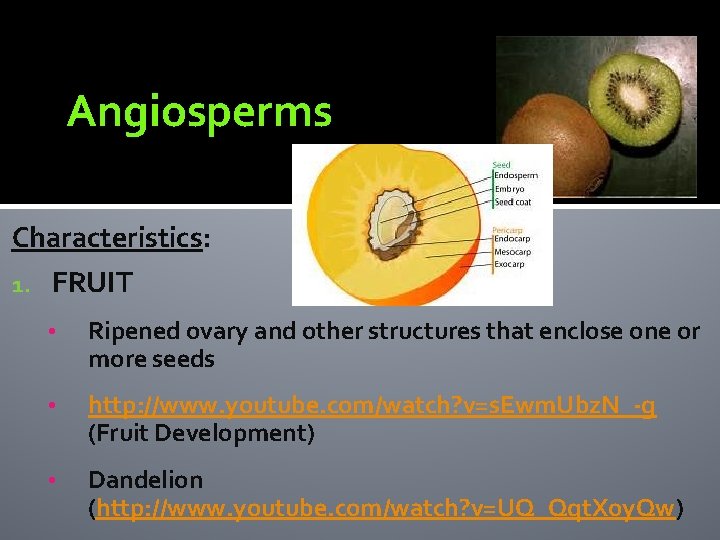
Angiosperms Characteristics: 1. FRUIT • Ripened ovary and other structures that enclose one or more seeds • http: //www. youtube. com/watch? v=s. Ewm. Ubz. N_-g (Fruit Development) • Dandelion (http: //www. youtube. com/watch? v=UQ_Qqt. Xoy. Qw)
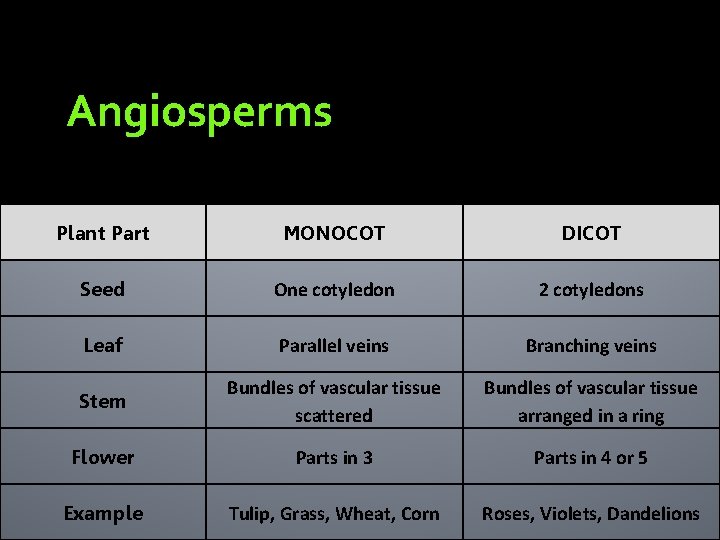
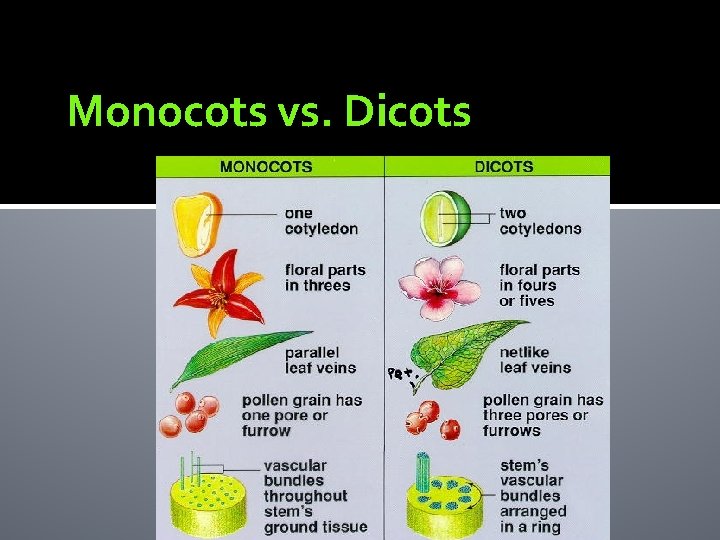
Angiosperms Plant Part MONOCOT DICOT Seed One cotyledon 2 cotyledons Leaf Parallel veins Branching veins Stem Bundles of vascular tissue scattered Bundles of vascular tissue arranged in a ring Flower Parts in 3 Parts in 4 or 5 Example Tulip, Grass, Wheat, Corn Roses, Violets, Dandelions
Monocots vs. Dicots
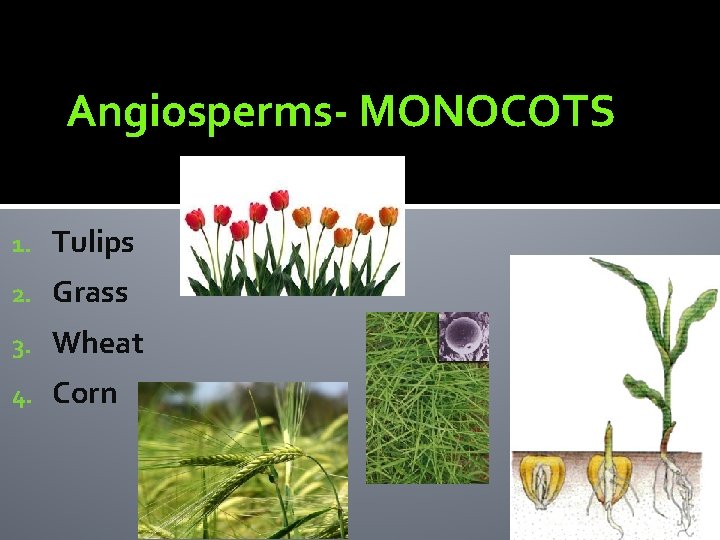
Angiosperms- MONOCOTS 1. Tulips 2. Grass 3. Wheat 4. Corn
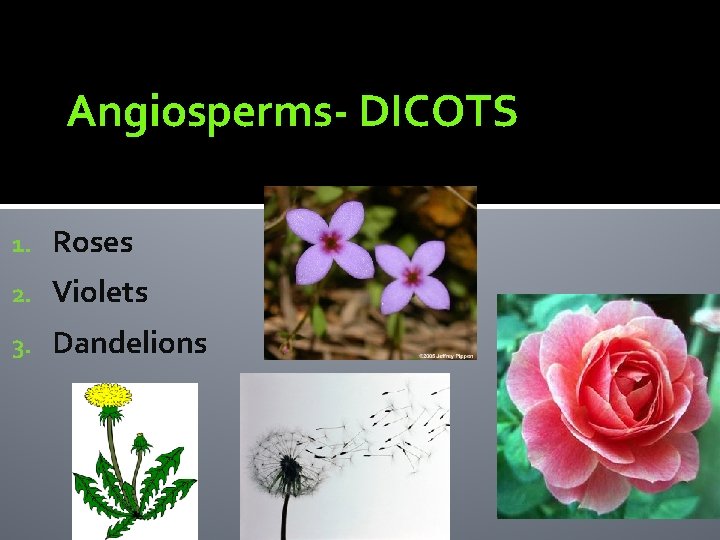
Angiosperms- DICOTS 1. Roses 2. Violets 3. Dandelions
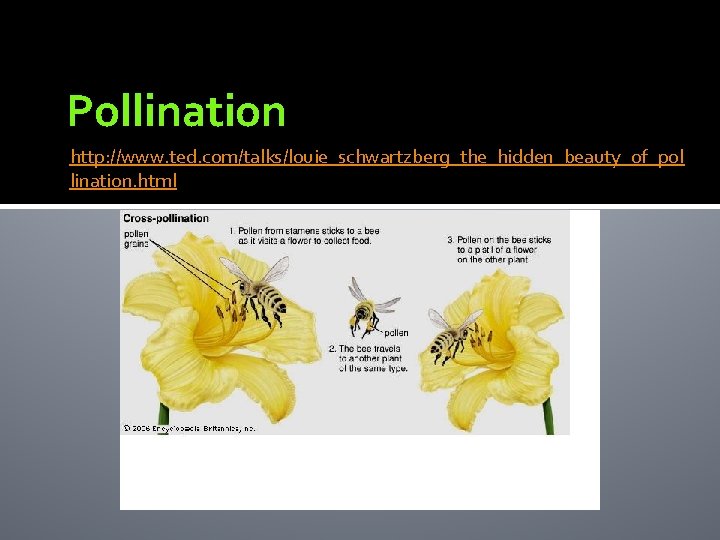
Pollination http: //www. ted. com/talks/louie_schwartzberg_the_hidden_beauty_of_pol lination. html
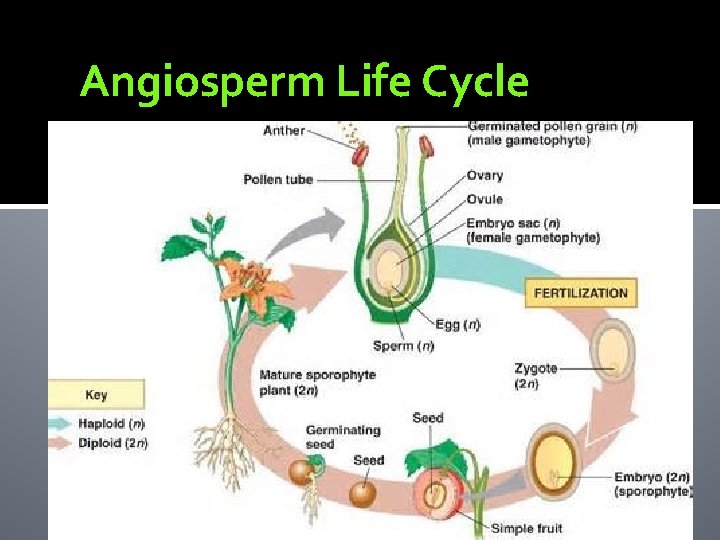
Angiosperm Life Cycle
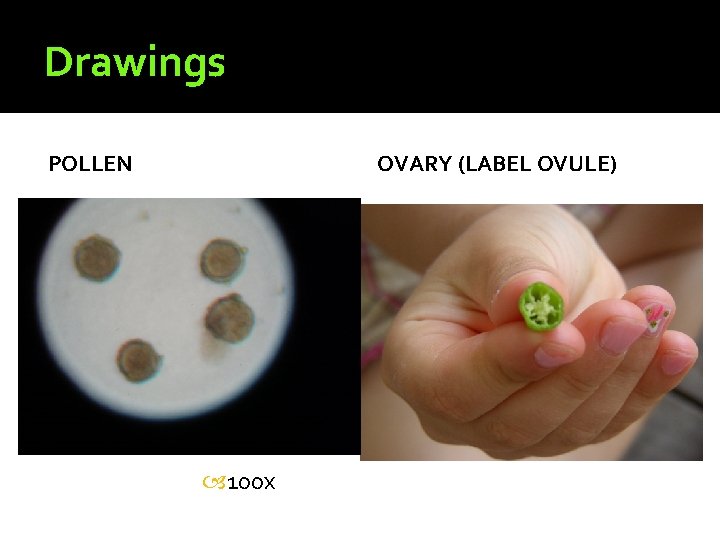
Drawings POLLEN OVARY (LABEL OVULE) 100 x