
Plant Classification Naming Chapter 4 Crops Unit Annual


- Slides: 47
Plant Classification & Naming Chapter 4 Crops Unit
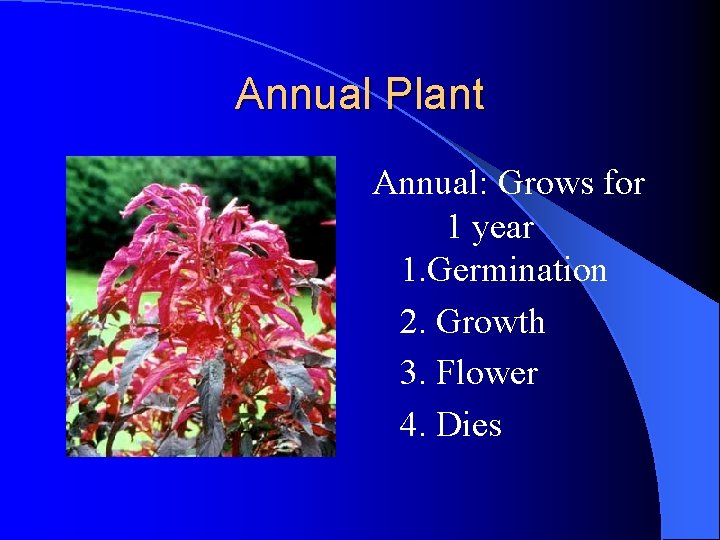
Annual Plant Annual: Grows for 1 year 1. Germination 2. Growth 3. Flower 4. Dies
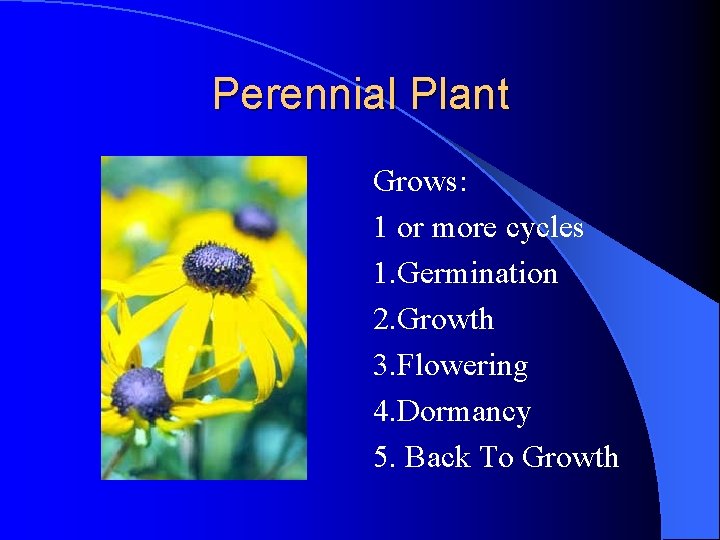
Perennial Plant Grows: 1 or more cycles 1. Germination 2. Growth 3. Flowering 4. Dormancy 5. Back To Growth
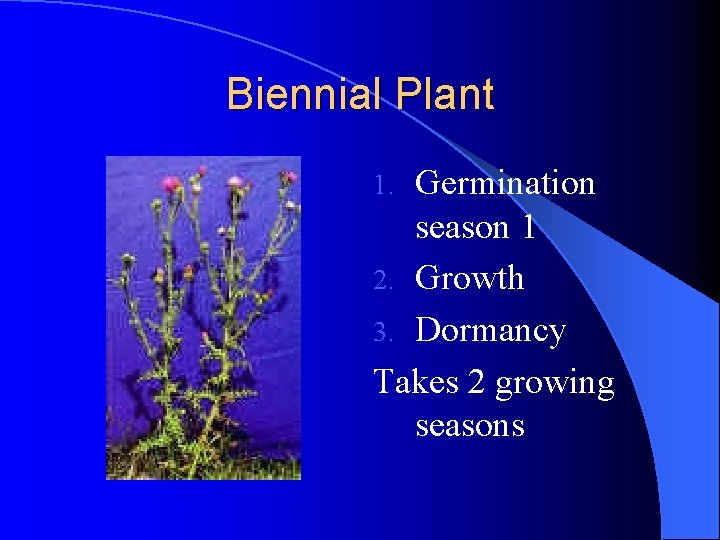
Biennial Plant Germination season 1 2. Growth 3. Dormancy Takes 2 growing seasons 1.
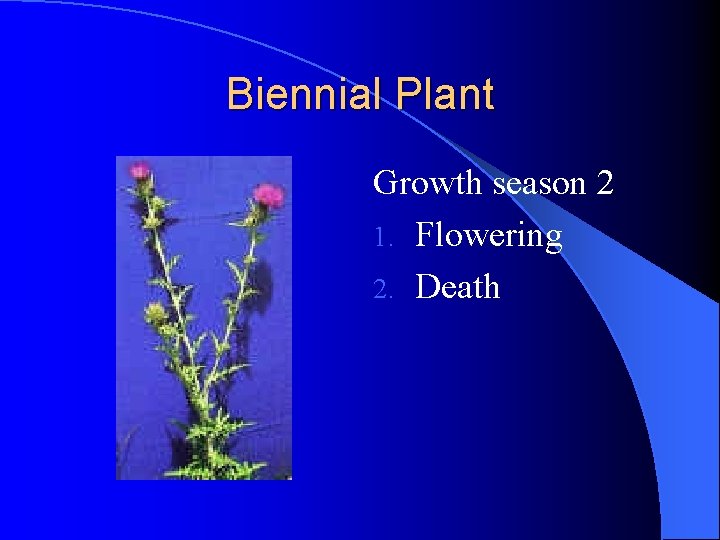
Biennial Plant Growth season 2 1. Flowering 2. Death
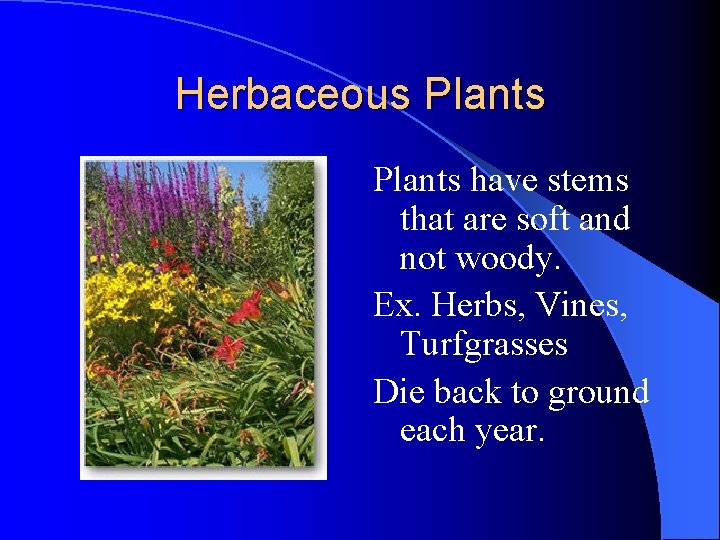
Herbaceous Plants have stems that are soft and not woody. Ex. Herbs, Vines, Turfgrasses Die back to ground each year.
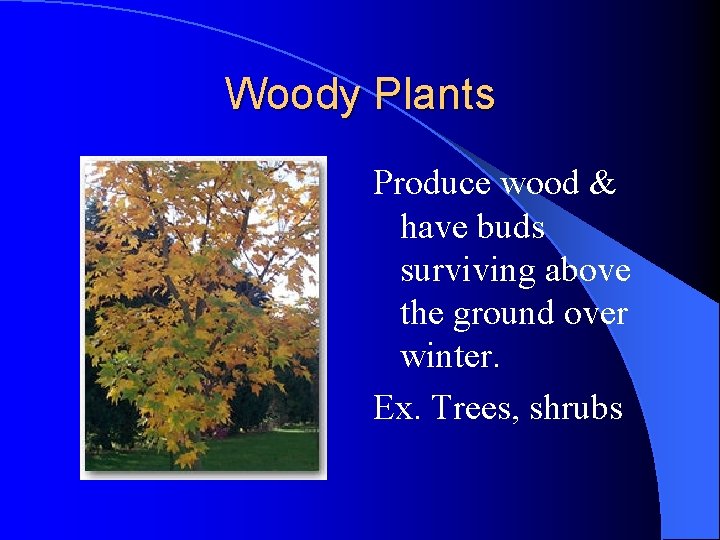
Woody Plants Produce wood & have buds surviving above the ground over winter. Ex. Trees, shrubs
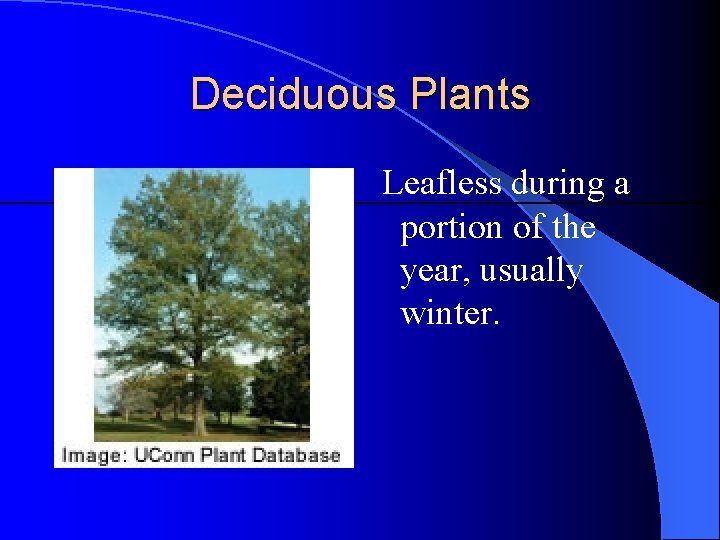
Deciduous Plants Leafless during a portion of the year, usually winter.
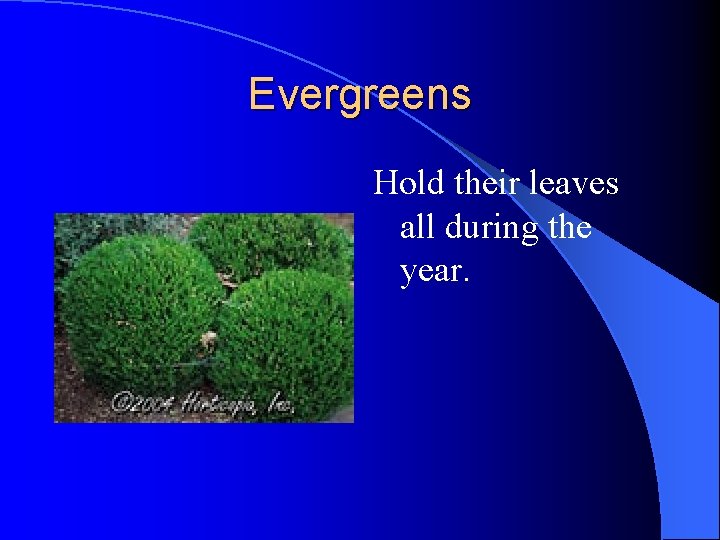
Evergreens Hold their leaves all during the year.
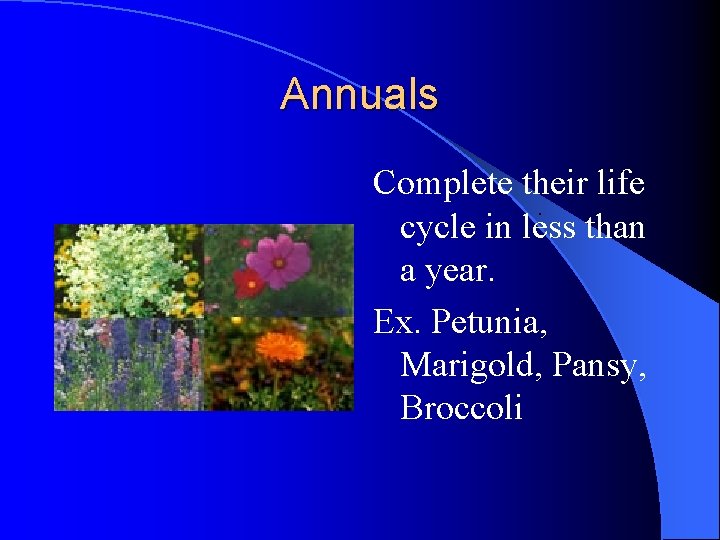
Annuals Complete their life cycle in less than a year. Ex. Petunia, Marigold, Pansy, Broccoli
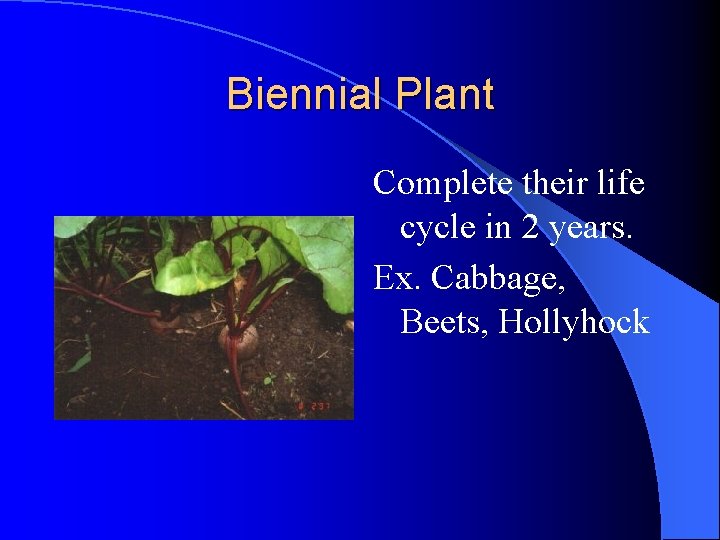
Biennial Plant Complete their life cycle in 2 years. Ex. Cabbage, Beets, Hollyhock
Perennials Will grow indefinitely from year to year. Ex. Tree, Shrubs
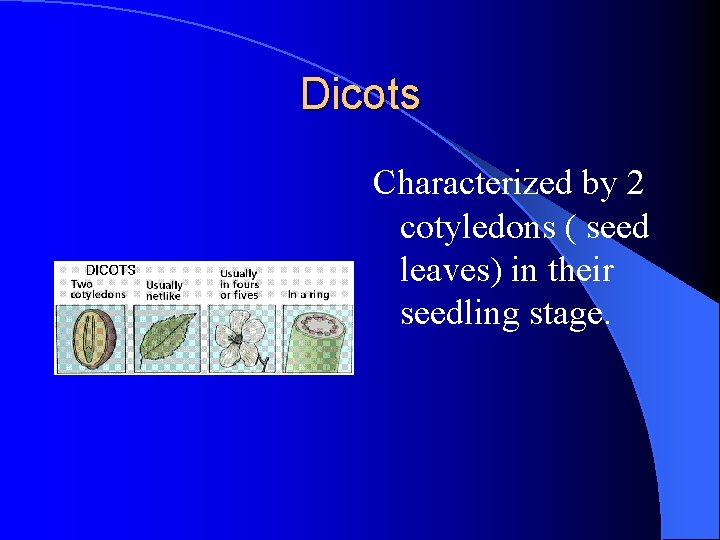
Dicots Characterized by 2 cotyledons ( seed leaves) in their seedling stage.
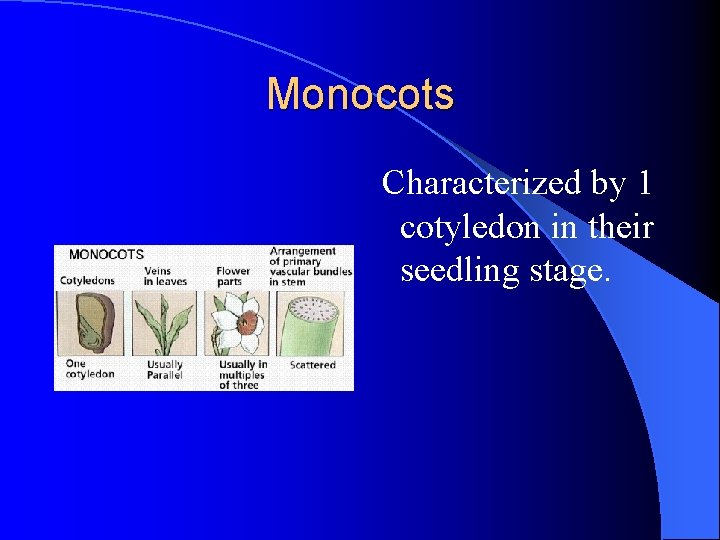
Monocots Characterized by 1 cotyledon in their seedling stage.
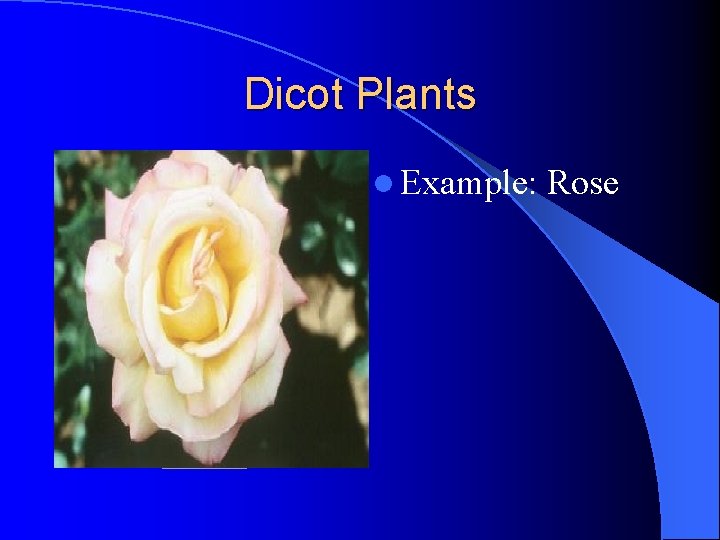
Dicot Plants l Example: Rose
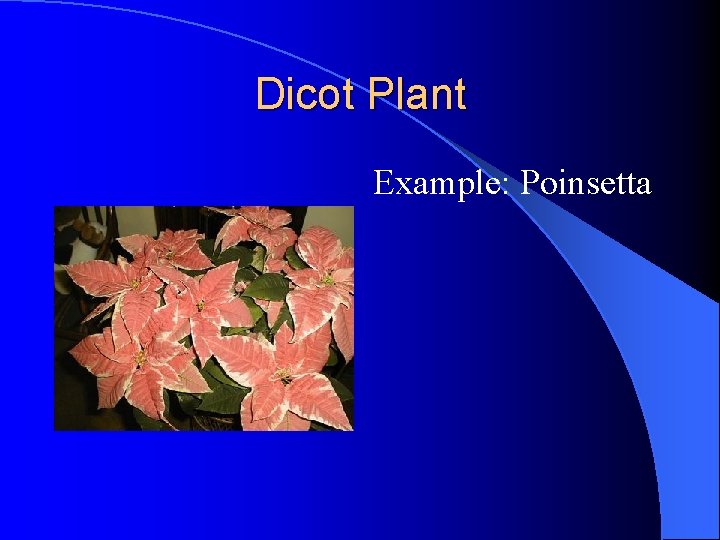
Dicot Plant Example: Poinsetta
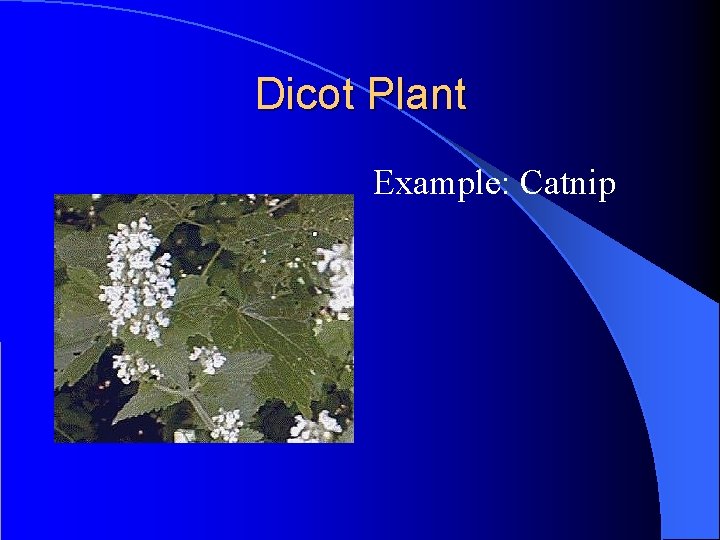
Dicot Plant Example: Catnip
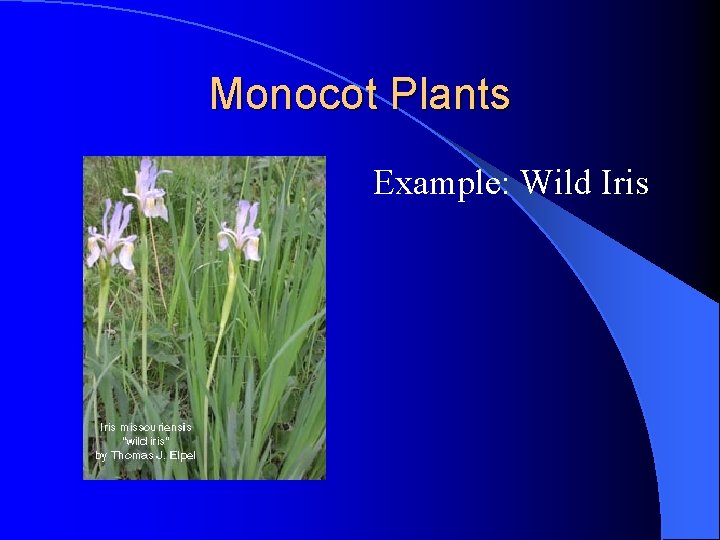
Monocot Plants Example: Wild Iris
Monocot Plants Example: Timothy Grass
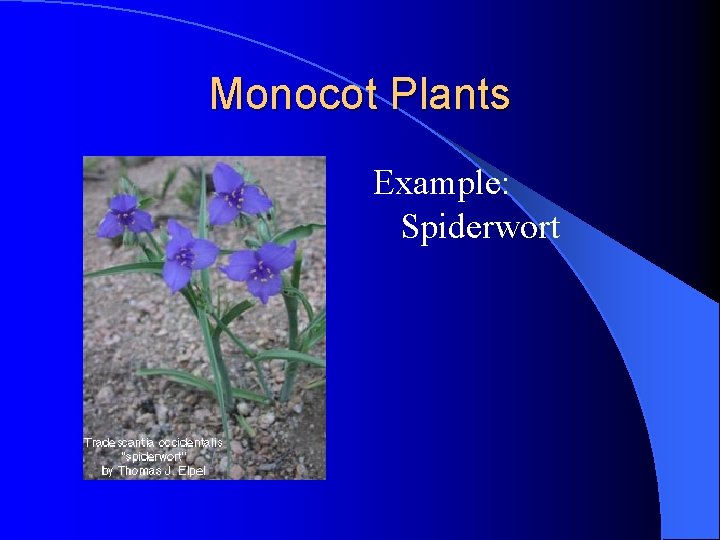
Monocot Plants Example: Spiderwort
Define Hardiness: Ability of a plant to withstand cold temperatures (adaptation). 2. Tender Plant: More sensitive to temperature extremes. 3. Hardy Plant: Less sensitive to temperature extremes. 1.
Define 4. Morophology: Deals with a part of a plant form & structure. 5. Botanical Nomenclature: Scientific classification of plants. 6. Cultivar: Cultivated variety that retains its features when reproduced.
Define 7. Scientific Name: Latin name of the plant written using Roman alphabet which includes ( genus & species name) 8. Botanist: Scientist who studies plants. 9. Reproductive Phase: When plant flowers and produces fruit.
Define 10. Dormancy: Slow or in active growth of plants.
Plant Life Cycles 1 st Vegetative Phase: Begins when a plant seed germinates & grows producing leaves, stems, and roots. 2 nd Reproductive Phase: When plant flowers and produces fruit. 3 rd Dormancy: Slowed or inactive growth.
Review Annuals: Can be broken into 2 groups. 1. Summer Annuals: Petunia, Marigold, Tomatoes 2. Winter Annuals: Broccoli, Spinach, Pansy
Review Biennials: 1 st season grow vegetatively then dormant 2 nd season produce fruit
Review Perennials: 2 groups 1 st Herbaceous: Strawberries, Asparagus 2 nd Woody: Trees, Shrubs, some Vines
Photosynthesis & Respiration Chapter 4
Photosynthesis The green color in leaves (chlorophyll) utilizes the energy of the sun ( photo) to combine (synthesis) the carbon from carbon dioxide with oxygen and hydrogen from water to produce simple sugars, (carbohydrates) from which enzymatic action, other plant food and in torn tissues are formed.
Define Chlorophyll: Green pigment contained in the chloroplast of the plant cell. Stomata: Tiny pores in the epidermis of a leaf. Cellular Respiration: Sugars made in photosynthesis are broken down into simpler molecules.
Define Cellular Respiration: In the process of breaking the chemical bonds, energy is released. The energy is applied towards growth and development of the plant.
Define Transpiration: The loss of water from the plant through the leaves in the form of water vapor.
Characteristics of leaves determine type of tree Leaf Form 2. Leaf Apex 3. Leaf Margin 4. Leaf Base 1.
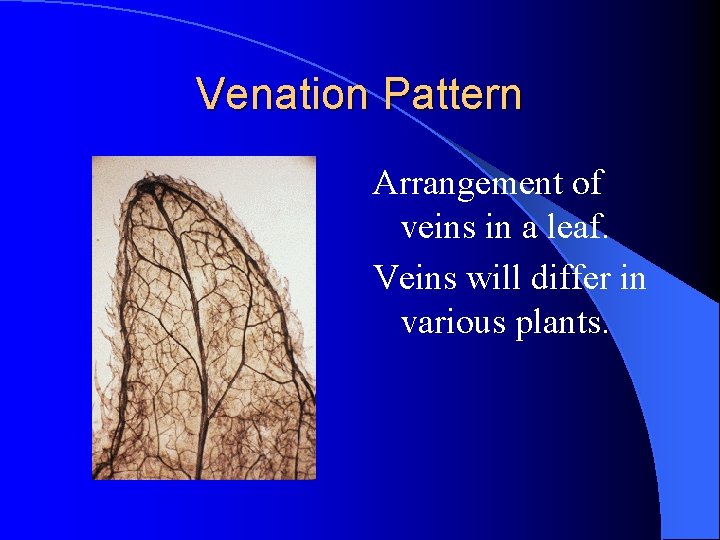
Venation Pattern Arrangement of veins in a leaf. Veins will differ in various plants.
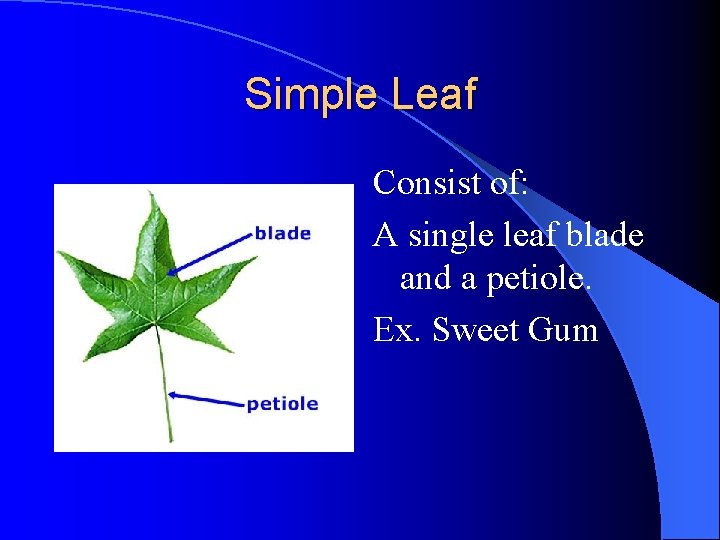
Simple Leaf Consist of: A single leaf blade and a petiole. Ex. Sweet Gum
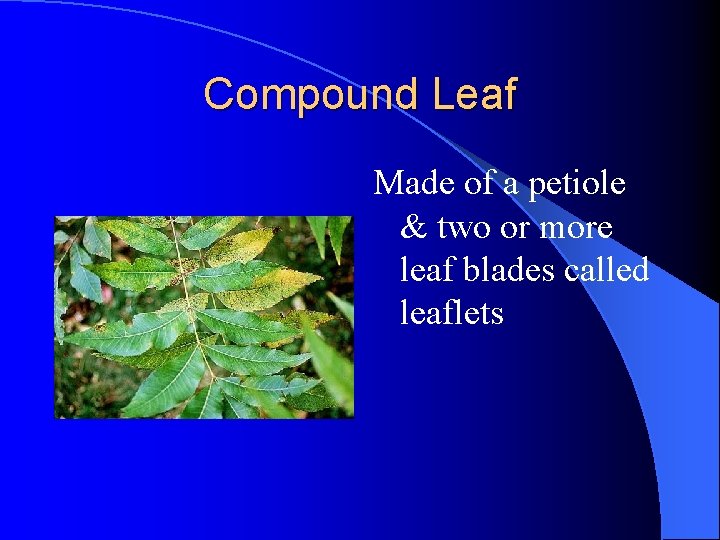
Compound Leaf Made of a petiole & two or more leaf blades called leaflets
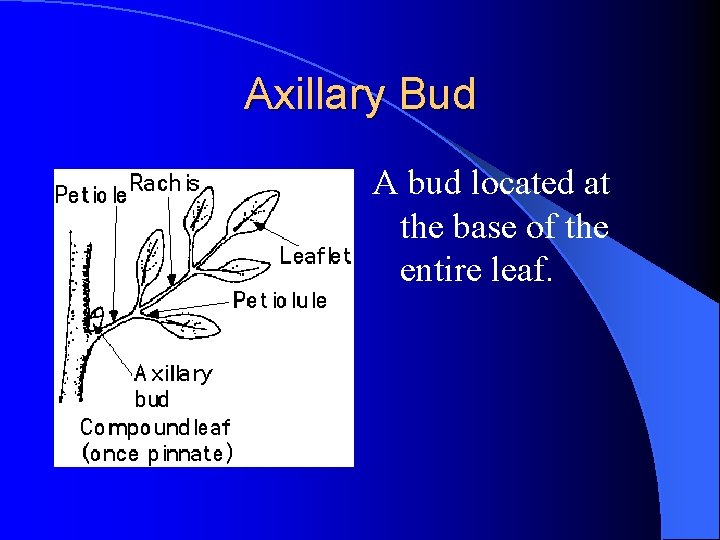
Axillary Bud A bud located at the base of the entire leaf.
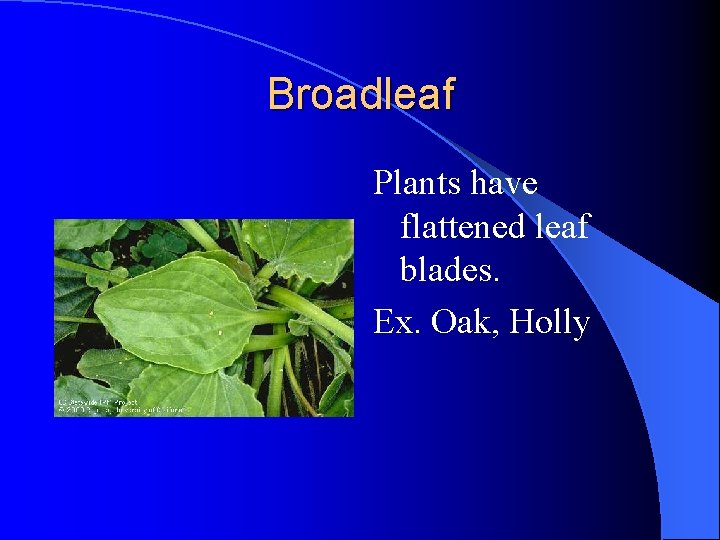
Broadleaf Plants have flattened leaf blades. Ex. Oak, Holly
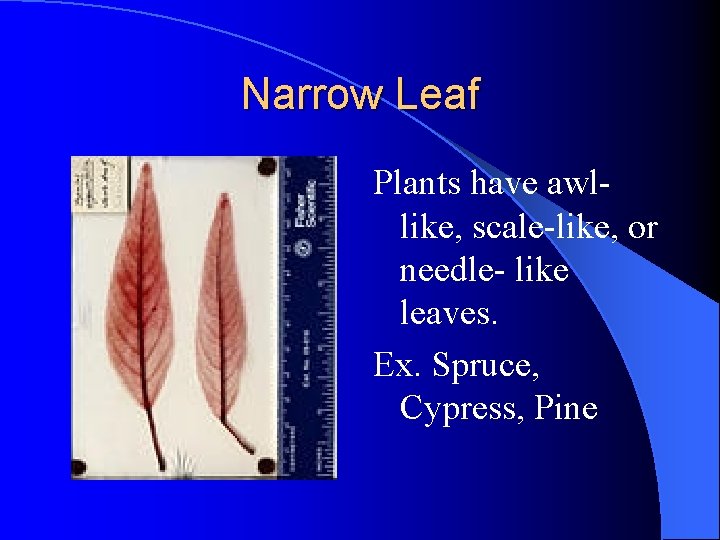
Narrow Leaf Plants have awllike, scale-like, or needle- like leaves. Ex. Spruce, Cypress, Pine
Define l Apical Meristem: Primary growing point of the stem. l Terminal Bud: Contains cells of undeveloped leaf, stem, flower, or mixture of it all. l Bud Scale: Tiny leaf-like structures that cover the bud before it opens.
Define Terminal Bud Scale Scar: Ring-like scars that can be found inches, or up to a few back from the terminal bud. Axillary or lateral bud: Will produce a new leaf or stem is located along the side of the stem.
Define Node: Point along a stem where leaves or other stems are attached. Internode: Area between two nodes. Leaf Scars: Left when a leaf drops from a stem. Lenticel: Tiny pores located on the stem that allows for gas exchange between the plant &the environment.
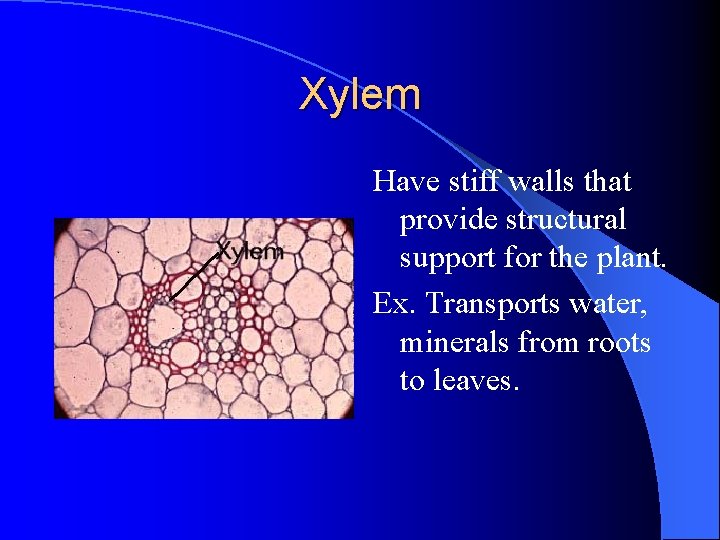
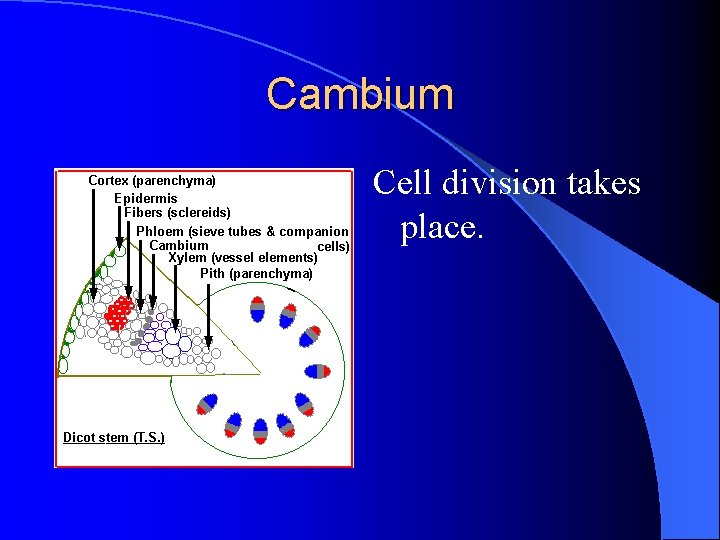
Xylem Have stiff walls that provide structural support for the plant. Ex. Transports water, minerals from roots to leaves.
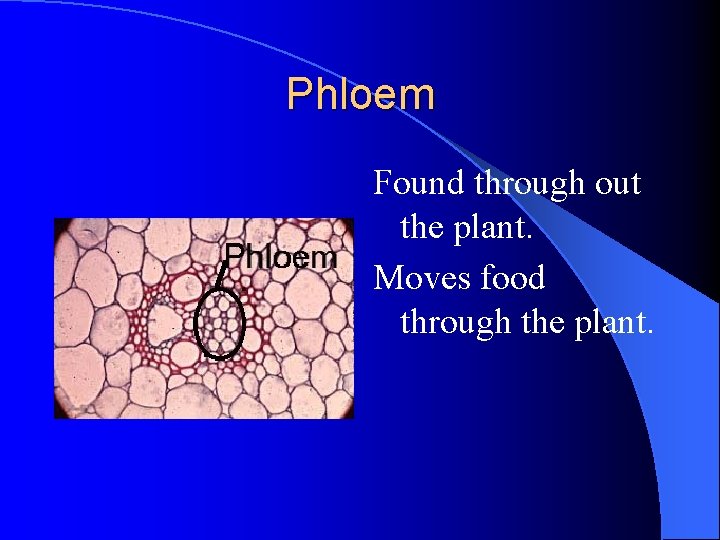
Phloem Found through out the plant. Moves food through the plant.
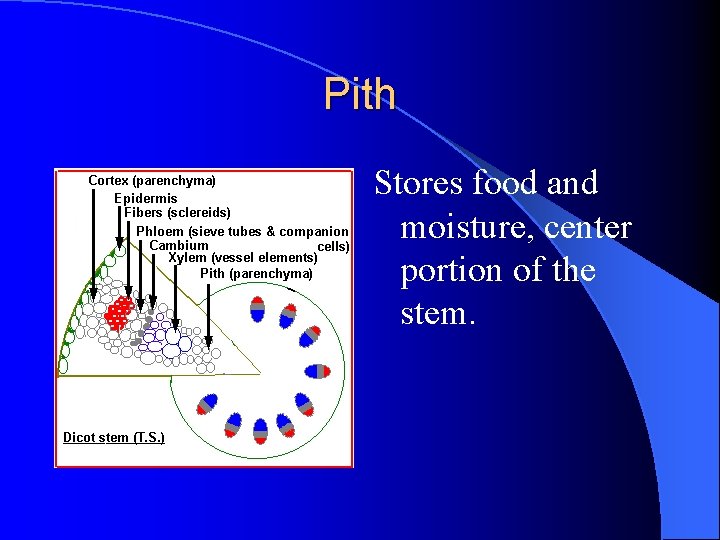
Pith Stores food and moisture, center portion of the stem.
Cambium Cell division takes place.