
Plant Classification 5 5 3 Distinguish between the
Plant Classification
5. 5. 3 Distinguish between the following phyla of plants, using simple external recognition features: bryophyta, filicinophyta, coniferophyta, and angiospermophyta 1) Bryophyta • Mosses, hornworts, and liverworts • plants o Do not have (vascular transport tissue for moving water and sugars) o Lack o Small plants that must live in damp environments o Do not produce flowers or seeds §
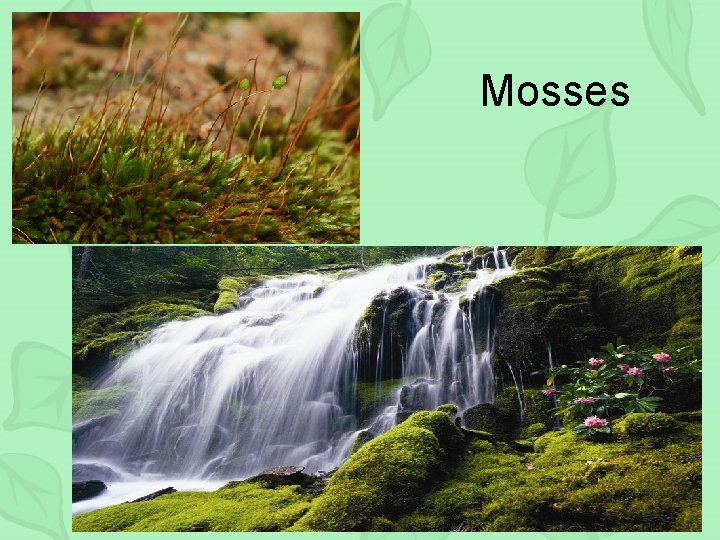
Mosses
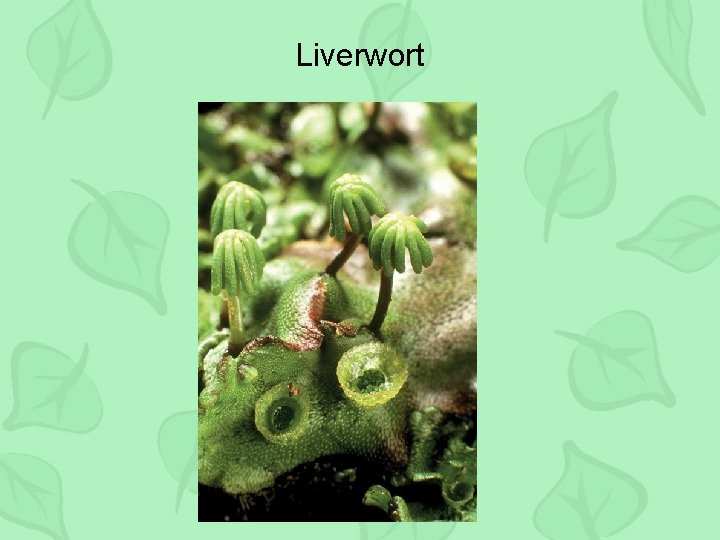
Liverwort
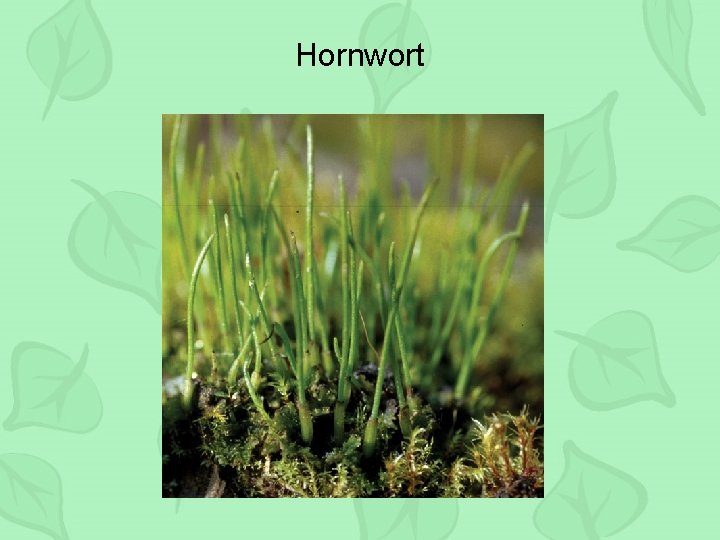
Hornwort
5. 5. 3 Distinguish between the following phyla of plants, using simple external recognition features: bryophyta, filicinophyta, coniferophyta, and angiospermophyta 2) Filicinophyta • • plants – have vascular tissue (xylem and phloem) to conduct water and sugars o Have true roots, stems and leaves • Do not produce flowers, pollen or seeds o Reproduce by producing o Sperm eggs and fertilize § Ferns usually grow in places with o Zygote grows into
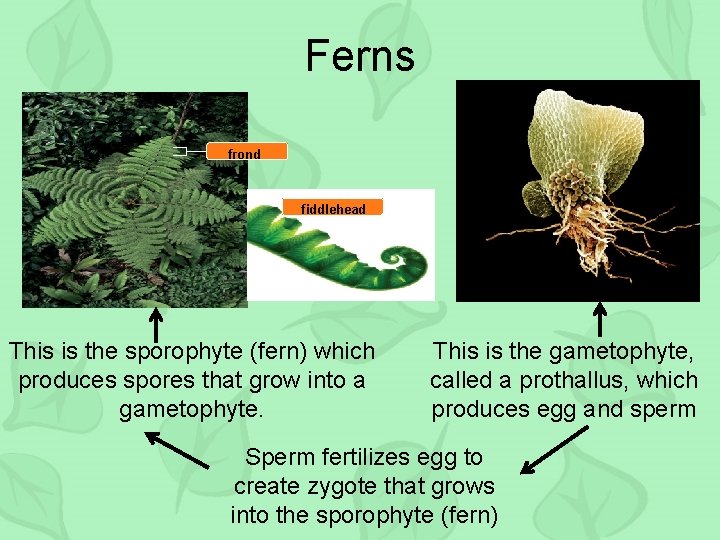
Ferns frond fiddlehead This is the sporophyte (fern) which produces spores that grow into a gametophyte. This is the gametophyte, called a prothallus, which produces egg and sperm Sperm fertilizes egg to create zygote that grows into the sporophyte (fern)

5. 5. 3 Distinguish between the following phyla of plants, using simple external recognition features: bryophyta, filicinophyta, coniferophyta, and angiospermophyta 3) Coniferophyta • plants that produce • Cone-bearing trees like • Usually with o Evergreen means it retains some leaves all year long • Produce male and female cones o Male cones produce (contains sperm) o Wind often blows pollen to female cone o Eggs are
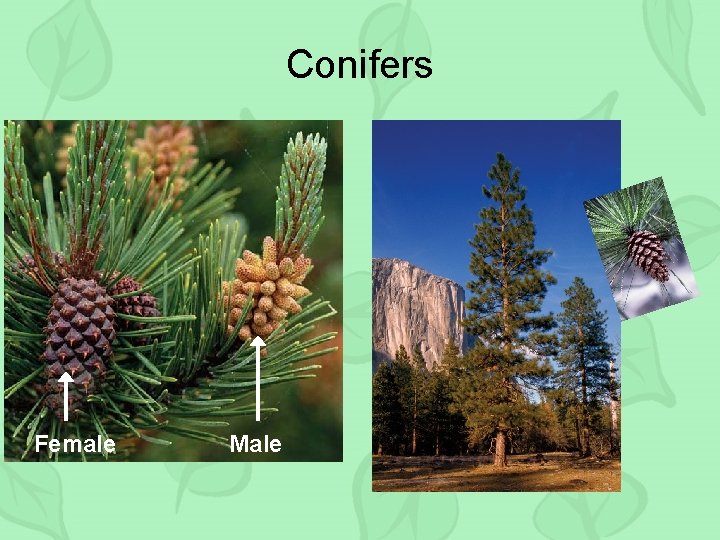
Conifers Female Male
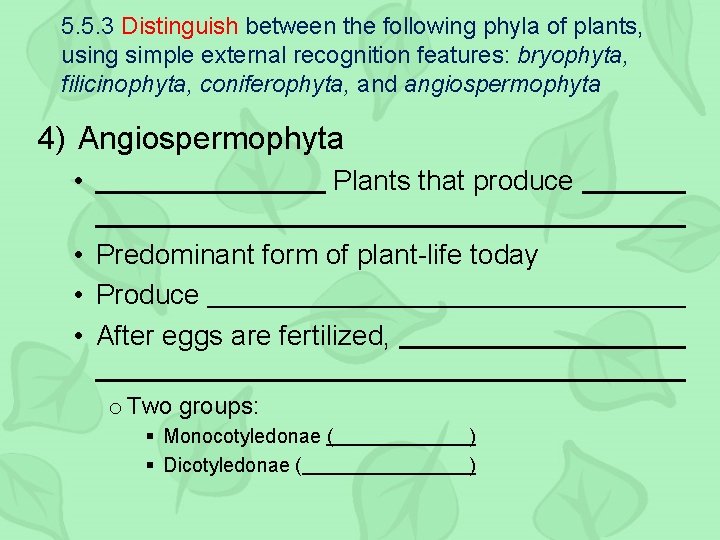
5. 5. 3 Distinguish between the following phyla of plants, using simple external recognition features: bryophyta, filicinophyta, coniferophyta, and angiospermophyta 4) Angiospermophyta • Plants that produce • Predominant form of plant-life today • Produce • After eggs are fertilized, o Two groups: § Monocotyledonae ( § Dicotyledonae ( ) )
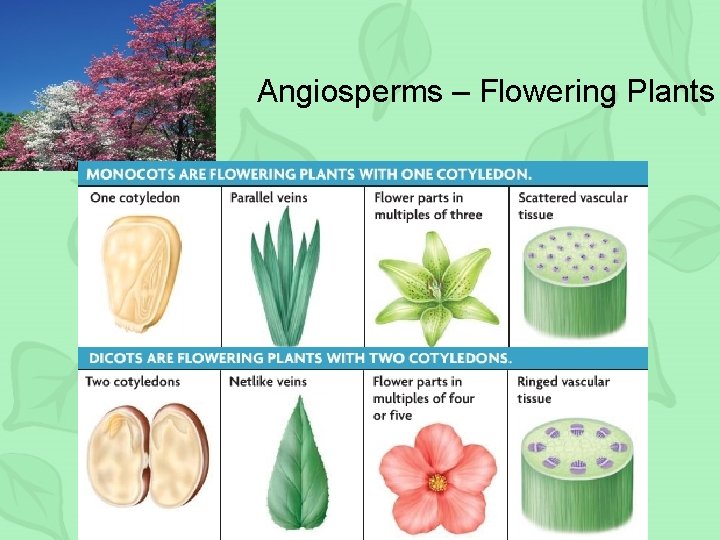
Angiosperms – Flowering Plants
- Slides: 11