
Plant Characteristics 1 Range in size 2 Most


- Slides: 31
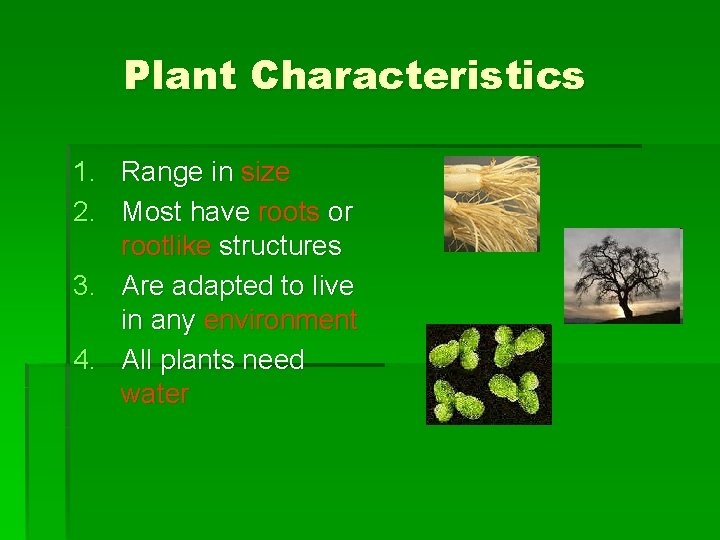
Plant Characteristics 1. Range in size 2. Most have roots or rootlike structures 3. Are adapted to live in any environment 4. All plants need water
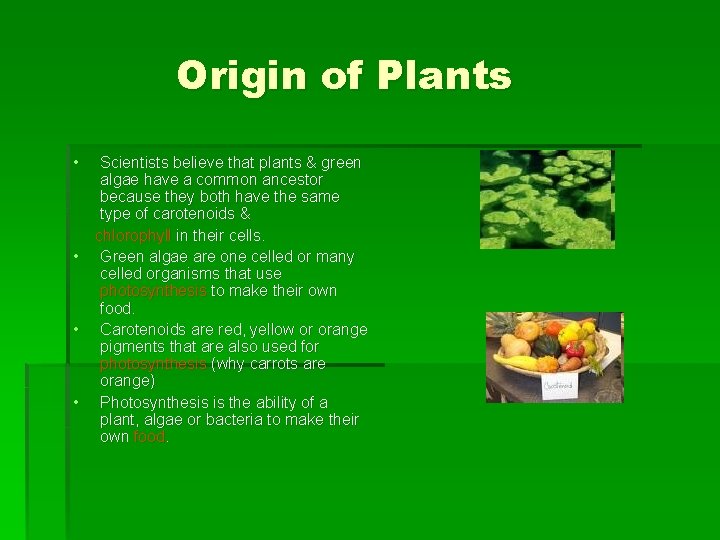
Origin of Plants • Scientists believe that plants & green algae have a common ancestor because they both have the same type of carotenoids & chlorophyll in their cells. • Green algae are one celled or many celled organisms that use photosynthesis to make their own food. • Carotenoids are red, yellow or orange pigments that are also used for photosynthesis (why carrots are orange) • Photosynthesis is the ability of a plant, algae or bacteria to make their own food.
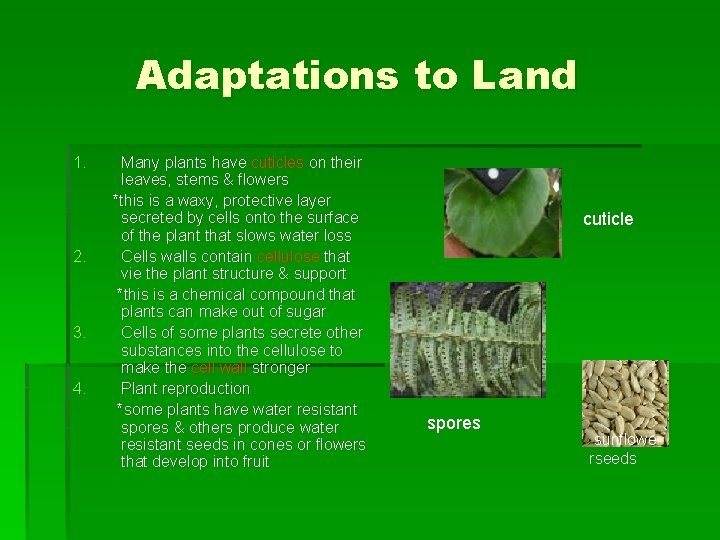
Adaptations to Land 1. 2. 3. 4. Many plants have cuticles on their leaves, stems & flowers *this is a waxy, protective layer secreted by cells onto the surface of the plant that slows water loss Cells walls contain cellulose that vie the plant structure & support *this is a chemical compound that plants can make out of sugar Cells of some plants secrete other substances into the cellulose to make the cell wall stronger Plant reproduction *some plants have water resistant spores & others produce water resistant seeds in cones or flowers that develop into fruit cuticle spores sunflowe rseeds
Plant Classification 1. Plants are divided into 2 main groups: vascular and nonvascular. 2. Vascular plants have tubelike structures that carry water, nutrients & other substances through the plant. 3. Nonvascular plants do not have the tubelike structures & use other ways to move water & substances through the plant.
Seedless Plants § Seedless Nonvascular Plants: *nonvascular plants are not very tall & have stalks & green, leaflike growths *have rhizoids instead of roots that anchor them where they grow *most grow in damp places (water is absorbed & distributed through the cell membrane & cell wall) *they do not have flowers or cones to produce seeds *they reproduce by spores
Types of Seedless Nonvascular Plants 1. Mosses *most are classified as mosses *grow on tree trunks, on rocks or the ground *found in damp areas & some in deserts
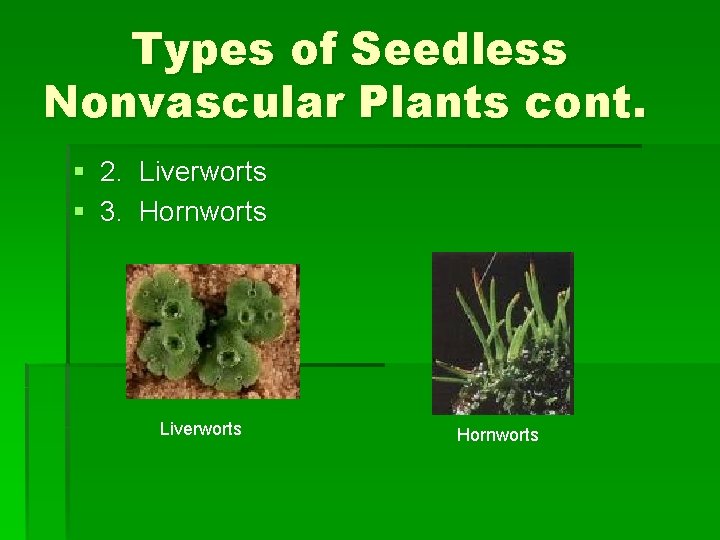
Types of Seedless Nonvascular Plants cont. § 2. Liverworts § 3. Hornworts Liverworts Hornworts
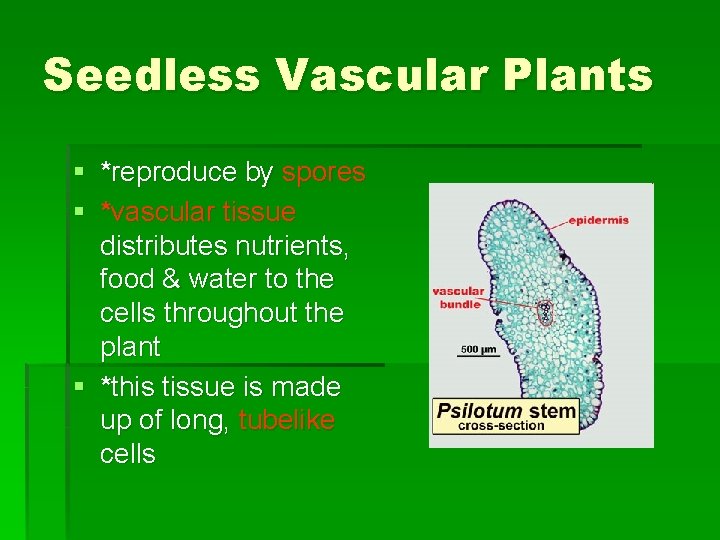
Seedless Vascular Plants § *reproduce by spores § *vascular tissue distributes nutrients, food & water to the cells throughout the plant § *this tissue is made up of long, tubelike cells
Types of Seedless Vascular Plants § 1. Ferns *the largest group *have stems, leaves and have roots
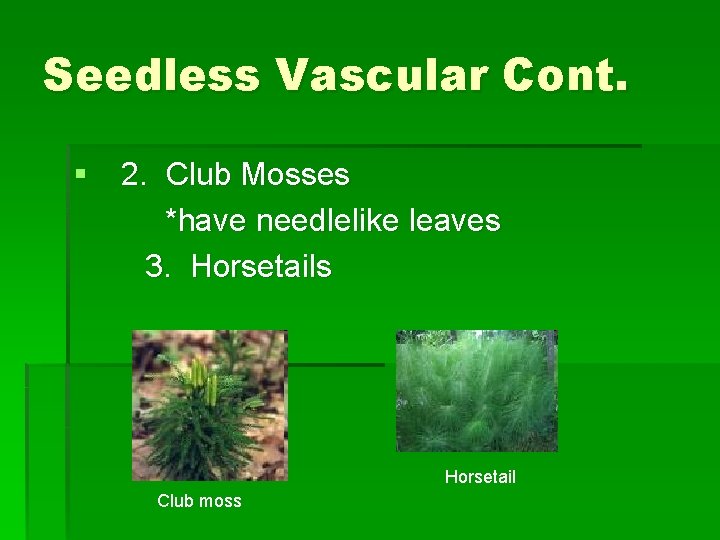
Seedless Vascular Cont. § 2. Club Mosses *have needlelike leaves 3. Horsetails Horsetail Club moss
Seed Plants § Characteristics of Seed Plants: § 1. most have leaves § 2. have stems § 3. have roots § 4. have vascular tissue
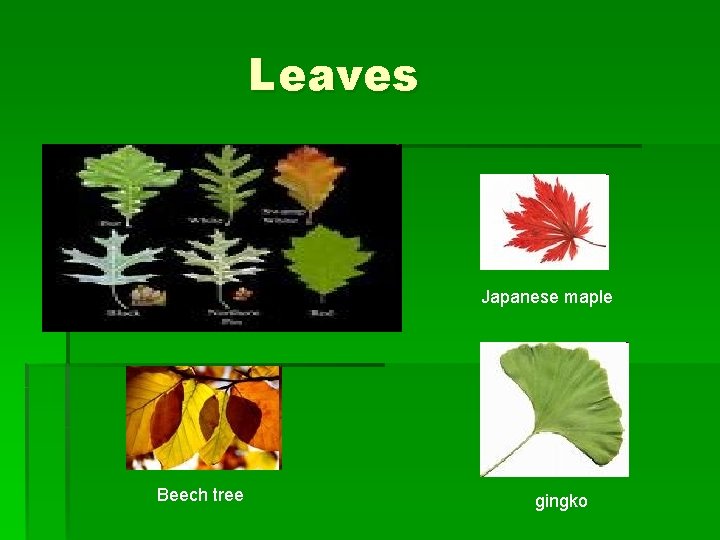
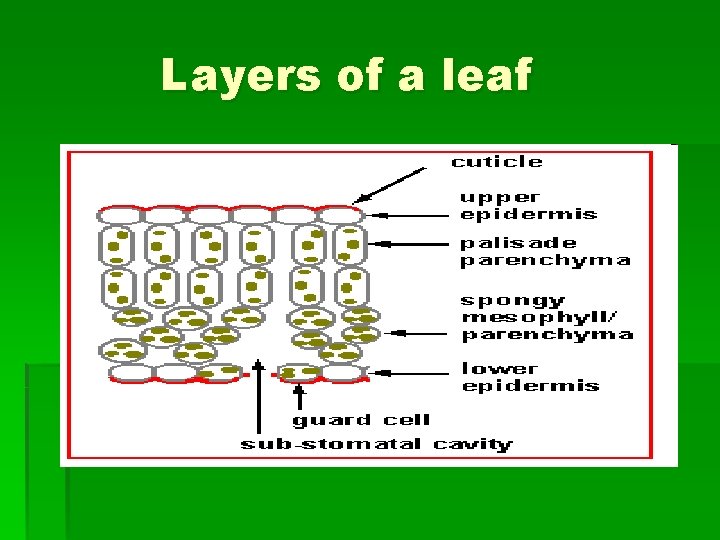
Leaves § 1. the organ of the plant where photosynthesis takes place § 2. leaves come in many shapes, sizes & colors § 3. a leaf is made up of many layers of cells § 4. The epidermis is a thin layer located on the upper & lower surface of a leaf § *it covers and protects the leaf § 5. The stomata are small openings in the epidermis § *they allow carbon dioxide, water & oxygen to enter and leave the cell
Leaves § 6. Each stoma is surrounded by a guard cell that opens & closes it. § 7. The palisade layer is under the upper epidermis § *long, narrow cells that contain chloroplast § *most of the food is produced here § 8. The spongy layer is located below the palisade layer § *vascular tissue is located here
Leaves Japanese maple Beech tree gingko
Layers of a leaf
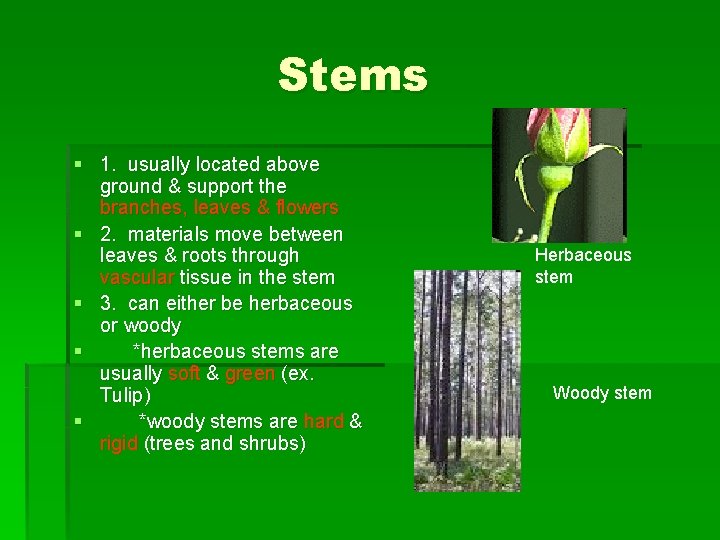
Stems § 1. usually located above ground & support the branches, leaves & flowers § 2. materials move between leaves & roots through vascular tissue in the stem § 3. can either be herbaceous or woody § *herbaceous stems are usually soft & green (ex. Tulip) § *woody stems are hard & rigid (trees and shrubs) Herbaceous stem Woody stem
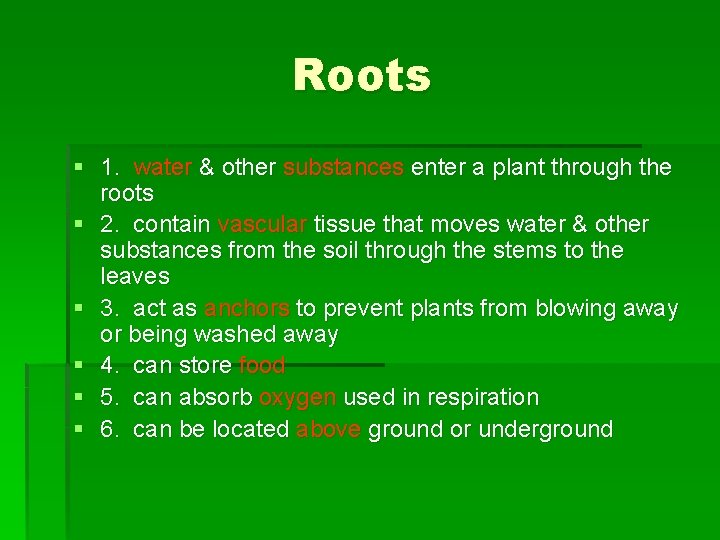
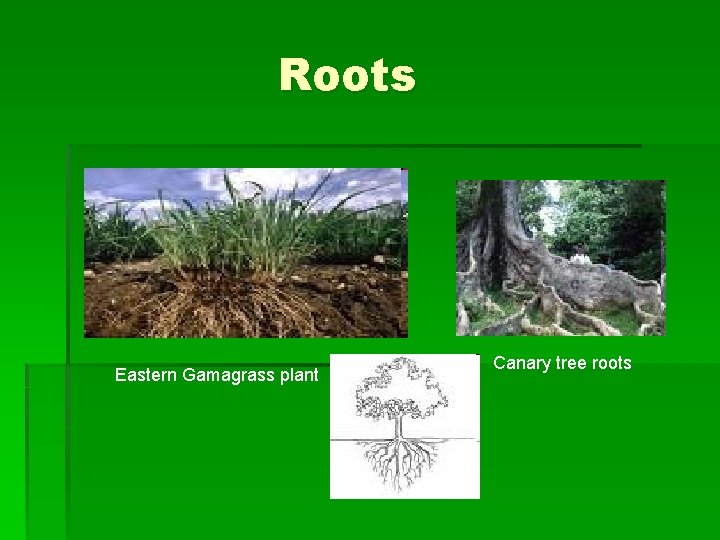
Roots § 1. water & other substances enter a plant through the roots § 2. contain vascular tissue that moves water & other substances from the soil through the stems to the leaves § 3. act as anchors to prevent plants from blowing away or being washed away § 4. can store food § 5. can absorb oxygen used in respiration § 6. can be located above ground or underground
Roots Eastern Gamagrass plant Canary tree roots
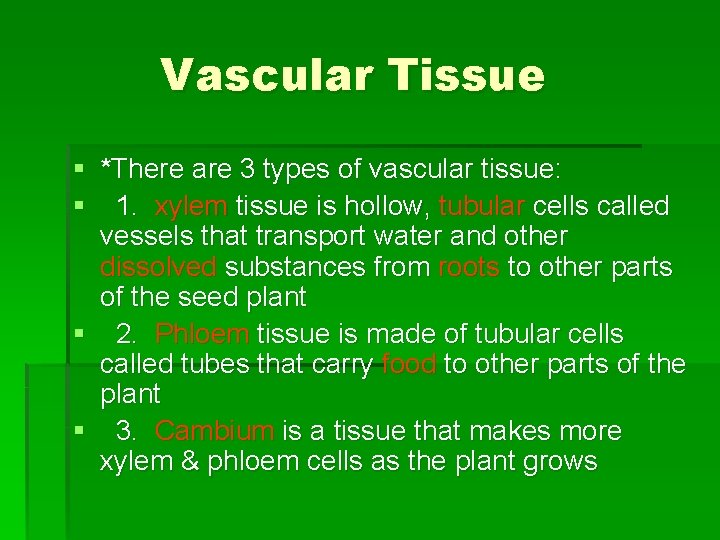
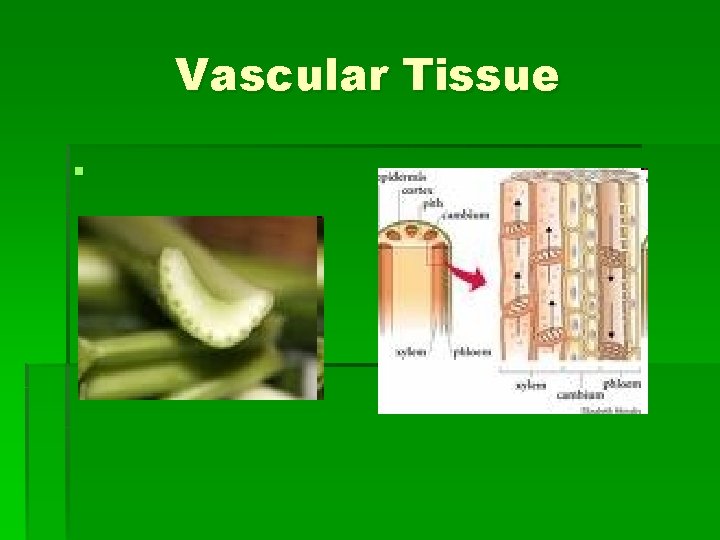
Vascular Tissue § *There are 3 types of vascular tissue: § 1. xylem tissue is hollow, tubular cells called vessels that transport water and other dissolved substances from roots to other parts of the seed plant § 2. Phloem tissue is made of tubular cells called tubes that carry food to other parts of the plant § 3. Cambium is a tissue that makes more xylem & phloem cells as the plant grows
Vascular Tissue §
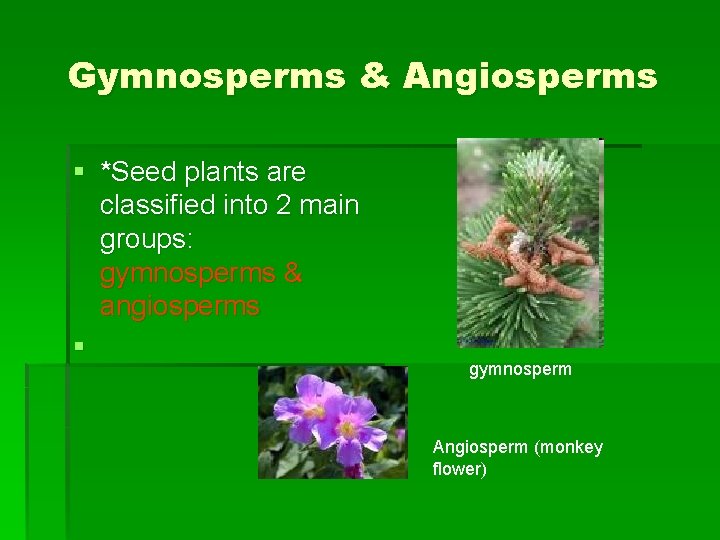
Gymnosperms & Angiosperms § *Seed plants are classified into 2 main groups: gymnosperms & angiosperms § gymnosperm Angiosperm (monkey flower)
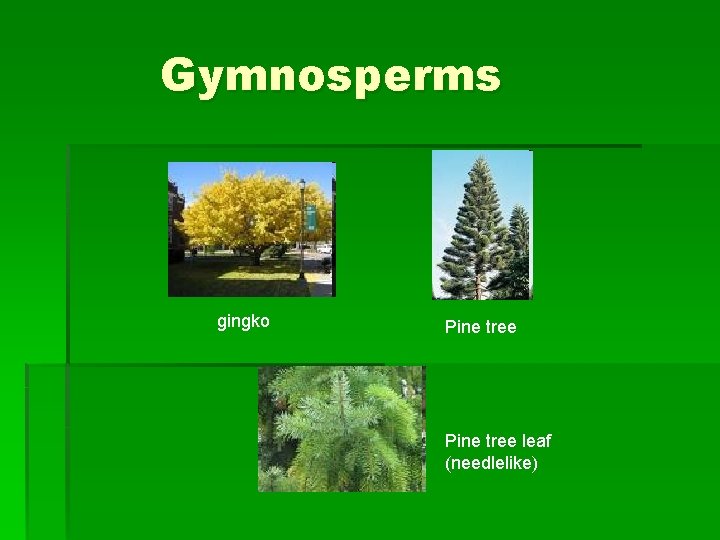
Gymnosperms § 1. They are vascular plants that produce seeds that are not protected by fruit & they do not have flowers (ex. Gingko & pine tree) § *many are called evergreens because some green leaves never fall off § *their leaves are needlelike or scalelike
Gymnosperms gingko Pine tree leaf (needlelike)
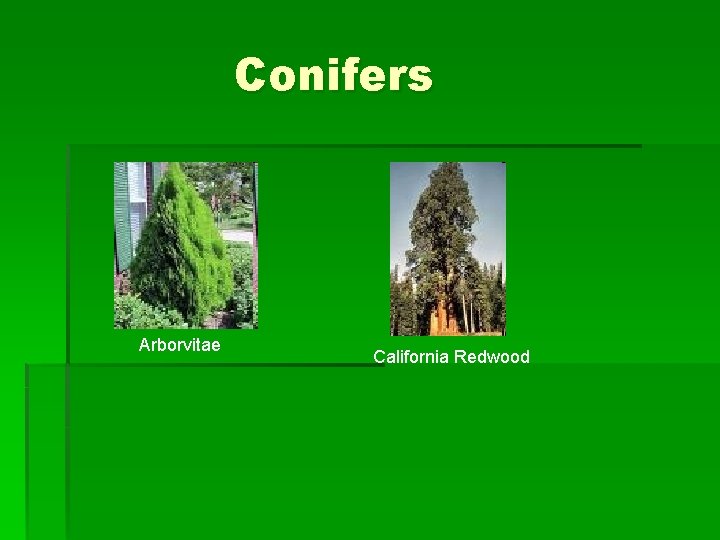
Gymnosperms § 2. Conifer is a type of gymnosperm that § produces 2 kinds of cones, a male § and female (ex. Redwood tree) § *the cone is the reproductive structure of the conifer (seeds develop inside the cone) § *conifers have needlelike leaves § *stay green all year & don’t lose all their leaves
Conifers Arborvitae California Redwood
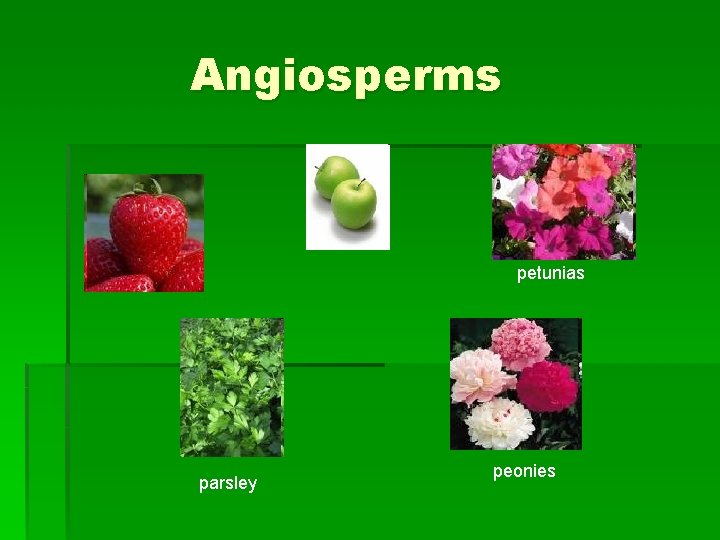
Angiosperms § § § § *also known as flowering plants 1. a vascular plant that produces flowers & has a fruit that contains one or more seeds (ex. Peach) 2. flowers of angiosperms vary in size, shape and color 3. some flower parts develop into fruit *most fruits contain seeds (ex. Apple) or have them on their surface (ex. strawberries
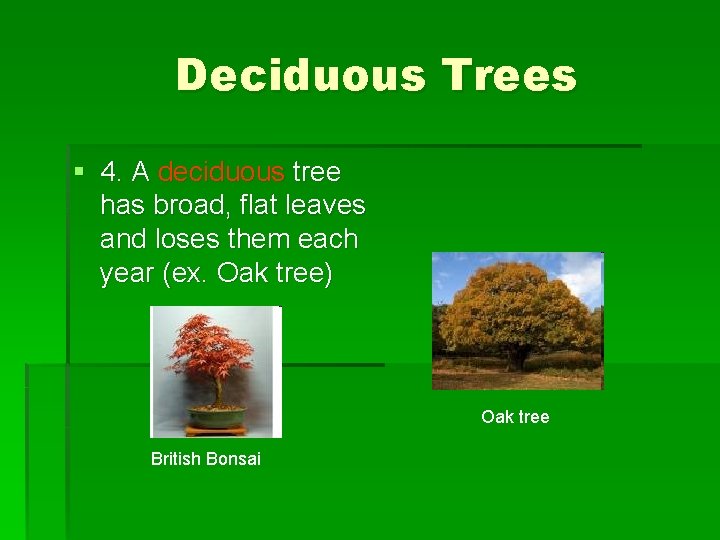
Deciduous Trees § 4. A deciduous tree has broad, flat leaves and loses them each year (ex. Oak tree) Oak tree British Bonsai
Angiosperms § 5. Angiosperms are divided into 2 groups: monocots & dicots § *Monocots have one cotyledon (part of the seed where food is stored) § **Examples: bananas & orchids § *Dicots have 2 cotyledons § **Examples: green beans & apples
Angiosperms § 6. Lifecycle of Angiosperms: § *Annuals complete their life cycle in § one year. Seeds have to be § re-planted each year. (ex. Petunias) § *Biennials complete their life cycle in § 2 years. They produce flowers & § seeds the second year. § *Perennials take more than 2 years to grow § to maturity, but they produce flowers & § fruit year after year (ex. Peonies)
Angiosperms petunias parsley peonies