
Plant Cell and Anatomy AICE Biology Characteristics of
Plant Cell and Anatomy AICE Biology

Characteristics of Monocots

Characteristics of Dicots
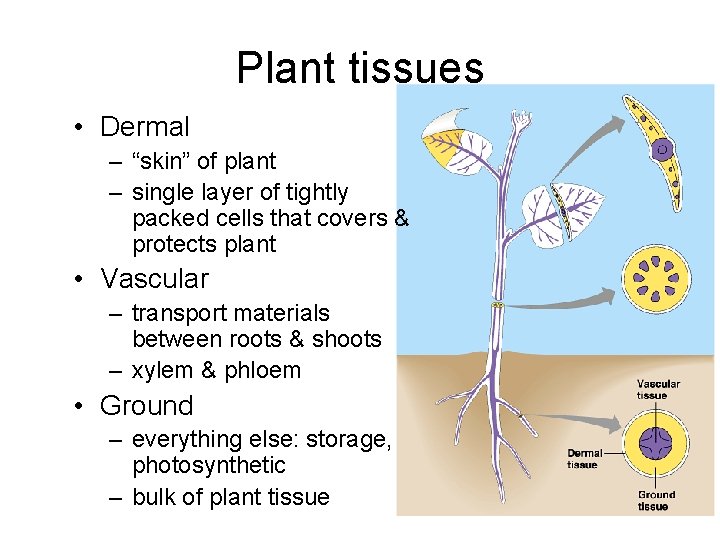
Plant tissues • Dermal – “skin” of plant – single layer of tightly packed cells that covers & protects plant • Vascular – transport materials between roots & shoots – xylem & phloem • Ground – everything else: storage, photosynthetic – bulk of plant tissue
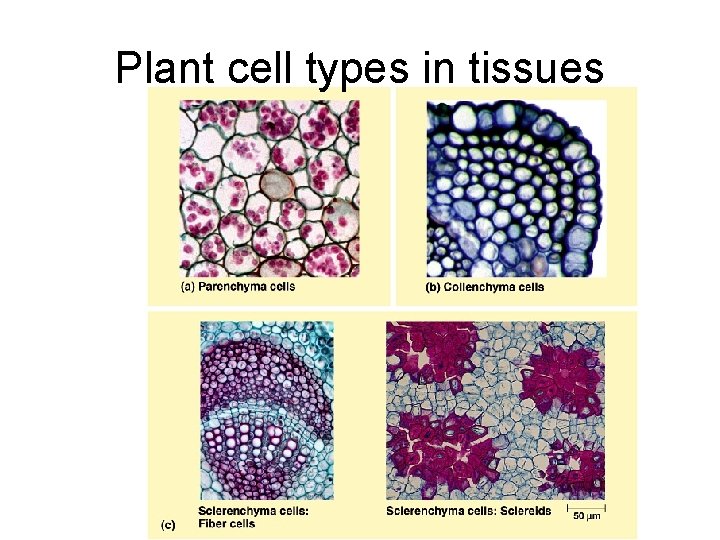
Plant cell types in tissues
Plant cell types in tissues Those would’ve been great names for my kids! • Parenchyma – “typical” plant cells = least specialized – photosynthetic cells, storage cells – tissue of leaves, stem, fruit, storage roots • Collenchyma – unevenly thickened primary walls = support • Sclerenchyma – very thick, “woody” secondary walls = support – rigid cells that can’t elongate – dead at functional maturity
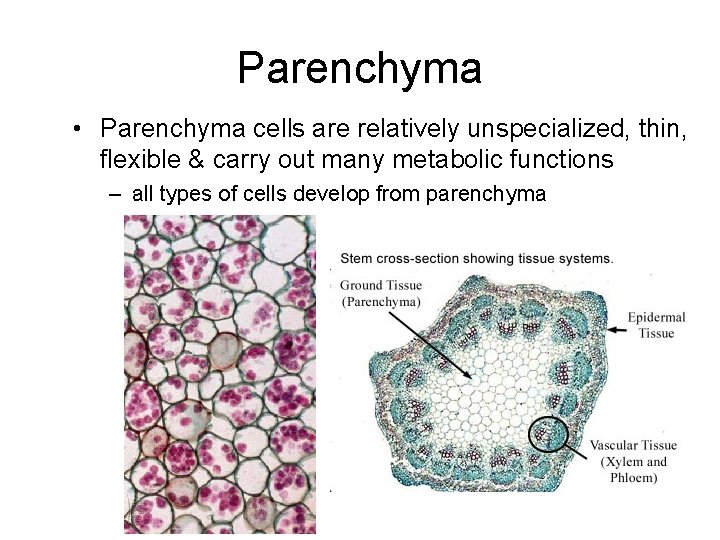
Parenchyma • Parenchyma cells are relatively unspecialized, thin, flexible & carry out many metabolic functions – all types of cells develop from parenchyma
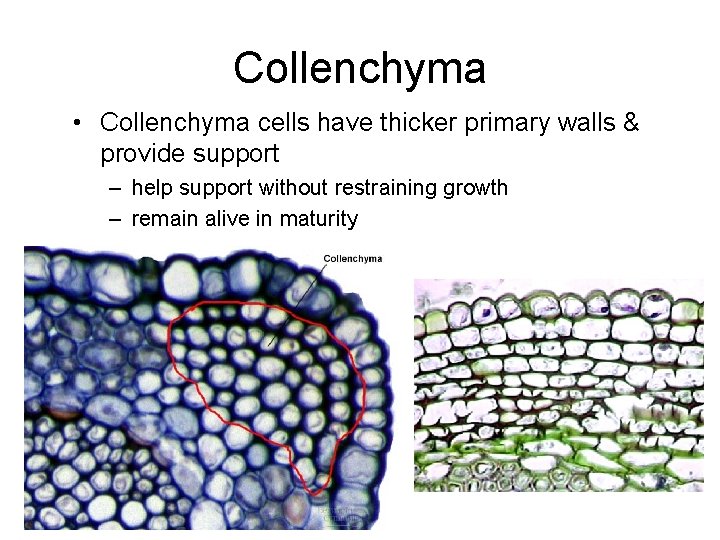
Collenchyma • Collenchyma cells have thicker primary walls & provide support – help support without restraining growth – remain alive in maturity
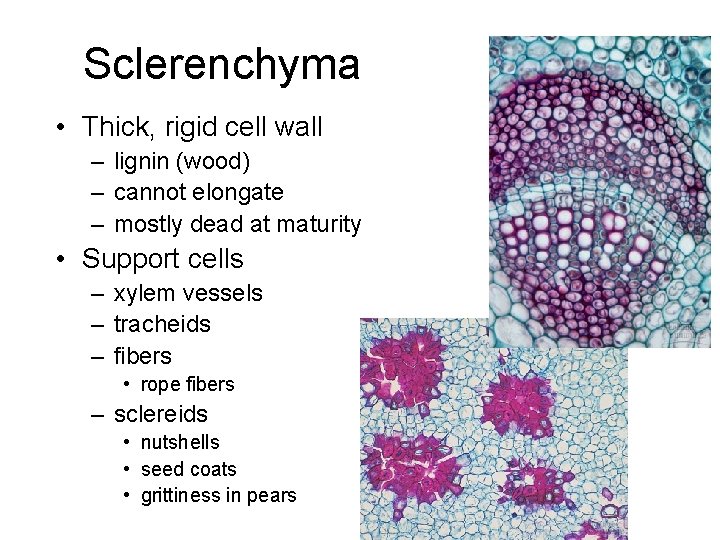
Sclerenchyma • Thick, rigid cell wall – lignin (wood) – cannot elongate – mostly dead at maturity • Support cells – xylem vessels – tracheids – fibers • rope fibers – sclereids • nutshells • seed coats • grittiness in pears
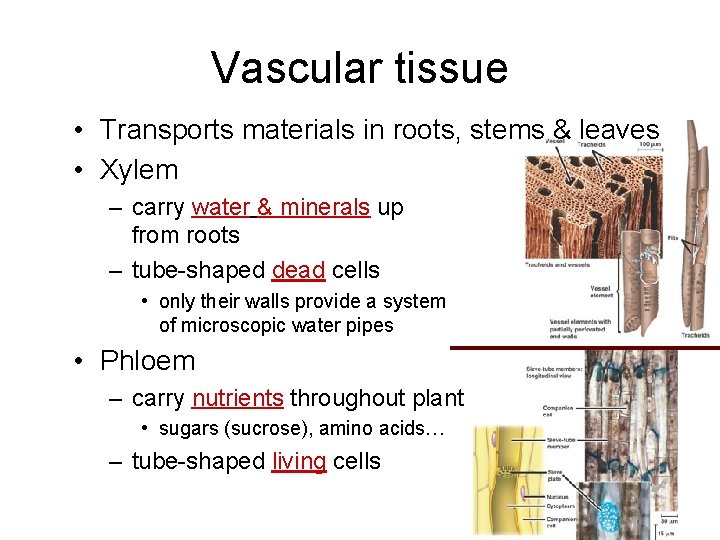
Vascular tissue • Transports materials in roots, stems & leaves • Xylem – carry water & minerals up from roots – tube-shaped dead cells • only their walls provide a system of microscopic water pipes • Phloem – carry nutrients throughout plant • sugars (sucrose), amino acids… – tube-shaped living cells
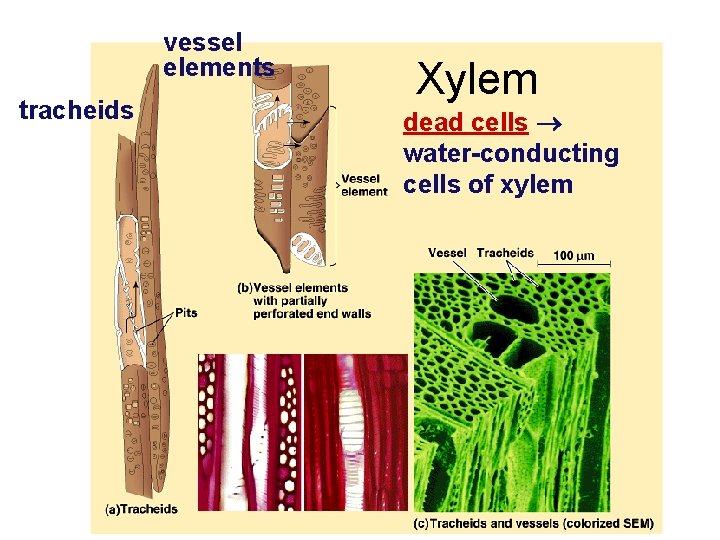
vessel elements tracheids Xylem dead cells water-conducting cells of xylem
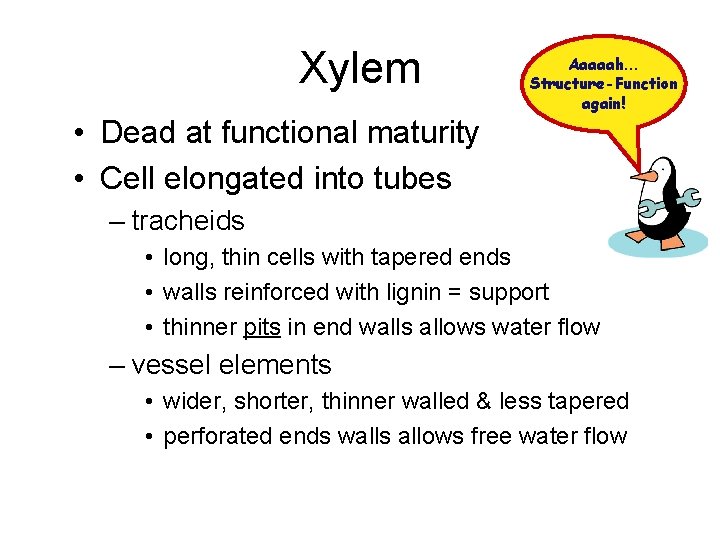
Xylem Aaaaah… Structure-Function again! • Dead at functional maturity • Cell elongated into tubes – tracheids • long, thin cells with tapered ends • walls reinforced with lignin = support • thinner pits in end walls allows water flow – vessel elements • wider, shorter, thinner walled & less tapered • perforated ends walls allows free water flow
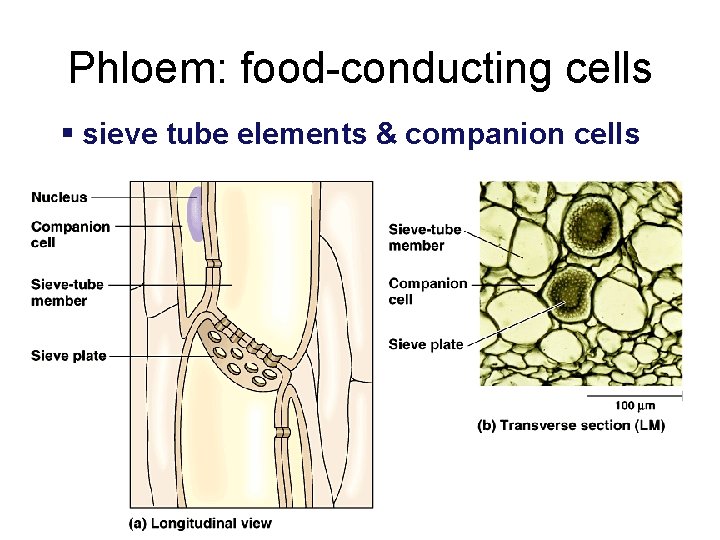
Phloem: food-conducting cells § sieve tube elements & companion cells
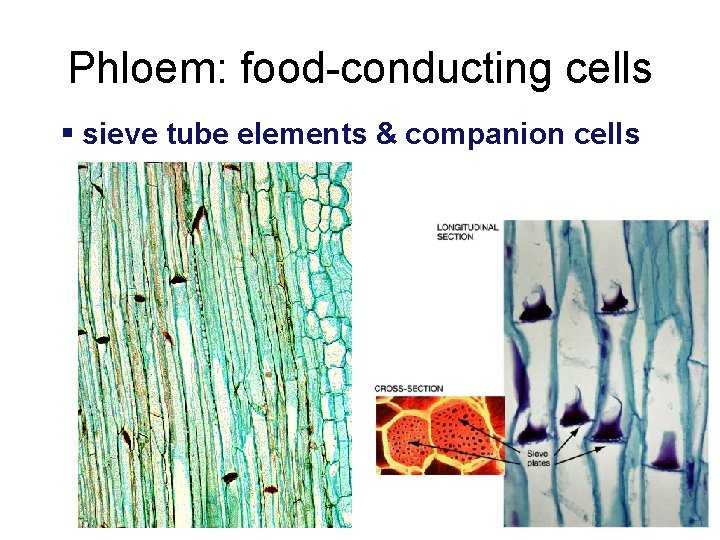
Phloem: food-conducting cells § sieve tube elements & companion cells
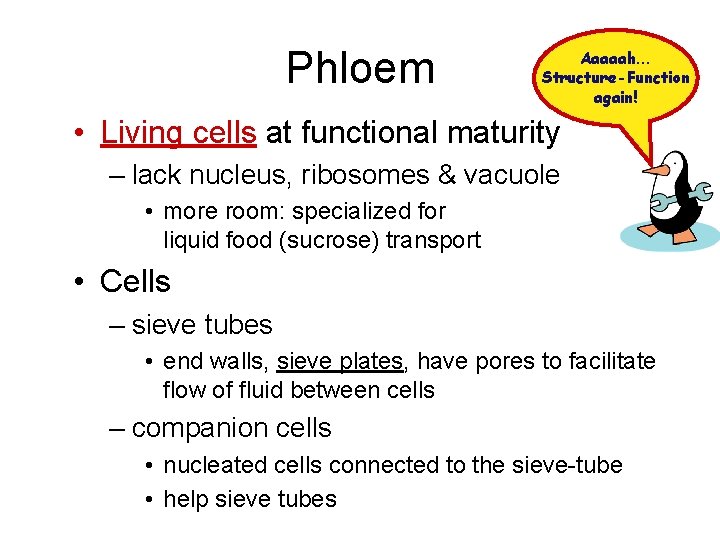
Phloem Aaaaah… Structure-Function again! • Living cells at functional maturity – lack nucleus, ribosomes & vacuole • more room: specialized for liquid food (sucrose) transport • Cells – sieve tubes • end walls, sieve plates, have pores to facilitate flow of fluid between cells – companion cells • nucleated cells connected to the sieve-tube • help sieve tubes
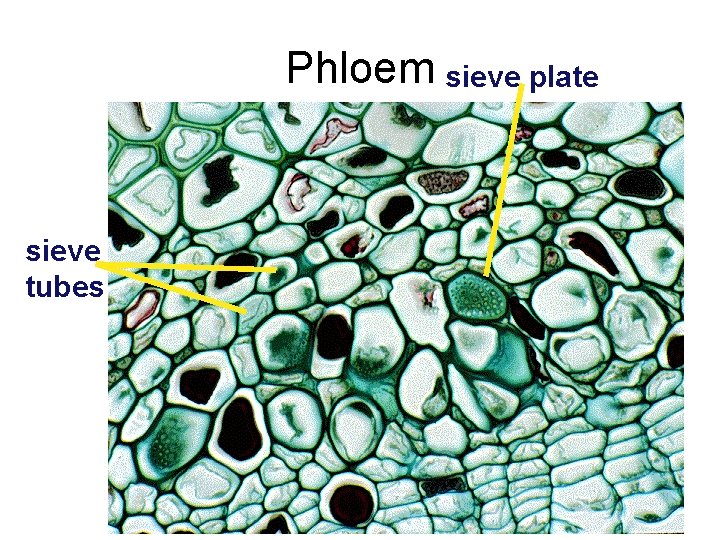
Phloem sieve plate sieve tubes
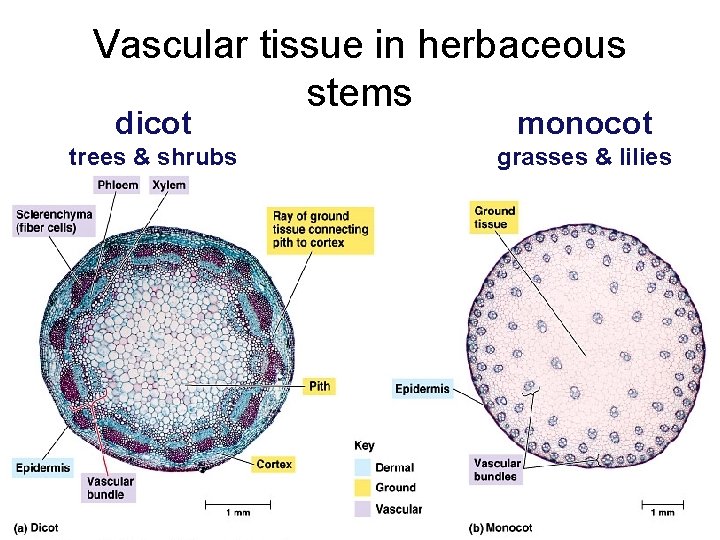
Vascular tissue in herbaceous stems dicot monocot trees & shrubs grasses & lilies
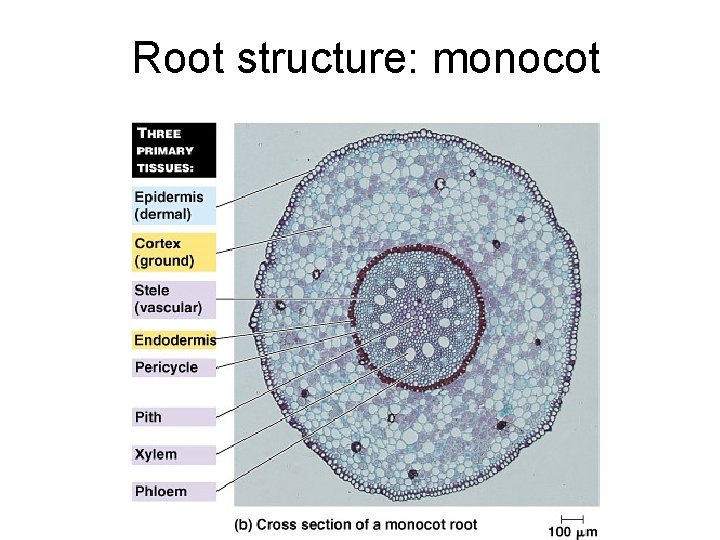
Root structure: monocot
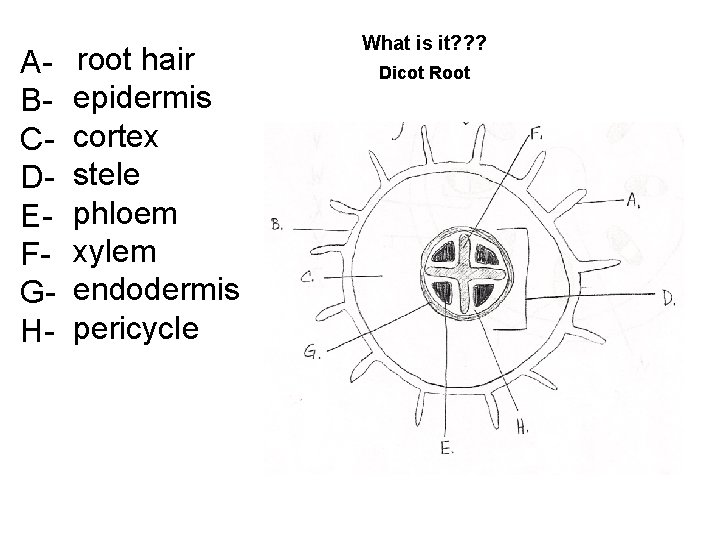
ABCDEFGH- root hair epidermis cortex stele phloem xylem endodermis pericycle What is it? ? ? Dicot Root
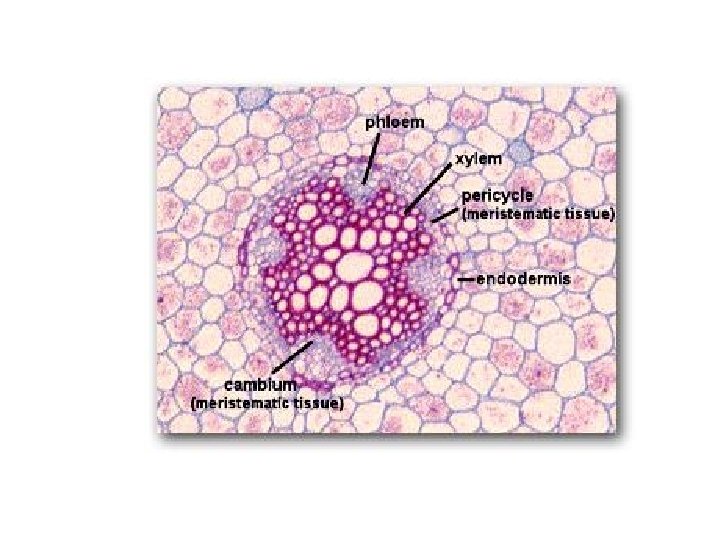
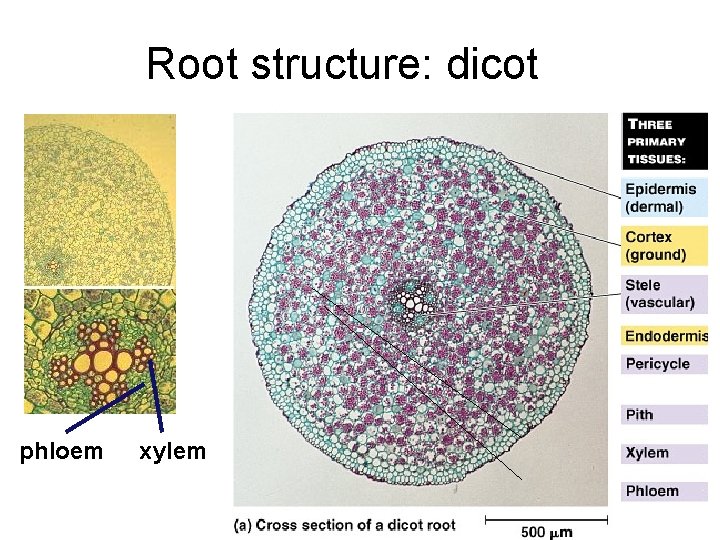
Root structure: dicot phloem xylem
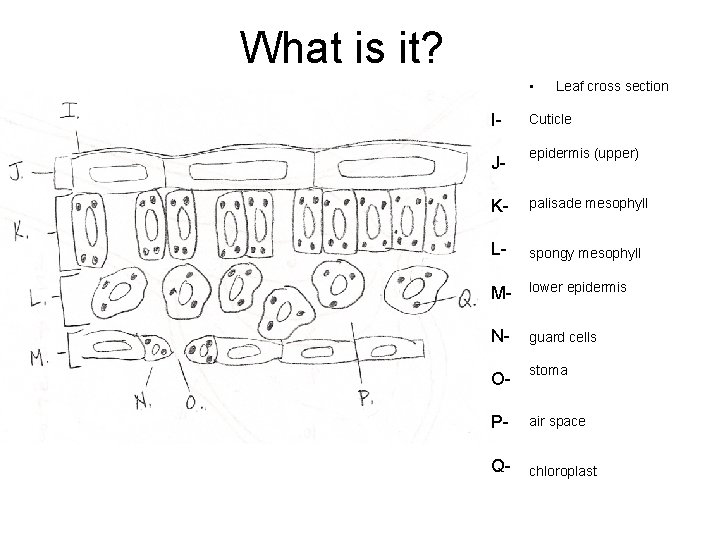
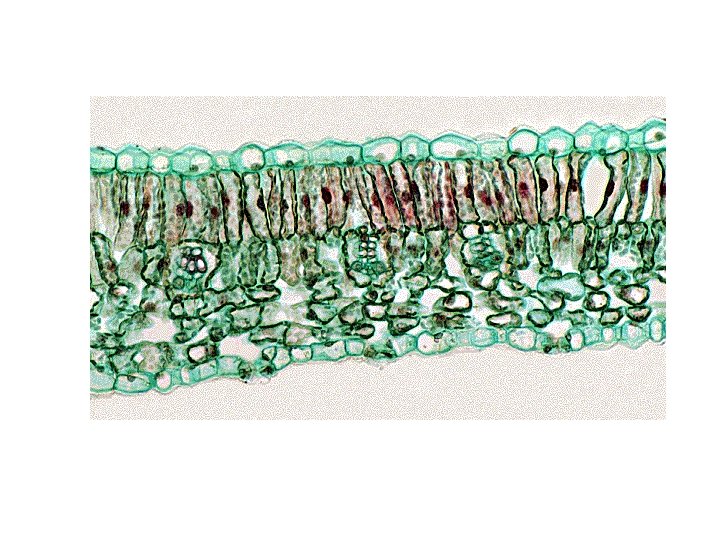
What is it? • IJ- Leaf cross section Cuticle epidermis (upper) K- palisade mesophyll L- spongy mesophyll M- lower epidermis N- guard cells O- stoma P- air space Q- chloroplast
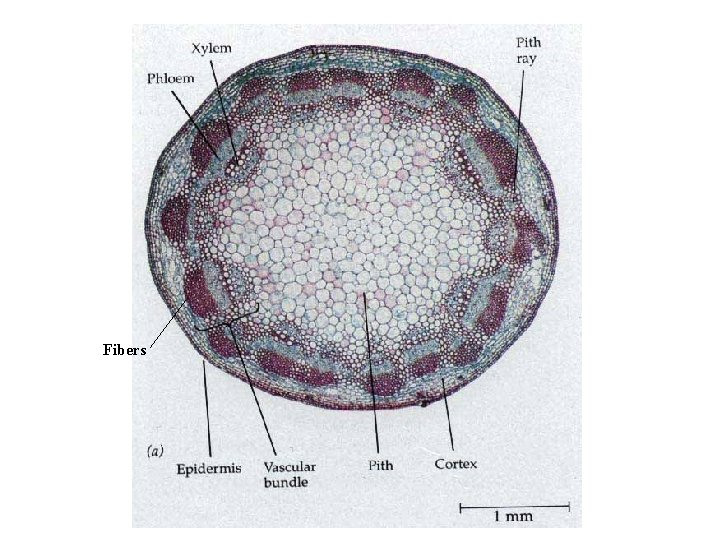
Fibers
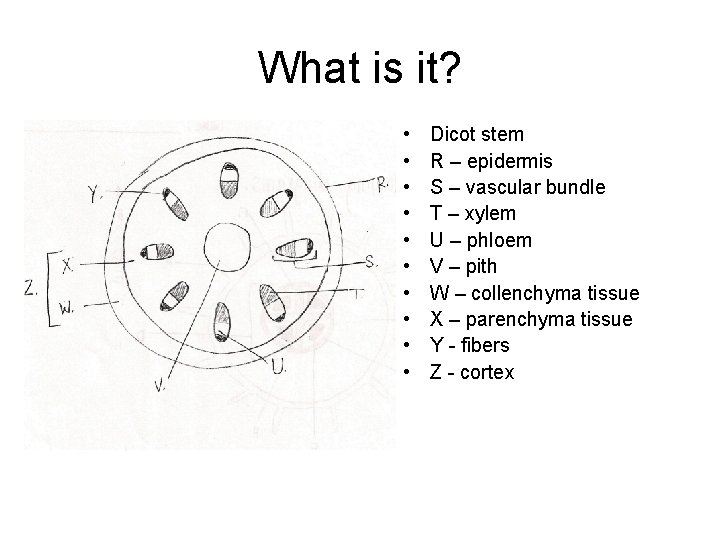
What is it? • • • Dicot stem R – epidermis S – vascular bundle T – xylem U – phloem V – pith W – collenchyma tissue X – parenchyma tissue Y - fibers Z - cortex
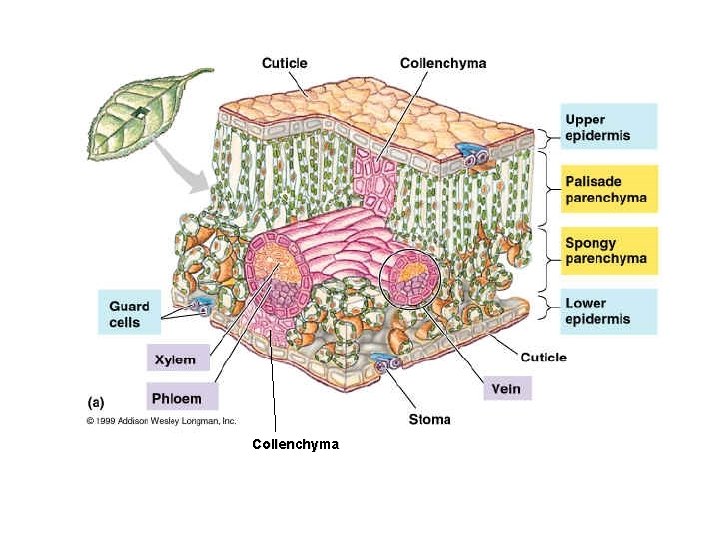
Collenchyma
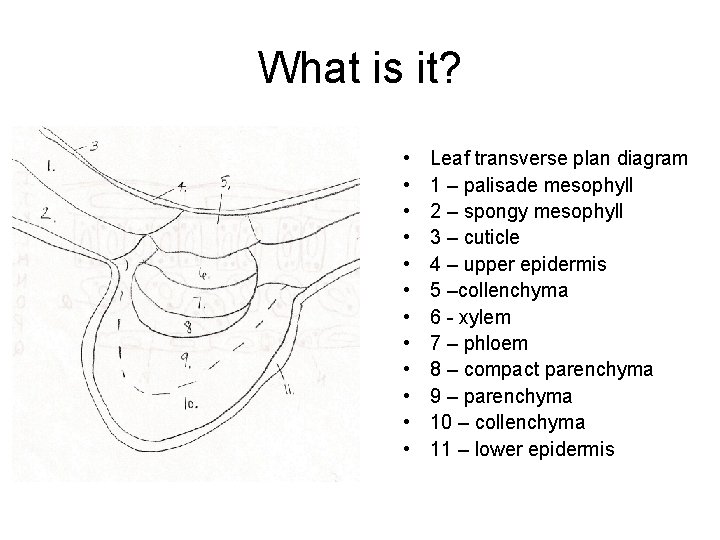
What is it? • • • Leaf transverse plan diagram 1 – palisade mesophyll 2 – spongy mesophyll 3 – cuticle 4 – upper epidermis 5 –collenchyma 6 - xylem 7 – phloem 8 – compact parenchyma 9 – parenchyma 10 – collenchyma 11 – lower epidermis
- Slides: 27