
Plant Breeding Chapter 16 Recurrent Selection in Crossfertilized
Plant Breeding Chapter 16 Recurrent Selection in Cross-fertilized 异花受精作物的轮回选择
Recurrent Selection in Cross-fertilized Contents 主要内容 Introduction 引言 Recurrent Selection Methods in Annual Crops 一年生作物的轮回选择方法 Types of Testers and Results of Selection 测验种的类型和选择结果 Selfing, or S 1 Recurrent Selection 自交或S 1轮回选择 Reciprocal Recurrent Selection 互交轮回选择 Use of Population Developed by Recurrent Selection 由轮回选择培育的群体的应用
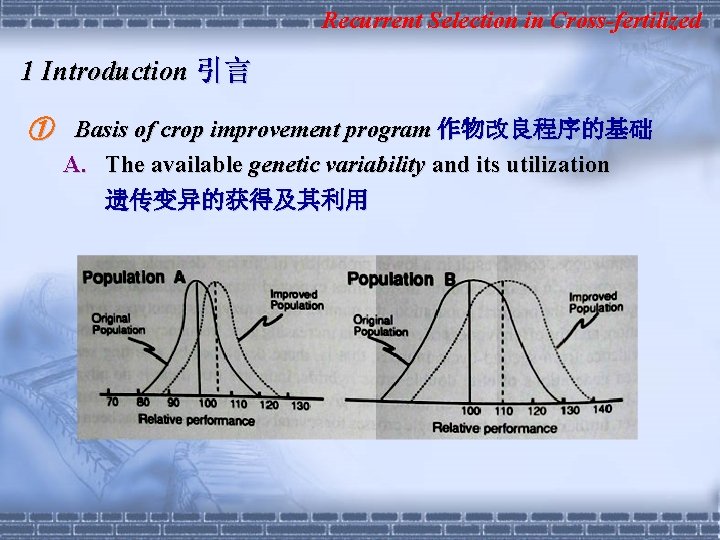
Recurrent Selection in Cross-fertilized 1 Introduction 引言 ① Basis of crop improvement program 作物改良程序的基础 A. The available genetic variability and its utilization 遗传变异的获得及其利用
Recurrent Selection in Cross-fertilized ② Reasons for the low frequency of desirable inbreds 优良自交系出现频率较低的原因 A. Inbreeding associated with selfing 与自交相连的近交 B. Small population size 群体规模较小 C. Linkage 连锁 ③ Procedures for these disadvantages 克服办法 A. Using much larger population size 使用较大规模的群体 B. Using cumulative selection to gradually increase desirable gene frequency through cyclical selection (recurrent selection) 通过轮回选择逐渐增加优良基因的频率
Recurrent Selection in Cross-fertilized ④ Definition of recurrent selection 轮回选择的定义 A. Reselection generation after generation, with intercrossing or interbreeding of the selected plants to provide for genetic recombination 从某一群体选择理想个体,进行随机交配,实现基因重 组,从而形成一个新群体的改良方法

Recurrent Selection in Cross-fertilized ⑤ Objectives of recurrent selection 轮回选择的目标 A. To improve quantitatively inherited traits 改良数量遗传性状 B. To improve the mean of the populations by increasing the mean of the population under selection 通过增加入选群体的平均值达到改良群体的目的 C. To maintain genetic variability for further improvement 为进一步改良保存遗传变异

Recurrent Selection in Cross-fertilized 2 Recurrent selection methods in annual crops 一年生作物的轮回选择方法 ① Characteristics of recurrent selection procedures 轮回选择法的特点 A. Cyclical in nature 本质上循环的 B. Including evaluation of selected plants 包括对入选植株的评价 C. Selected individuals are intercrossed 入选植株要自由交配

Recurrent Selection in Cross-fertilized ② Determinants for the effectiveness of recurrent selection 确定轮回选择效果的因素 A. The improvement of population performance 群体表现的改良 B. The improvement of inbreds performance 自交系表现的改良 C. The remained amount of genetic variability 遗传变异的保存
Recurrent Selection in Cross-fertilized ③ Main steps 主要步骤 A. Establishing a genetically broad-based population 建立遗传基础较宽的群体 B. Identifying individuals with superior genotypes 鉴定具有优良基因型的单株 C. Intermating to produce a new population and to begin another cycle 入选单株随机交配产生新的群体,再开始另一个循环
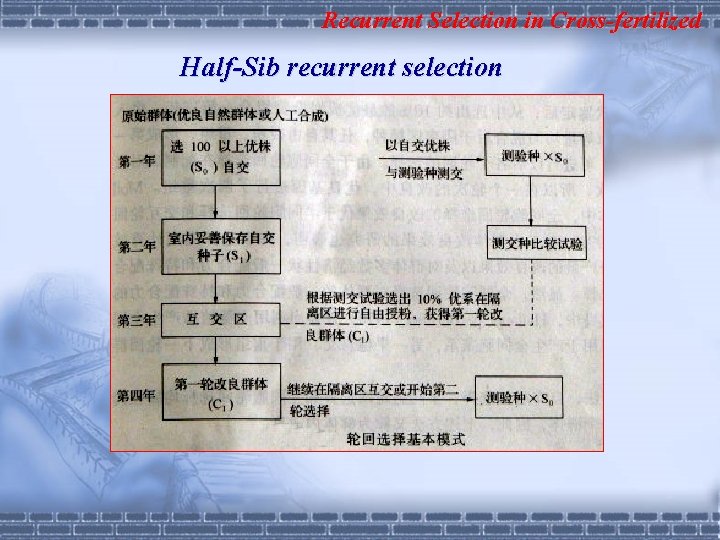
Recurrent Selection in Cross-fertilized Half-Sib recurrent selection
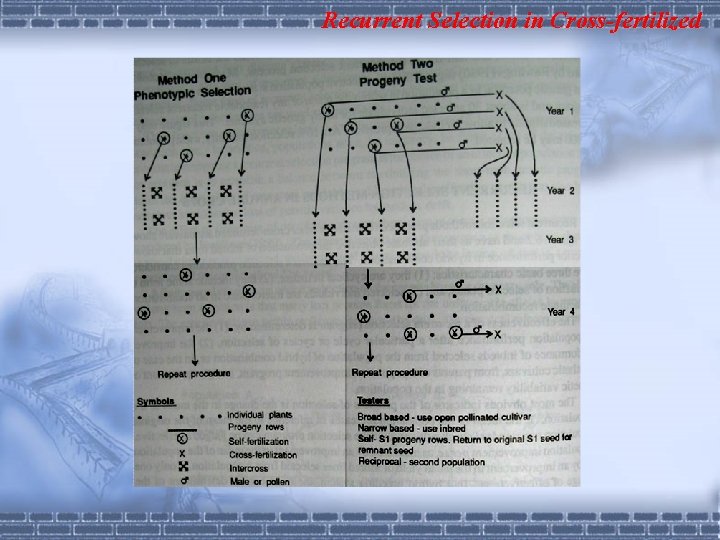
Recurrent Selection in Cross-fertilized ③ Two types of recurrent selection 两种类型的轮回选择 A. Phenotypic recurrent selection 表现型轮回选择 B. Recurrent selection based on progeny testing 基于后代测验的轮回选择 a. Broad-base tester 宽基础测验种 b. Narrow-base tester 窄基础测验种 c. Self progeny自交后代 d. Reciprocal tester 相互测验种 ★Selected plants as male parent and the tester as female parent 入选植株为父本,测验种为母本
Recurrent Selection in Cross-fertilized
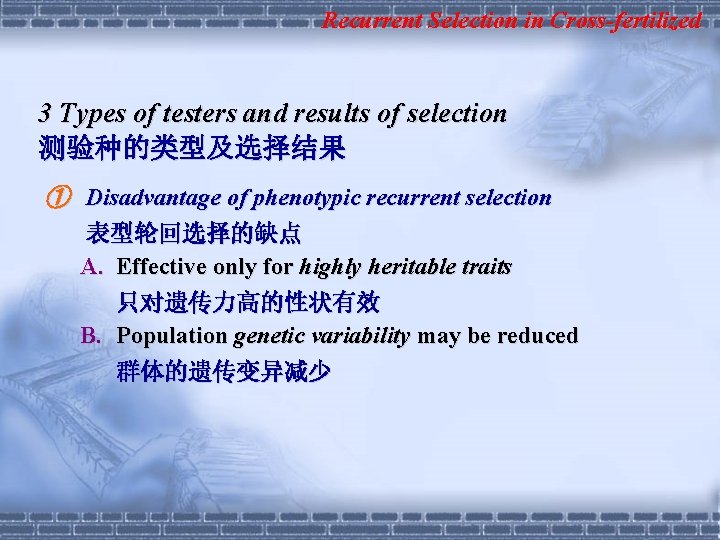
Recurrent Selection in Cross-fertilized 3 Types of testers and results of selection 测验种的类型及选择结果 ① Disadvantage of phenotypic recurrent selection 表型轮回选择的缺点 A. Effective only for highly heritable traits 只对遗传力高的性状有效 B. Population genetic variability may be reduced 群体的遗传变异减少
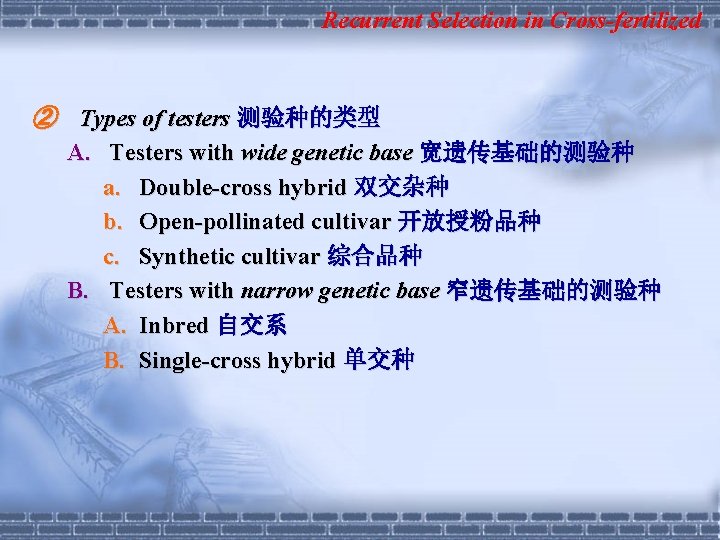
Recurrent Selection in Cross-fertilized ② Types of testers 测验种的类型 A. Testers with wide genetic base 宽遗传基础的测验种 a. Double-cross hybrid 双交杂种 b. Open-pollinated cultivar 开放授粉品种 c. Synthetic cultivar 综合品种 B. Testers with narrow genetic base 窄遗传基础的测验种 A. Inbred 自交系 B. Single-cross hybrid 单交种
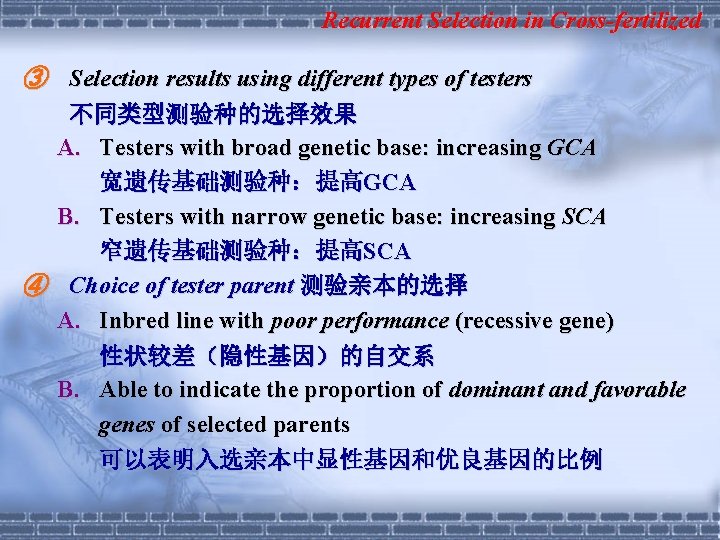
Recurrent Selection in Cross-fertilized ③ Selection results using different types of testers 不同类型测验种的选择效果 A. Testers with broad genetic base: increasing GCA 宽遗传基础测验种:提高GCA B. Testers with narrow genetic base: increasing SCA 窄遗传基础测验种:提高SCA ④ Choice of tester parent 测验亲本的选择 A. Inbred line with poor performance (recessive gene) 性状较差(隐性基因)的自交系 B. Able to indicate the proportion of dominant and favorable genes of selected parents 可以表明入选亲本中显性基因和优良基因的比例
Recurrent Selection in Cross-fertilized 4 Selfing, or S 1 recurrent selection 自交或S 1轮回选择 ① Major steps 主要步骤 A. Discarding progeny row used to evaluate selected plants in year one 放弃用于上一年评价入选亲本的后代株行 B. Intercrossing remnant seeds of original selected plants 原始入选植株的剩余种子进行自由交配
Recurrent Selection in Cross-fertilized ② Advantages 优点 A. Both the mean of the population and the performance of inbred lines selected from the population get good improvement 群体平均值和从此群体中选出的自交系都能得到改良 B. Inbred lines have shown less inbreeding depression 自交系很少出现近交衰退
Recurrent Selection in Cross-fertilized 5 Reciprocal recurrent selection交互轮回选择 ① Objectives of reciprocal recurrent selection 交互轮回选择的目标 A. To make maximum use of both GCA and SCA 最大限度地利用GCA和SCA B. To improve simultaneously two different population 可以同时改良两个不同的群体 ② Character 特点 A. Source A and B are respectively used as tester parent of the counterpart 资源A和资源B同时作为对方的测验亲本
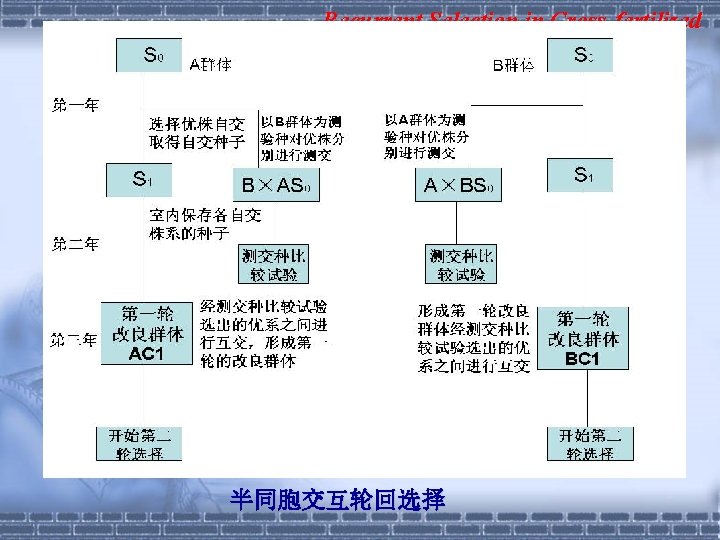
Recurrent Selection in Cross-fertilized 半同胞交互轮回选择
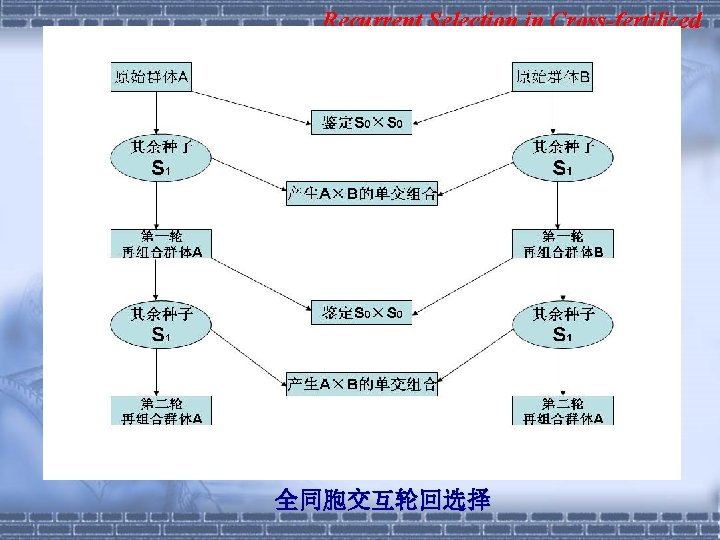
Recurrent Selection in Cross-fertilized 全同胞交互轮回选择
Recurrent Selection in Cross-fertilized 6 Use of population developed by recurrent selection 轮回选择法所获得群体的利用 ① Released as a cultivar 作为品种推出 • When a maximum amount of variability for traits other than those selected is acceptable 当被选择性状之外其它性状的最大变异量为可接受时 ② Used as potential parents of synthetic cultivar 作为综合品种的潜在亲本 • If they prove to have superior progeny performance 如果它们的后代表现优良 ③ Forming an improved synthetic cultivar 获得改良的综合品种 • After concentrating other characters 在加强了其它性状之后
Recurrent Selection in Cross-fertilized Exercise 思考题 • What is the recurrent selection? selection 什么是轮回选择? • What is the objectives of recurrent selection? 轮回选择的育种目标是什么? • What is the determinants for the effectiveness of recurrent selection? 轮回选择获得成功的决定因素是什么?
- Slides: 22