
Plant Booklet What is a plant Multicellular Eukaryotes
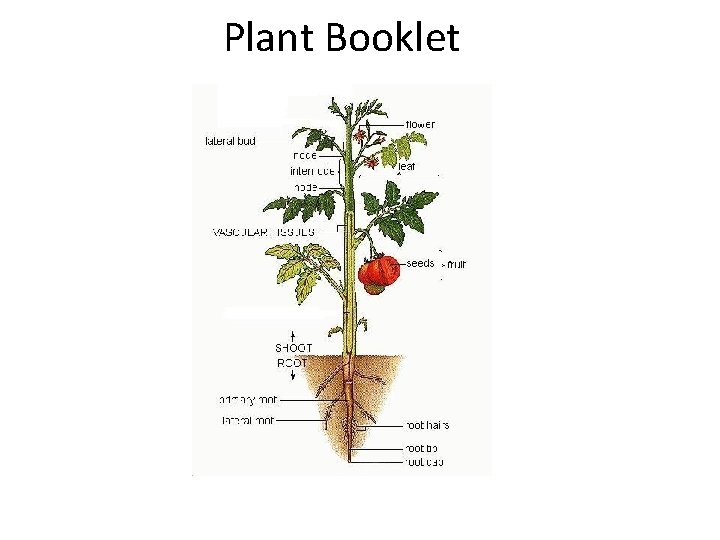
Plant Booklet
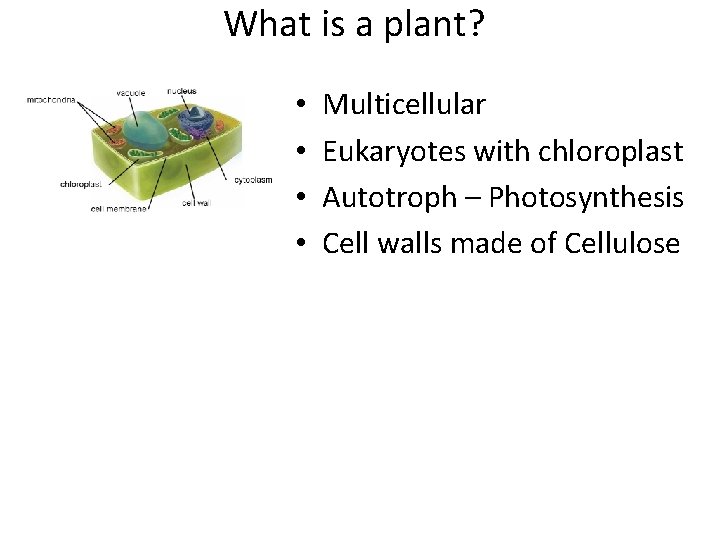
What is a plant? • • Multicellular Eukaryotes with chloroplast Autotroph – Photosynthesis Cell walls made of Cellulose
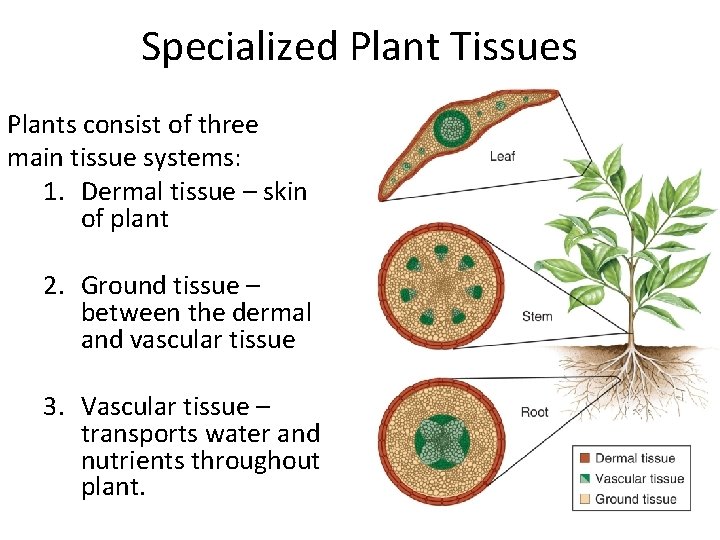
Specialized Plant Tissues Plants consist of three main tissue systems: 1. Dermal tissue – skin of plant 2. Ground tissue – between the dermal and vascular tissue 3. Vascular tissue – transports water and nutrients throughout plant.
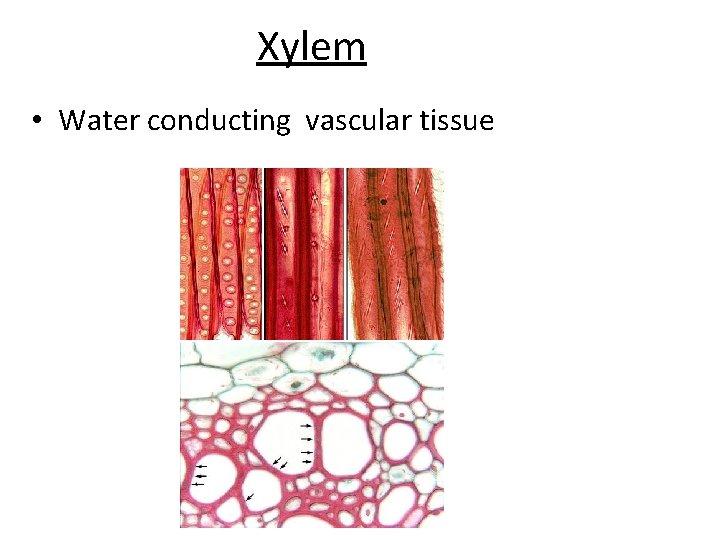
Xylem • Water conducting vascular tissue
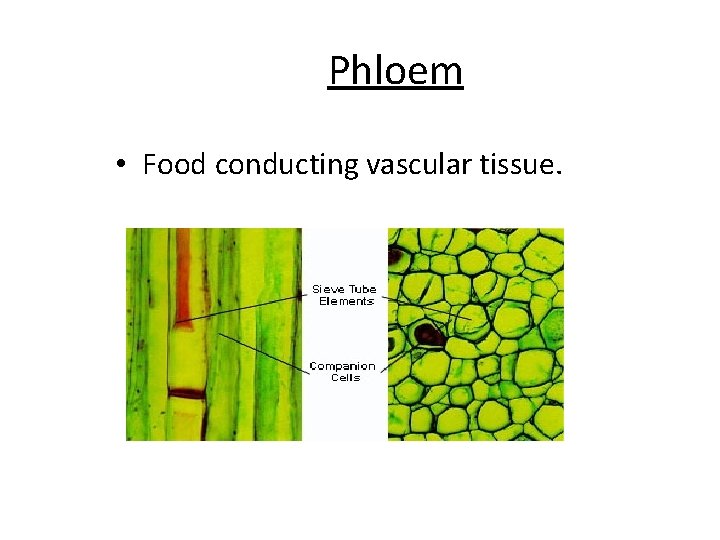
Phloem • Food conducting vascular tissue.
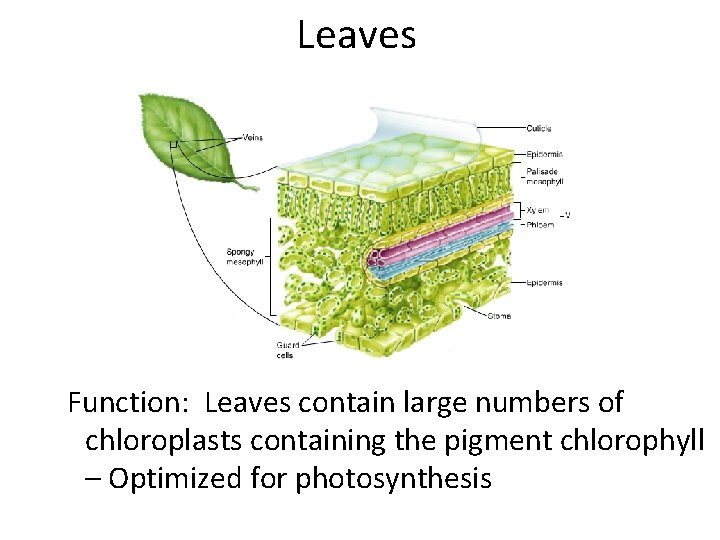
Leaves Function: Leaves contain large numbers of chloroplasts containing the pigment chlorophyll – Optimized for photosynthesis
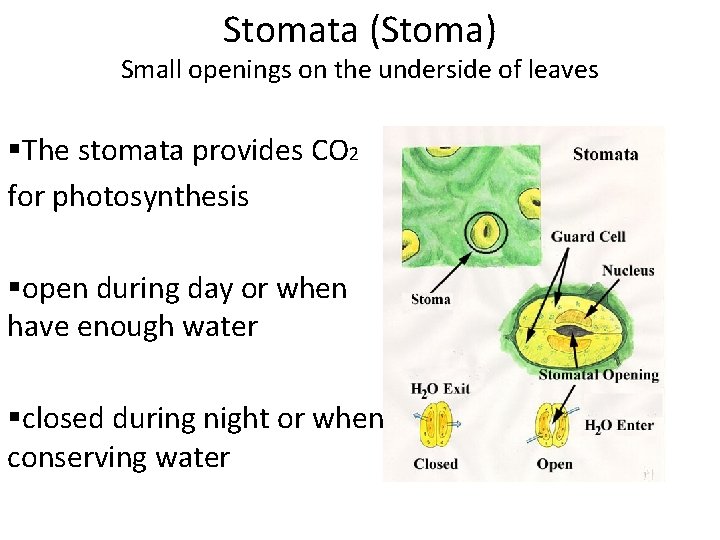
Stomata (Stoma) Small openings on the underside of leaves §The stomata provides CO 2 for photosynthesis §open during day or when have enough water §closed during night or when conserving water
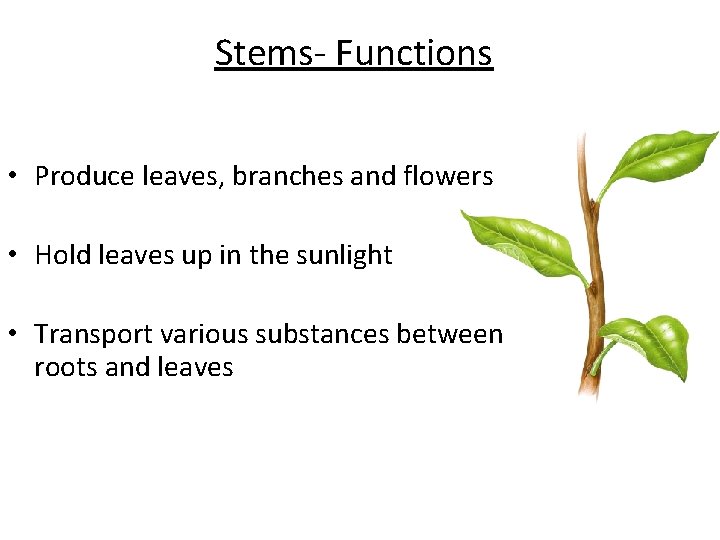
Stems- Functions • Produce leaves, branches and flowers • Hold leaves up in the sunlight • Transport various substances between roots and leaves
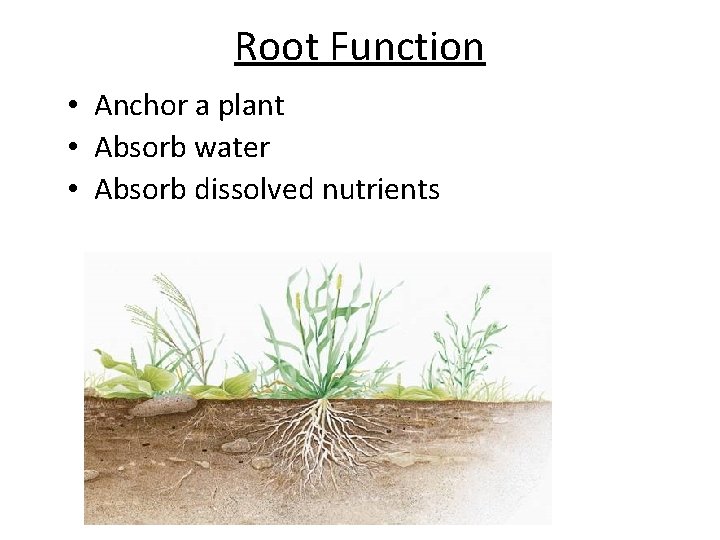
Root Function • Anchor a plant • Absorb water • Absorb dissolved nutrients
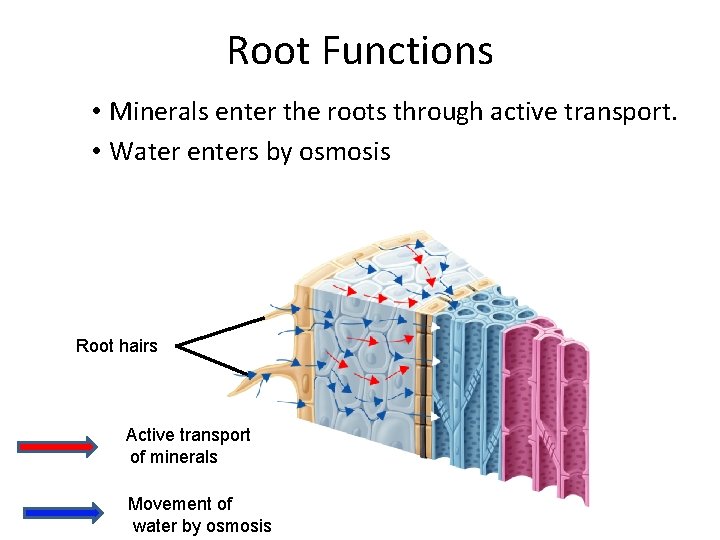
Root Functions • Minerals enter the roots through active transport. • Water enters by osmosis Root hairs Active transport of minerals Movement of water by osmosis
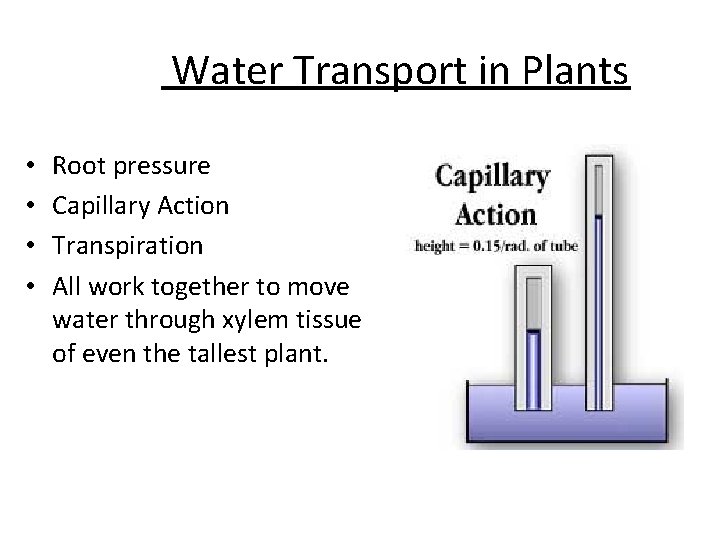
Water Transport in Plants • • Root pressure Capillary Action Transpiration All work together to move water through xylem tissue of even the tallest plant.
Nutrient Transport • Many plants pump sugars into their fruit. • Move sugars out of leaves and roots, through the stems, to the fruit. • Done through Phloem.
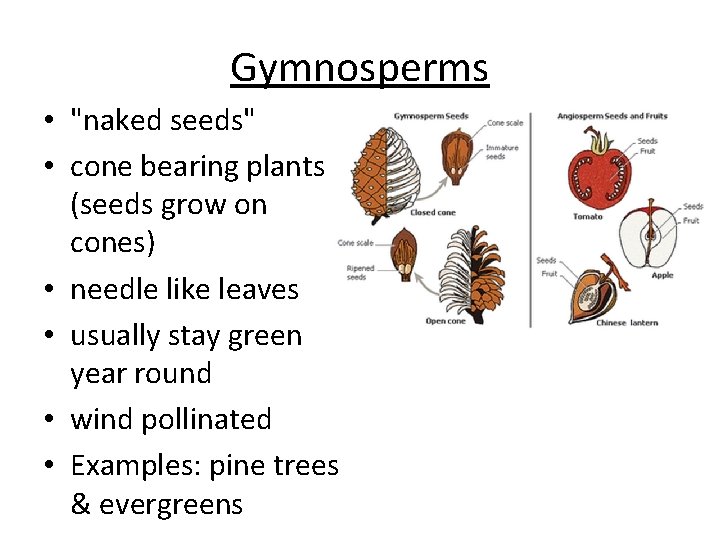
Gymnosperms • "naked seeds" • cone bearing plants (seeds grow on cones) • needle like leaves • usually stay green year round • wind pollinated • Examples: pine trees & evergreens
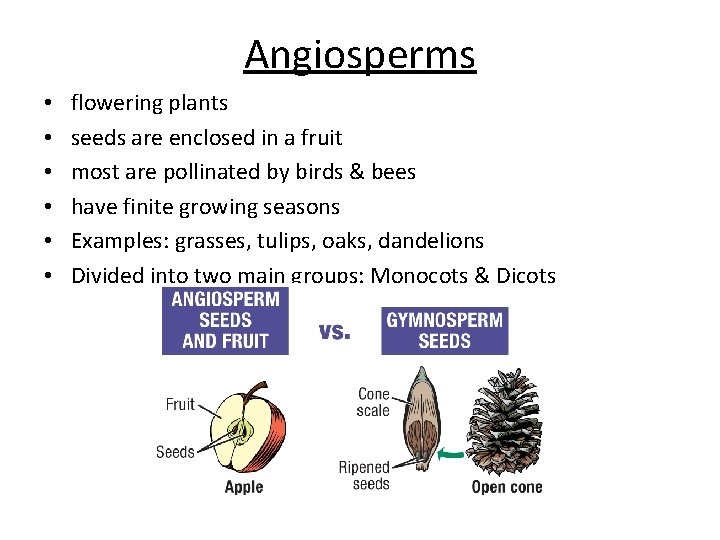
Angiosperms • • • flowering plants seeds are enclosed in a fruit most are pollinated by birds & bees have finite growing seasons Examples: grasses, tulips, oaks, dandelions Divided into two main groups: Monocots & Dicots
- Slides: 14