
PLANT BIOLOGICAL SYSTEMS AND NEEDS Chapter 12 Kinds
PLANT BIOLOGICAL SYSTEMS AND NEEDS Chapter 12
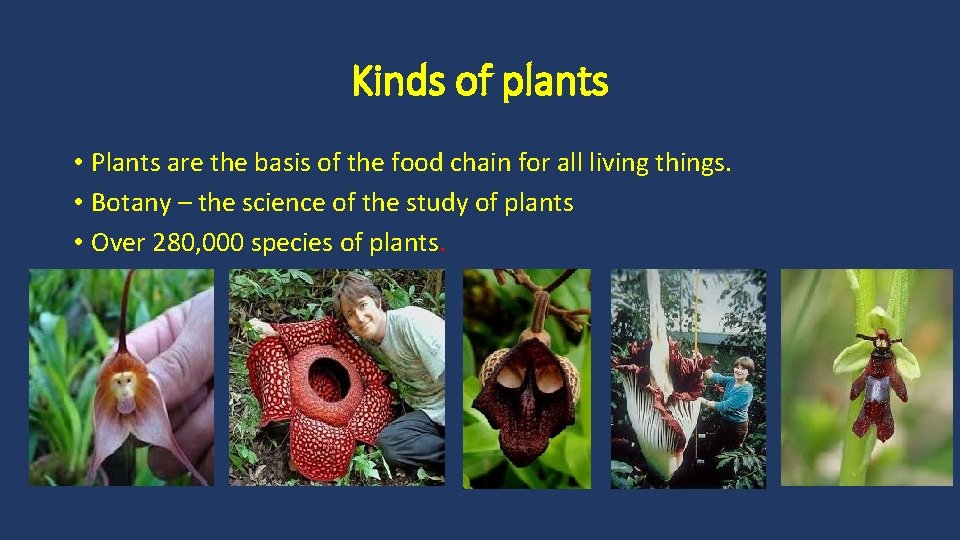
Kinds of plants • Plants are the basis of the food chain for all living things. • Botany – the science of the study of plants • Over 280, 000 species of plants.
Angiosperms • Angiosperm is a plant with enclosed seeds. • More than half of all living plants are classified as flowering plants or angiosperms • Angiosperms are the most highly evolved of the plants • Each flower usually contains both pollen and ovules • Pollination can be completed by wind, insects, or by the plant itself • Cotyledons are the seedling leaves when the seed first sprouts or germinates • Angiosperms are either monocots (one cotyledon) or dicots (two).
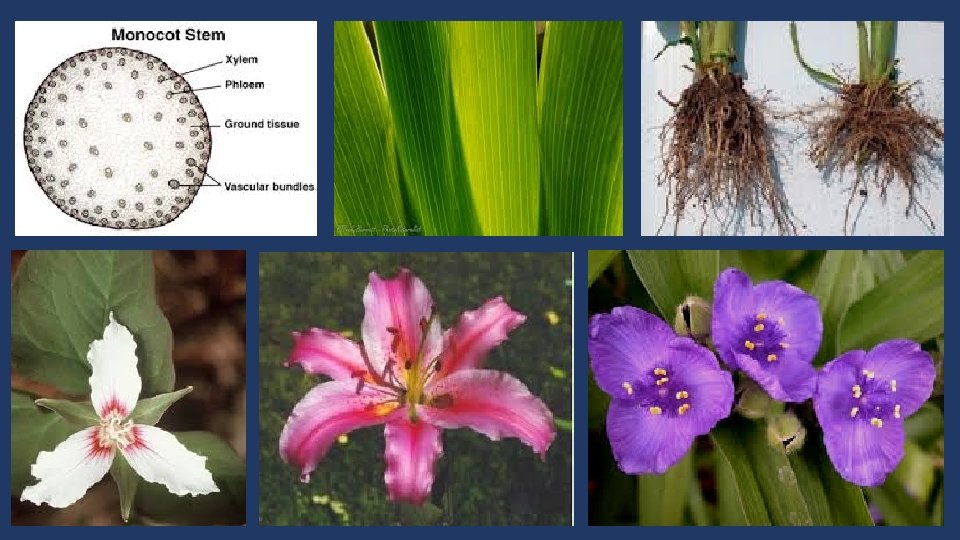
Monocots • Leaves have parallel veins • Leaves are usually long and blade-like • Stems tend to be non-woody with scattered vascular bundles • Roots tend to be fibrous • Flowers have 3 petals or multiples of 3 • Grasses are the most important monocots.
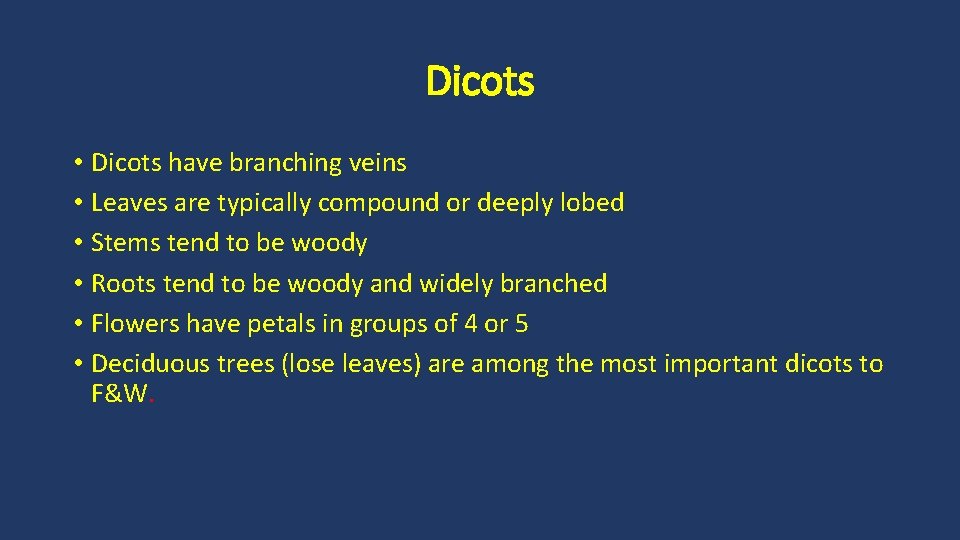
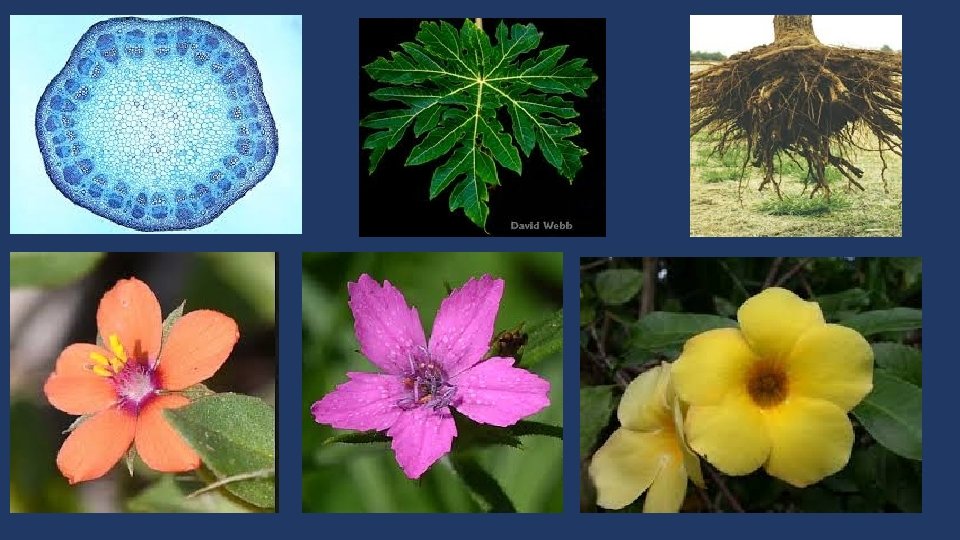
Dicots • Dicots have branching veins • Leaves are typically compound or deeply lobed • Stems tend to be woody • Roots tend to be woody and widely branched • Flowers have petals in groups of 4 or 5 • Deciduous trees (lose leaves) are among the most important dicots to F&W.
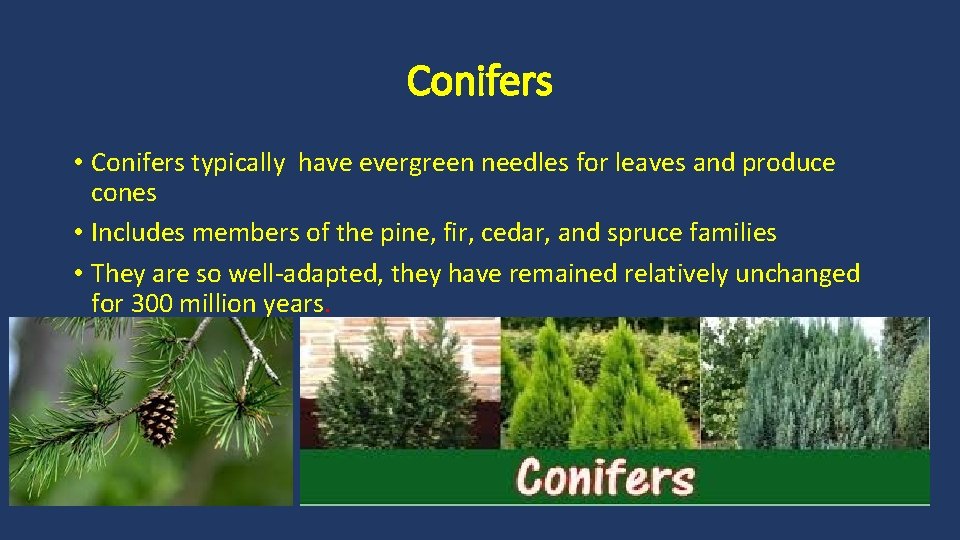
Conifers • Conifers typically have evergreen needles for leaves and produce cones • Includes members of the pine, fir, cedar, and spruce families • They are so well-adapted, they have remained relatively unchanged for 300 million years.
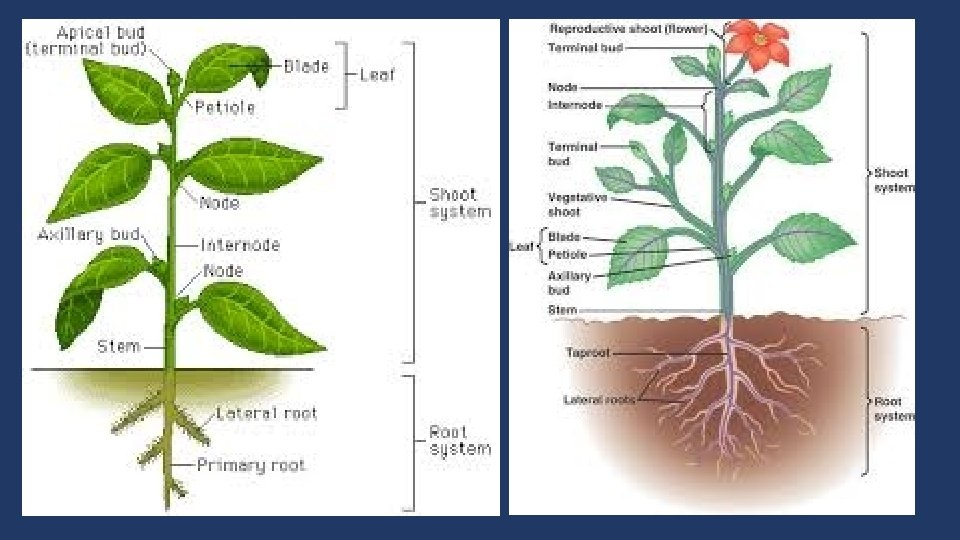
Major Plant Parts • Root – anchors the plant and absorbs water and nutrients from the soil • Shoot – the above-ground portion of the plant that provides support, conducts water and other materials within the plant, and manufactures food by photosynthesis. • Node – place on a stem where leaves are attached • Vegetative stage – young rapidly-growing, non-flowering stage • Reproductive stage – when a plant starts producing flowers, fruits, and seed.
Plant Life Cycles • Annuals – short-lived plants in which the entire life cycle, from germination to seed production, takes place in one growing season • Biennials – have a two-year life cycle; they do not normally bloom until the second season after the seed is planted • Perennials – live from year to year; generally divided into two categories – woody and herbaceous.
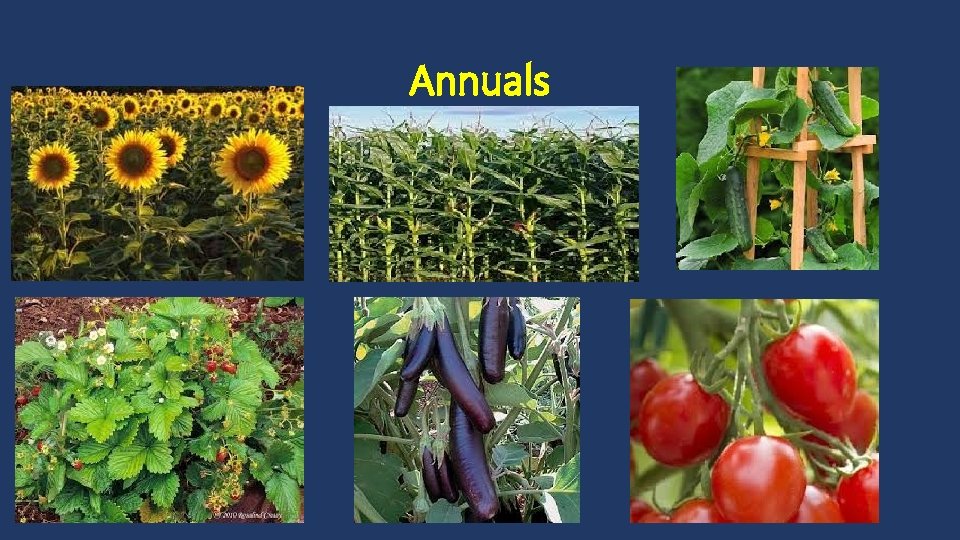
Annuals
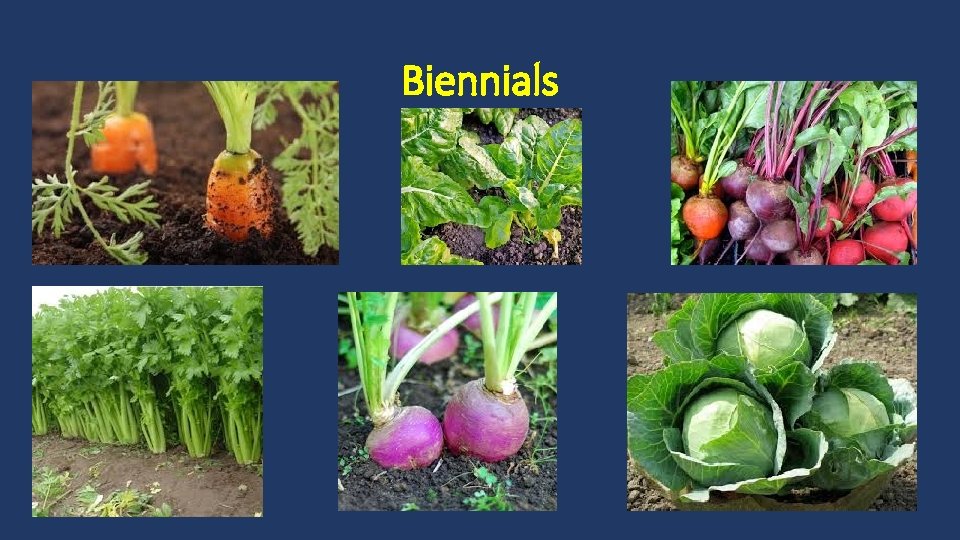
Biennials
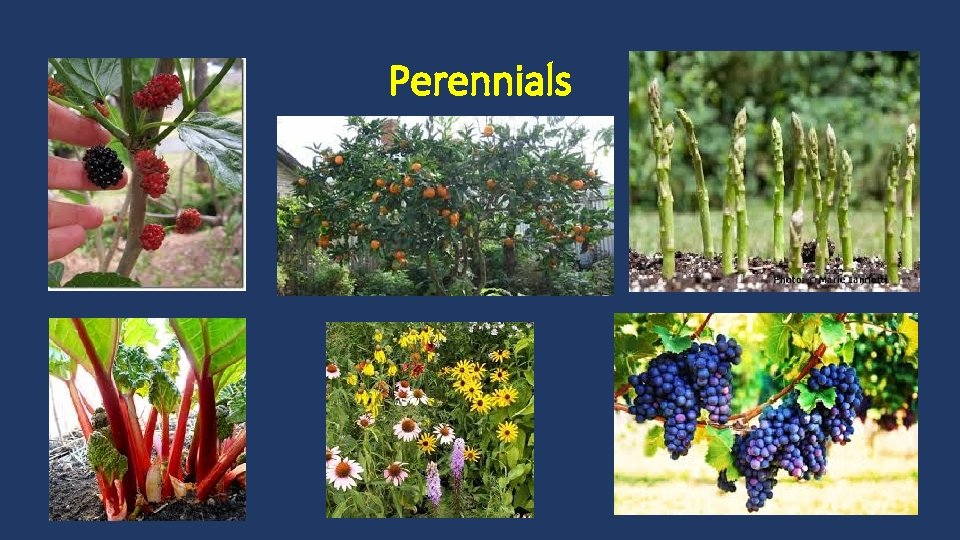
Perennials
Plant Reproduction • Vegetative reproduction – asexual reproduction, vegetative propagation; can multiply in more ways than just by seed • Usually by runners (stolons), rhizomes (thick, underground stem), and horizontal roots • Sexual Reproduction – seeds are produced in flowers; stamen is male reproductive structure; pistil is female reproductive structure • Monoecious – staminate and pistillate flowers produced on same plant • Dioecious – staminate and pistillate flowers produced on separate plants
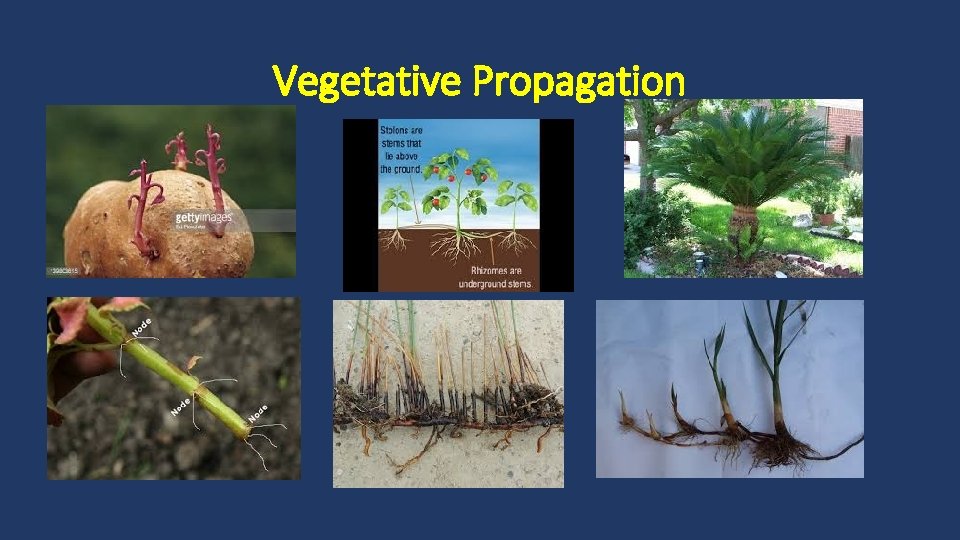
Vegetative Propagation

Monoecious plants
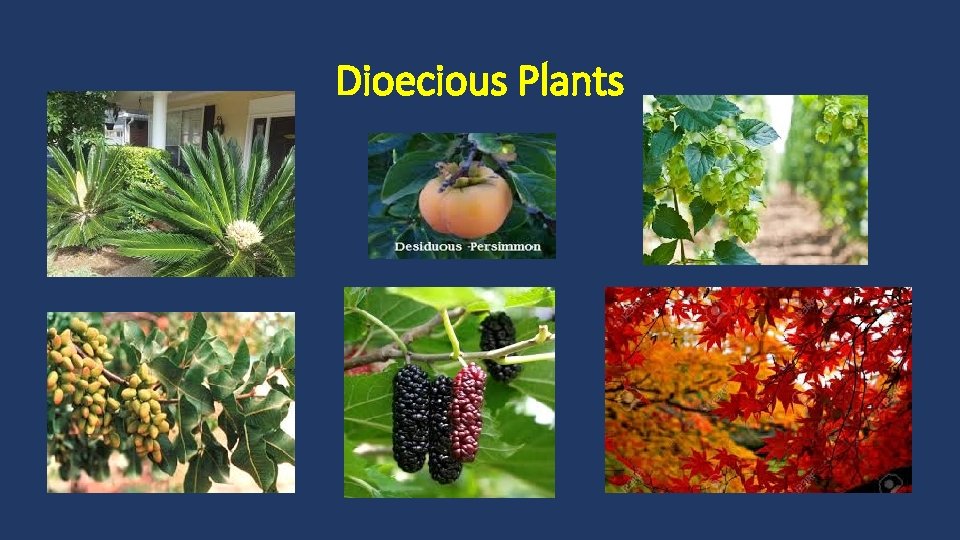
Dioecious Plants
- Slides: 18