
PLANT ASSETS STUDY OBJECTIVES After studying this chapter
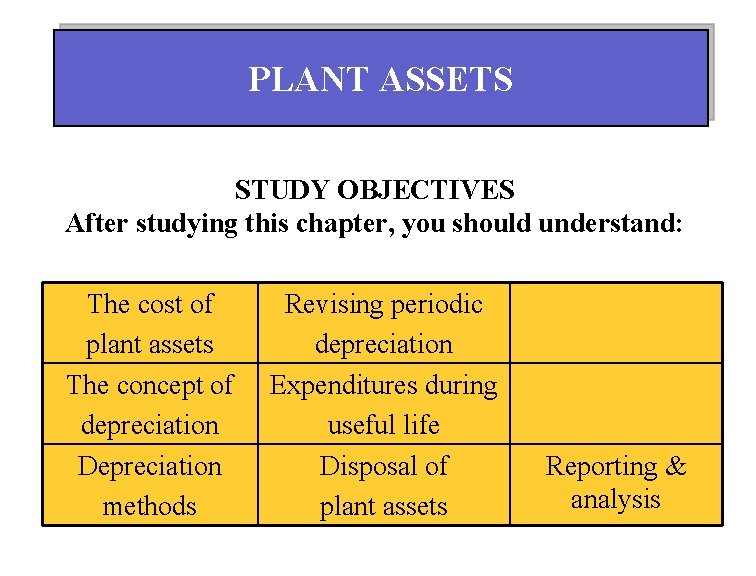
PLANT ASSETS STUDY OBJECTIVES After studying this chapter, you should understand: The cost of plant assets The concept of depreciation Depreciation methods Revising periodic depreciation Expenditures during useful life Disposal of plant assets Reporting & analysis
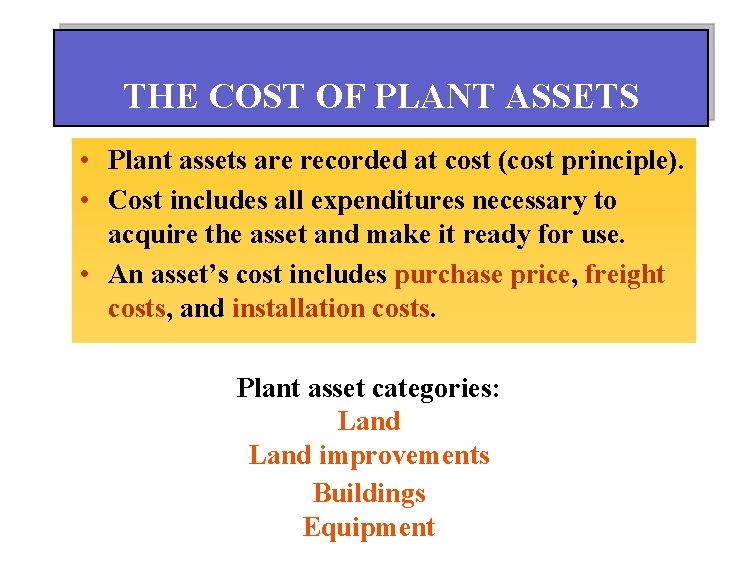
THE COST OF PLANT ASSETS • Plant assets are recorded at cost (cost principle). • Cost includes all expenditures necessary to acquire the asset and make it ready for use. • An asset’s cost includes purchase price, freight costs, and installation costs. Plant asset categories: Land improvements Buildings Equipment
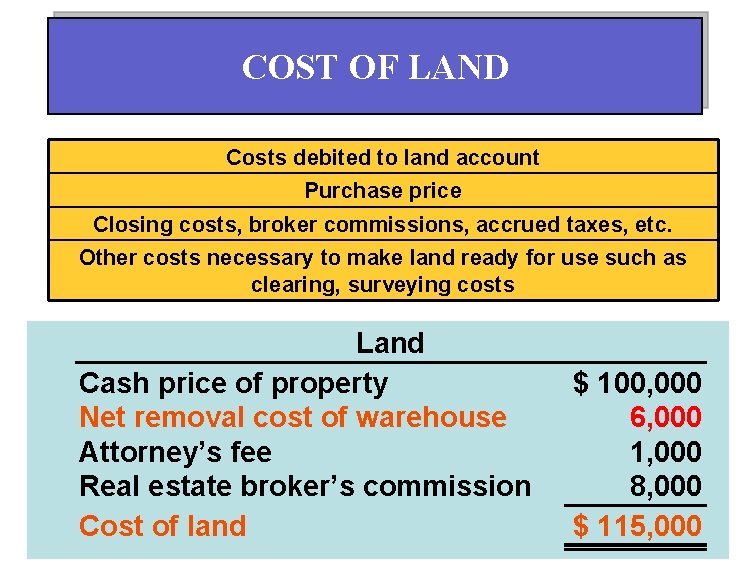
COST OF LAND Costs debited to land account Purchase price Closing costs, broker commissions, accrued taxes, etc. Other costs necessary to make land ready for use such as clearing, surveying costs Land Cash price of property Net removal cost of warehouse Attorney’s fee Real estate broker’s commission Cost of land $ 100, 000 6, 000 1, 000 8, 000 $ 115, 000
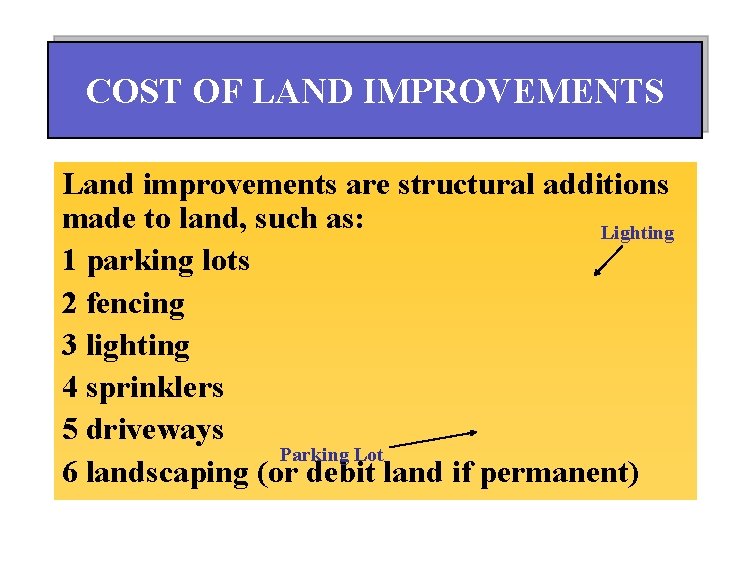
COST OF LAND IMPROVEMENTS Land improvements are structural additions made to land, such as: Lighting 1 parking lots 2 fencing 3 lighting 4 sprinklers 5 driveways Parking Lot 6 landscaping (or debit land if permanent)
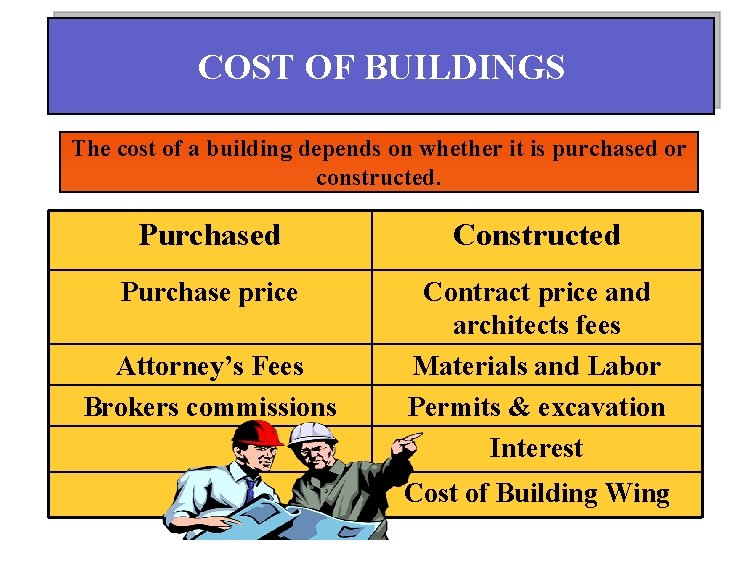
COST OF BUILDINGS The cost of a building depends on whether it is purchased or constructed. Purchased Constructed Purchase price Contract price and architects fees Materials and Labor Permits & excavation Interest Attorney’s Fees Brokers commissions Cost of Building Wing

COST OF EQUIPMENT Purchase price Sales tax Freight charges Transit insurance Assembly Installation Testing and Trial Runs Other ongoing expenses are expensed as incurred
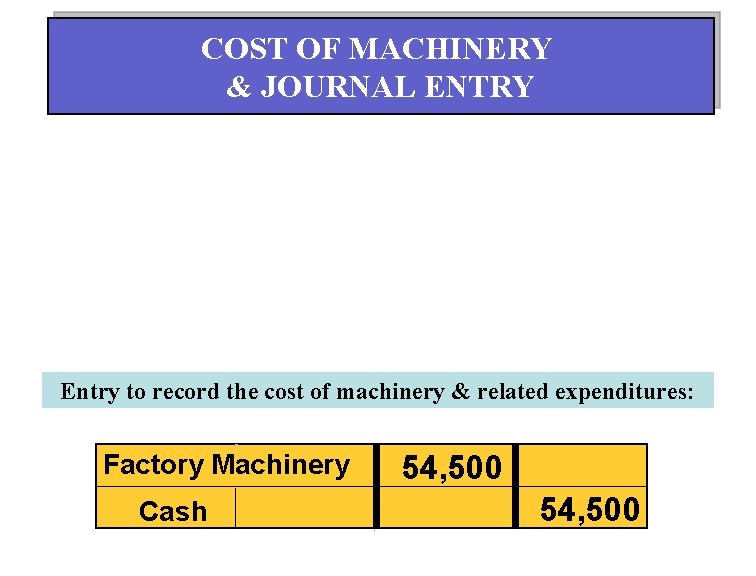
COST OF MACHINERY & JOURNAL ENTRY Entry to record the cost of machinery & related expenditures: Factory Machinery Cash 54, 500
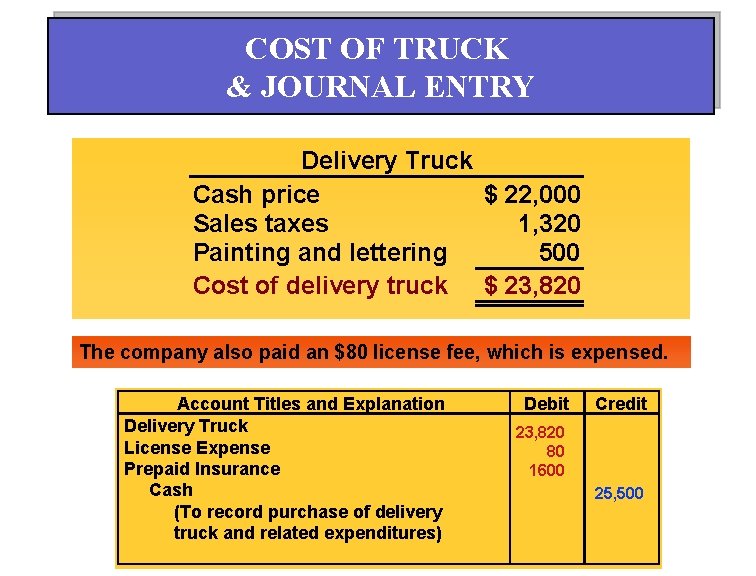
COST OF TRUCK & JOURNAL ENTRY Delivery Truck Cash price $ 22, 000 Sales taxes 1, 320 Painting and lettering 500 Cost of delivery truck $ 23, 820 The company also paid an $80 license fee, which is expensed. Account Titles and Explanation Delivery Truck License Expense Prepaid Insurance Cash (To record purchase of delivery truck and related expenditures) Debit Credit 23, 820 80 1600 25, 500
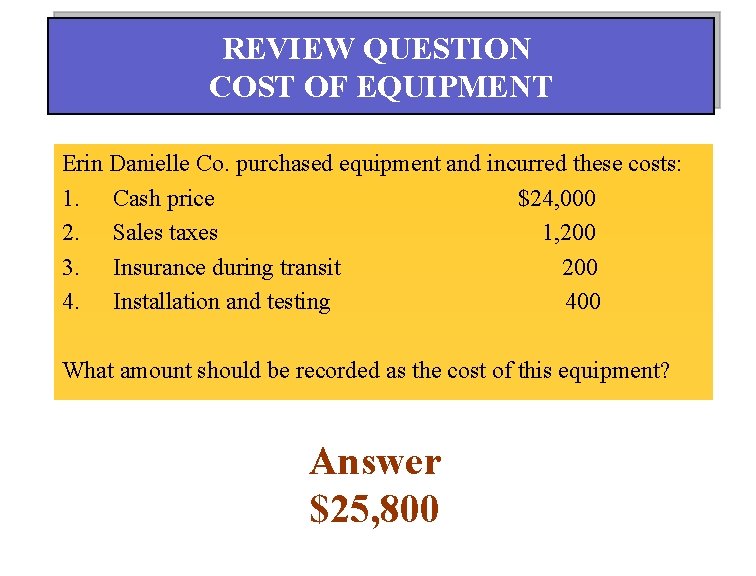
REVIEW QUESTION COST OF EQUIPMENT Erin Danielle Co. purchased equipment and incurred these costs: 1. Cash price $24, 000 2. Sales taxes 1, 200 3. Insurance during transit 200 4. Installation and testing 400 What amount should be recorded as the cost of this equipment? Answer $25, 800
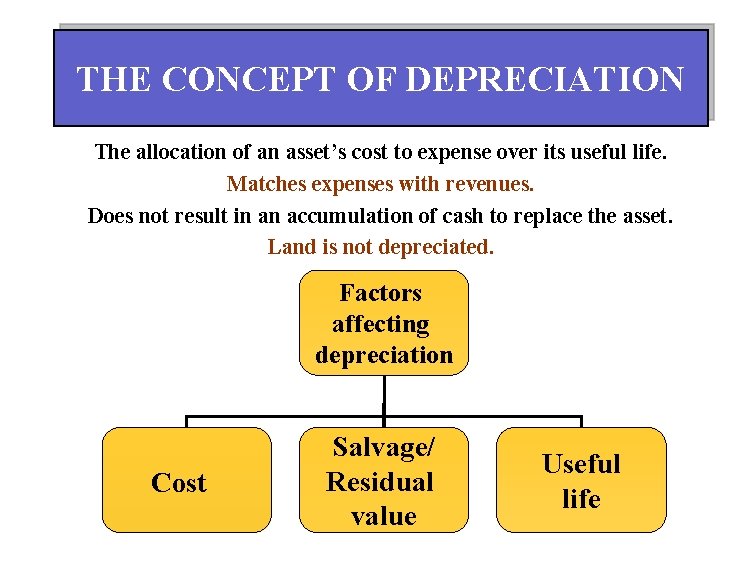
THE CONCEPT OF DEPRECIATION The allocation of an asset’s cost to expense over its useful life. Matches expenses with revenues. Does not result in an accumulation of cash to replace the asset. Land is not depreciated. Factors affecting depreciation Cost Salvage/ Residual value Useful life
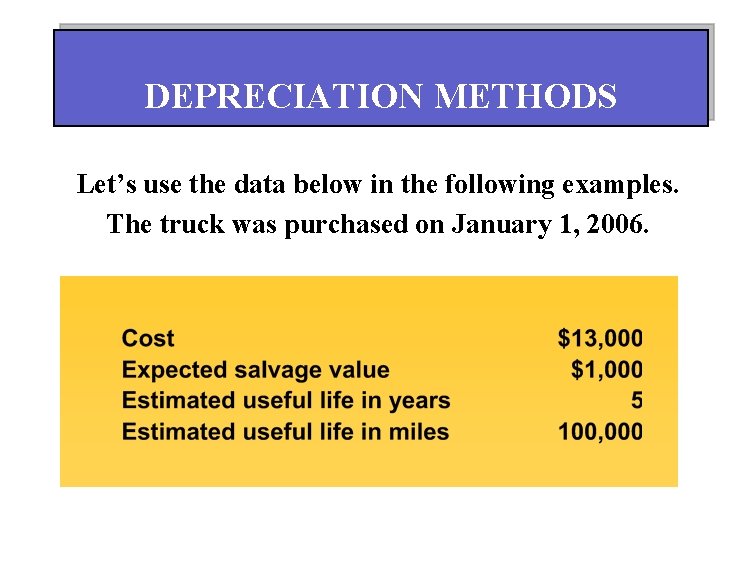
DEPRECIATION METHODS Let’s use the data below in the following examples. The truck was purchased on January 1, 2006.
STRAIGHT-LINE METHOD • Depreciation is the same for each year of the asset’s useful life. • It is measured solely by the passage of time. • Cost of asset - salvage value = depreciable base
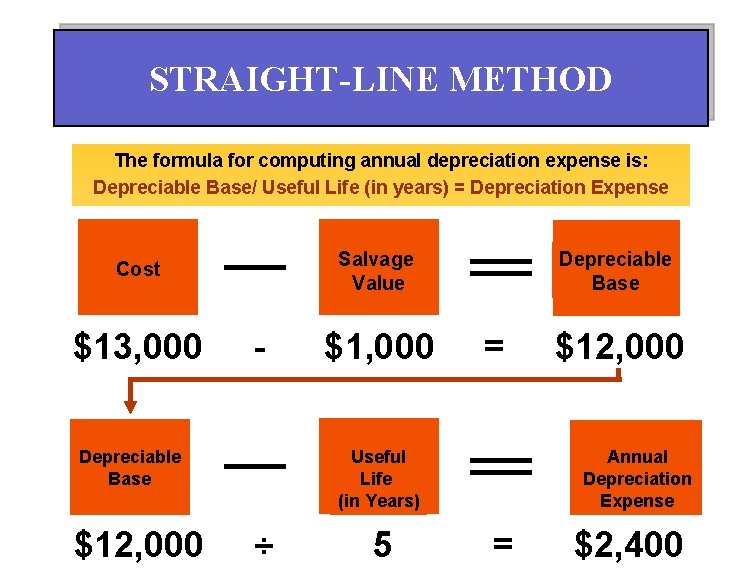
STRAIGHT-LINE METHOD The formula for computing annual depreciation expense is: Depreciable Base/ Useful Life (in years) = Depreciation Expense Salvage Value Cost $13, 000 - Depreciable Base $12, 000 $1, 000 Depreciable Base = Useful Life (in Years) ÷ 5 $12, 000 Annual Depreciation Expense = $2, 400
UNITS OF ACTIVITY • Useful life is expressed in terms of the total units of production expected. • Total activity is a rough estimate. • If productivity varies significantly from one period to another, this method is best at matching of expenses with revenues.
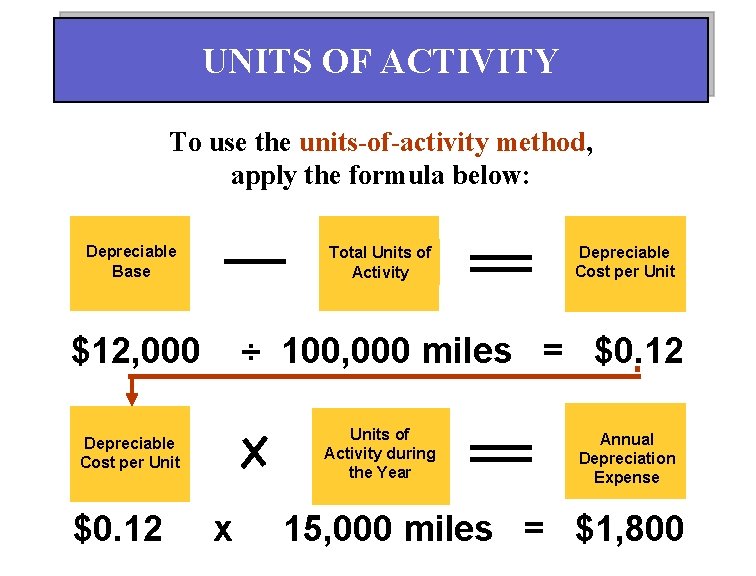
UNITS OF ACTIVITY To use the units-of-activity method, apply the formula below: Depreciable Base Total Units of Activity $12, 000 ÷ 100, 000 miles = $0. 12 Units of Activity during the Year Depreciable Cost per Unit $0. 12 Depreciable Cost per Unit x Annual Depreciation Expense 15, 000 miles = $1, 800
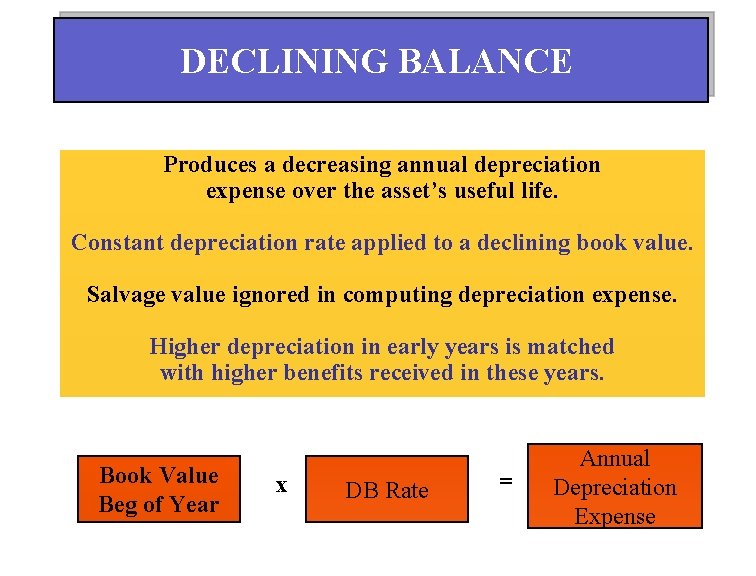
DECLINING BALANCE Produces a decreasing annual depreciation expense over the asset’s useful life. Constant depreciation rate applied to a declining book value. Salvage value ignored in computing depreciation expense. Higher depreciation in early years is matched with higher benefits received in these years. Book Value Beg of Year x DB Rate = Annual Depreciation Expense
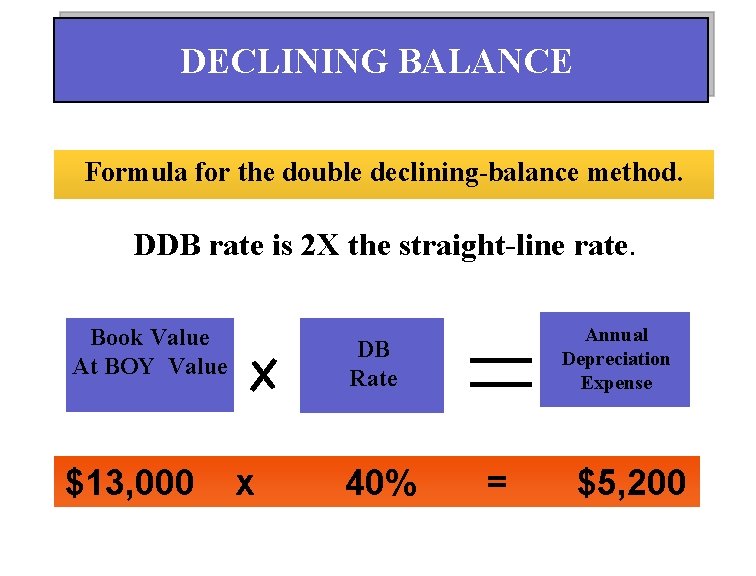
DECLINING BALANCE Formula for the double declining-balance method. DDB rate is 2 X the straight-line rate. Book Value At BOY Value $13, 000 Annual Depreciation Expense DB Rate x 40% = $5, 200
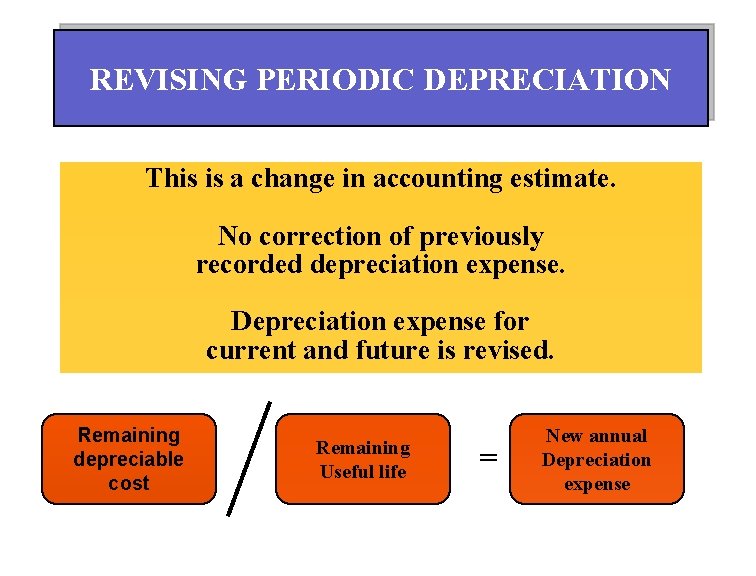
REVISING PERIODIC DEPRECIATION This is a change in accounting estimate. No correction of previously recorded depreciation expense. Depreciation expense for current and future is revised. Remaining depreciable cost Remaining Useful life = New annual Depreciation expense
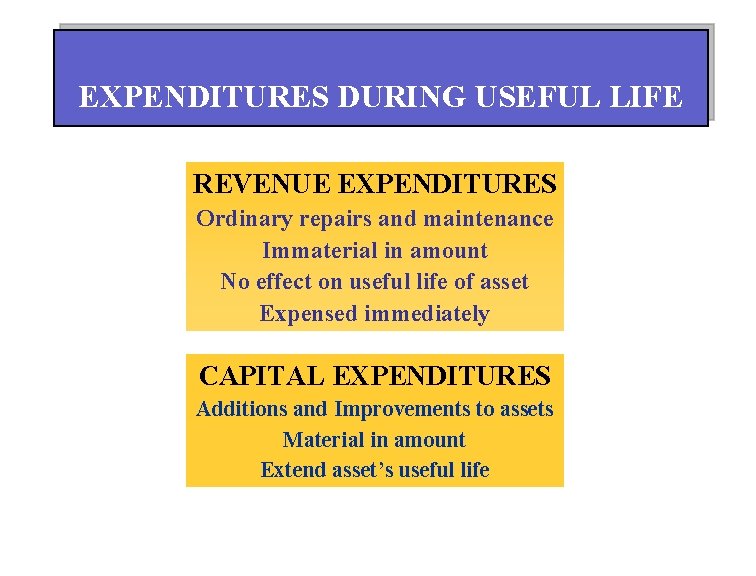
EXPENDITURES DURING USEFUL LIFE REVENUE EXPENDITURES Ordinary repairs and maintenance Immaterial in amount No effect on useful life of asset Expensed immediately CAPITAL EXPENDITURES Additions and Improvements to assets Material in amount Extend asset’s useful life
- Slides: 19