
Plant Animal Bacteria Protist Cell membrane Nucleus Mitochondria
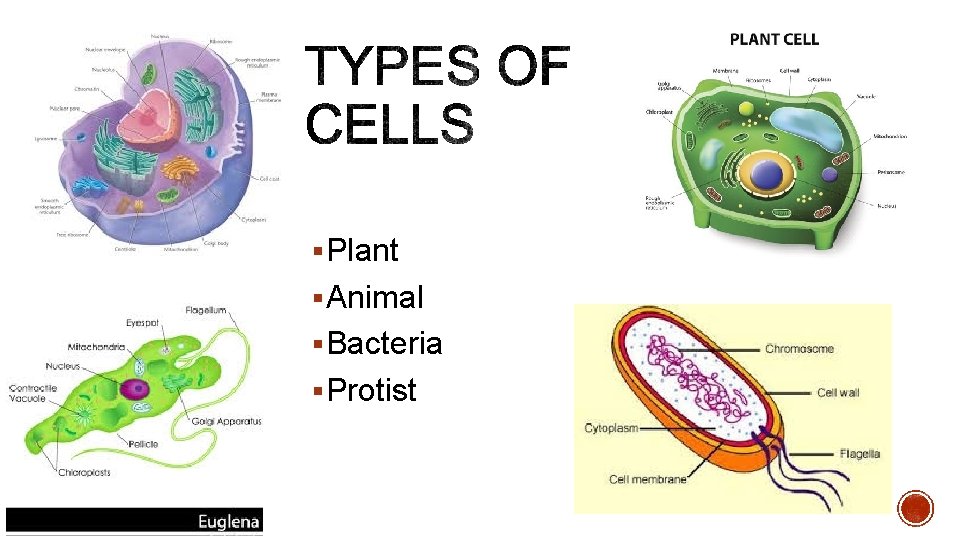
§ Plant § Animal § Bacteria § Protist
§Cell membrane §Nucleus §Mitochondria §Vacuole
§Cell wall §Chloroplast
§ Prokaryotic organisms are § Eukaryotic organisms are cells that lack a nucleus and cells that contain a membrane-bound membrane bound nucleus organelles. and organelles § Prokaryotes are made up of § Eukaryotes can be plant, most bacteria animal, and protists
§ Unicellular organisms are composed of one cell § Unicellular organisms are commonly protists and bacteria
§ Cells that are photosynthetic contain chloroplasts and the pigment chlorophyll. § This would include most cells of the plant kingdom and some protist § Non-photosynthesizing cells would lack chloroplasts and chlorophyll. § This would include cells of the animal kingdom
§Cell membrane §Chloroplasts §Cytoplasm §Mitochondria §Nucleus §Cell wall §Vacuole §Lysosomes
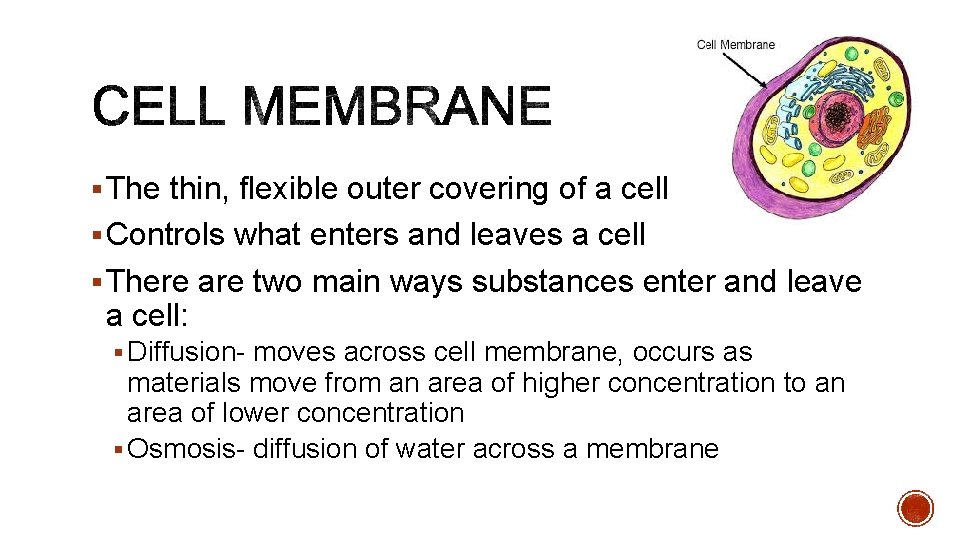
§ The thin, flexible outer covering of a cell § Controls what enters and leaves a cell § There are two main ways substances enter and leave a cell: § Diffusion- moves across cell membrane, occurs as materials move from an area of higher concentration to an area of lower concentration § Osmosis- diffusion of water across a membrane
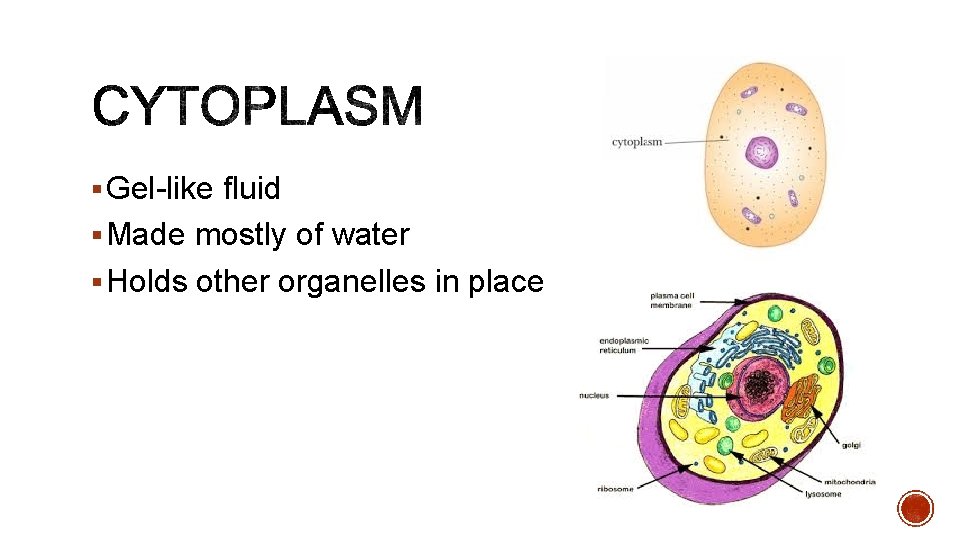
§ Gel-like fluid § Made mostly of water § Holds other organelles in place
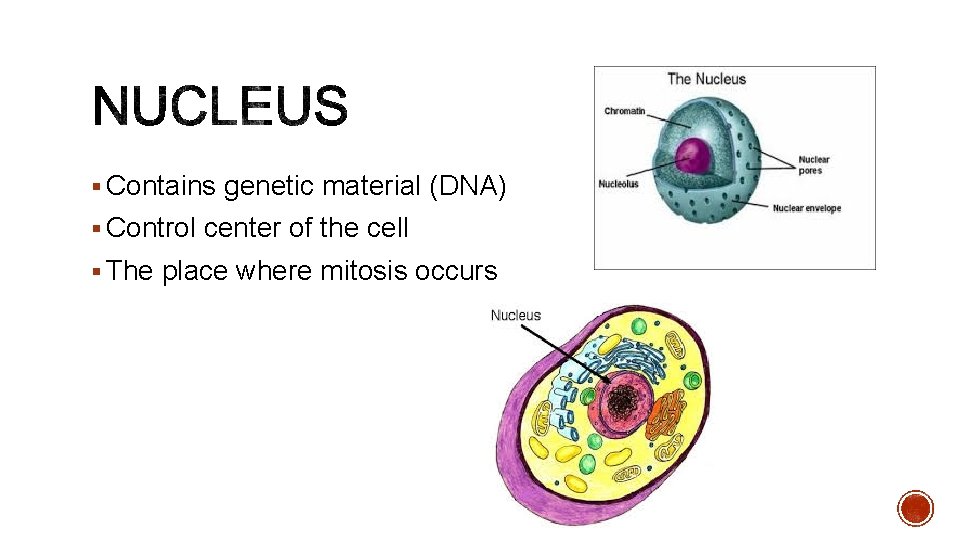
§ Contains genetic material (DNA) § Control center of the cell § The place where mitosis occurs
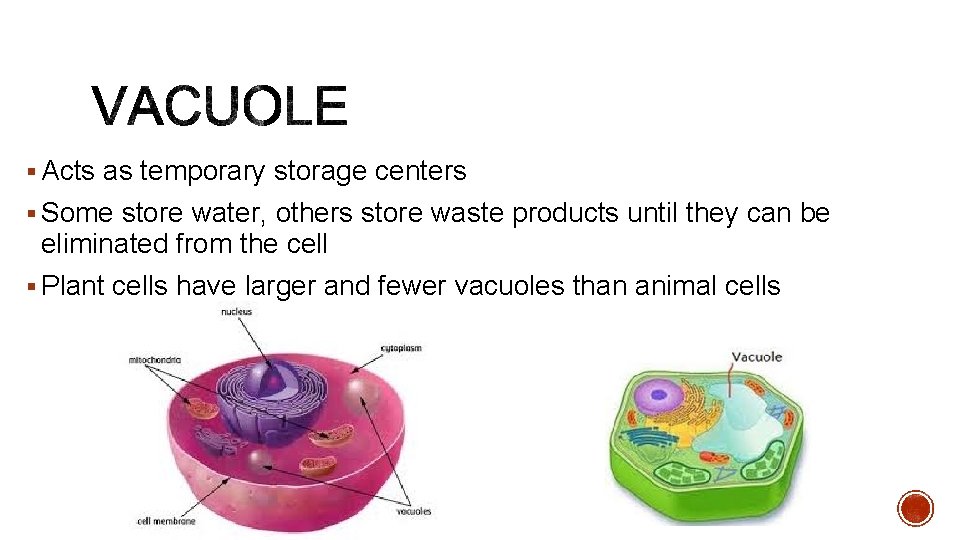
§ Acts as temporary storage centers § Some store water, others store waste products until they can be eliminated from the cell § Plant cells have larger and fewer vacuoles than animal cells
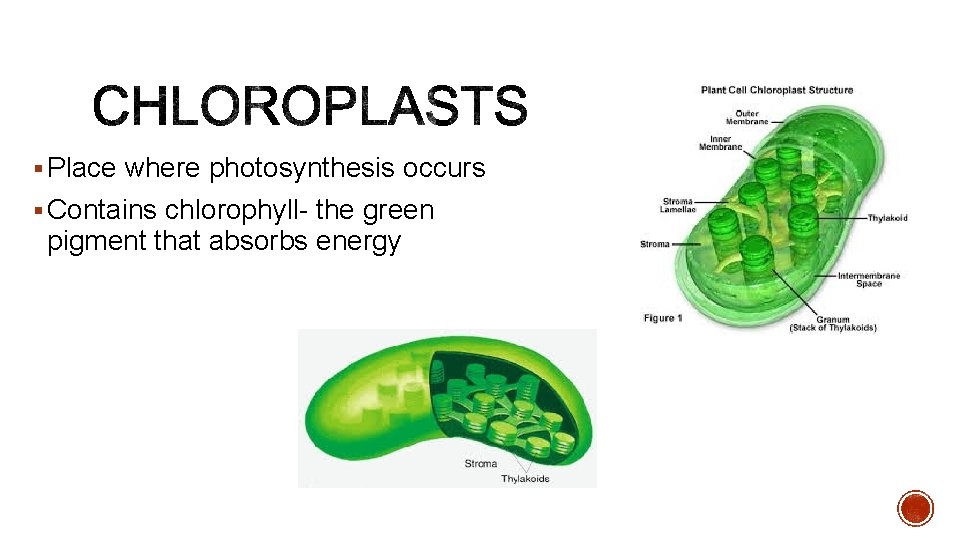
§ Place where photosynthesis occurs § Contains chlorophyll- the green pigment that absorbs energy
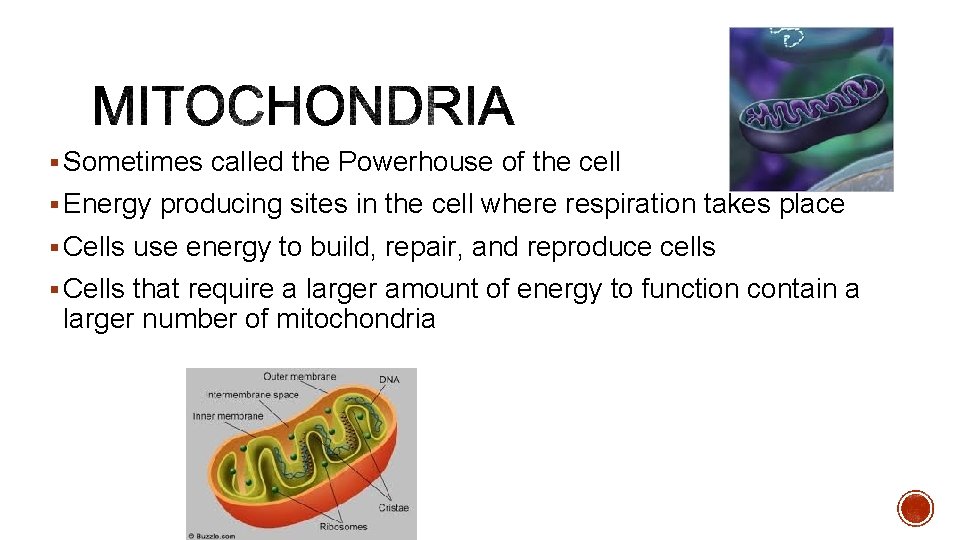
§ Sometimes called the Powerhouse of the cell § Energy producing sites in the cell where respiration takes place § Cells use energy to build, repair, and reproduce cells § Cells that require a larger amount of energy to function contain a larger number of mitochondria
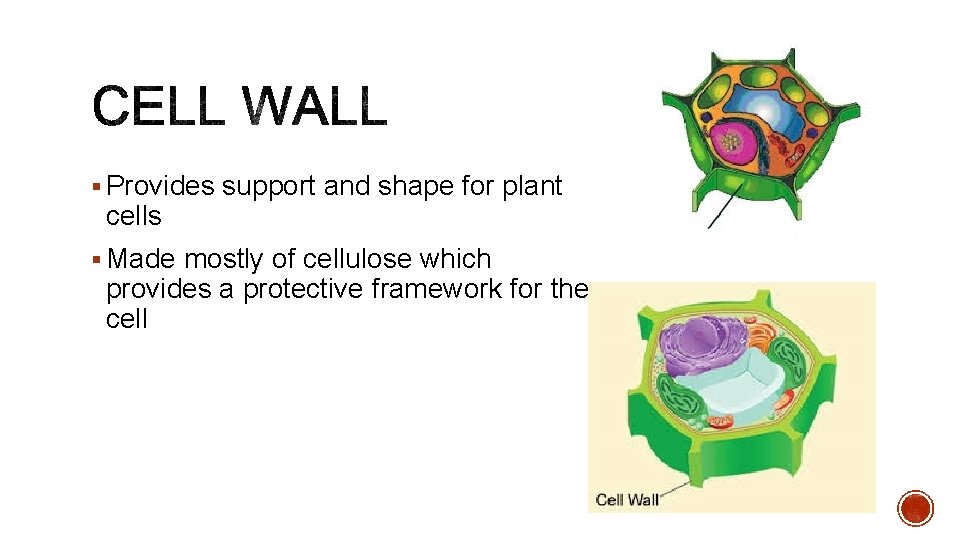
§ Provides support and shape for plant cells § Made mostly of cellulose which provides a protective framework for the cell
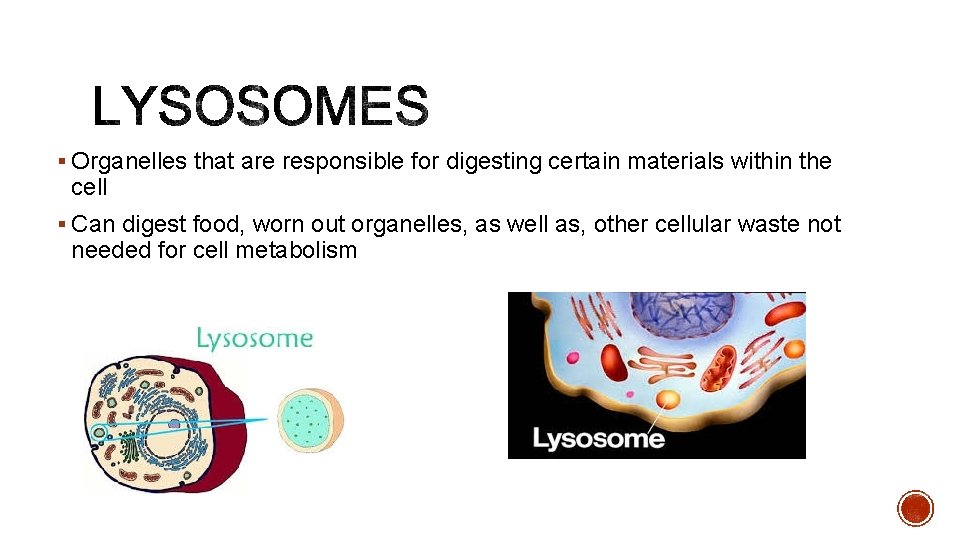
§ Organelles that are responsible for digesting certain materials within the cell § Can digest food, worn out organelles, as well as, other cellular waste not needed for cell metabolism
§ Mitosis § Waste elimination § Photosynthesis § Cellular respiration
§ Results in a duplicate copy of the cell § Needed for growth, replacement of cells, and asexual reproduction § Occurs in the nucleus
§ Organisms rid cells of waste products that could be harmful § Occurs in the cell membrane § Process of diffusion § Process of osmosis
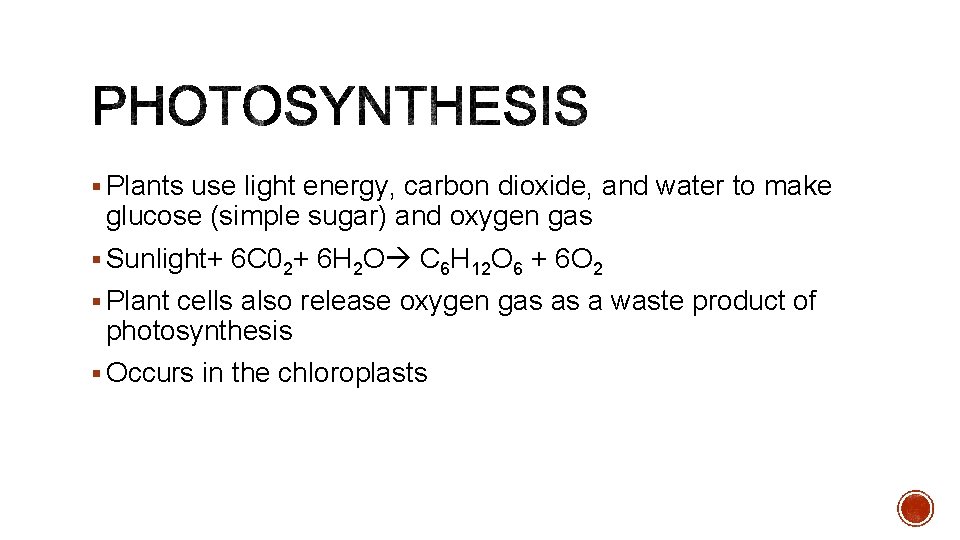
§ Plants use light energy, carbon dioxide, and water to make glucose (simple sugar) and oxygen gas § Sunlight+ 6 C 02+ 6 H 2 O C 6 H 12 O 6 + 6 O 2 § Plant cells also release oxygen gas as a waste product of photosynthesis § Occurs in the chloroplasts
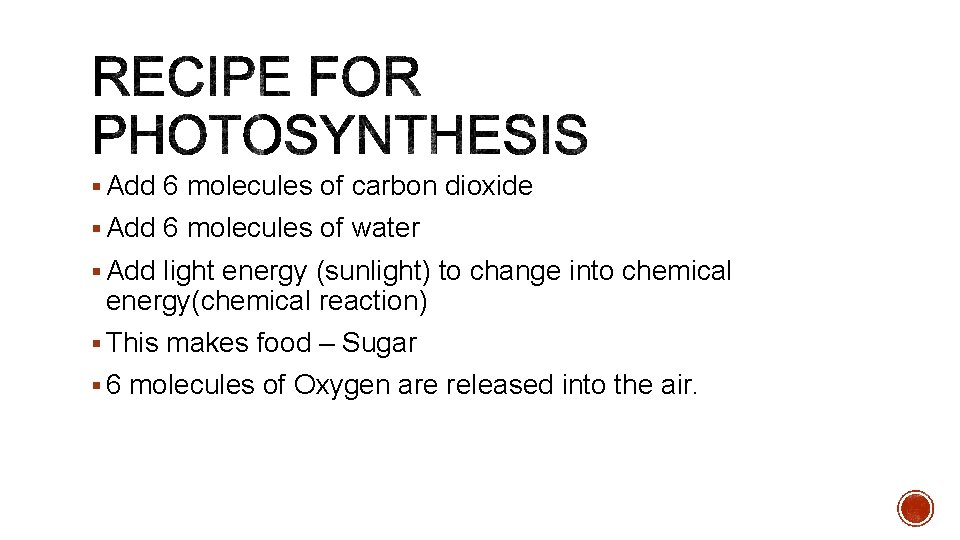
§ Add 6 molecules of carbon dioxide § Add 6 molecules of water § Add light energy (sunlight) to change into chemical energy(chemical reaction) § This makes food – Sugar § 6 molecules of Oxygen are released into the air.
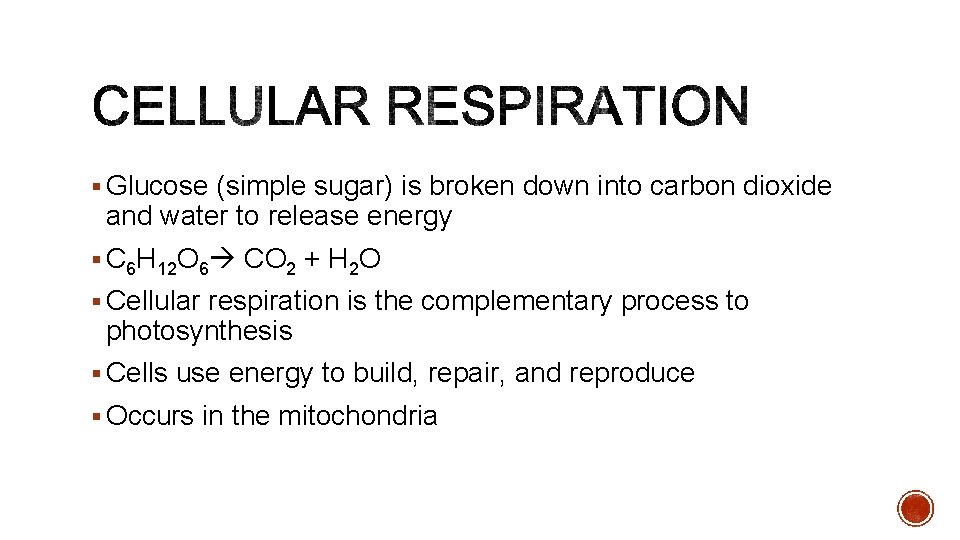
§ Glucose (simple sugar) is broken down into carbon dioxide and water to release energy § C 6 H 12 O 6 CO 2 + H 2 O § Cellular respiration is the complementary process to photosynthesis § Cells use energy to build, repair, and reproduce § Occurs in the mitochondria
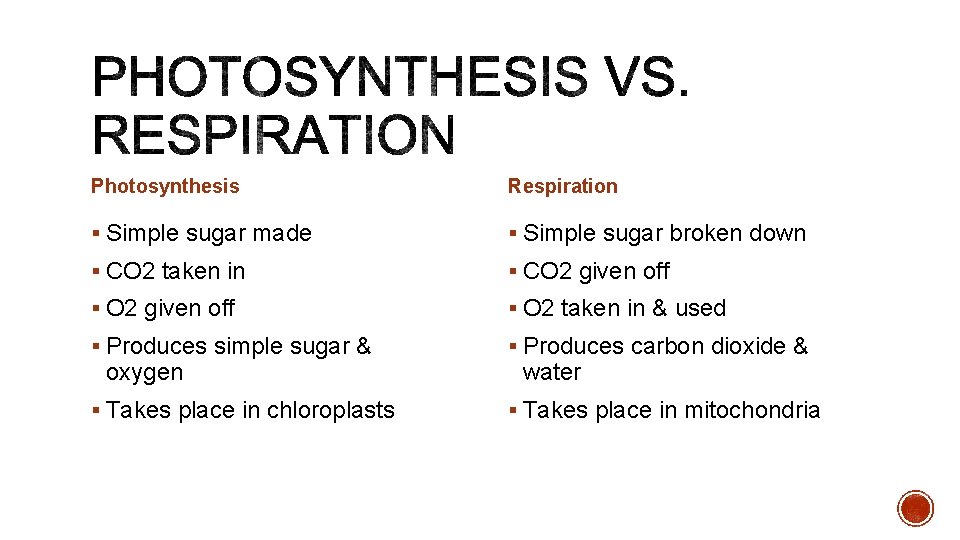
Photosynthesis Respiration § Simple sugar made § Simple sugar broken down § CO 2 taken in § CO 2 given off § O 2 taken in & used § Produces simple sugar & § Produces carbon dioxide & § Takes place in chloroplasts § Takes place in mitochondria oxygen water
- Slides: 24