
Plant and Animal Cells The Cell Theory 1
- Slides: 19
Plant and Animal Cells
The Cell Theory 1. All living things are made up of one or more cells and their products 2. The cell is the simplest unit that can carry out all life processes 3. All cells come from other cells; they do not come from non-living matter All living things are either prokaryotes (simple, singlecelled organisms) or eukaryotes (more complex single -celled organisms or multicellular).
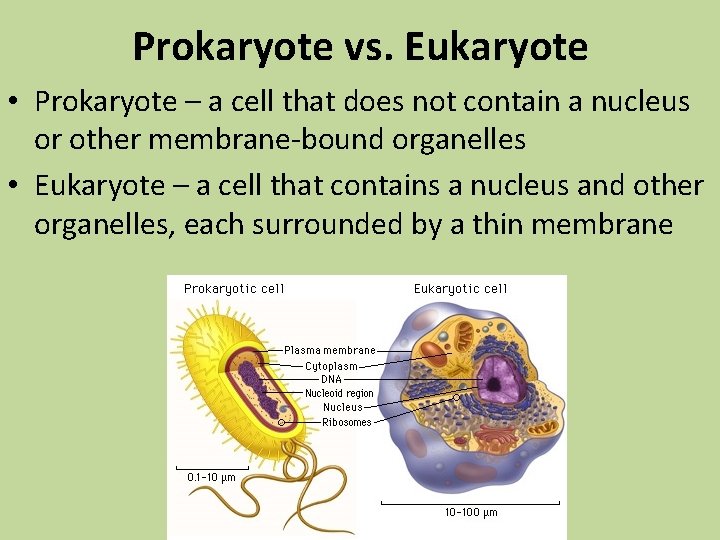
Prokaryote vs. Eukaryote • Prokaryote – a cell that does not contain a nucleus or other membrane-bound organelles • Eukaryote – a cell that contains a nucleus and other organelles, each surrounded by a thin membrane
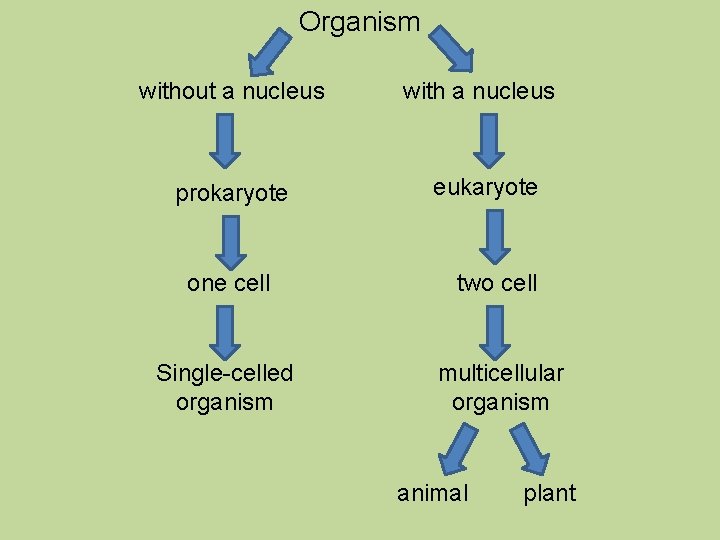
Organism without a nucleus with a nucleus prokaryote eukaryote one cell two cell Single-celled organism multicellular organism animal plant
Cell Structure A eukaryotic cell has specialized parts, called organelles, that carry out specific functions necessary for life. organelle: a cell structure that performs a specific function for the cell All cells have to perform the same basic activities to stay alive: use energy, store materials, take materials from the environment, get rid of wastes, move substances to where they are needed, and reproduce.
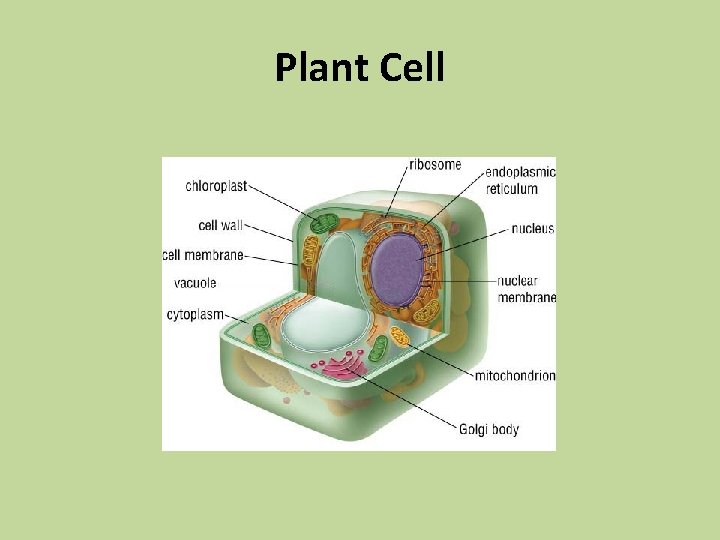
Plant Cell
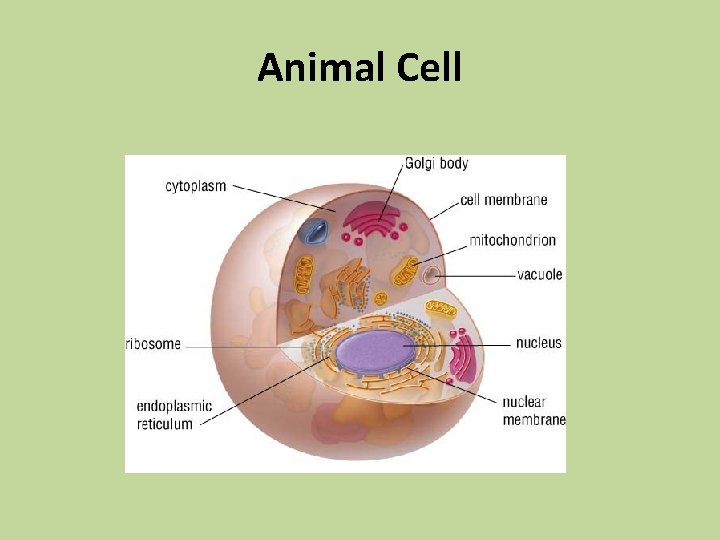
Animal Cell
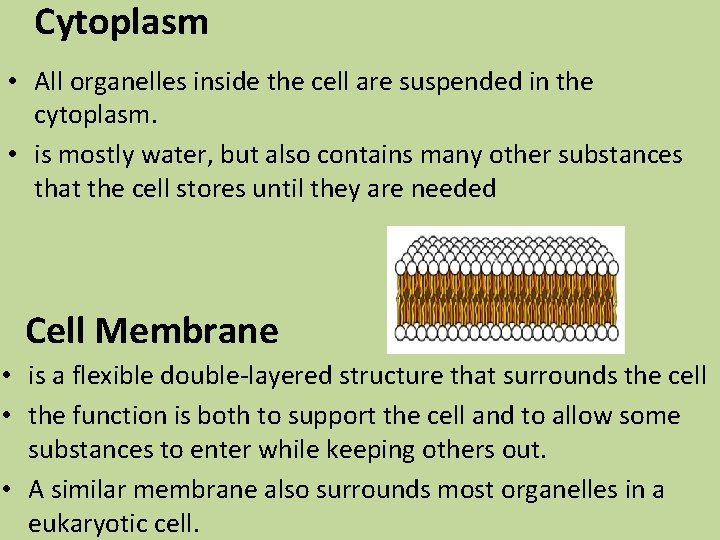
Cytoplasm • All organelles inside the cell are suspended in the cytoplasm. • is mostly water, but also contains many other substances that the cell stores until they are needed Cell Membrane • is a flexible double-layered structure that surrounds the cell • the function is both to support the cell and to allow some substances to enter while keeping others out. • A similar membrane also surrounds most organelles in a eukaryotic cell.
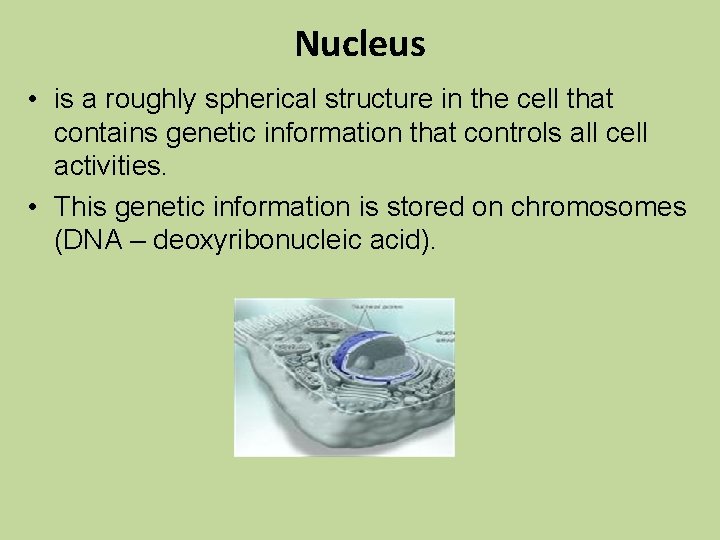
Nucleus • is a roughly spherical structure in the cell that contains genetic information that controls all cell activities. • This genetic information is stored on chromosomes (DNA – deoxyribonucleic acid).
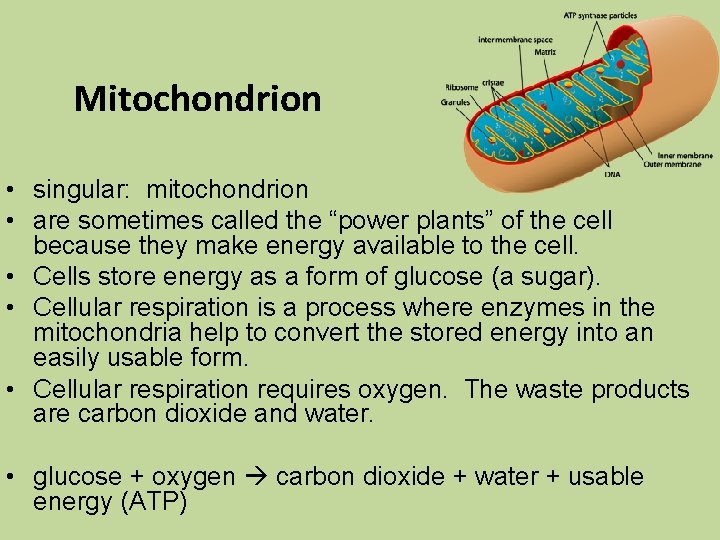
Mitochondrion • singular: mitochondrion • are sometimes called the “power plants” of the cell because they make energy available to the cell. • Cells store energy as a form of glucose (a sugar). • Cellular respiration is a process where enzymes in the mitochondria help to convert the stored energy into an easily usable form. • Cellular respiration requires oxygen. The waste products are carbon dioxide and water. • glucose + oxygen carbon dioxide + water + usable energy (ATP)
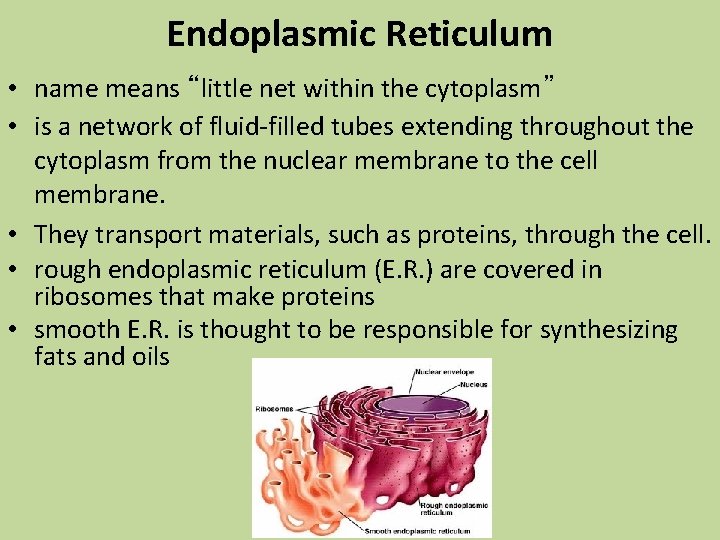
Endoplasmic Reticulum • name means “little net within the cytoplasm” • is a network of fluid-filled tubes extending throughout the cytoplasm from the nuclear membrane to the cell membrane. • They transport materials, such as proteins, through the cell. • rough endoplasmic reticulum (E. R. ) are covered in ribosomes that make proteins • smooth E. R. is thought to be responsible for synthesizing fats and oils
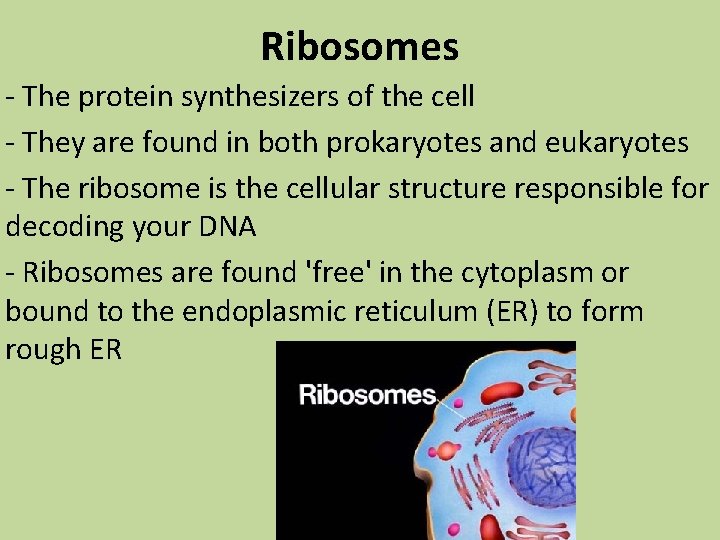
Ribosomes - The protein synthesizers of the cell - They are found in both prokaryotes and eukaryotes - The ribosome is the cellular structure responsible for decoding your DNA - Ribosomes are found 'free' in the cytoplasm or bound to the endoplasmic reticulum (ER) to form rough ER
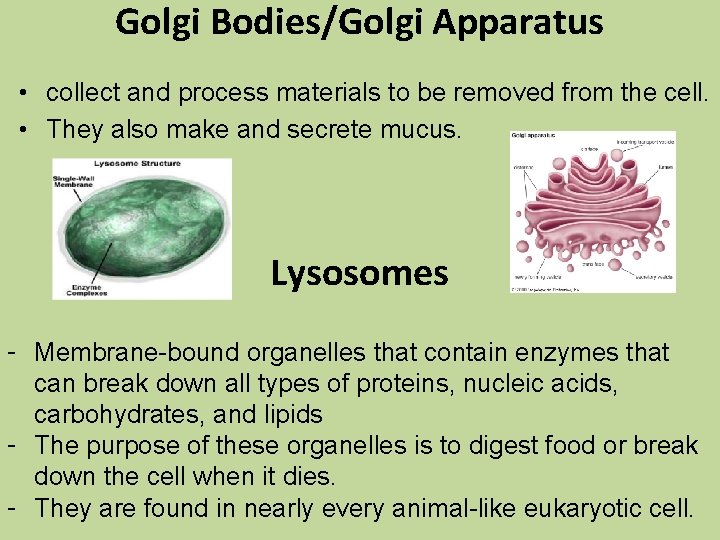
Golgi Bodies/Golgi Apparatus • collect and process materials to be removed from the cell. • They also make and secrete mucus. Lysosomes - Membrane-bound organelles that contain enzymes that can break down all types of proteins, nucleic acids, carbohydrates, and lipids - The purpose of these organelles is to digest food or break down the cell when it dies. - They are found in nearly every animal-like eukaryotic cell.
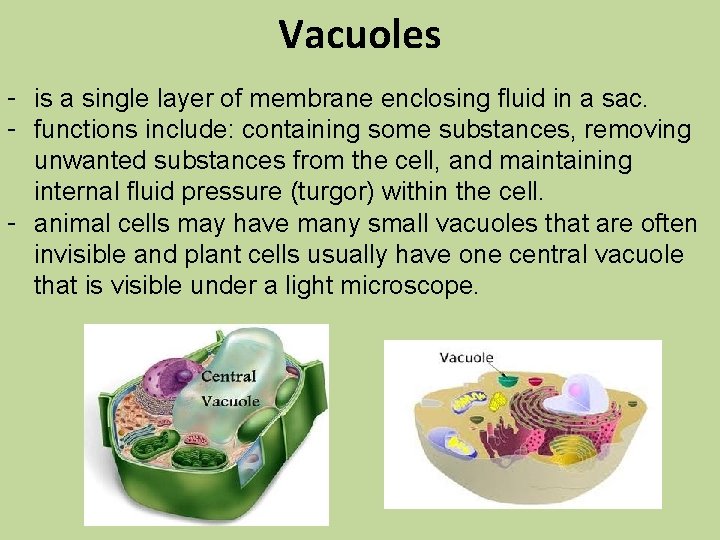
Vacuoles - is a single layer of membrane enclosing fluid in a sac. - functions include: containing some substances, removing unwanted substances from the cell, and maintaining internal fluid pressure (turgor) within the cell. - animal cells may have many small vacuoles that are often invisible and plant cells usually have one central vacuole that is visible under a light microscope.
The Animal Cell http: //www. cellsalive. com/cells/cell_model. htm
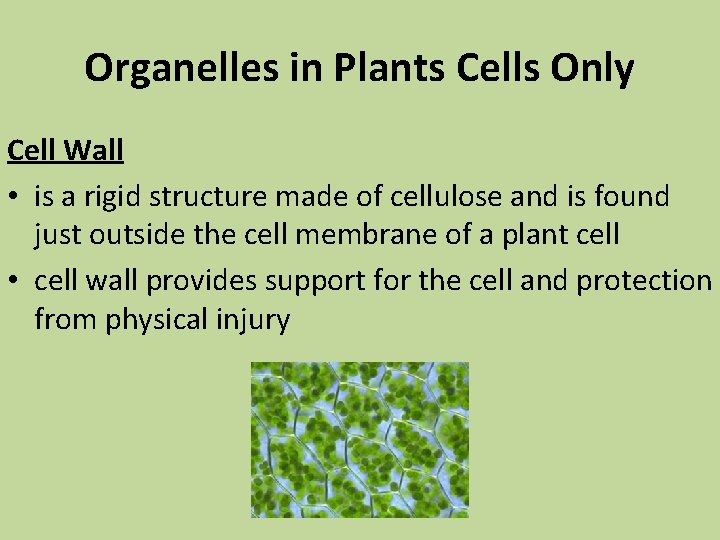
Organelles in Plants Cells Only Cell Wall • is a rigid structure made of cellulose and is found just outside the cell membrane of a plant cell • cell wall provides support for the cell and protection from physical injury
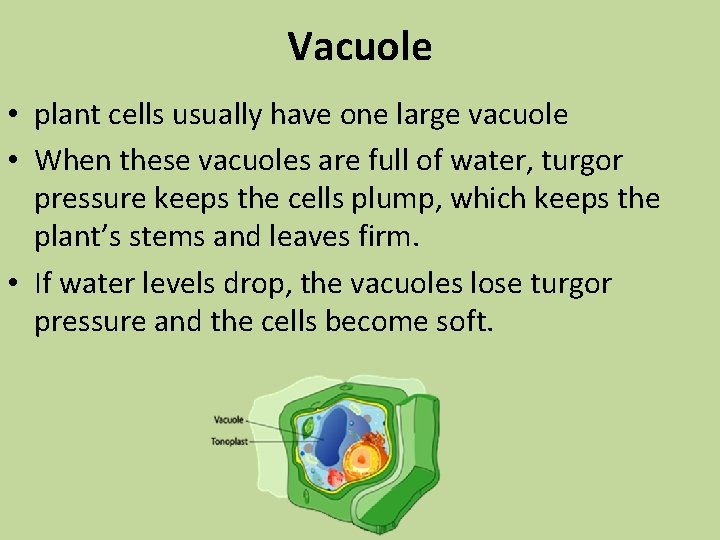
Vacuole • plant cells usually have one large vacuole • When these vacuoles are full of water, turgor pressure keeps the cells plump, which keeps the plant’s stems and leaves firm. • If water levels drop, the vacuoles lose turgor pressure and the cells become soft.
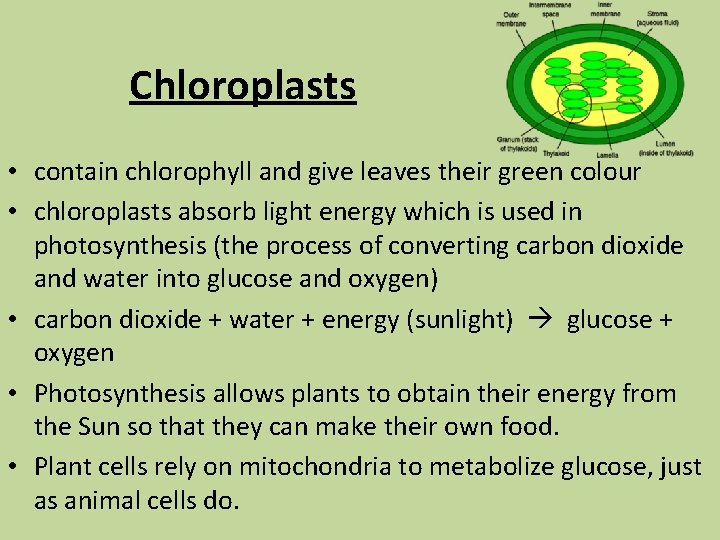
Chloroplasts • contain chlorophyll and give leaves their green colour • chloroplasts absorb light energy which is used in photosynthesis (the process of converting carbon dioxide and water into glucose and oxygen) • carbon dioxide + water + energy (sunlight) glucose + oxygen • Photosynthesis allows plants to obtain their energy from the Sun so that they can make their own food. • Plant cells rely on mitochondria to metabolize glucose, just as animal cells do.
The Plant Cell http: //www. cellsalive. com/cells/cell_model. htm