
Plant and Animal Cells 2 Lesson 2 September
Plant and Animal Cells 2 Lesson 2 September 23 rd, 2010
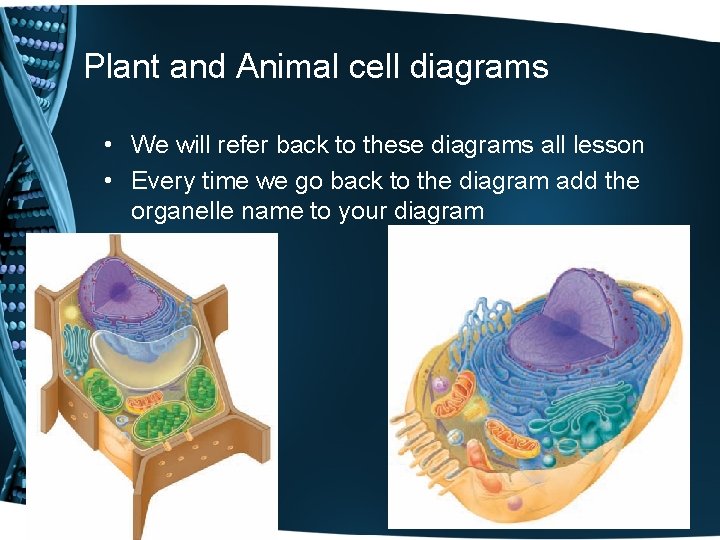
Plant and Animal cell diagrams • We will refer back to these diagrams all lesson • Every time we go back to the diagram add the organelle name to your diagram

From Yesterday -Add these to your diagrams Nucleus Nucleolus Chromatin Cell Membrane Cytoplasm Cell Membrane

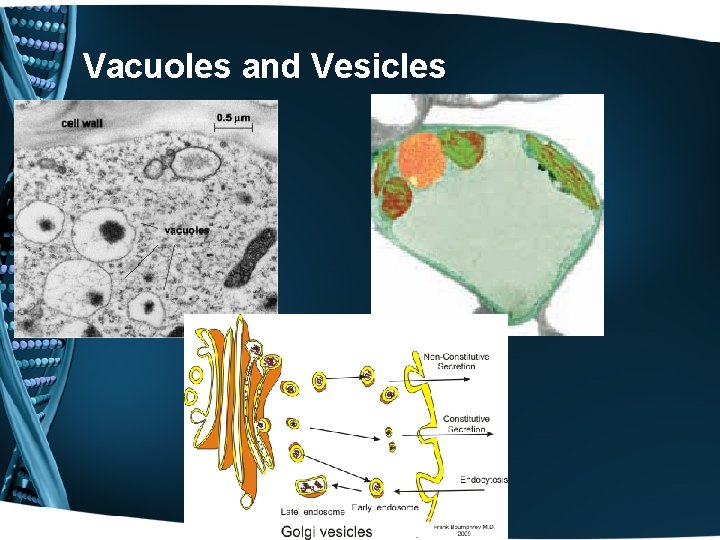
Vacuoles and Vesicles • Membrane-bound organelles that store nutrients, wastes, and other substances used by the cell • In plant cells, the central vacuole stores water for the cell. When water the cell, the central vacuole swells, causing the plant cell to become firm. • Vesicles transport substances throughout the cell.
Vacuoles and Vesicles

Central Vacuole Vesicle
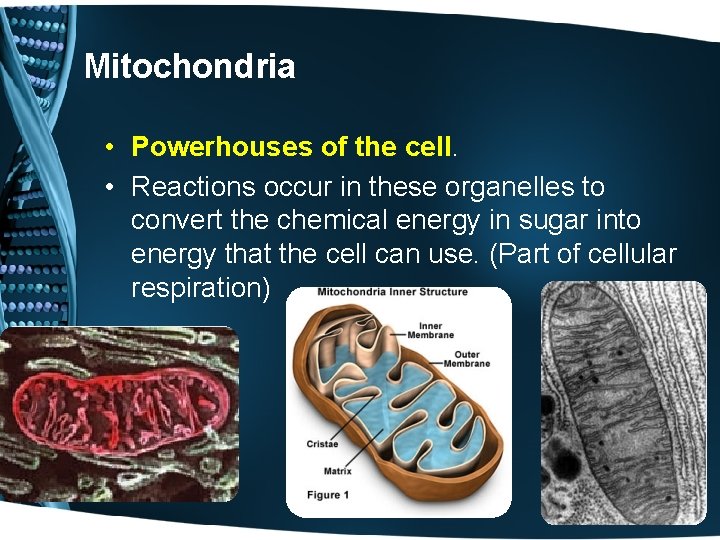
Mitochondria • Powerhouses of the cell. • Reactions occur in these organelles to convert the chemical energy in sugar into energy that the cell can use. (Part of cellular respiration)
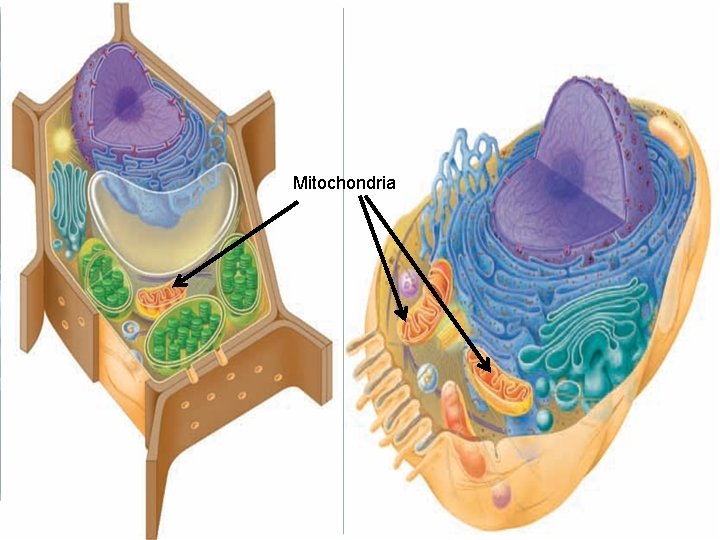
Mitochondria
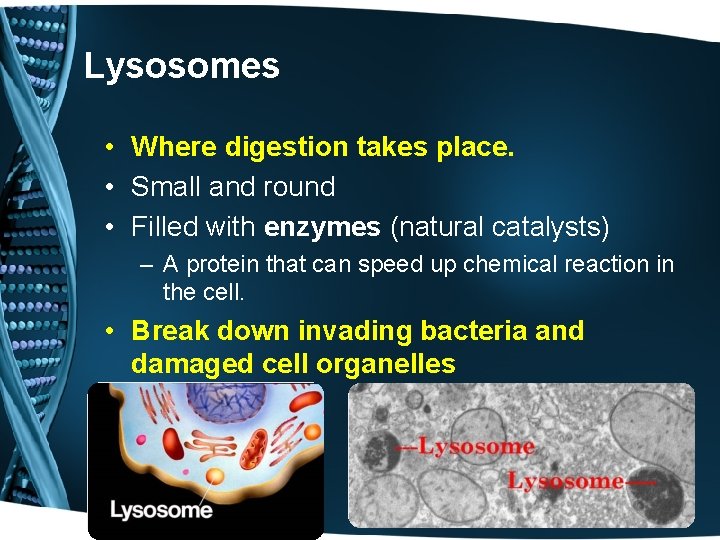
Lysosomes • Where digestion takes place. • Small and round • Filled with enzymes (natural catalysts) – A protein that can speed up chemical reaction in the cell. • Break down invading bacteria and damaged cell organelles
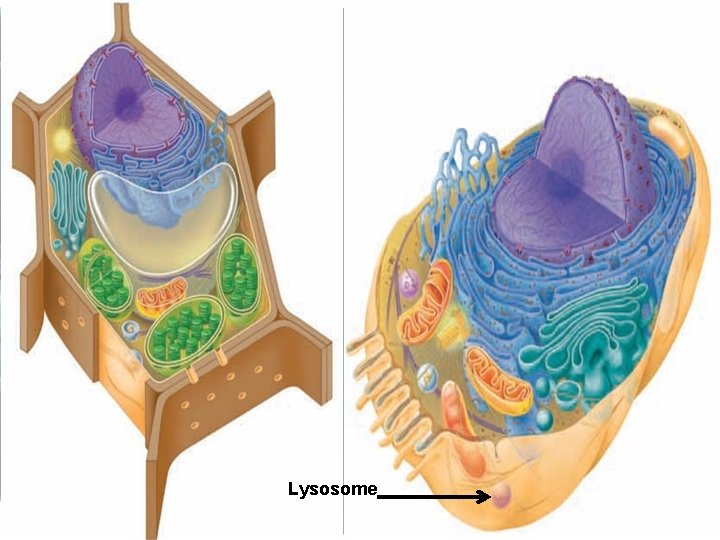
Lysosome
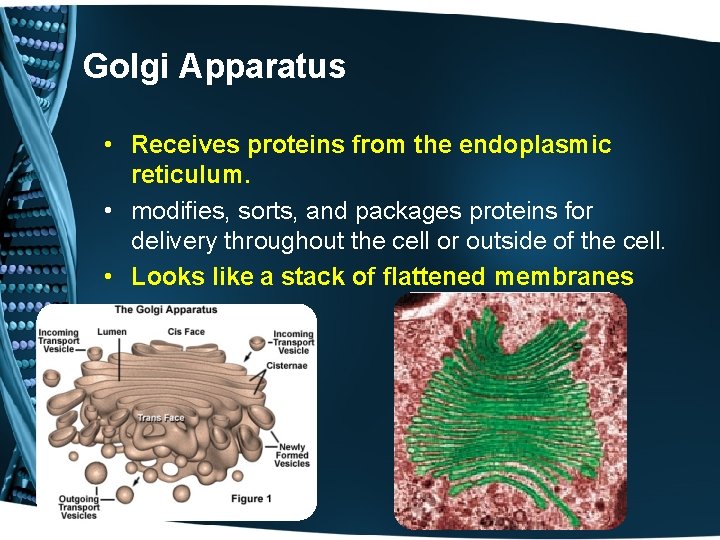
Golgi Apparatus • Receives proteins from the endoplasmic reticulum. • modifies, sorts, and packages proteins for delivery throughout the cell or outside of the cell. • Looks like a stack of flattened membranes
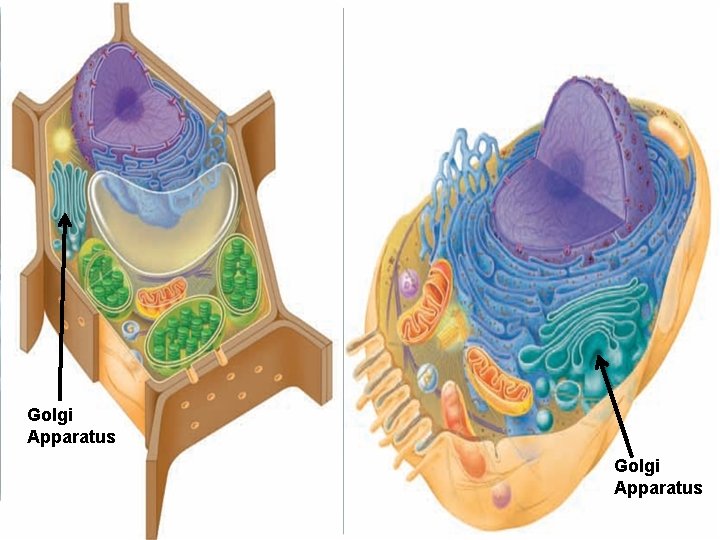
Golgi Apparatus
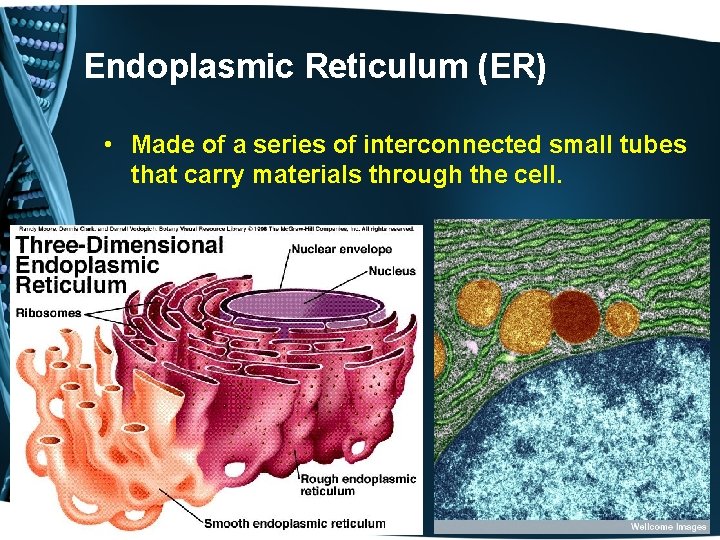
Endoplasmic Reticulum (ER) • Made of a series of interconnected small tubes that carry materials through the cell.
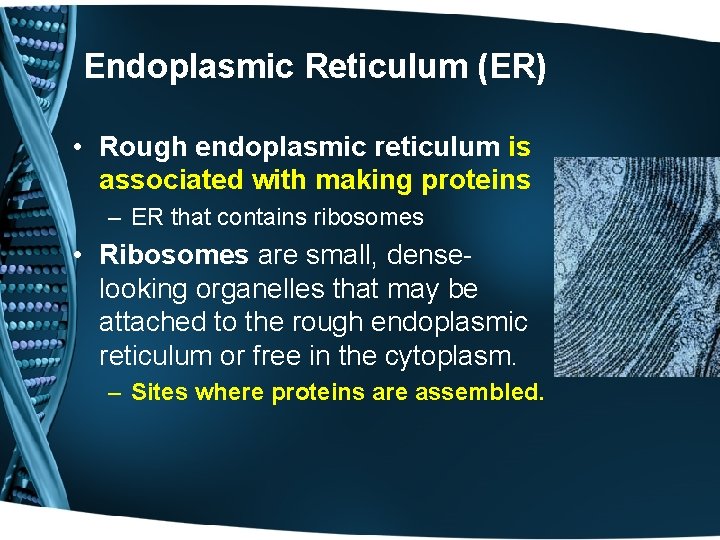
Endoplasmic Reticulum (ER) • Rough endoplasmic reticulum is associated with making proteins – ER that contains ribosomes • Ribosomes are small, denselooking organelles that may be attached to the rough endoplasmic reticulum or free in the cytoplasm. – Sites where proteins are assembled.
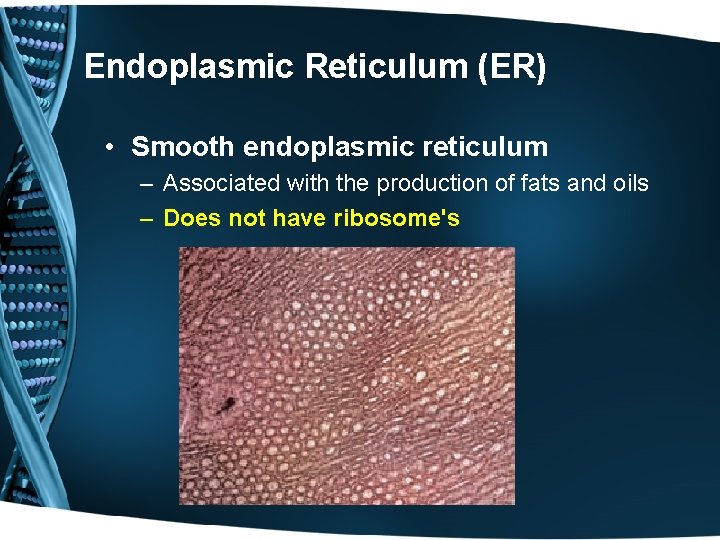
Endoplasmic Reticulum (ER) • Smooth endoplasmic reticulum – Associated with the production of fats and oils – Does not have ribosome's
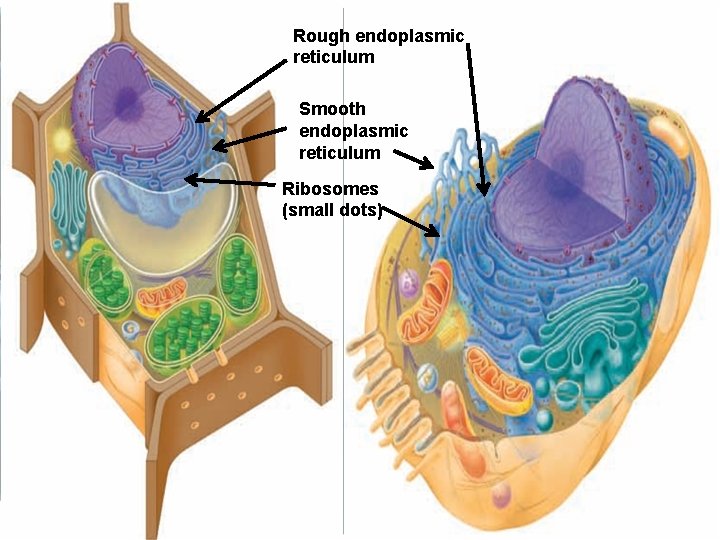
Rough endoplasmic reticulum Smooth endoplasmic reticulum Ribosomes (small dots)
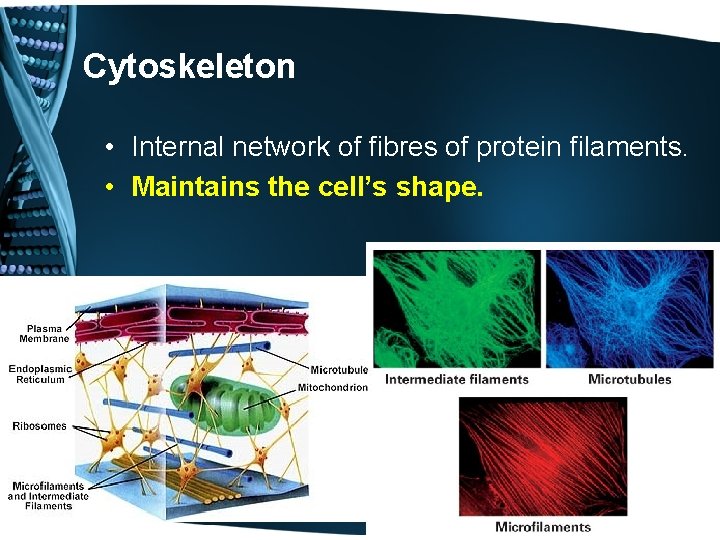
Cytoskeleton • Internal network of fibres of protein filaments. • Maintains the cell’s shape.
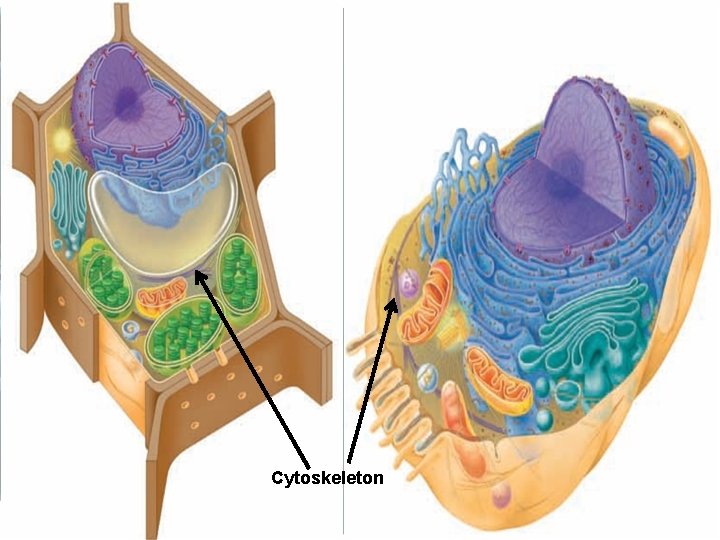
Cytoskeleton
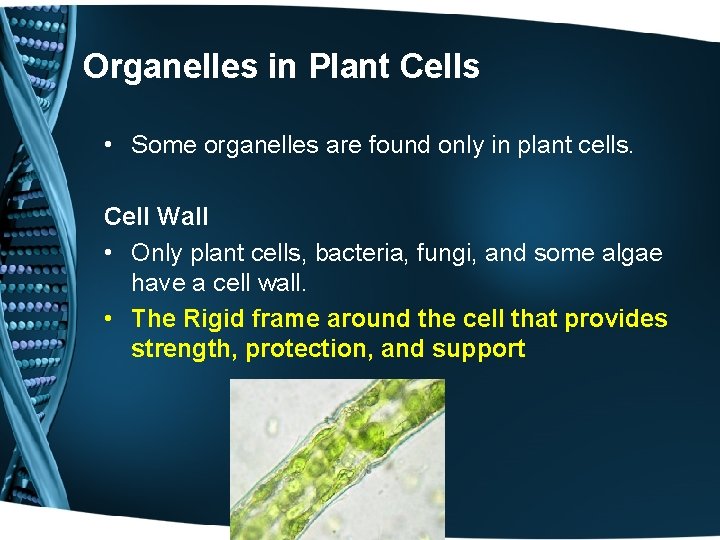
Organelles in Plant Cells • Some organelles are found only in plant cells. Cell Wall • Only plant cells, bacteria, fungi, and some algae have a cell wall. • The Rigid frame around the cell that provides strength, protection, and support
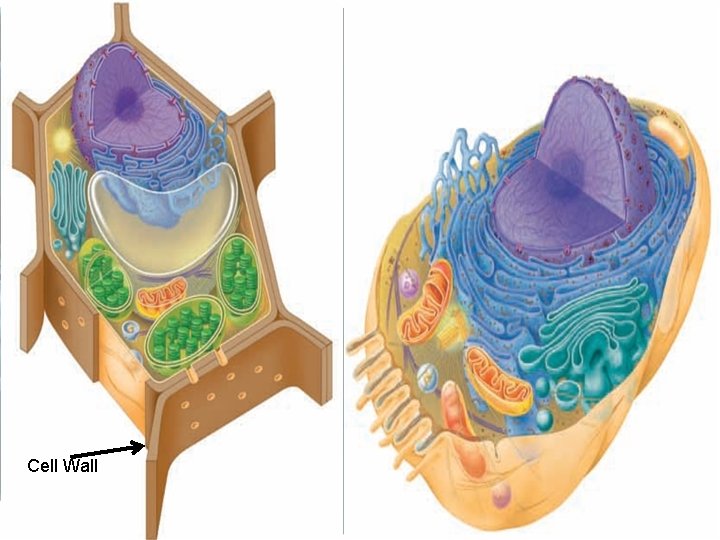
Cell Wall
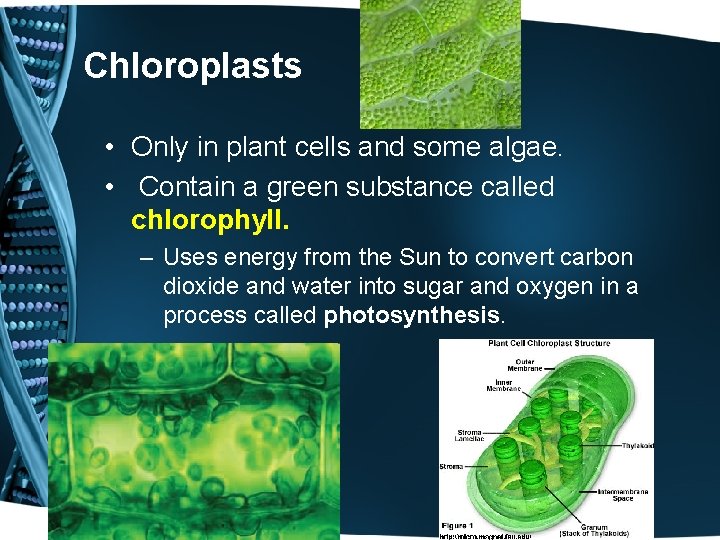
Chloroplasts • Only in plant cells and some algae. • Contain a green substance called chlorophyll. – Uses energy from the Sun to convert carbon dioxide and water into sugar and oxygen in a process called photosynthesis.
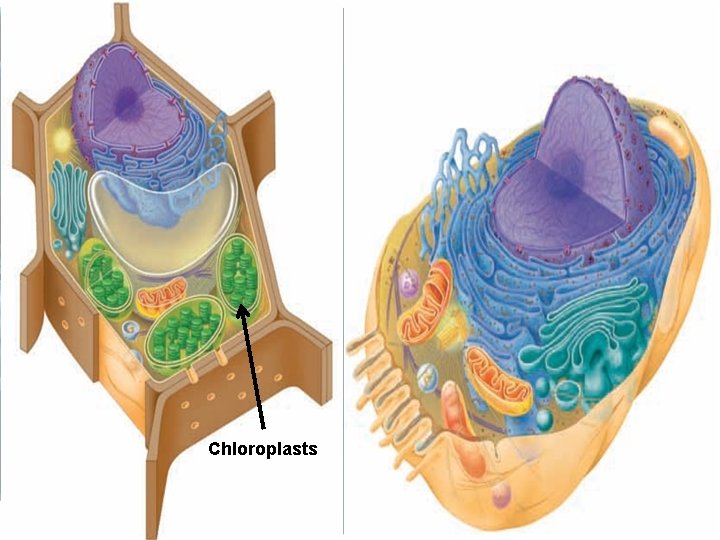
Chloroplasts
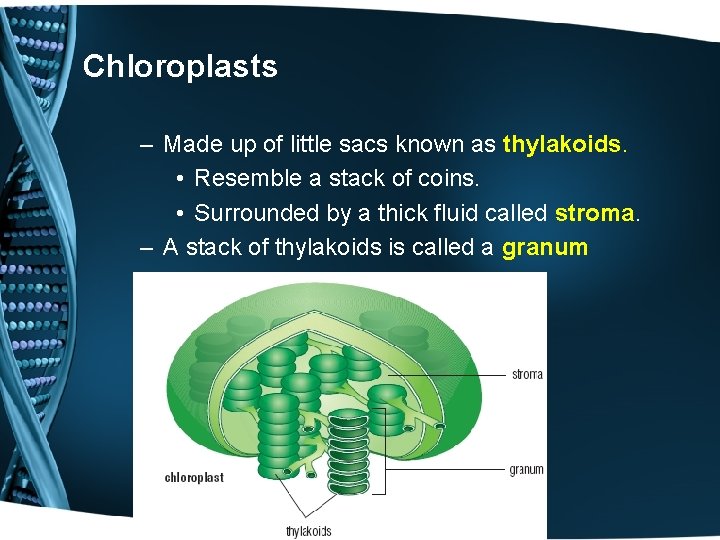
Chloroplasts – Made up of little sacs known as thylakoids. • Resemble a stack of coins. • Surrounded by a thick fluid called stroma. – A stack of thylakoids is called a granum
Differences between Plant and Animal Cells - Plants • Contain Chlorophyll – photosynthesis • Large central Vacuole • Store energy in the forms such as cornstarch and oil
Differences between Plant and Animal Cells - Animals • Small Vacuole • Store energy in form of glycogen, carbohydrates, and lipids (fat) • Some have specialized compounds for haemoglobin and cholesterol
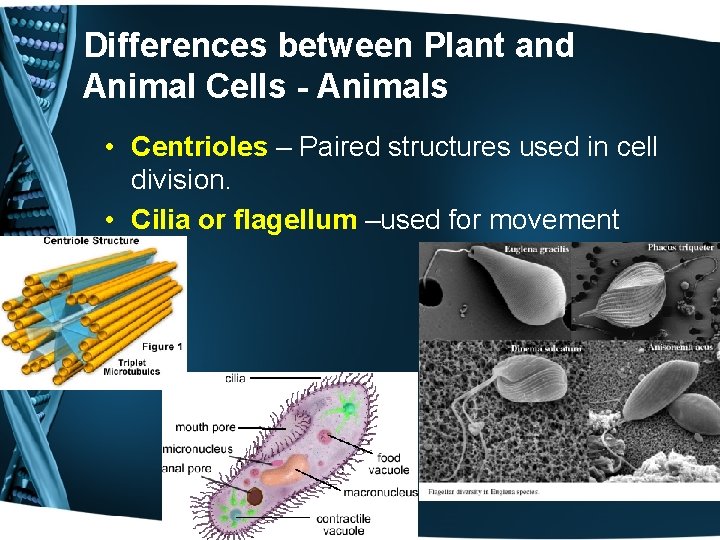
Differences between Plant and Animal Cells - Animals • Centrioles – Paired structures used in cell division. • Cilia or flagellum –used for movement
http: //www. youtube. com/watch? v=a 6 bo q. Ebc. JWI
Homework • Finish Lab and hand in • Finish and hand in questions 1 -5
- Slides: 28