
Plant Anatomy Presented by Brennan Hyden Parts of

Plant Anatomy Presented by Brennan Hyden
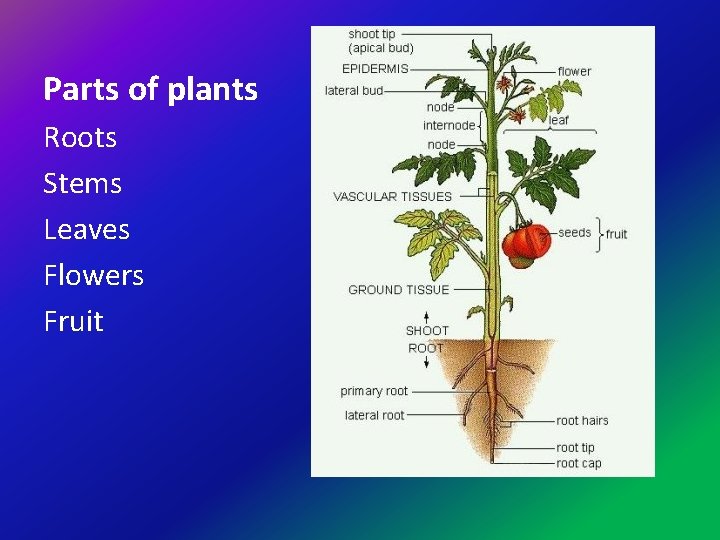
Parts of plants Roots Stems Leaves Flowers Fruit
Root functions • To absorb water and nutrients • To anchor the plant in the ground or onto a tree or rock • In some cases to store water and nutrients • In some cases to perform photosynthesis

Root Growth Regions Root cap protects root as it is going down through the soil Area of cell division contains the meristem which is responsible for manufacturing new cells Area of cell elongation is where new cells stretch and push the root down Area of cell differentiation is where cells differentiate into there separate functions

Root Interior Root hairs absorb water into root Water and nutrients then pass through the epidermis, outer cortex, endodermis, and inner cortex Water finally enters the xylem where it is carried up to the upper part of the plant The phloem is located in bundles outside the xylem where it carries sugars and nutrients down to the root cells In between the xylem and the phloem is the cambium which contains undifferentiated tissue and creates new xylem and phloem Dicotyledon root Monocotyledon Root
Elements needed by plants • • • Oxygen Hydrogen Carbon Nitrogen Phosphorus Potassium Magnesium Calcium Sulfur • • Chlorine Iron Maganese Colbalt Copper Zinc Molybdenum
Stem functions • To transport nutrients to and from the roots, leaves, flowers, fruit, and other stems • In some cases to store water and nutrients • In some cases to perform photosynthesis
Types of stems • • • Vertical stems Bulbs such as onions, garlic, tulips, and lilies Tubers such as potatos Rhizomes such as grasses, iris, and orchids Corms such as crocus stolons such as in strawberries
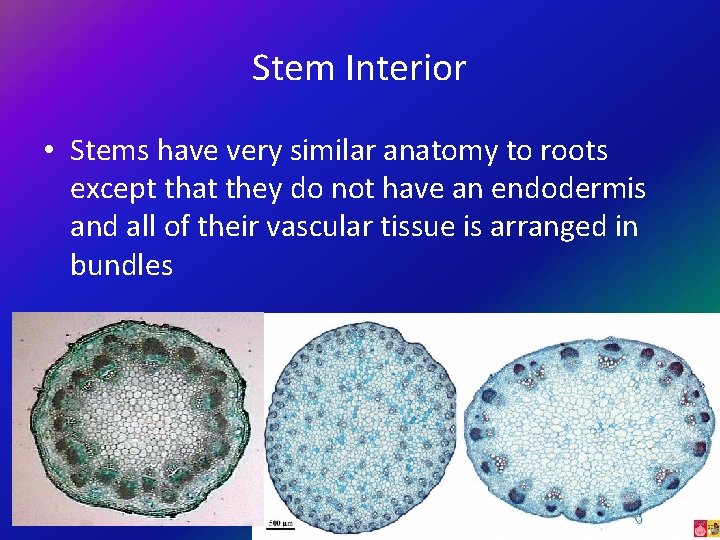
Stem Interior • Stems have very similar anatomy to roots except that they do not have an endodermis and all of their vascular tissue is arranged in bundles
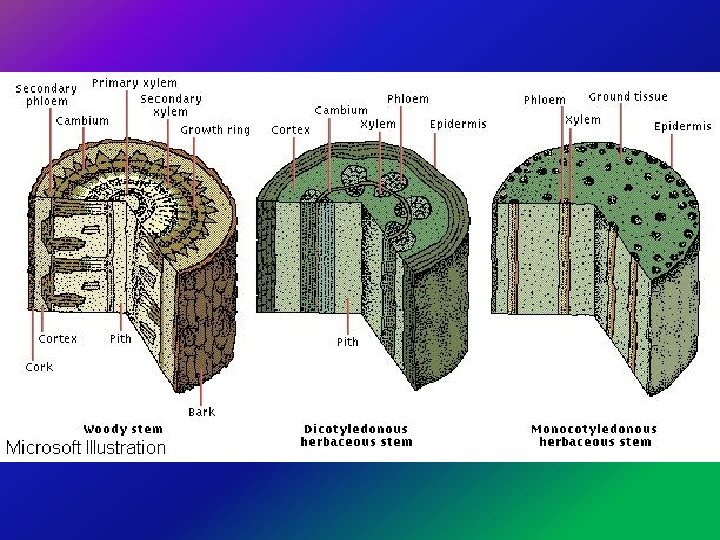
Woody Stems • In dicotyledons and gymnosperms that form woody stems, the cambium will connect to form a ring. This cambium then makes more vascular tissue forming a tree’s first ring • The next year the cambium will create another layer of xylem and phloem, the xylem will form the second ring and the phloem will be pushed out and as a result not form a ring
Leaf functions • To perform photosynthesis • In some cases to store water and nutrients

Leaf Interior
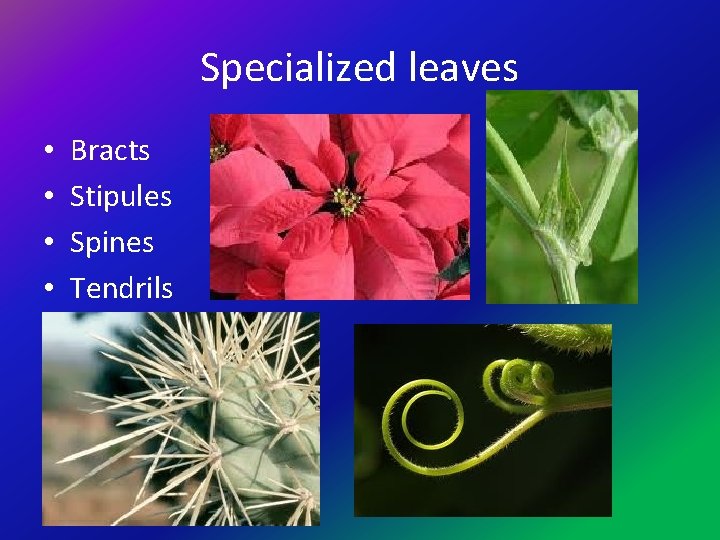
Specialized leaves • • Bracts Stipules Spines Tendrils
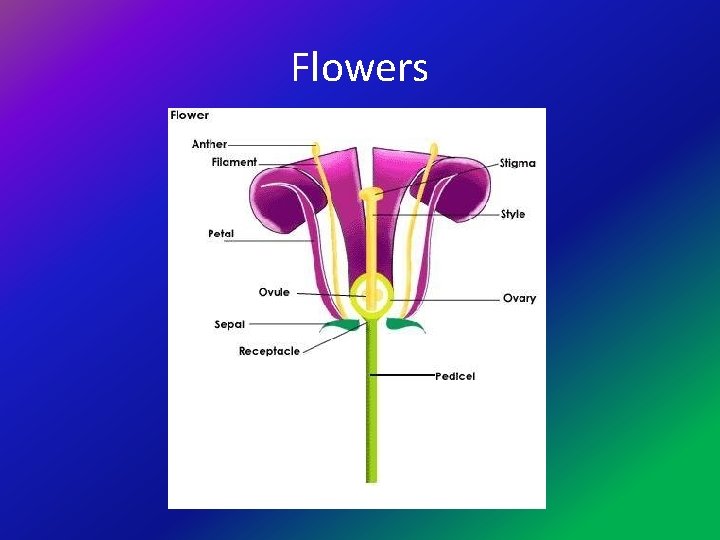
Flowers
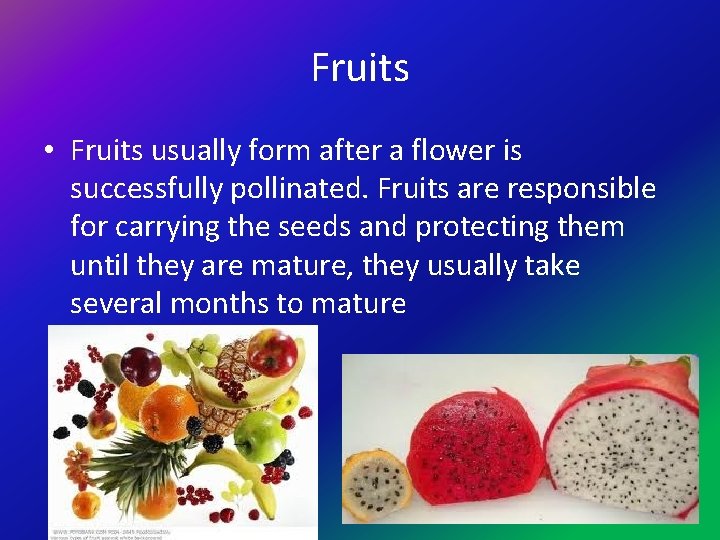
Fruits • Fruits usually form after a flower is successfully pollinated. Fruits are responsible for carrying the seeds and protecting them until they are mature, they usually take several months to mature
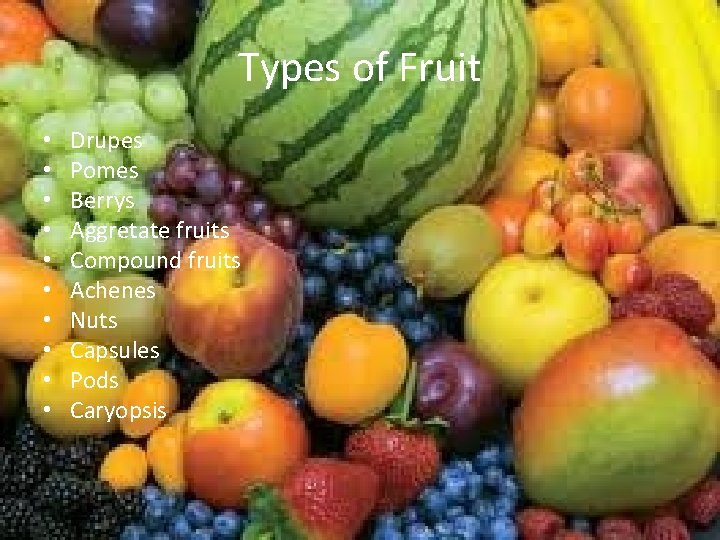
Types of Fruit • • • Drupes Pomes Berrys Aggretate fruits Compound fruits Achenes Nuts Capsules Pods Caryopsis
Ways of propagating plants • • • Seeds Division of rhizomes Seperating or slicing corms and bulbs Dividing tubers Seperating runners Stem and tip cuttings Leaf cuttings Root cuttings Seperating gemmae Tissue culture
Seeds • Seeds are generally the only way of sexual reproduction from plants • Seeds originate from the ovules in the flower after pollination and are carried in the fruit in angiosperms • In the wild seeds are usually germinated in the soil
Division of rhizomes • Grasses, orchids, strawberries, iris, and calla lilies all have rhizomes • Rhizomes naturally branch and produce new growths or plants • Rhizome branches and sections can be cut apart or seperated to produce new plants
Corms and bulbs • Narcissus, tulipia, and lilium grow from bulbs, crocus and gladiolus grow from corms • Corms and bulbs naturally produce tiny lateral corms and bulblets that produce separate plants • Corms an bulbs can be sliced into sections and treated with fungicide and they will produce new plants
Dividing Tubers • Potatoes and cyclamen grow from stem tubers • Sweet potatoes, daylilies, dahlias, and yams grow from root tubers • Tubers can produce multiple shoots or sometimes smaller lateral tubers, these can be cut apart or seperated to produce new plants

Seperating runners • Strawberries and spider plants produce runners on specialized stems called stolons • Once these runners get roots they can be cut away from the mother plant and planted on their own

Stem and tip cuttings • Wandering jews, jade plants, willows, some orchids and, many members of the Euphorbiacea and Crassulaceae families can be propagated using tip cuttings • Cuttings are taken from the stem with at least two to three node from which roots and new shoots will emerge
Leaf cuttings • Begonias, jade plants, and many members of the crassulaceae family can be propagated using leaf cuttings • New plants may emerge from the leaf axil, or another part of the leaf depending on the type of plant
Root cuttings • Some plants can be propagated using root cuttings • Taking root cuttings involves taking a section of the root, new roots and shoots will emerge from the cambium in the root.
Gemmae • Gemmae are small buds that are produced on some plants such as pingulas which will naturally “pop” off and grow into a new plant
Tissue culture • Tissue culture is a recent discovery of a way to propagate plants asexually • This method can produce thousands of clones from a single plant • There are several ways of performing tissue culture which involve using meristems, protoplasts, embryos and microspores • The tissue is undifferentiated and is introduced to auxins to promote root growth and cytokinins to promote shoot growth
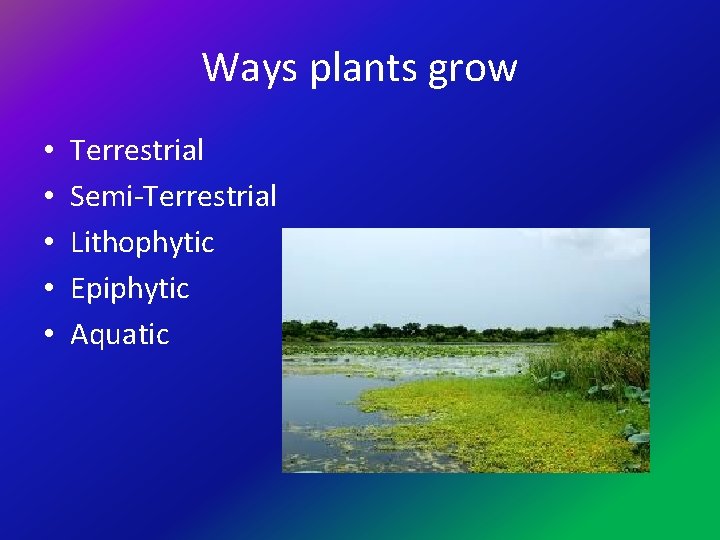
Ways plants grow • • • Terrestrial Semi-Terrestrial Lithophytic Epiphytic Aquatic
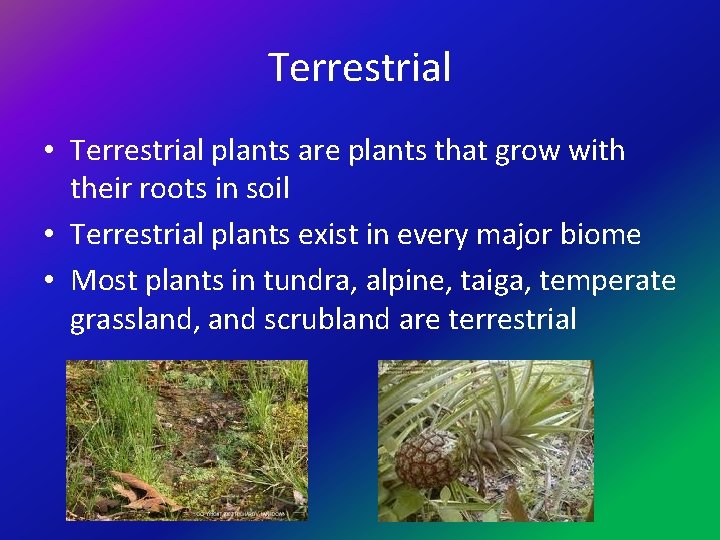
Terrestrial • Terrestrial plants are plants that grow with their roots in soil • Terrestrial plants exist in every major biome • Most plants in tundra, alpine, taiga, temperate grassland, and scrubland are terrestrial
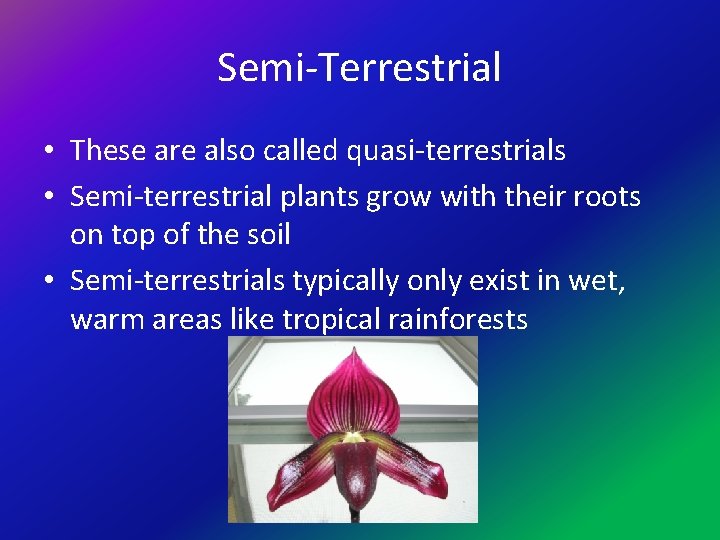
Semi-Terrestrial • These are also called quasi-terrestrials • Semi-terrestrial plants grow with their roots on top of the soil • Semi-terrestrials typically only exist in wet, warm areas like tropical rainforests
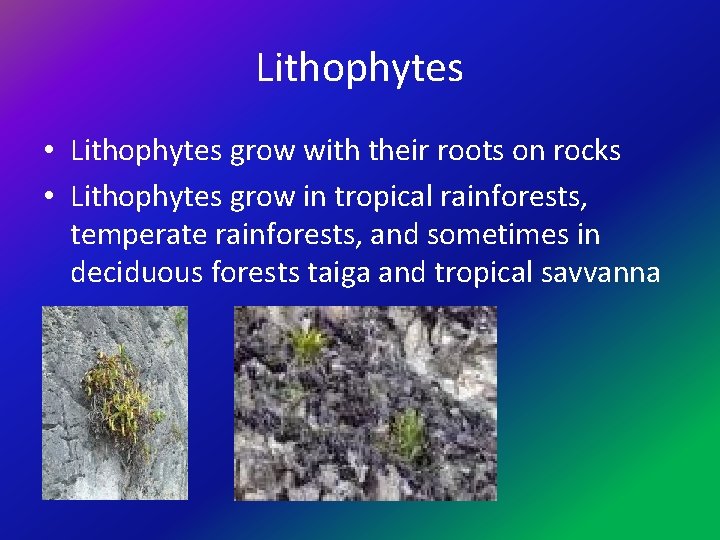
Lithophytes • Lithophytes grow with their roots on rocks • Lithophytes grow in tropical rainforests, temperate rainforests, and sometimes in deciduous forests taiga and tropical savvanna
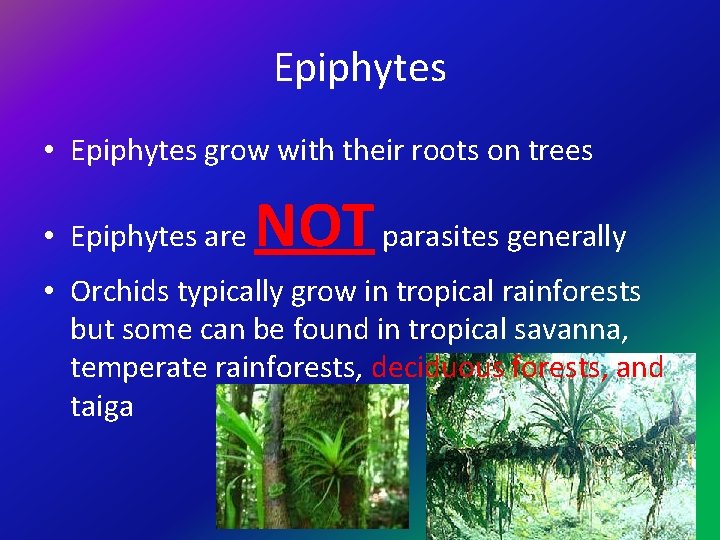
Epiphytes • Epiphytes grow with their roots on trees • Epiphytes are NOT parasites generally • Orchids typically grow in tropical rainforests but some can be found in tropical savanna, temperate rainforests, deciduous forests, and taiga
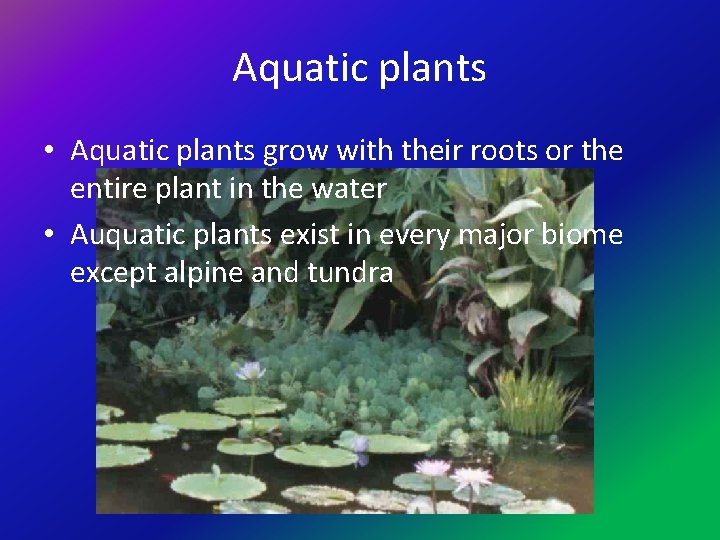
Aquatic plants • Aquatic plants grow with their roots or the entire plant in the water • Auquatic plants exist in every major biome except alpine and tundra
Other ways plants obtain nutrients • • Carnivorus plants Mycoheterotrophs Hemiparasites holoparasites
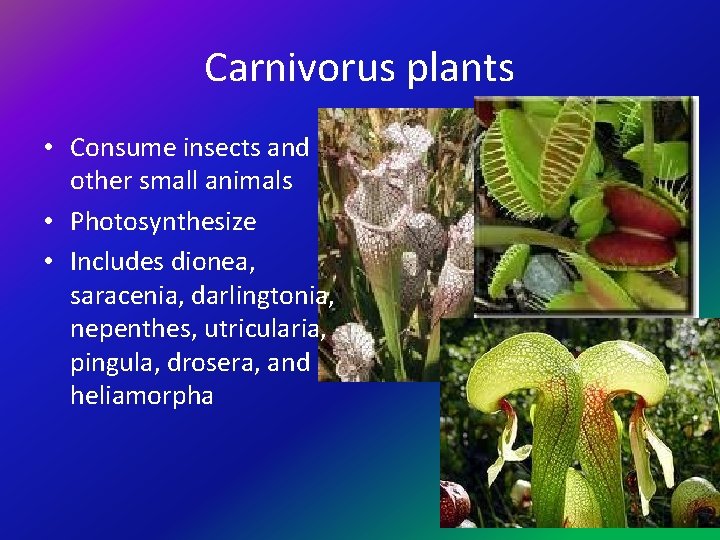
Carnivorus plants • Consume insects and other small animals • Photosynthesize • Includes dionea, saracenia, darlingtonia, nepenthes, utricularia, pingula, drosera, and heliamorpha
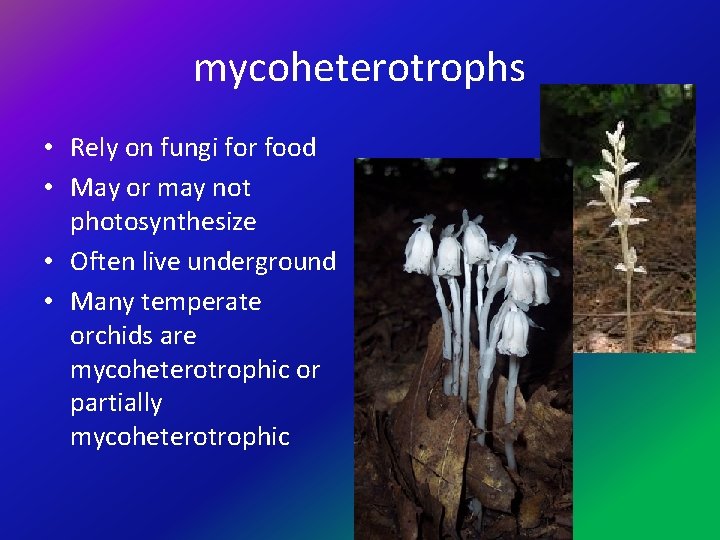
mycoheterotrophs • Rely on fungi for food • May or may not photosynthesize • Often live underground • Many temperate orchids are mycoheterotrophic or partially mycoheterotrophic
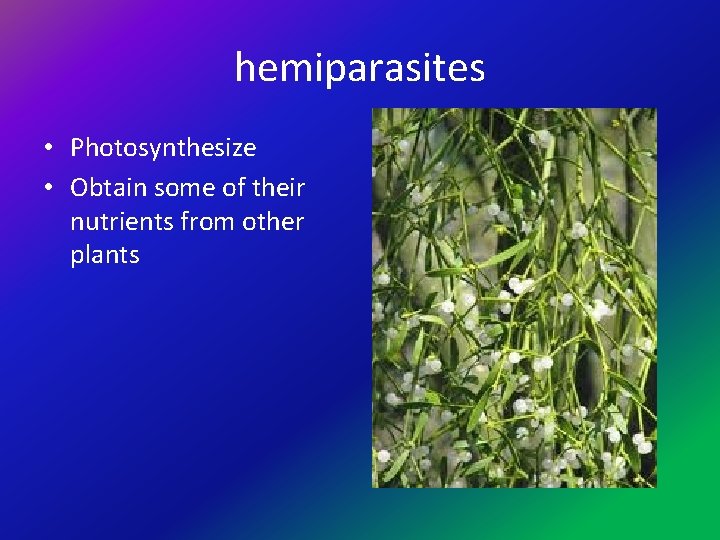
hemiparasites • Photosynthesize • Obtain some of their nutrients from other plants
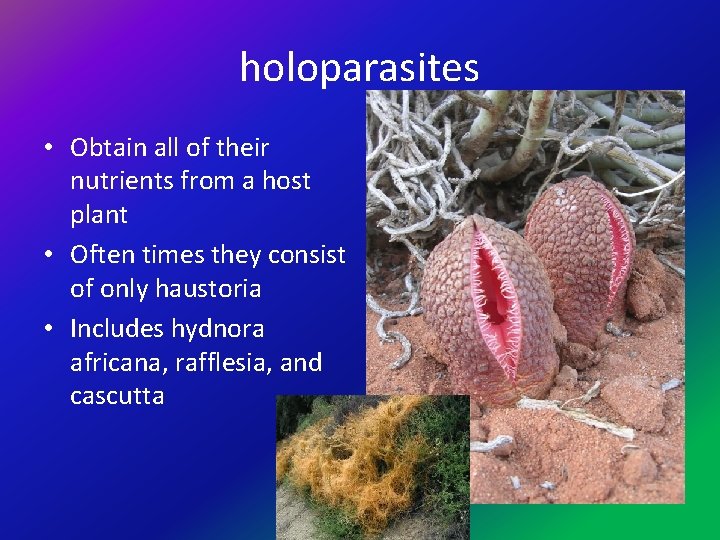
holoparasites • Obtain all of their nutrients from a host plant • Often times they consist of only haustoria • Includes hydnora africana, rafflesia, and cascutta
Noxious weeds • • Linaria vulgaris Heriacium auriantiacum Hypericum perforatum Silybum marianum Berteroa incana Cynoglossum officinale Centaurea Stoebe Verbascum thapsus
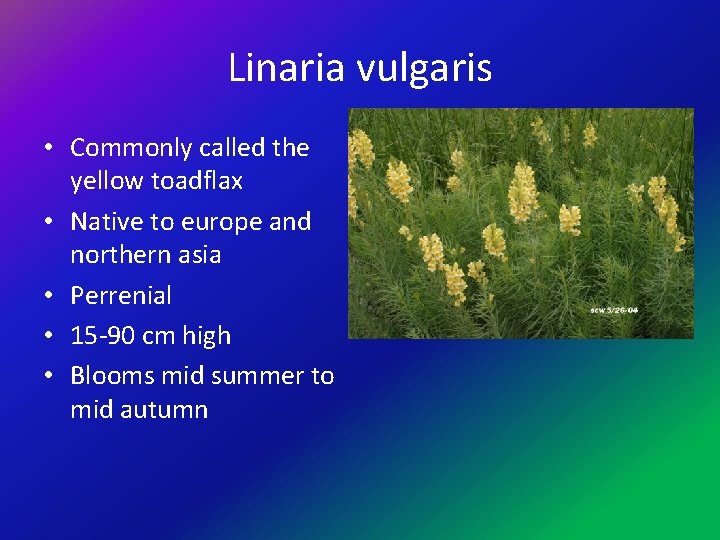
Linaria vulgaris • Commonly called the yellow toadflax • Native to europe and northern asia • Perrenial • 15 -90 cm high • Blooms mid summer to mid autumn
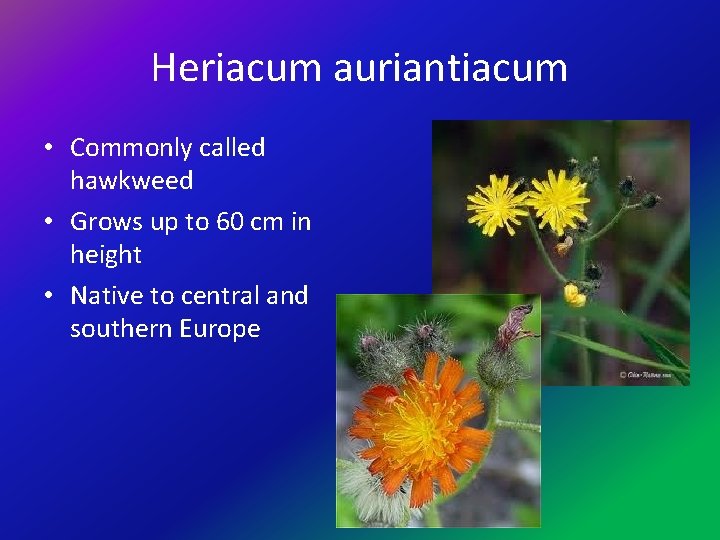
Heriacum auriantiacum • Commonly called hawkweed • Grows up to 60 cm in height • Native to central and southern Europe
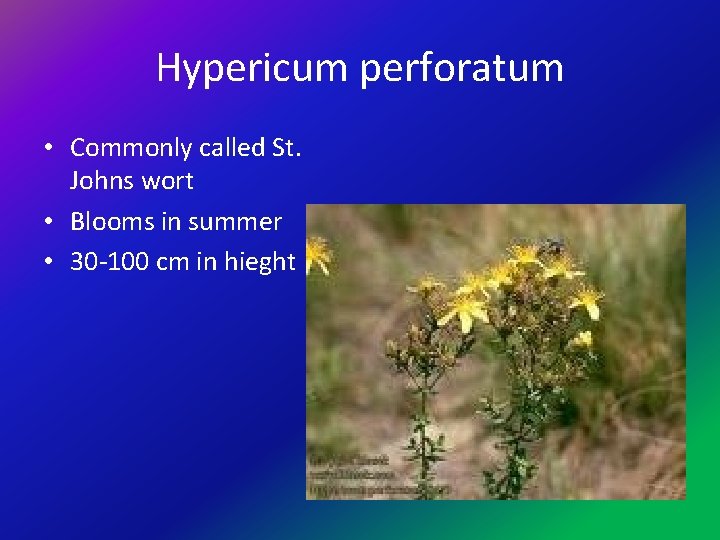
Hypericum perforatum • Commonly called St. Johns wort • Blooms in summer • 30 -100 cm in hieght
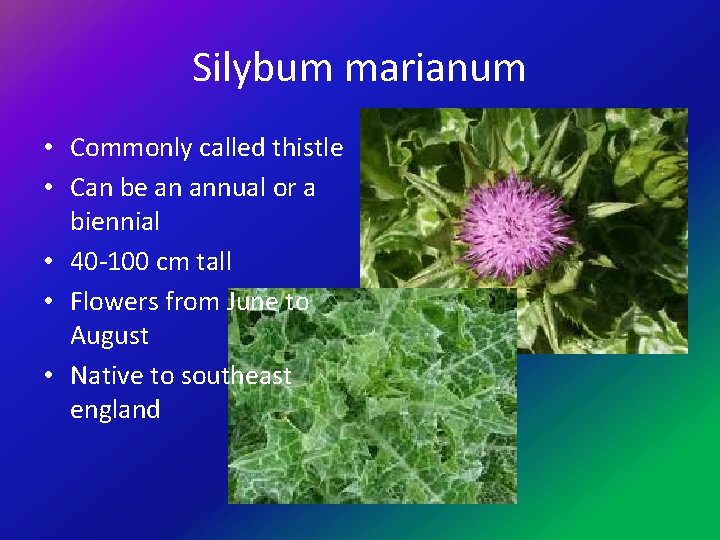
Silybum marianum • Commonly called thistle • Can be an annual or a biennial • 40 -100 cm tall • Flowers from June to August • Native to southeast england
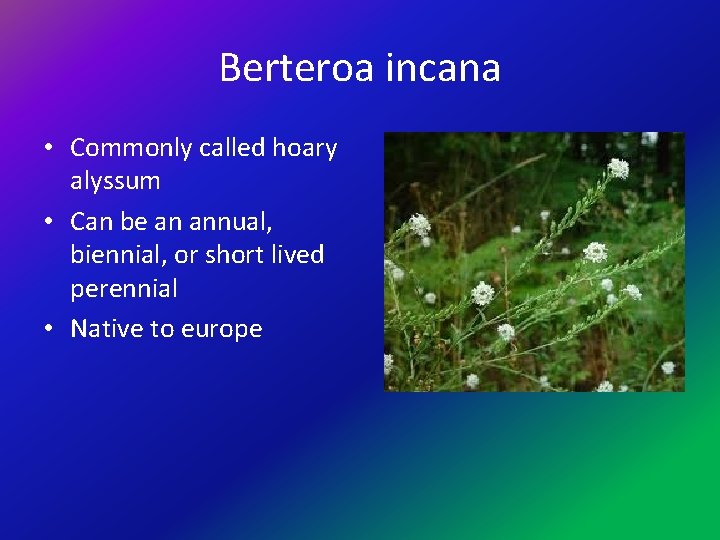
Berteroa incana • Commonly called hoary alyssum • Can be an annual, biennial, or short lived perennial • Native to europe
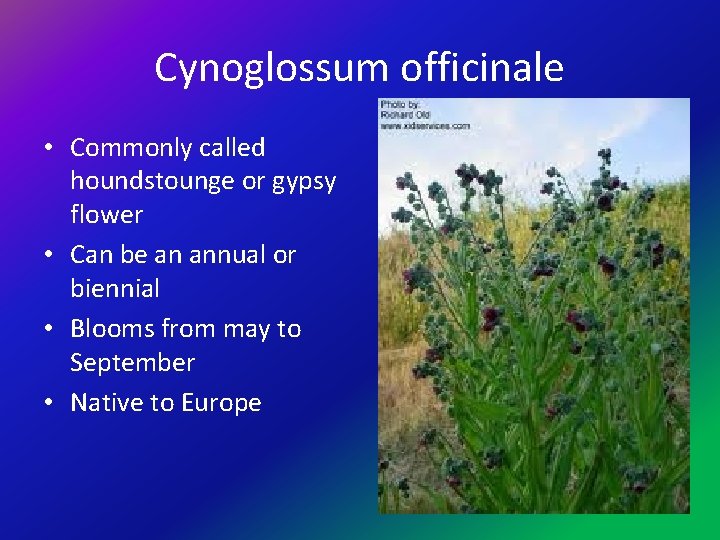
Cynoglossum officinale • Commonly called houndstounge or gypsy flower • Can be an annual or biennial • Blooms from may to September • Native to Europe
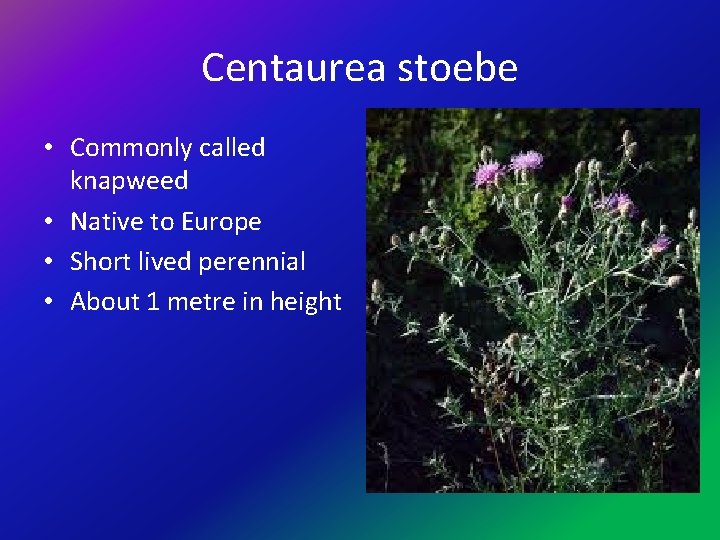
Centaurea stoebe • Commonly called knapweed • Native to Europe • Short lived perennial • About 1 metre in height
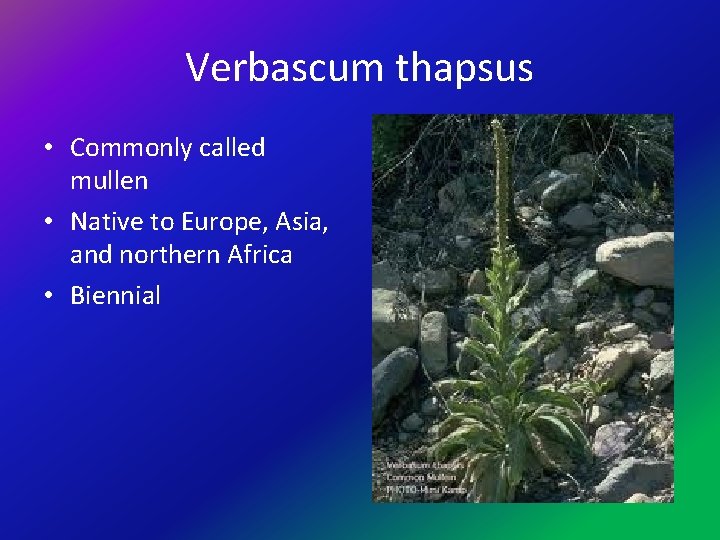
Verbascum thapsus • Commonly called mullen • Native to Europe, Asia, and northern Africa • Biennial
Native plants • • • Calypso bulbosa Cypripedium montanum Lilium columbianum Anemone multifida Dodecatheon conjugens Viola glabella Frasura albicalus Balsamorhiza sagittata Claytonia lanceolata Erythronium grandiflorum
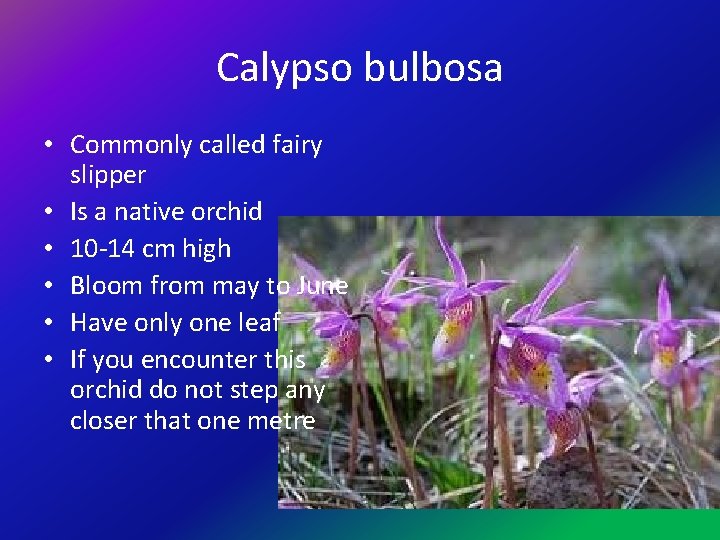
Calypso bulbosa • Commonly called fairy slipper • Is a native orchid • 10 -14 cm high • Bloom from may to June • Have only one leaf • If you encounter this orchid do not step any closer that one metre
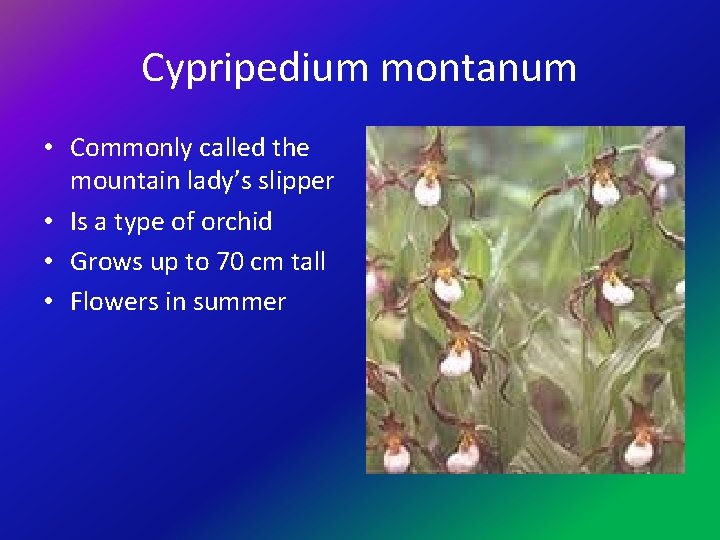
Cypripedium montanum • Commonly called the mountain lady’s slipper • Is a type of orchid • Grows up to 70 cm tall • Flowers in summer
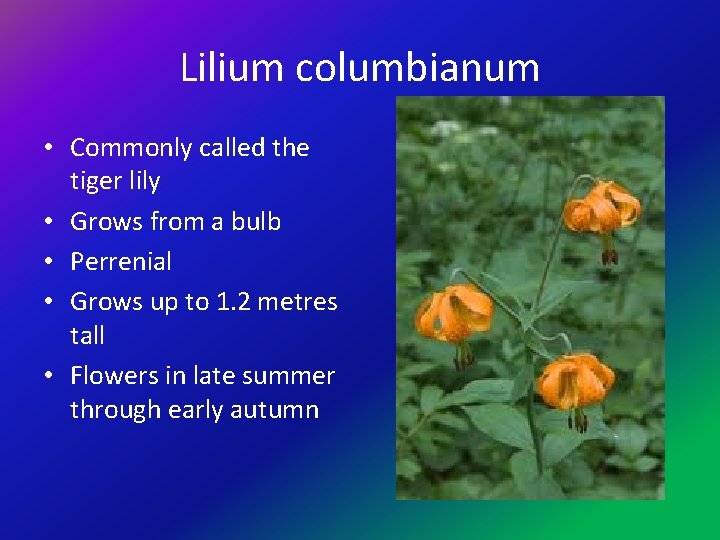
Lilium columbianum • Commonly called the tiger lily • Grows from a bulb • Perrenial • Grows up to 1. 2 metres tall • Flowers in late summer through early autumn
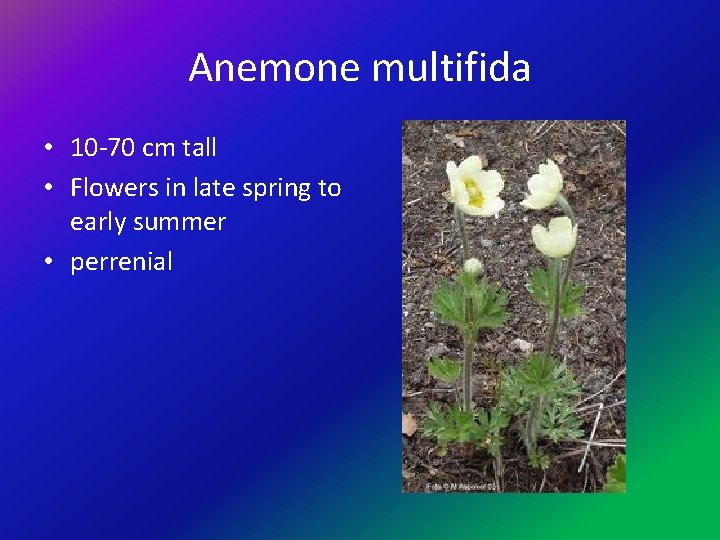
Anemone multifida • 10 -70 cm tall • Flowers in late spring to early summer • perrenial
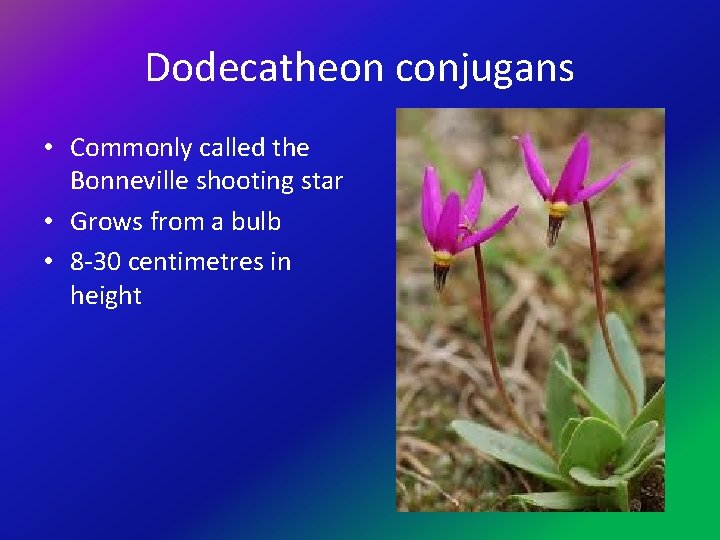
Dodecatheon conjugans • Commonly called the Bonneville shooting star • Grows from a bulb • 8 -30 centimetres in height
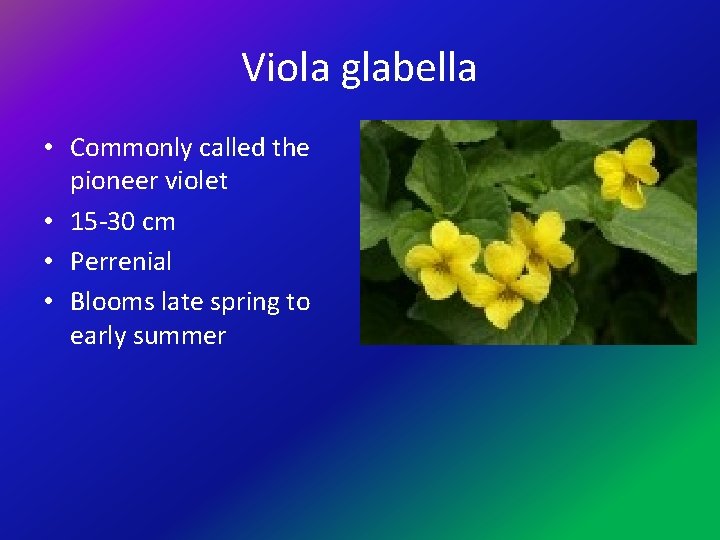
Viola glabella • Commonly called the pioneer violet • 15 -30 cm • Perrenial • Blooms late spring to early summer
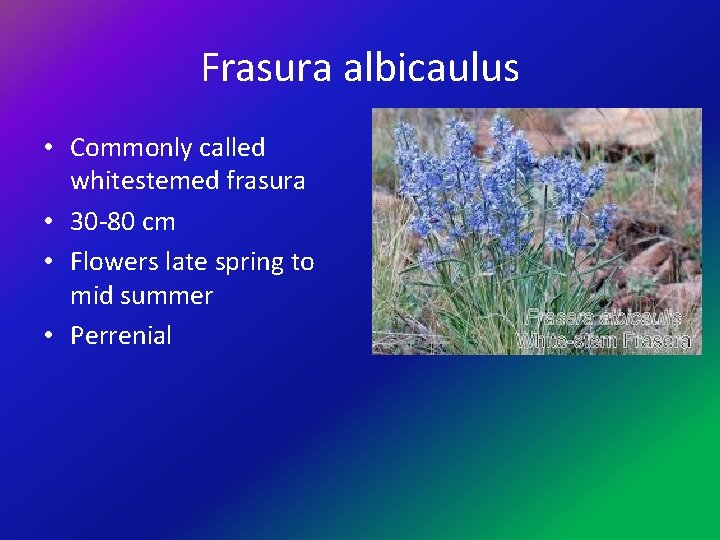
Frasura albicaulus • Commonly called whitestemed frasura • 30 -80 cm • Flowers late spring to mid summer • Perrenial
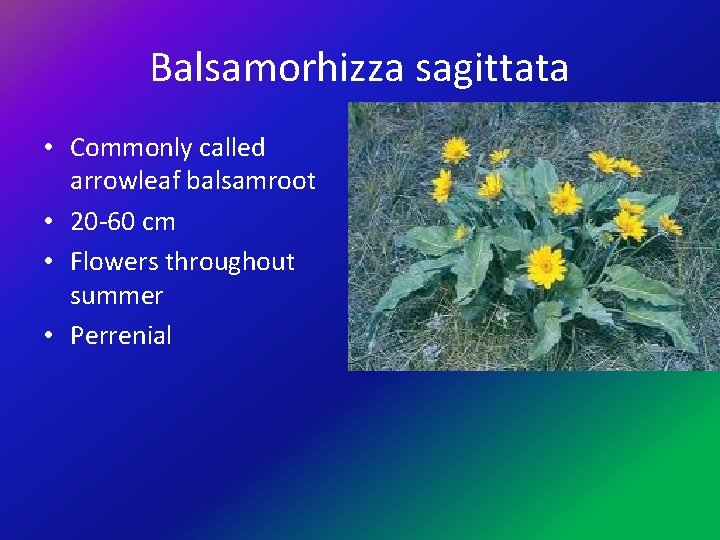
Balsamorhizza sagittata • Commonly called arrowleaf balsamroot • 20 -60 cm • Flowers throughout summer • Perrenial
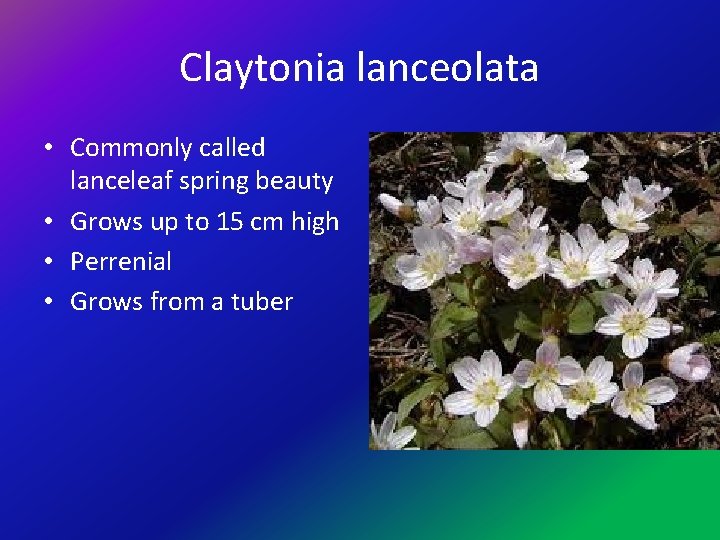
Claytonia lanceolata • Commonly called lanceleaf spring beauty • Grows up to 15 cm high • Perrenial • Grows from a tuber
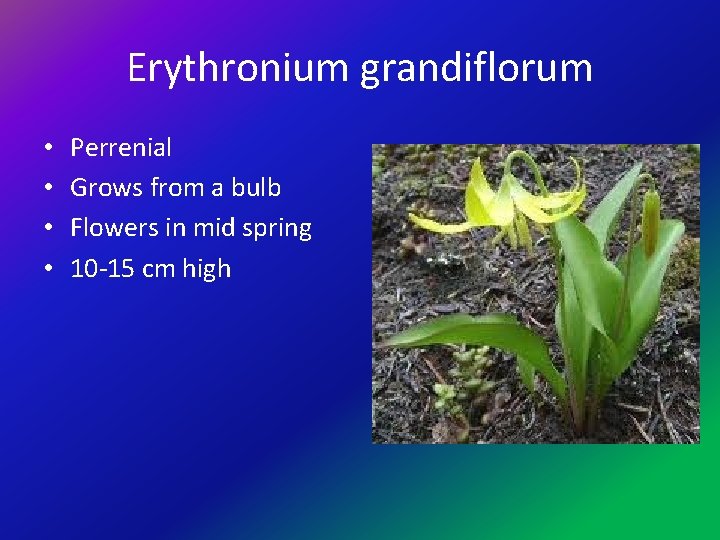
Erythronium grandiflorum • • Perrenial Grows from a bulb Flowers in mid spring 10 -15 cm high
Native Trees • • • Pinus ponderosa Psuedotsuga menziesii Larix occidentalis Poplus tremuloides Poplus trichocarpa Acer glabrum Alnus incana Alnus viridus Salix bebbena var. bebbiana Salix drummondrana
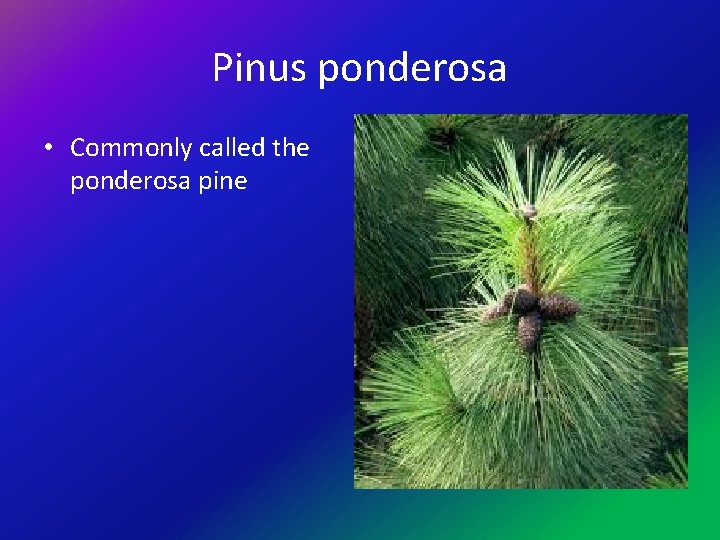
Pinus ponderosa • Commonly called the ponderosa pine
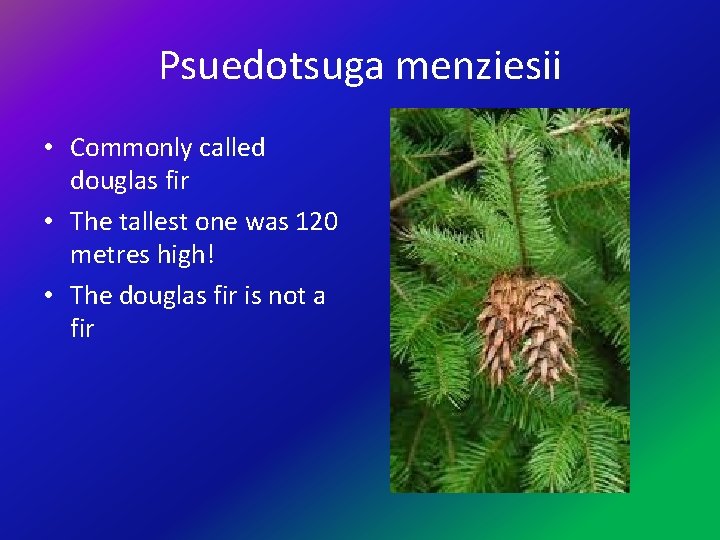
Psuedotsuga menziesii • Commonly called douglas fir • The tallest one was 120 metres high! • The douglas fir is not a fir
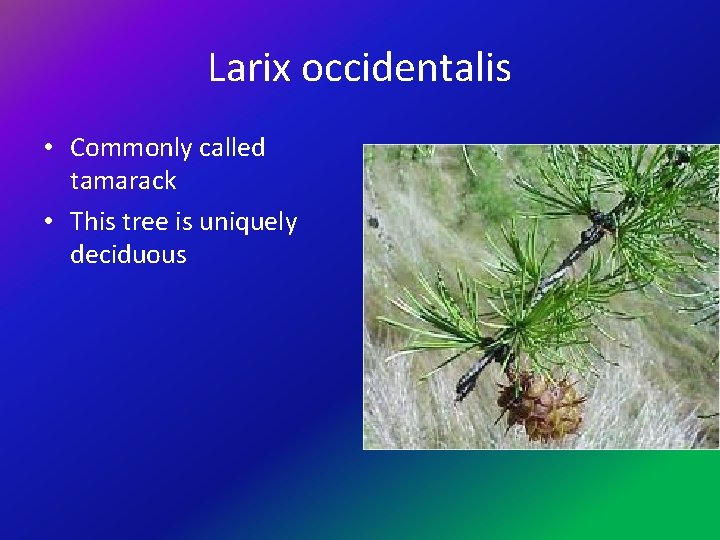
Larix occidentalis • Commonly called tamarack • This tree is uniquely deciduous

Poplus tremuloides • Commonly called quaking aspen • Grows up to 25 metres tall
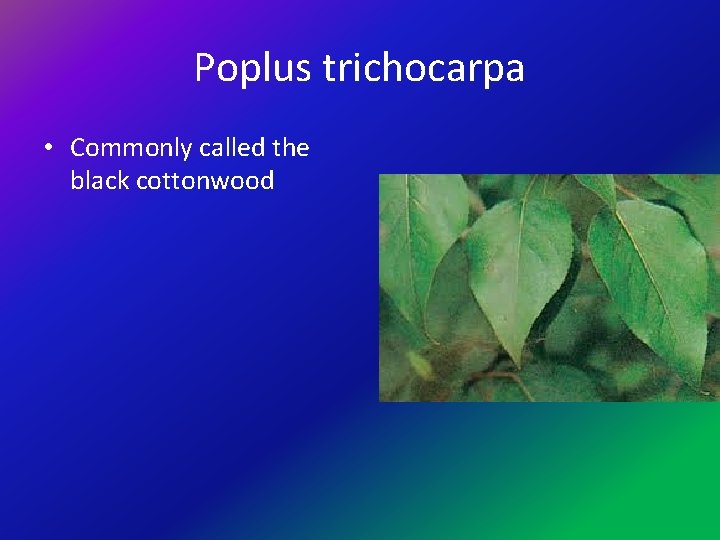
Poplus trichocarpa • Commonly called the black cottonwood
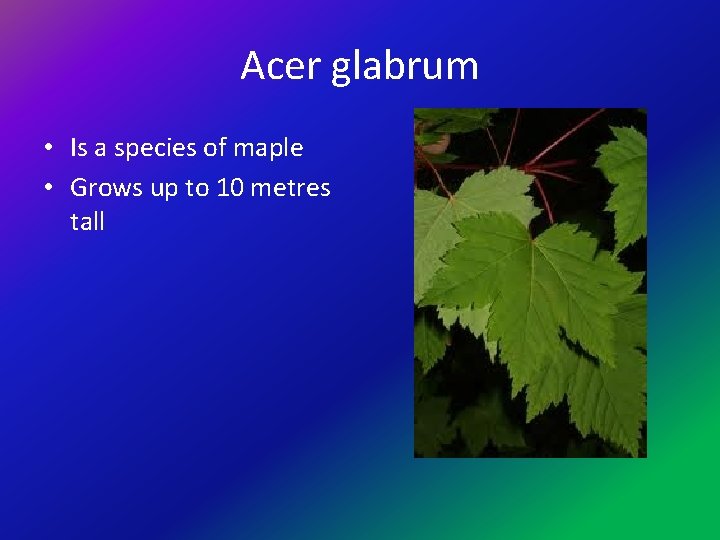
Acer glabrum • Is a species of maple • Grows up to 10 metres tall
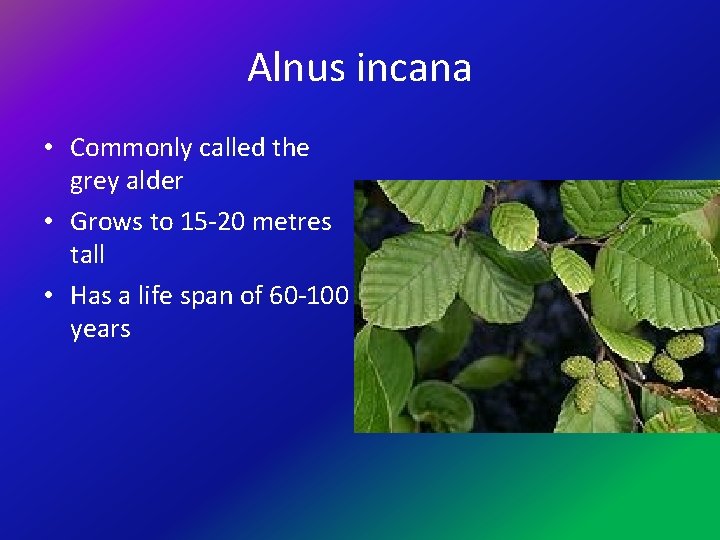
Alnus incana • Commonly called the grey alder • Grows to 15 -20 metres tall • Has a life span of 60 -100 years
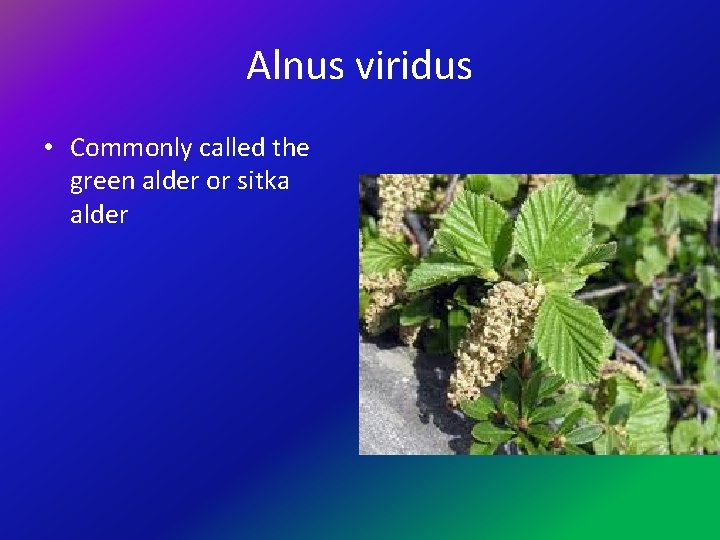
Alnus viridus • Commonly called the green alder or sitka alder
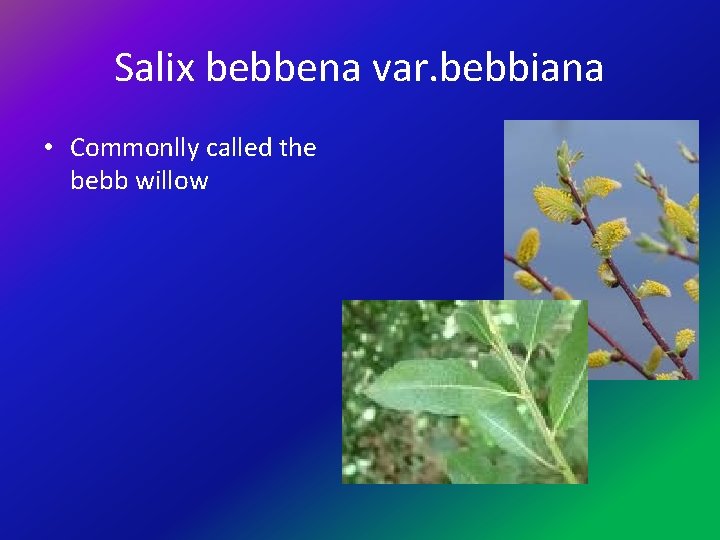
Salix bebbena var. bebbiana • Commonlly called the bebb willow

Salix drummondiana • Commonly called drummond’s willow • Grows 1 -5 metres tall
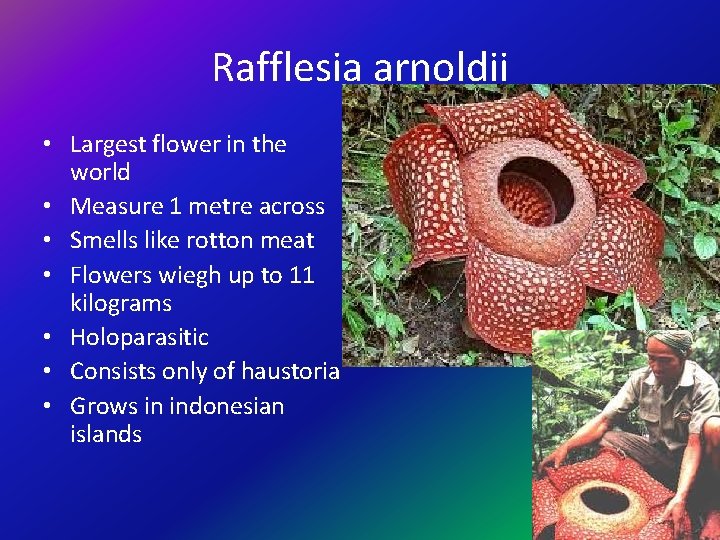
Rafflesia arnoldii • Largest flower in the world • Measure 1 metre across • Smells like rotton meat • Flowers wiegh up to 11 kilograms • Holoparasitic • Consists only of haustoria • Grows in indonesian islands
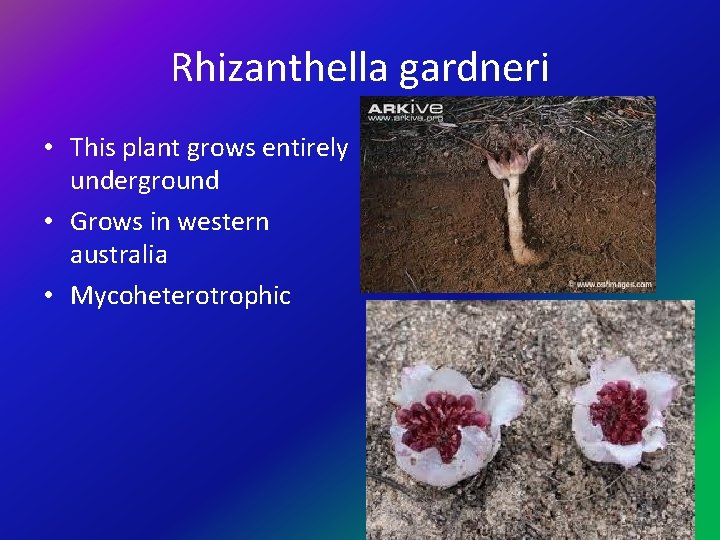
Rhizanthella gardneri • This plant grows entirely underground • Grows in western australia • Mycoheterotrophic
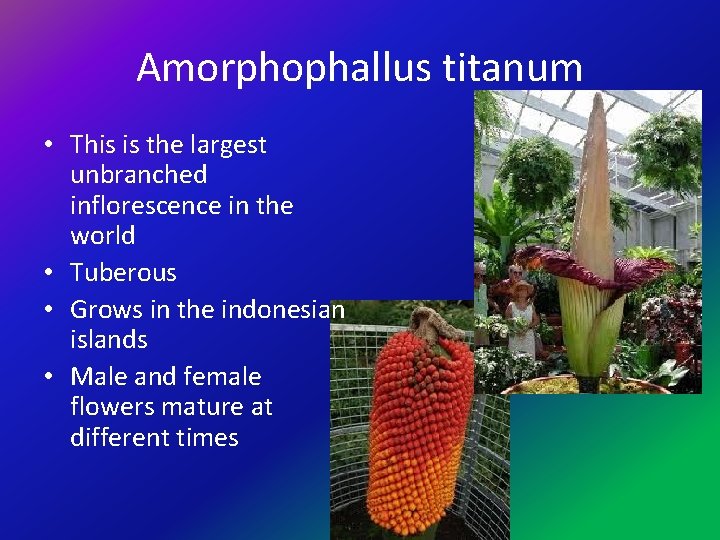
Amorphophallus titanum • This is the largest unbranched inflorescence in the world • Tuberous • Grows in the indonesian islands • Male and female flowers mature at different times
- Slides: 73