
PLANT ADAPTATIONS WHAT IS THE STRUCTURE OF AN
- Slides: 25
PLANT ADAPTATIONS
WHAT IS THE STRUCTURE OF AN ORGANISM? v. A structure is a part of an organism that performs a specific job
WHAT IS A FUNCTION OF A STRUCTURE? v. The function is the job a structure performs.
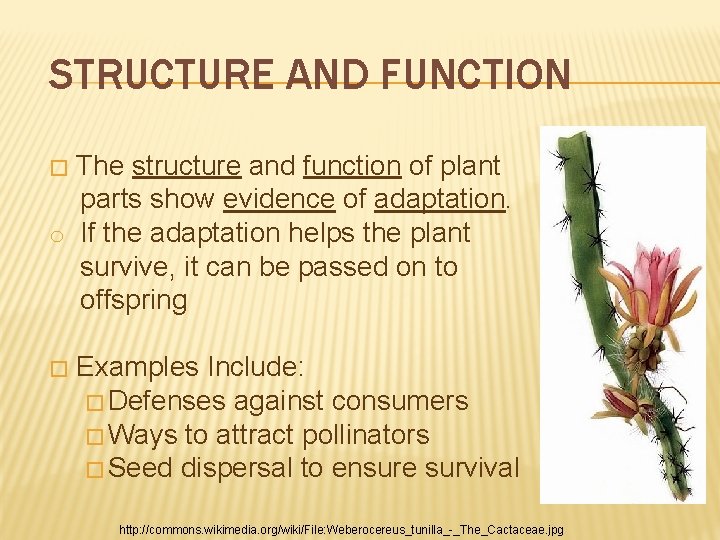
STRUCTURE AND FUNCTION The structure and function of plant parts show evidence of adaptation. o If the adaptation helps the plant survive, it can be passed on to offspring � � Examples Include: � Defenses against consumers � Ways to attract pollinators � Seed dispersal to ensure survival http: //commons. wikimedia. org/wiki/File: Weberocereus_tunilla_-_The_Cactaceae. jpg
WHAT IS AN ADAPTATION? v. An inherited trait that helps an organism survive
HEREDITY AND FUNCTION v We have looked at genetics v Now, we will look at how genetics and function can effect adaptations
HEREDITY AND FUNCTION v What are some genetic traits or adaptations we may see in animals over several generations? v What are some genetic traits or adaptations we may see in plants over several generations?
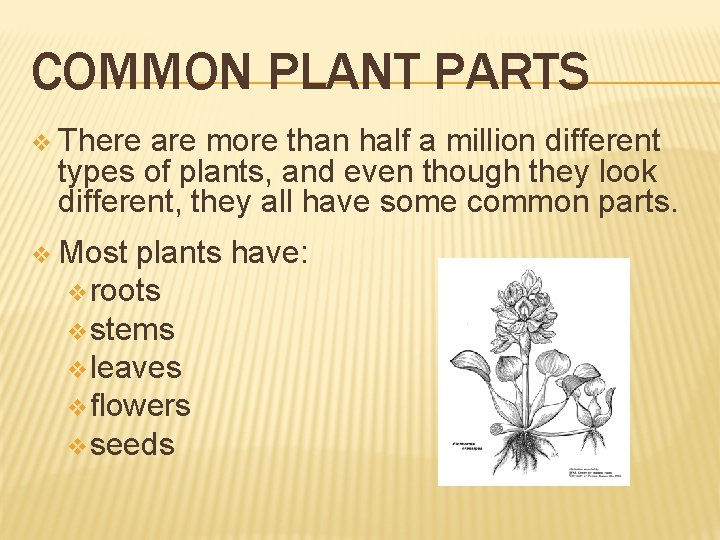
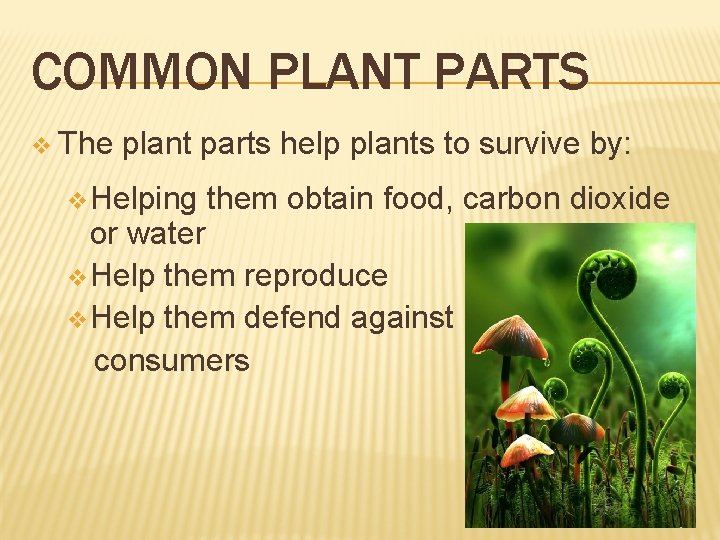
COMMON PLANT PARTS v There are more than half a million different types of plants, and even though they look different, they all have some common parts. v Most plants have: v roots v stems v leaves v flowers v seeds
COMMON PLANT PARTS v The plant parts help plants to survive by: v Helping them obtain food, carbon dioxide or water v Help them reproduce v Help them defend against consumers
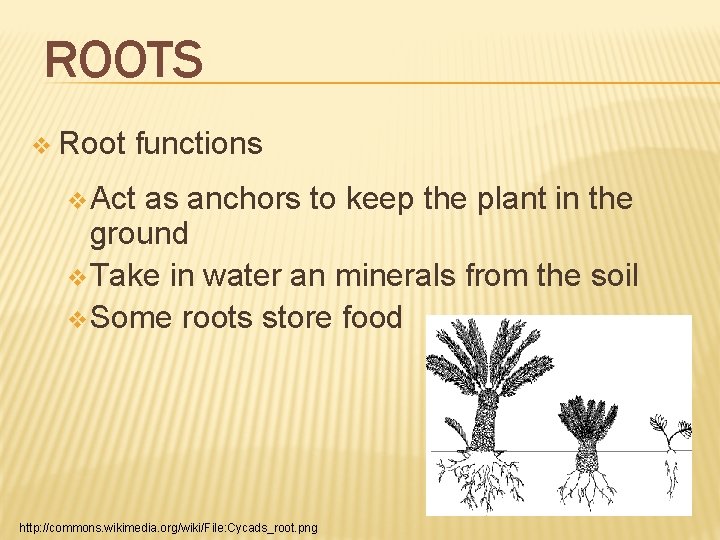
ROOTS v Root functions v Act as anchors to keep the plant in the ground v Take in water an minerals from the soil v Some roots store food http: //commons. wikimedia. org/wiki/File: Cycads_root. png
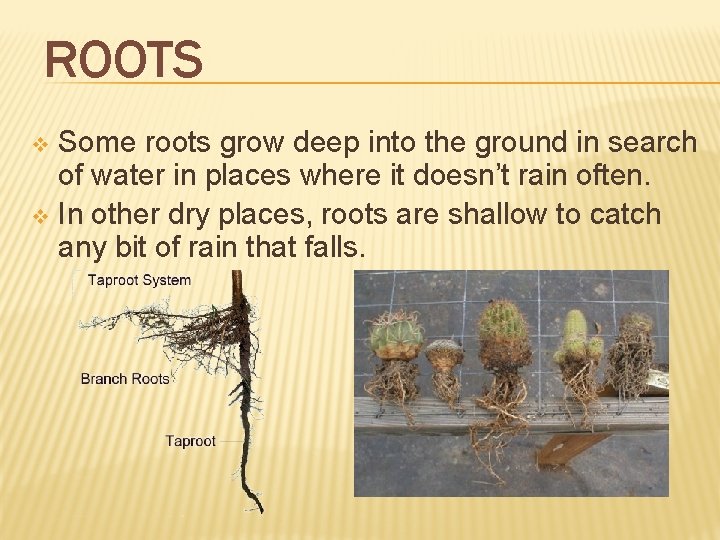
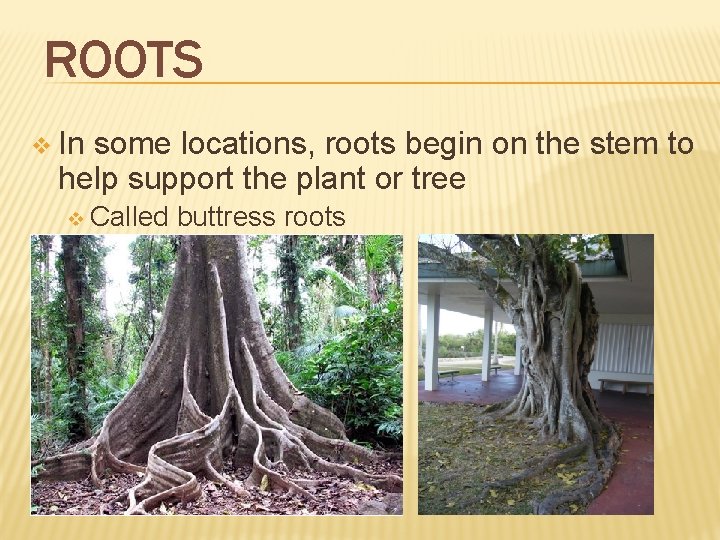
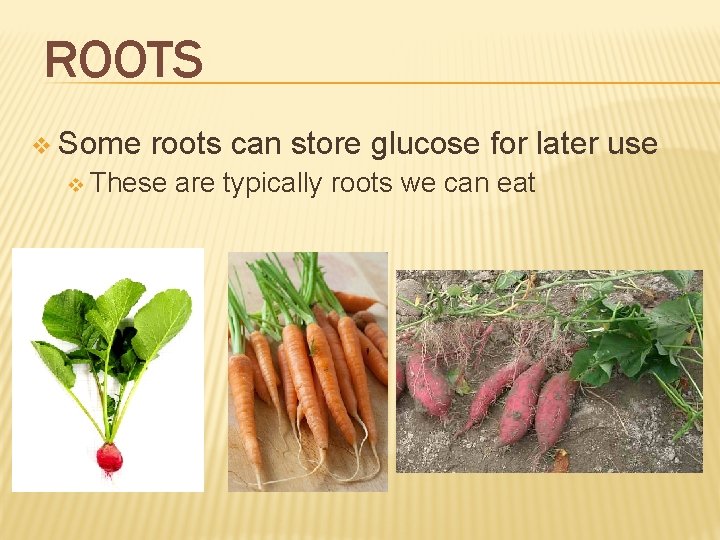
ROOTS v Root adaptations v Roots must adapt to many different environments v Spread out and create a shallow root system v Grow a deep tap root v Grow above ground to support the tree v Store food for later use
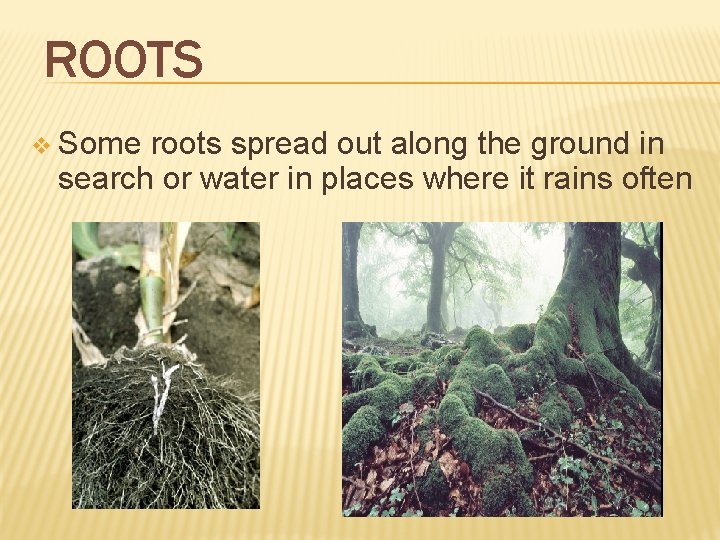
ROOTS v Some roots spread out along the ground in search or water in places where it rains often
ROOTS Some roots grow deep into the ground in search of water in places where it doesn’t rain often. v In other dry places, roots are shallow to catch any bit of rain that falls. v
ROOTS v In some locations, roots begin on the stem to help support the plant or tree v Called buttress roots
ROOTS v Some roots can store glucose for later use v These are typically roots we can eat
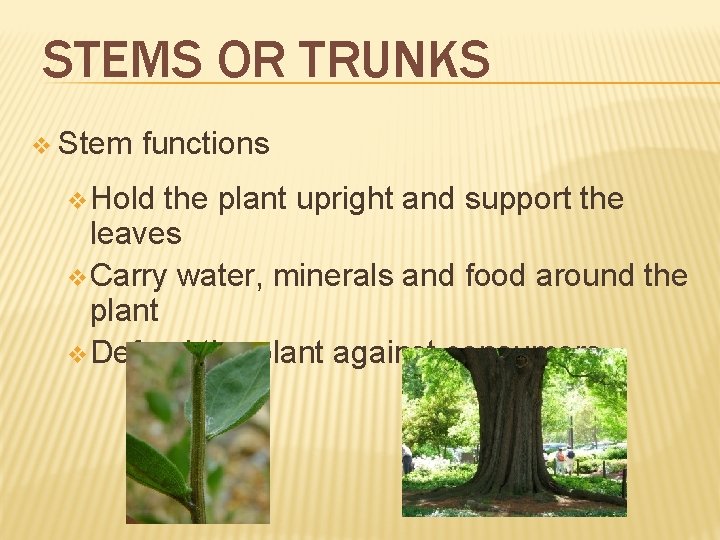
STEMS OR TRUNKS v Stem functions v Hold the plant upright and support the leaves v Carry water, minerals and food around the plant v Defend the plant against consumers
STEMS OR TRUNKS v adaptations v Stems and trunks must adapt to many different environments v Rigid and made of bark v Flexible and not made of bark v Have xylem to carry water and food around the plant v Defenses against consumers
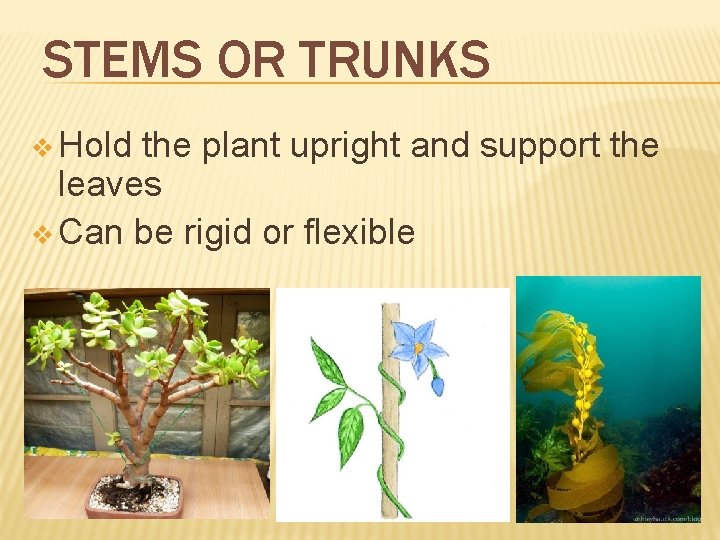
STEMS OR TRUNKS v Hold the plant upright and support the leaves v Can be rigid or flexible
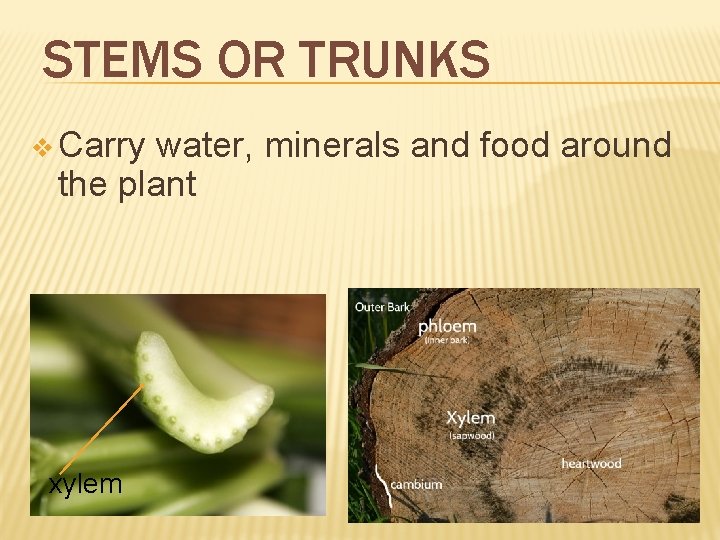
STEMS OR TRUNKS v Carry water, minerals and food around the plant xylem
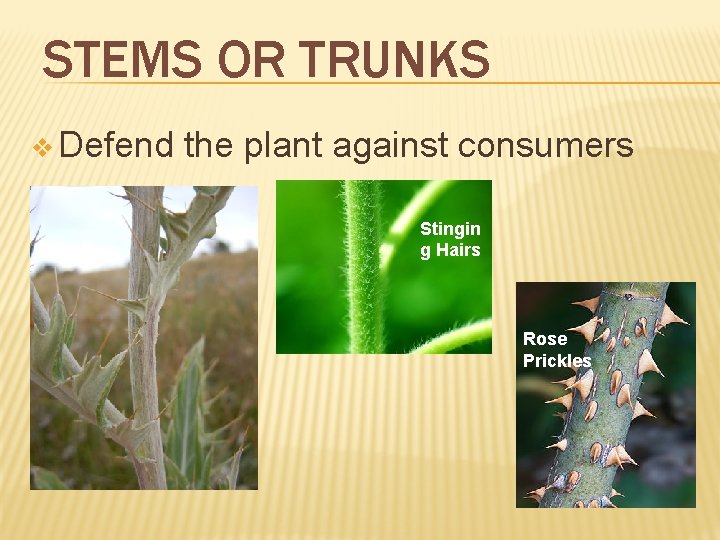
STEMS OR TRUNKS v Defend the plant against consumers Stingin g Hairs Rose Prickles
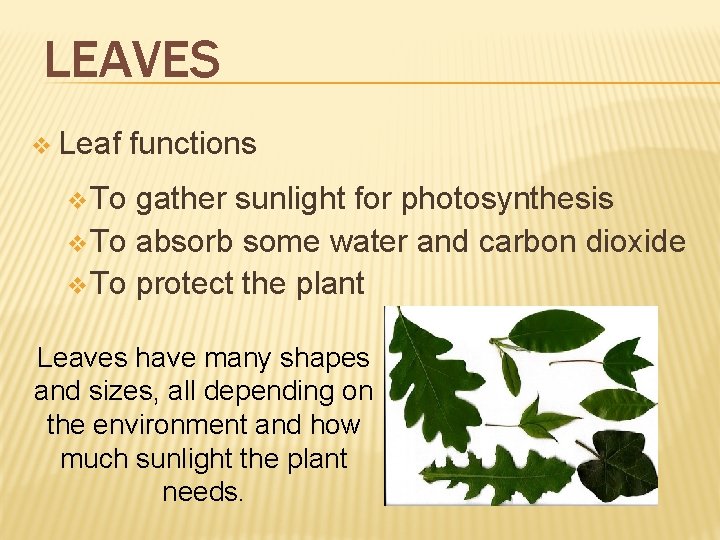
LEAVES v Leaf functions v To gather sunlight for photosynthesis v To absorb some water and carbon dioxide v To protect the plant Leaves have many shapes and sizes, all depending on the environment and how much sunlight the plant needs.
LEAVES v adaptations v leaf size v float in water v catch prey v thorns v toxins
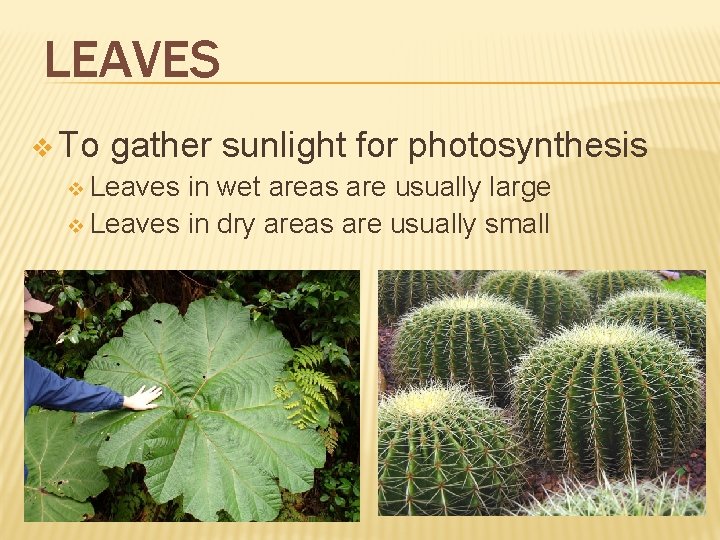
LEAVES v To gather sunlight for photosynthesis v Leaves in wet areas are usually large v Leaves in dry areas are usually small
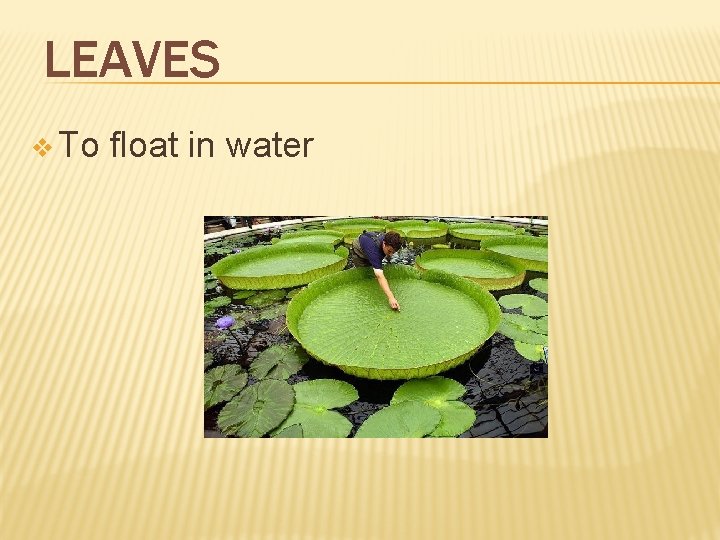
LEAVES v To float in water
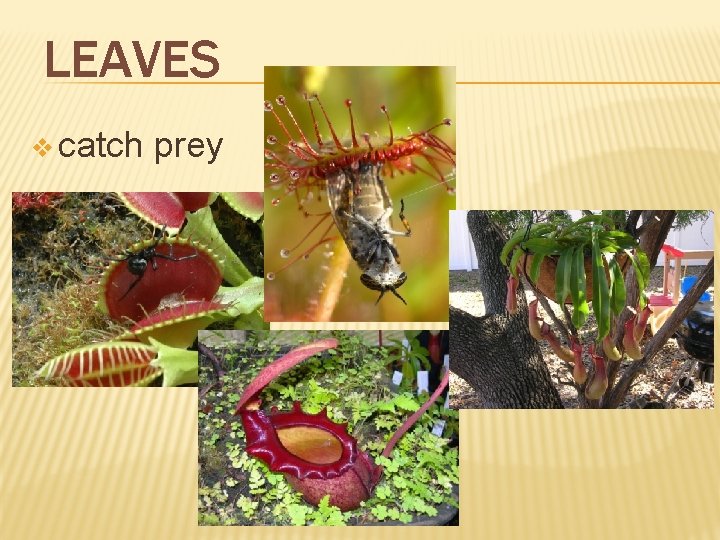
LEAVES v catch prey