
Plant Adaptations Dry Adaptations An adaptation is a
- Slides: 2
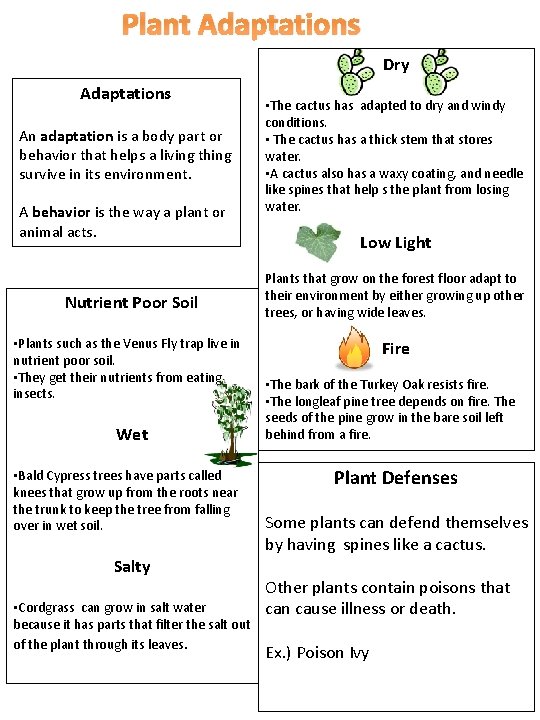
Plant Adaptations Dry Adaptations An adaptation is a body part or behavior that helps a living thing survive in its environment. A behavior is the way a plant or animal acts. Nutrient Poor Soil • Plants such as the Venus Fly trap live in nutrient poor soil. • They get their nutrients from eating insects. Wet • Bald Cypress trees have parts called knees that grow up from the roots near the trunk to keep the tree from falling over in wet soil. Salty • Cordgrass can grow in salt water because it has parts that filter the salt out of the plant through its leaves. • The cactus has adapted to dry and windy conditions. • The cactus has a thick stem that stores water. • A cactus also has a waxy coating, and needle like spines that help s the plant from losing water. Low Light Plants that grow on the forest floor adapt to their environment by either growing up other trees, or having wide leaves. Fire • The bark of the Turkey Oak resists fire. • The longleaf pine tree depends on fire. The seeds of the pine grow in the bare soil left behind from a fire. Plant Defenses Some plants can defend themselves by having spines like a cactus. Other plants contain poisons that can cause illness or death. Ex. ) Poison Ivy
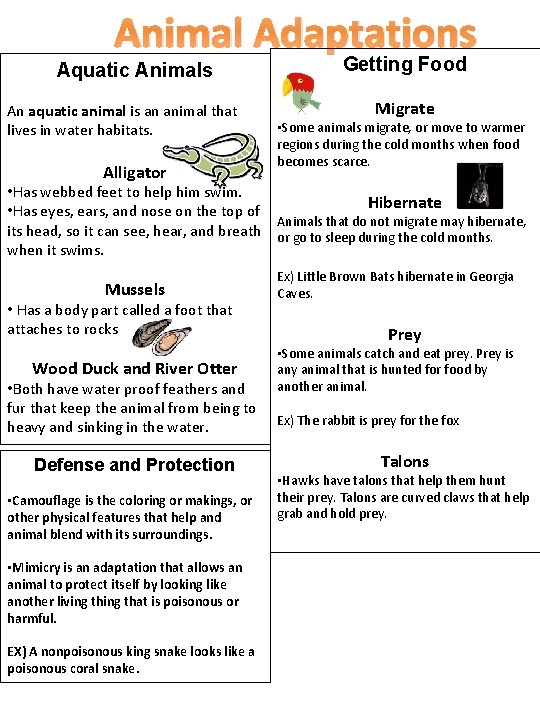
Animal Adaptations Aquatic Animals An aquatic animal is an animal that lives in water habitats. Alligator Getting Food Migrate • Some animals migrate, or move to warmer regions during the cold months when food becomes scarce. • Has webbed feet to help him swim. Hibernate • Has eyes, ears, and nose on the top of Animals that do not migrate may hibernate, its head, so it can see, hear, and breath or go to sleep during the cold months. when it swims. Mussels • Has a body part called a foot that attaches to rocks Wood Duck and River Otter • Both have water proof feathers and fur that keep the animal from being to heavy and sinking in the water. Defense and Protection • Camouflage is the coloring or makings, or other physical features that help and animal blend with its surroundings. • Mimicry is an adaptation that allows an animal to protect itself by looking like another living that is poisonous or harmful. EX) A nonpoisonous king snake looks like a poisonous coral snake. Ex) Little Brown Bats hibernate in Georgia Caves. Prey • Some animals catch and eat prey. Prey is any animal that is hunted for food by another animal. Ex) The rabbit is prey for the fox Talons • Hawks have talons that help them hunt their prey. Talons are curved claws that help grab and hold prey.