
Plans Missouri Compromise Wilmot Proviso Compromise of 1850
- Slides: 19
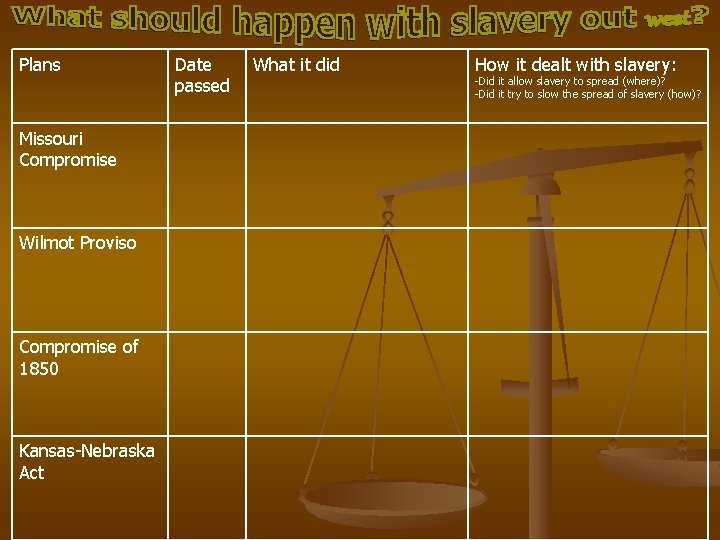
Plans Missouri Compromise Wilmot Proviso Compromise of 1850 Kansas-Nebraska Act Date passed What it did How it dealt with slavery: -Did it allow slavery to spread (where)? -Did it try to slow the spread of slavery (how)?
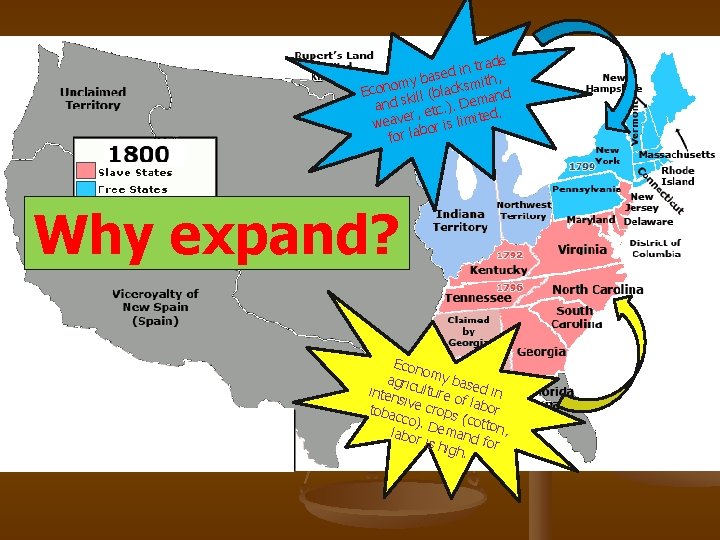
trade n i d e s my ba acksmith, o n o c l E and kill (b and s etc. ). Dem. er, ted weav bor is limi for la Why expand? Econ o agric my bas ed in u lture inten o si f toba ve crops labor cco). De (cotton, m labo r is h and for igh.
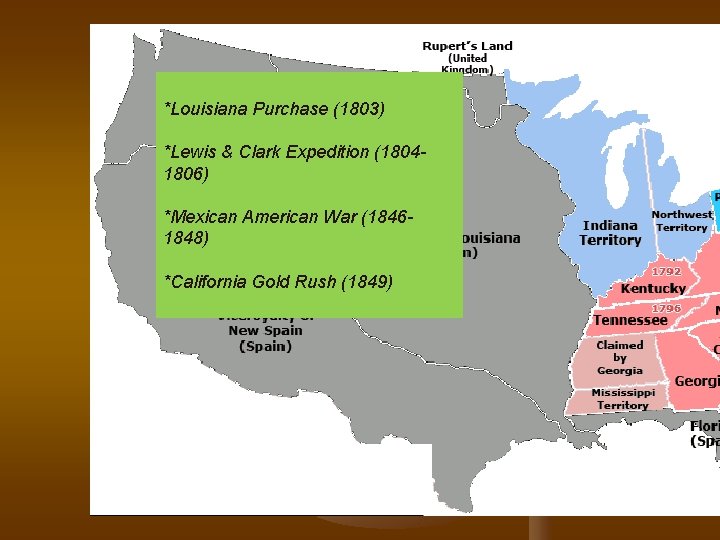
*Louisiana Purchase (1803) *Lewis & Clark Expedition (18041806) *Mexican American War (18461848) *California Gold Rush (1849)
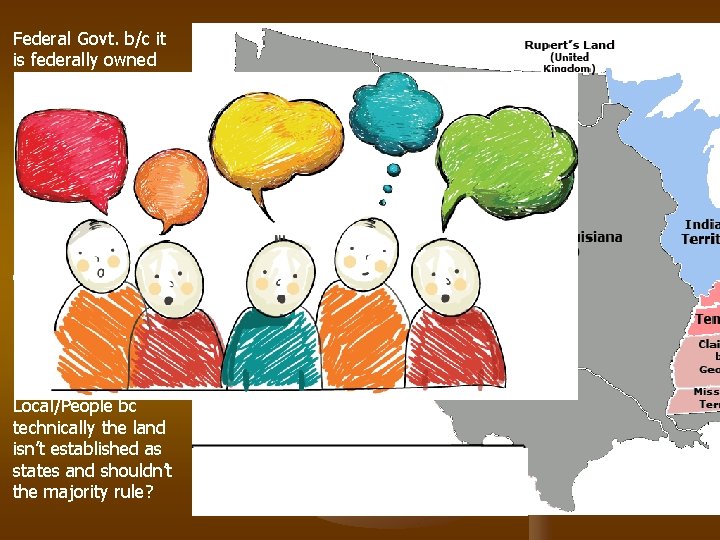
Federal Govt. b/c it is federally owned land? *How should this land be divided? * Should each area become a state? State Govt. b/c that is how it was decided in the east? Local/People bc technically the land isn’t established as states and shouldn’t the majority rule? * Should the land allow slavery or not? * Who should make these types of decisions?
Each time the nation expanded, a new plan to solve the situation and tension was developed. n n Here are four of the plans/attempts: Missouri Compromise Wilmot Proviso Compromise of 1850 Kansas-Nebraska Act. n Review each plan. Match each plan with the correct map. Complete the chart with the details of each plan.
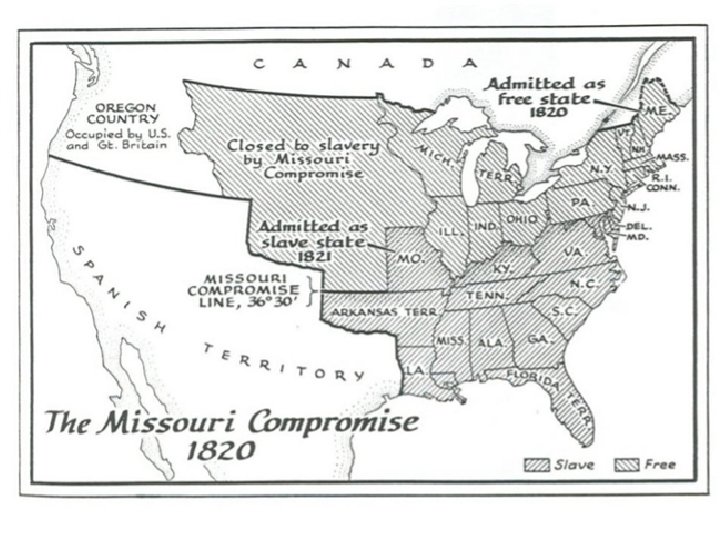
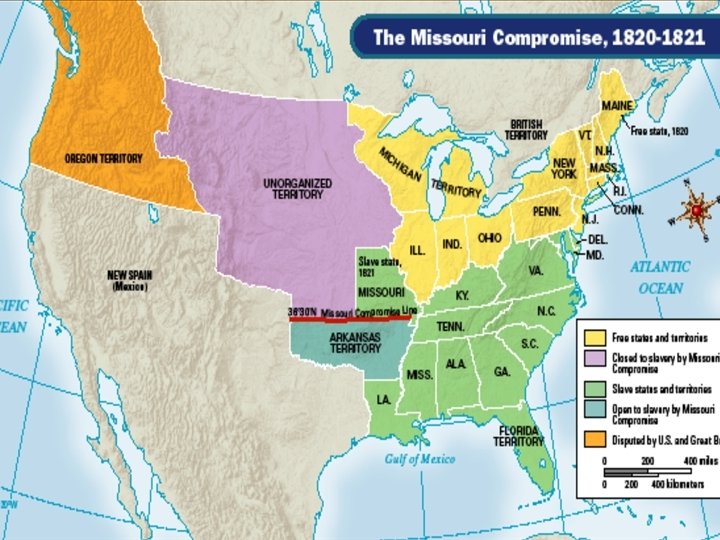
Missouri Compromise (1820) n n Nation was currently divided with 11 free and 11 slave states Missouri requests and is admitted as a slave state under the following conditions Could not import enslaved Africans into Missouri n Set free all children of Missouri slaves Maine is admitted as a free state (to keep balance in the Senate) n n n Made slavery illegal north of the 36° 30’ parallel n n an attempt to slow the spread of slavery out west. Slavery was still legal south of the 36° 30’ line.
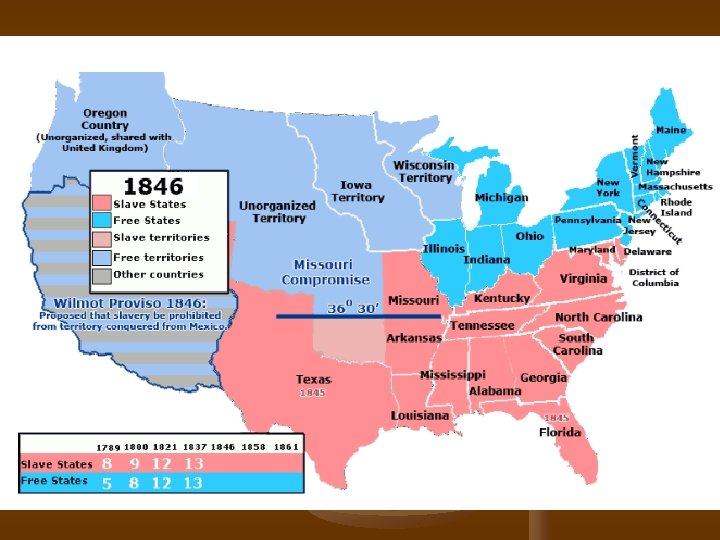
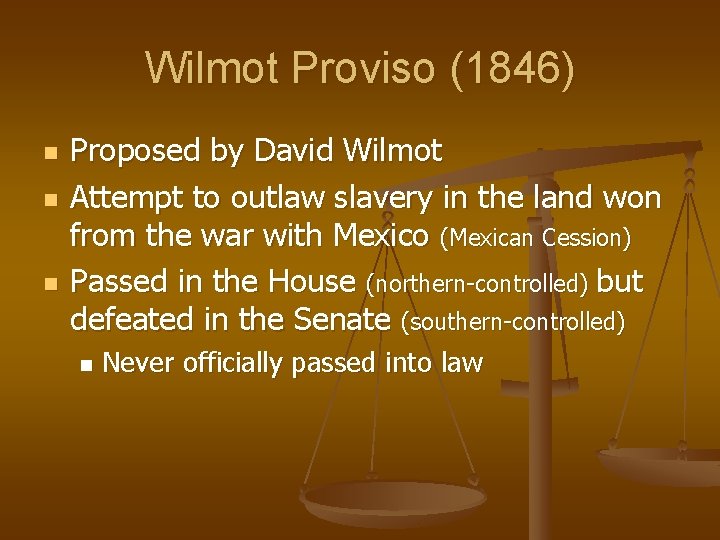
Wilmot Proviso (1846) n n n Proposed by David Wilmot Attempt to outlaw slavery in the land won from the war with Mexico (Mexican Cession) Passed in the House (northern-controlled) but defeated in the Senate (southern-controlled) n Never officially passed into law
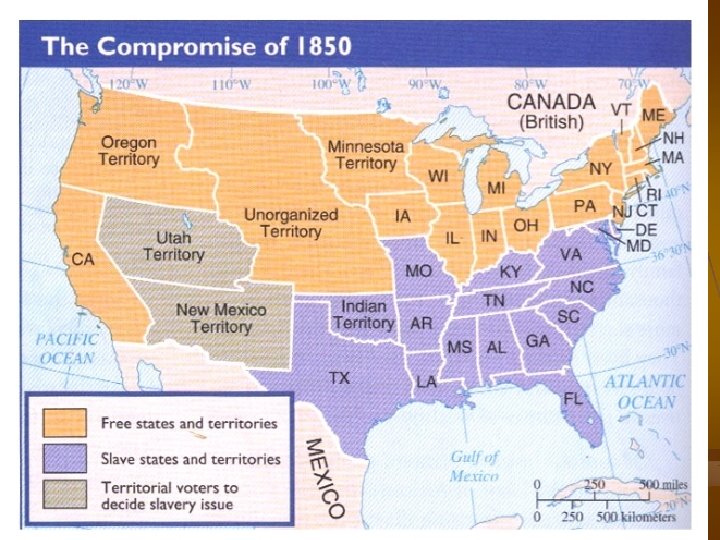
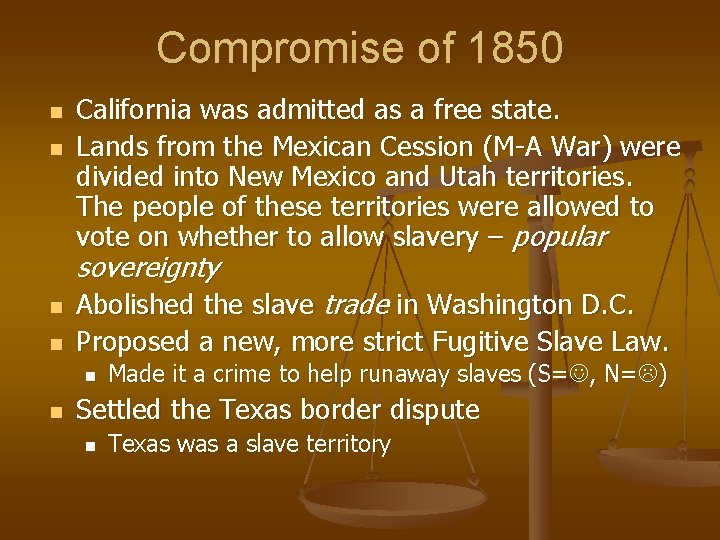
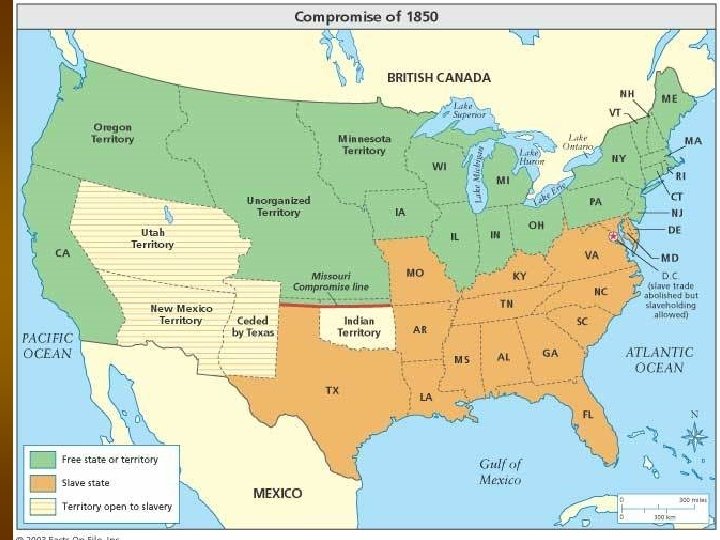
Compromise of 1850 n n California was admitted as a free state. Lands from the Mexican Cession (M-A War) were divided into New Mexico and Utah territories. The people of these territories were allowed to vote on whether to allow slavery – popular sovereignty n n Abolished the slave trade in Washington D. C. Proposed a new, more strict Fugitive Slave Law. n n Made it a crime to help runaway slaves (S= , N= ) Settled the Texas border dispute n Texas was a slave territory
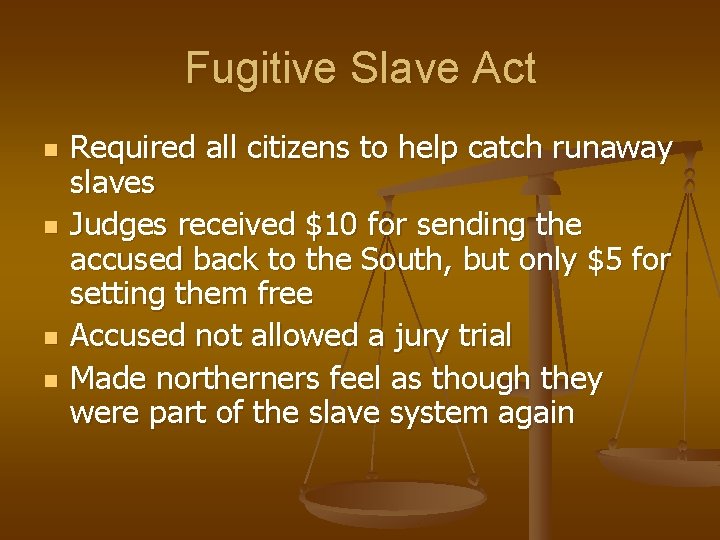
Fugitive Slave Act n n Required all citizens to help catch runaway slaves Judges received $10 for sending the accused back to the South, but only $5 for setting them free Accused not allowed a jury trial Made northerners feel as though they were part of the slave system again
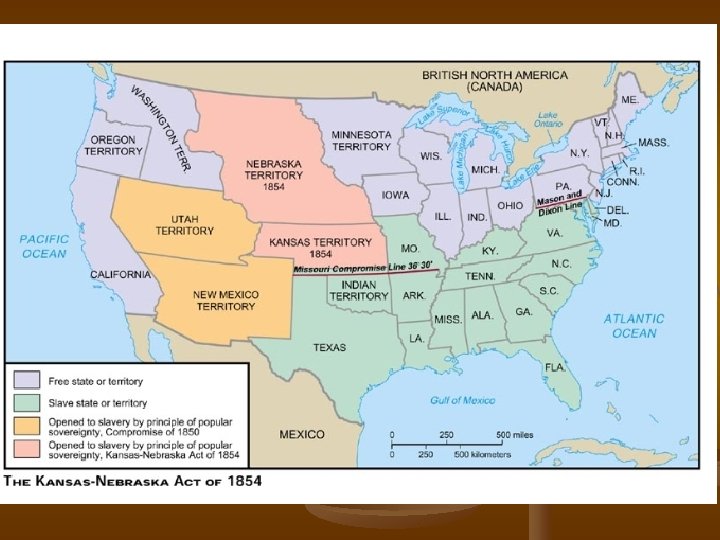
Kansas-Nebraska Act (1854) n Repealed the Missouri Compromise n n n 36° 30’ parallel no longer counts as a dividing line for slavery Created Kansas and Nebraska territories (from the remaining land of the LA Purchase) and those territories would decide on slavery through popular sovereignty Pro-slavery and anti-slavery voters crossed borders to cast their ballots in order to influence the outcome (results: Bleeding Kansas; KS=slave, NE=free)
Tension in Kansas and Nebraska n n n n n • Kansas and Nebraska territories north of 36° 30’ line, closed to slavery • 1854 Kansas-Nebraska Act allows popular sovereignty on slavery Act is supported by Senator Stephen Douglas because he knew Southerners did not want to add another free state and he wanted to build a transcontinental railroad from Chicago to the Pacific “Bleeding Kansas” In 1855, proslavery settlers from Missouri cross border to vote in Kansas Fraudulent victory leads to violent struggle over slavery in Kansas (Continued on the next slide) Violence in the Senate Charles Sumner verbally attacks slavery, singles out Andrew Butler Preston S. Brooks, Butler’s nephew, assaults Sumner on Senate
Bleeding Kansas n n n Pro-slavery activists traveled to Lawrence, KS, an anti-slavery stronghold, and smashed the press of the Free-Soil newspaper John Brown, an abolitionist, traveled to Pottawatomie Creek and killed five proslavery men Describes the blood-shed and violence in the western territories