
Planning with Public Health How Collaborative Healthy Built
Planning with Public Health: How Collaborative Healthy Built Environment Program Planning Achieves Results October 1, 2019 4: 00 pm – 5: 00 pm Ontario Professional Planners Institute Conference 2019 Production of this presentation has been made possible through a financial contribution from the Public Health Agency of Canada.
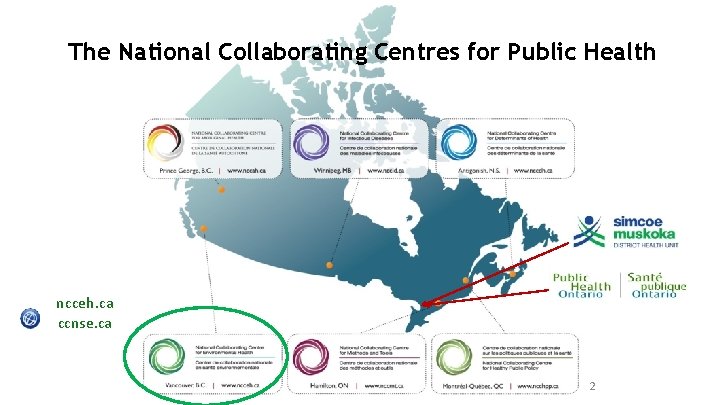
The National Collaborating Centres for Public Health ncceh. ca ccnse. ca 2
Disclosure Statement Today’s speakers of this session do not have any affiliation (financial or otherwise) with a pharmaceutical, medical device or communications organization.
MODERATOR & PRESENTERS Moderator: Lydia Ma, MSc, Ph. D Manager, National Collaborating Centre for Environmental Health (NCCEH); Adjunct Professor, School of Population and Public Health, University of British Columbia Brent W. Moloughney, MD, MSc, FRCPC Chief, Health Promotion, Chronic Disease and Injury Prevention, Public Health Ontario Health and the Built Environment; Supporting Public Health Practice Charles Gardner, MD, CCFP, MHSc, FRCPC Medical Officer of Health, Simcoe Muskoka District Health Unit Healthy Built Environment – A Provincial Framework for Healthy Community Design Ghazal Fazli, MPH, Ph. D Post-doctoral Fellow, Public Health Ontario Capacity and Readiness of Public Health to Support the Creation of Healthy Built Environments
Q&A DISCUSSIONS
Health and the Built Environment Dr. Brent Moloughney Public. Health. Ontario. ca 6
Public. Health. Ontario. ca 7
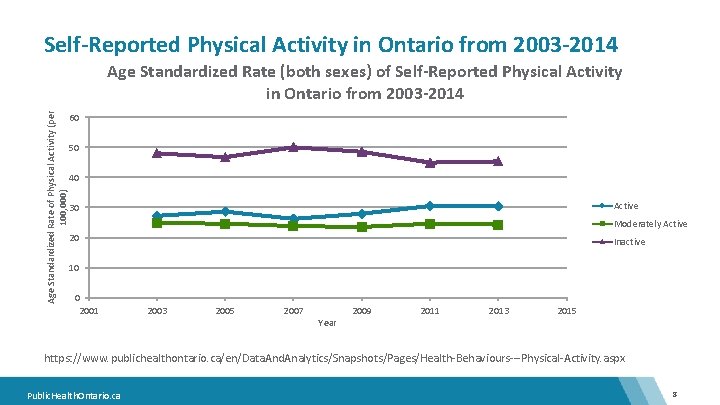
Self-Reported Physical Activity in Ontario from 2003 -2014 Age Standardized Rate of Physical Activity (per 100, 000) Age Standardized Rate (both sexes) of Self-Reported Physical Activity in Ontario from 2003 -2014 60 50 40 Active 30 Moderately Active 20 Inactive 10 0 2001 2003 2005 2007 Year 2009 2011 2013 2015 https: //www. publichealthontario. ca/en/Data. And. Analytics/Snapshots/Pages/Health-Behaviours---Physical-Activity. aspx Public. Health. Ontario. ca 8
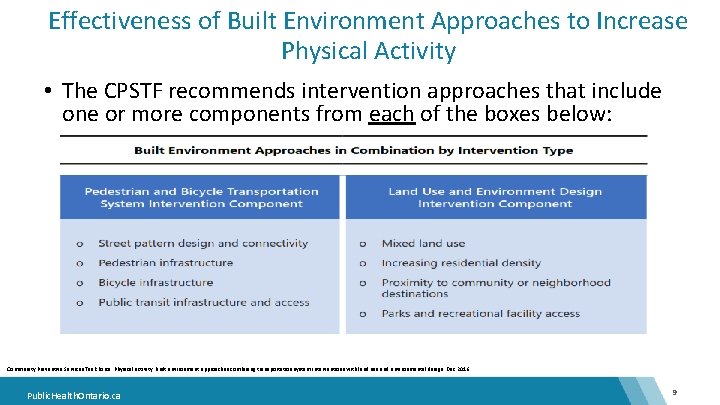
Effectiveness of Built Environment Approaches to Increase Physical Activity • The CPSTF recommends intervention approaches that include one or more components from each of the boxes below: Community Preventive Services Task Force. Physical activity: Built environment approaches combining transportation system interventions with land use and environmental design. Dec 2016. Public. Health. Ontario. ca 9
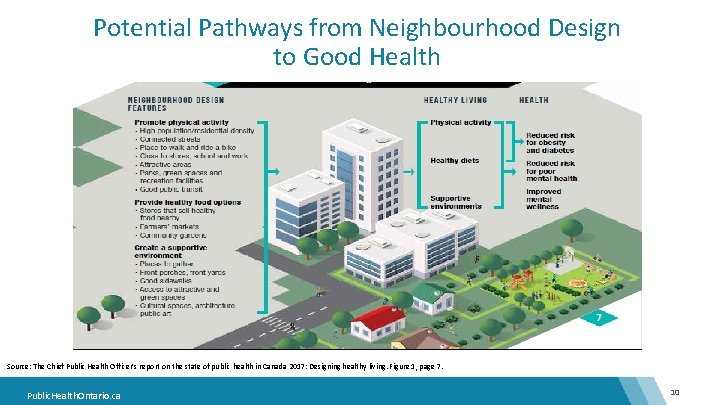
Potential Pathways from Neighbourhood Design to Good Health Source: The Chief Public Health Officer’s report on the state of public health in Canada 2017: Designing healthy living. Figure 1, page 7. Public. Health. Ontario. ca 10
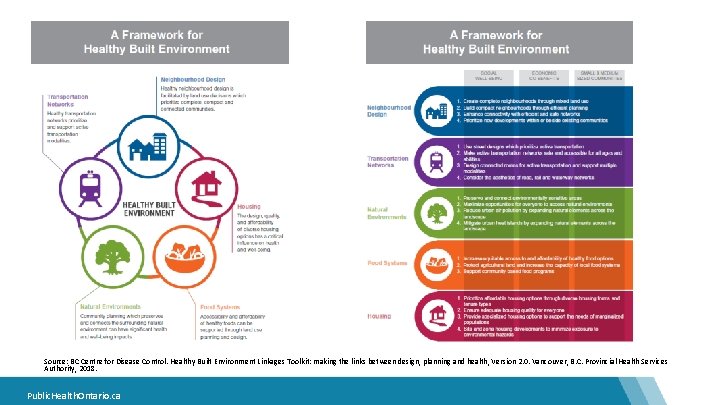
Source: BC Centre for Disease Control. Healthy Built Environment Linkages Toolkit: making the links between design, planning and health, Version 2. 0. Vancouver, B. C. Provincial Health Services Authority, 2018. Public. Health. Ontario. ca
Healthy Built Environment – A Provincial Framework for Healthy Community Design Dr. Charles Gardner Public. Health. Ontario. ca 12
Locally Driven Collaborative Project (LDCP) “HEALTHY BUILT ENVIRONMENT A PROVINCIAL FRAMEWORK FOR HEALTHY COMMUNITY DESIGN” Collaborative project: 18 Health Units, and representatives from Ontario Public Health Association, Public Health Agency of Canada, University of Toronto and Registered Professional Planners.
LOCALLY DRIVEN COLLABORATIVE PROJECT (LDCP): “HEALTHY BUILT ENVIRONMENT - A PROVINCIAL FRAMEWORK FOR HEALTHY COMMUNITY DESIGN” Collaborative project: § Public Health Ontario and Simcoe Muskoka District Health Unit § 18 Health Units § Ontario Public Health Association § Public Health Agency of Canada, § University of Toronto, and § Registered Professional Planners.
RESEARCH QUESTION: How can public health units most effectively work with their communities to achieve community design that improves population health?
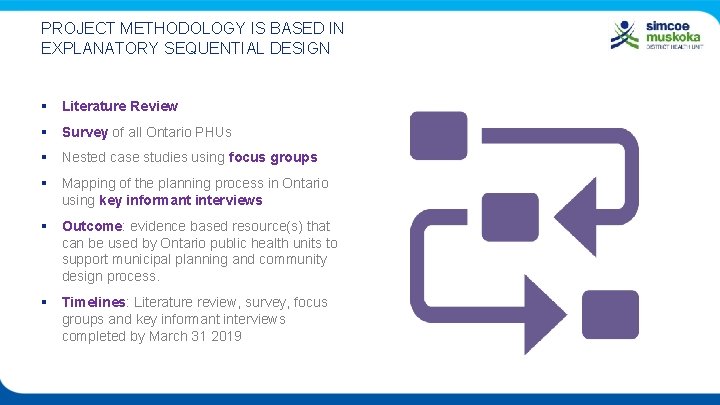
PROJECT METHODOLOGY IS BASED IN EXPLANATORY SEQUENTIAL DESIGN § Literature Review § Survey of all Ontario PHUs § Nested case studies using focus groups § Mapping of the planning process in Ontario using key informant interviews § Outcome: evidence based resource(s) that can be used by Ontario public health units to support municipal planning and community design process. § Timelines: Literature review, survey, focus groups and key informant interviews completed by March 31 2019
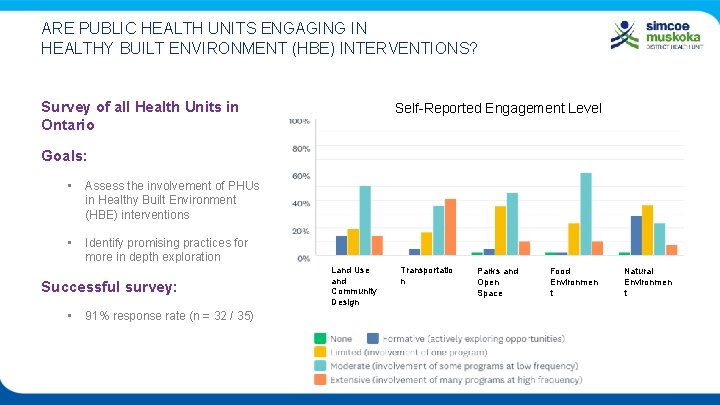
ARE PUBLIC HEALTH UNITS ENGAGING IN HEALTHY BUILT ENVIRONMENT (HBE) INTERVENTIONS? Survey of all Health Units in Ontario Self-Reported Engagement Level Goals: • Assess the involvement of PHUs in Healthy Built Environment (HBE) interventions • Identify promising practices for more in depth exploration Successful survey: • 91% response rate (n = 32 / 35) Land Use and Community Design Transportatio n Parks and Open Space Food Environmen t Natural Environmen t
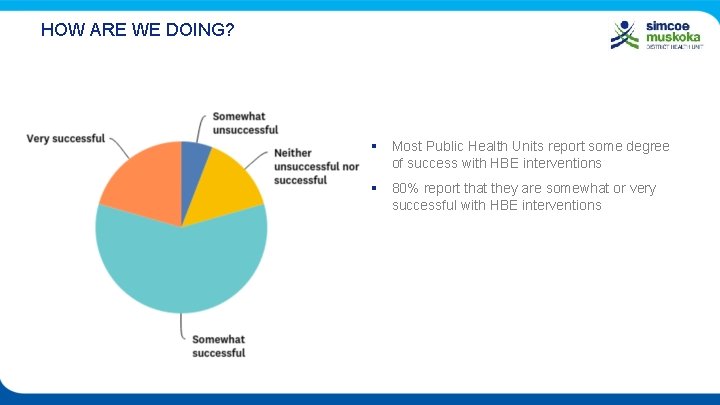
HOW ARE WE DOING? § Most Public Health Units report some degree of success with HBE interventions § 80% report that they are somewhat or very successful with HBE interventions
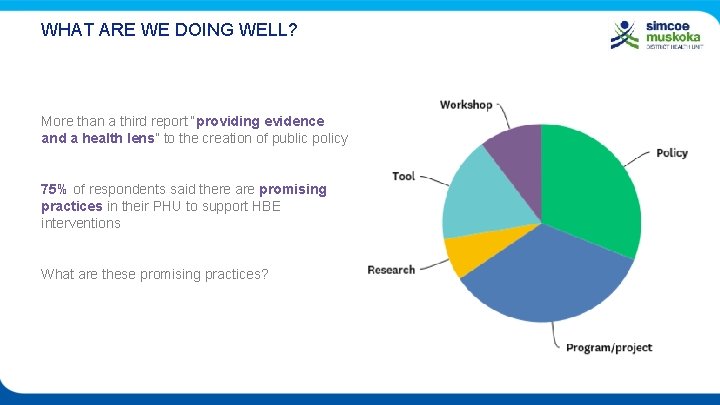
WHAT ARE WE DOING WELL? More than a third report “providing evidence and a health lens” to the creation of public policy 75% of respondents said there are promising practices in their PHU to support HBE interventions What are these promising practices?
FOCUS GROUPS Moving from the survey findings to a deeper, focused exploration of promising practices Selection Criteria: 1. Survey responses on promising practices 2. Strong level of engagement 3. Diversity in geographic, demographic and governance characteristics 7 Public Health Units and Community Partners
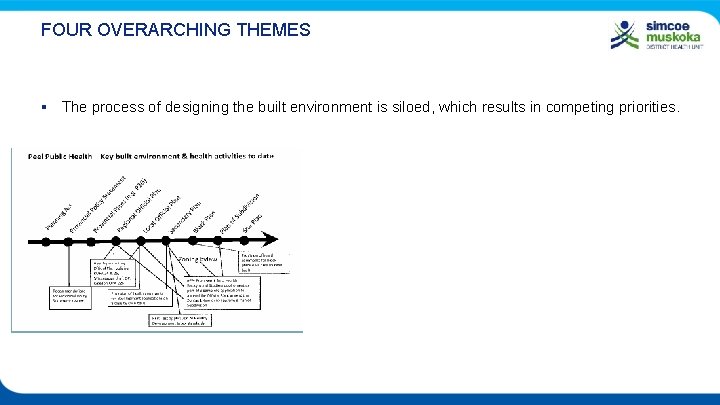
FOUR OVERARCHING THEMES § The process of designing the built environment is siloed, which results in competing priorities.
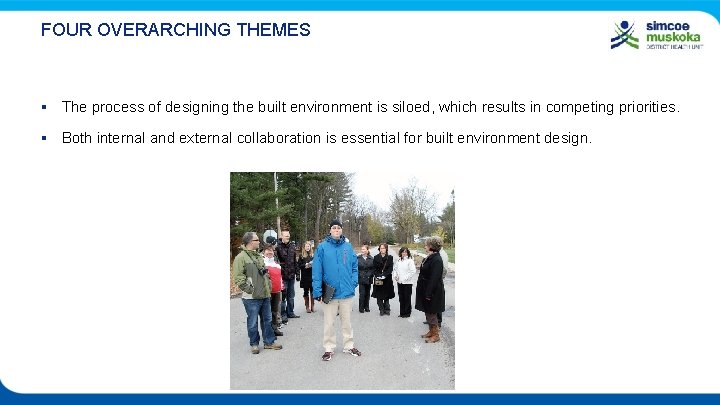
FOUR OVERARCHING THEMES § The process of designing the built environment is siloed, which results in competing priorities. § Both internal and external collaboration is essential for built environment design.
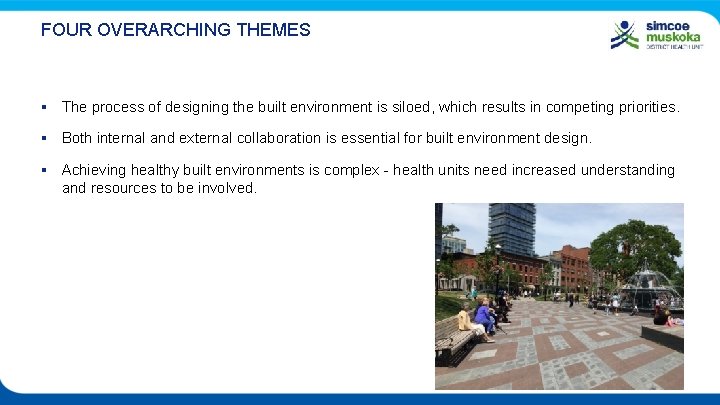
FOUR OVERARCHING THEMES § The process of designing the built environment is siloed, which results in competing priorities. § Both internal and external collaboration is essential for built environment design. § Achieving healthy built environments is complex - health units need increased understanding and resources to be involved.
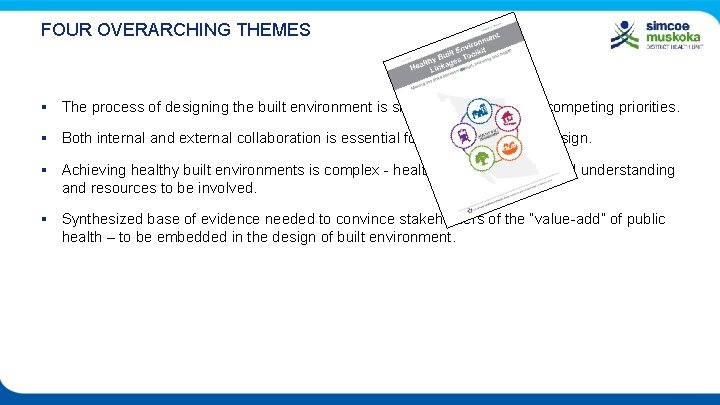
FOUR OVERARCHING THEMES § The process of designing the built environment is siloed, which results in competing priorities. § Both internal and external collaboration is essential for built environment design. § Achieving healthy built environments is complex - health units need increased understanding and resources to be involved. § Synthesized base of evidence needed to convince stakeholders of the “value-add” of public health – to be embedded in the design of built environment.
CASE STUDY: NORTHERN ONTARIO Promising Practices Advice to others § Keep a pulse on the municipal agenda § Take initiative § Develop personal relationships § Connect with external stakeholders § Utilize municipal elections to raise awareness § Prioritize § Use the best available evidence § Respect the Northern planners perspectives
EXPLORING THE LEGISLATIVE PROCESS Mapping the Municipal Planning Process in Ontario “What are the opportunities for public health input within the municipal planning process in Ontario? ” § Key informant interviews with key ministry staff Highlights: § Limited opportunities for PH engagement within the provincial system § Predominant opportunities exist at the local level § Potential to engage MOHLTC in the One Window approach
NEXT STEPS? § Utilize the findings of the research to develop a resource or tool to support PHUs § Partner with PHO for joint resource(s) development aligned with their local public health capacity study § Undertake knowledge translation activities to enhance public health capacity § Position the application of the findings to support work that is essential within a reorganized public health system in Ontario
Capacity and Readiness of Public Health to Support the Creation of Healthy Built Environments Dr. Ghazal Fazli Public. Health. Ontario. ca 31
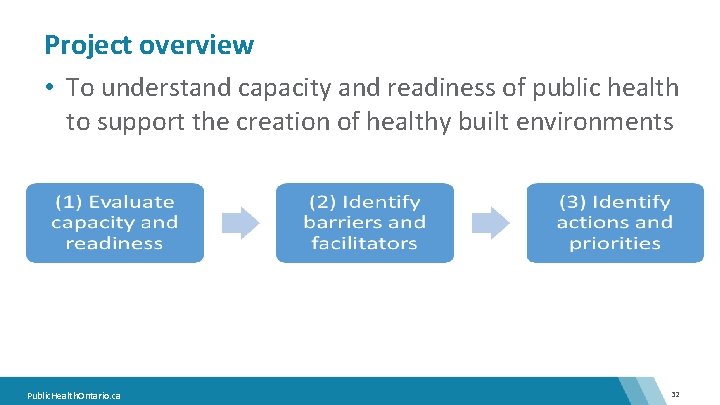
Project overview • To understand capacity and readiness of public health to support the creation of healthy built environments Public. Health. Ontario. ca 32
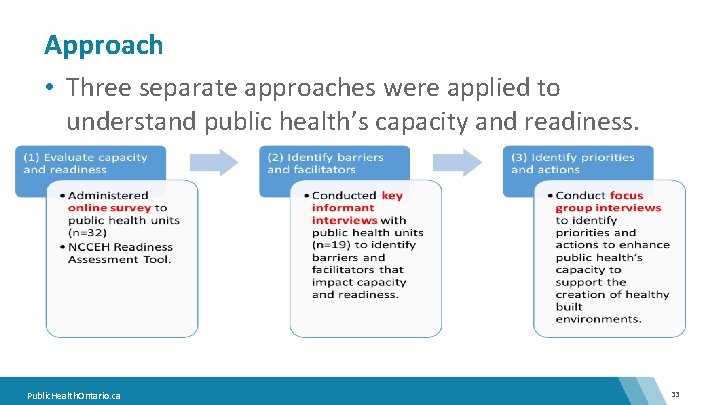
Approach • Three separate approaches were applied to understand public health’s capacity and readiness. Public. Health. Ontario. ca 33
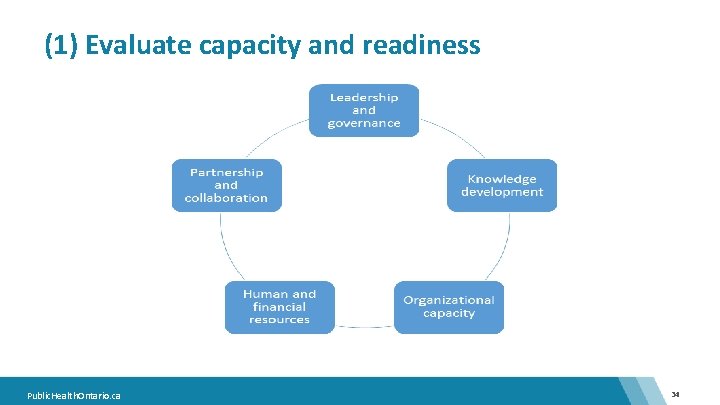
(1) Evaluate capacity and readiness Public. Health. Ontario. ca 34
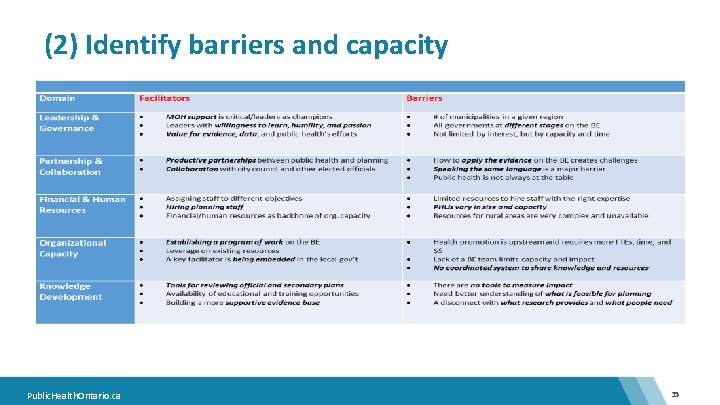
(2) Identify barriers and capacity Public. Health. Ontario. ca 35
(3) Identify actions and priorities • This fall, focus group interviews will be conducted with public health units to identify next steps, solutions and actions to support the creation of healthy built environments. Public. Health. Ontario. ca 36
Supporting Public Health Practice Dr. Brent Moloughney Public. Health. Ontario. ca 37
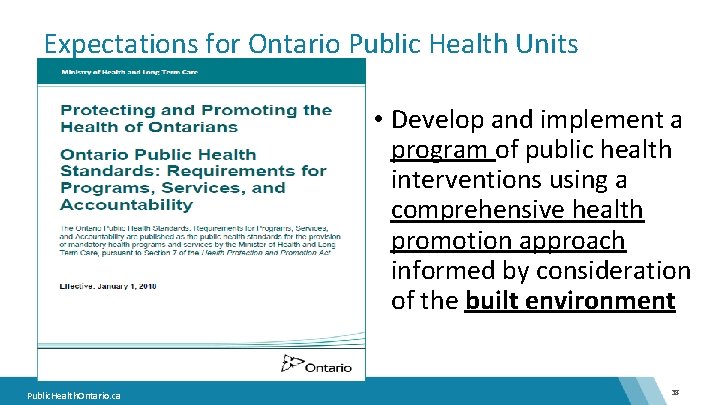
Expectations for Ontario Public Health Units • Develop and implement a program of public health interventions using a comprehensive health promotion approach informed by consideration of the built environment Public. Health. Ontario. ca 38
PHO Strategic Plan 2014 -2019 Evidence, Knowledge and Action for a Healthier Ontario We build capacity, assemble expertise and guide action through • advice, consultation and interpretation • continuing education and professional development • health emergency preparedness • information management • knowledge and best practices generation • laboratory services • library services • research, ethics and evaluation • support to policy and program development • surveillance and population health assessment Public. Health. Ontario. ca 39
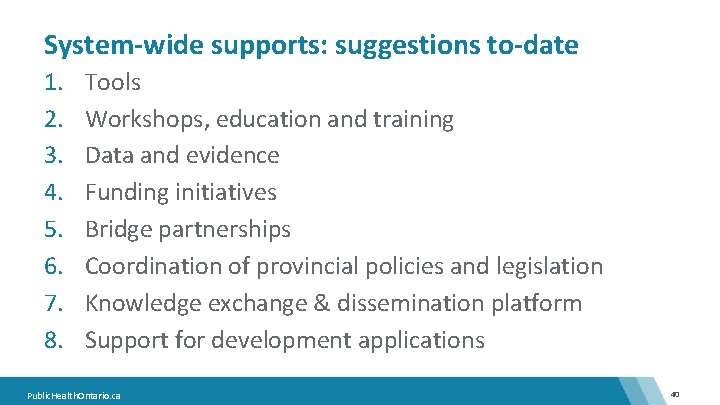
System-wide supports: suggestions to-date 1. 2. 3. 4. 5. 6. 7. 8. Tools Workshops, education and training Data and evidence Funding initiatives Bridge partnerships Coordination of provincial policies and legislation Knowledge exchange & dissemination platform Support for development applications Public. Health. Ontario. ca 40
System transformation Dr. Charles Gardner Public. Health. Ontario. ca 41
Thank You For further information, please contact us at: contact@ncceh. ca
- Slides: 39