
Planning Today for Tomorrows Challenges Strategic Planning Process
- Slides: 35
Planning Today for Tomorrow’s Challenges Strategic Planning Process for Affiliates [Insert Chapter or State Council Name Here] Presented by SHRM © SHRM 2009
The Three Primary Sections I. Planning Principles II. The Strategic Planning Process III. Strategic Execution ©SHRM 2009
I. Planning Principles Strategic Planning Process for Affiliates © SHRM 2009
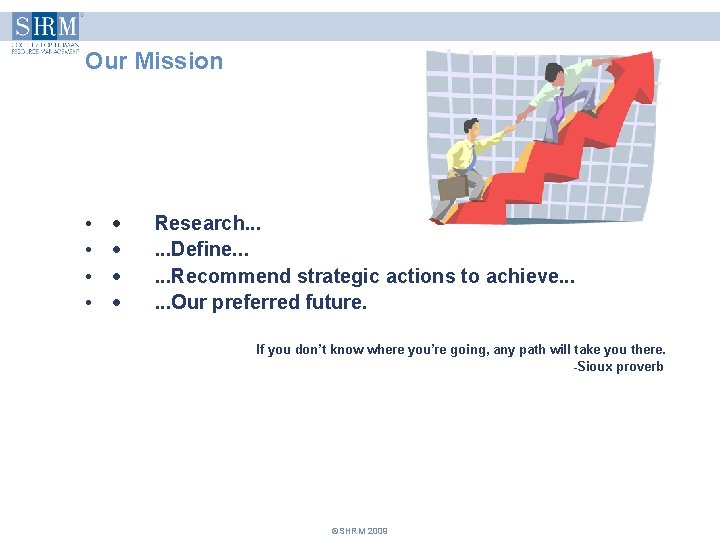
Our Mission • • · · Research. . . Define. . . Recommend strategic actions to achieve. . . Our preferred future. If you don’t know where you’re going, any path will take you there. -Sioux proverb ©SHRM 2009
Program Objectives · Review the key elements of a Strategic Planning Process. · Explain the critical components of the Strategic Execution Planning Cycle. · Develop and execute a Strategic Plan. · Address concerns you may have about sustaining a long-term practice of planning. ©SHRM 2009
Planning Myths Ø Most people plan. Ø Planning takes too much time and work, it bogs us down. Ø Planning is rarely looked upon as an investment. Ø The best planning methods are based on complex strategies. Ø Planning should be concrete, not flexible. ©SHRM 2009
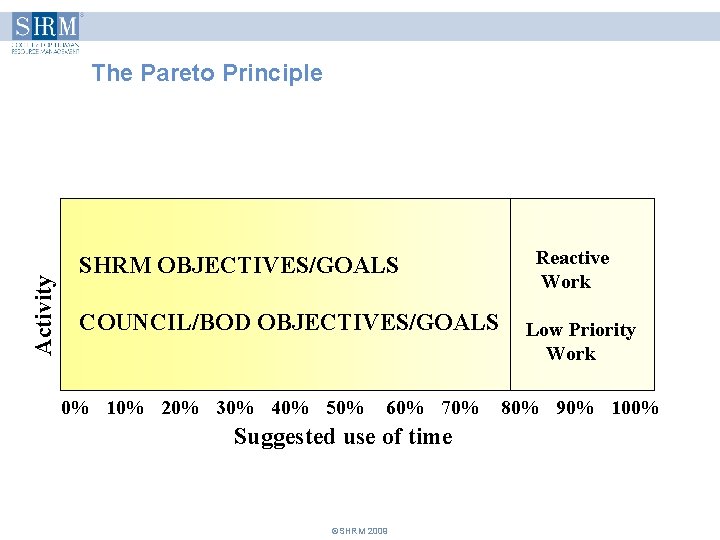
Activity The Pareto Principle SHRM OBJECTIVES/GOALS COUNCIL/BOD OBJECTIVES/GOALS 0% 10% 20% 30% 40% 50% 60% 70% Suggested use of time ©SHRM 2009 Reactive Work Low Priority Work 80% 90% 100%
II. The Strategic Planning Process for Affiliates © SHRM 2009
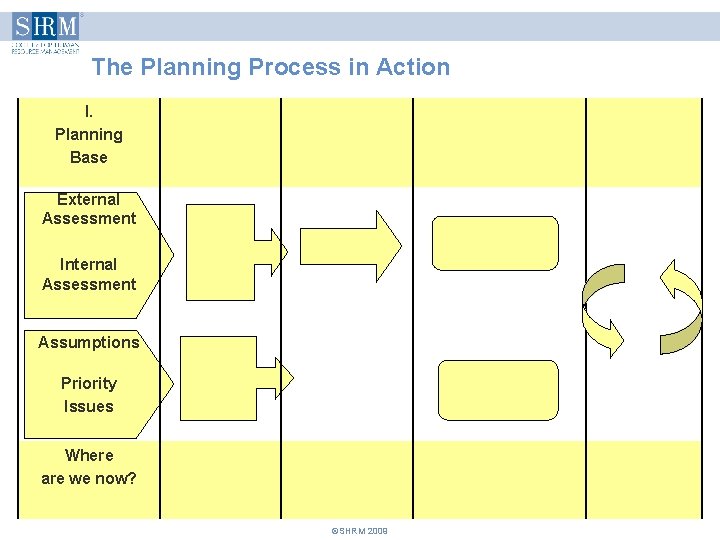
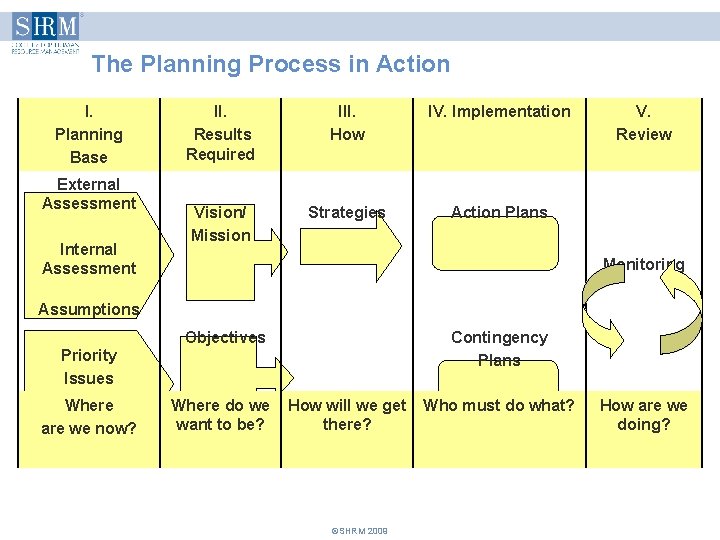
The Planning Process in Action I. Planning Base External Assessment Internal Assessment Assumptions Priority Issues Where are we now? ©SHRM 2009
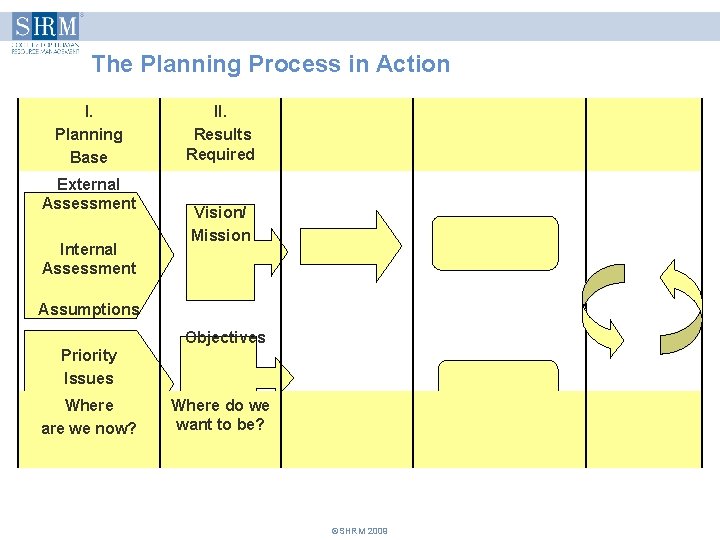
The Planning Process in Action I. Planning Base External Assessment Internal Assessment II. Results Required Vision/ Mission Assumptions Objectives Priority Issues Where are we now? Where do we want to be? ©SHRM 2009
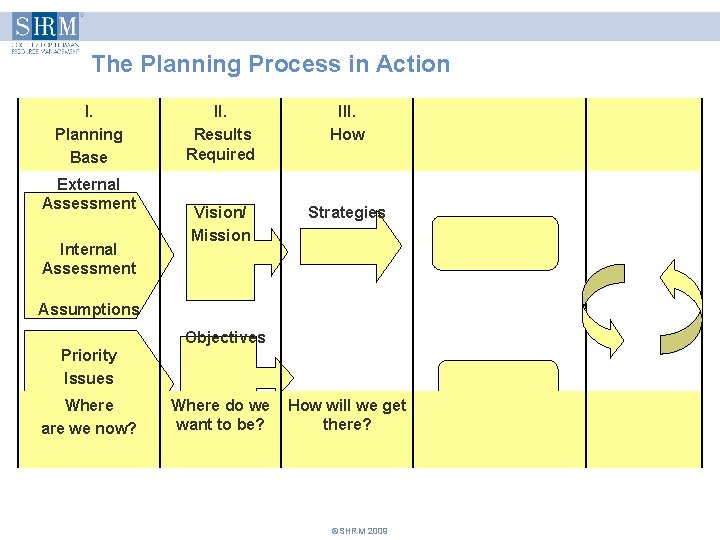
The Planning Process in Action I. Planning Base External Assessment Internal Assessment II. Results Required III. How Vision/ Mission Strategies Assumptions Objectives Priority Issues Where are we now? Where do we want to be? How will we get there? ©SHRM 2009
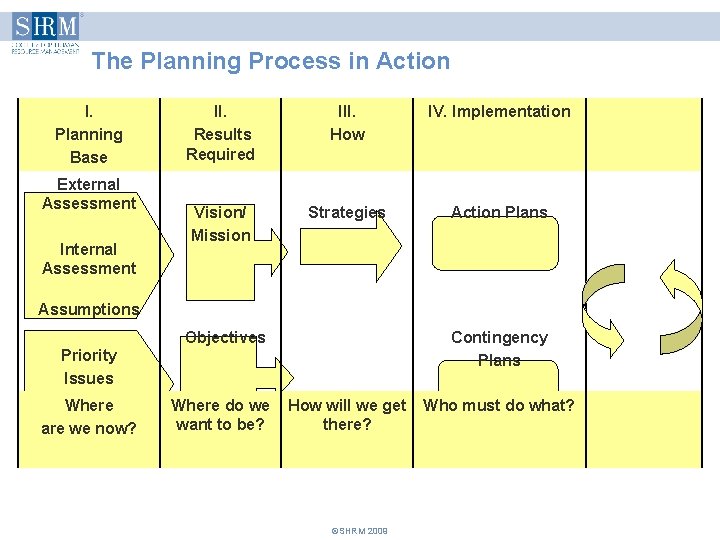
The Planning Process in Action I. Planning Base External Assessment Internal Assessment II. Results Required III. How IV. Implementation Vision/ Mission Strategies Action Plans Assumptions Objectives Contingency Plans Priority Issues Where are we now? Where do we want to be? How will we get there? ©SHRM 2009 Who must do what?
The Planning Process in Action I. Planning Base External Assessment Internal Assessment II. Results Required III. How IV. Implementation Vision/ Mission Strategies Action Plans V. Review Monitoring Assumptions Objectives Contingency Plans Priority Issues Where are we now? Where do we want to be? How will we get there? ©SHRM 2009 Who must do what? How are we doing?
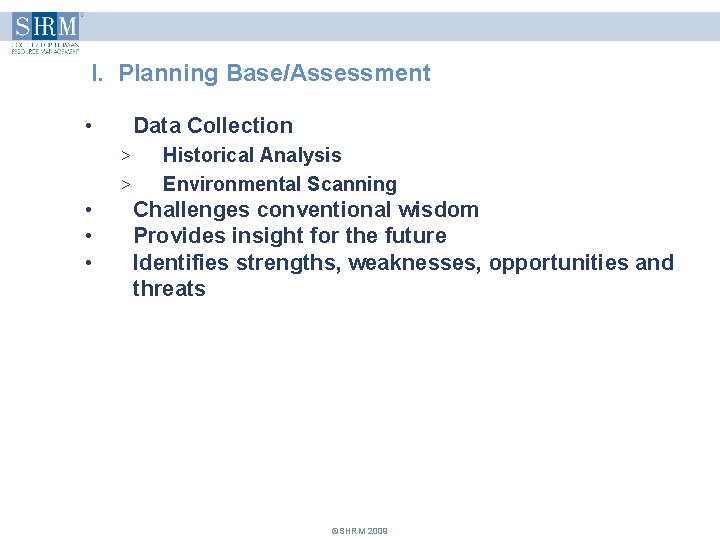
l. Planning Base/Assessment • Data Collection > > • • • Historical Analysis Environmental Scanning Challenges conventional wisdom Provides insight for the future Identifies strengths, weaknesses, opportunities and threats ©SHRM 2009
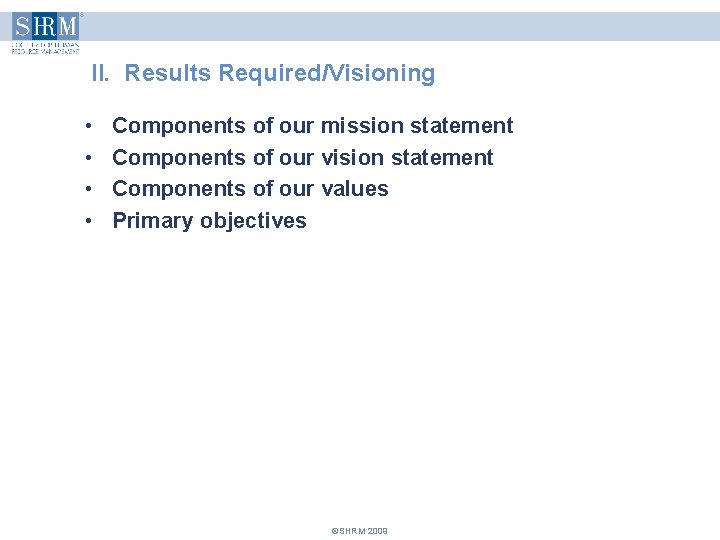
II. Results Required/Visioning • • Components of our mission statement Components of our vision statement Components of our values Primary objectives ©SHRM 2009
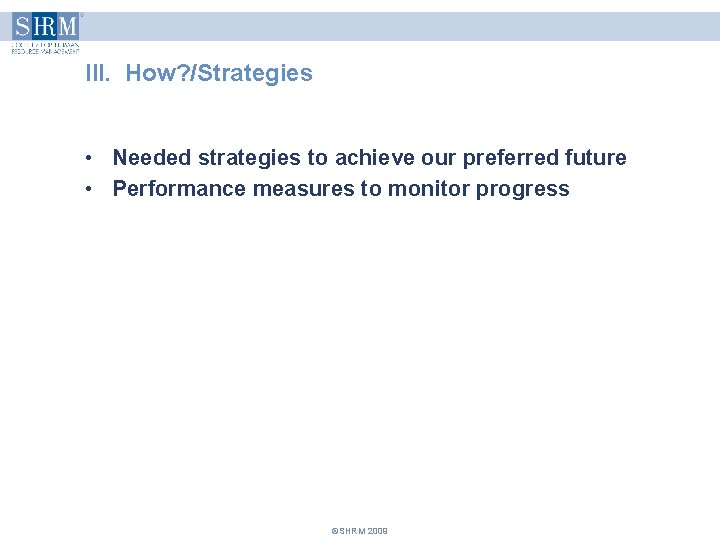
III. How? /Strategies • Needed strategies to achieve our preferred future • Performance measures to monitor progress ©SHRM 2009
IV. Implementation • Tactical action plans > Specific tasks > Responsibility levels > Time frames > outcomes • Implementation elements to clarify roles • Contingency plans to explore alternatives ©SHRM 2009
V. Review • Monitoring > To determine level of progress > Establish basis for alternative plans • Controls > Before the fact > During the fact > After the fact ©SHRM 2009
Outcomes • • • Clear picture of how trends impact our present and future Agreed upon direction and strategy Clearly defined mission, vision and values Specific, clear plans to improve our performance Development of team behaviors Improved decision making ©SHRM 2009 • • • Better leadership Development of strategic thinking and implementation skills Better allocation of resources and responsibilities Identification of short and long term “attention areas” Increased recognition as a “differentiator” Consistent, sustained success, as opposed to marginal success
III. Strategic Execution Strategic Planning Process for Affiliates © SHRM 2009
Historical Analysis HIGHS LOWS ©SHRM 2009
Historical Analysis HIGHS LOWS ©SHRM 2009
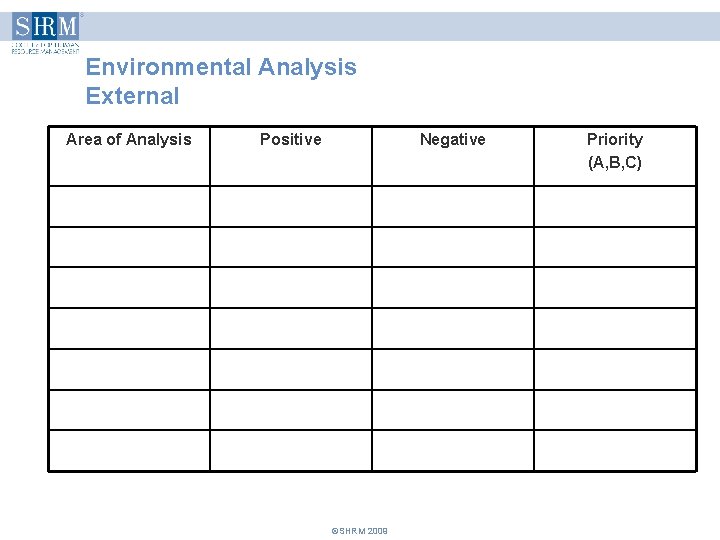
Environmental Analysis External Area of Analysis Positive Negative ©SHRM 2009 Priority (A, B, C)
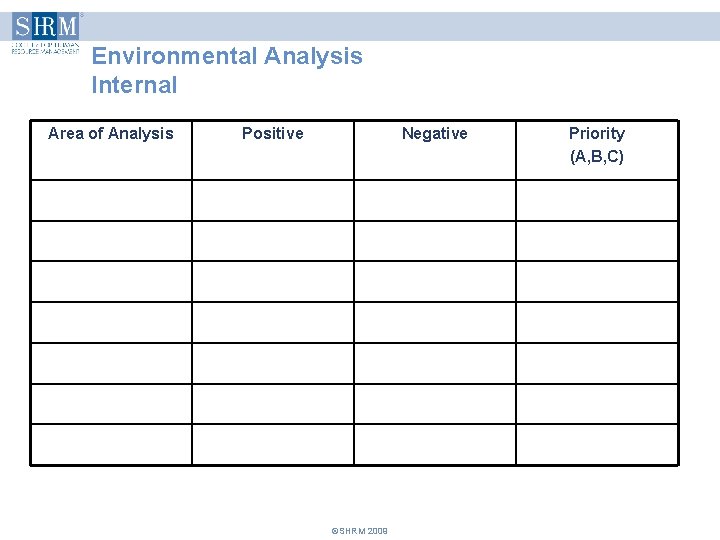
Environmental Analysis Internal Area of Analysis Positive Negative ©SHRM 2009 Priority (A, B, C)
SWOT Analysis -- Strengths Something we have, our competition does not and they can’t easily get. ©SHRM 2009
SWOT Analysis -- Weaknesses Something our competition has, we do not and we can’t easily get. ©SHRM 2009
SWOT Analysis -- Opportunities What are the overall issues, based on what our scan tells us, that we should be concentrating on? ©SHRM 2009
SWOT Analysis -- Threats What can potentially get in the way of our success? ©SHRM 2009
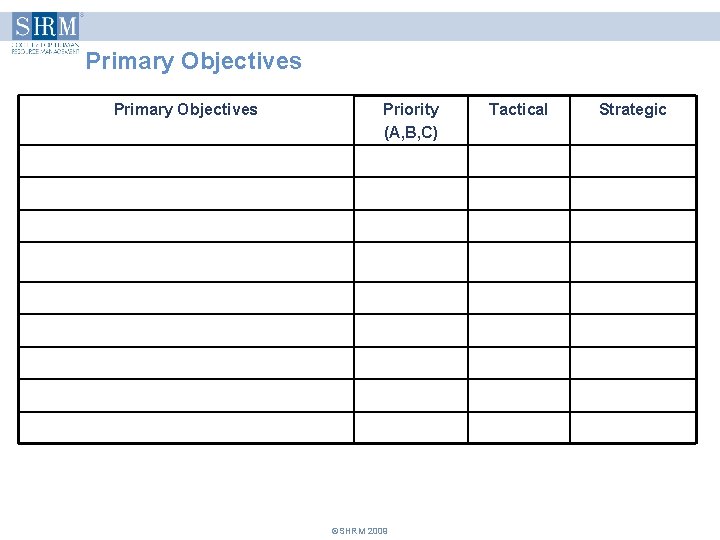
Primary Objectives Priority (A, B, C) ©SHRM 2009 Tactical Strategic
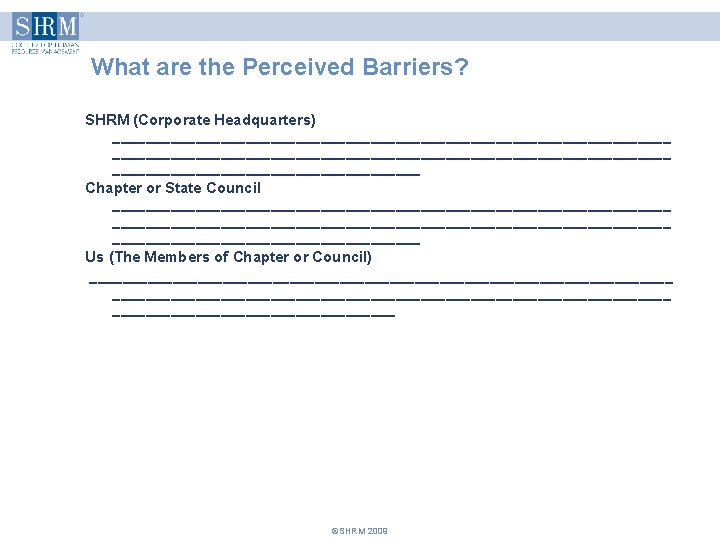
What are the Perceived Barriers? SHRM (Corporate Headquarters) ___________________________________________________________________ Chapter or State Council ___________________________________________________________________ Us (The Members of Chapter or Council) ___________________________________ _________________ ©SHRM 2009
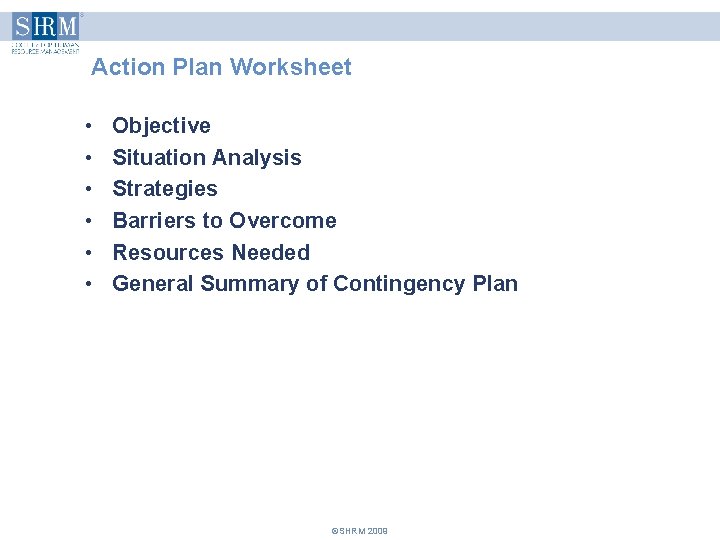
Action Plan Worksheet • • • Objective Situation Analysis Strategies Barriers to Overcome Resources Needed General Summary of Contingency Plan ©SHRM 2009
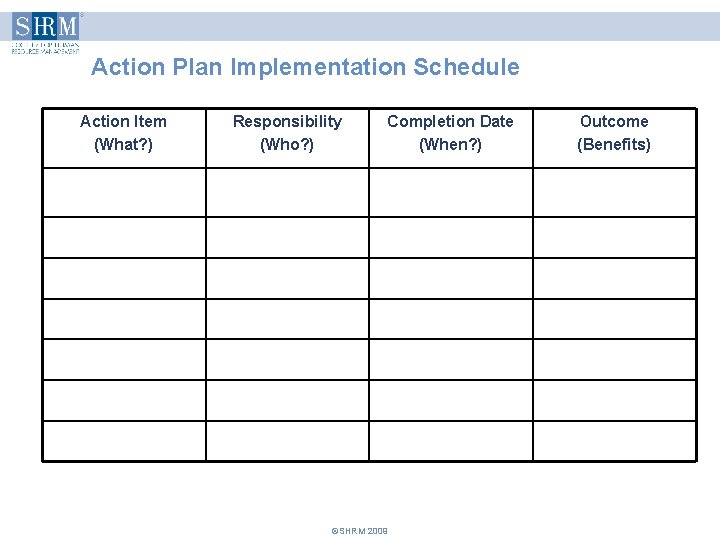
Action Plan Implementation Schedule Action Item (What? ) Responsibility (Who? ) Completion Date (When? ) ©SHRM 2009 Outcome (Benefits)
The Plan Sniff Test • • Is the plan realistic? Is the plan simple? Is the plan sequential? Does it flow properly? Is there a contingency plan? Will we know if we’re off track? Is the plan creative? Were all issues and facts taken into consideration? ©SHRM 2009
Implementation and Monitoring • • How and to whom will we communicate our objectives? Who will be on the implementation team? What roles will everyone have? What training and development is necessary to better position us for the future? • How often should we meet to review our status? ©SHRM 2009
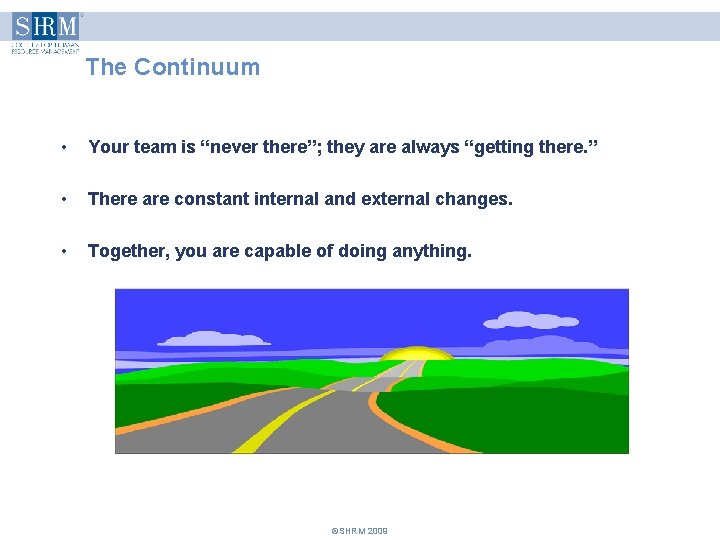
The Continuum • Your team is “never there”; they are always “getting there. ” • There are constant internal and external changes. • Together, you are capable of doing anything. ©SHRM 2009