
Planning for the Whole Community Integrating and Coordinating
- Slides: 30
Planning for the Whole Community Integrating and Coordinating Emergency Preparedness, Response and Recovery for Children and Adults with Disabilities and Others with Access and Functional Needs Before, During and After a Disaster. March, 2011
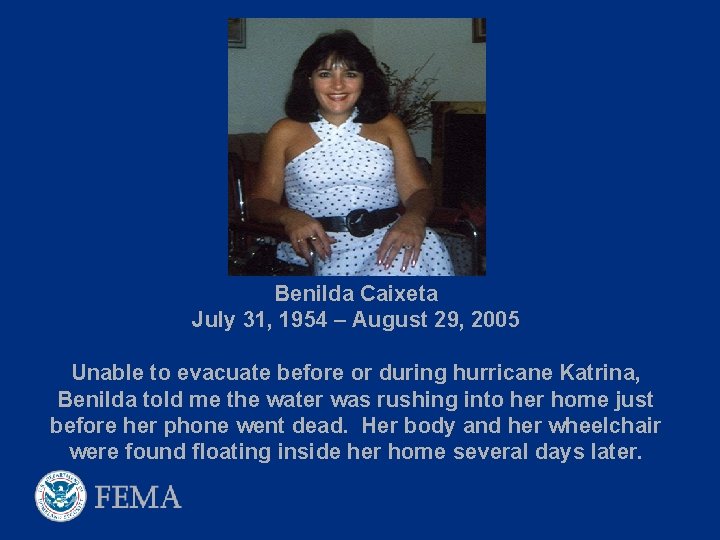
Benilda Caixeta July 31, 1954 – August 29, 2005 Unable to evacuate before or during hurricane Katrina, Benilda told me the water was rushing into her home just before her phone went dead. Her body and her wheelchair were found floating inside her home several days later.
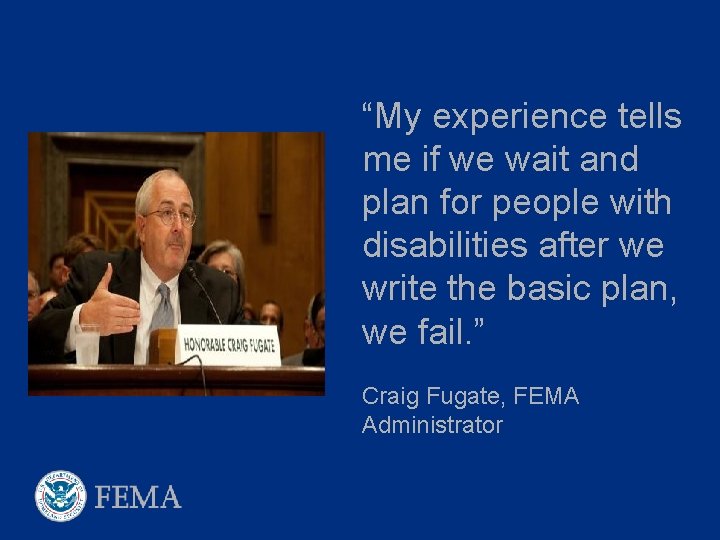
“My experience tells me if we wait and plan for people with disabilities after we write the basic plan, we fail. ” Craig Fugate, FEMA Administrator
§ A “Whole Community” Approach: § Understanding and meeting the true needs of the entire affected community. § Engaging all aspects of the community (public, private, and civic) in both defining those needs and devising ways to meet them. § Strengthening the assets, institutions, and social processes that work well in communities on a daily basis to improve resilience and emergency management outcomes.
Types of Disabilities and Health Maintenance Needs
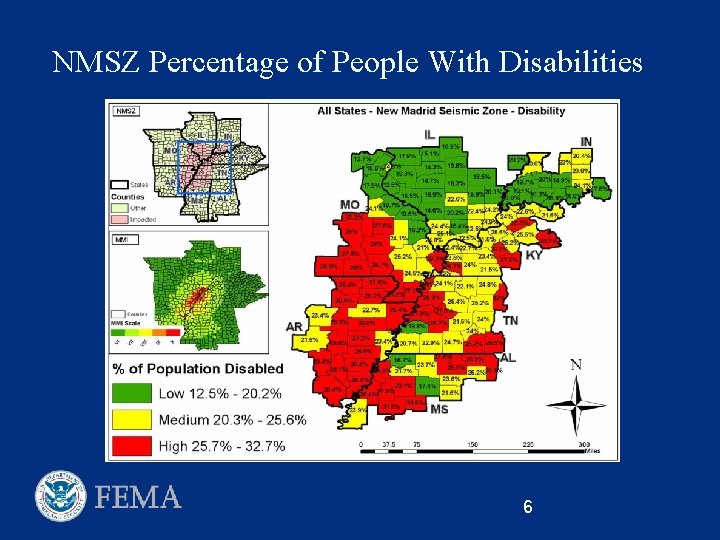
NMSZ Percentage of People With Disabilities 6
“We don’t plan for easy in FEMA … we plan for real. ” Administrator Fugate March 2010
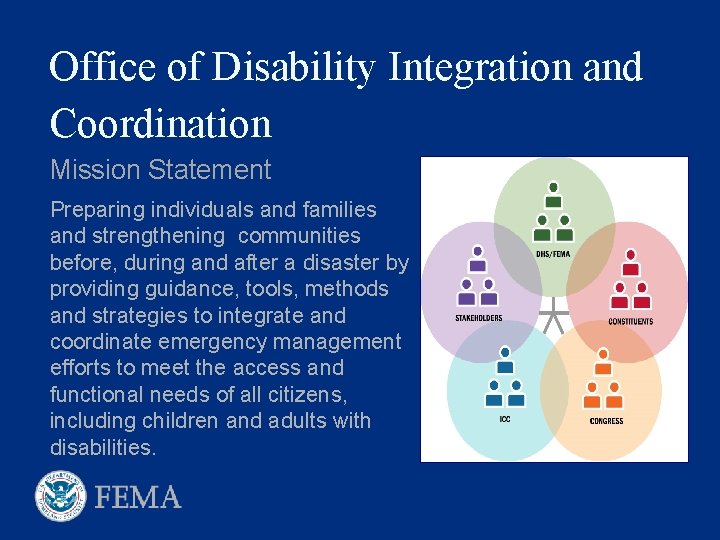
Office of Disability Integration and Coordination Mission Statement Preparing individuals and families and strengthening communities before, during and after a disaster by providing guidance, tools, methods and strategies to integrate and coordinate emergency management efforts to meet the access and functional needs of all citizens, including children and adults with disabilities.
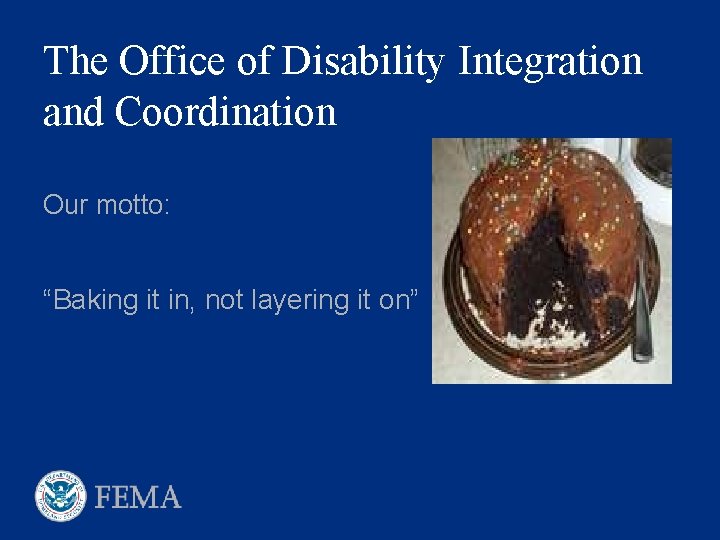
The Office of Disability Integration and Coordination Our motto: “Baking it in, not layering it on”
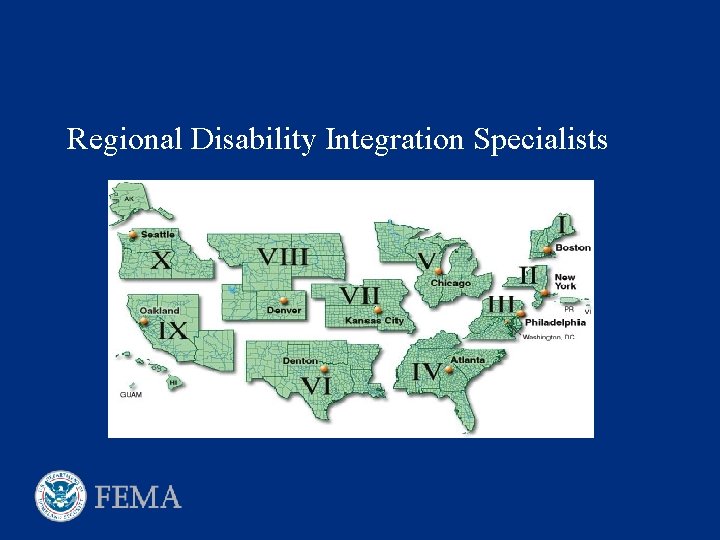
Regional Disability Integration Specialists
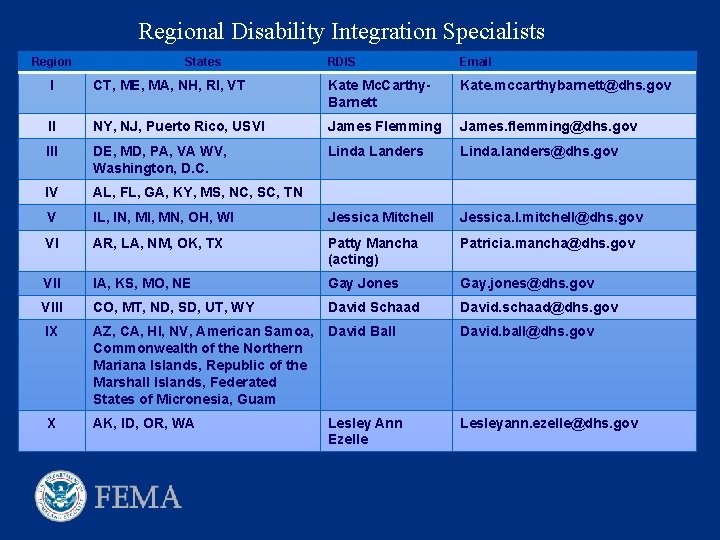
Regional Disability Integration Specialists Region States RDIS Email I CT, ME, MA, NH, RI, VT Kate Mc. Carthy. Barnett Kate. mccarthybarnett@dhs. gov II NY, NJ, Puerto Rico, USVI James Flemming James. flemming@dhs. gov III DE, MD, PA, VA WV, Washington, D. C. Linda Landers Linda. landers@dhs. gov IV AL, FL, GA, KY, MS, NC, SC, TN V IL, IN, MI, MN, OH, WI Jessica Mitchell Jessica. l. mitchell@dhs. gov VI AR, LA, NM, OK, TX Patty Mancha (acting) Patricia. mancha@dhs. gov VII IA, KS, MO, NE Gay Jones Gay. jones@dhs. gov VIII CO, MT, ND, SD, UT, WY David Schaad David. schaad@dhs. gov IX AZ, CA, HI, NV, American Samoa, David Ball Commonwealth of the Northern Mariana Islands, Republic of the Marshall Islands, Federated States of Micronesia, Guam David. ball@dhs. gov X AK, ID, OR, WA Lesleyann. ezelle@dhs. gov Lesley Ann Ezelle
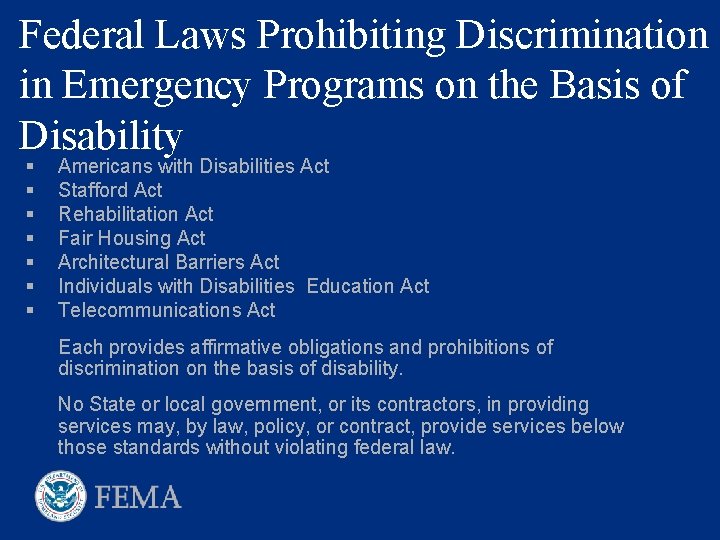
Federal Laws Prohibiting Discrimination in Emergency Programs on the Basis of Disability § § § § Americans with Disabilities Act Stafford Act Rehabilitation Act Fair Housing Act Architectural Barriers Act Individuals with Disabilities Education Act Telecommunications Act Each provides affirmative obligations and prohibitions of discrimination on the basis of disability. No State or local government, or its contractors, in providing services may, by law, policy, or contract, provide services below those standards without violating federal law.
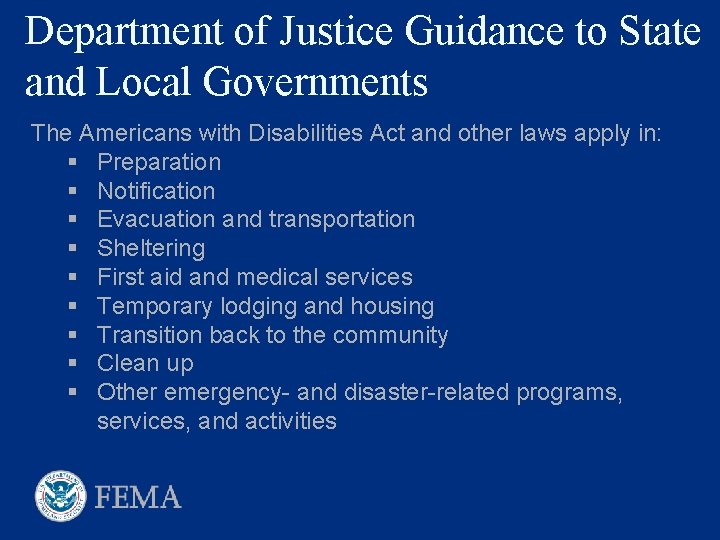
Department of Justice Guidance to State and Local Governments The Americans with Disabilities Act and other laws apply in: § Preparation § Notification § Evacuation and transportation § Sheltering § First aid and medical services § Temporary lodging and housing § Transition back to the community § Clean up § Other emergency- and disaster-related programs, services, and activities
“Complying with the Americans with Disabilities Act is not optional” FEMA Administrator, Craig Fugate to the National Voluntary Agencies Active in Disasters Conference May 2010
The words we use: We hear it all the time – “special needs” and “vulnerable”. Both terms do damage. When people with disabilities are thought of as “special”, they are often thought of as marginal individuals who have needs, not rights. The word “vulnerable” has a similarly unfortunate effect. Vulnerable people must have things done for them; they’re recipients, not participants. -CT P&A
The difference between the right word and the almost right word is the difference between lightning and a lightning bug. Mark Twain
“However beautiful the strategy is, you should occasionally look at the results. ” Winston Churchill
Access and Functional Needs The term "access and functional needs" means those actions, services, accommodations, and programmatic, architectural, and communication modifications that a covered entity must undertake or provide to afford individuals with disabilities a full and equal opportunity to use and enjoy programs, services, activities, goods, facilities, privileges, advantages, and accommodations in the most integrated setting, in light of the exigent circumstances of the emergency and the legal obligation to undertake advance planning and prepare to meet the disability-related needs of individuals who have disabilities as defined by the ADA Amendments Act of 2008, P. L. 110 -325, and those associated with them. Department of Justice
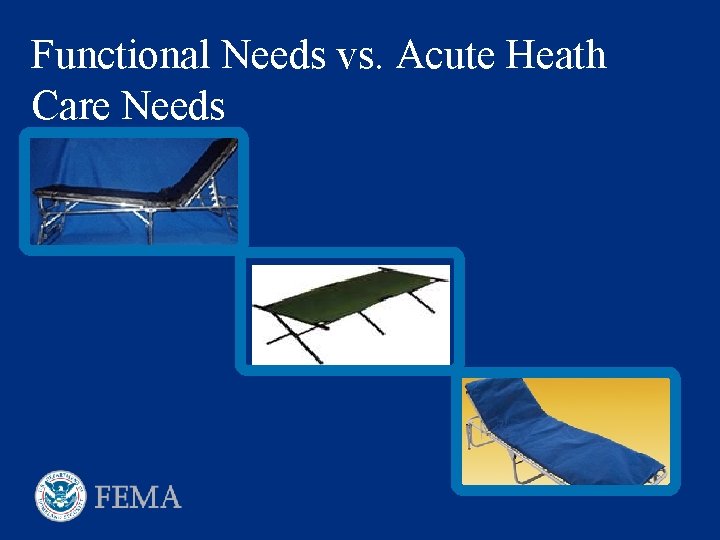
Functional Needs vs. Acute Heath Care Needs
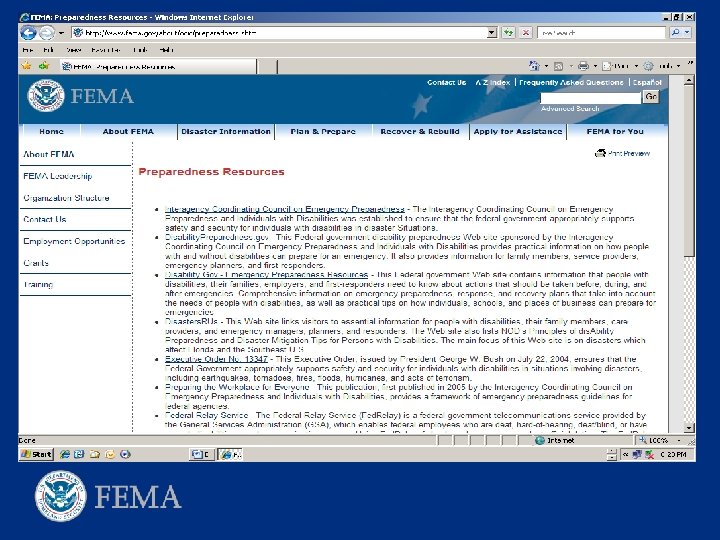
FNSS Guidance includes information about: § § § § Planning Finding subject matter experts Selecting potential shelter sites Accessible toilets and bathing facilities Personal assistance service needs Medical Care Durable Medical Equipment and Consumable Medical Supplies § Legal obligations § Service and assistance animal
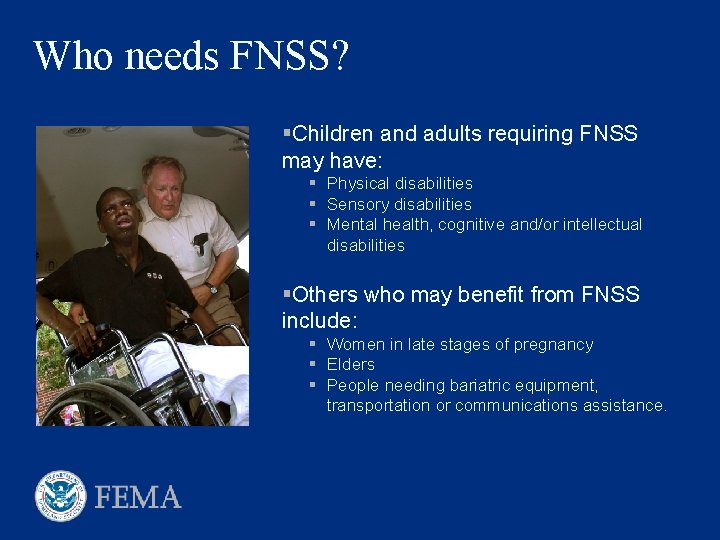
Who needs FNSS? §Children and adults requiring FNSS may have: § Physical disabilities § Sensory disabilities § Mental health, cognitive and/or intellectual disabilities §Others who may benefit from FNSS include: § Women in late stages of pregnancy § Elders § People needing bariatric equipment, transportation or communications assistance.
FEMA SUPPORT § Regional trainings in all ten FEMA Regions for emergency managers and shelter planners- state training underway § Disability Integration Specialists § Durable medical supply cache and a IDIQ contract § Consumable Medical Supplies IDIQ contract § Requirements for “universal” cots § Personal Assistance Services request for information in current Fed Biz Ops process § Shelter accessibility information included in the National Shelter System § EMI course on Mass Care Emergency Services Principles includes a section on FNSS § MOUs with NCIL and NDRN
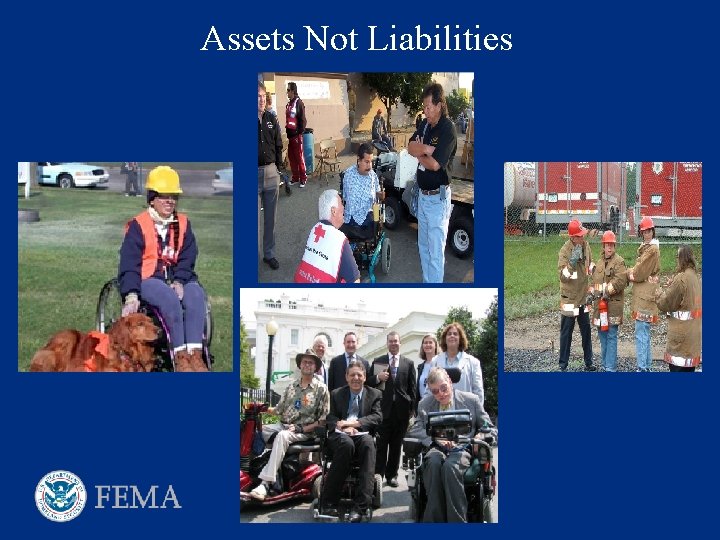
Personal Responsibility- From Liabilities to Assets: Personal responsibility before, during and after a disaster applies to people with disabilities just as it applies to people without disabilities. Although ability varies from person to person, educational and outreach efforts, information and tools must be made available and accessible to everyone.
“It is time children, people with disabilities or any other segment of our communities who have traditionally been underserved, to be more fully and consistently integrated into preparedness and planning efforts at every level of government. " Craig Fugate, FEMA Administrator
Assets Not Liabilities
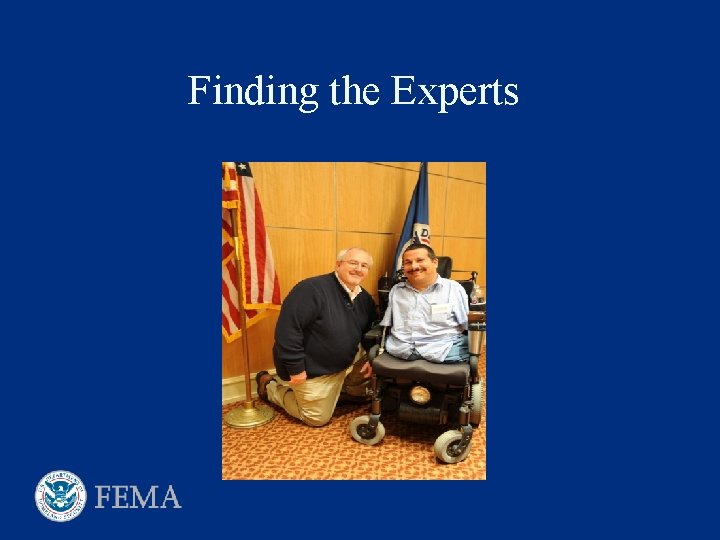
Finding the Experts
INTEGRATION AND COORDINATION When communities integrate the needs of children and adults with disabilities and others with access and functional needs into their community wide planning initiatives, they maximize resources, meet their obligations and strengthen their ability to prepare for, protect against, respond to, recover from and mitigate all hazards.
Office of Disability Integration and Coordination Marcie Roth, Director marcie. roth@dhs. gov 202. 212. 1537