
Planning Effective Learning Paul Tully 2009 LEARNING OUTCOMES

- Slides: 17
Planning Effective Learning Paul Tully (2009)
LEARNING OUTCOMES • To explain Geoff Petty’s model of active learning • To discuss the use of games and simulations • To outline a range of effective ‘Teaching by Groupwork’ methods • To identify activities that stimulate student thinking and ideas
PASSIVE LEARNING Learning that takes place as a result of listening to or watching something ACTIVE LEARNING Learning that takes place as a consequence of doing something
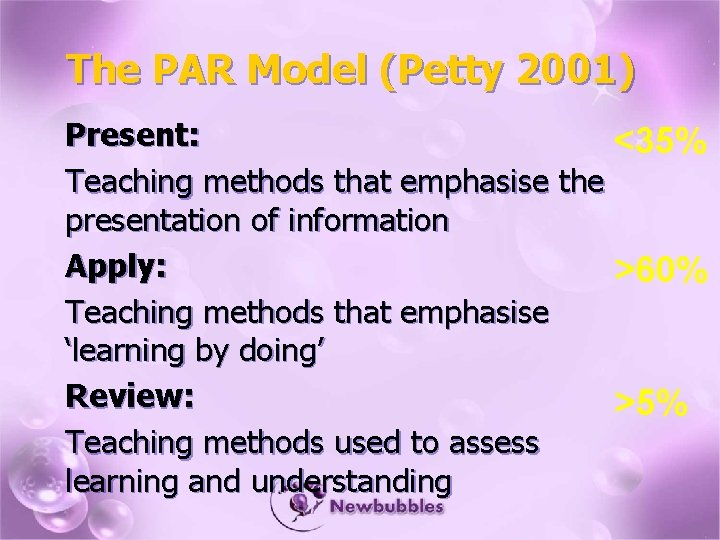
The PAR Model (Petty 2001) Present: <35% Teaching methods that emphasise the presentation of information Apply: >60% Teaching methods that emphasise ‘learning by doing’ Review: >5% Teaching methods used to assess learning and understanding
Learning By Playing “You can learn more about a person in an hour of play than in a year of conversation” PLATO
How to Run Games • Make it relevant • Make it challenging • Build in different levels • Use existing formats to save time e. g. monopoly • Give clear instructions on goals/ outcomes • Assign students randomly to teams • Set a time limit • Evaluate
On-line Games • http: //www. educationarcade. org/ • http: //www. eduweb. com/portfolio/adventure. php • http: //download. com • http: //www. eduweb. com/portfolio/adventure. php • http: //www. watercoolergames. org
Build In Breaks – the 5 Rs • Relax: moving and waking • Review work: key learning points • Read: notes, articles, text • Reflect: identify questions • Research: using the internet, library, NLN, MOODLE
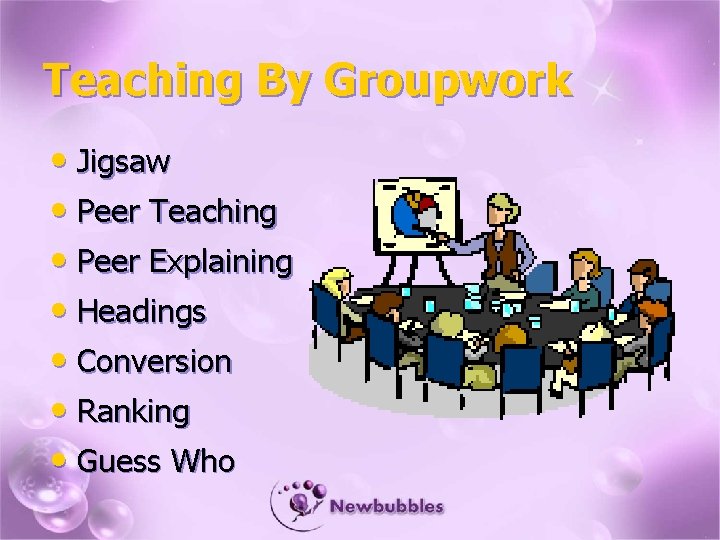
Teaching By Groupwork • Jigsaw • Peer Teaching • Peer Explaining • Headings • Conversion • Ranking • Guess Who
Advance organisers • Advance Organisers enable students to use their previous knowledge to make sense of new information. • Advance organisers are simply exercises that provide a lead into the topic material you want to teach
Independent Learning • Placing learners at the heart of their own • • • learning Getting learners to take responsibility for their own learning Exploration, research, problem-solving, projects, student’s own knowledge Use homework Inspectors want to see evidence of Independent Learning so build this into your Scheme of Work
Making Independent Learning Happen • Pair • Share • Chair • Self-Aware
Independent Learning: Final thoughts • Independent learning is about building skills and getting students to apply their learning to new situations • Independent Learning can in-class, homework or project team • Take small steps – students take a while to get used to this style of teaching
Idea Generators Simple techniques include: • • Asking Questions Pass the Question Snowballing Class Brainstorm Empathy Round Robin Free Association
The Active Scheme of Work • Schemes of work are the blueprint of where you intend to take your students so that they can pass their assessments and achieve in your subject • Active Learning starts with your Scheme of Work
Choosing a teaching method Criteria should include: • The nature of the topic • Preferred learning styles of students • Proposed learning objectives/outcomes • Preferred teaching style of teacher • Requirements for assessment • Level of student’s motivation and interest • Whether or not students have the required skills
Summary Use techniques that: • • • Provide active learning opportunities Involve all students Relate new material to old Encourage self-disclosure Develop and practice new skills Provide immediate feedback