
Planning Business Messages Prentice Hall 2008 Business Communication
Planning Business Messages © Prentice Hall, 2008 Business Communication Today, 9 e 1
Three-Step Writing Process • Planning • Writing • Completing © Prentice Hall, 2008 Business Communication Today, 9 e 2
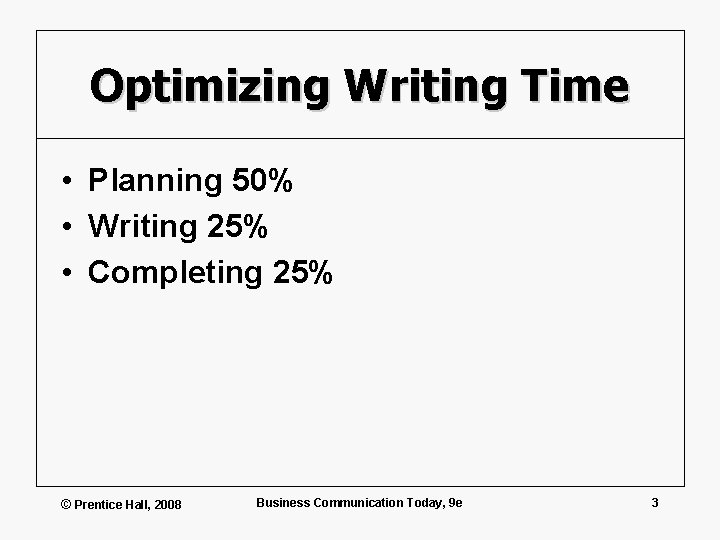
Optimizing Writing Time • Planning 50% • Writing 25% • Completing 25% © Prentice Hall, 2008 Business Communication Today, 9 e 3
Analyze the Situation • Define your purpose • Profile your audience © Prentice Hall, 2008 Business Communication Today, 9 e 4
Define Your Purpose • General • Specific – Inform – Outcomes – Persuade – Timing and realism – Collaborate – Acceptability © Prentice Hall, 2008 Business Communication Today, 9 e 5
Profile Your Audience • Identify primary audience • Determine size and location • Determine composition • Gauge level of understanding • Project expectations and preferences • Forecast probable reaction © Prentice Hall, 2008 Business Communication Today, 9 e 6
Gather Information • Informal methods – Viewpoints of others – Reports and company documents – Supervisors, colleagues, customers – Audience input © Prentice Hall, 2008 Business Communication Today, 9 e 7
Determine Audience Needs • Provide accurate information • Provide ethical information • Provide pertinent information © Prentice Hall, 2008 Business Communication Today, 9 e 8
Selecting the Medium • • Oral media Written media Visual media Electronic media © Prentice Hall, 2008 Business Communication Today, 9 e 9
Oral Communication • • • Face-to-face conversations Interviews Speeches Presentations Meetings © Prentice Hall, 2008 Business Communication Today, 9 e 10
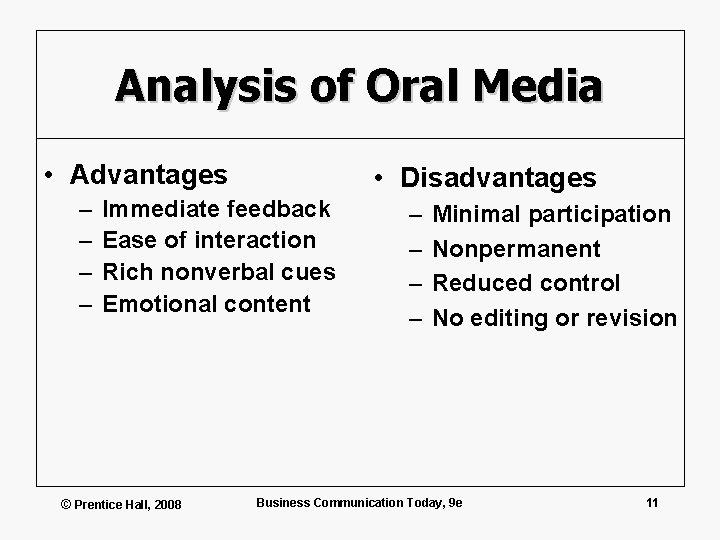
Analysis of Oral Media • Advantages – – • Disadvantages Immediate feedback Ease of interaction Rich nonverbal cues Emotional content © Prentice Hall, 2008 – – Minimal participation Nonpermanent Reduced control No editing or revision Business Communication Today, 9 e 11

Written Communication • • Memos Letters Reports Proposals © Prentice Hall, 2008 Business Communication Today, 9 e 12
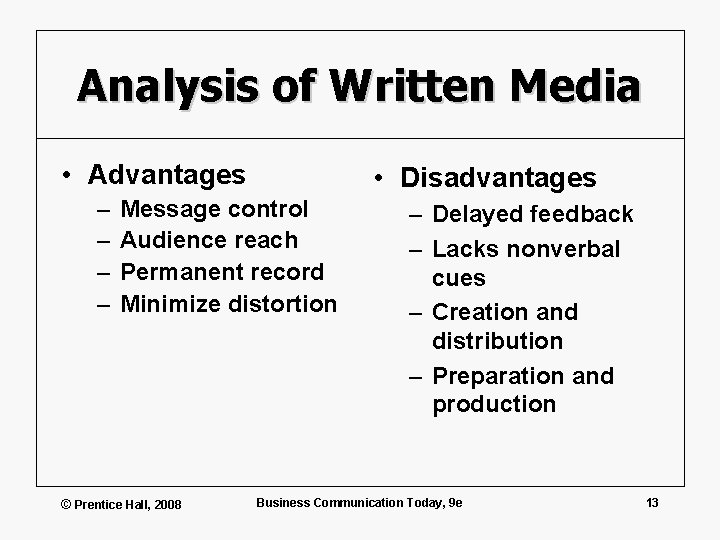
Analysis of Written Media • Advantages – – • Disadvantages Message control Audience reach Permanent record Minimize distortion © Prentice Hall, 2008 – Delayed feedback – Lacks nonverbal cues – Creation and distribution – Preparation and production Business Communication Today, 9 e 13
Visual Communication • Charts • Graphs • Diagrams © Prentice Hall, 2008 Business Communication Today, 9 e 14
Analysis of Visual Media • Advantages • Disadvantages – Expedite communication – Less intimidating – Assist audience © Prentice Hall, 2008 – Learning curve – Preparation time – Transmittal and storage Business Communication Today, 9 e 15
Electronic Communication • Oral communication – Telephone calls, teleconferencing, voicemail, audio CDs, podcasts • Written communication – Email, instant messaging, websites, wikis • Visual communication – Electronic presentations, computer animation, video © Prentice Hall, 2008 Business Communication Today, 9 e 16
Analysis of Electronic Media • Advantages • Disadvantages – Delivery speed – Overuse – Audience reach – Privacy issues – Multimedia – Security risks – Accessibility – Productivity © Prentice Hall, 2008 Business Communication Today, 9 e 17
Choosing the Right Media • • • Media richness Message formality Media limitations Sender intentions Urgency and cost Audience preferences © Prentice Hall, 2008 Business Communication Today, 9 e 18
Organizing Information • • Get to the point Omit irrelevant details Organize your ideas Indicate necessary information © Prentice Hall, 2008 Business Communication Today, 9 e 19
Importance of Organization • • Improves productivity Boosts understanding Increases acceptance Saves audience time © Prentice Hall, 2008 Business Communication Today, 9 e 20
Define the Main Idea • • General purpose Specific purpose Basic topic Main idea © Prentice Hall, 2008 Business Communication Today, 9 e 21
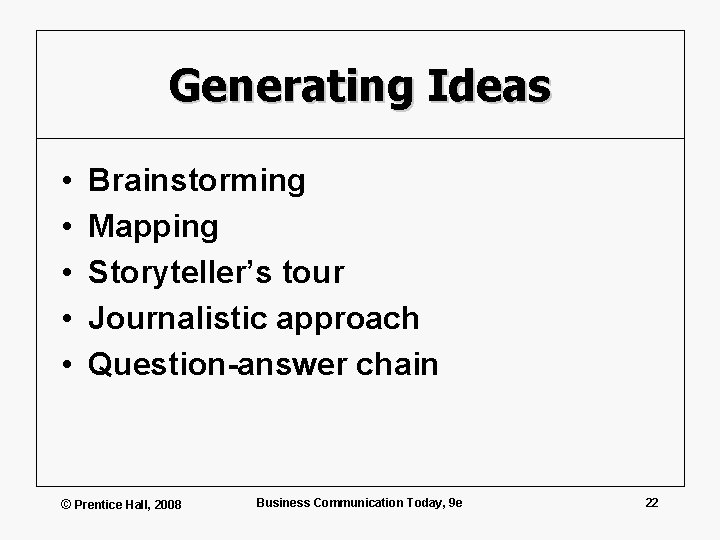
Generating Ideas • • • Brainstorming Mapping Storyteller’s tour Journalistic approach Question-answer chain © Prentice Hall, 2008 Business Communication Today, 9 e 22
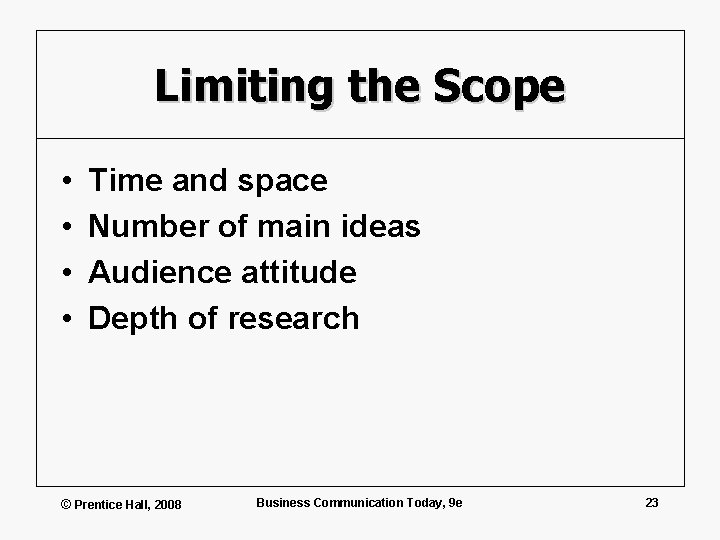
Limiting the Scope • • Time and space Number of main ideas Audience attitude Depth of research © Prentice Hall, 2008 Business Communication Today, 9 e 23
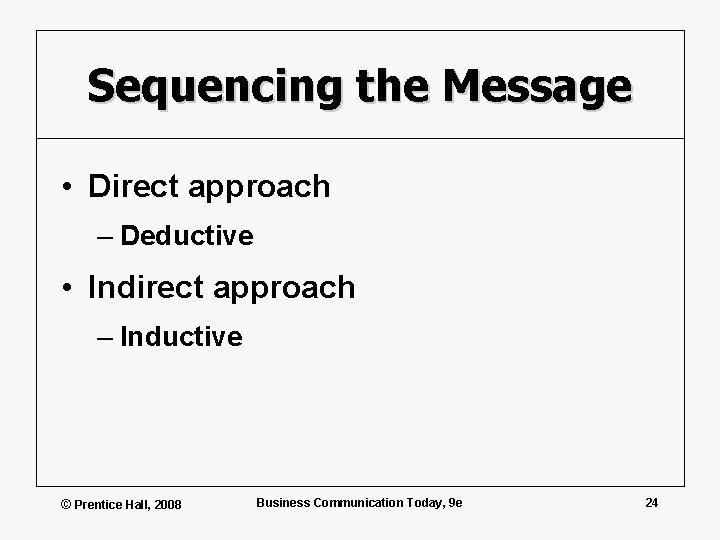
Sequencing the Message • Direct approach – Deductive • Indirect approach – Inductive © Prentice Hall, 2008 Business Communication Today, 9 e 24
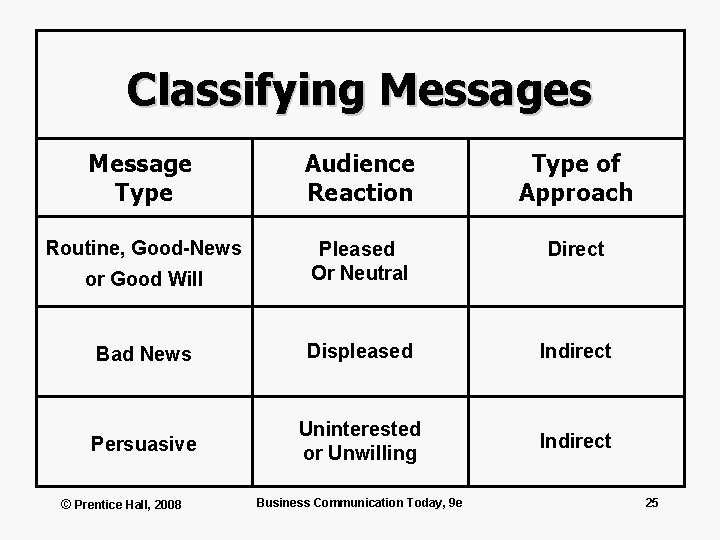
Classifying Messages Message Type Audience Reaction Type of Approach Routine, Good-News Direct or Good Will Pleased Or Neutral Bad News Displeased Indirect Persuasive Uninterested or Unwilling Indirect © Prentice Hall, 2008 Business Communication Today, 9 e 25
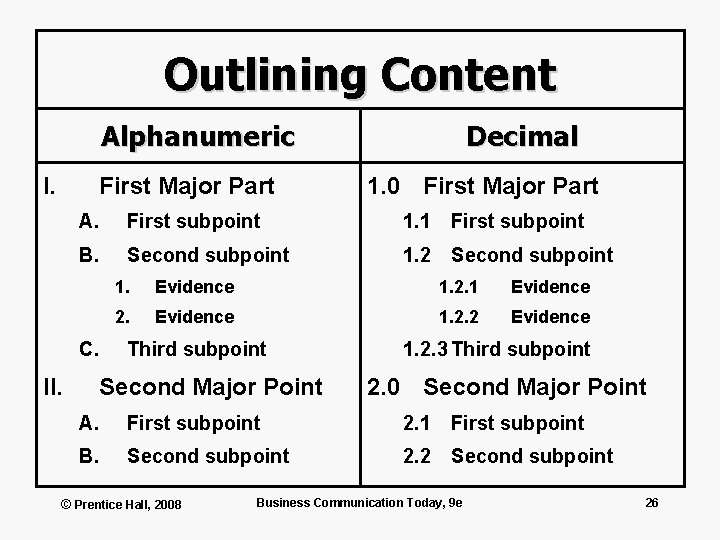
Outlining Content Alphanumeric I. First Major Part 1. 0 First Major Part A. First subpoint 1. 1 First subpoint B. Second subpoint 1. 2 Second subpoint C. II. Decimal 1. Evidence 1. 2. 1 Evidence 2. Evidence 1. 2. 2 Evidence Third subpoint Second Major Point 1. 2. 3 Third subpoint 2. 0 Second Major Point A. First subpoint 2. 1 First subpoint B. Second subpoint 2. 2 Second subpoint © Prentice Hall, 2008 Business Communication Today, 9 e 26
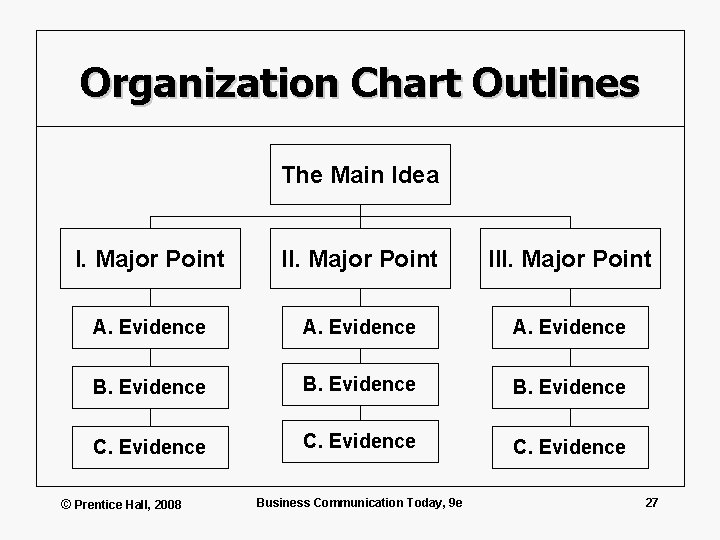
Organization Chart Outlines The Main Idea I. Major Point III. Major Point A. Evidence B. Evidence C. Evidence © Prentice Hall, 2008 Business Communication Today, 9 e 27
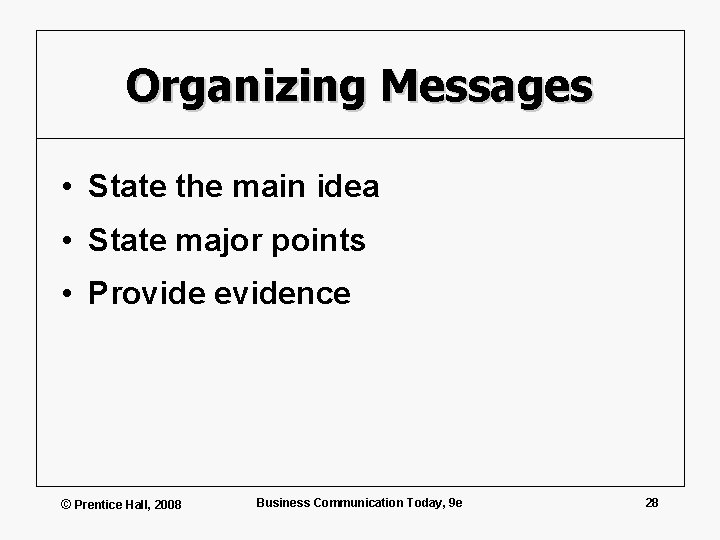
Organizing Messages • State the main idea • State major points • Provide evidence © Prentice Hall, 2008 Business Communication Today, 9 e 28
- Slides: 28