
Planning and managing a travel and tourism event
- Slides: 51
Planning and managing a travel and tourism event In this section of the syllabus you will learn about: • Processes for planning, managing and running a real-life event • Working as part of a team • Successfully completing an event in a variety of contexts • Producing business plans and recording your activities • Evaluating the whole program of events
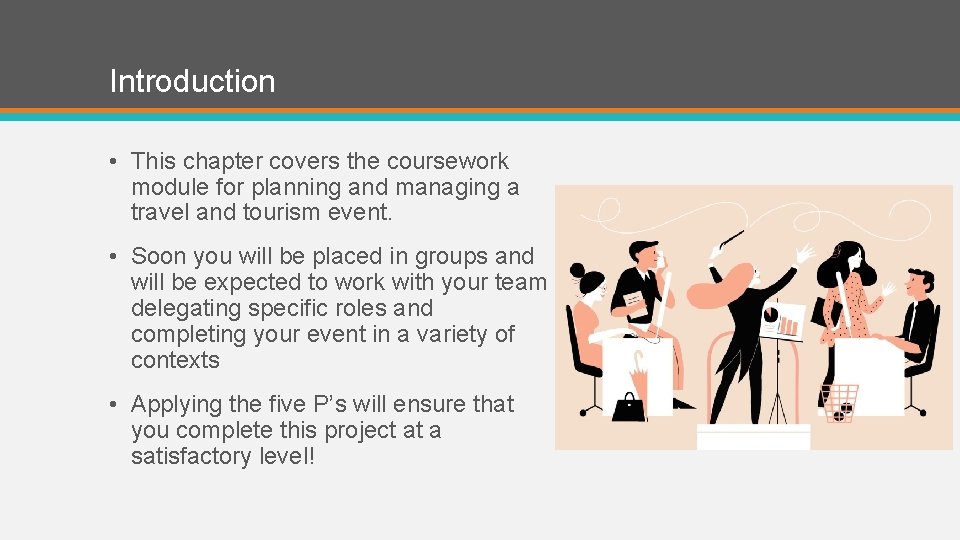
Introduction • This chapter covers the coursework module for planning and managing a travel and tourism event. • Soon you will be placed in groups and will be expected to work with your team delegating specific roles and completing your event in a variety of contexts • Applying the five P’s will ensure that you complete this project at a satisfactory level!
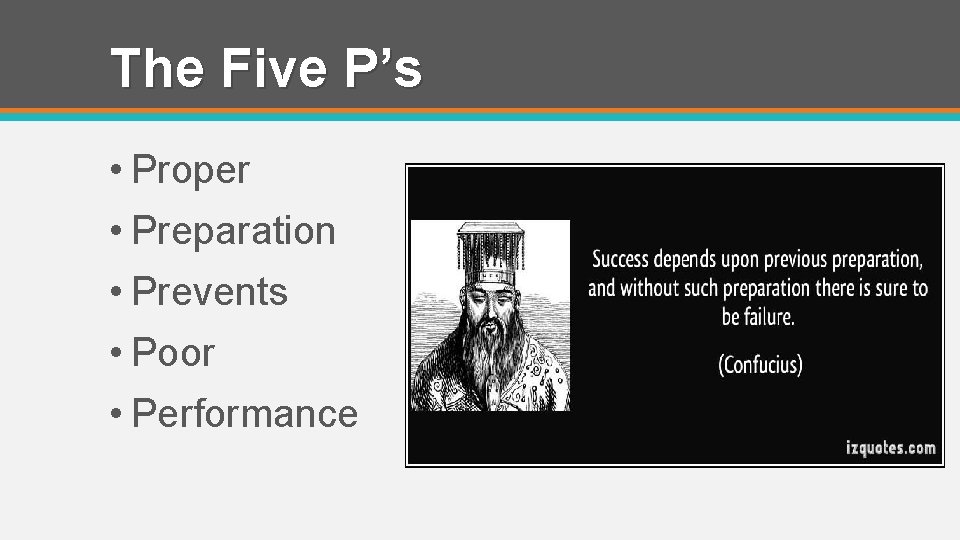
The Five P’s • Proper • Preparation • Prevents • Poor • Performance
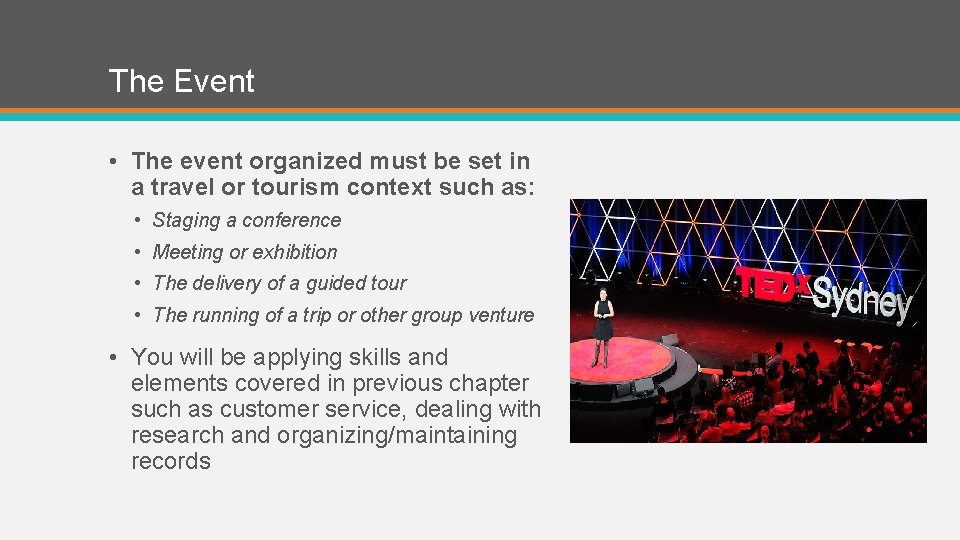
The Event • The event organized must be set in a travel or tourism context such as: • Staging a conference • Meeting or exhibition • The delivery of a guided tour • The running of a trip or other group venture • You will be applying skills and elements covered in previous chapter such as customer service, dealing with research and organizing/maintaining records
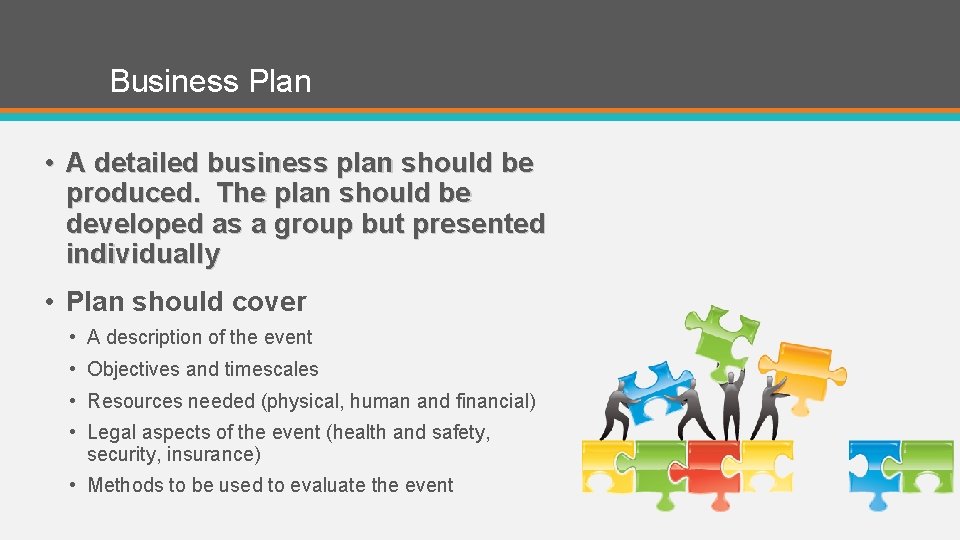
Business Plan • A detailed business plan should be produced. The plan should be developed as a group but presented individually • Plan should cover • A description of the event • Objectives and timescales • Resources needed (physical, human and financial) • Legal aspects of the event (health and safety, security, insurance) • Methods to be used to evaluate the event
Coursework • This whole project culminates in the actual running and evaluation of the event giving firsthand experience of a travel and tourism project in action • The instructor, Mr. Symonds, will be assessing and evaluating each project from start to finish. Instructor will be marking the coursework assignment and then shipping off to Cambridge to assess the marks.
Evidence included • A business plan • Log book or other record of contributions through the planning of the project including dealing with any problems • Details of research for the feasibility study and additional research during the management of the project • An evaluation of personal performance, the team’s performance and recommendations for both the organizational and personal improvement
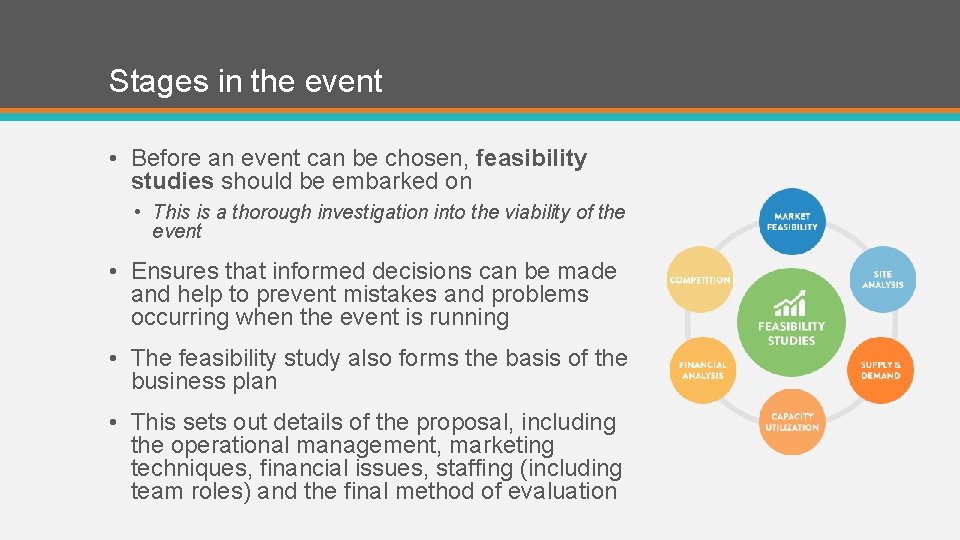
Stages in the event • Before an event can be chosen, feasibility studies should be embarked on • This is a thorough investigation into the viability of the event • Ensures that informed decisions can be made and help to prevent mistakes and problems occurring when the event is running • The feasibility study also forms the basis of the business plan • This sets out details of the proposal, including the operational management, marketing techniques, financial issues, staffing (including team roles) and the final method of evaluation
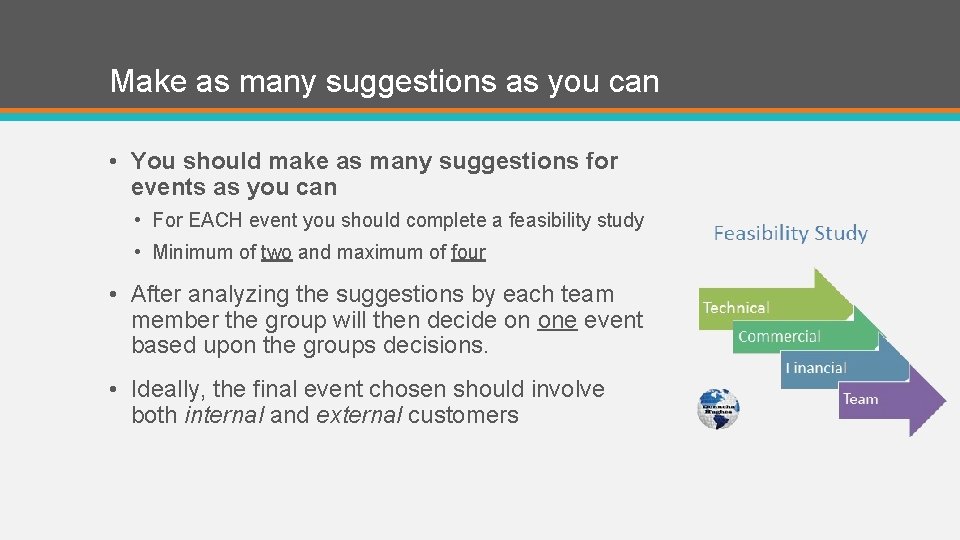
Make as many suggestions as you can • You should make as many suggestions for events as you can • For EACH event you should complete a feasibility study • Minimum of two and maximum of four • After analyzing the suggestions by each team member the group will then decide on one event based upon the groups decisions. • Ideally, the final event chosen should involve both internal and external customers
The chosen event • Whichever event is finally decided upon, it is vital that nay discussion/decision making process is recorded on an individual basis! • This may be done in writing, audio, video, or DVD • I recommend writing; students in previous year had great success
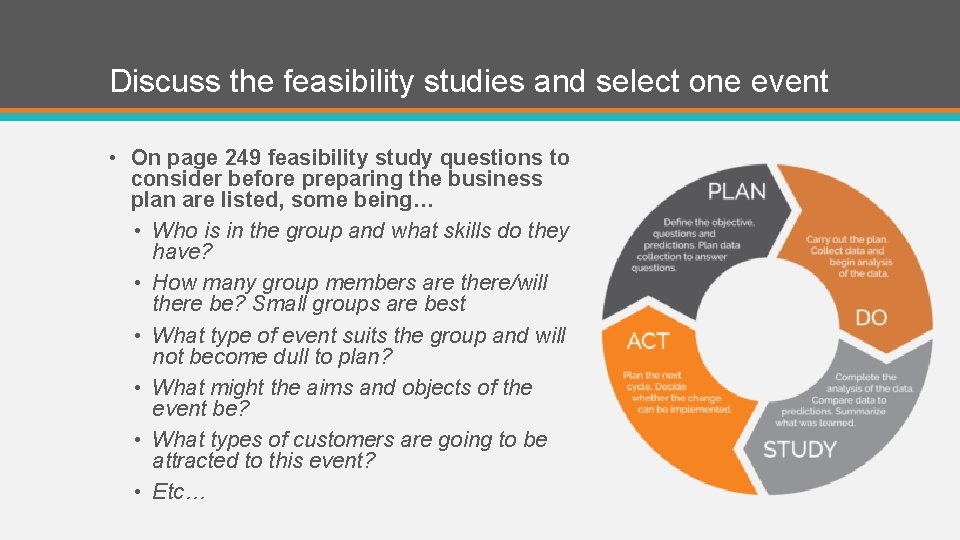
Discuss the feasibility studies and select one event • On page 249 feasibility study questions to consider before preparing the business plan are listed, some being… • Who is in the group and what skills do they have? • How many group members are there/will there be? Small groups are best • What type of event suits the group and will not become dull to plan? • What might the aims and objects of the event be? • What types of customers are going to be attracted to this event? • Etc…
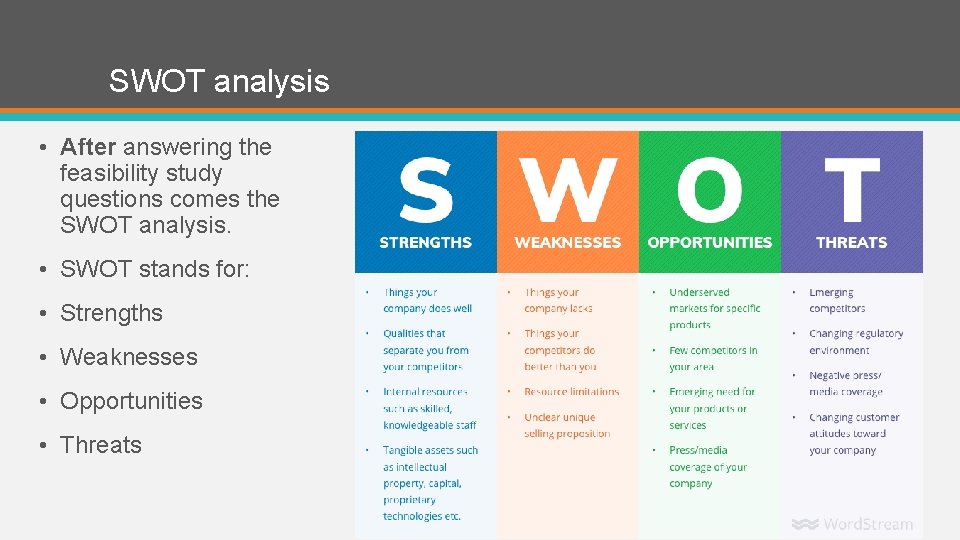
SWOT analysis • After answering the feasibility study questions comes the SWOT analysis. • SWOT stands for: • Strengths • Weaknesses • Opportunities • Threats
SWOT • SWOT analysis are used by businesses and many marketing departments whilst they are planning a business venture or campaign. • It aids with consideration for all the issues that may affect a promotion, event or campaign – both positive and negative. • By understanding these issues, it helps to strengthen subsequent steps and prevent failures. • Strengths and weaknesses are internal factors while opportunities and threats are external factors
SWOT • The SWOT analysis is an important tool to assist an organization in its planning and promotion of certain goods or services • For example, a tour operator may decide not to promote a particular holiday destination if the weaknesses and threats out weigh the strengths and opportunities. • Holiday destinations are susceptible to this and may no longer be a viable option for a tour operator to promote should there be a war, civil unrest, natural disasters, acts of terrorism, etc…
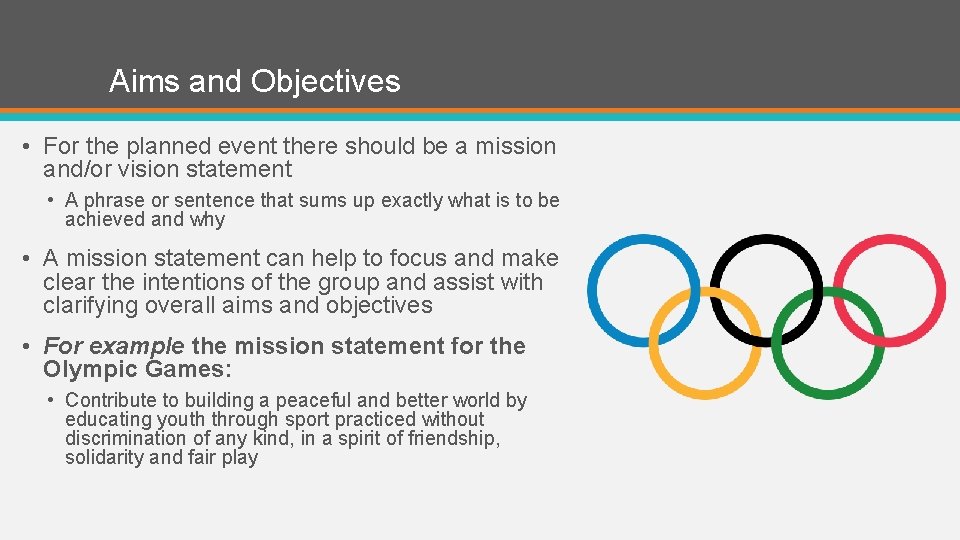
Aims and Objectives • For the planned event there should be a mission and/or vision statement • A phrase or sentence that sums up exactly what is to be achieved and why • A mission statement can help to focus and make clear the intentions of the group and assist with clarifying overall aims and objectives • For example the mission statement for the Olympic Games: • Contribute to building a peaceful and better world by educating youth through sport practiced without discrimination of any kind, in a spirit of friendship, solidarity and fair play
Aims and Objectives • Aims and objects for the event should become more clear when the mission statement is complete • Events may have more than one goal and may have a primary and several secondary purposes such as: • Raising funds for a local charity and raising the profile of the school • Developing and working in a team • Providing benefits for the group and local community • Raising awareness of the travel and tourism course • Meeting requirements of the budget set • Etc…
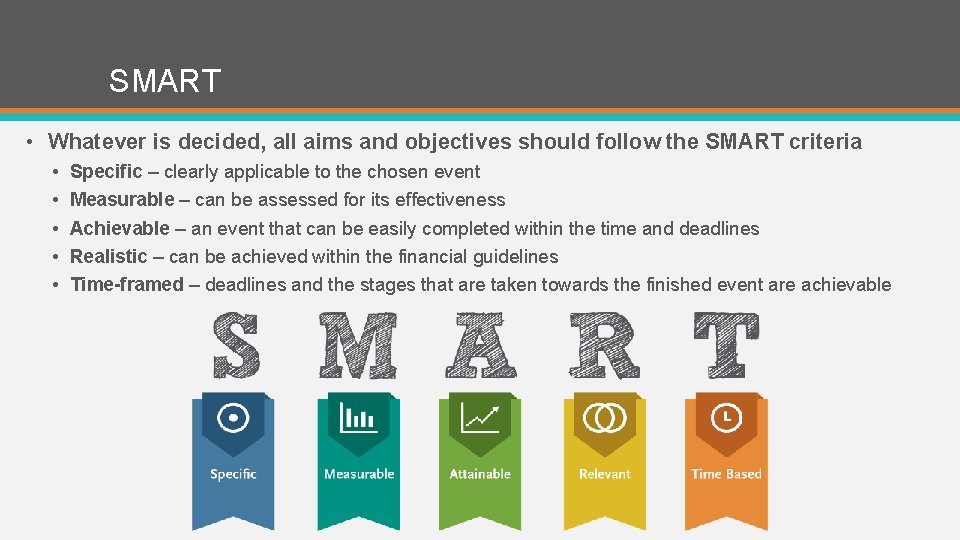
SMART • Whatever is decided, all aims and objectives should follow the SMART criteria • • • Specific – clearly applicable to the chosen event Measurable – can be assessed for its effectiveness Achievable – an event that can be easily completed within the time and deadlines Realistic – can be achieved within the financial guidelines Time-framed – deadlines and the stages that are taken towards the finished event are achievable
Who is it aimed at? • These aims and objectives should also take into consideration who the event is aimed at • There must be a broad understanding of not only who it is aimed at but also why it should be aimed at a certain section of the population • Without knowing who your customers are makes the organization and planning very difficult
Staffing for the event • Staffing for the event will be an important consideration. • Within each group there will be members with differing skills and abilities • Good groups plays to each individuals strengths • Within the feasibility studies team roles and responsibilities will need to be identified • The business plan will dictate the actual roles and functions of each group member
The roles within the group • Chairperson or coordinator • To stimulate and inspire others • Enthusiastic, good-humored • Able to work with all kinds of people • Help the group use all the abilities and experiences its members posses
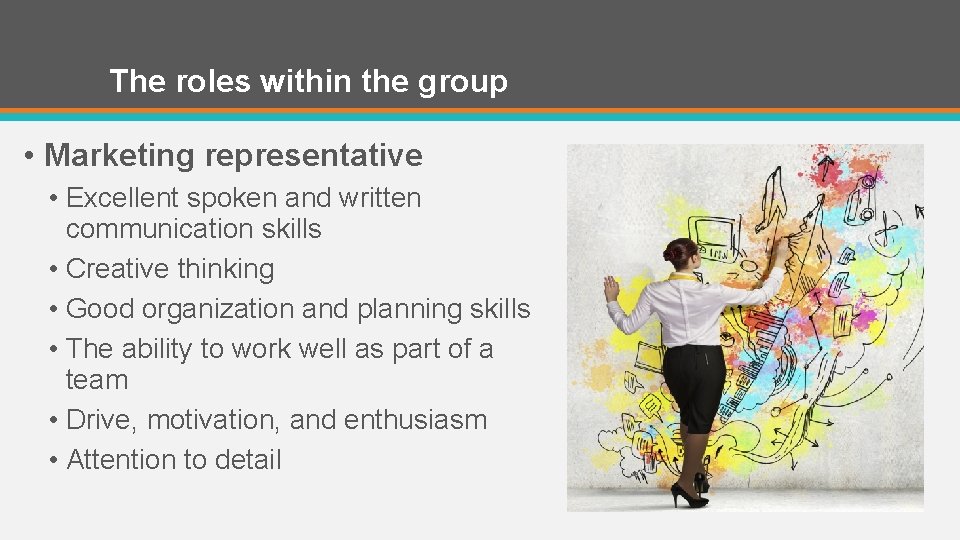
The roles within the group • Marketing representative • Excellent spoken and written communication skills • Creative thinking • Good organization and planning skills • The ability to work well as part of a team • Drive, motivation, and enthusiasm • Attention to detail
The roles within the group • Finance representative • Good ability to work with figures • Able to safely calculate information regarding income and expenditure • Able to keep accurate records/organized • Attention to detail • Honest and hardworking
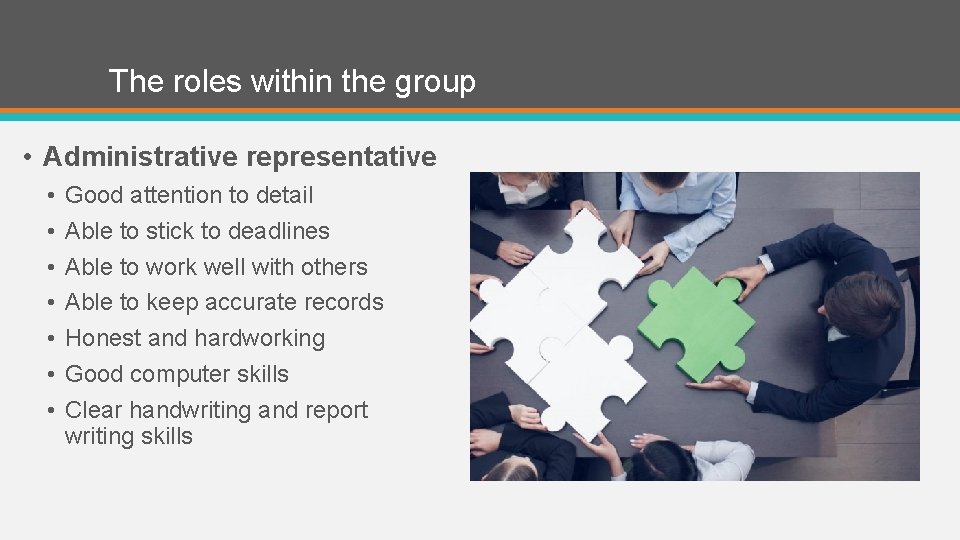
The roles within the group • Administrative representative • • Good attention to detail Able to stick to deadlines Able to work well with others Able to keep accurate records Honest and hardworking Good computer skills Clear handwriting and report writing skills
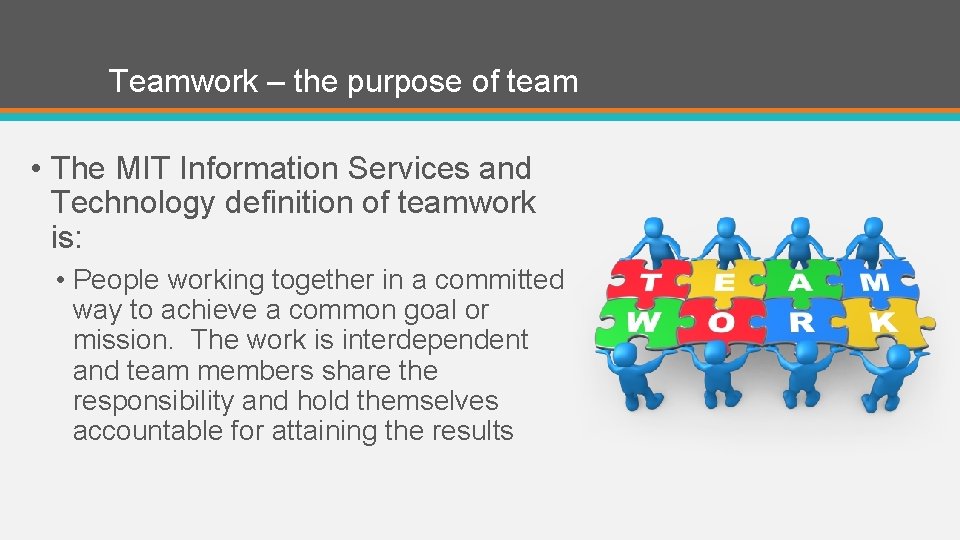
Teamwork – the purpose of team • The MIT Information Services and Technology definition of teamwork is: • People working together in a committed way to achieve a common goal or mission. The work is interdependent and team members share the responsibility and hold themselves accountable for attaining the results
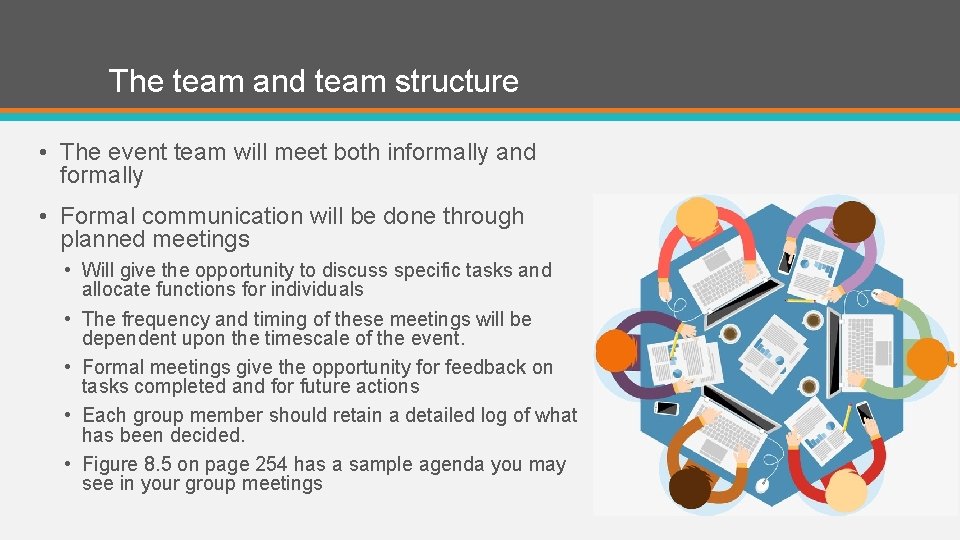
The team and team structure • The event team will meet both informally and formally • Formal communication will be done through planned meetings • Will give the opportunity to discuss specific tasks and allocate functions for individuals • The frequency and timing of these meetings will be dependent upon the timescale of the event. • Formal meetings give the opportunity for feedback on tasks completed and for future actions • Each group member should retain a detailed log of what has been decided. • Figure 8. 5 on page 254 has a sample agenda you may see in your group meetings
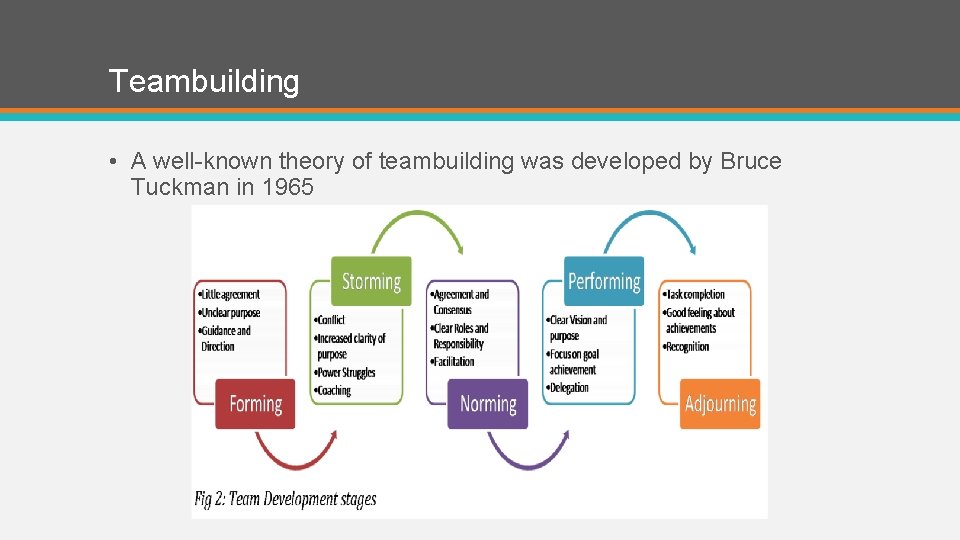
Teambuilding • A well-known theory of teambuilding was developed by Bruce Tuckman in 1965
Good customer service skills • Listening skills • Positive body language • Verbal communication including consideration to tone and intonation of speech • Positive attitude and commitment to the project as a whole
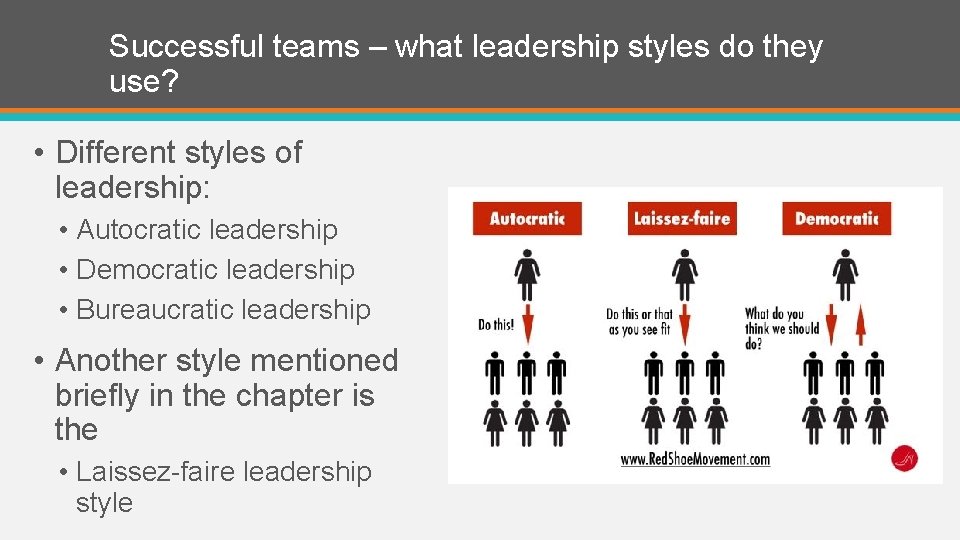
Successful teams – what leadership styles do they use? • Different styles of leadership: • Autocratic leadership • Democratic leadership • Bureaucratic leadership • Another style mentioned briefly in the chapter is the • Laissez-faire leadership style
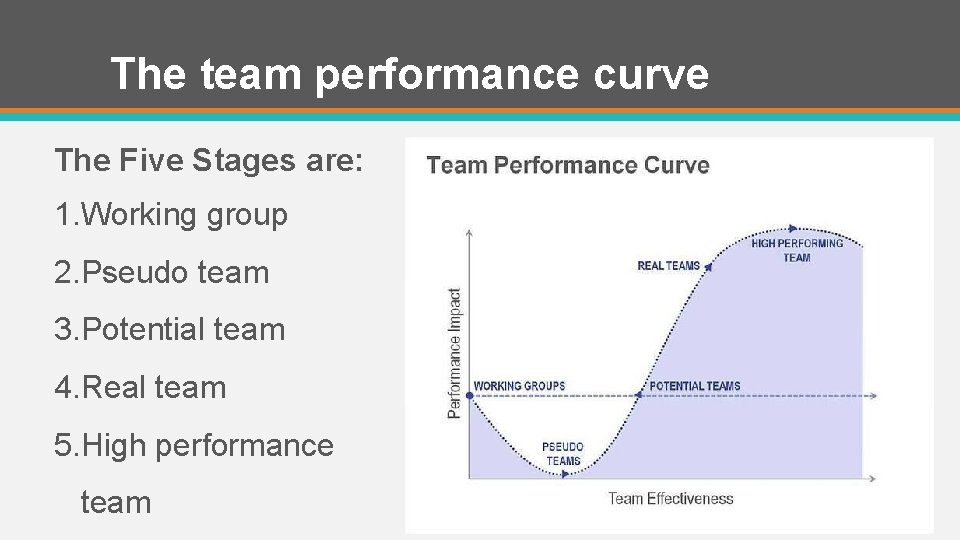
The team performance curve The Five Stages are: 1. Working group 2. Pseudo team 3. Potential team 4. Real team 5. High performance team
Marketing the Event • Getting the right product to the right people at the right time in the right place and at the right cost • There is no point in organizing the event if the intended customers do not receive the information.
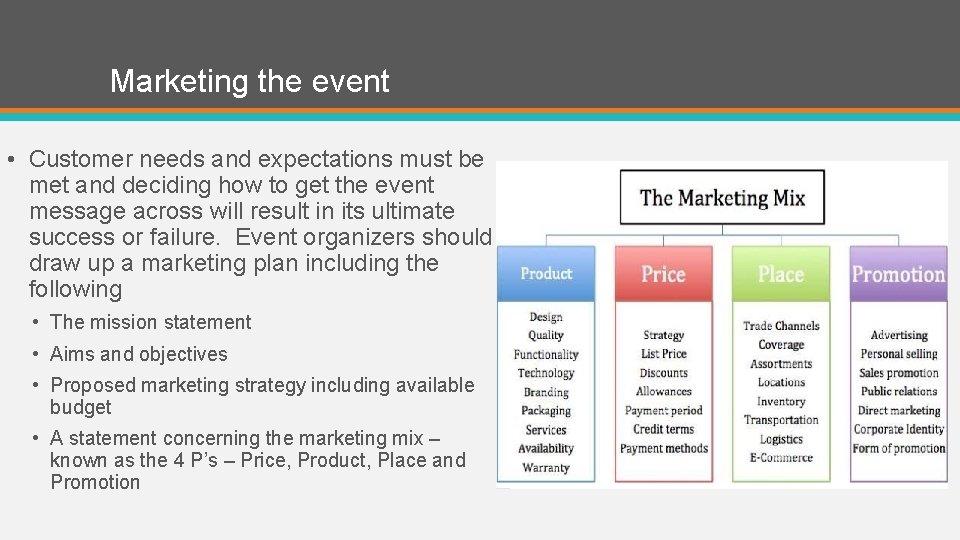
Marketing the event • Customer needs and expectations must be met and deciding how to get the event message across will result in its ultimate success or failure. Event organizers should draw up a marketing plan including the following • The mission statement • Aims and objectives • Proposed marketing strategy including available budget • A statement concerning the marketing mix – known as the 4 P’s – Price, Product, Place and Promotion
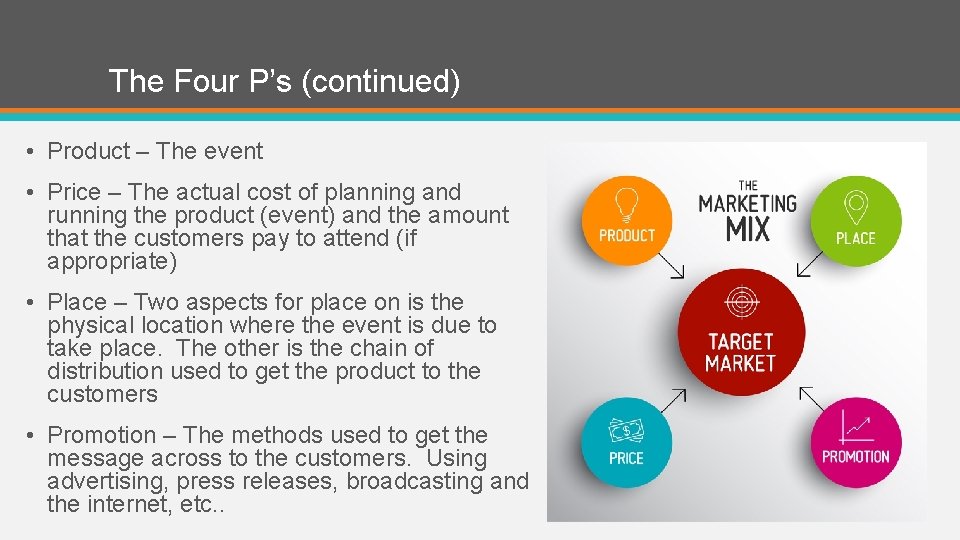
The Four P’s (continued) • Product – The event • Price – The actual cost of planning and running the product (event) and the amount that the customers pay to attend (if appropriate) • Place – Two aspects for place on is the physical location where the event is due to take place. The other is the chain of distribution used to get the product to the customers • Promotion – The methods used to get the message across to the customers. Using advertising, press releases, broadcasting and the internet, etc. .
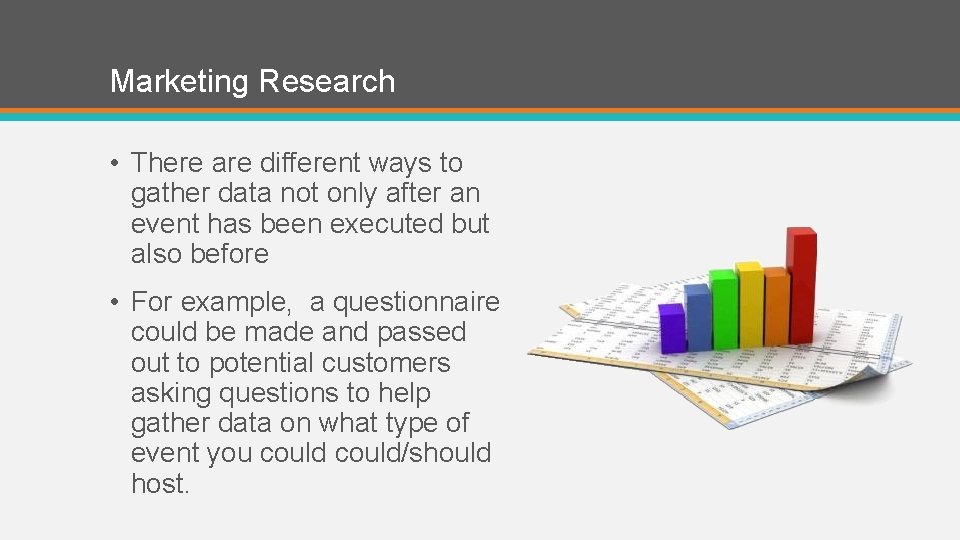
Marketing Research • There are different ways to gather data not only after an event has been executed but also before • For example, a questionnaire could be made and passed out to potential customers asking questions to help gather data on what type of event you could/should host.
Benefits of Questionnaires • Generally the benefits of using a questionnaire are that it can: • Target a large number of people • Reach respondents • Be relatively low cost in time and money • Be relatively easy to get information from people quickly • Provide standardized questions • Provide analysis that is straightforward and responses that are precoded • Questionnaires should be made using the following points: • Ask as many potential customers as possible • Keep the layout and design as simple as practical • Try not to include any distractions – unnecessary pictures or fonts • Offer yes/no responses or multiple choice questions • More points listed on page 259
After data gathered… • When you have gone over your data, conducted your feasibility studies, and selected you event amongst your group the next step is promoting your event to your selected target audience • There are five main aspects to the promotional mix, being: • • • Advertising Personal selling Sales promotion Public relations Direct marketing • Other potential elements include: • Corporate image • Sponsorship
Use of appropriate resources • Venues, equipment and materials • Staging an event requires a variety of resources. These will include physical resources such as the venue. • Potential venue options include but not limited to: • • • Arena School Visitor attraction National park Etc… • There may be a need for portable equipment including but not limited to: • Tables • Chairs • Computers • Etc. . • The connection and location of utilities that may need power to is also an important consideration
Finance • One factor you will be looking at during the feasibility studies will involve finance(s) • Whether a small budget or not most events will involve some type of financial obligations • The sources of funds can vary greatly (pg. 263) • Parents/students • School • Local businesses • Etc.
Finance • Funding allocation • Expenditure for each aspect of the event must be carefully recorded • Every detail, not only financial, should be present within your data! • Income & Expenditure • The even may not include many costs but having a budget for the event is still of great importance • Common for extra costs to arise through the planning aspect of the event so the budget may need to be altered accordingly • Some events may aim to raise funds for a charity/make a profit
Finance • Cash Flow • Linked to the event timescales • Tells an organization/group how much money is in the bank at any one time • Cash flow forecast • Reflects anticipated timings of income and expenditure and resulting balance figures. • Usually done by a month to month basis
Financial Documents – while organizing event • List of financial documents including but not limited to: • Invoices • Purchase order statements • Checks • Receipts • Quotations • Delivery notes • Ticket stubs • Bank statements • It is important that all financial documents are kept up to date and stored in a safe place. Having copies of these documents in recommended. • Used to support all evidence of expenditures before, during, and after the event
Business Plan • A business plan should include the following: • An event summary • A short description of the event • Your marketing and sales strategy • The team • Operations • Financial forecasts • Evaluation • Descriptions of each located on pg. 266
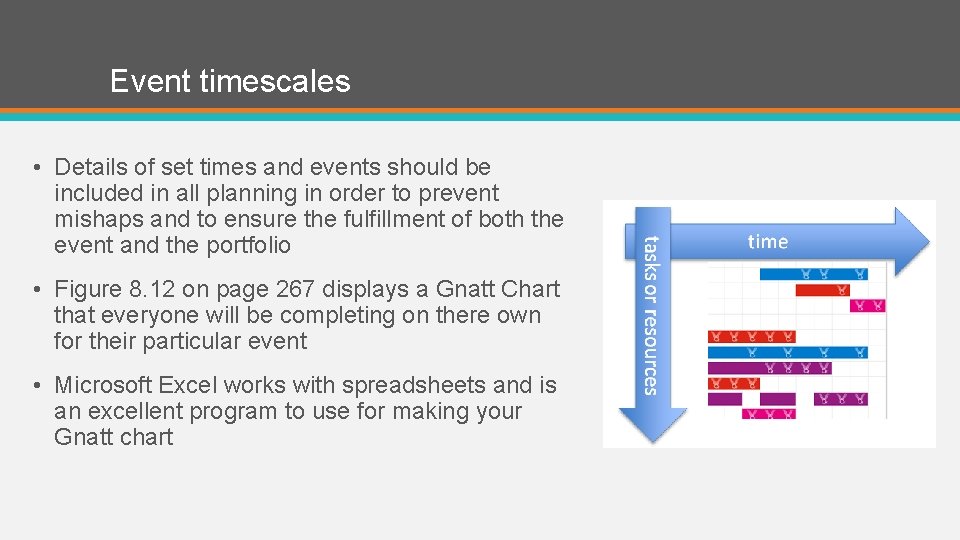
Event timescales • Details of set times and events should be included in all planning in order to prevent mishaps and to ensure the fulfillment of both the event and the portfolio • Figure 8. 12 on page 267 displays a Gnatt Chart that everyone will be completing on there own for their particular event • Microsoft Excel works with spreadsheets and is an excellent program to use for making your Gnatt chart
Risk assessments and contingency planning • Risky assessments and making a contingency plan or ‘Plan B’ are essential for the safe and realistic organization of any event. • Responds to potential problems and what the group should do instead incase that problem arises • First part, is to try and assess all potential problems that could arise – many of these problems will be out of the organizers control • For example, weather • Decisions should be made ahead of the actual event to overcome any potential difficulties
Risk assessments and contingency planning • Assessing any risk involved with an event is essential in order to reduce or eliminate any potential risks • This will help or highlight event risks and ultimately give consideration to whether or not an event is a safe and viable option
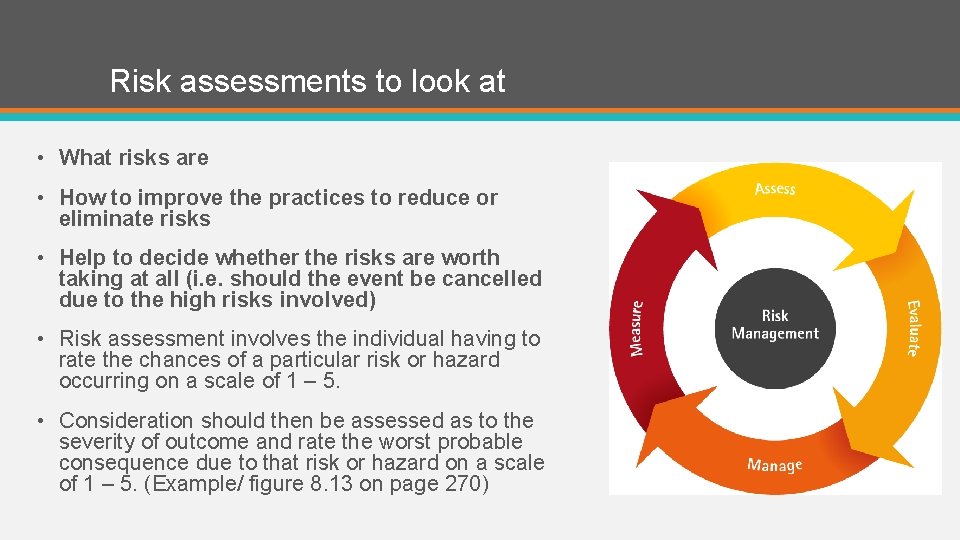
Risk assessments to look at • What risks are • How to improve the practices to reduce or eliminate risks • Help to decide whether the risks are worth taking at all (i. e. should the event be cancelled due to the high risks involved) • Risk assessment involves the individual having to rate the chances of a particular risk or hazard occurring on a scale of 1 – 5. • Consideration should then be assessed as to the severity of outcome and rate the worst probable consequence due to that risk or hazard on a scale of 1 – 5. (Example/ figure 8. 13 on page 270)
Activity 9 – Risk Assessment • Complete the activity on page 270 to assess risk for the given scenarios listed
Insurance arrangements • Any event no matter how big or small must consider insurance • In the unlikely event that something goes wrong it is important insurance policies are in place to cover all possible outcomes • In most instances, the event will be covered by the school/college insurance policy. • However, should the event be conducted as a residential trip in an overseas destination, there may be a requirement for extra insurance coverage • We will not need to worry about that
Carry out the event according to plan • The event is expected to be real and should therefore actually take place. • Cambridge recommends that candidates have video or photographs of the event be taken during and complete a log of the event to help with the final evaluation
Evaluation • Event evaluation is a very important part of the event process • Evaluation techniques should be considered at the early stages of the project • The business plan should contain an assessment of evaluation methods • Evaluation could be conducted via: • • Questionnaires Interviewing group members or participants Witness statements from assessor Etc… • More information on page 272
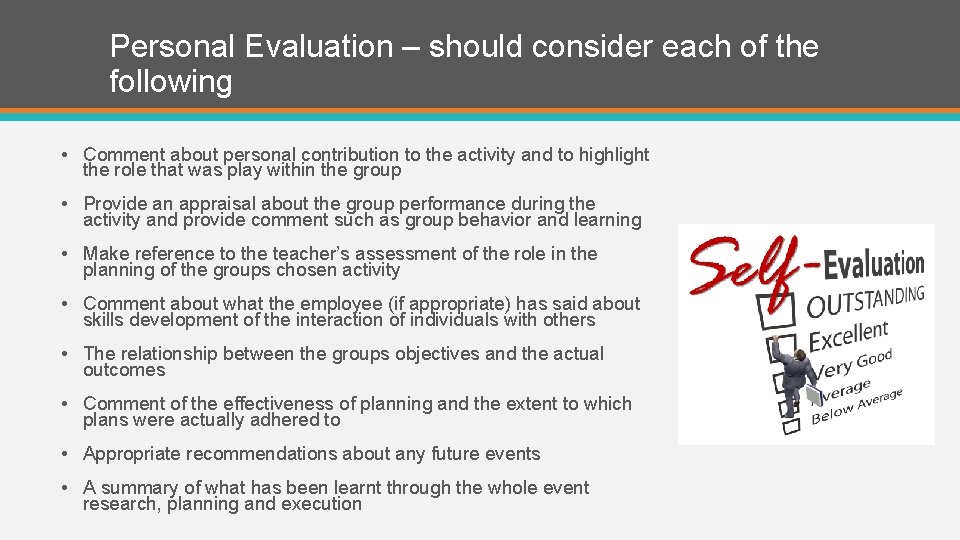
Personal Evaluation – should consider each of the following • Comment about personal contribution to the activity and to highlight the role that was play within the group • Provide an appraisal about the group performance during the activity and provide comment such as group behavior and learning • Make reference to the teacher’s assessment of the role in the planning of the groups chosen activity • Comment about what the employee (if appropriate) has said about skills development of the interaction of individuals with others • The relationship between the groups objectives and the actual outcomes • Comment of the effectiveness of planning and the extent to which plans were actually adhered to • Appropriate recommendations about any future events • A summary of what has been learnt through the whole event research, planning and execution
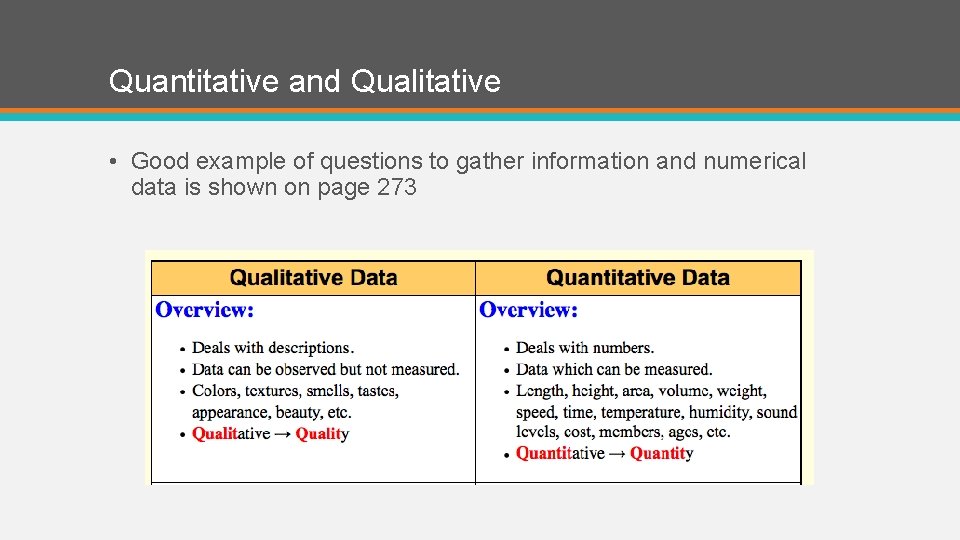
Quantitative and Qualitative • Good example of questions to gather information and numerical data is shown on page 273