
Planning and Implementation Nutrition Program Pertemuan 10 Gizi
- Slides: 23
Planning and Implementation Nutrition Program Pertemuan 10 Gizi Kerja Nadiyah, S. Gz. , M. Si Laras Sitoayu, S. Gz. , MKM. , RD Millyantri Elvandari, S. Gz. , M. Si
• Nutrition program, along with other health habits, require ongoing support from employers. New programs can be added over time and evaluated periodically for their effectiveness in establishing, maintaining, and increasing employee healthy eating. • For best results, recognition of the benefits of nutrition program should become an inherent part of organizational change and corporate culture.
Why should a workplace be concerned about nutrition program? • When a workplace can help employees to make wise food choices, as part of a workplace nutrition program, it can influence the person’s long-term health and wellness. • Healthy eating and active living combined with a positive outlook can lead to: ü Reduced risk of heart disease and some forms of cancer. ü Elevated mood, energy and self-esteem. ü Reduced anxiety and stress. ü Opportunities to spend enjoyable time with family and friends.
What should a nutrition program focus on? • They should make sure that wherever their employees get their food whether its catering, vending machines, canteens, or cafeterias - that these venues should offer some healthier food choices : ü Eat at least one dark green and one orange vegetable each day. ü Choose vegetables and fruit prepared with little or no added fat, sugar or salt. ü Have vegetables and fruit more often than juice. ü Make at least half of your grain products whole grain each day. ü Choose grain products that are lower in fat, sugar or salt. ü Drink skim, 1% or 2% milk each day. ü Select lower fat milk alternatives. ü Be active every day. ü Satisfy your thirst with water.
How to start a nutrition program? • Before start: ü No matter how much you plan or make people aware, nutrition programs are voluntary - not everyone will join or be interested, unless required by company. Survey employees to help you decide what types and levels of programs to offer. ü When planning a nutrition program, be sure you know the interests of your audience. In this case: ü Be sure to consider what types of programs have been offered in the past. Which programs worked? Which did not? ü Know exactly who your target audience is. ü Identify who people can go to if they have individual questions or want more help.
• Baseline ü Determine barriers to employee healthy eating at the workplace ü Assess current workplace nutrition programs q List current nutrition options for employees through worksite and identify number of employees ü Determine costs of current company nutrition programs such as: q Capital investment in building or facilities such as cafeterias q Staffing, equipment, and space q Cafeteria and vending machine contracts q Incentives tied to nutrition programs ü Conduct survey of employee satisfaction with current workplace supported nutrition programs
• Process ü Reassess barriers to employee healthy eating ü Document steps taken and progress implementing each intervention selected toward q List numeric goals in each form of intervention within a designated time period (e. g. , 12 months from startup) q Describe timeline for implementation of each planned intervention (e. g. , length of time and timing of tasks to develop, initiate, and conduct a mass campaign) ü Reassess employee satisfaction regarding workplace supported nutrition programs
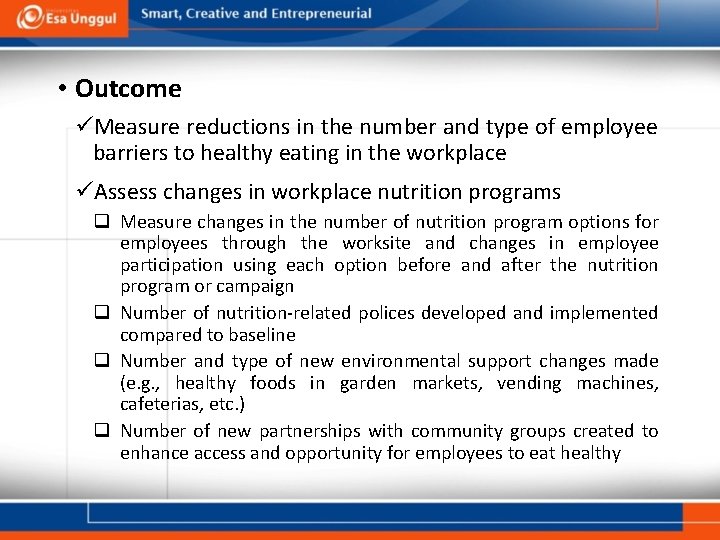
• Outcome üMeasure reductions in the number and type of employee barriers to healthy eating in the workplace üAssess changes in workplace nutrition programs q Measure changes in the number of nutrition program options for employees through the worksite and changes in employee participation using each option before and after the nutrition program or campaign q Number of nutrition-related polices developed and implemented compared to baseline q Number and type of new environmental support changes made (e. g. , healthy foods in garden markets, vending machines, cafeterias, etc. ) q Number of new partnerships with community groups created to enhance access and opportunity for employees to eat healthy
üAssess changes in program costs from baseline • New capital investments made (e. g. , cafeteria) • Increases in staffing or materials needs due to new program offerings • New incentives or changes in existing incentives based on employee participation • Changes in costs for vending or cafeteria contracts • Assess changes in survey responses for employee satisfaction following implementation of a workplace supported nutrition program and compare with baseline ü Depending on goal success, review the need to adjust workplace programs.
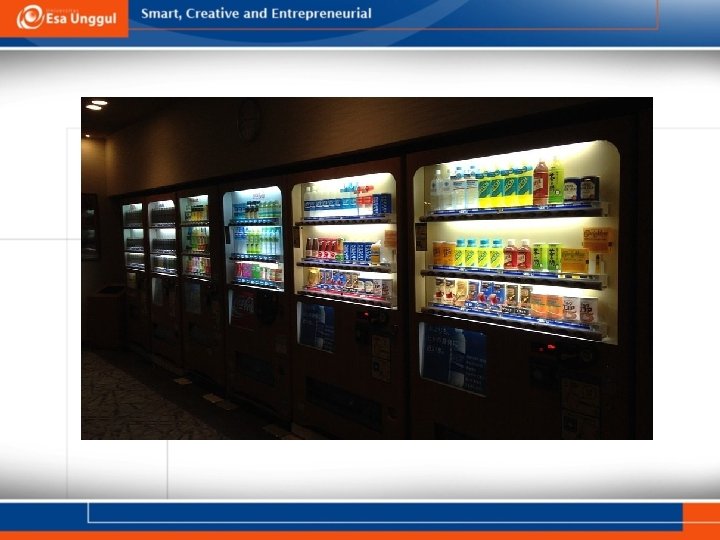
Does the workplace influence how people eat? • Yes. Always remember that the workplace environment influences the health of its employees. A safe and clean eating area is a requirement under most occupational health and safety laws. Beyond this, it is important to look at what is offered at vending machines and staff cafeterias. If you don't look at the larger picture to see how the workplace itself influences the eating patterns of the employees, the program will not work as well as it could. • Be sure the workplace supports nutrition programs by providing time for employees to go to information sessions, offering appropriate foods in the cafeteria and vending machines, and by providing refrigerators and microwaves so that meals can be stored and prepared appropriately.
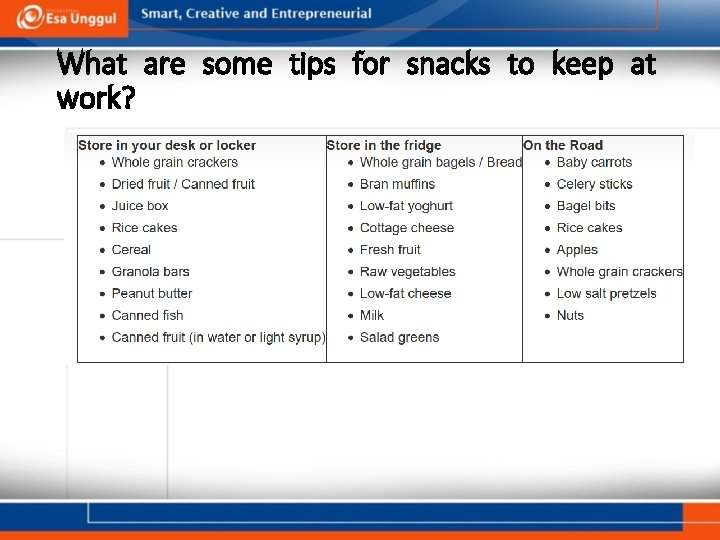
What are some tips for snacks to keep at work?
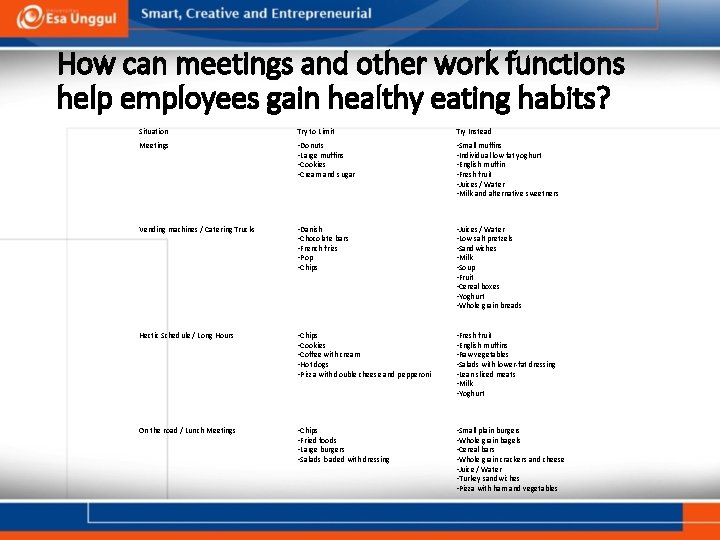
How can meetings and other work functions help employees gain healthy eating habits? Situation Try to Limit Try Instead Meetings • Donuts • Large muffins • Cookies • Cream and sugar • Small muffins • Individual low fat yoghurt • English muffin • Fresh fruit • Juices / Water • Milk and alternative sweetners Vending machines / Catering Trucks • Danish • Chocolate bars • French fries • Pop • Chips • Juices / Water • Low salt pretzels • Sandwiches • Milk • Soup • Fruit • Cereal boxes • Yoghurt • Whole grain breads Hectic Schedule / Long Hours • Chips • Cookies • Coffee with cream • Hot dogs • Pizza with double cheese and pepperoni • Fresh fruit • English muffins • Raw vegetables • Salads with lower-fat dressing • Lean sliced meats • Milk • Yoghurt On the road / Lunch Meetings • Chips • Fried foods • Large burgers • Salads loaded with dressing • Small plain burgers • Whole grain bagels • Cereal bars • Whole grain crackers and cheese • Juice / Water • Turkey sandwiches • Pizza with ham and vegetables
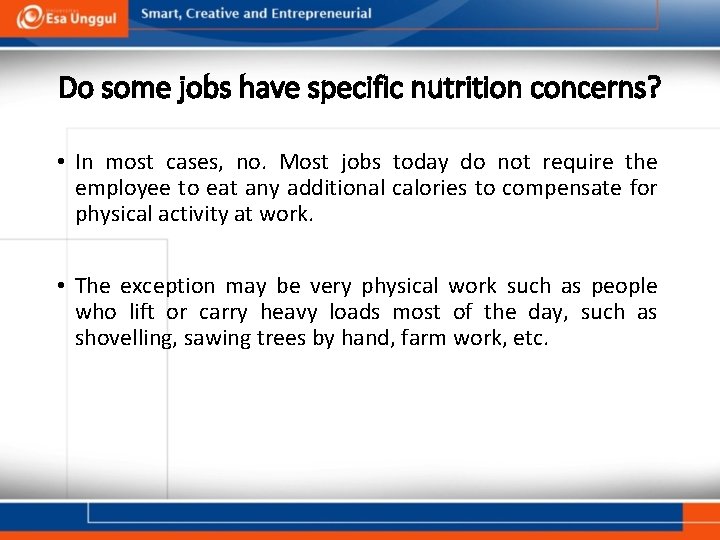
Do some jobs have specific nutrition concerns? • In most cases, no. Most jobs today do not require the employee to eat any additional calories to compensate for physical activity at work. • The exception may be very physical work such as people who lift or carry heavy loads most of the day, such as shovelling, sawing trees by hand, farm work, etc.
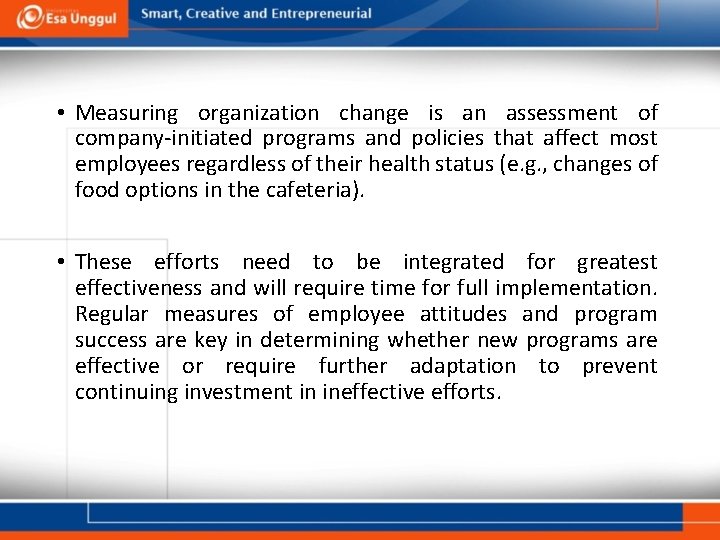
• Measuring organization change is an assessment of company-initiated programs and policies that affect most employees regardless of their health status (e. g. , changes of food options in the cafeteria). • These efforts need to be integrated for greatest effectiveness and will require time for full implementation. Regular measures of employee attitudes and program success are key in determining whether new programs are effective or require further adaptation to prevent continuing investment in ineffective efforts.
Task Look for examples of nutritional programs applied to employees in a company, then do the implementation analysis along with examples of menus presented to employees