
Planning An Instructional Unit The Big Idea Instructional
Planning An Instructional Unit
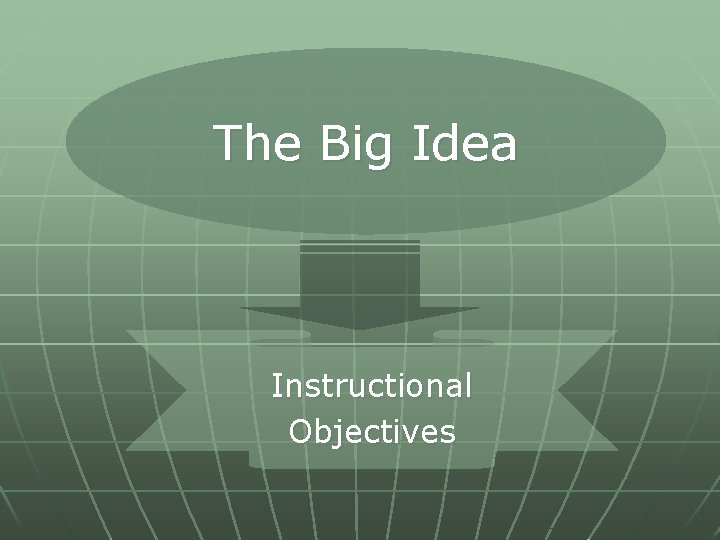
The Big Idea Instructional Objectives
As you listen to the song, examine the details of the painting and complete the art analysis worksheet.
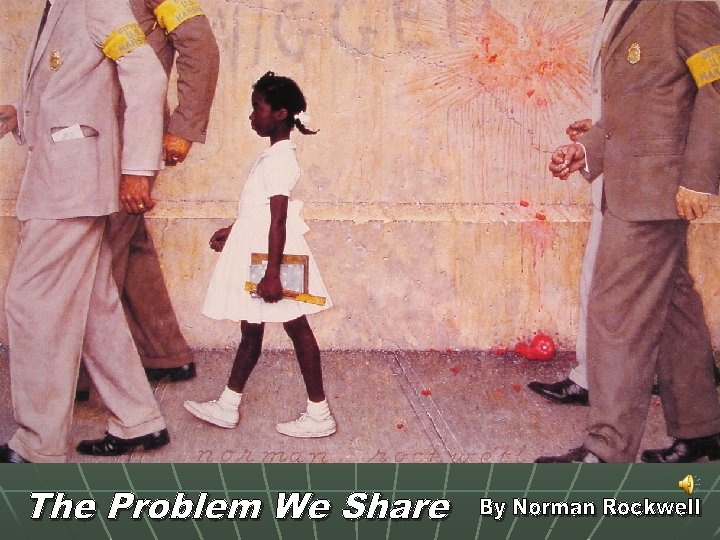
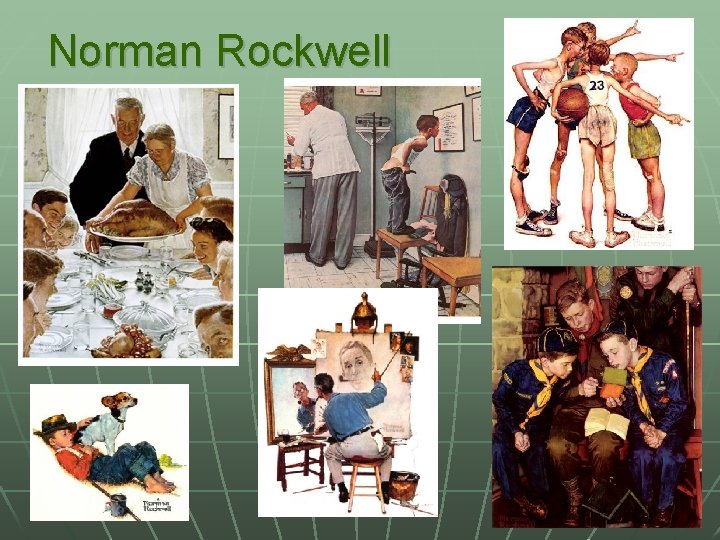
Norman Rockwell
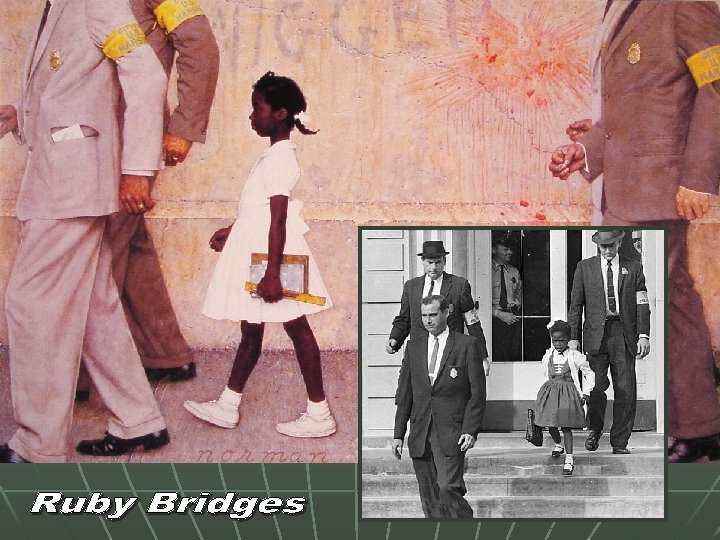
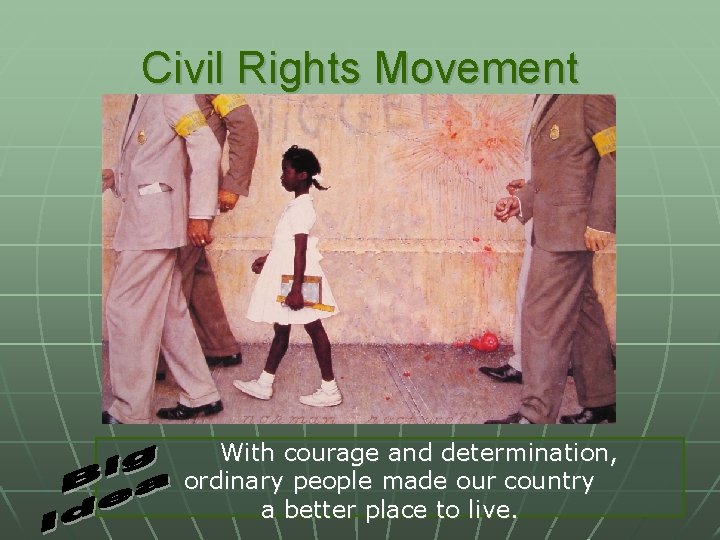
Civil Rights Movement With courage and determination, ordinary people made our country a better place to live.
Other Considerations n n How much time do you have to devote to this unit? How much do your students already know about the topics you will cover? How can you make this topic relevant to the world today? What skills do your students need to learn?
Important Content to Include Topics You will Cover in this Unit n List Key Concepts & Vocabulary n Reading, Writing, & Math Activities n Student Performance Activity n
What resources are available? n n n Handouts & Worksheets Mapping Activities A/V Materials: Film, Music, Art, Photographs Internet Resources Primary Source Documents
How will you measure student learning? Tests & Quizzes for this Unit n Projects for this Unit n Homework Assignments n Can all students demonstrate what they have learned?
How will your students know what you expect of them?
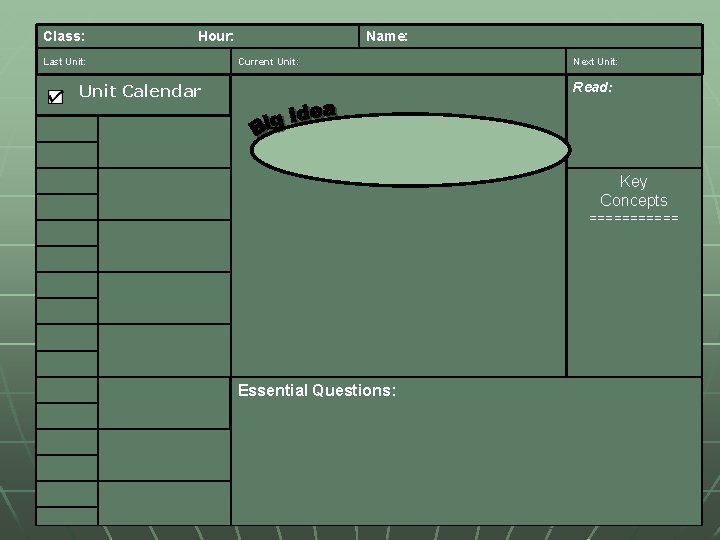
Class: Hour: Last Unit: Name: Current Unit: Next Unit: Read: Unit Calendar Key Concepts ====== Essential Questions:
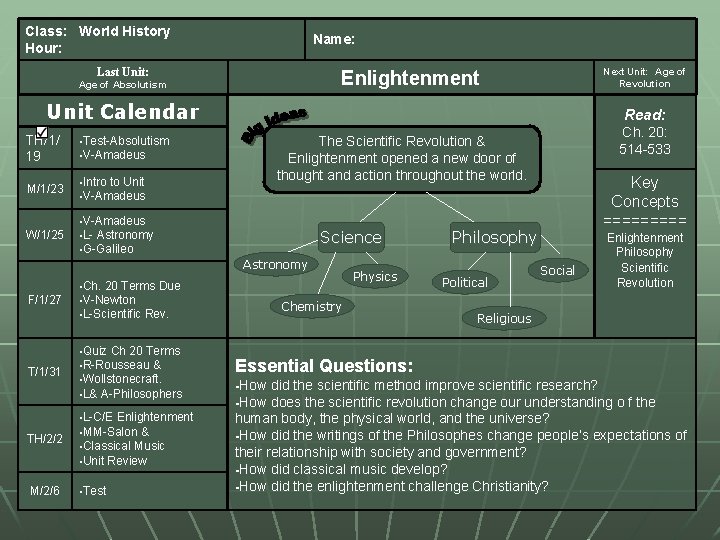
Class: World History Hour: Name: Last Unit: Next Unit: Age of Revolution Enlightenment Age of Absolutism Unit Calendar TH/1/ 19 M/1/23 Read: V-Amadeus Intro to Unit V-Amadeus W/1/25 Science L- Astronomy G-Galileo Astronomy Ch. F/1/27 20 Terms Due V-Newton L-Scientific T/1/31 Ch 20 Terms R-Rousseau & Wollstonecraft. L& A-Philosophers L-C/E TH/2/2 M/2/6 Enlightenment & Classical Music Unit Review MM-Salon Test Physics Chemistry Rev. Quiz Ch. 20: 514 -533 The Scientific Revolution & Enlightenment opened a new door of thought and action throughout the world. Test-Absolutism Key Concepts ===== Philosophy Political Social Enlightenment Philosophy Scientific Revolution Religious Essential Questions: How did the scientific method improve scientific research? How does the scientific revolution change our understanding o f the human body, the physical world, and the universe? How did the writings of the Philosophes change people’s expectations of their relationship with society and government? How did classical music develop? How did the enlightenment challenge Christianity?
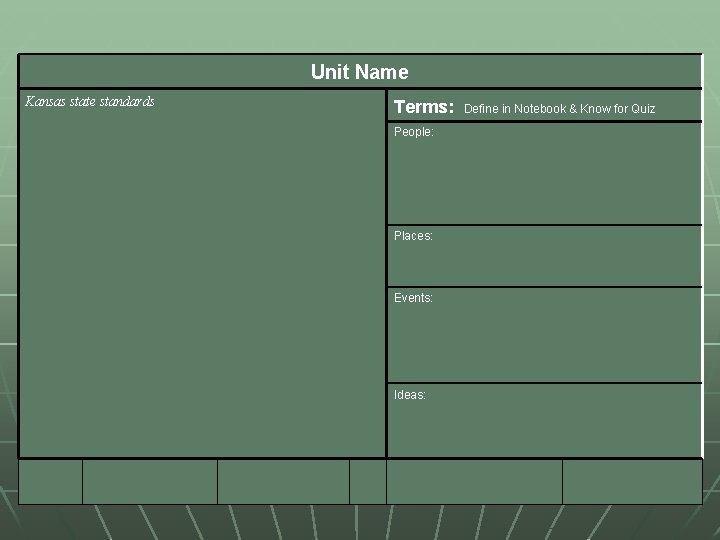
Unit Name Kansas state standards Terms: People: Places: Events: Ideas: Define in Notebook & Know for Quiz
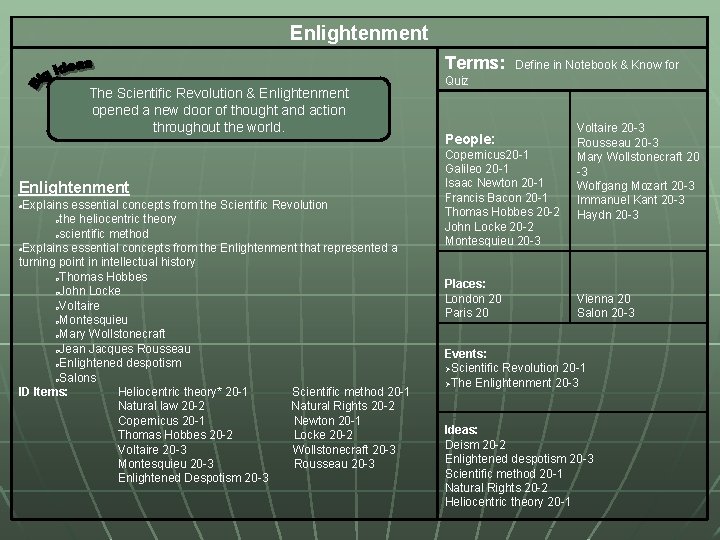
Enlightenment Terms: The Scientific Revolution & Enlightenment opened a new door of thought and action throughout the world. Enlightenment Explains essential concepts from the Scientific Revolution heliocentric theory oscientific method Explains essential concepts from the Enlightenment that represented a turning point in intellectual history o. Thomas Hobbes o. John Locke o. Voltaire o. Montesquieu o. Mary Wollstonecraft o. Jean Jacques Rousseau o. Enlightened despotism o. Salons ID Items: Heliocentric theory* 20 -1 Scientific method 20 -1 Natural law 20 -2 Natural Rights 20 -2 Copernicus 20 -1 Newton 20 -1 Thomas Hobbes 20 -2 Locke 20 -2 Voltaire 20 -3 Wollstonecraft 20 -3 Montesquieu 20 -3 Rousseau 20 -3 Enlightened Despotism 20 -3 othe Define in Notebook & Know for Quiz People: Copernicus 20 -1 Galileo 20 -1 Isaac Newton 20 -1 Francis Bacon 20 -1 Thomas Hobbes 20 -2 John Locke 20 -2 Montesquieu 20 -3 Places: London 20 Paris 20 Voltaire 20 -3 Rousseau 20 -3 Mary Wollstonecraft 20 -3 Wolfgang Mozart 20 -3 Immanuel Kant 20 -3 Haydn 20 -3 Vienna 20 Salon 20 -3 Events: Scientific Revolution 20 -1 The Enlightenment 20 -3 Ideas: Deism 20 -2 Enlightened despotism 20 -3 Scientific method 20 -1 Natural Rights 20 -2 Heliocentric theory 20 -1
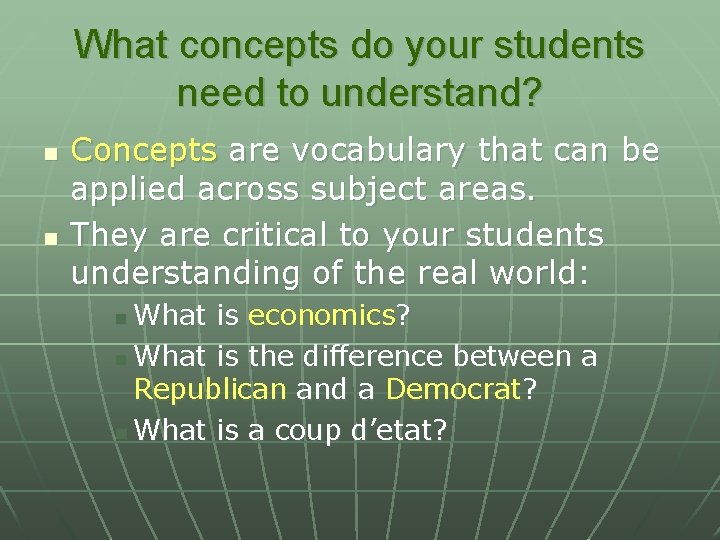
What concepts do your students need to understand? n n Concepts are vocabulary that can be applied across subject areas. They are critical to your students understanding of the real world: What is economics? n What is the difference between a Republican and a Democrat? n What is a coup d’etat? n
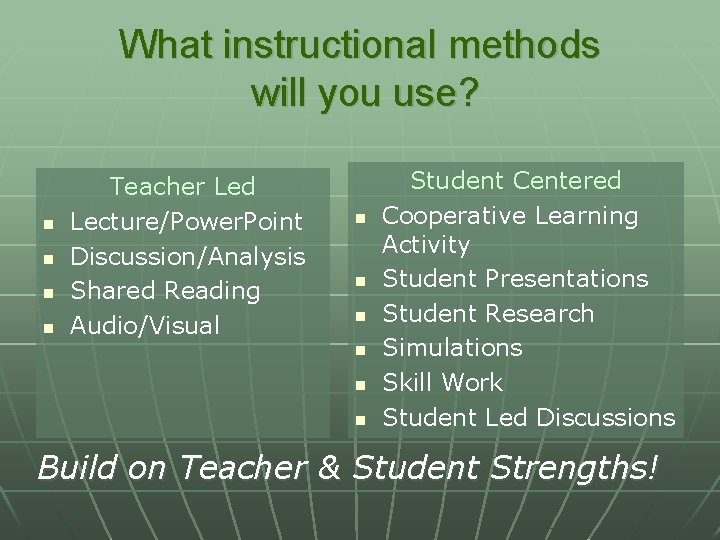
What instructional methods will you use? n n Teacher Led Lecture/Power. Point Discussion/Analysis Shared Reading Audio/Visual n n n Student Centered Cooperative Learning Activity Student Presentations Student Research Simulations Skill Work Student Led Discussions Build on Teacher & Student Strengths!
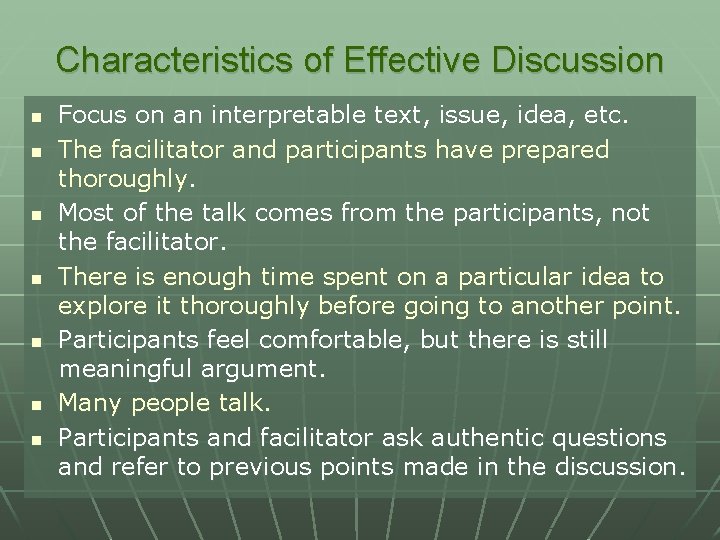
Characteristics of Effective Discussion n n n Focus on an interpretable text, issue, idea, etc. The facilitator and participants have prepared thoroughly. Most of the talk comes from the participants, not the facilitator. There is enough time spent on a particular idea to explore it thoroughly before going to another point. Participants feel comfortable, but there is still meaningful argument. Many people talk. Participants and facilitator ask authentic questions and refer to previous points made in the discussion.
Student Centered Discussion n n n Socratic Circles Reading Pods Fish Bowl Debates Use reading strategy to improve student comprehension Stress student use of factual detail to support viewpoint. Provide students with guidelines & feedback.
Working with Primary Sources n n n Music Photographs Cartoon Analysis
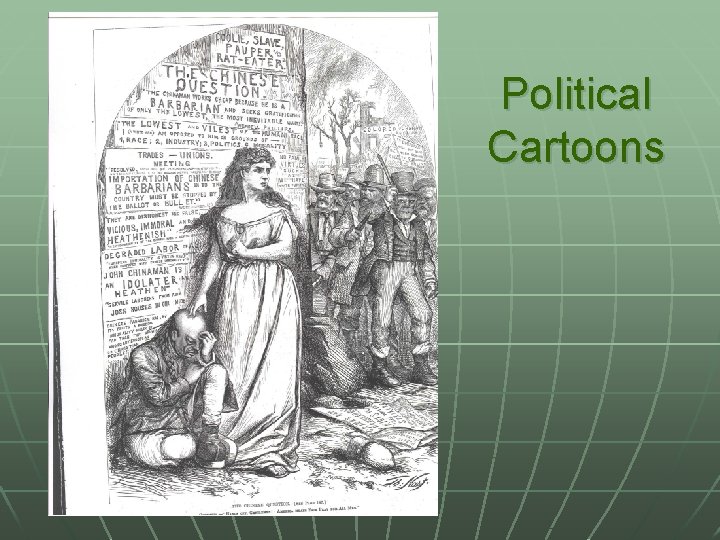
Political Cartoons

Projects Website

Are there any questions?
- Slides: 25