
Planning a Smart Infrastructure for Intelligent Buildings Carol
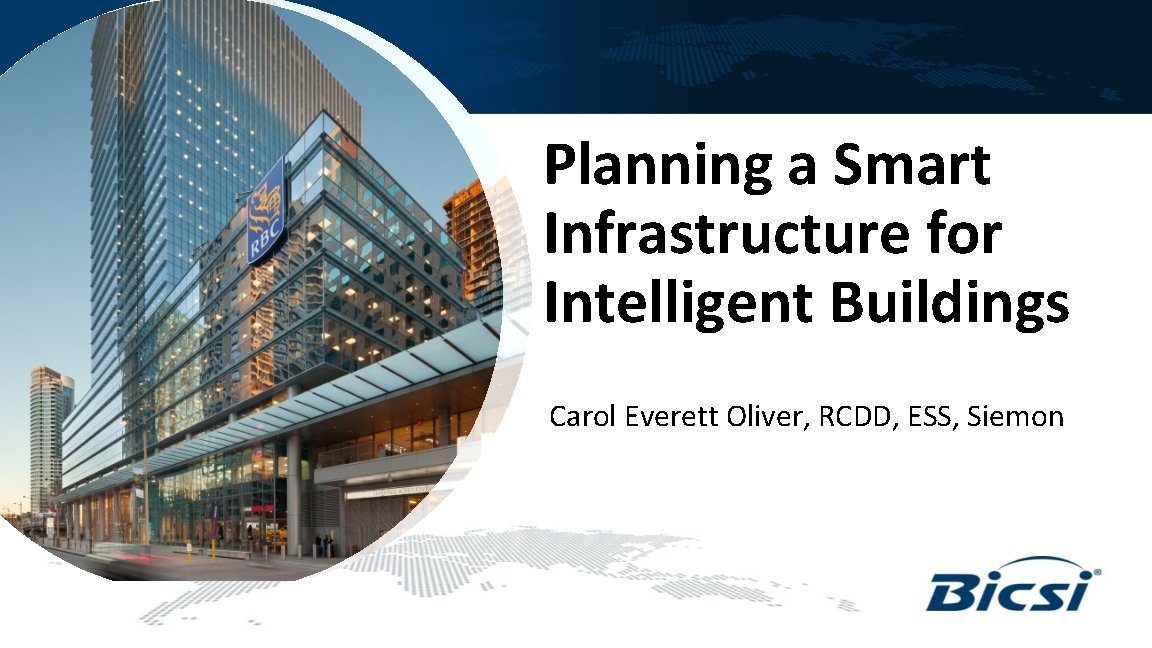
Planning a Smart Infrastructure for Intelligent Buildings Carol Everett Oliver, RCDD, ESS, Siemon
Agenda • • • Elements of Infrastructure Standards & Resources Design Considerations Remote Powering & Effects on Cabling Different Cabling Layouts
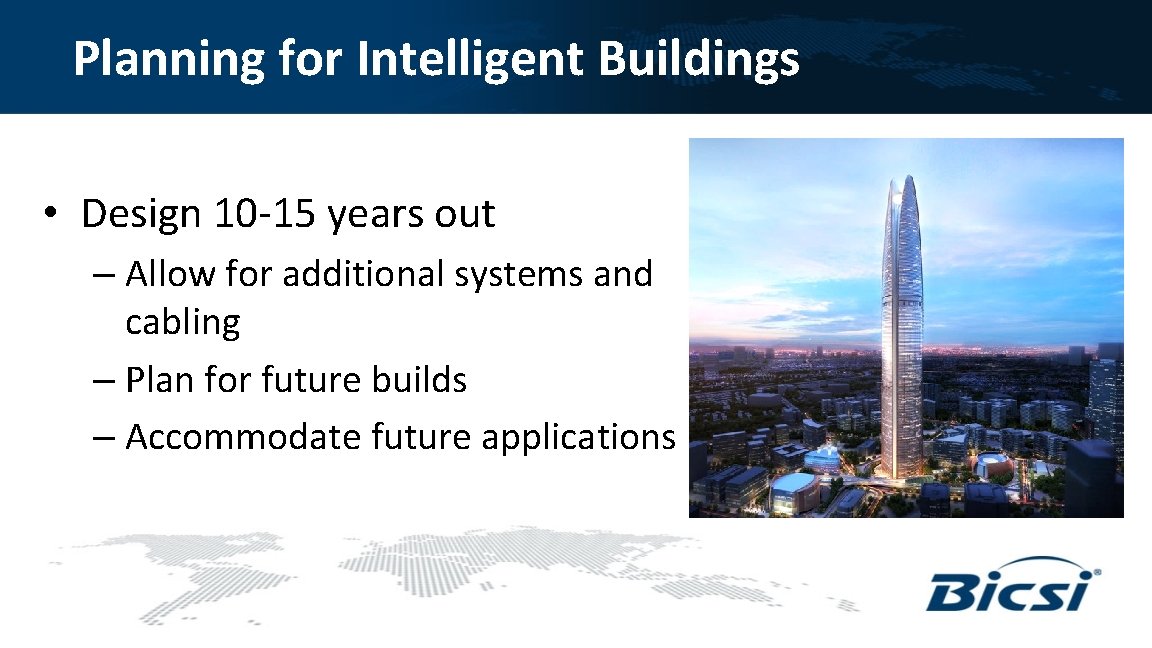
Planning for Intelligent Buildings • Design 10 -15 years out – Allow for additional systems and cabling – Plan for future builds – Accommodate future applications 3

Elements of the Communications Infrastructure Topology Coverage Outlets Pathways and Spaces Cable 4
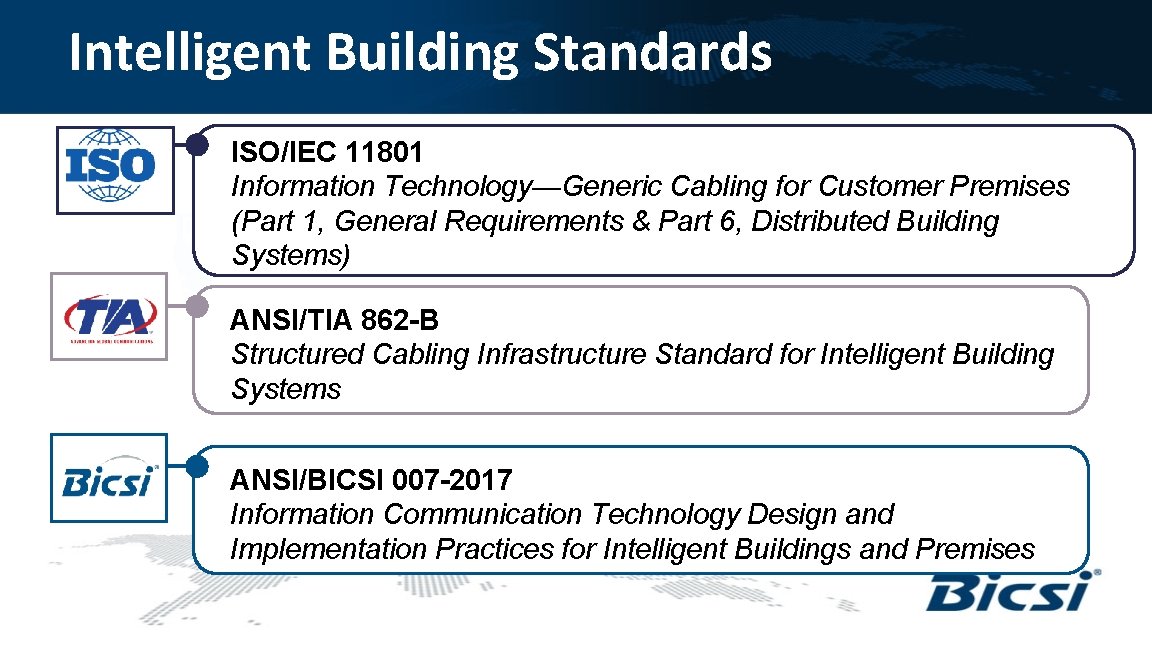
Intelligent Building Standards ISO/IEC 11801 Information Technology—Generic Cabling for Customer Premises (Part 1, General Requirements & Part 6, Distributed Building Systems) ANSI/TIA 862 -B Structured Cabling Infrastructure Standard for Intelligent Building Systems ANSI/BICSI 007 -2017 Information Communication Technology Design and Implementation Practices for Intelligent Buildings and Premises
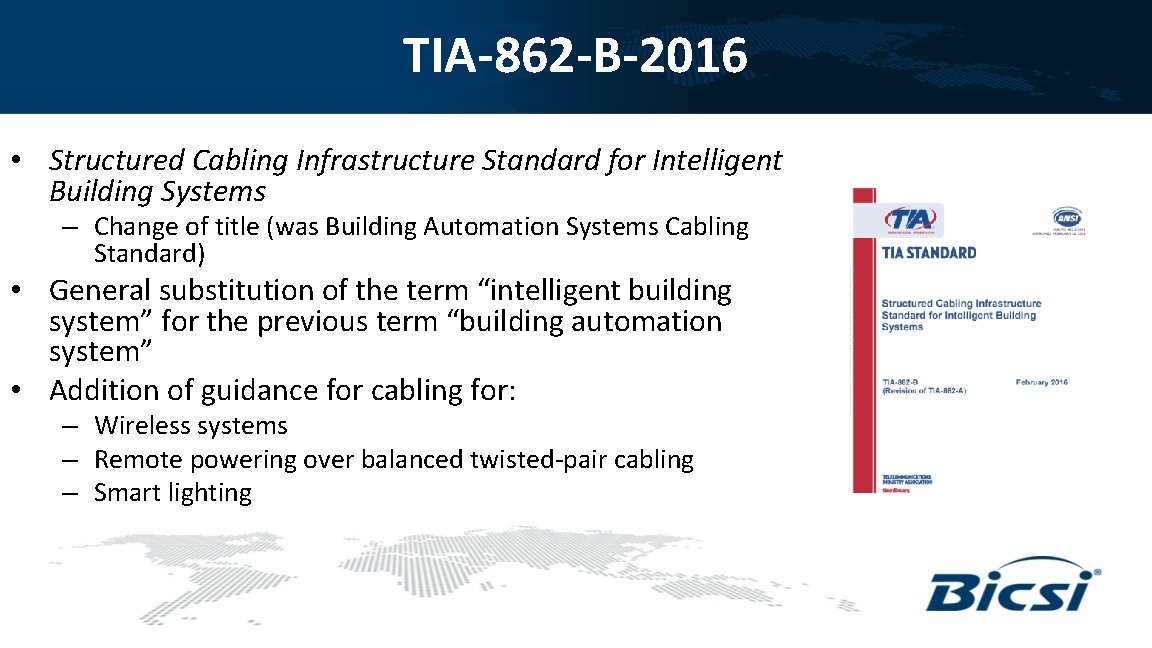
TIA-862 -B-2016 • Structured Cabling Infrastructure Standard for Intelligent Building Systems – Change of title (was Building Automation Systems Cabling Standard) • General substitution of the term “intelligent building system” for the previous term “building automation system” • Addition of guidance for cabling for: – Wireless systems – Remote powering over balanced twisted-pair cabling – Smart lighting
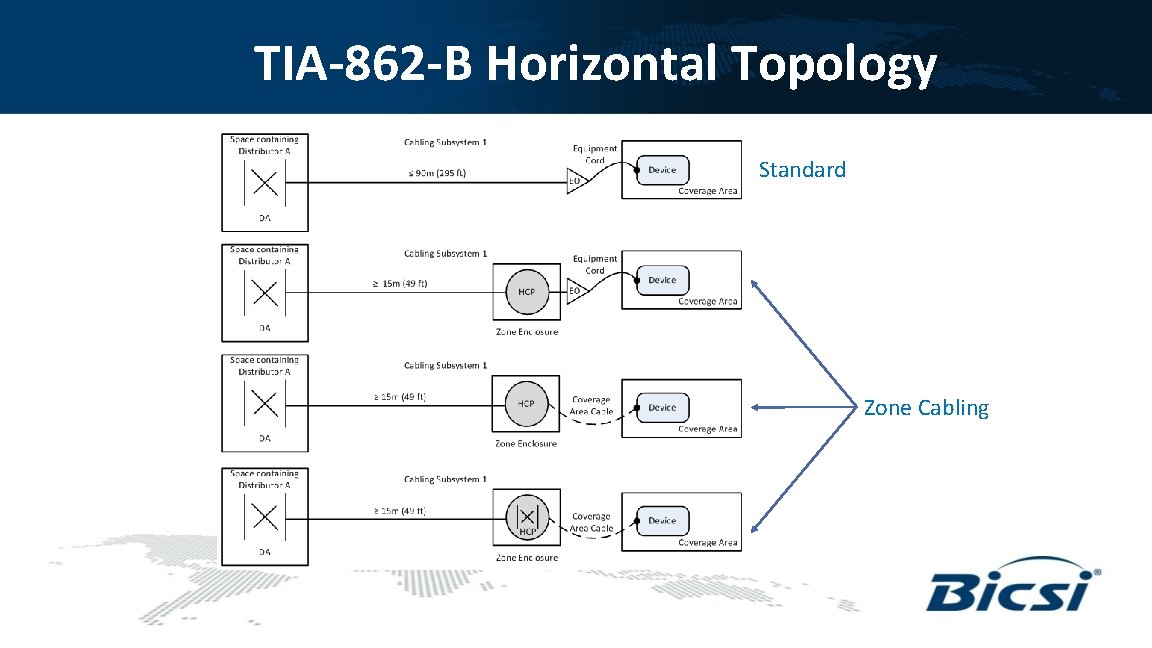
TIA-862 -B Horizontal Topology Standard Zone Cabling
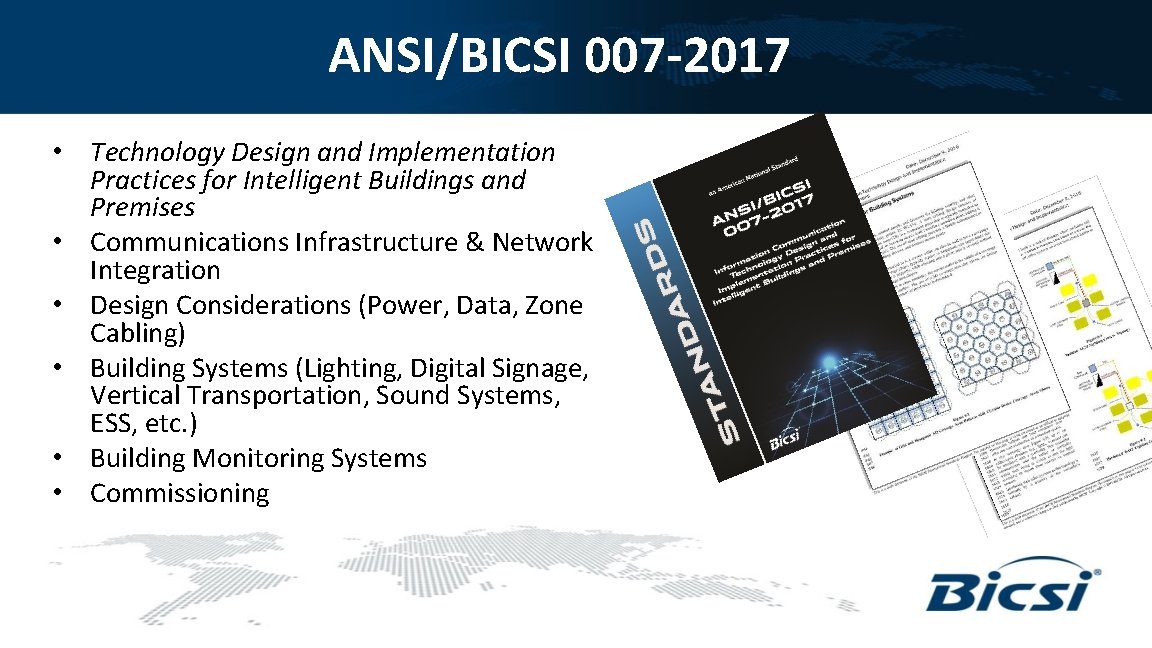
ANSI/BICSI 007 -2017 • Technology Design and Implementation Practices for Intelligent Buildings and Premises • Communications Infrastructure & Network Integration • Design Considerations (Power, Data, Zone Cabling) • Building Systems (Lighting, Digital Signage, Vertical Transportation, Sound Systems, ESS, etc. ) • Building Monitoring Systems • Commissioning
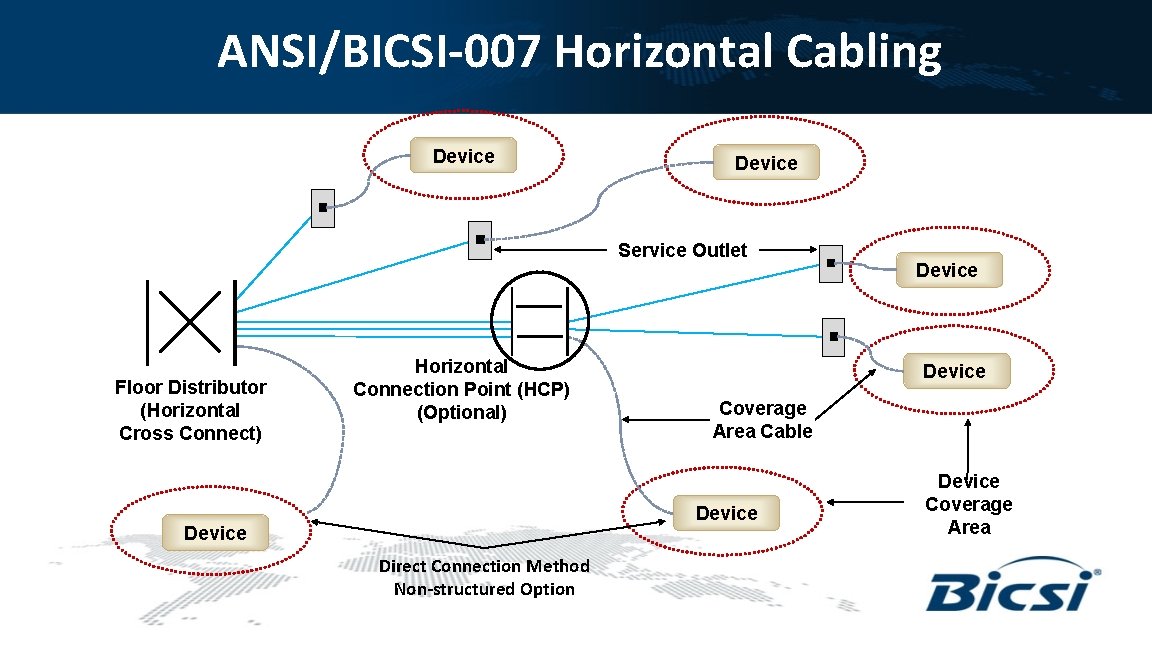
ANSI/BICSI-007 Horizontal Cabling Device Service Outlet Floor Distributor (Horizontal Cross Connect) Horizontal Connection Point (HCP) (Optional) Device Coverage Area Cable Device Direct Connection Method Non-structured Option Device Coverage Area

Example of a TR that Supports Multiple Systems Wall-Mounted Systems Wireless Device Systems Future Racks and Systems Specialty Systems

Example of a TR that Provides Restricted Access Critical/Sensitive Information Systems Restricted Access 11
Quiz Question What is Zone Cabling?

Zone Cabling Methodology } Zone cabling is a standardsbased approach to support convergence of devices } Consists of cables run from connections in the telecommunications room (TR) to outlets housed in a zone enclosure servicing coverage areas } Shorter cables run from outlets in the zone enclosure directly to devices or to outlets servicing devices } 25% spare port availability recommended for best ROI } Supports rapid reorganization and deployment of new devices and applications } MAC work costs less, is faster and less disruptive } Factory pre-terminated and tested trunking cables can be installed from the TR to the zone enclosure for quicker deployment

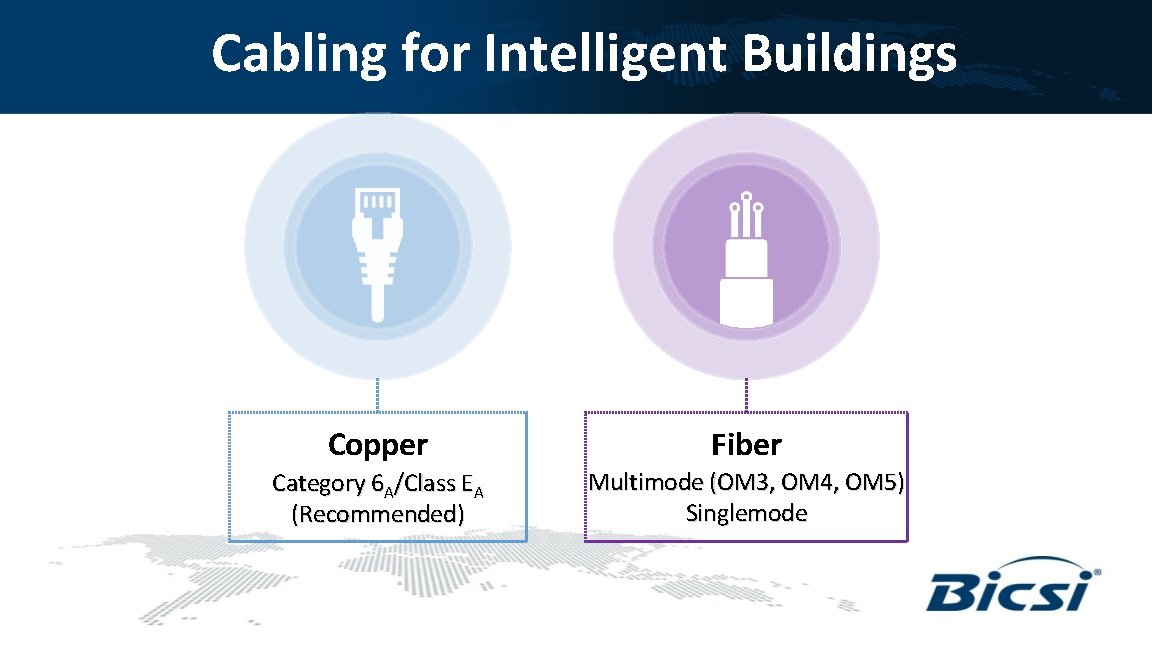
Cable Selection Traditional Building Employ a vast array of different protocols and cabling systems Converged Building Multiple building systems over a single IT cabling infrastructure (fiber and copper) One cable type means: • Rapid deployment • Reduced labor costs
Cabling for Intelligent Buildings Copper Fiber Category 6 A/Class EA (Recommended) Multimode (OM 3, OM 4, OM 5) Singlemode 15
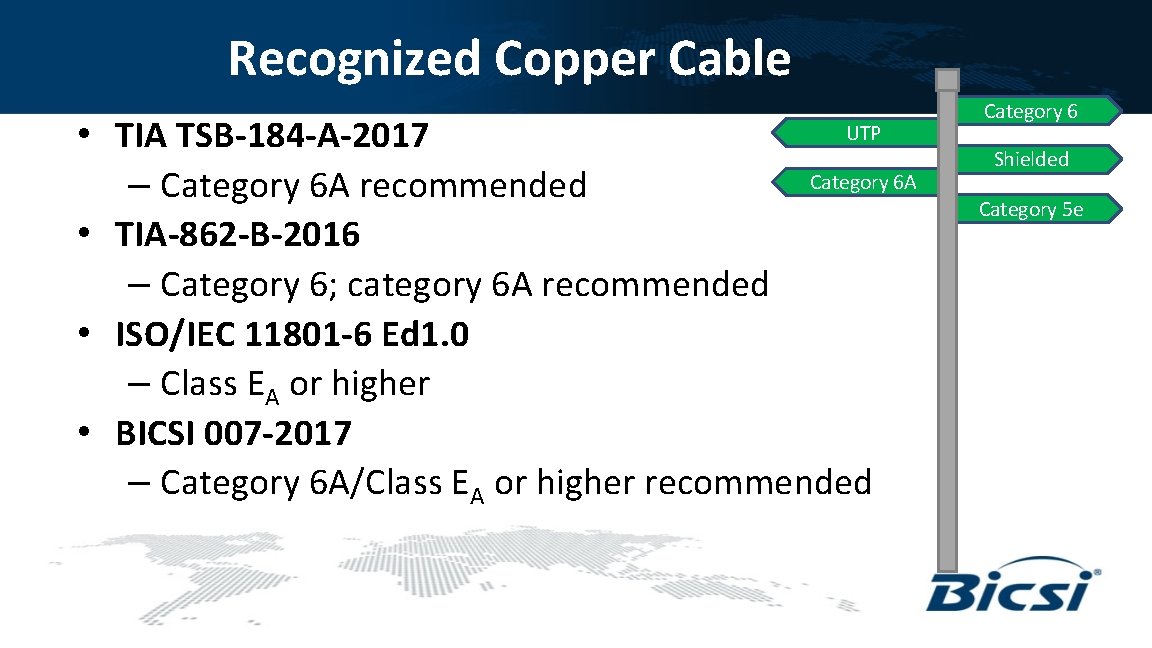
Recognized Copper Cable UTP • TIA TSB-184 -A-2017 Category 6 A – Category 6 A recommended • TIA-862 -B-2016 – Category 6; category 6 A recommended • ISO/IEC 11801 -6 Ed 1. 0 – Class EA or higher • BICSI 007 -2017 – Category 6 A/Class EA or higher recommended Category 6 Shielded Category 5 e
Quiz Question What is an MPTL? A: Modular Plug Terminated Link Recognized by ANSI/TIA-568. 2 -D
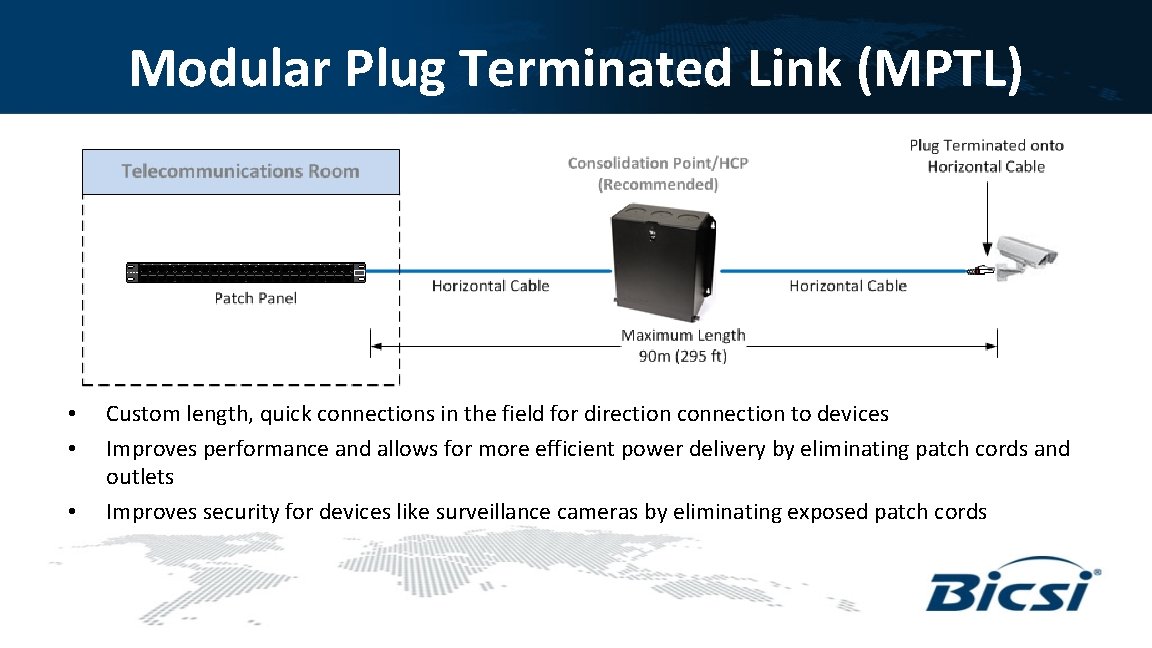
Modular Plug Terminated Link (MPTL) • • • Custom length, quick connections in the field for direction connection to devices Improves performance and allows for more efficient power delivery by eliminating patch cords and outlets Improves security for devices like surveillance cameras by eliminating exposed patch cords
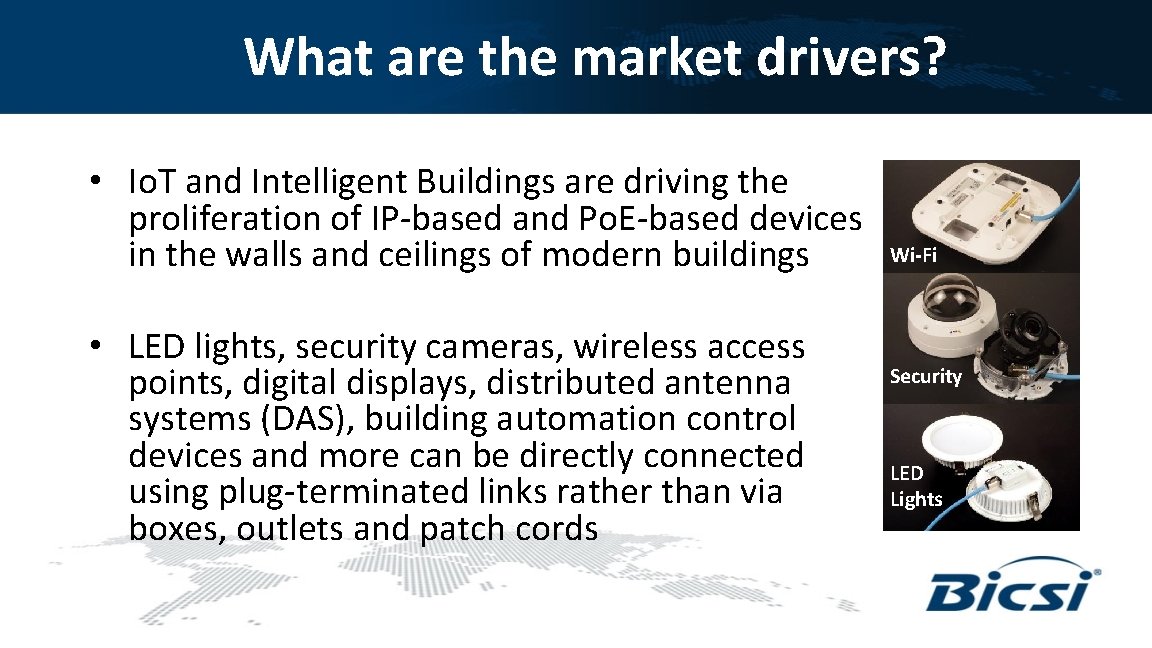
What are the market drivers? • Io. T and Intelligent Buildings are driving the proliferation of IP-based and Po. E-based devices in the walls and ceilings of modern buildings • LED lights, security cameras, wireless access points, digital displays, distributed antenna systems (DAS), building automation control devices and more can be directly connected using plug-terminated links rather than via boxes, outlets and patch cords Wi-Fi Security LED Lights
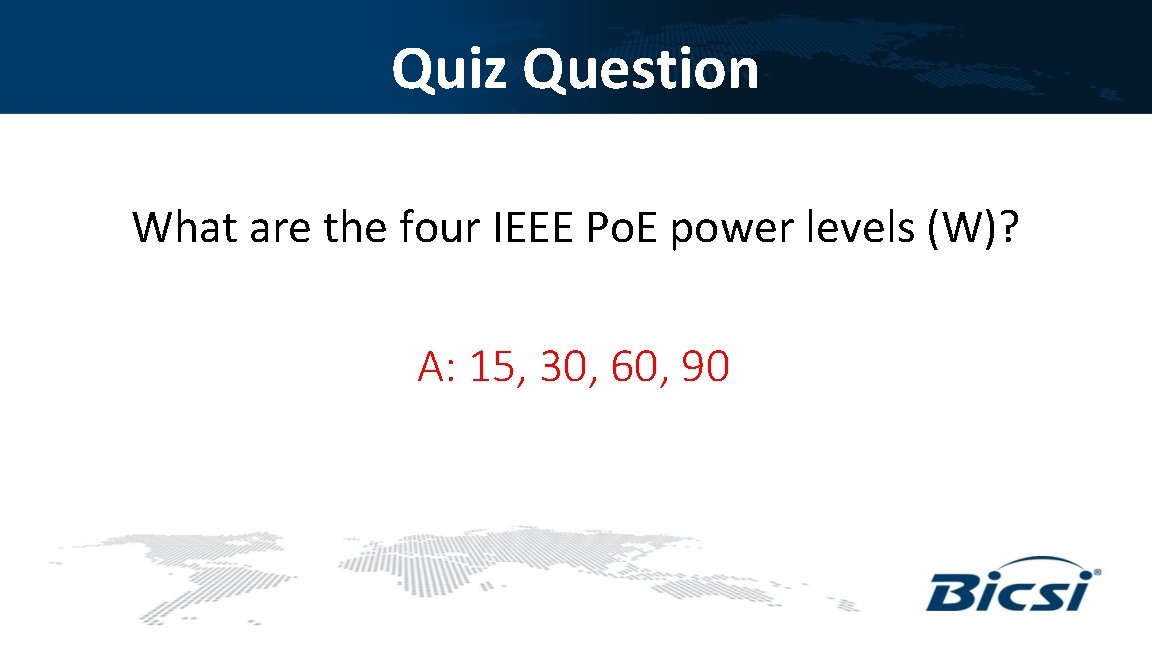
Quiz Question What are the four IEEE Po. E power levels (W)? A: 15, 30, 60, 90
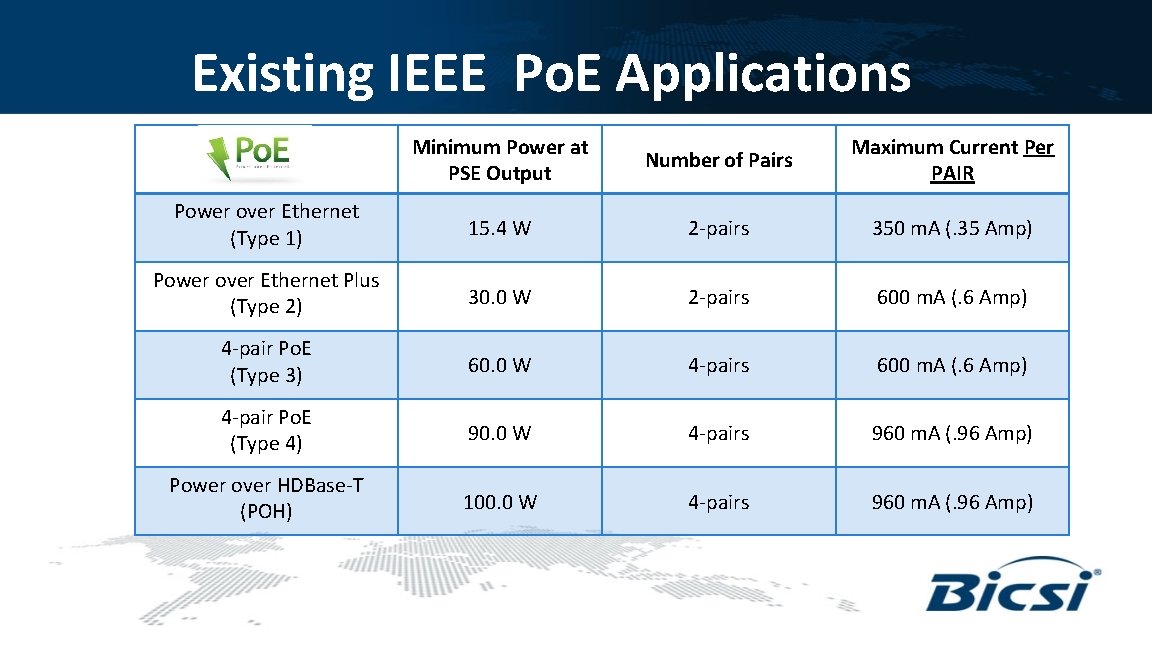
Existing IEEE Po. E Applications Minimum Power at PSE Output Number of Pairs Maximum Current Per PAIR Power over Ethernet (Type 1) 15. 4 W 2 -pairs 350 m. A (. 35 Amp) Power over Ethernet Plus (Type 2) 30. 0 W 2 -pairs 600 m. A (. 6 Amp) 4 -pair Po. E (Type 3) 60. 0 W 4 -pairs 600 m. A (. 6 Amp) 4 -pair Po. E (Type 4) 90. 0 W 4 -pairs 960 m. A (. 96 Amp) Power over HDBase-T (POH) 100. 0 W 4 -pairs 960 m. A (. 96 Amp)
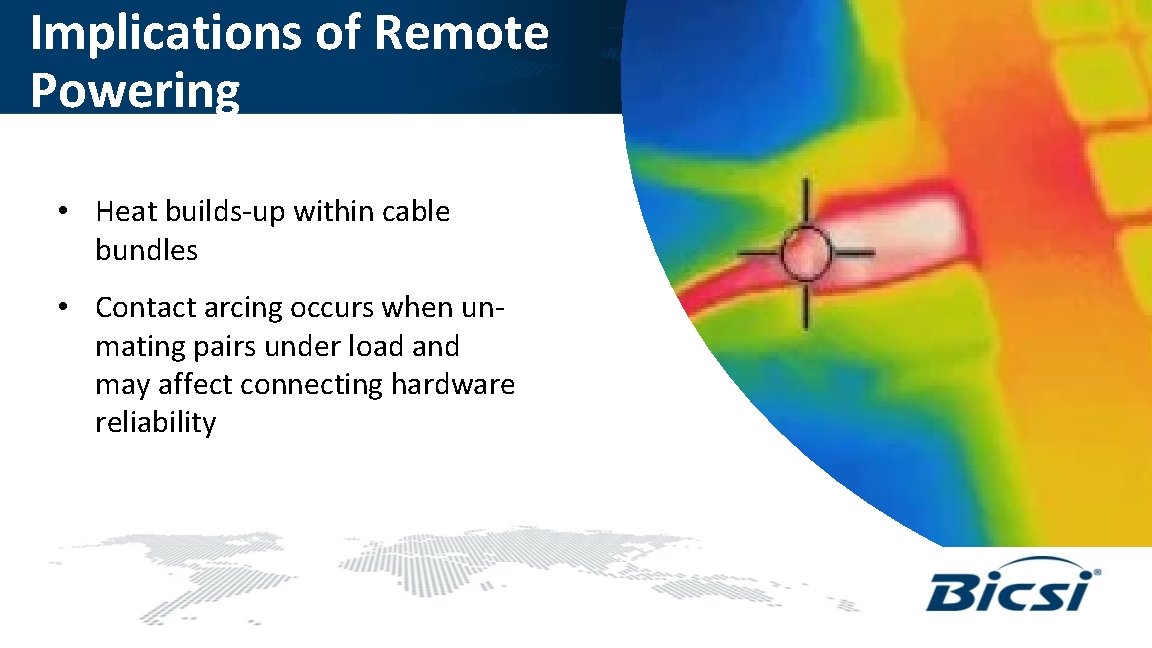
Implications of Remote Powering • Heat builds-up within cable bundles • Contact arcing occurs when unmating pairs under load and may affect connecting hardware reliability
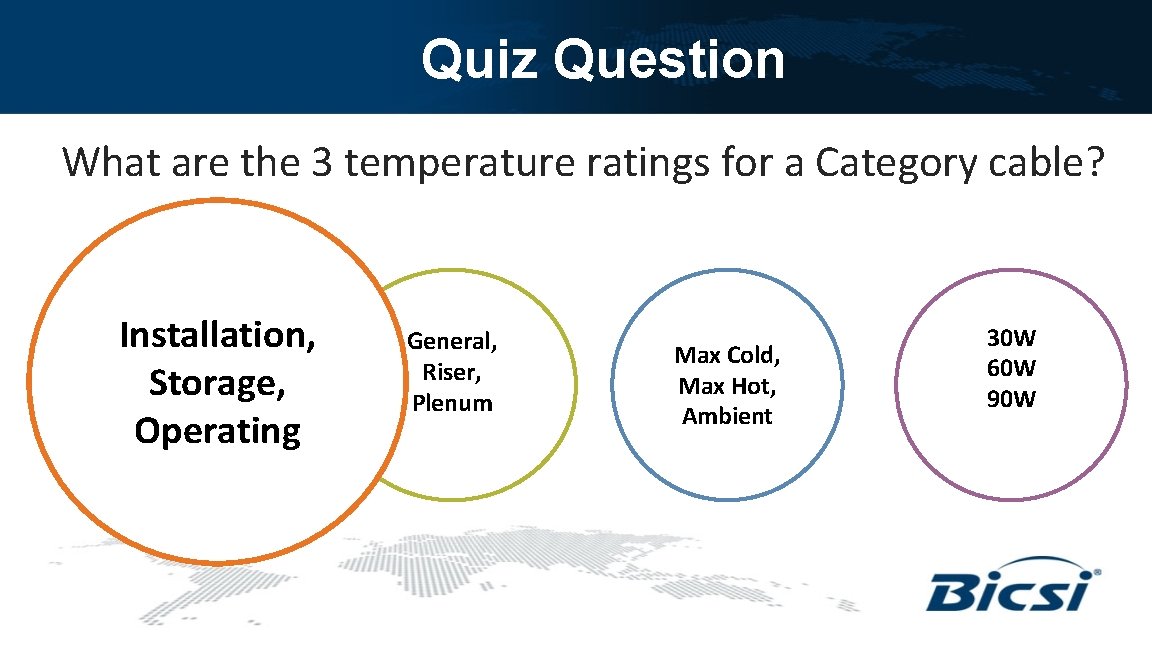
Quiz Question What are the 3 temperature ratings for a Category cable? Installation, Storage, Operating BICSI 2019© General, Riser, Plenum Max Cold, Max Hot, Ambient 30 W 60 W 90 W 23
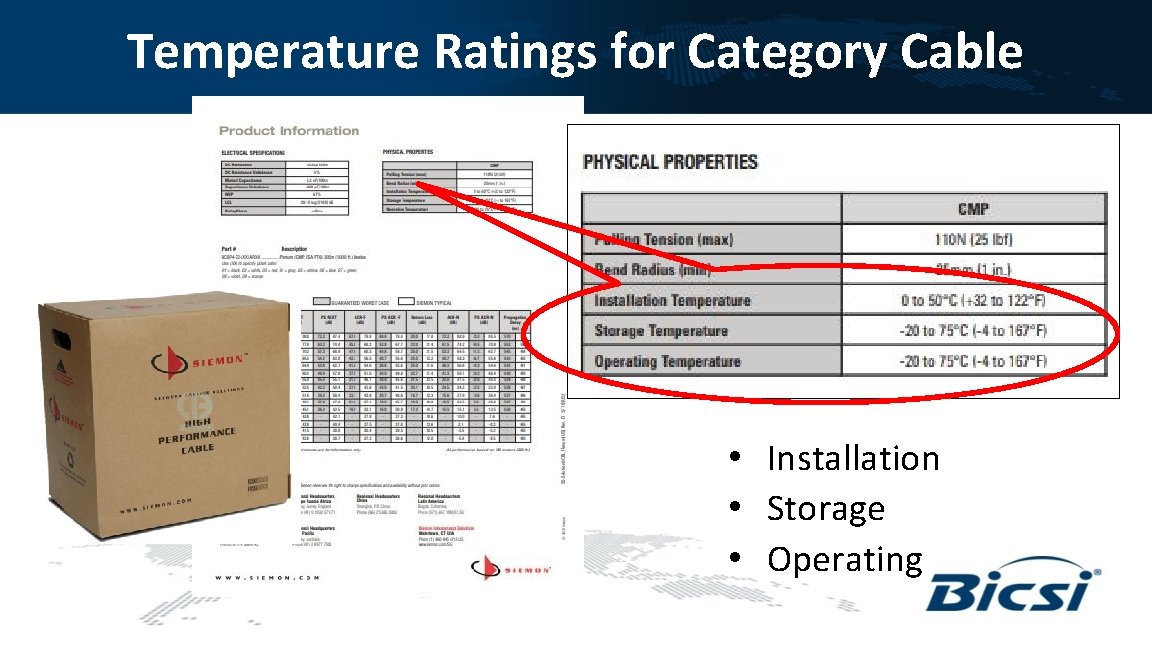
Temperature Ratings for Category Cable • Installation • Storage • Operating
Quiz Question What is the TIA specified operating temperature range for cabling? A: -20°C to 60°C (-4°F to 140°F)
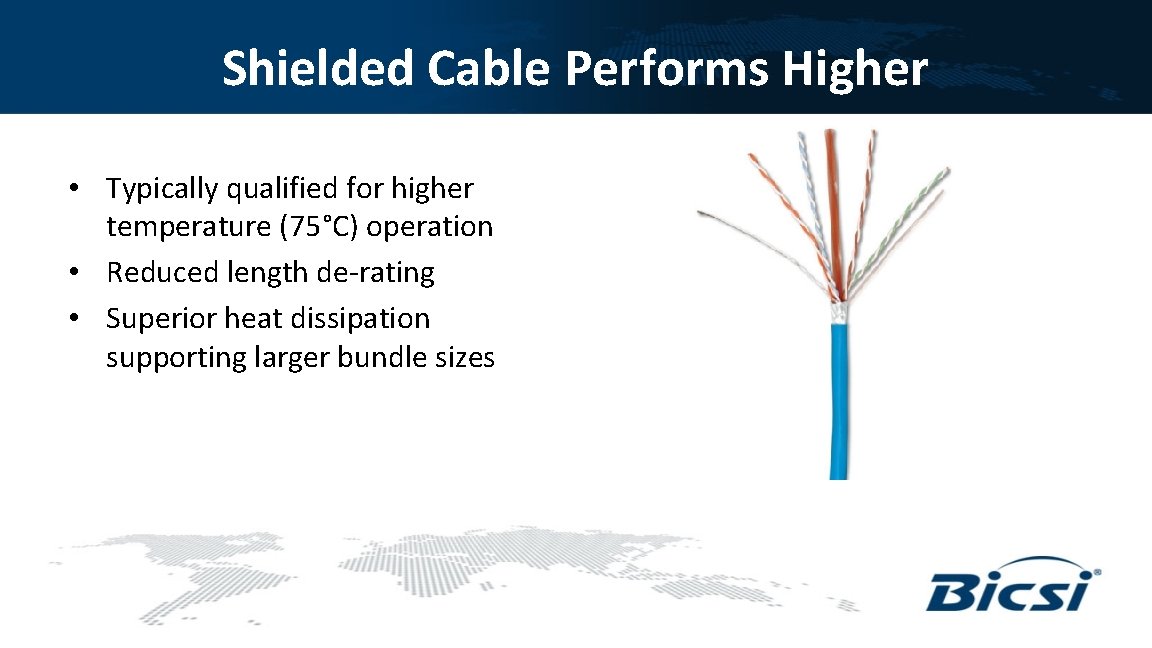
Shielded Cable Performs Higher • Typically qualified for higher temperature (75°C) operation • Reduced length de-rating • Superior heat dissipation supporting larger bundle sizes
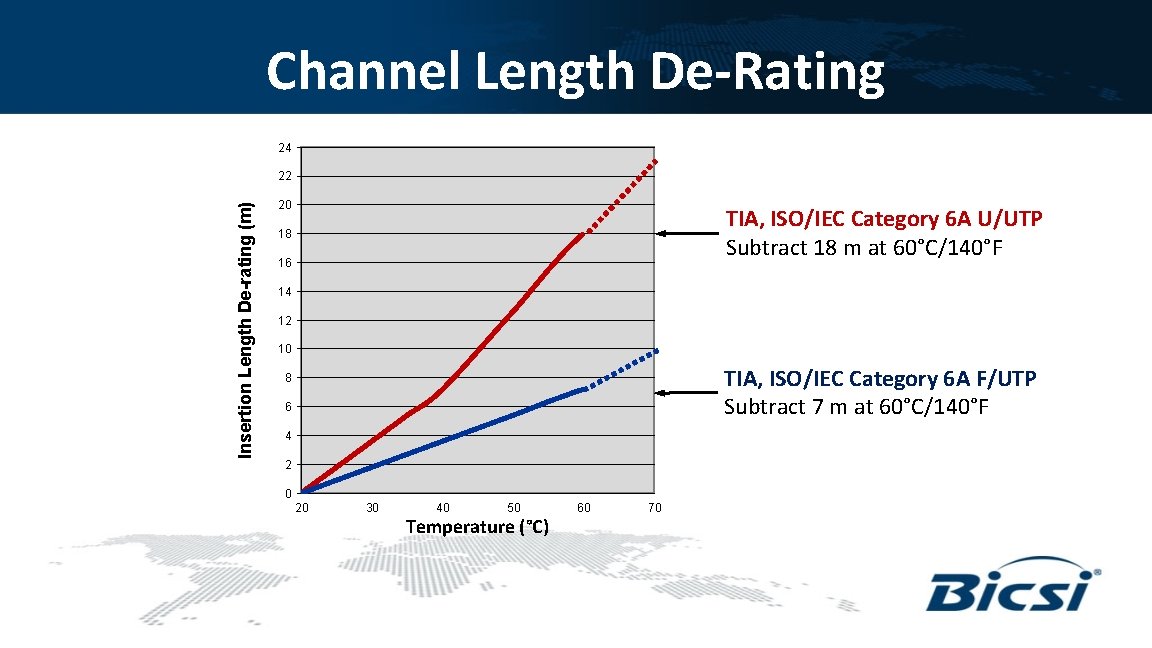
Channel Length De-Rating 24 Insertion Length De-rating (m) 22 20 TIA, ISO/IEC Category 6 A U/UTP Subtract 18 m at 60°C/140°F 18 16 14 12 10 TIA, ISO/IEC Category 6 A F/UTP Subtract 7 m at 60°C/140°F 8 6 4 2 0 20 30 40 50 Temperature (°C) 60 70
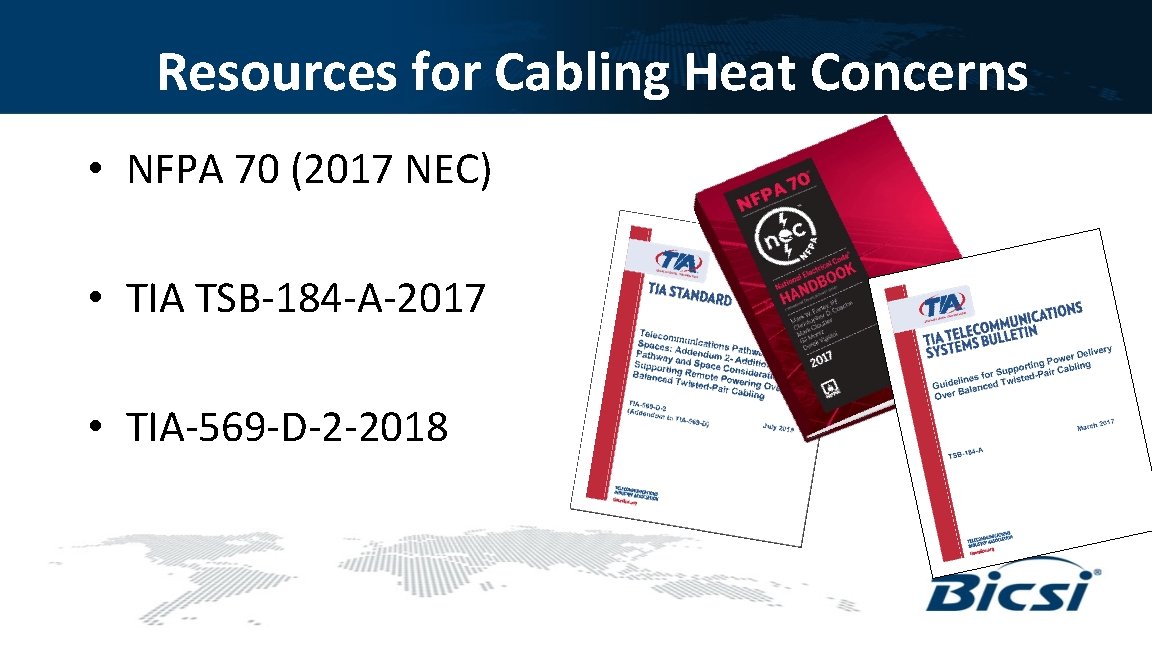
Resources for Cabling Heat Concerns • NFPA 70 (2017 NEC) • TIA TSB-184 -A-2017 • TIA-569 -D-2 -2018
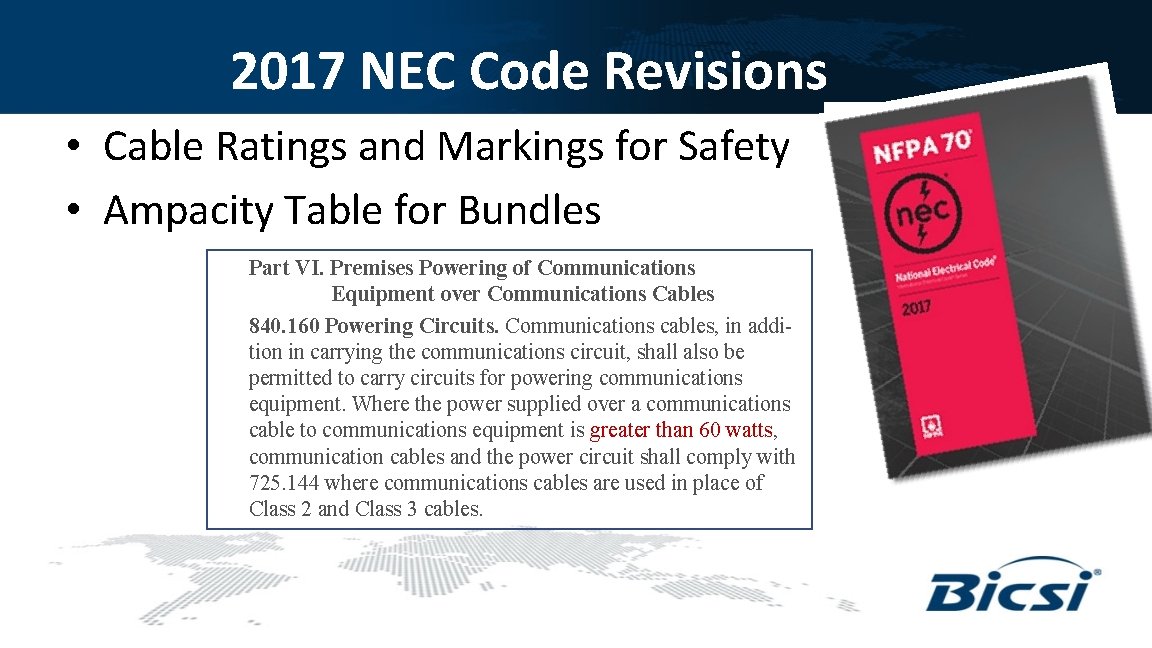
2017 NEC Code Revisions • Cable Ratings and Markings for Safety • Ampacity Table for Bundles Part VI. Premises Powering of Communications Equipment over Communications Cables 840. 160 Powering Circuits. Communications cables, in addition in carrying the communications circuit, shall also be permitted to carry circuits for powering communications equipment. Where the power supplied over a communications cable to communications equipment is greater than 60 watts, communication cables and the power circuit shall comply with 725. 144 where communications cables are used in place of Class 2 and Class 3 cables.
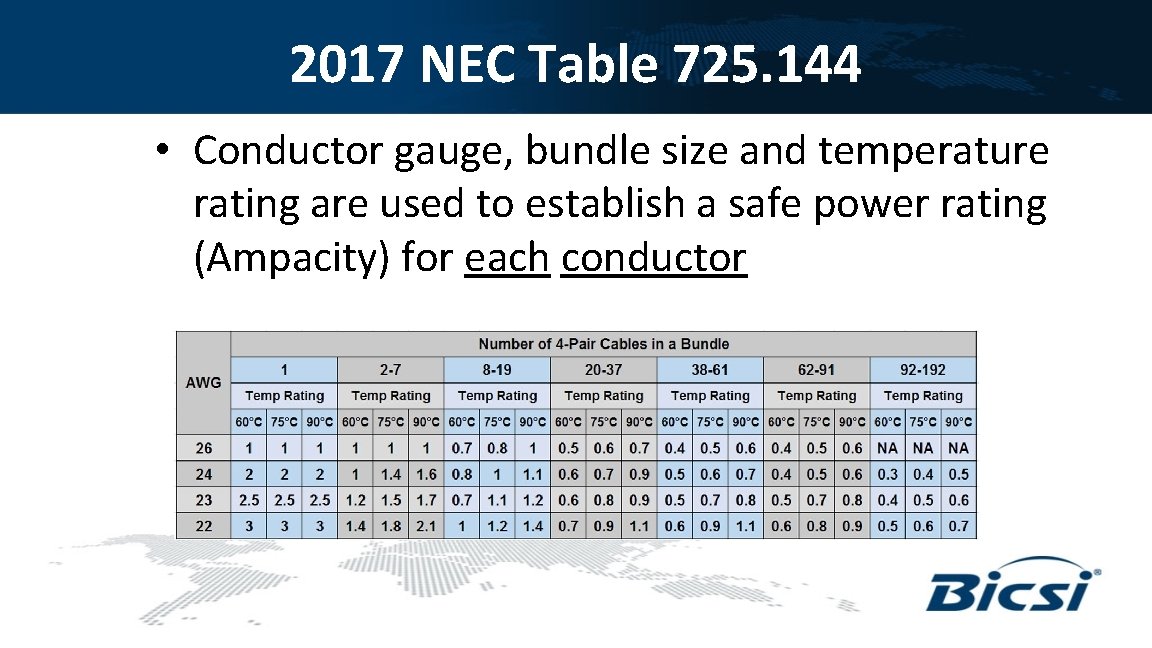
2017 NEC Table 725. 144 • Conductor gauge, bundle size and temperature rating are used to establish a safe power rating (Ampacity) for each conductor
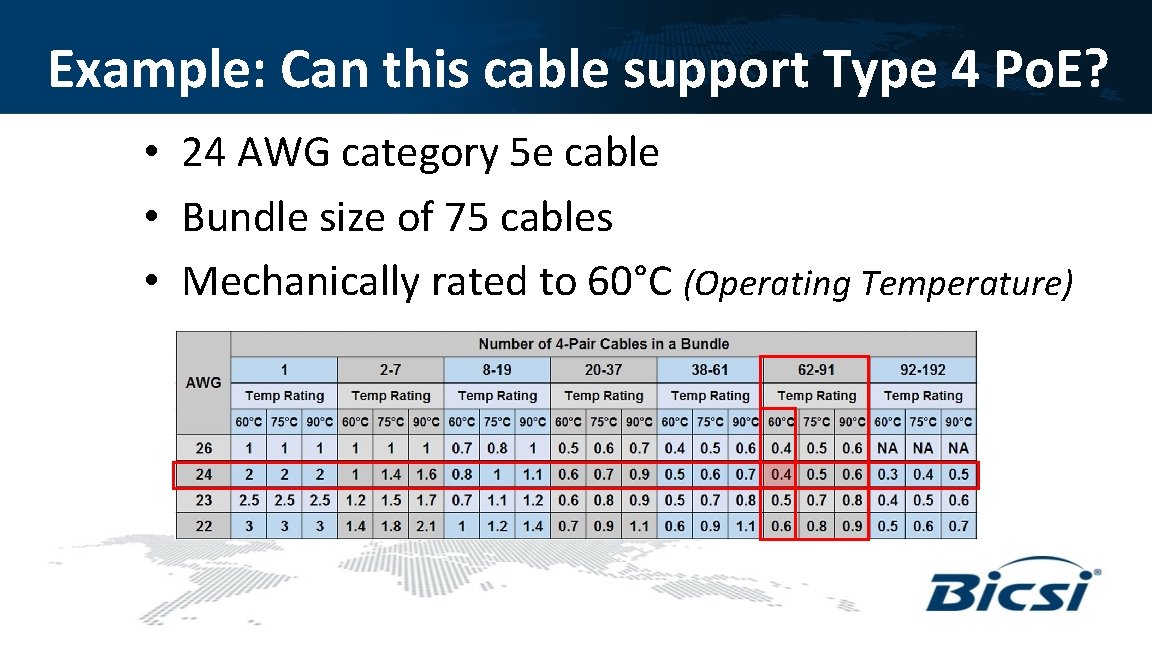
Example: Can this cable support Type 4 Po. E? • 24 AWG category 5 e cable • Bundle size of 75 cables • Mechanically rated to 60°C (Operating Temperature)
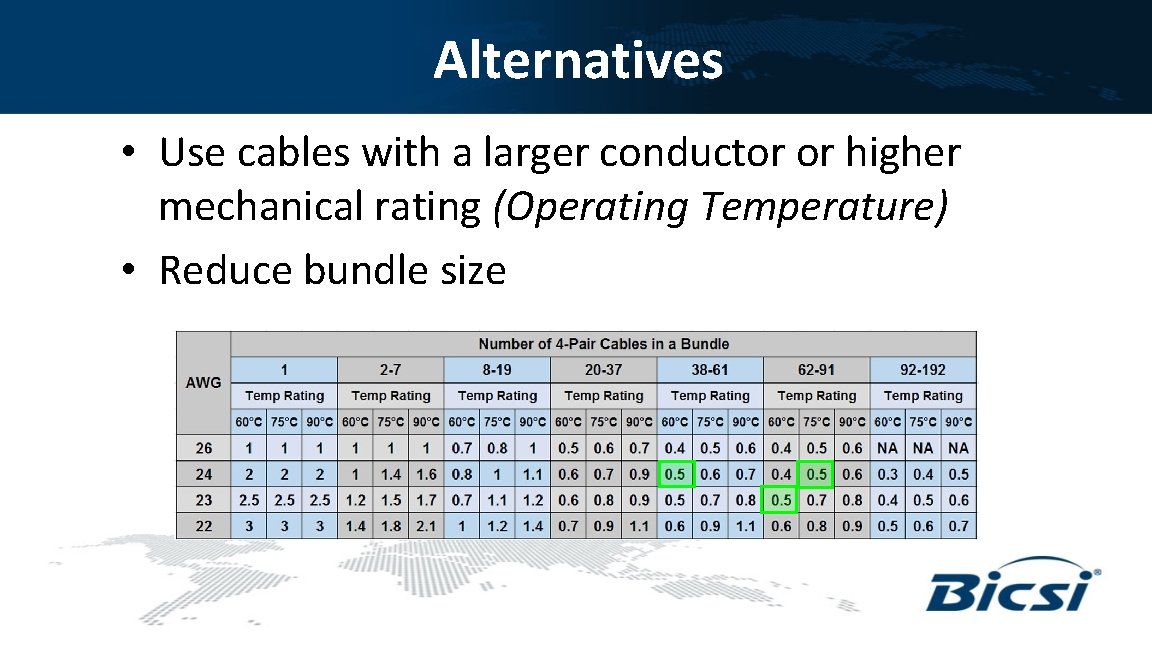
Alternatives • Use cables with a larger conductor or higher mechanical rating (Operating Temperature) • Reduce bundle size
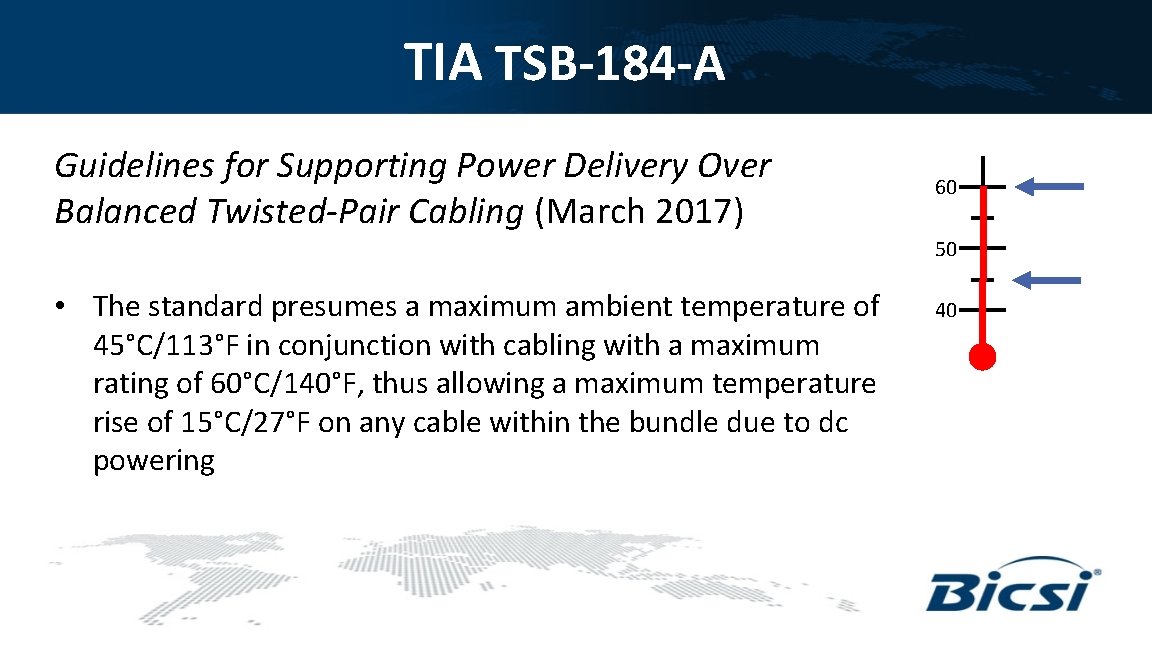
TIA TSB-184 -A Guidelines for Supporting Power Delivery Over Balanced Twisted-Pair Cabling (March 2017) 60 50 • The standard presumes a maximum ambient temperature of 45°C/113°F in conjunction with cabling with a maximum rating of 60°C/140°F, thus allowing a maximum temperature rise of 15°C/27°F on any cable within the bundle due to dc powering 40
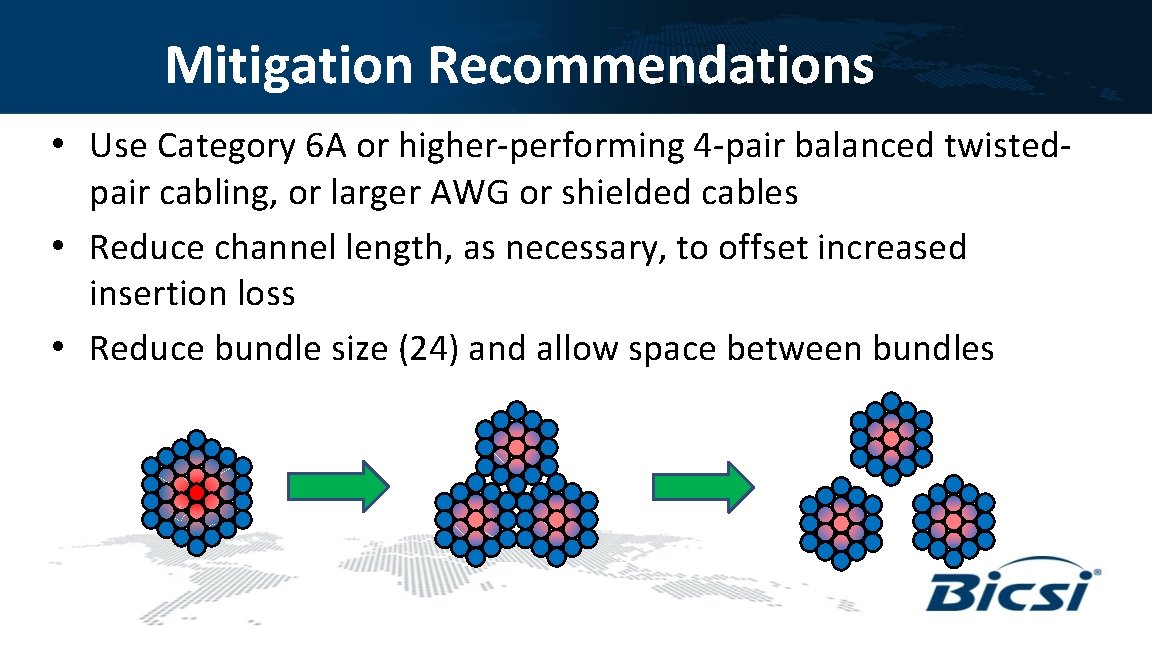
Mitigation Recommendations • Use Category 6 A or higher-performing 4 -pair balanced twistedpair cabling, or larger AWG or shielded cables • Reduce channel length, as necessary, to offset increased insertion loss • Reduce bundle size (24) and allow space between bundles
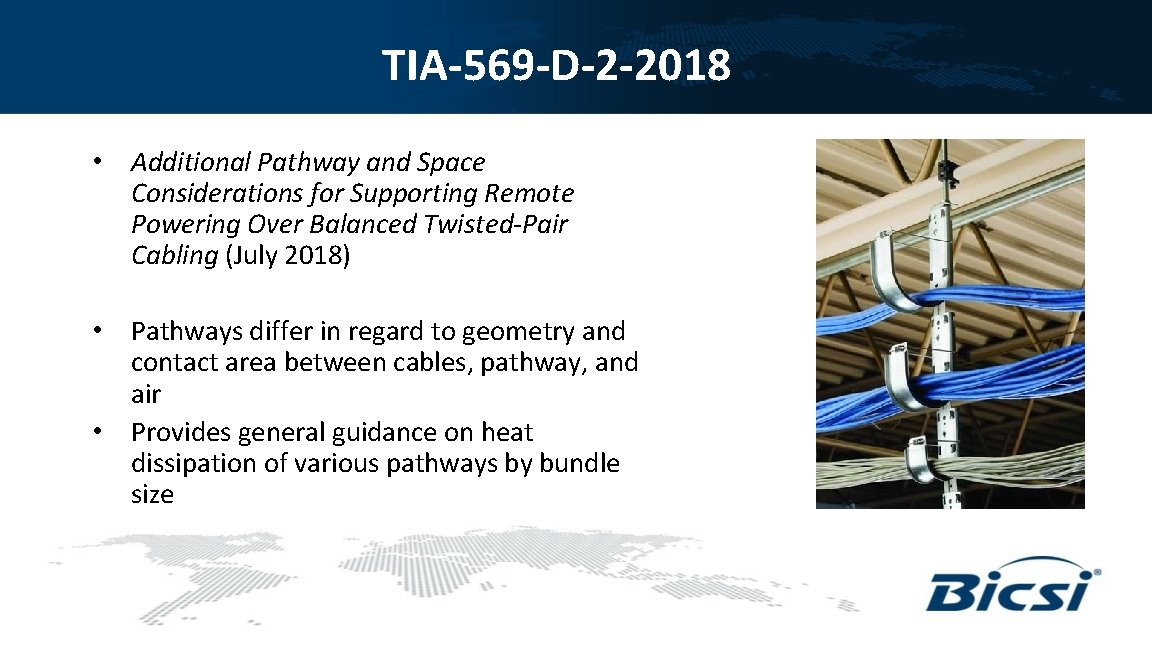
TIA-569 -D-2 -2018 • Additional Pathway and Space Considerations for Supporting Remote Powering Over Balanced Twisted-Pair Cabling (July 2018) • Pathways differ in regard to geometry and contact area between cables, pathway, and air • Provides general guidance on heat dissipation of various pathways by bundle size
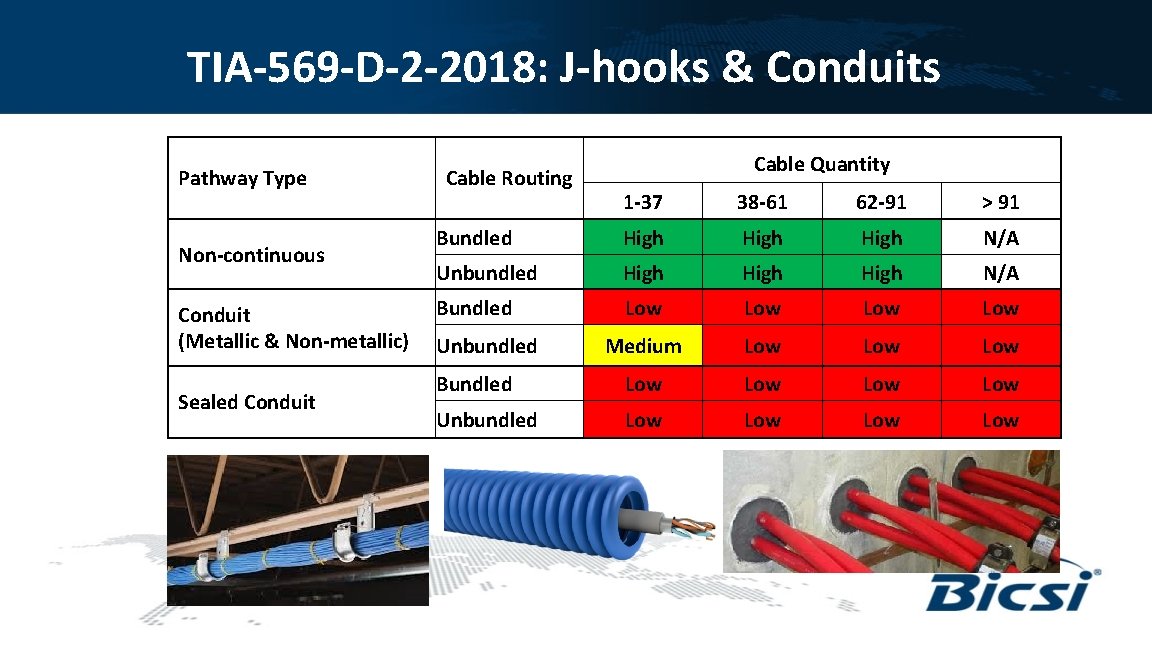
TIA-569 -D-2 -2018: J-hooks & Conduits Pathway Type Non-continuous Conduit (Metallic & Non-metallic) Sealed Conduit Cable Routing Cable Quantity 1 -37 38 -61 62 -91 > 91 Bundled High N/A Unbundled High N/A Bundled Low Low Medium Low Low Bundled Low Low Unbundled
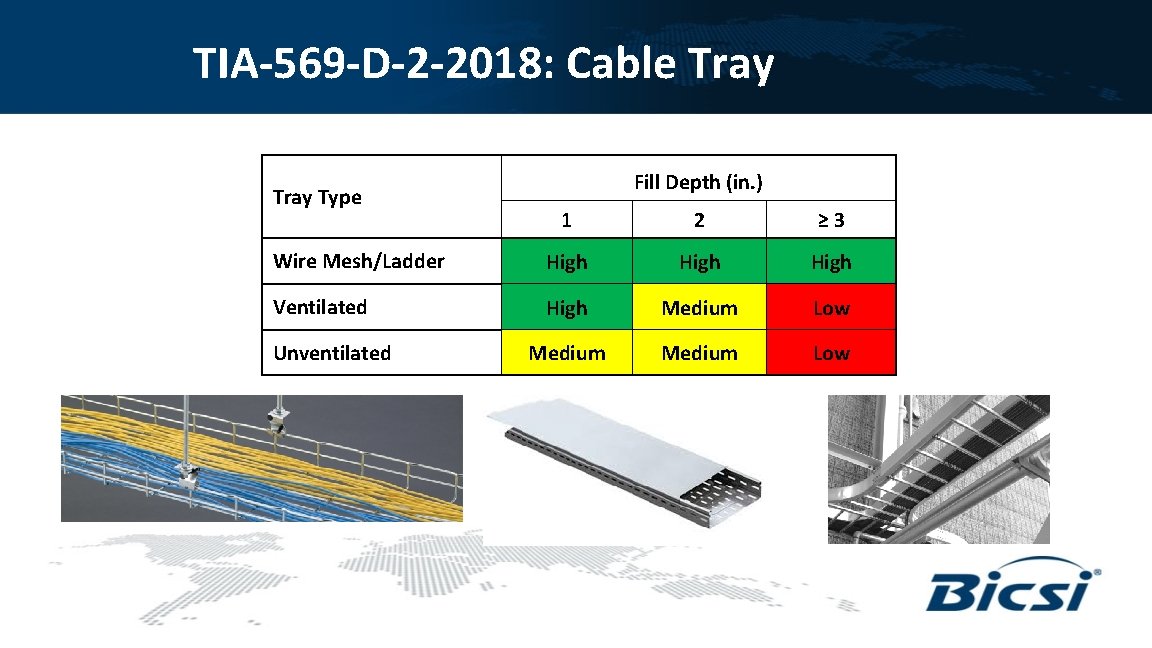
TIA-569 -D-2 -2018: Cable Tray Type Fill Depth (in. ) 1 2 ≥ 3 Wire Mesh/Ladder High Ventilated High Medium Low Unventilated
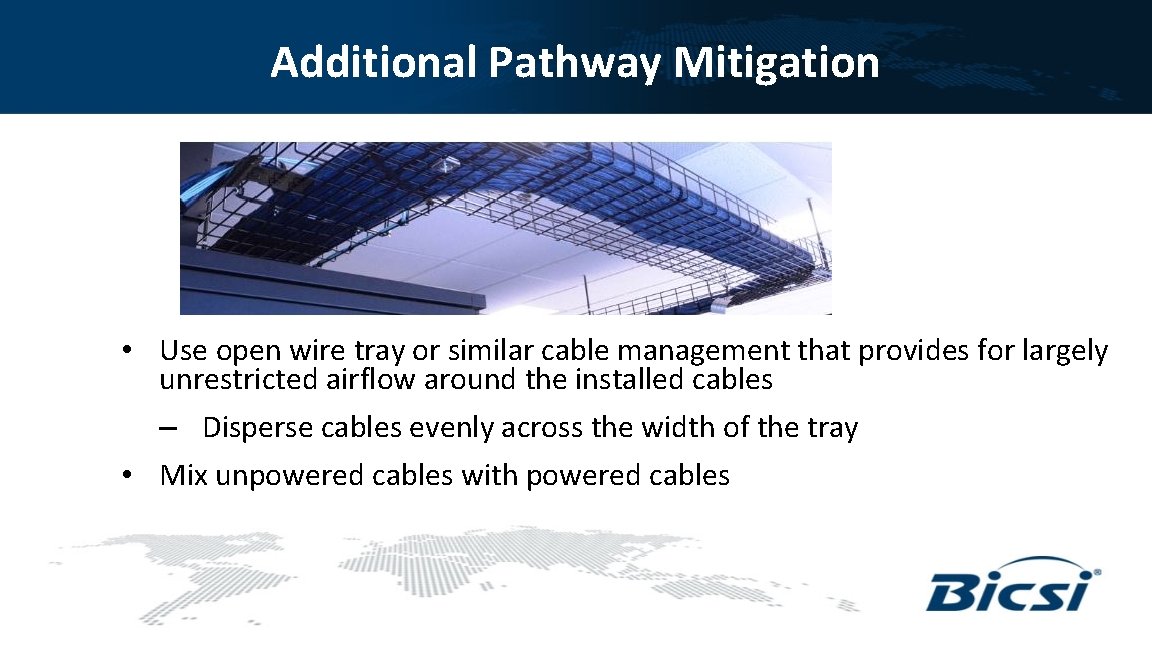
Additional Pathway Mitigation • Use open wire tray or similar cable management that provides for largely unrestricted airflow around the installed cables – Disperse cables evenly across the width of the tray • Mix unpowered cables with powered cables
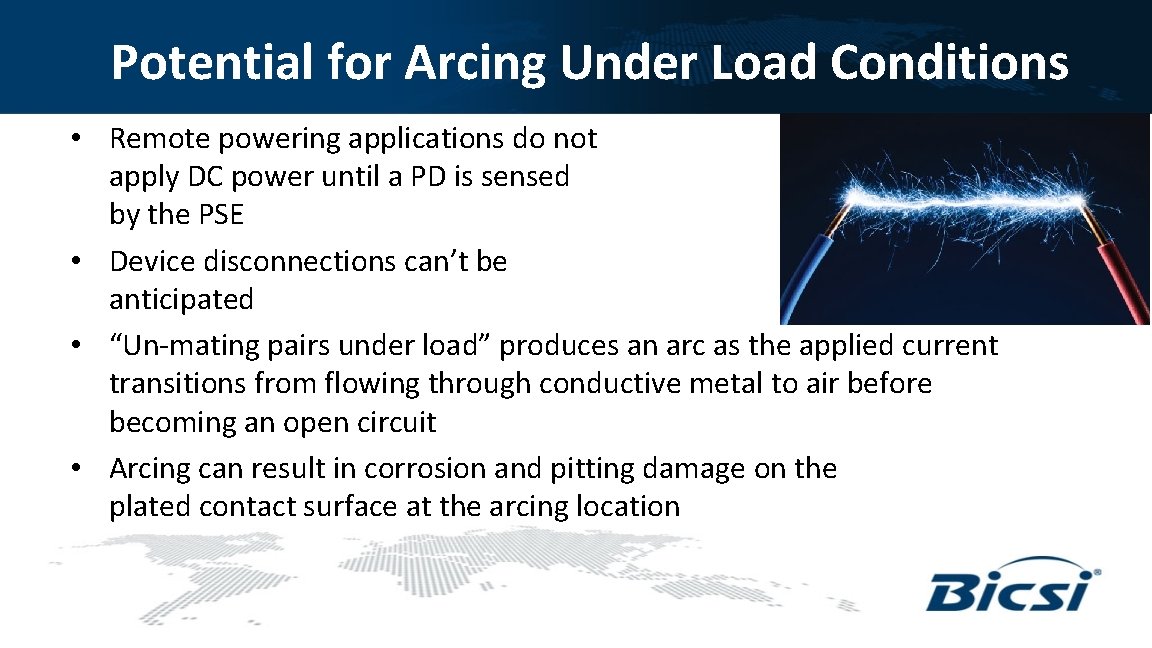
Potential for Arcing Under Load Conditions • Remote powering applications do not apply DC power until a PD is sensed by the PSE • Device disconnections can’t be anticipated • “Un-mating pairs under load” produces an arc as the applied current transitions from flowing through conductive metal to air before becoming an open circuit • Arcing can result in corrosion and pitting damage on the plated contact surface at the arcing location
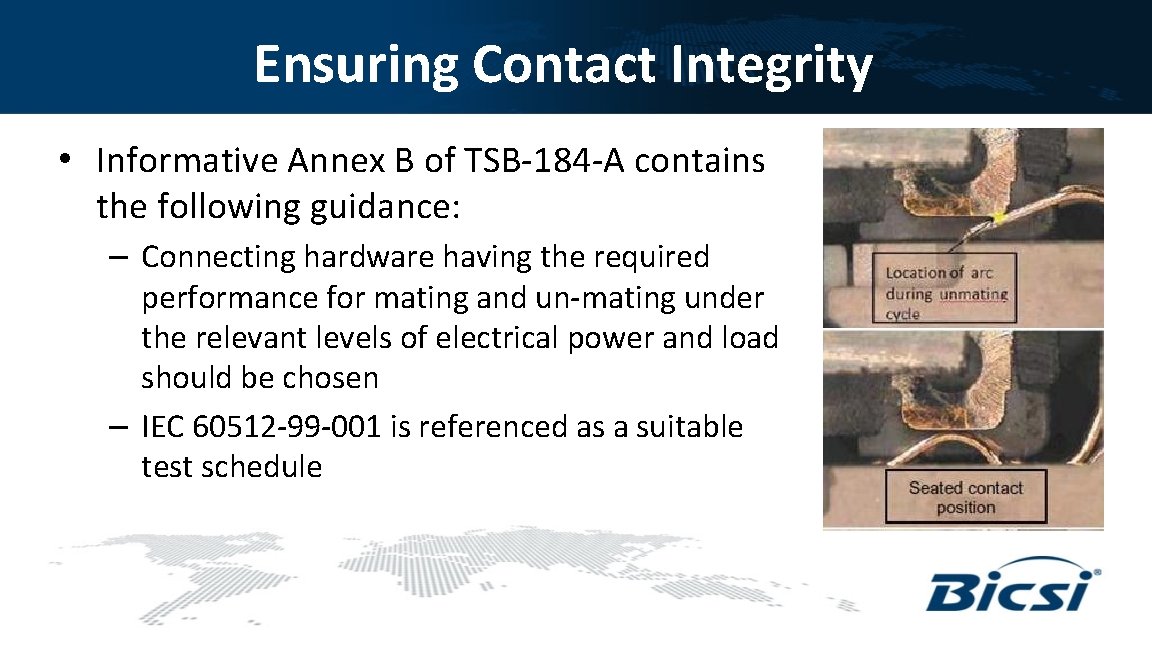
Ensuring Contact Integrity • Informative Annex B of TSB-184 -A contains the following guidance: – Connecting hardware having the required performance for mating and un-mating under the relevant levels of electrical power and load should be chosen – IEC 60512 -99 -001 is referenced as a suitable test schedule
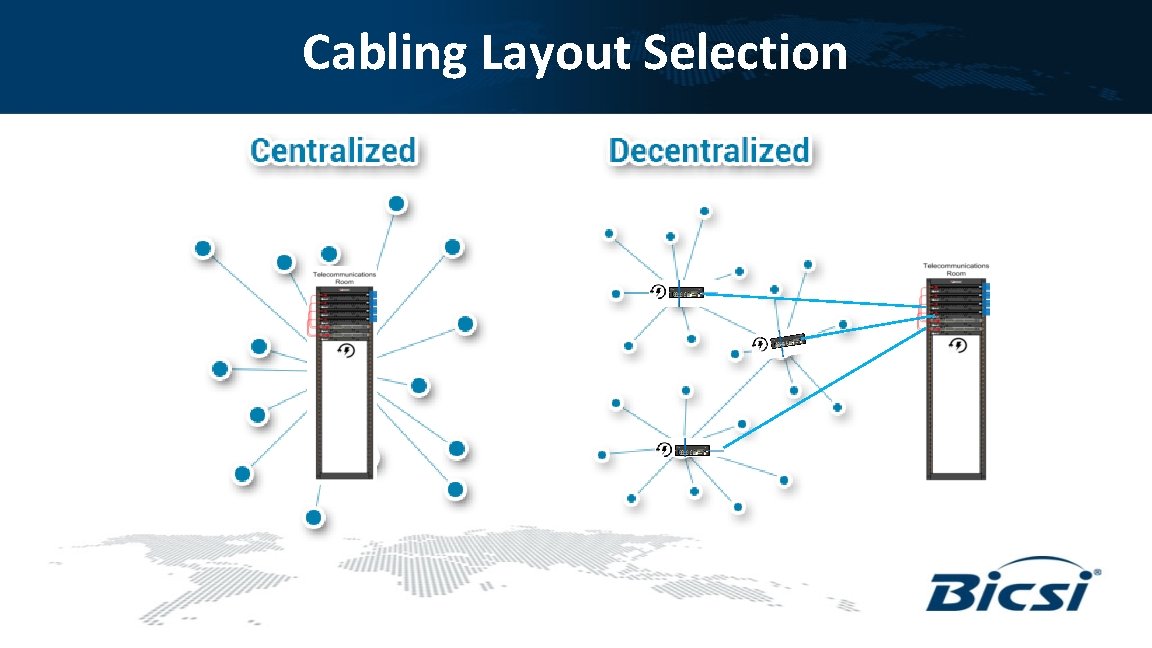
Cabling Layout Selection
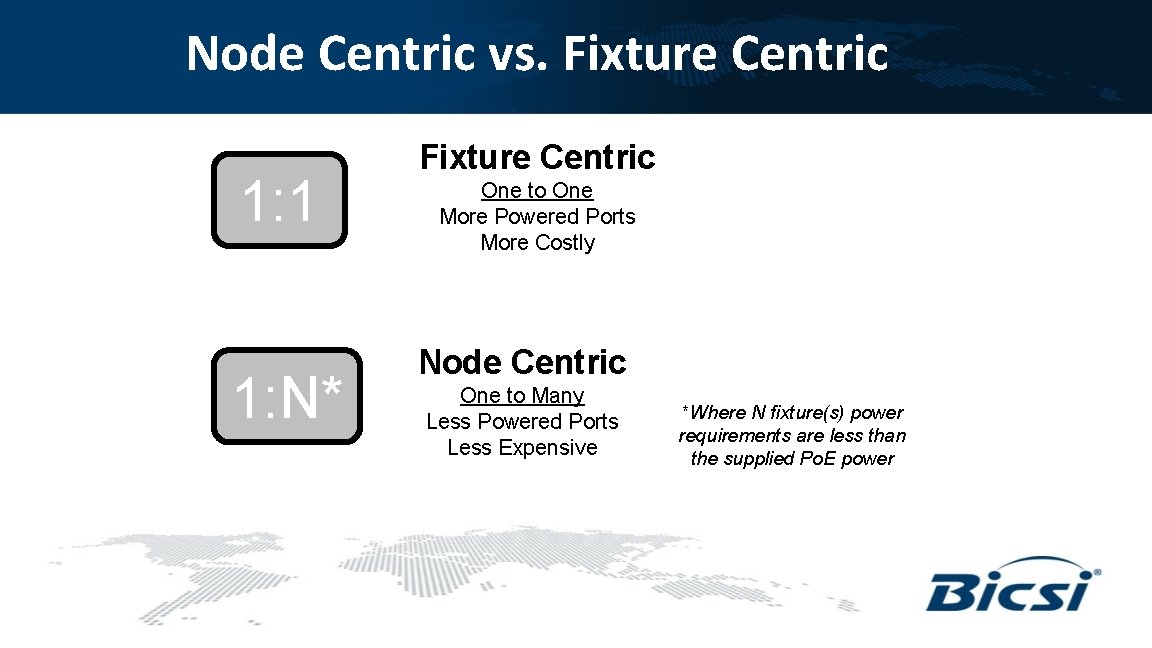
Node Centric vs. Fixture Centric 1: 1 1: N* Fixture Centric One to One More Powered Ports More Costly Node Centric One to Many Less Powered Ports Less Expensive *Where N fixture(s) power requirements are less than the supplied Po. E power
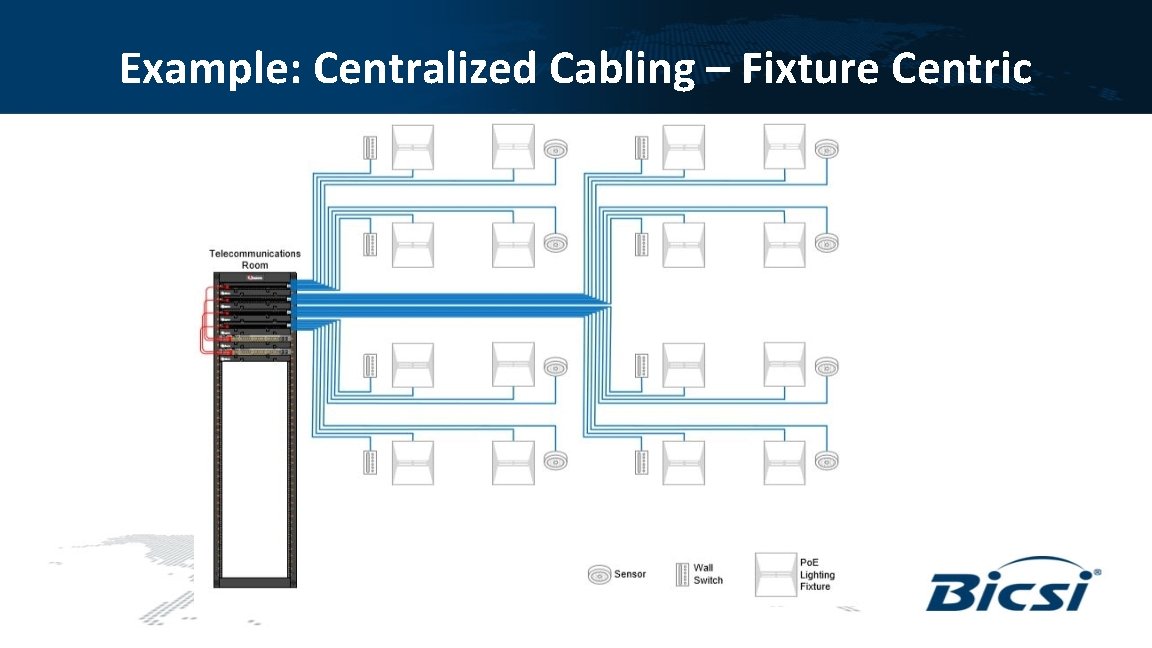
Example: Centralized Cabling – Fixture Centric
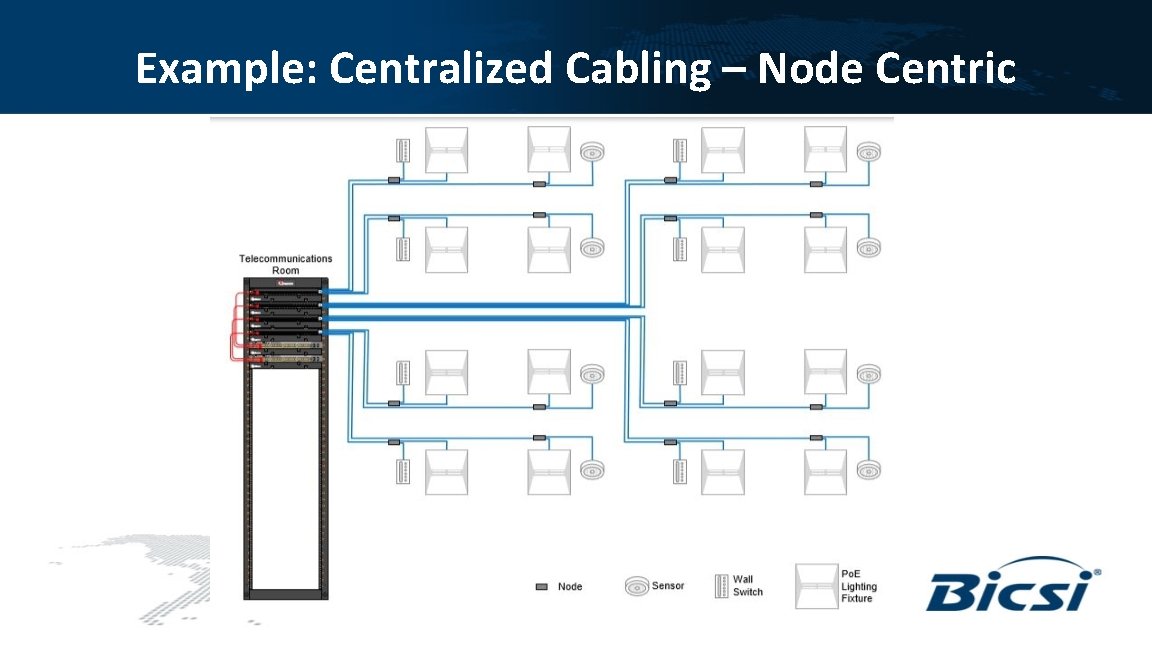
Example: Centralized Cabling – Node Centric
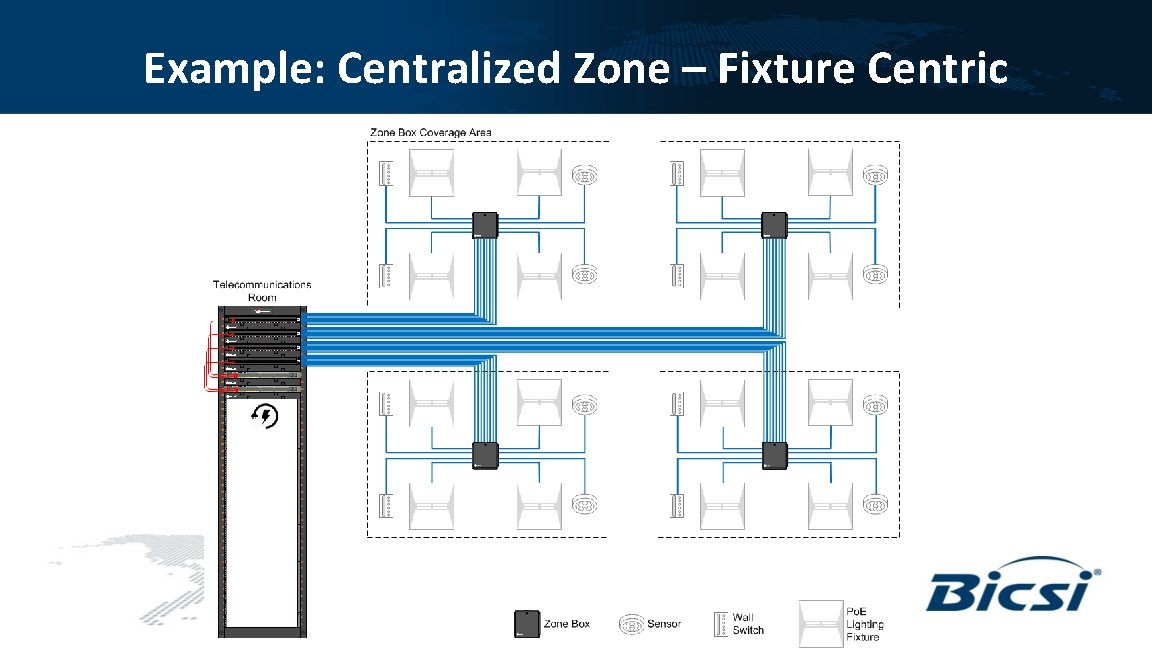
Example: Centralized Zone – Fixture Centric
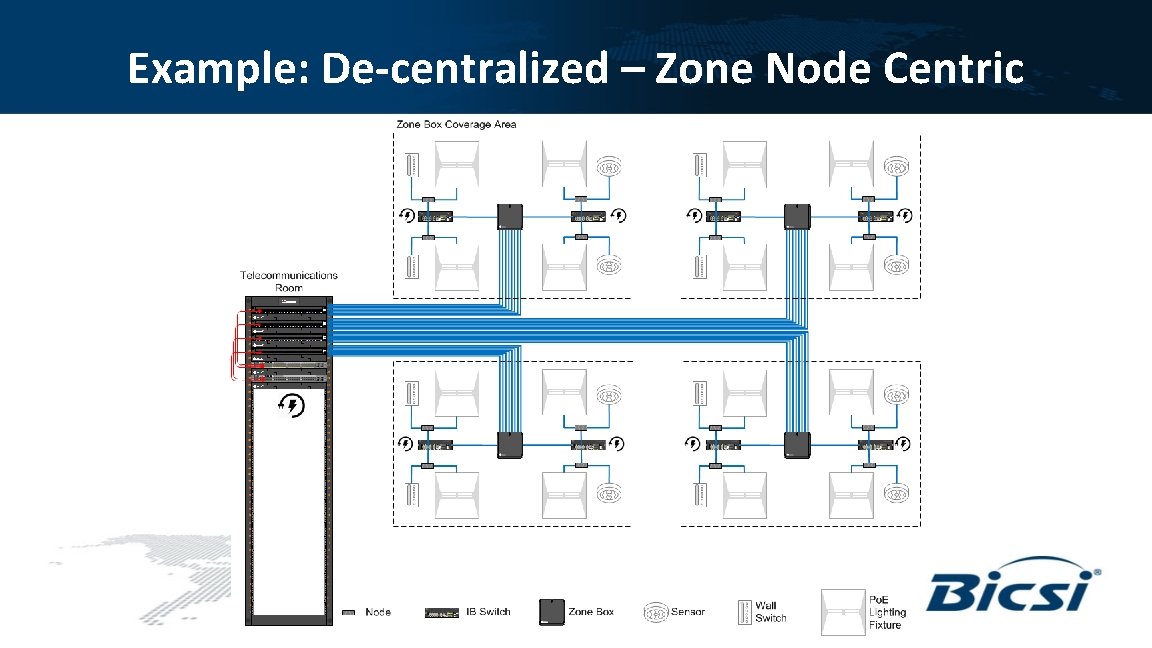
Example: De-centralized – Zone Node Centric
Summary ü Increasing numbers of IB applications will run over a low- voltage cabling platform ü Know the resources, codes and standards to help you design your infrastructure ü Zone cabling and modular plug terminations have a role ü Remote powering places increased demands on network cabling systems ü Design according to proper device coverage area
Thank You Carol Everett Oliver, RCDD, ESS Carol. Everett. oliver@gmail. com
- Slides: 48