
Planning a Presentation Types of presentation Planned presentation
- Slides: 12
Planning a Presentation
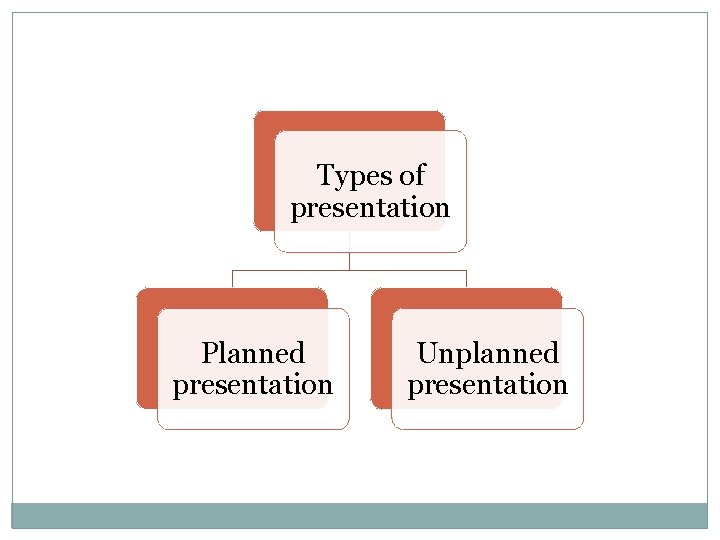
Types of presentation Planned presentation Unplanned presentation
Key points in Unplanned presentation �Concentrate and increase your thought speed �Utilize the time from seat to stage �Always have some well rehearsed humorous stories and quotes with you �When you reached a certain position in organization, you must be mentally prepared that you may be asked any time to speak. �Problem in unplanned presentations is how to make them interesting. Read stories of achievers and leaders. �More you practice, better your skill will be �Train yourself to think and talk
Planned Presentation �Informative presentations �Direct reporting
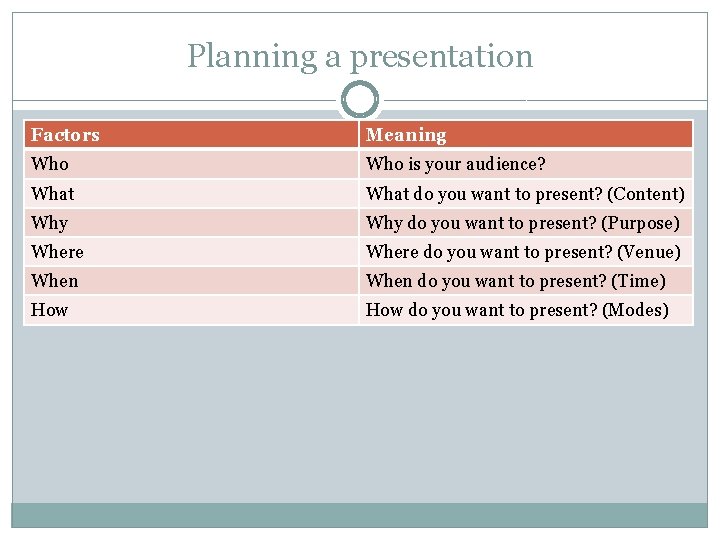
Planning a presentation Factors Meaning Who is your audience? What do you want to present? (Content) Why do you want to present? (Purpose) Where do you want to present? (Venue) When do you want to present? (Time) How do you want to present? (Modes)
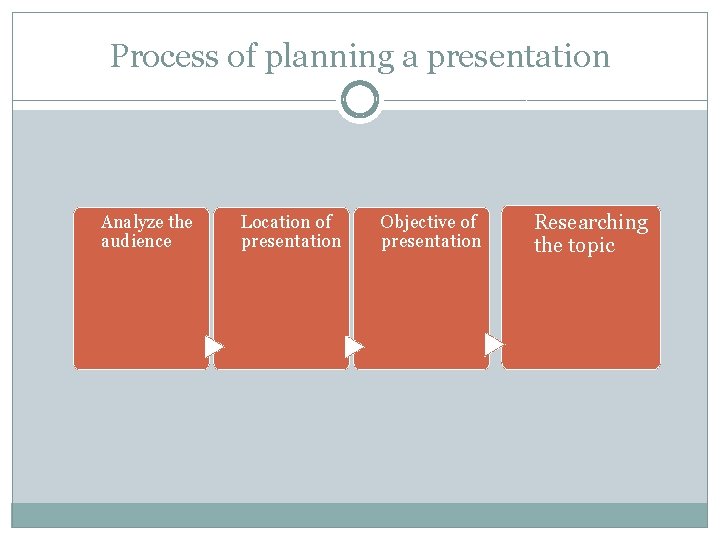
Process of planning a presentation Analyze the audience Location of presentation Objective of presentation Researching the topic
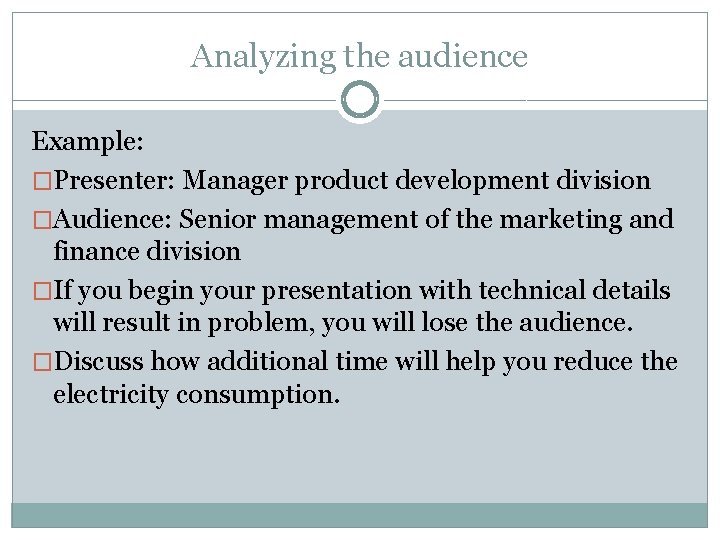
Analyzing the audience Example: �Presenter: Manager product development division �Audience: Senior management of the marketing and finance division �If you begin your presentation with technical details will result in problem, you will lose the audience. �Discuss how additional time will help you reduce the electricity consumption.
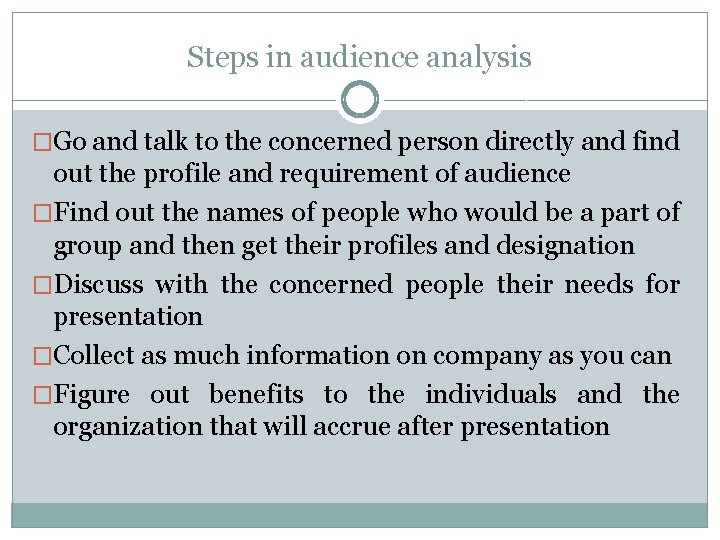
Steps in audience analysis �Go and talk to the concerned person directly and find out the profile and requirement of audience �Find out the names of people who would be a part of group and then get their profiles and designation �Discuss with the concerned people their needs for presentation �Collect as much information on company as you can �Figure out benefits to the individuals and the organization that will accrue after presentation
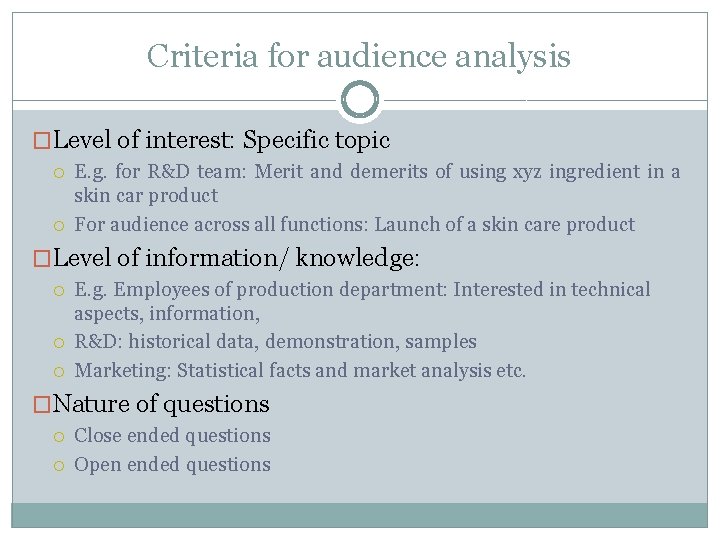
Criteria for audience analysis �Level of interest: Specific topic E. g. for R&D team: Merit and demerits of using xyz ingredient in a skin car product For audience across all functions: Launch of a skin care product �Level of information/ knowledge: E. g. Employees of production department: Interested in technical aspects, information, R&D: historical data, demonstration, samples Marketing: Statistical facts and market analysis etc. �Nature of questions Close ended questions Open ended questions
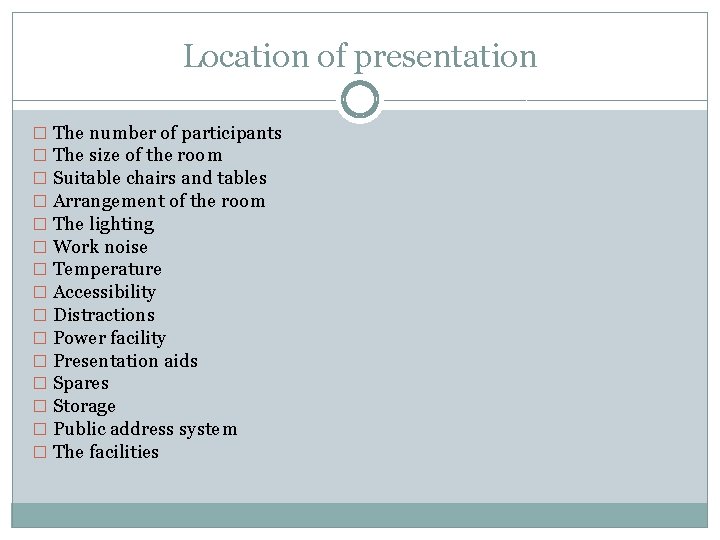
Location of presentation � The number of participants � The size of the room � Suitable chairs and tables � Arrangement of the room � The lighting � Work noise � Temperature � Accessibility � Distractions � Power facility � Presentation aids � Spares � Storage � Public address system � The facilities
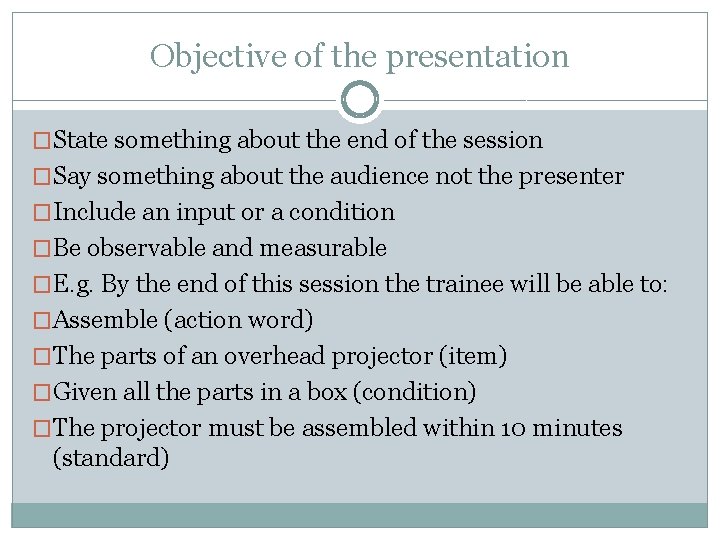
Objective of the presentation �State something about the end of the session �Say something about the audience not the presenter �Include an input or a condition �Be observable and measurable �E. g. By the end of this session the trainee will be able to: �Assemble (action word) �The parts of an overhead projector (item) �Given all the parts in a box (condition) �The projector must be assembled within 10 minutes (standard)
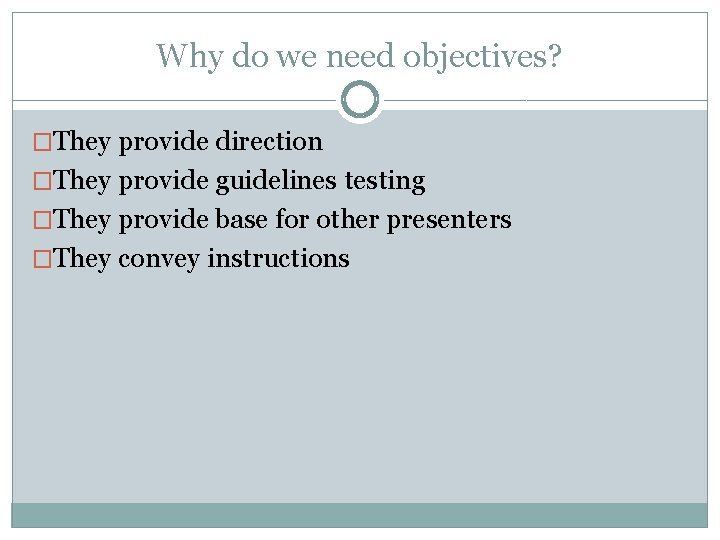
Why do we need objectives? �They provide direction �They provide guidelines testing �They provide base for other presenters �They convey instructions