
Planning a Personal Exercise Program r s i

- Slides: 10
Planning a Personal Exercise Program
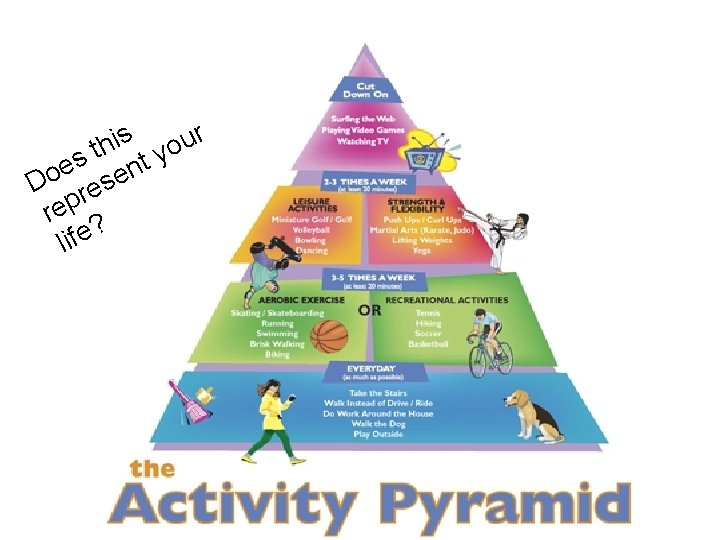
r s i u h t t yo s e en o D res rep ? life
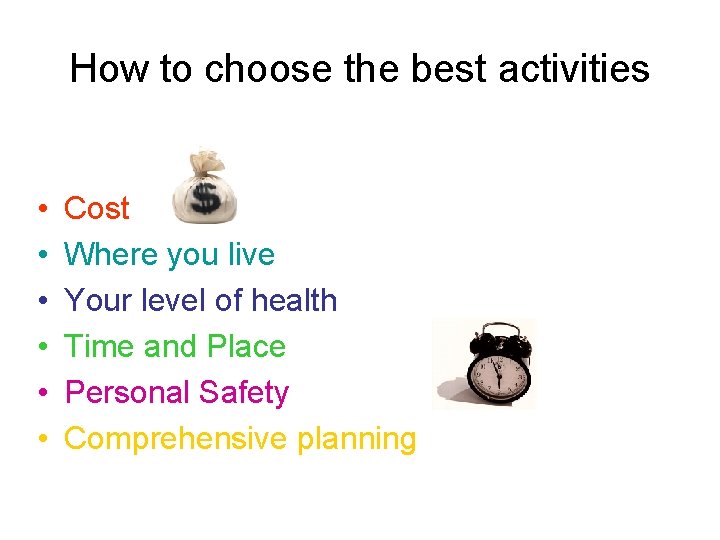
How to choose the best activities • • • Cost Where you live Your level of health Time and Place Personal Safety Comprehensive planning
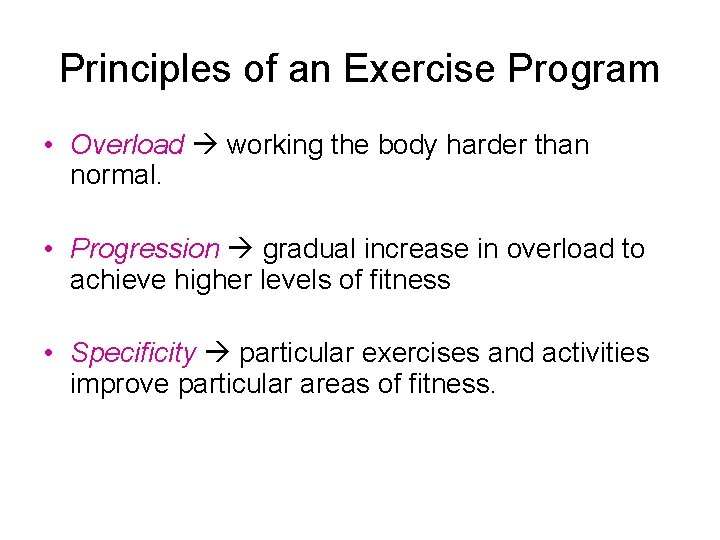
Principles of an Exercise Program • Overload working the body harder than normal. • Progression gradual increase in overload to achieve higher levels of fitness • Specificity particular exercises and activities improve particular areas of fitness.
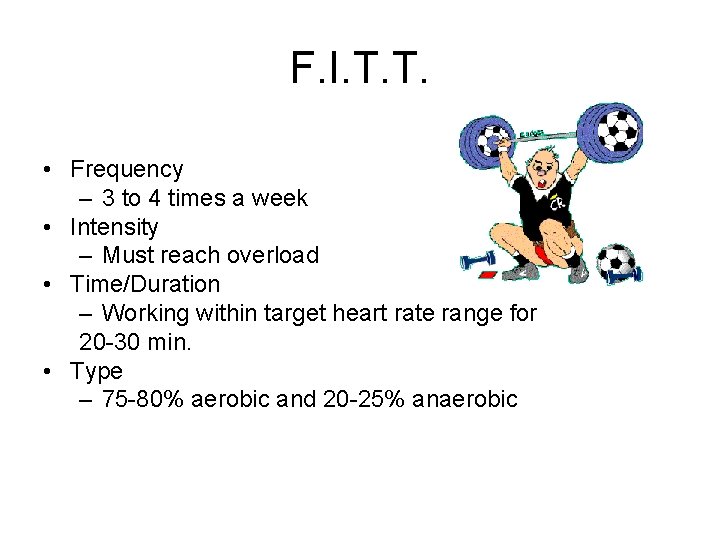
F. I. T. T. • Frequency – 3 to 4 times a week • Intensity – Must reach overload • Time/Duration – Working within target heart rate range for 20 -30 min. • Type – 75 -80% aerobic and 20 -25% anaerobic
Repetitions and Sets • To improve fitness, you must do enough repetitions of each exercise to reach fatigue. – Repetitions represent how many consecutive times you do an exercise. Example: 8 -12 reps of bicep curls. • A set refers to a group of repetitions, followed by a rest period of about one minute. – Example: 3 sets of 8 -12 push ups with a minute rest in between.
Warm up & Cool Down Must be included in EVERY WORK OUT! Prepare your muscles for work out by increasing heart rate first and then stretching. VS Prepare your muscles to return to a resting state and stretching. Sometimes the warm up can be the same as the cool down!
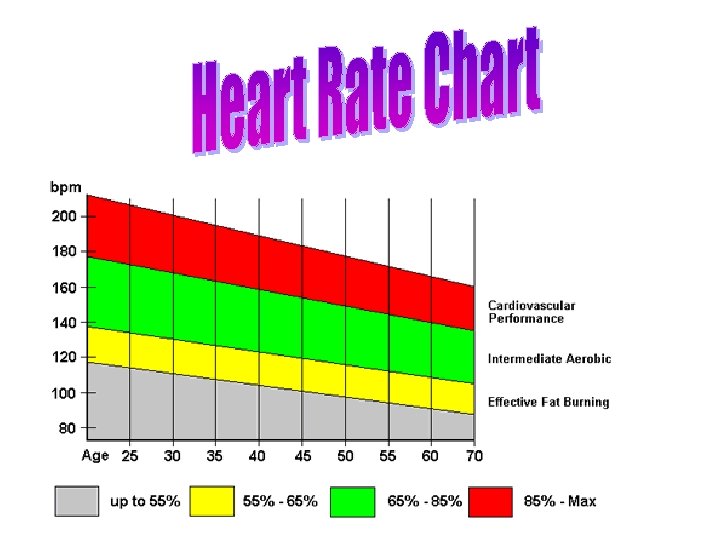
Monitoring your <3 Rate – Knowing your heart rate is important for three reasons: 1. It assures you are training at the right intensity to gain benefit from the exercise. 2. It also assures you are exercising at a safe intensity. 3. It can tell you the amount of time you exercised in your target heart rate zone.