
Planning a Personal Activity Program Chapter 4 Lesson
- Slides: 23
Planning a Personal Activity Program Chapter 4 Lesson 3 Mr. Martin
You Will Be Able To � Set realistic fitness goals. � Synthesize information and apply critical thinking decision making and problem skills to develop a personal physical activity program. � Identify the basic principals of a physical activity program.
Vocabulary � Overload � Progression � Specificity � Warm-up � Workout � F. I. T. T. � Cool down resting heart rate
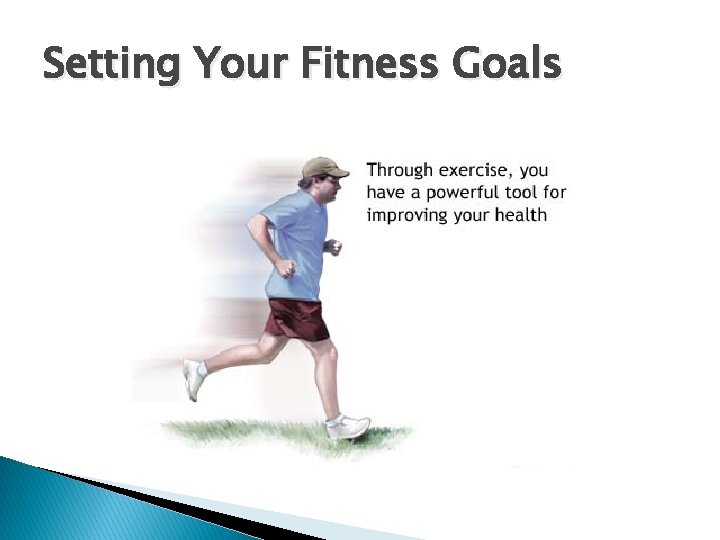
Setting Your Fitness Goals
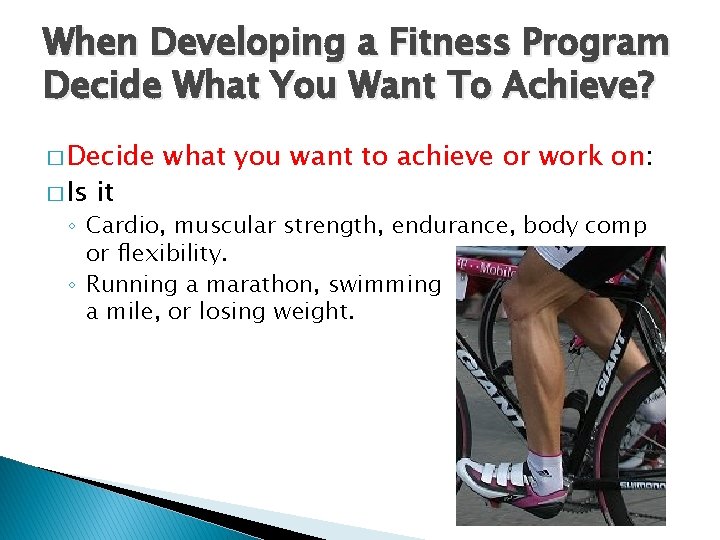
When Developing a Fitness Program Decide What You Want To Achieve? � Decide � Is it what you want to achieve or work on: ◦ Cardio, muscular strength, endurance, body comp or flexibility. ◦ Running a marathon, swimming a mile, or losing weight.
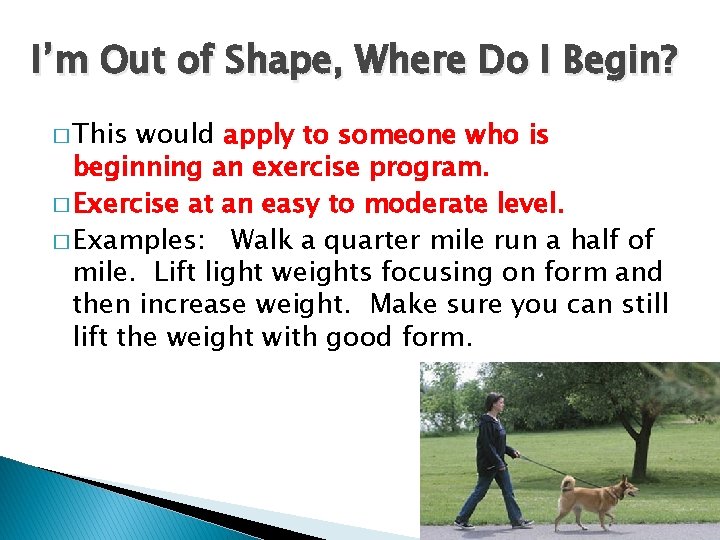
I’m Out of Shape, Where Do I Begin? � This would apply to someone who is beginning an exercise program. � Exercise at an easy to moderate level. � Examples: Walk a quarter mile run a half of mile. Lift light weights focusing on form and then increase weight. Make sure you can still lift the weight with good form.
Basics of a Physical Activity Program � Warm-up � Stretch � Workout � Cool down
The Warm Up � Stage One � The Warm-Up is an activity that prepares the muscles for work. � Activates energy systems � Increase temperature, and prepares the heart for an increased workload.
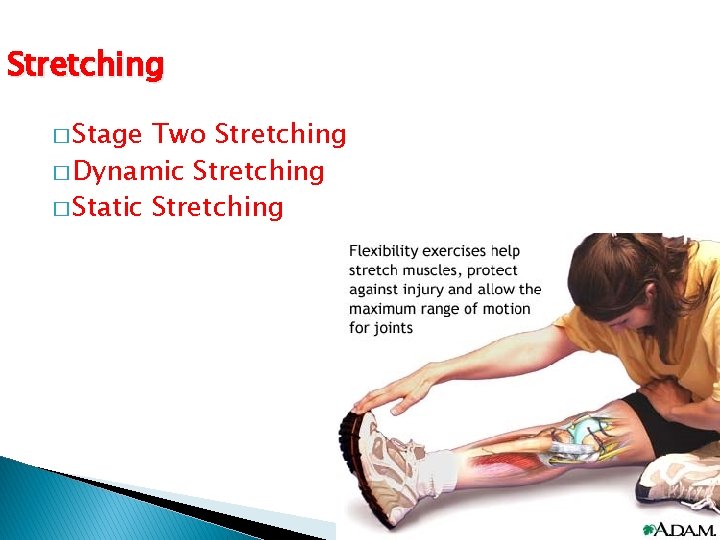
Stretching � Stage Two Stretching � Dynamic Stretching � Static Stretching
The Work Out � Stage Three � The Work-Out is part of the exercise program when the activity is performed at its highest peak. � To be effective follow the F. I. T. T. formula. � F -Frequency � I - Intensity Crucial Information � T -Time � T-Type
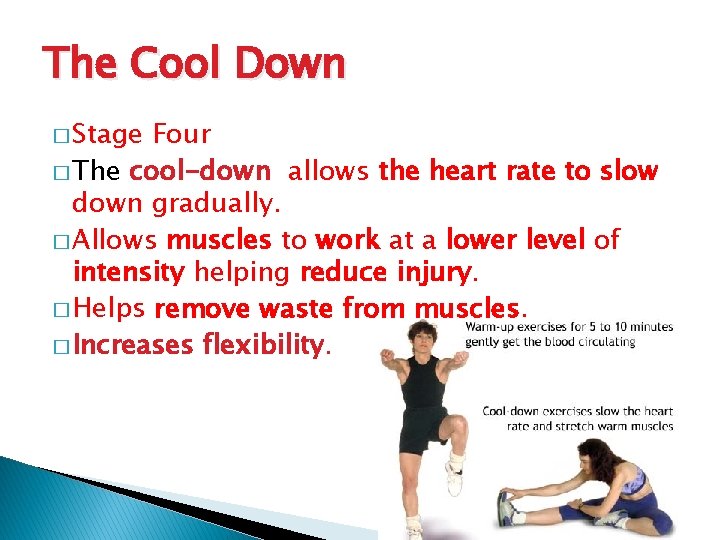
The Cool Down � Stage Four � The cool-down allows the heart rate to slow down gradually. � Allows muscles to work at a lower level of intensity helping reduce injury. � Helps remove waste from muscles. � Increases flexibility.
The F. I. T. T. Principal � Frequency – How often one works out. � Intensity – How hard one works out. � Time – How long one works out. � Type – The type of activity that one participates. � F. I. T. T (What not to do). #1 � F. I. T. T. (Much Better) � F. I. T. T. (Much better than example #1)
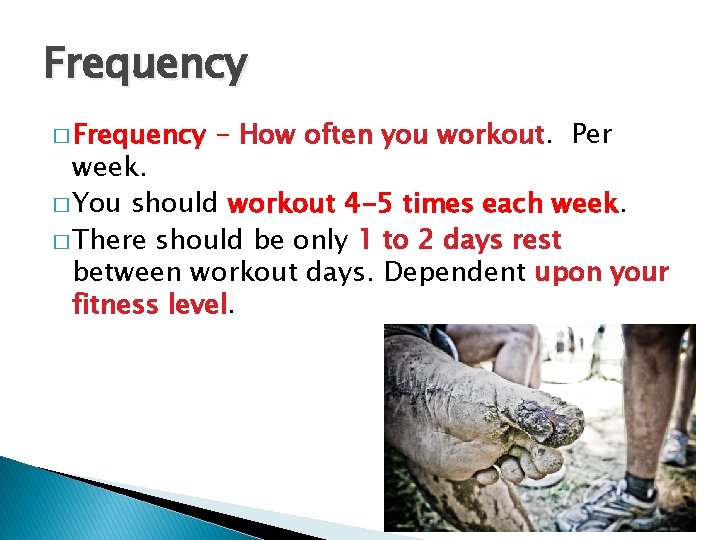
Frequency � Frequency - How often you workout. Per week. � You should workout 4 -5 times each week. � There should be only 1 to 2 days rest between workout days. Dependent upon your fitness level.
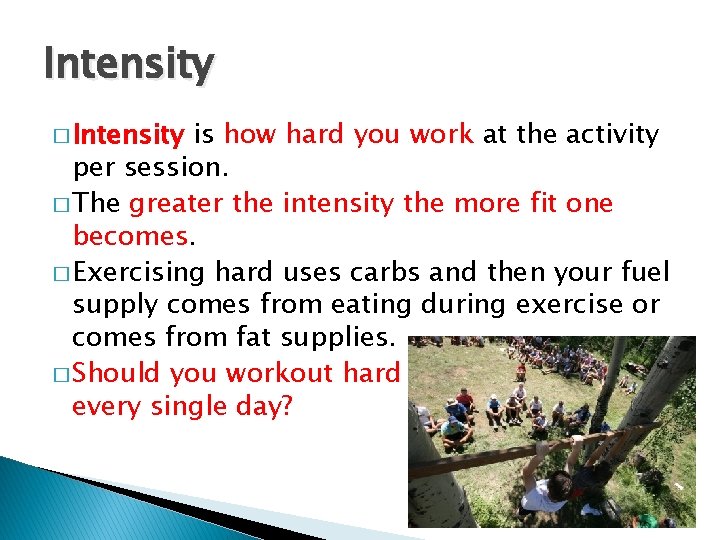
Intensity � Intensity is how hard you work at the activity per session. � The greater the intensity the more fit one becomes. � Exercising hard uses carbs and then your fuel supply comes from eating during exercise or comes from fat supplies. � Should you workout hard every single day?
Time � Time/Duration - how long you workout in a session. � When beginning slowly build-up and increase the time that you exercise. � If you have never ru � The goal with aerobic activates is to keep within your target heart rate.
Type � Type is which activities you select. � CV work, muscular strength, muscular endurance.
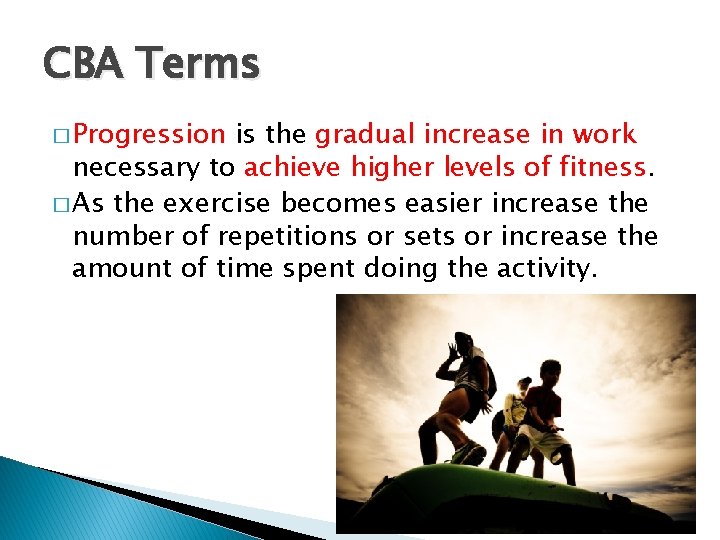
CBA Terms � Progression is the gradual increase in work necessary to achieve higher levels of fitness. � As the exercise becomes easier increase the number of repetitions or sets or increase the amount of time spent doing the activity.
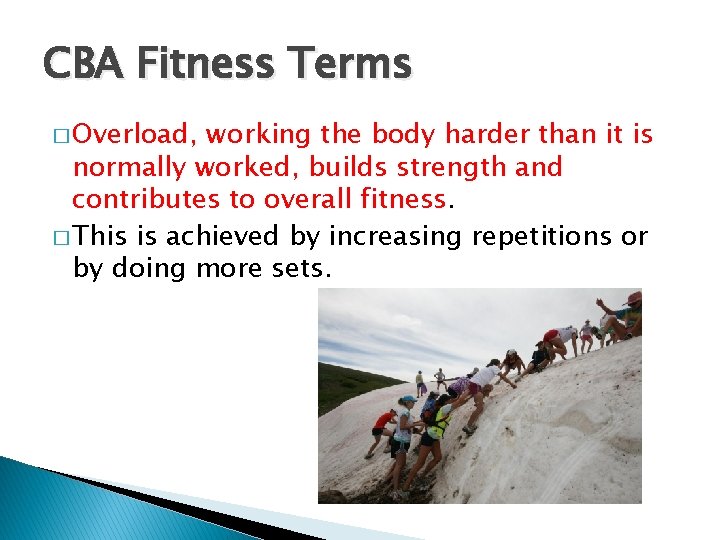
CBA Fitness Terms � Overload, working the body harder than it is normally worked, builds strength and contributes to overall fitness. � This is achieved by increasing repetitions or by doing more sets.
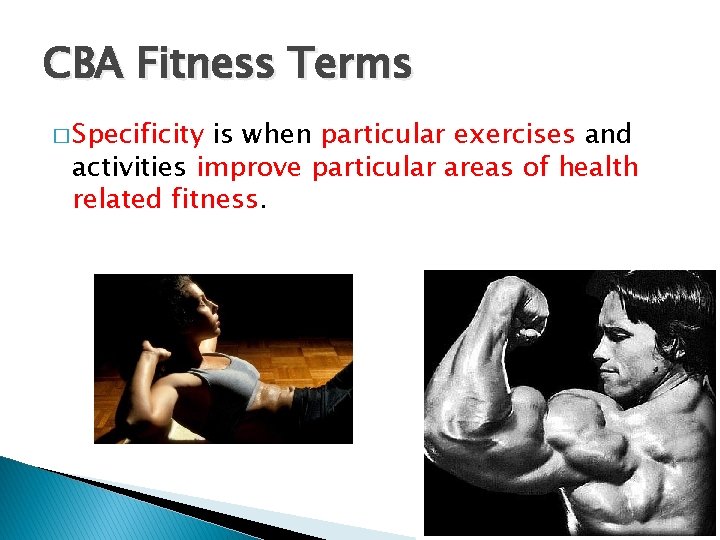
CBA Fitness Terms � Specificity is when particular exercises and activities improve particular areas of health related fitness.
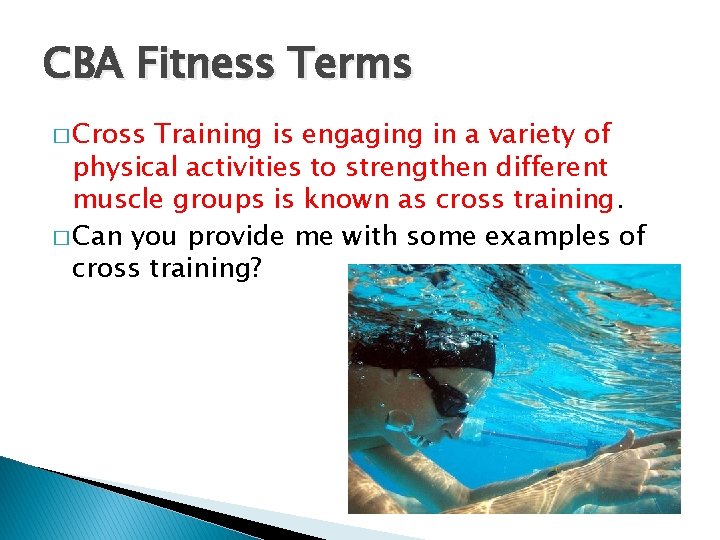
CBA Fitness Terms � Cross Training is engaging in a variety of physical activities to strengthen different muscle groups is known as cross training. � Can you provide me with some examples of cross training?
CBA Fitness Terms � Resting Heart Rate is the number of times your heart beats in one minute when are not active. � A person of average fitness should have a resting heart rate of 60 -90 bpm. � A resting heart rate below 72 indicates a good level of fitness.
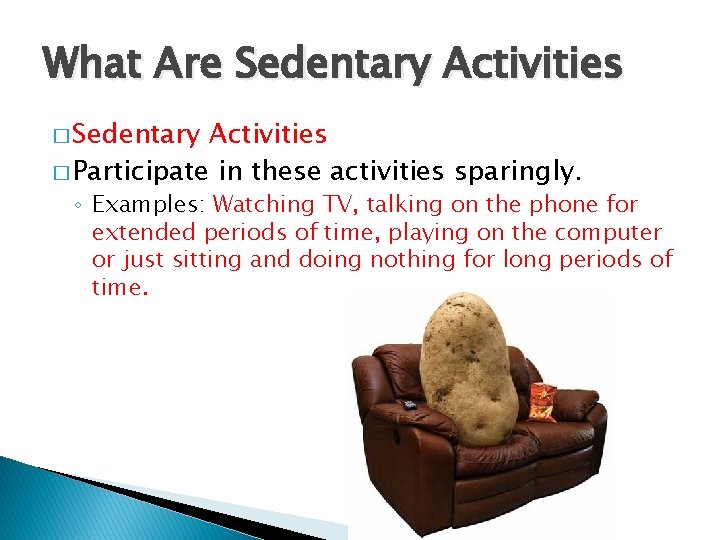
What Are Sedentary Activities � Participate in these activities sparingly. ◦ Examples: Watching TV, talking on the phone for extended periods of time, playing on the computer or just sitting and doing nothing for long periods of time.
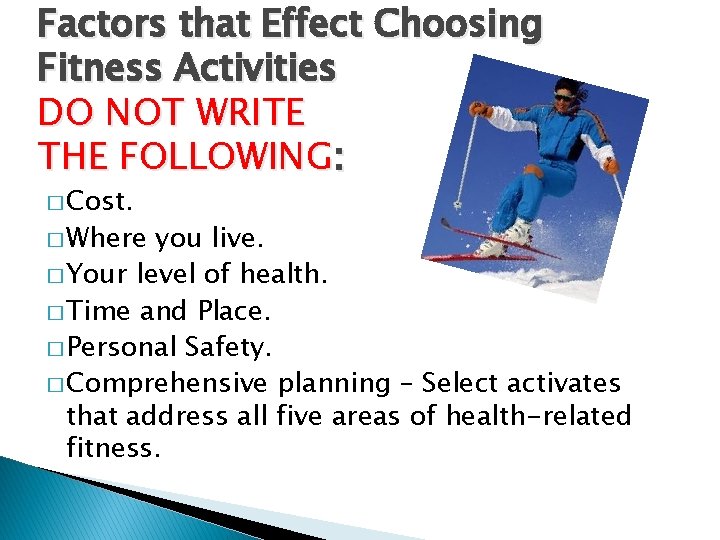
Factors that Effect Choosing Fitness Activities DO NOT WRITE THE FOLLOWING: � Cost. � Where you live. � Your level of health. � Time and Place. � Personal Safety. � Comprehensive planning – Select activates that address all five areas of health-related fitness.