
Plankton Marine life 3 categories 1 Benthos bottom
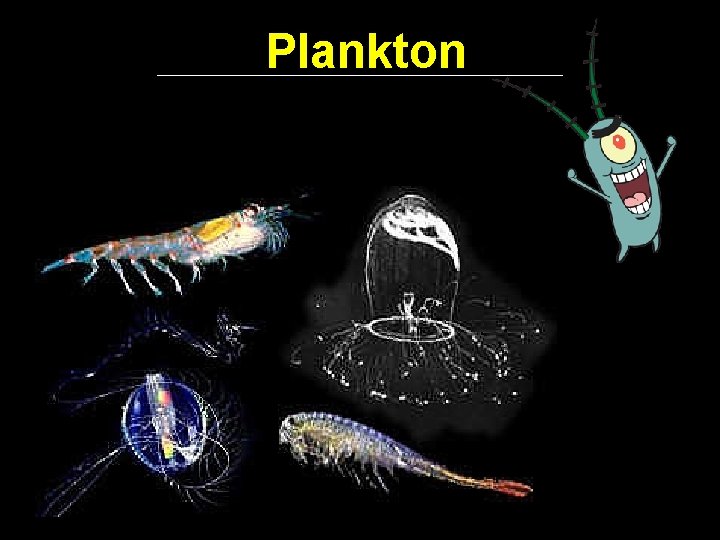
Plankton
Marine life 3 categories: 1. Benthos: bottom dwellers; sponges, crabs 2. Nekton: strong swimmers- whales, fish, squid 3. Plankton: animal/plants that drift in water. The have little control over their movement. Includes: diatoms, dinoflagellates, larvae, jellyfish, bacteria.
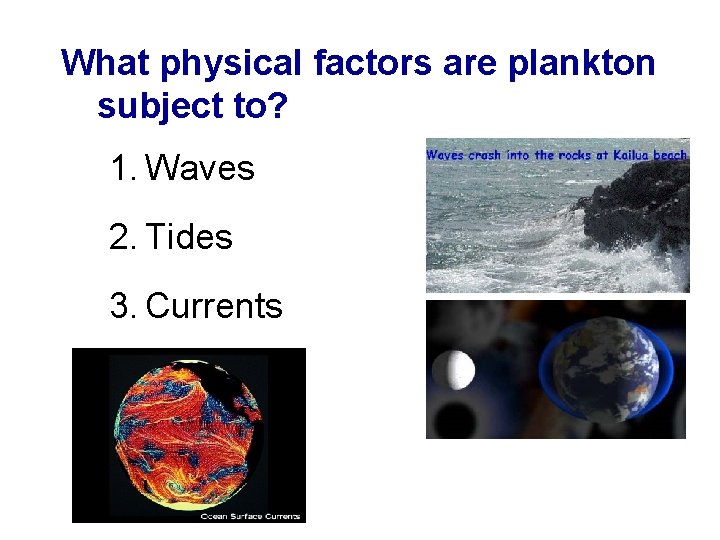
What physical factors are plankton subject to? 1. Waves 2. Tides 3. Currents
Plankton classified by: • Size • Habitat • Taxonomy

Size: • Picoplankton (. 2 -2 µm) bacterioplankton • Nanoplankton (2 - 20 µm) protozoans • Microplankton (20 -200 µm) diatoms, eggs, larvae • Macroplankton (200 -2, 000 µm) some eggs, juvenile fish • Megaplankton (> 2, 000 µm) includes jellyfish, ctenophores, Mola mola
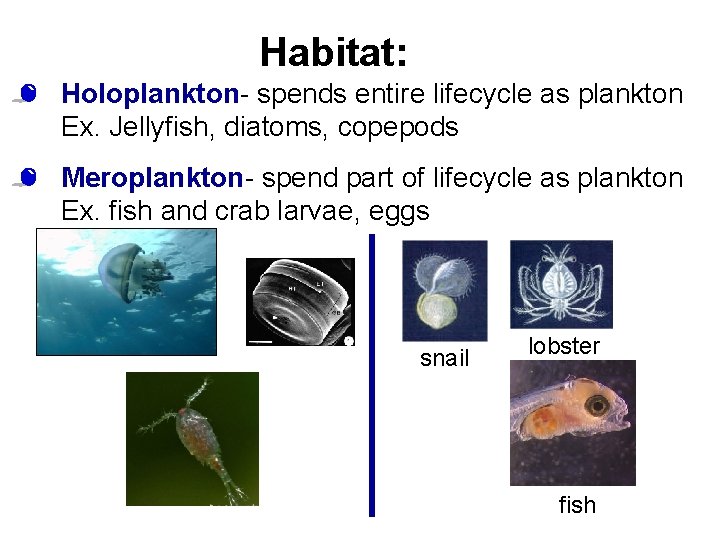
Habitat: • Holoplankton- spends entire lifecycle as plankton Ex. Jellyfish, diatoms, copepods • Meroplankton- spend part of lifecycle as plankton Ex. fish and crab larvae, eggs snail lobster fish

Life cycle of a squid • Squid experience benthic, planktonic, and nektonic stages • Squid are considered meroplankton (opposite = holoplankton)

Habitat: • Pleuston- organisms that float passively at the seas surface Ex. Physalia, Velella • Neuston – organisms that inhabit the uppermost few mm of the surface water Ex. bacteria, protozoa, larvae; light intensity too high for phytoplankton Neuston net
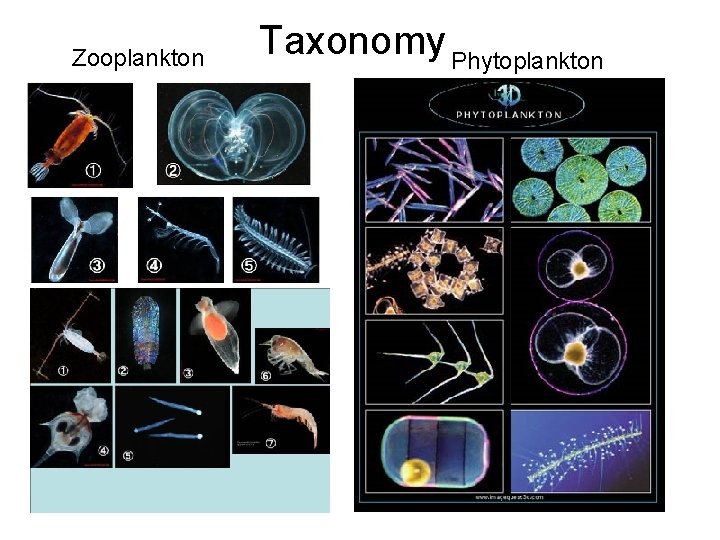
Zooplankton Taxonomy Phytoplankton

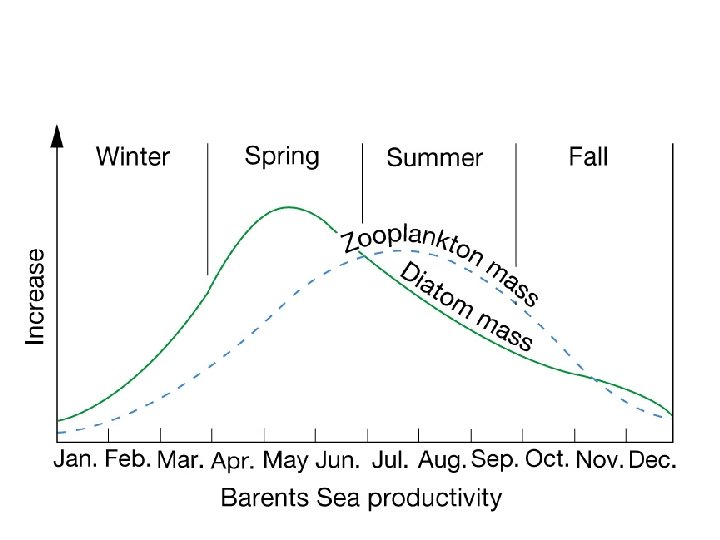
Importance of Phytoplankton is the base of the food chain. Phytoplankton population decline causes zooplankton and apex predators to decline.
Phytoplankton- restricted to the euphotic zone where light is available for photosynthesis. Blooms: • High nutrients • Upwelling • Seasonal conditions
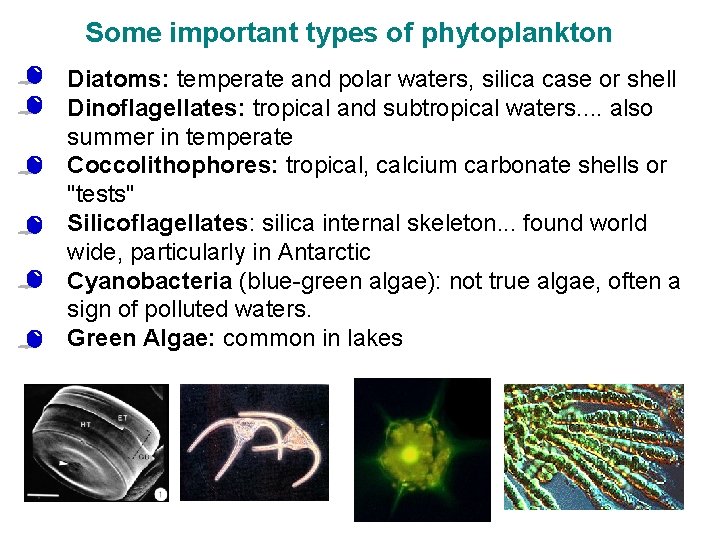
Some important types of phytoplankton • • • Diatoms: temperate and polar waters, silica case or shell Dinoflagellates: tropical and subtropical waters. . also summer in temperate Coccolithophores: tropical, calcium carbonate shells or "tests" Silicoflagellates: silica internal skeleton. . . found world wide, particularly in Antarctic Cyanobacteria (blue-green algae): not true algae, often a sign of polluted waters. Green Algae: common in lakes
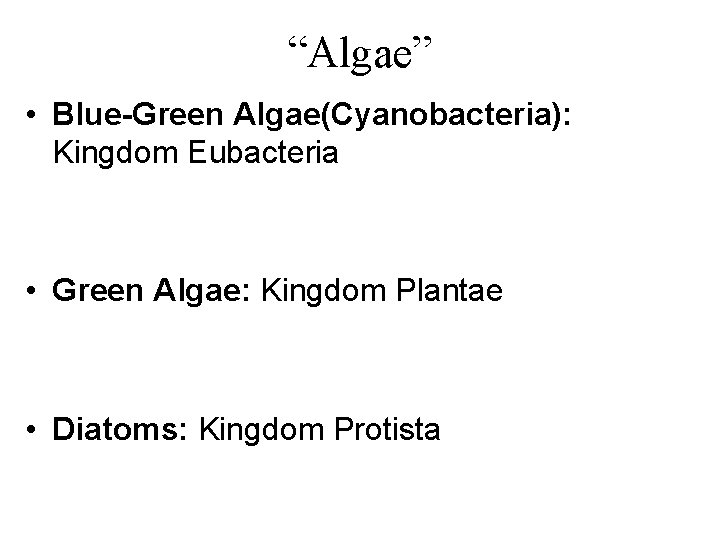
“Algae” • Blue-Green Algae(Cyanobacteria): Kingdom Eubacteria • Green Algae: Kingdom Plantae • Diatoms: Kingdom Protista

Green Algae

Blue-Green Algae

Diatoms
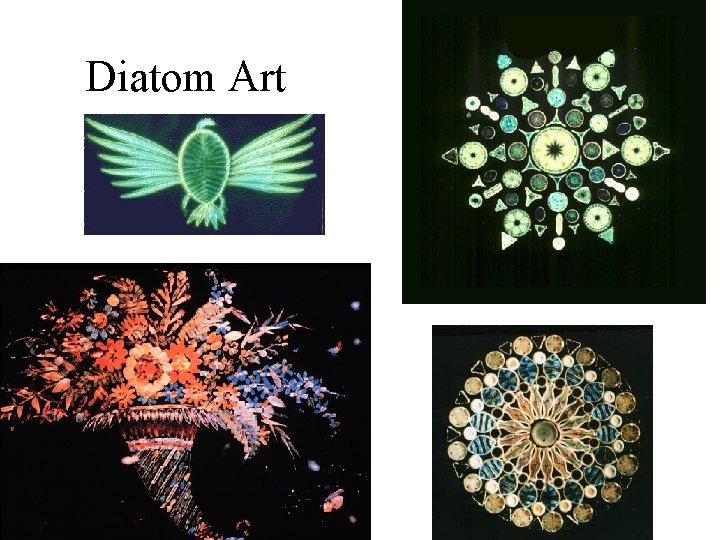
Diatom Art

Some important types of zooplankton • Crustaceans: Copepods Krill Cladocera Mysids Ostracods • Jellies Cniderian (True jellies, Man-of-wars, By-the-wind-sailors) • Ctenophores (comb jellies) • Urochordates (salps and larvacea) • Worms (Arrow worms, polychaetes) • Pteropods (planktonic snails)
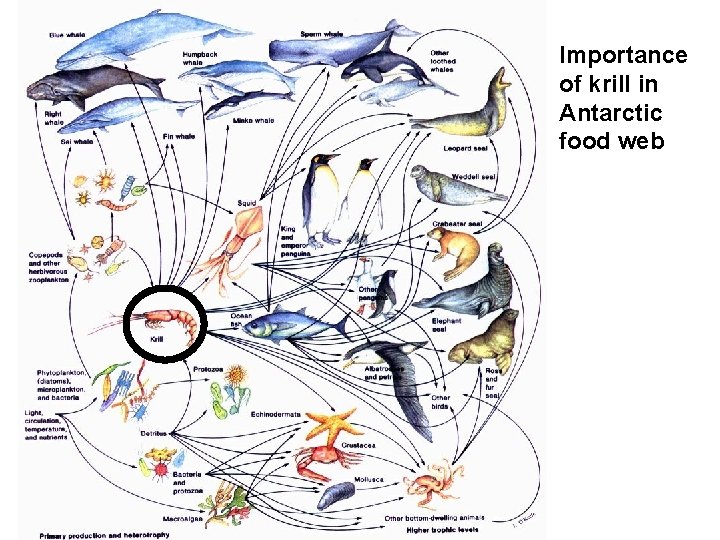
Importance of krill in Antarctic food web

Chaetognath Copepod Crab larvae jellies
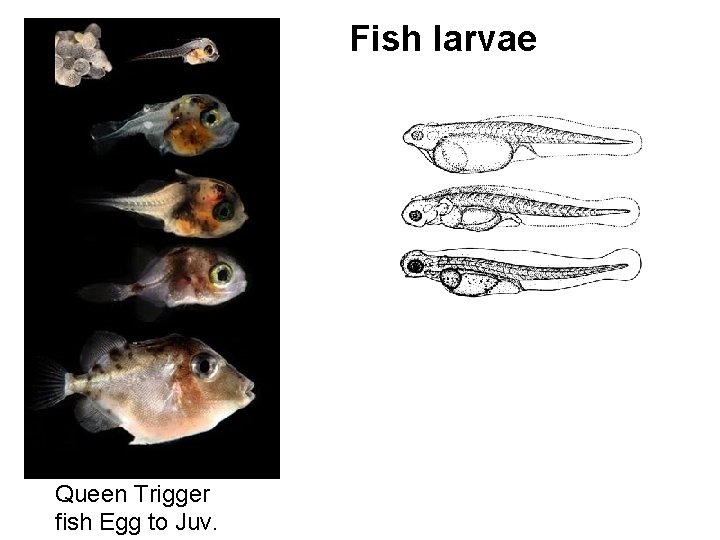
Fish larvae Queen Trigger fish Egg to Juv.
- Slides: 22