
Plankton Chapter 14 Phytoplankton Zooplankton Review food webs
Plankton – Chapter 14 ØPhytoplankton ØZooplankton ØReview food webs ØMotivation for studying plankton ØHow plankton are collected
Review: What is plankton? • Plankton comes from the Greek word Planktos that translates to “wanderer” or “drifter” • Plankton include plant-like organisms and animals that float, drift, or have feeble swimming abilities (insufficient for horizontal migration against currents) • Usually microscopic, but may be large drifting organisms, e. g. , jellyfish
• Phytoplankton - kingdom Protista - autotrophs, primary producers, utilize photosynthesis for energy • Zooplankton - kingdom animalia -heterotrophs (herbivores, carnivores and omnivores; primary and secondary consumers)
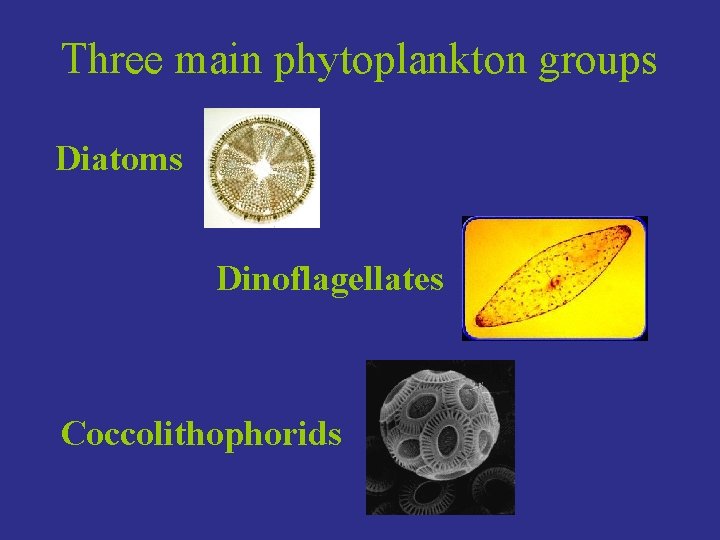
Three main phytoplankton groups Diatoms Dinoflagellates Coccolithophorids

Diatoms compose the most abundant phytoplankton group in the oceans, they come in two general varieties: Centric (pillbox shape) Pennate (elongate shape) ET: epitheca HT: hypotheca Diatoms use silicate to make hard cell walls called ‘frustules’
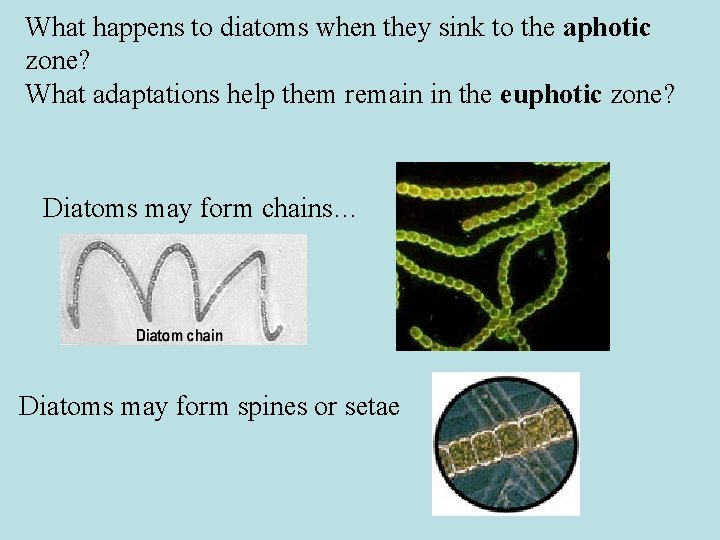
What happens to diatoms when they sink to the aphotic zone? What adaptations help them remain in the euphotic zone? Diatoms may form chains… Diatoms may form spines or setae
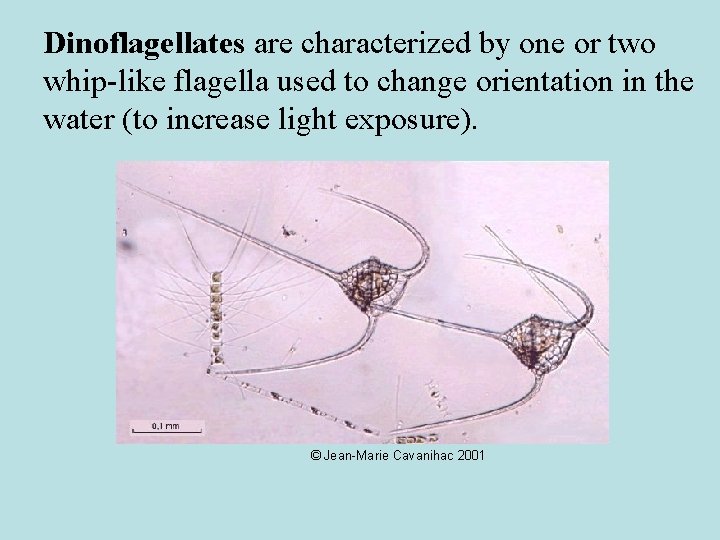
Dinoflagellates are characterized by one or two whip-like flagella used to change orientation in the water (to increase light exposure). © Jean-Marie Cavanihac 2001

Dinoflagellates are often bioluminescent, for example: Pyrocystis fusiformis
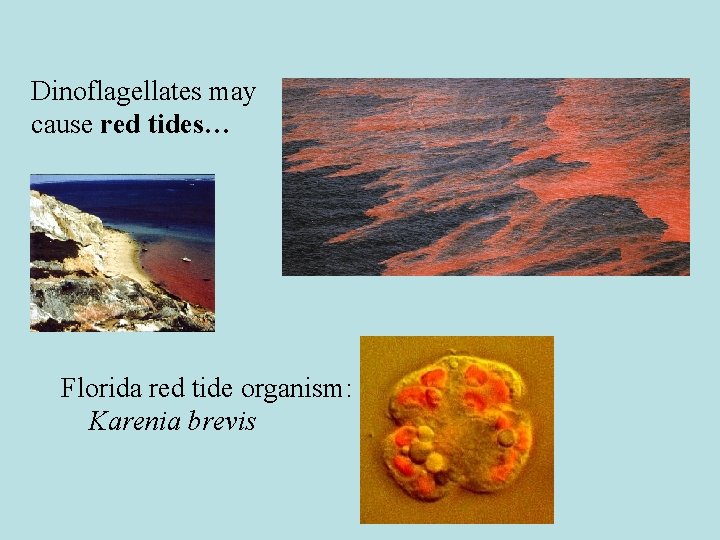
Dinoflagellates may cause red tides… Florida red tide organism: Karenia brevis
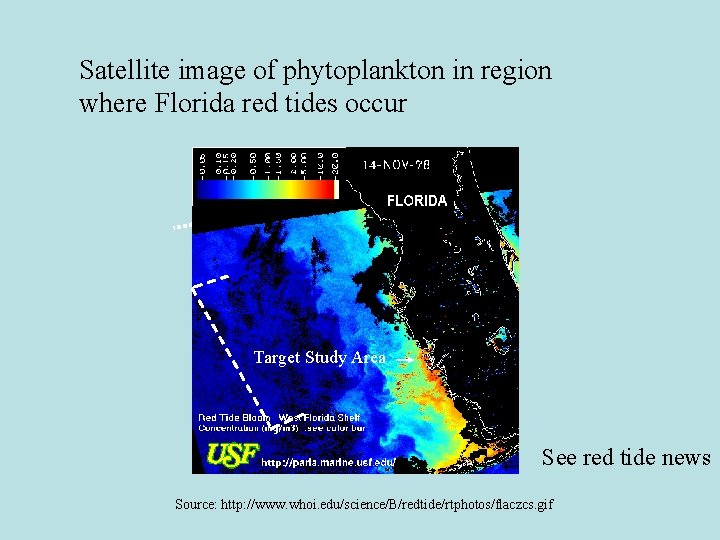
Satellite image of phytoplankton in region where Florida red tides occur Target Study Area See red tide news Source: http: //www. whoi. edu/science/B/redtide/rtphotos/flaczcs. gif

Coccolithophorids: use calcium carbonate to form white “shells” Emiliania huxleyi coccolith
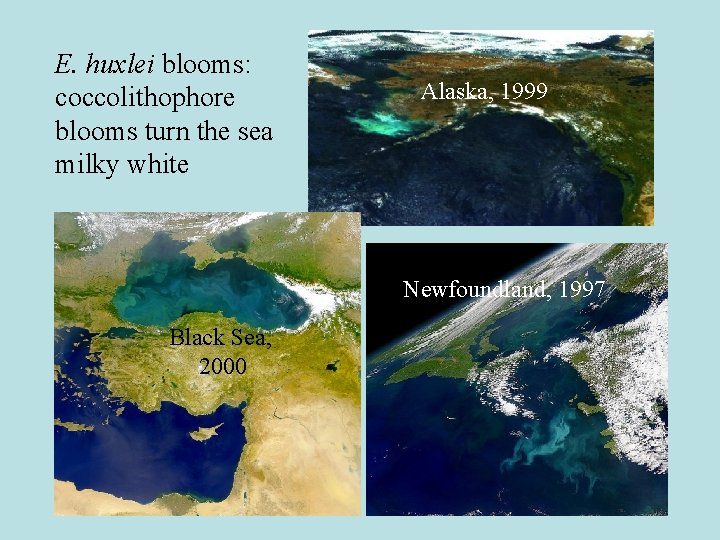
E. huxlei blooms: coccolithophore blooms turn the sea milky white Alaska, 1999 Newfoundland, 1997 Black Sea, 2000
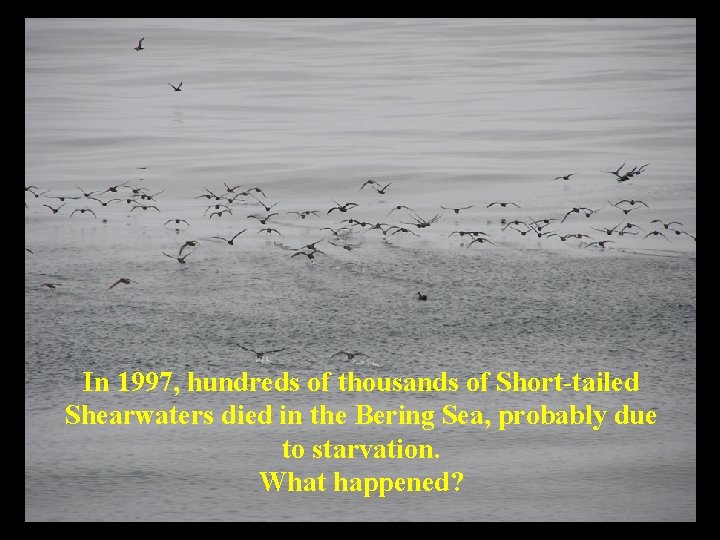
In 1997, hundreds of thousands of Short-tailed Shearwaters died in the Bering Sea, probably due to starvation. What happened? (photo from SBI project, summer 2003)
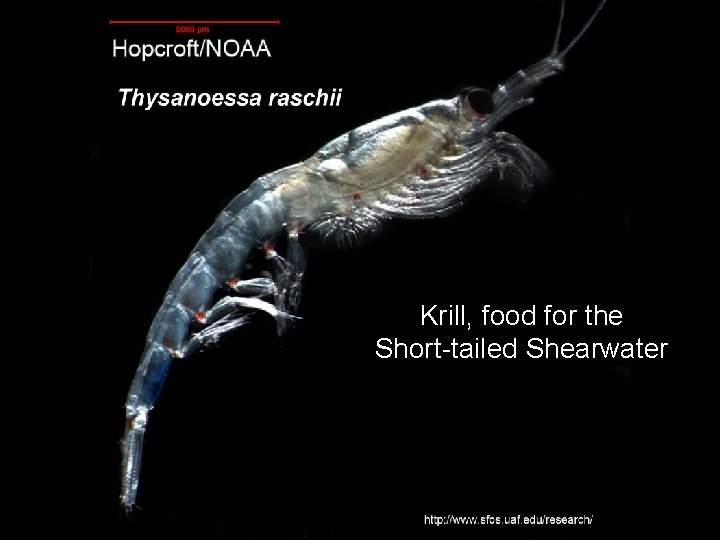
Krill, food for the Short-tailed Shearwater
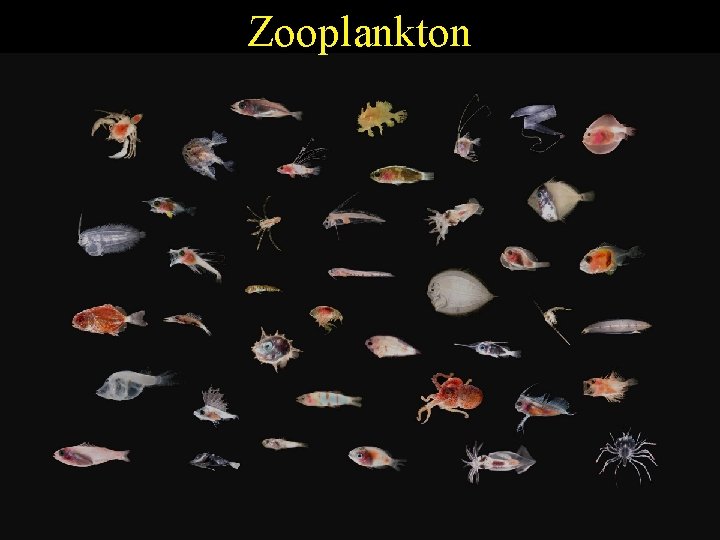
Zooplankton
Important zooplankton phyla (Kingdom Animalia) • Cnidaria - jellyfish, corals • Mollusca - clams, oysters, snails (plankton as larval forms) • Arthropoda - copepods, crabs, shrimp (plankton as larval and adult forms) • Echinodermata - starfish, sand dollars, sea urchins (plankton as larval forms)

Two primary zooplankton categories: 1. Holoplankton - planktonic throughout their entire life cycle (e. g. , krill, copepods, chaetognaths) 2. Meroplankton - planktonic for only a portion of their life cycle, invertebrate larvae (e. g. , bivalves, starfish, barnacles); ichthyoplankton - fish eggs and larvae are also meroplankton Photos courtesy of C. Guigand, RSMAS

Examples of holoplankton… Farranula gracilis (copepod) with eggs Chaetognath Euphausiid (krill) Eucalanus sp. female
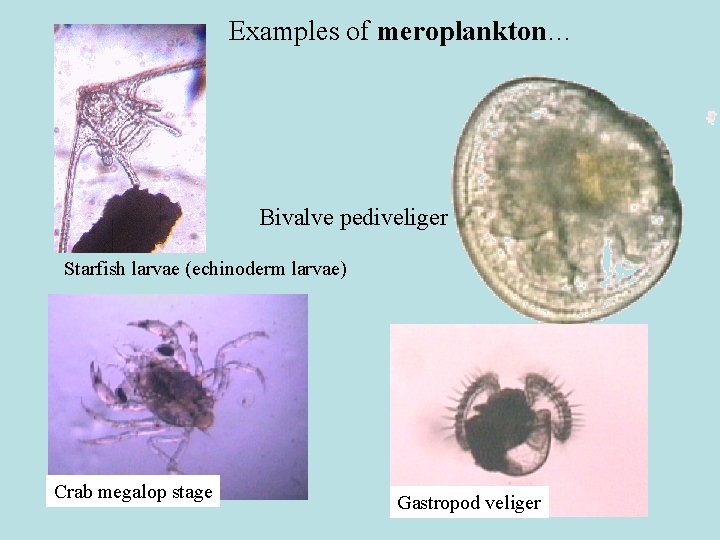
Examples of meroplankton… Bivalve pediveliger Starfish larvae (echinoderm larvae) Crab megalop stage Gastropod veliger
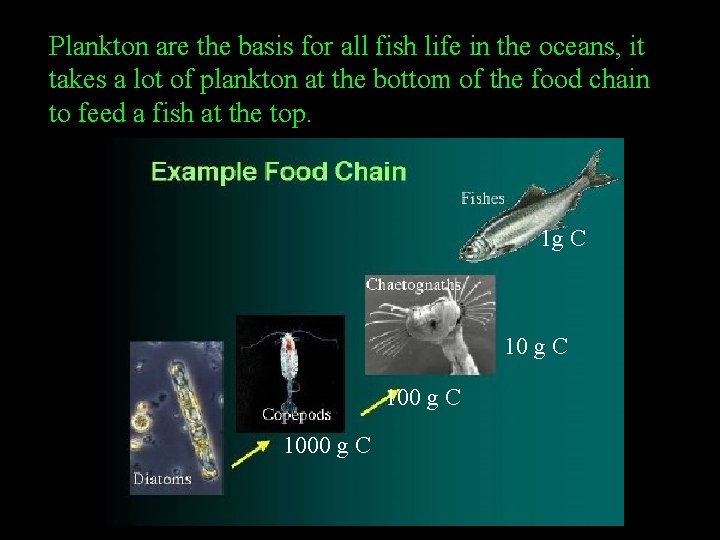
Plankton are the basis for all fish life in the oceans, it takes a lot of plankton at the bottom of the food chain to feed a fish at the top. 1 g C 1000 g C
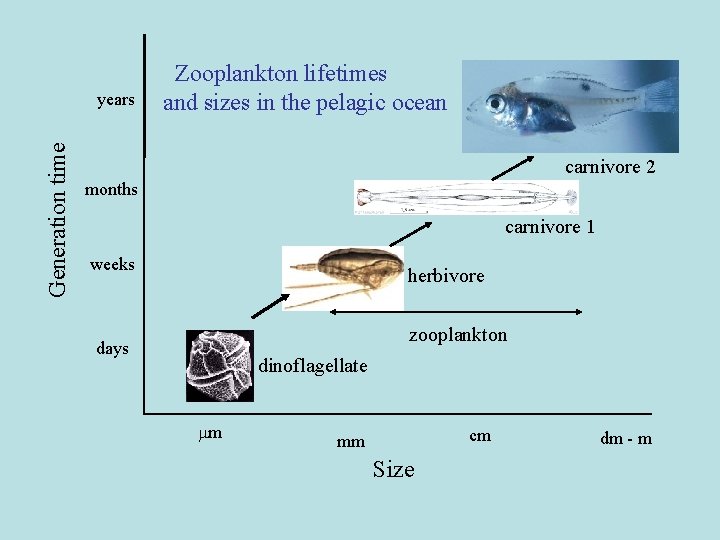
Generation time years Zooplankton lifetimes and sizes in the pelagic ocean carnivore 2 months carnivore 1 weeks herbivore zooplankton days dinoflagellate m cm mm Size dm - m

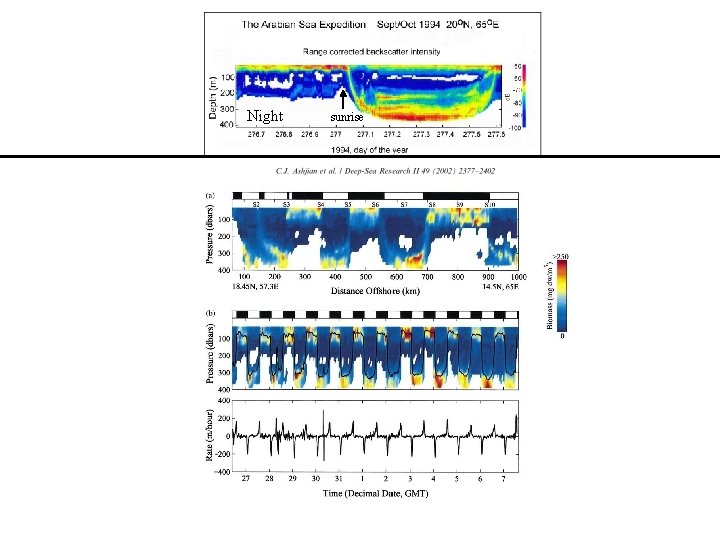
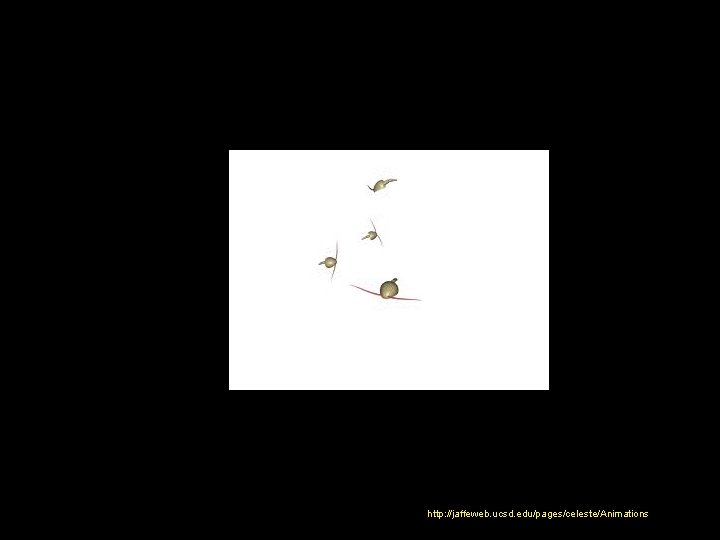
Copepods: crustaceans – usually the most abundant zooplankton (from Greek Kope=“oar”, Podos=“foot”, hence oar-footed, referring to their swimming legs) § Herbivores, carnivores and omnivores § Holoplanktonic: entire planktonic life cycle § Migrate vertically day-night (see next slide) Side view Mr. Plankton
Night sunrise
http: //jaffeweb. ucsd. edu/pages/celeste/Animations/
- Slides: 24