
Planktivory Planktivory Suspension feeders Animals that process large



- Slides: 24
Planktivory
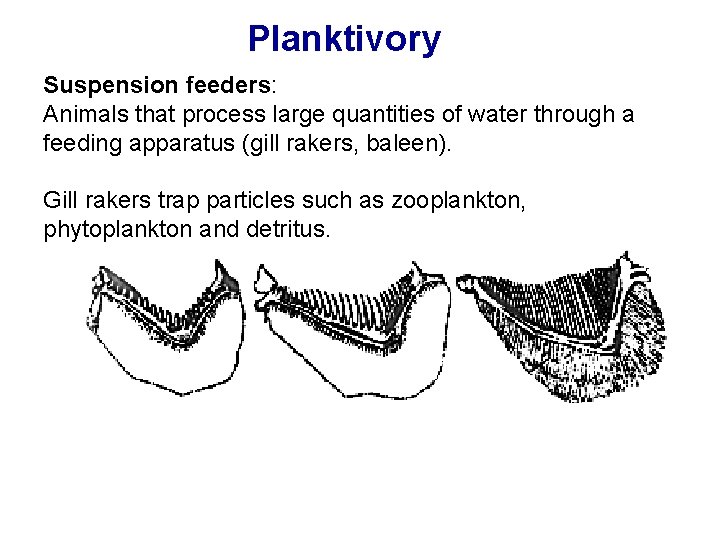
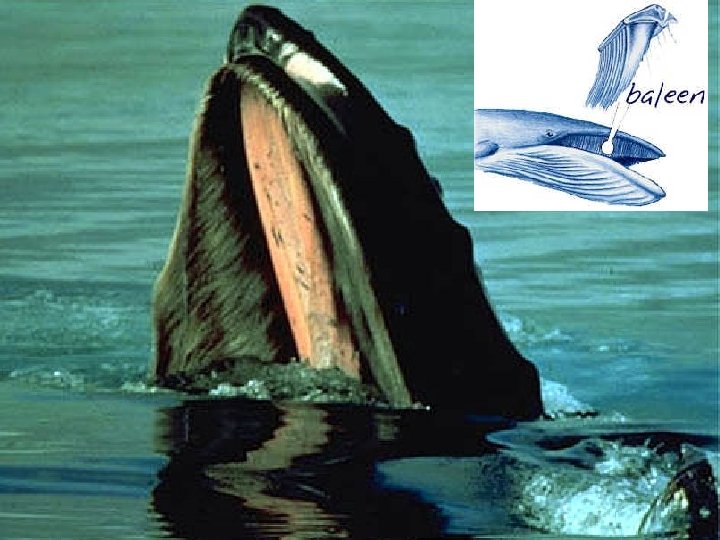
Planktivory Suspension feeders: Animals that process large quantities of water through a feeding apparatus (gill rakers, baleen). Gill rakers trap particles such as zooplankton, phytoplankton and detritus.
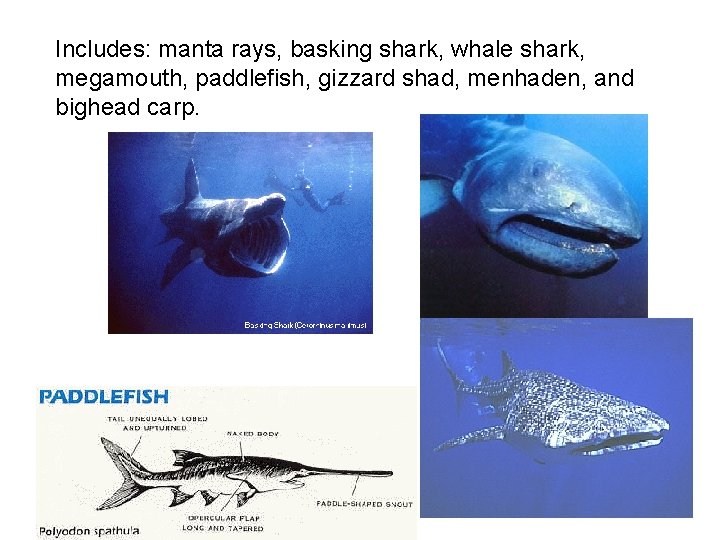
Includes: manta rays, basking shark, whale shark, megamouth, paddlefish, gizzard shad, menhaden, and bighead carp.
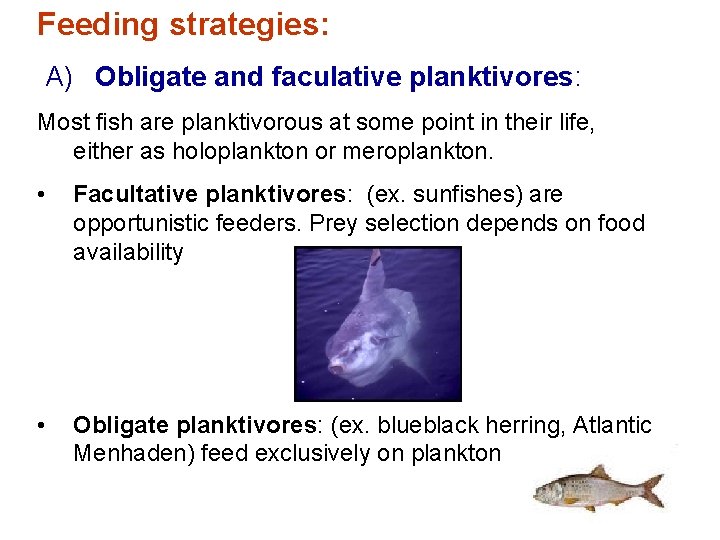
Feeding strategies: A) Obligate and faculative planktivores: Most fish are planktivorous at some point in their life, either as holoplankton or meroplankton. • Facultative planktivores: (ex. sunfishes) are opportunistic feeders. Prey selection depends on food availability • Obligate planktivores: (ex. blueblack herring, Atlantic Menhaden) feed exclusively on plankton
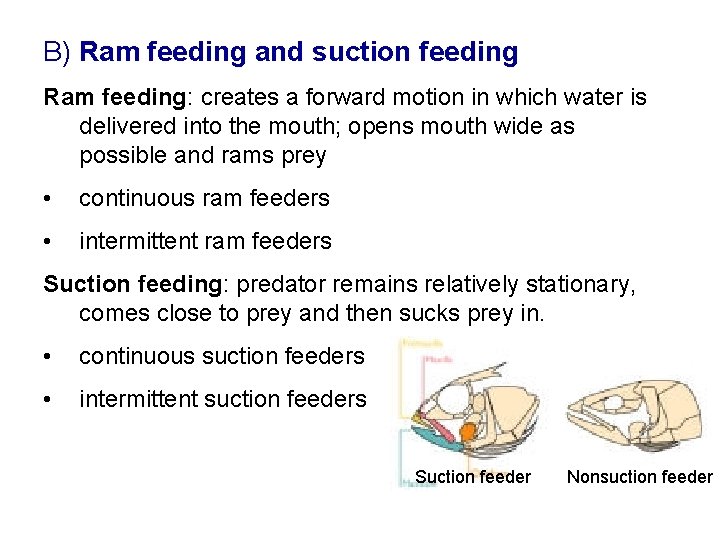
B) Ram feeding and suction feeding Ram feeding: creates a forward motion in which water is delivered into the mouth; opens mouth wide as possible and rams prey • continuous ram feeders • intermittent ram feeders Suction feeding: predator remains relatively stationary, comes close to prey and then sucks prey in. • continuous suction feeders • intermittent suction feeders Suction feeder Nonsuction feeder
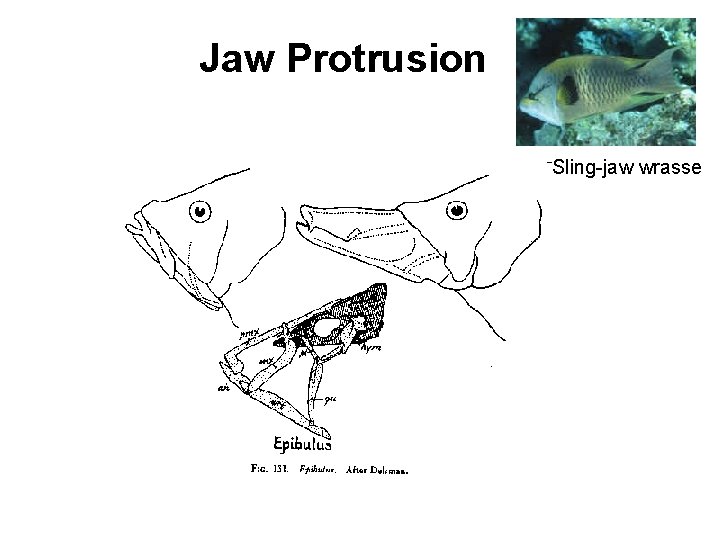
Jaw Protrusion Sling-jaw wrasse
Ram Feeders • Continuous • Intermittent
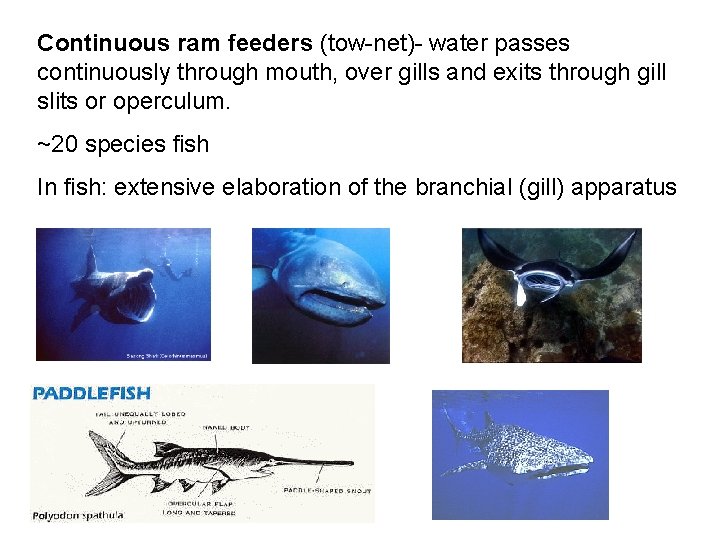
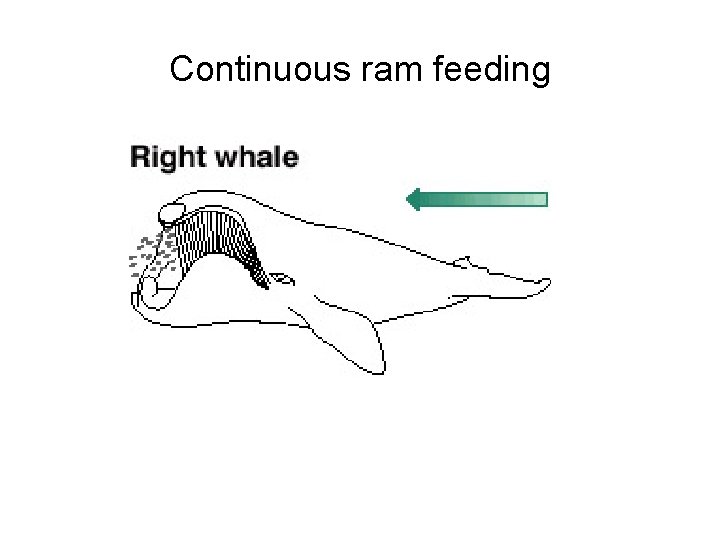
Continuous ram feeders (tow-net)- water passes continuously through mouth, over gills and exits through gill slits or operculum. ~20 species fish In fish: extensive elaboration of the branchial (gill) apparatus
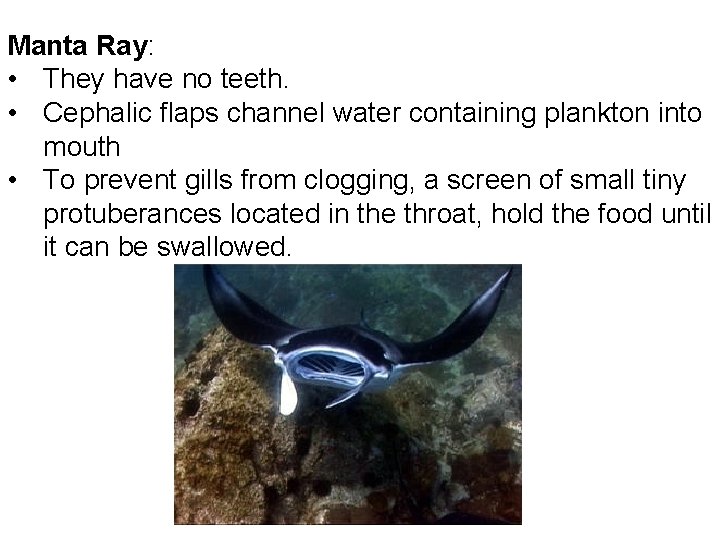
Manta Ray: • They have no teeth. • Cephalic flaps channel water containing plankton into mouth • To prevent gills from clogging, a screen of small tiny protuberances located in the throat, hold the food until it can be swallowed.
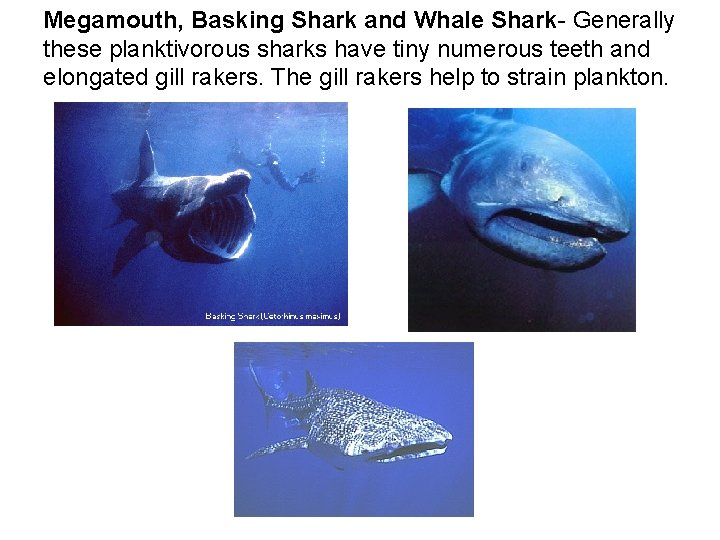
Megamouth, Basking Shark and Whale Shark- Generally these planktivorous sharks have tiny numerous teeth and elongated gill rakers. The gill rakers help to strain plankton.
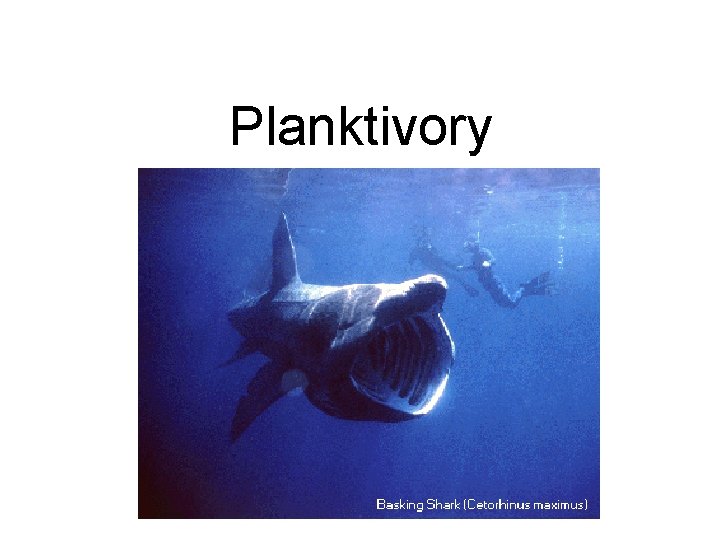
Basking shark- (10 meters long) • Swims about 2 knots with mouth open and bristle-like gill rakers erect while filtering particulate matter • It then closes its’ mouth forcing water over the gills; it is an indiscriminate planktivore • Has five pairs of gill slits and can filters ~540 liters zooplankton/day and over 1500 gallons of water/ hour (1850 m 3 water/hour) • Basking sharks caught between Oct. And Dec. , no visible gill rakers were found, but had immature or functionless, incompletely developed rakers (possibly has a resting, non feeding stage). Re-grows gill rakers by February.
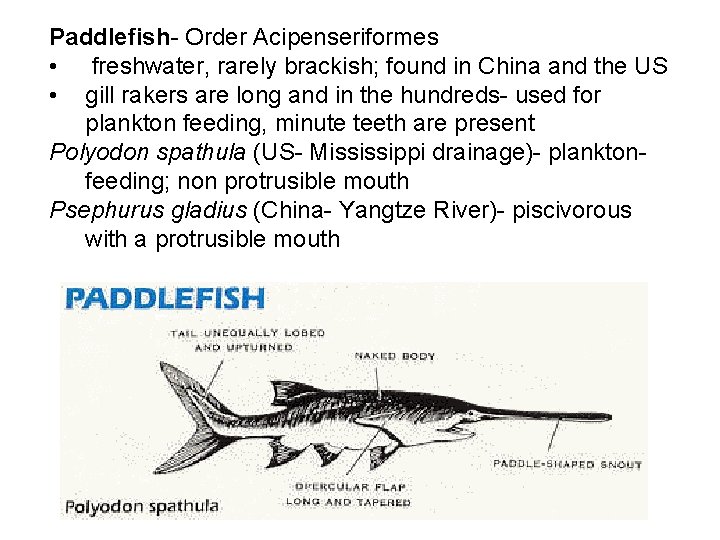
Paddlefish- Order Acipenseriformes • freshwater, rarely brackish; found in China and the US • gill rakers are long and in the hundreds- used for plankton feeding, minute teeth are present Polyodon spathula (US- Mississippi drainage)- planktonfeeding; non protrusible mouth Psephurus gladius (China- Yangtze River)- piscivorous with a protrusible mouth
Continuous ram feeding
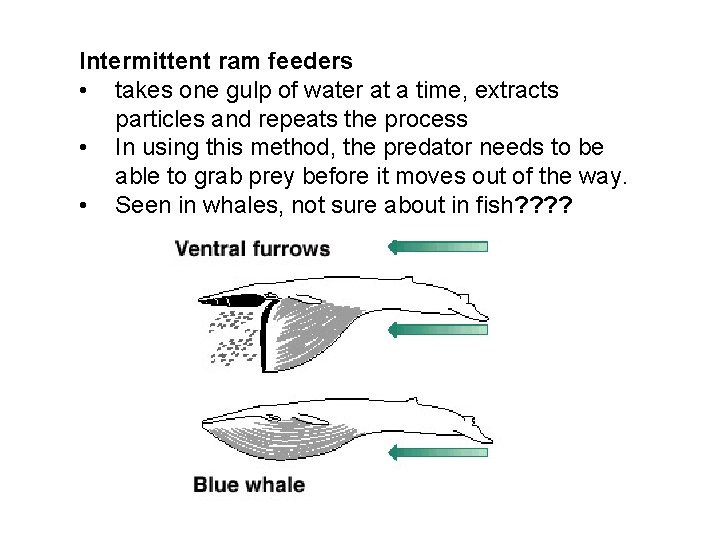
Intermittent ram feeders • takes one gulp of water at a time, extracts particles and repeats the process • In using this method, the predator needs to be able to grab prey before it moves out of the way. • Seen in whales, not sure about in fish? ?
Suction Feeders • Continuous • Intermittent
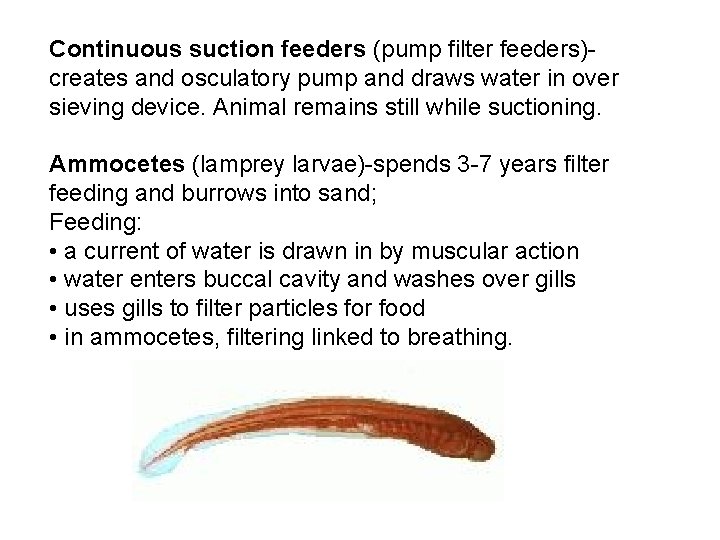
Continuous suction feeders (pump filter feeders)- creates and osculatory pump and draws water in over sieving device. Animal remains still while suctioning. Ammocetes (lamprey larvae)-spends 3 -7 years filter feeding and burrows into sand; Feeding: • a current of water is drawn in by muscular action • water enters buccal cavity and washes over gills • uses gills to filter particles for food • in ammocetes, filtering linked to breathing.
Intermittent suction feeders (intermediate feeding): • relatively unspecialized • intermediate condition between ram and suction feeding on individual prey • they don’t alter their swimming speed or direction to focus attention on individual plankton.
Diurnal and Nocturnal Planktivores
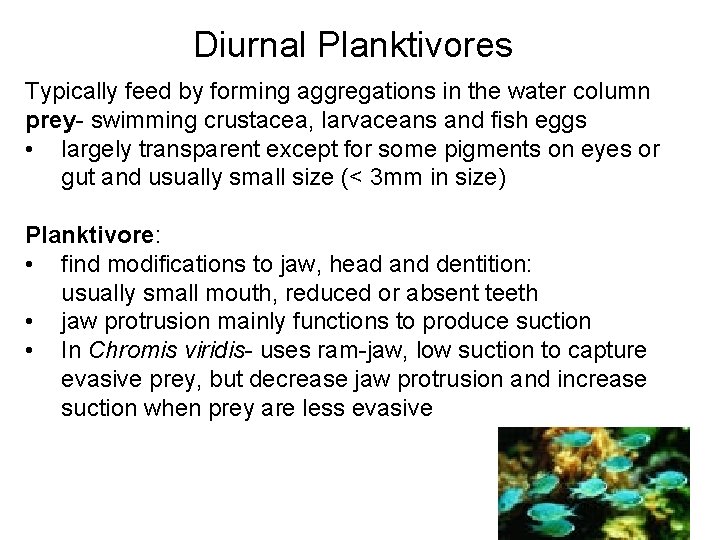
Diurnal Planktivores Typically feed by forming aggregations in the water column prey- swimming crustacea, larvaceans and fish eggs • largely transparent except for some pigments on eyes or gut and usually small size (< 3 mm in size) Planktivore: • find modifications to jaw, head and dentition: usually small mouth, reduced or absent teeth • jaw protrusion mainly functions to produce suction • In Chromis viridis- uses ram-jaw, low suction to capture evasive prey, but decrease jaw protrusion and increase suction when prey are less evasive
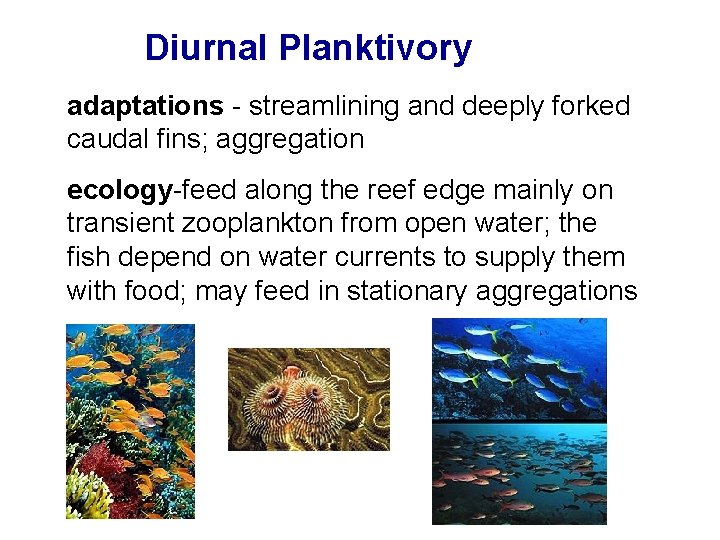
Diurnal Planktivory adaptations - streamlining and deeply forked caudal fins; aggregation ecology-feed along the reef edge mainly on transient zooplankton from open water; the fish depend on water currents to supply them with food; may feed in stationary aggregations
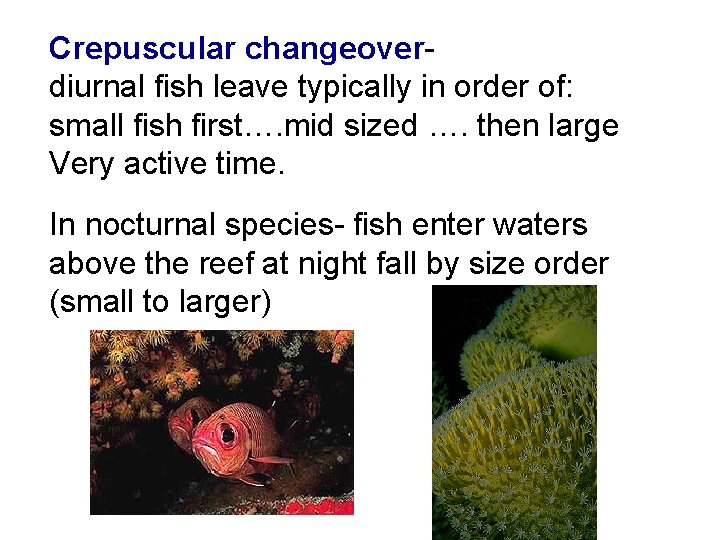
Crepuscular changeover- diurnal fish leave typically in order of: small fish first…. mid sized …. then large Very active time. In nocturnal species- fish enter waters above the reef at night fall by size order (small to larger)
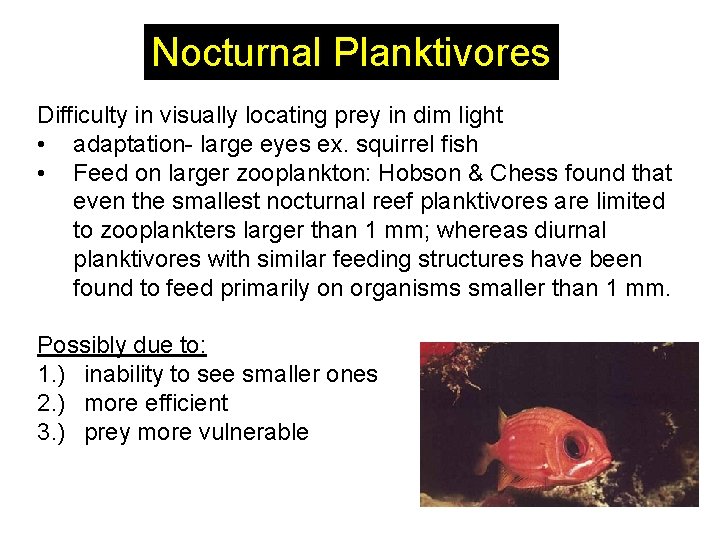
Nocturnal Planktivores Difficulty in visually locating prey in dim light • adaptation- large eyes ex. squirrel fish • Feed on larger zooplankton: Hobson & Chess found that even the smallest nocturnal reef planktivores are limited to zooplankters larger than 1 mm; whereas diurnal planktivores with similar feeding structures have been found to feed primarily on organisms smaller than 1 mm. Possibly due to: 1. ) inability to see smaller ones 2. ) more efficient 3. ) prey more vulnerable
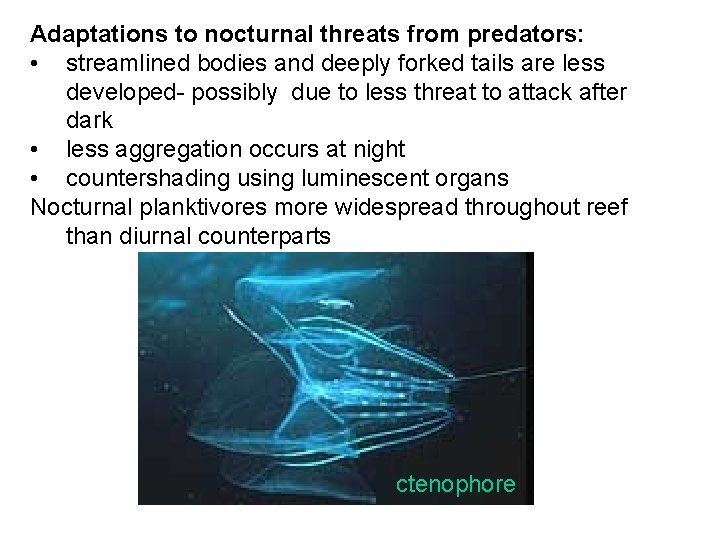
Adaptations to nocturnal threats from predators: • streamlined bodies and deeply forked tails are less developed- possibly due to less threat to attack after dark • less aggregation occurs at night • countershading using luminescent organs Nocturnal planktivores more widespread throughout reef than diurnal counterparts ctenophore