
Planificacin Agregada MPS y MRP en manufactura Dr
- Slides: 31
Planificación Agregada MPS y MRP en manufactura Dr. Walter López Moreno
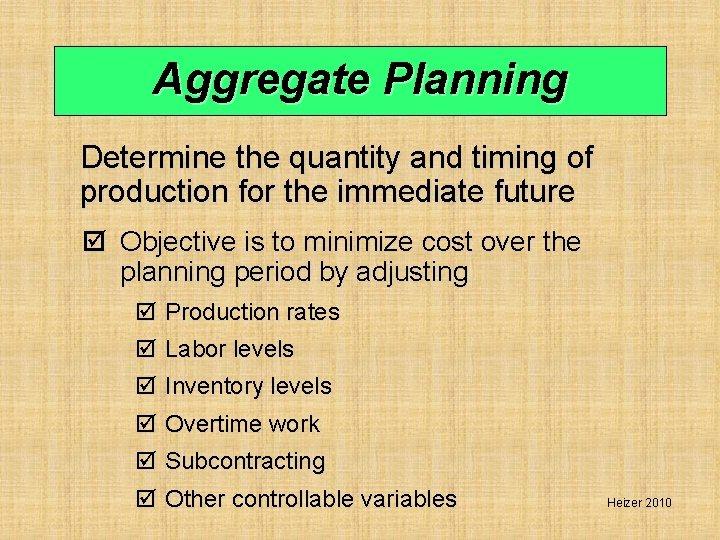
Aggregate Planning Determine the quantity and timing of production for the immediate future þ Objective is to minimize cost over the planning period by adjusting þ Production rates þ Labor levels þ Inventory levels þ Overtime work þ Subcontracting þ Other controllable variables Heizer 2010
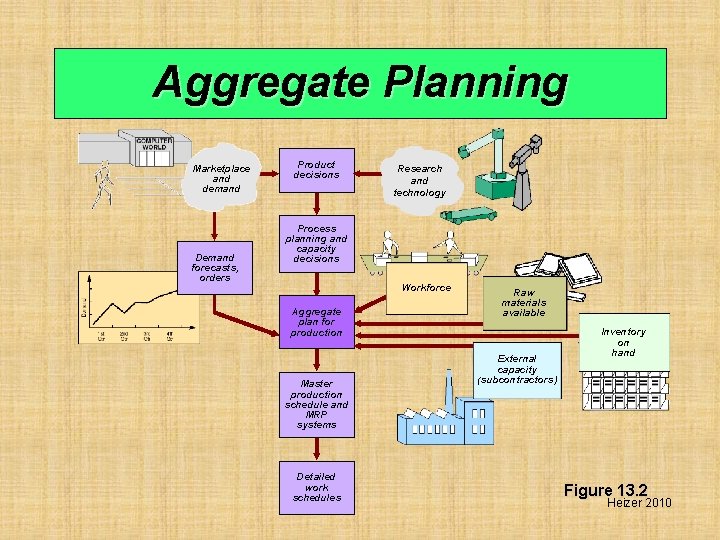
Aggregate Planning Marketplace and demand Demand forecasts, orders Product decisions Research and technology Process planning and capacity decisions Workforce Aggregate plan for production Master production schedule and MRP systems Detailed work schedules Raw materials available External capacity (subcontractors) Inventory on hand Figure 13. 2 Heizer 2010
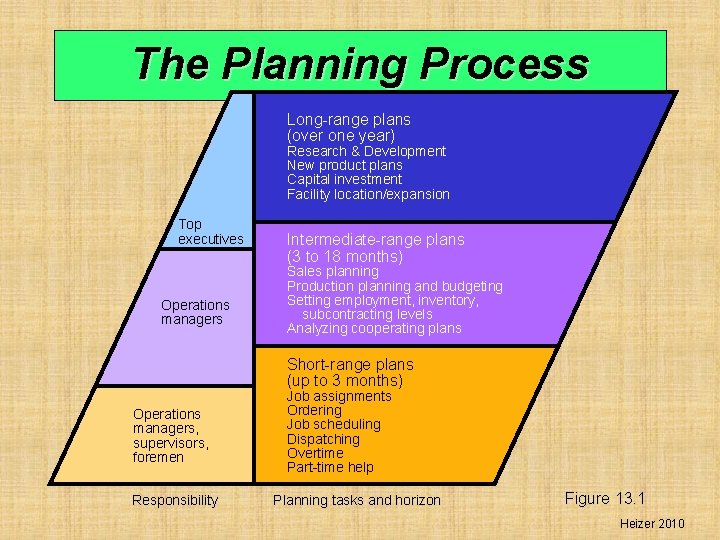
The Planning Process Long-range plans (over one year) Research & Development New product plans Capital investment Facility location/expansion Top executives Operations managers Intermediate-range plans (3 to 18 months) Sales planning Production planning and budgeting Setting employment, inventory, subcontracting levels Analyzing cooperating plans Short-range plans (up to 3 months) Operations managers, supervisors, foremen Responsibility Job assignments Ordering Job scheduling Dispatching Overtime Part-time help Planning tasks and horizon Figure 13. 1 Heizer 2010
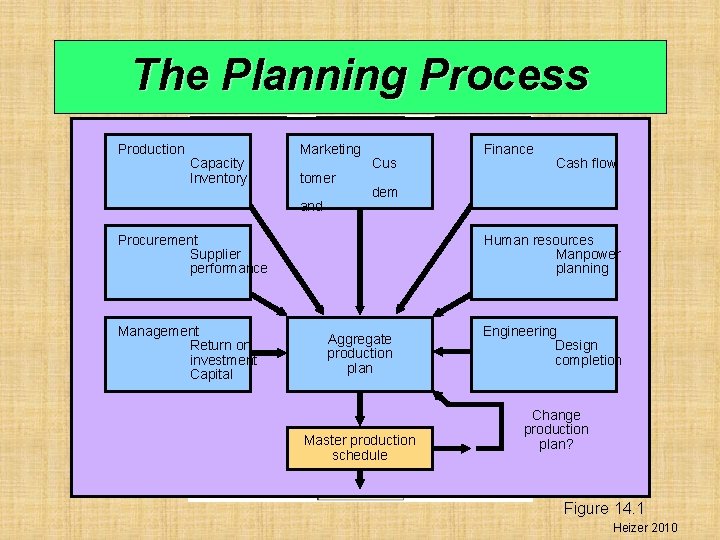
The Planning Process Production Capacity Inventory Marketing tomer and Cus Cash flow dem Procurement Supplier performance Management Return on investment Capital Finance Human resources Manpower planning Aggregate production plan Master production schedule Engineering Design completion Change production plan? Figure 14. 1 Heizer 2010
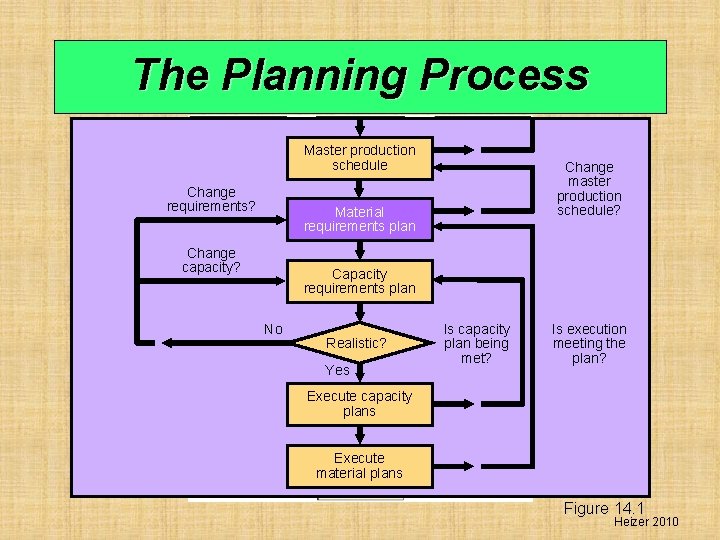
The Planning Process Master production schedule Change requirements? Change master production schedule? Material requirements plan Change capacity? Capacity requirements plan No Realistic? Yes Is capacity plan being met? Is execution meeting the plan? Execute capacity plans Execute material plans Figure 14. 1 Heizer 2010
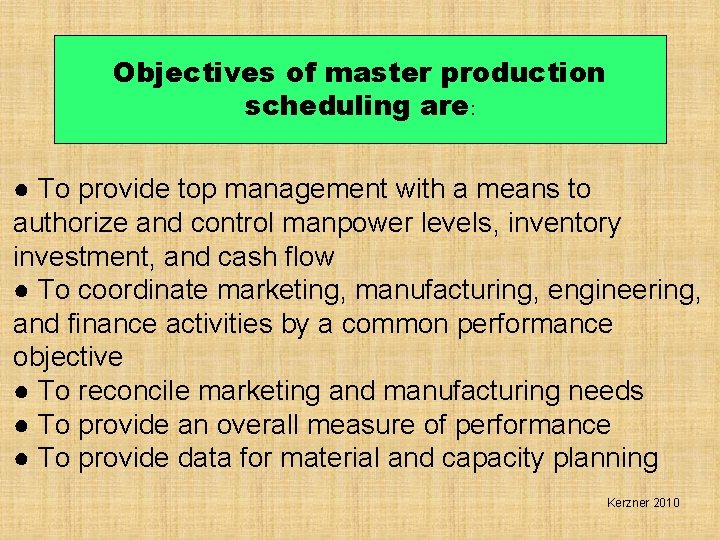
Objectives of master production scheduling are: ● To provide top management with a means to authorize and control manpower levels, inventory investment, and cash flow ● To coordinate marketing, manufacturing, engineering, and finance activities by a common performance objective ● To reconcile marketing and manufacturing needs ● To provide an overall measure of performance ● To provide data for material and capacity planning Kerzner 2010
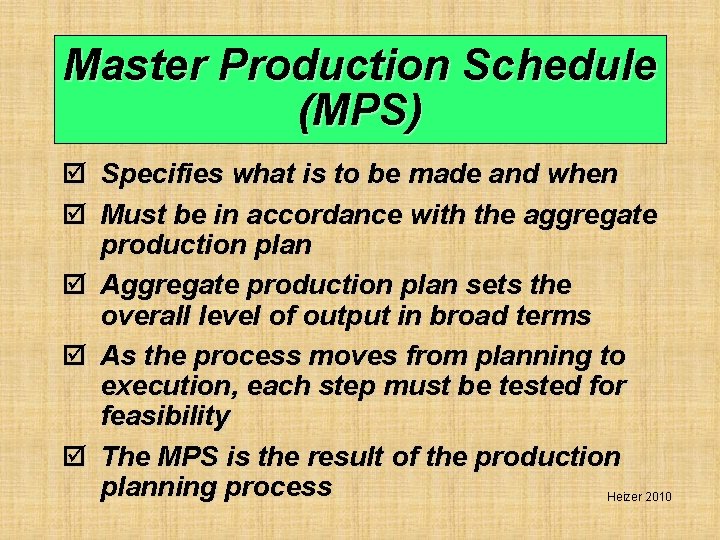
Master Production Schedule (MPS) þ þ Specifies what is to be made and when Must be in accordance with the aggregate production plan þ Aggregate production plan sets the overall level of output in broad terms þ As the process moves from planning to execution, each step must be tested for feasibility þ The MPS is the result of the production planning process Heizer 2010
Master Production Schedule (MPS) þ MPS is established in terms of specific products þ Schedule must be followed for a reasonable length of time þ The MPS is quite often fixed or frozen in the near term part of the plan þ The MPS is a rolling schedule þ The MPS is a statement of what is to be produced, not a forecast of demand Heizer 2010
Master Production Schedule (MPS) Can be expressed in any of the following terms: þ A customer order in a job shop (maketo-order) company þ Modules in a repetitive (assemble-tostock) company þ An end item in a continuous (make-tostock) company Heizer 2010
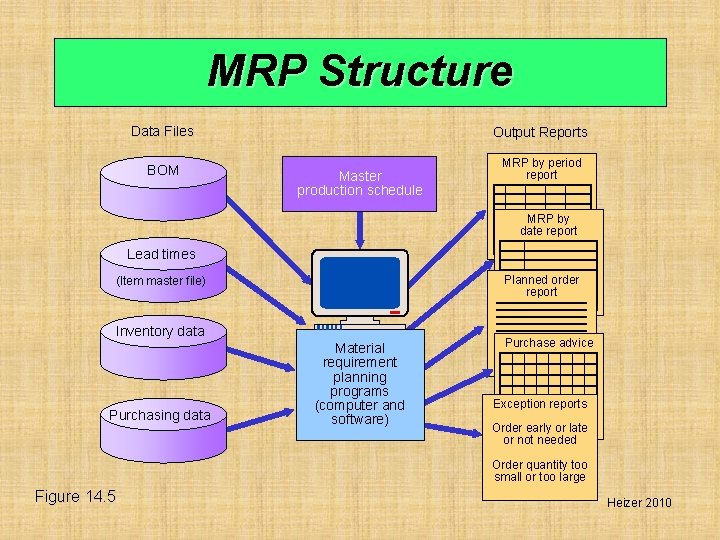
MRP Structure Data Files Output Reports BOM MRP by period report Master production schedule MRP by date report Lead times Planned order report (Item master file) Inventory data Purchasing data Material requirement planning programs (computer and software) Purchase advice Exception reports Order early or late or not needed Order quantity too small or too large Figure 14. 5 Heizer 2010
Benefits of MRP 1. Better response to customer orders 2. Faster response to market changes 3. Improved utilization of facilities and labor 4. Reduced inventory levels Heizer 2010
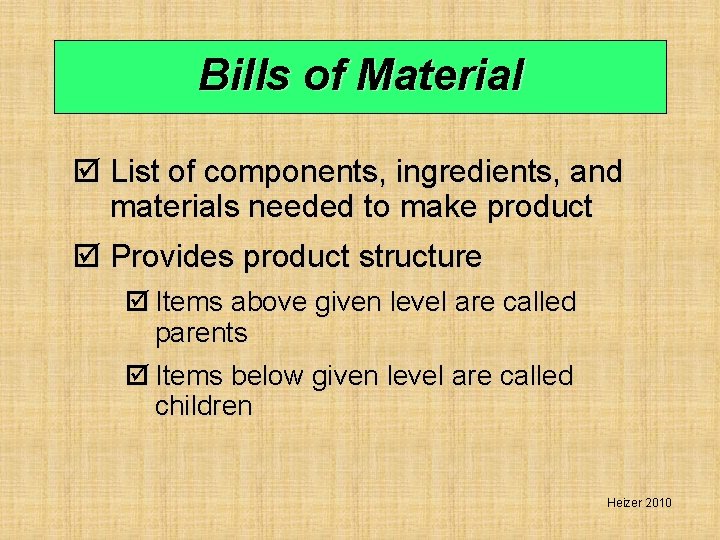
Bills of Material þ List of components, ingredients, and materials needed to make product þ Provides product structure þ Items above given level are called parents þ Items below given level are called children Heizer 2010
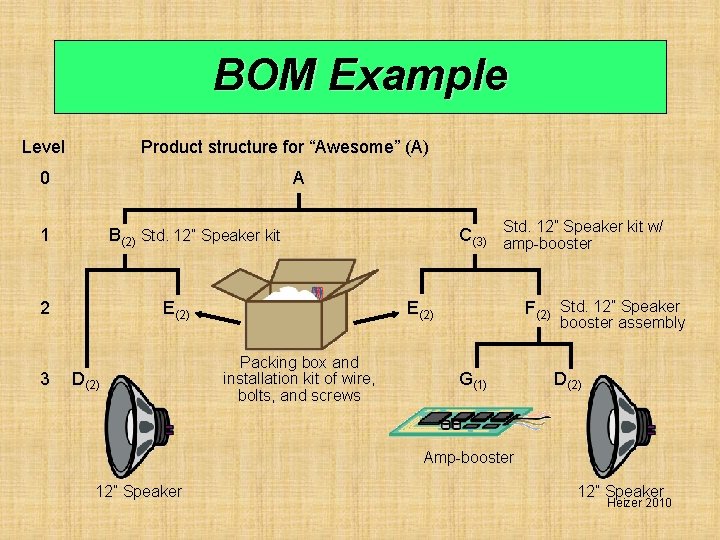
BOM Example Level Product structure for “Awesome” (A) A 0 1 2 3 12” Speaker kit w/ C(3) Std. amp-booster B(2) Std. 12” Speaker kit E(2) D(2) F(2) Std. 12” Speaker E(2) Packing box and installation kit of wire, bolts, and screws booster assembly G(1) D(2) Amp-booster 12” Speaker Heizer 2010
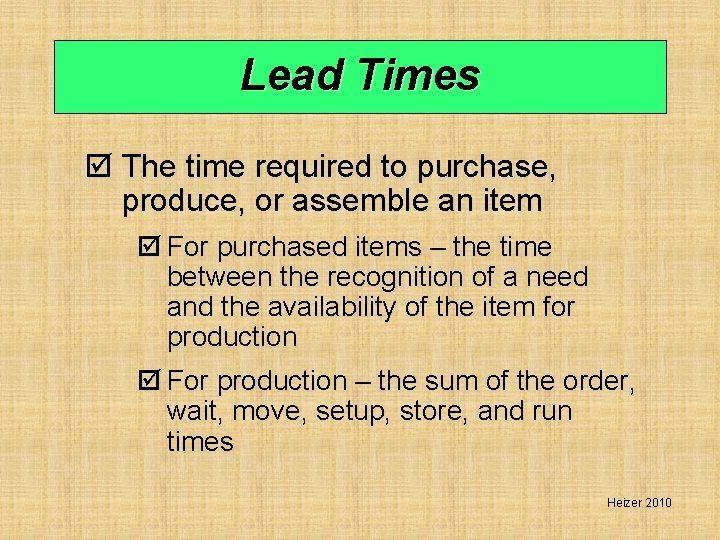
Lead Times þ The time required to purchase, produce, or assemble an item þ For purchased items – the time between the recognition of a need and the availability of the item for production þ For production – the sum of the order, wait, move, setup, store, and run times Heizer 2010
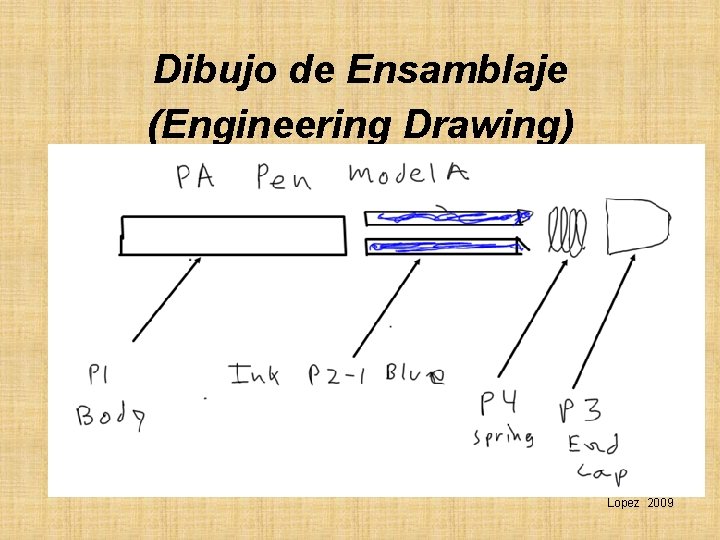
Dibujo de Ensamblaje (Engineering Drawing) Lopez 2009
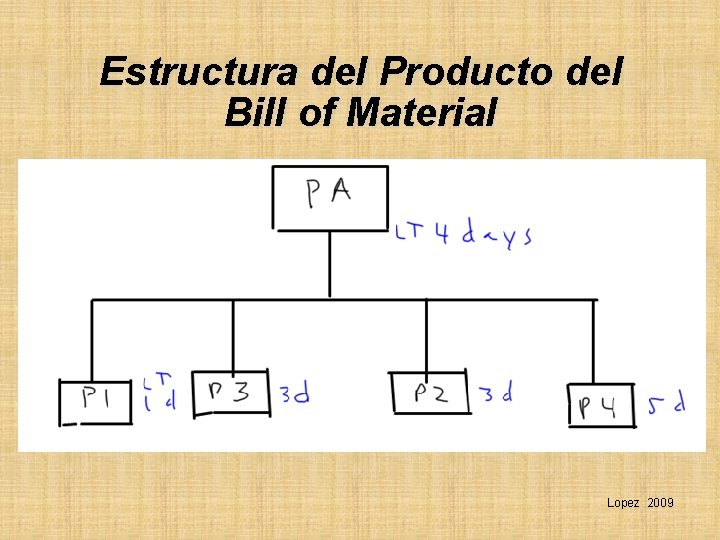
Estructura del Producto del Bill of Material Lopez 2009
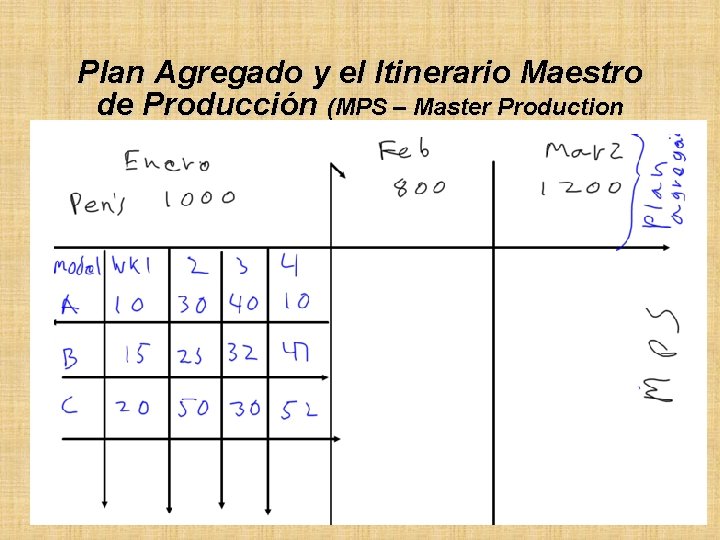
Plan Agregado y el Itinerario Maestro de Producción (MPS – Master Production Schedule)
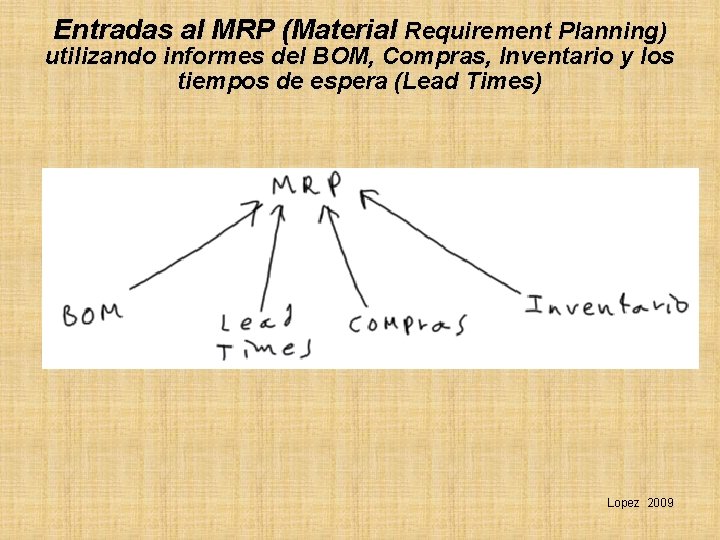
Entradas al MRP (Material Requirement Planning) utilizando informes del BOM, Compras, Inventario y los tiempos de espera (Lead Times) Lopez 2009
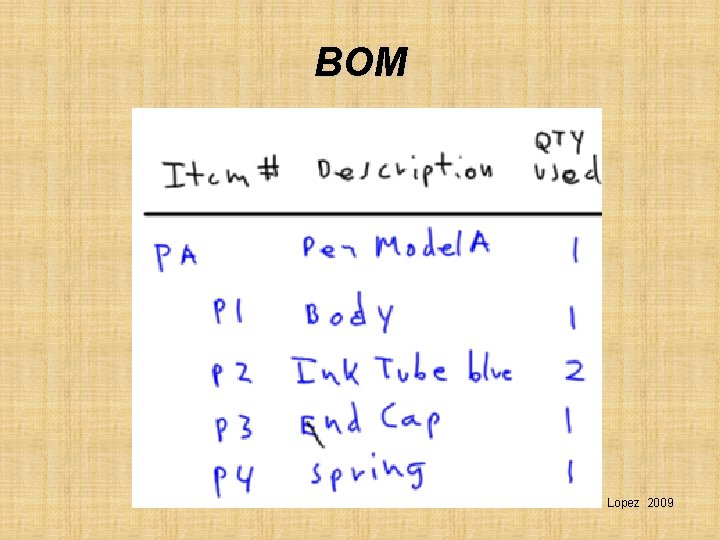
BOM Lopez 2009
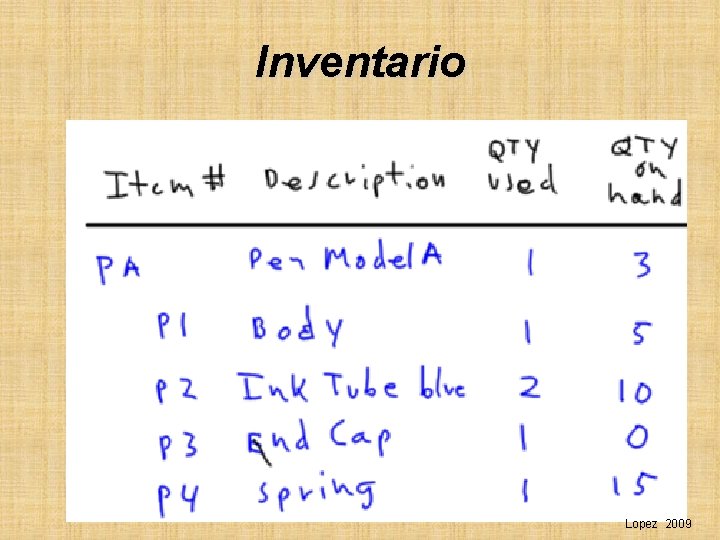
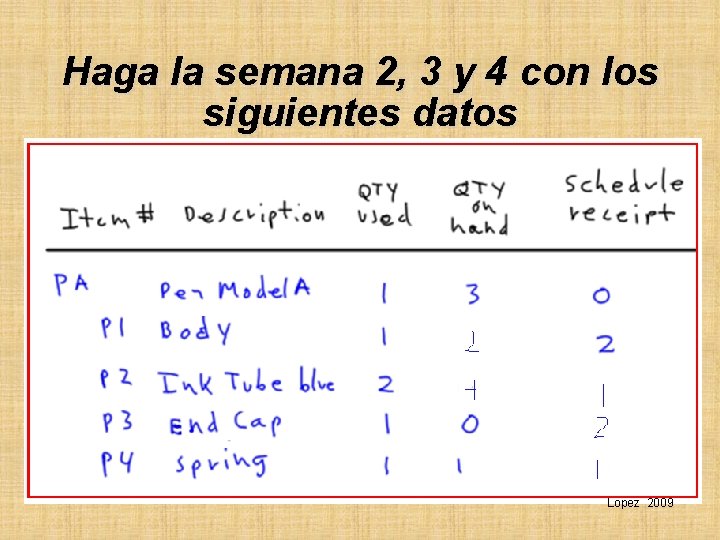
Inventario Quantity on hand – Es el inventario que esta disponible en el almacén. WIP – Material que esta en proceso de producción. Cantidad en el piso – Piezas sin labor que están disponibles y asignadas (comprometidas) para la produccion. En algunos casos forman parte de un sistema de KANBAN.
Inventario Lopez 2009
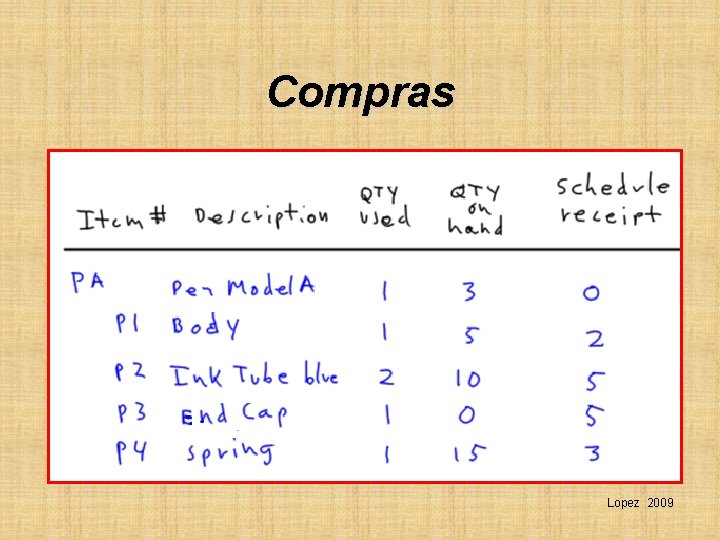
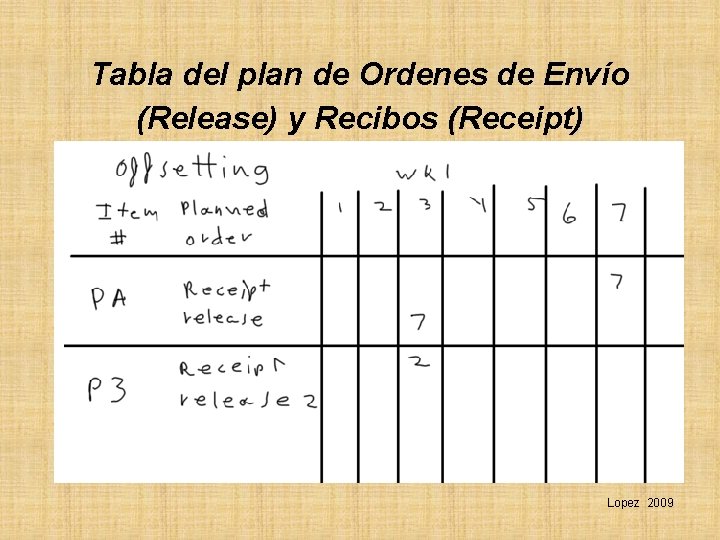
Compras Planned order Receipt – son los materiales que se planifican comprar de acuerdo a las futuras necesidades. En producciones que estan en proceso los ordenes deben estar en itinerario por recibir (Planned schedule receipt) Planned order Release – Son las ordenes que se planifican con el suplidor para las fechas de recibo físicamente en las instalaciones. Estas dependen del lead time. Lopez 2009
Compras Lopez 2009
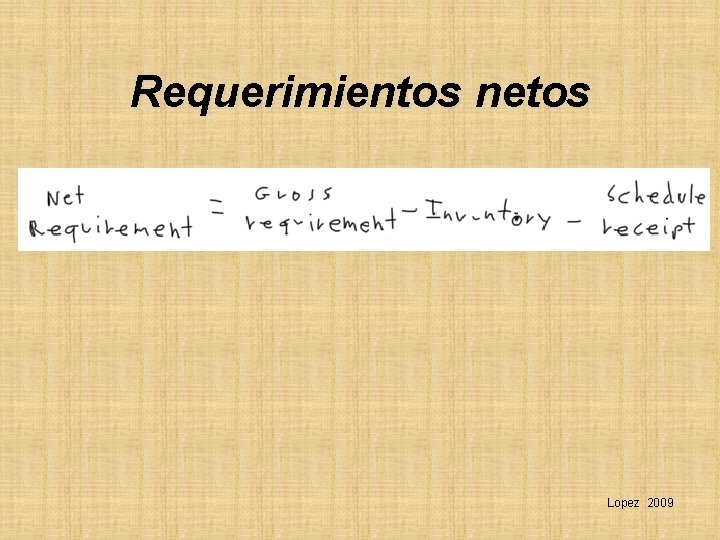
Requerimientos netos Lopez 2009
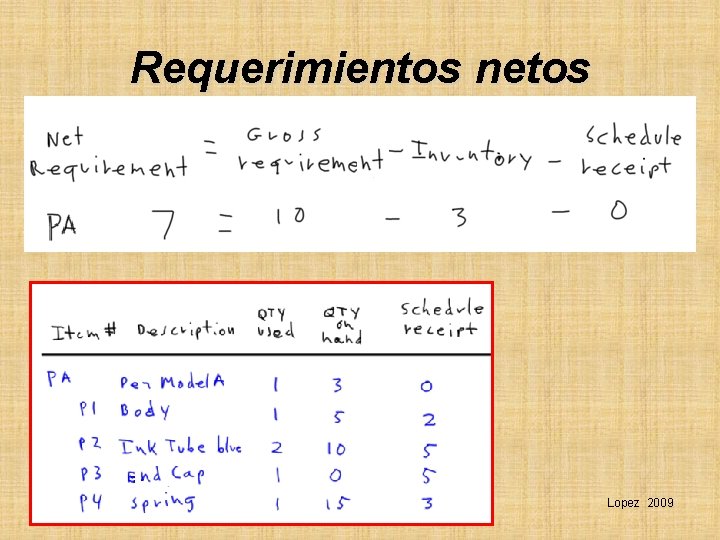
Requerimientos netos Lopez 2009
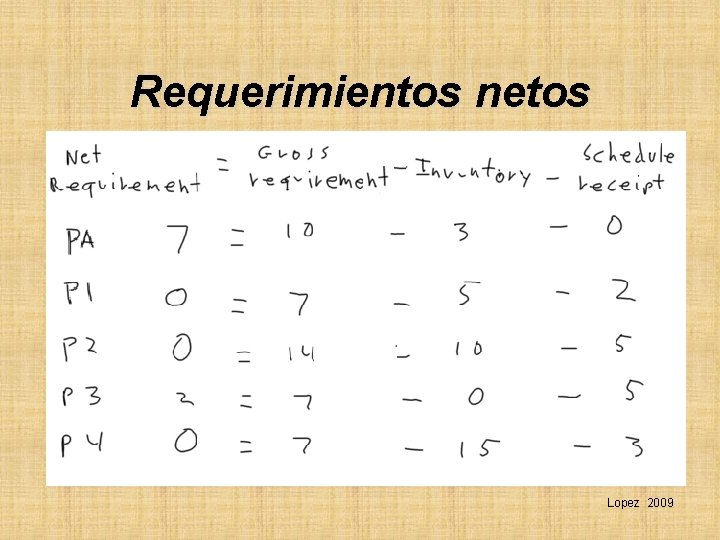
Requerimientos netos Lopez 2009
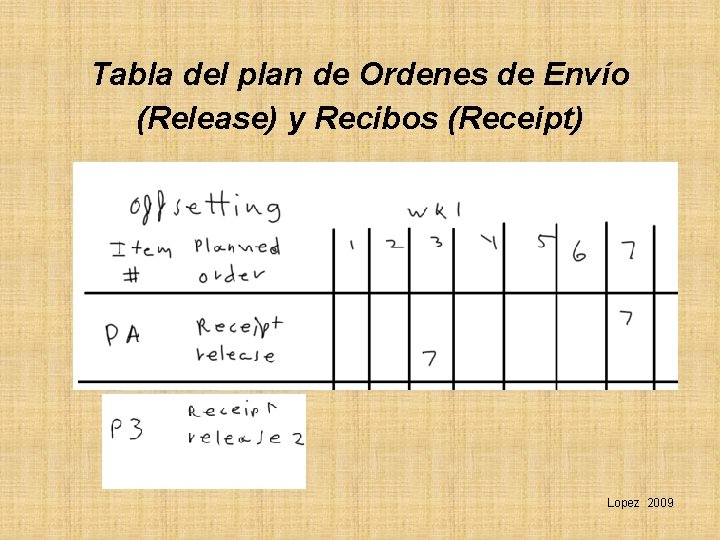
Tabla del plan de Ordenes de Envío (Release) y Recibos (Receipt) Lopez 2009
Tabla del plan de Ordenes de Envío (Release) y Recibos (Receipt) Lopez 2009
Haga la semana 2, 3 y 4 con los siguientes datos Lopez 2009
Referencias Heizer/Render (2010) Principles of Operations Management, 6 e Operations Management Kerzner Harold, (2010) Project Management , A systems approach to planning, scheduling and control López Walter, (2009) Proceso de planificación en manufactura