
Planets in The Solar System Surface Features on
- Slides: 44
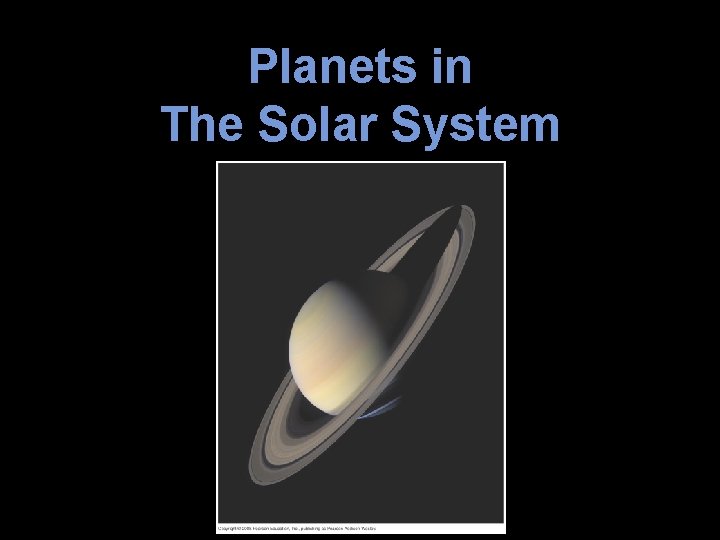
Planets in The Solar System
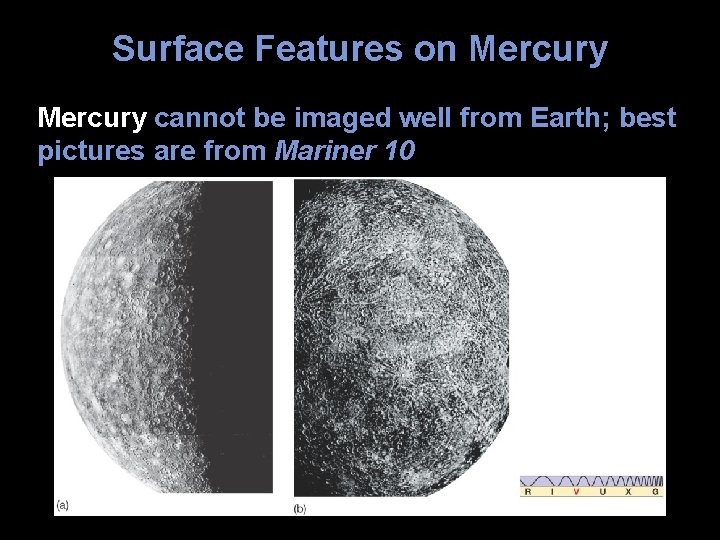
Surface Features on Mercury cannot be imaged well from Earth; best pictures are from Mariner 10
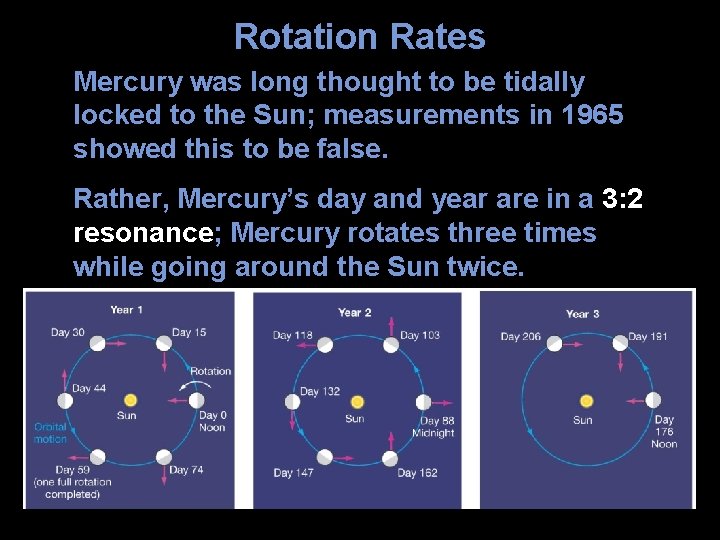
Rotation Rates Mercury was long thought to be tidally locked to the Sun; measurements in 1965 showed this to be false. Rather, Mercury’s day and year are in a 3: 2 resonance; Mercury rotates three times while going around the Sun twice.
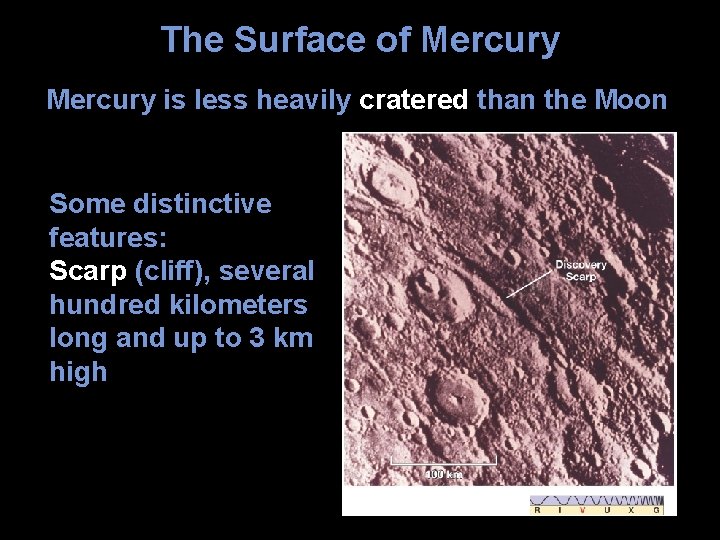
The Surface of Mercury is less heavily cratered than the Moon Some distinctive features: Scarp (cliff), several hundred kilometers long and up to 3 km high
Evolutionary History of the Moon and Mercury much less well understood: • Formed about 4. 6 billion years ago • Melted due to bombardment, cooled slowly • Shrank, crumpling crust
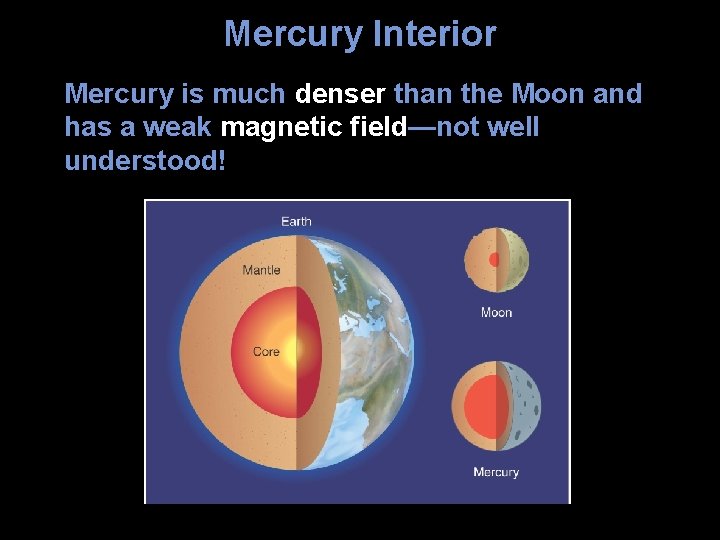
Mercury Interior Mercury is much denser than the Moon and has a weak magnetic field—not well understood!
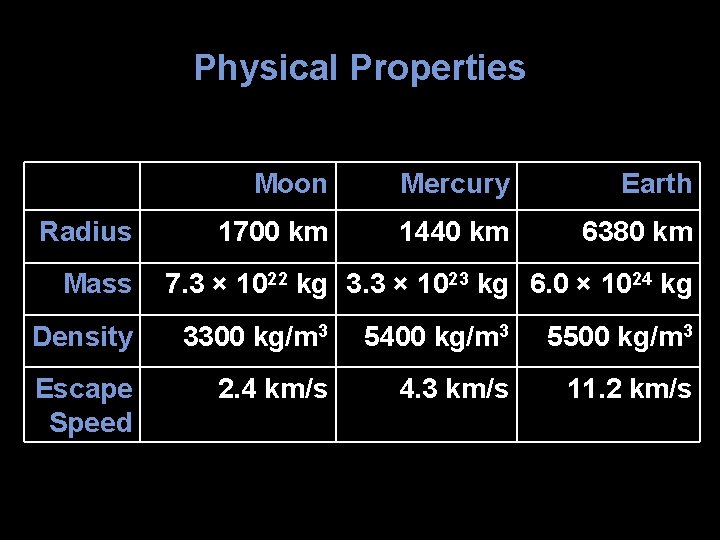
Physical Properties Radius Mass Moon Mercury Earth 1700 km 1440 km 6380 km 7. 3 × 10²² kg 3. 3 × 10²³ kg 6. 0 × 1024 kg Density 3300 kg/m 3 5400 kg/m 3 5500 kg/m 3 Escape Speed 2. 4 km/s 4. 3 km/s 11. 2 km/s
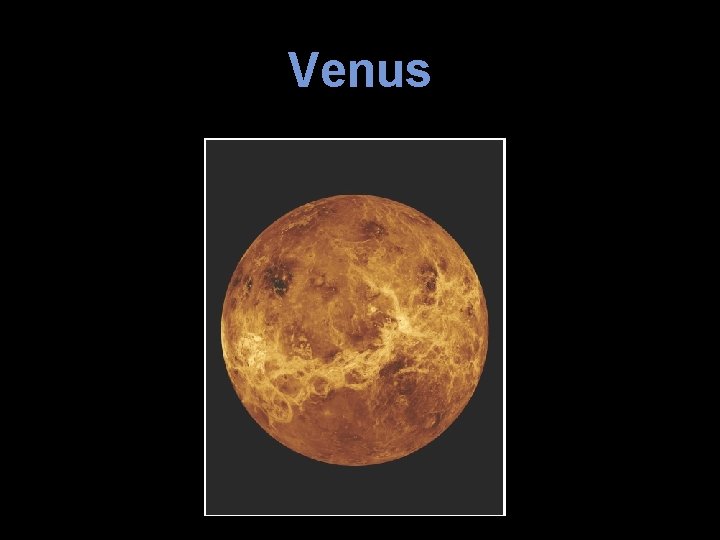
Venus
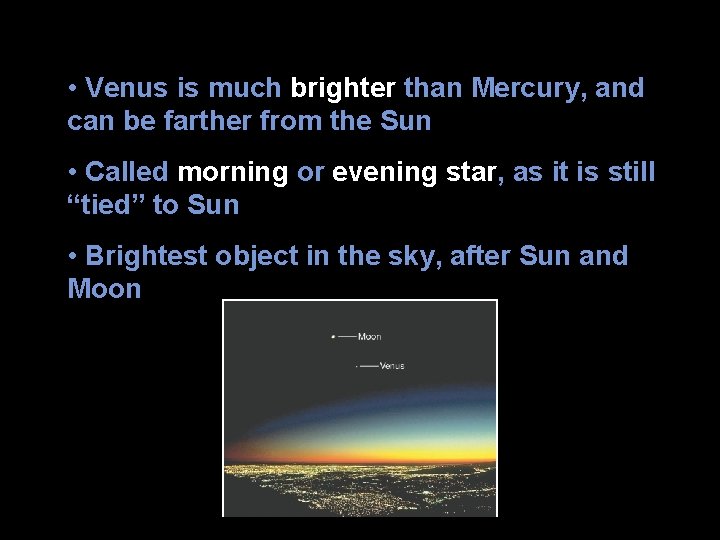
• Venus is much brighter than Mercury, and can be farther from the Sun • Called morning or evening star, as it is still “tied” to Sun • Brightest object in the sky, after Sun and Moon
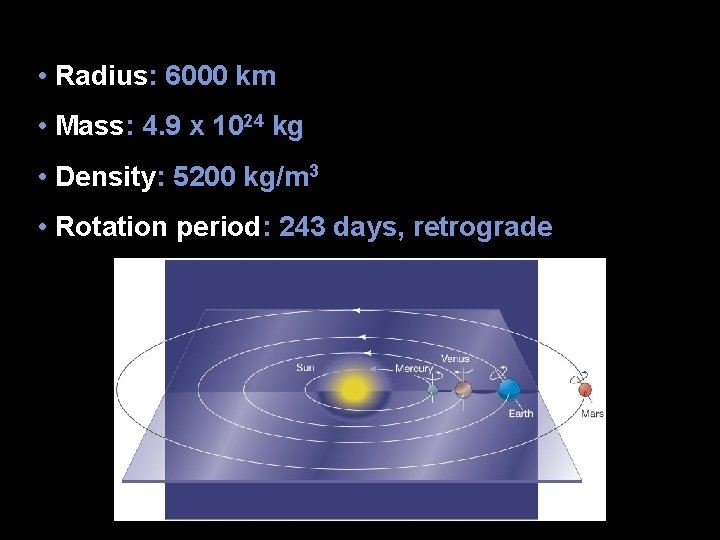
• Radius: 6000 km • Mass: 4. 9 x 1024 kg • Density: 5200 kg/m 3 • Rotation period: 243 days, retrograde
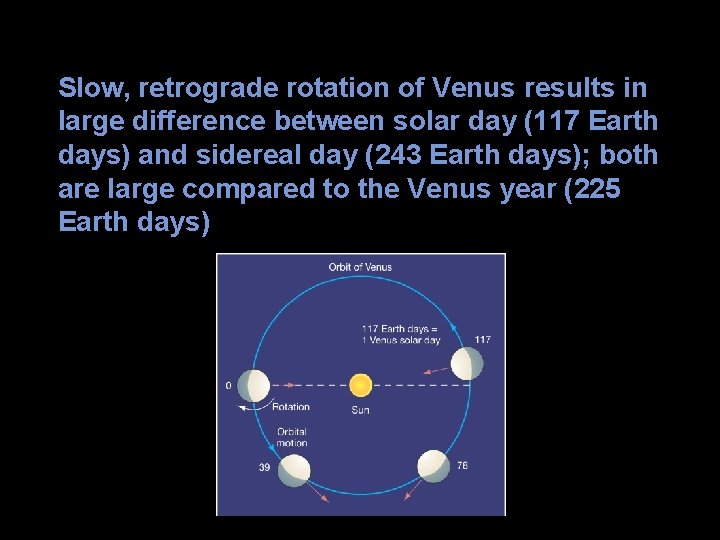
Slow, retrograde rotation of Venus results in large difference between solar day (117 Earth days) and sidereal day (243 Earth days); both are large compared to the Venus year (225 Earth days)
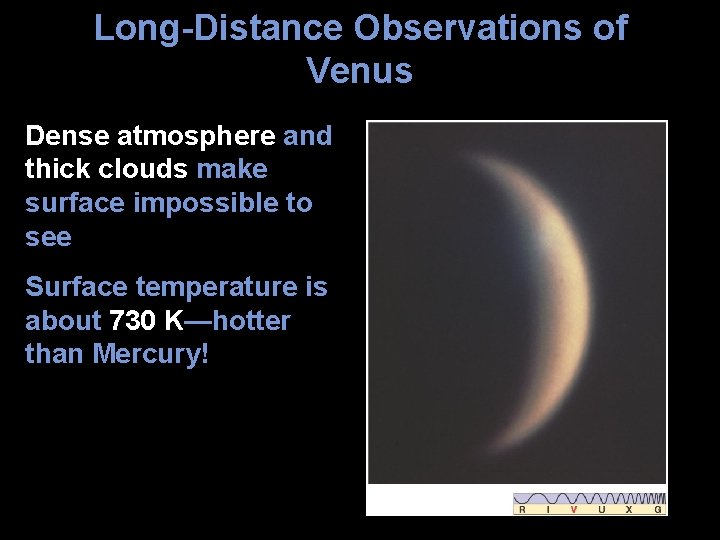
Long-Distance Observations of Venus Dense atmosphere and thick clouds make surface impossible to see Surface temperature is about 730 K—hotter than Mercury!
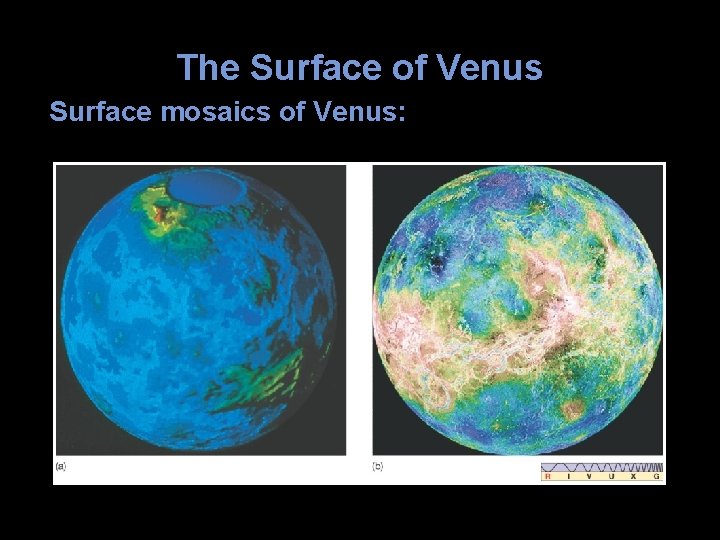
The Surface of Venus Surface mosaics of Venus:
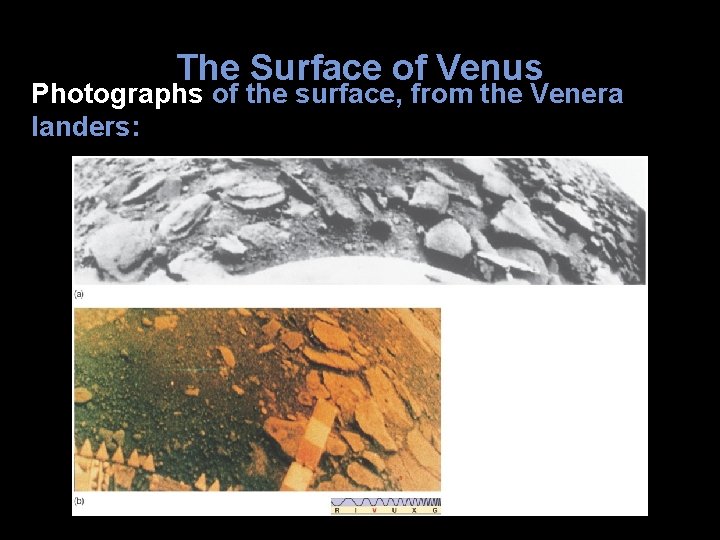
The Surface of Venus Photographs of the surface, from the Venera landers:
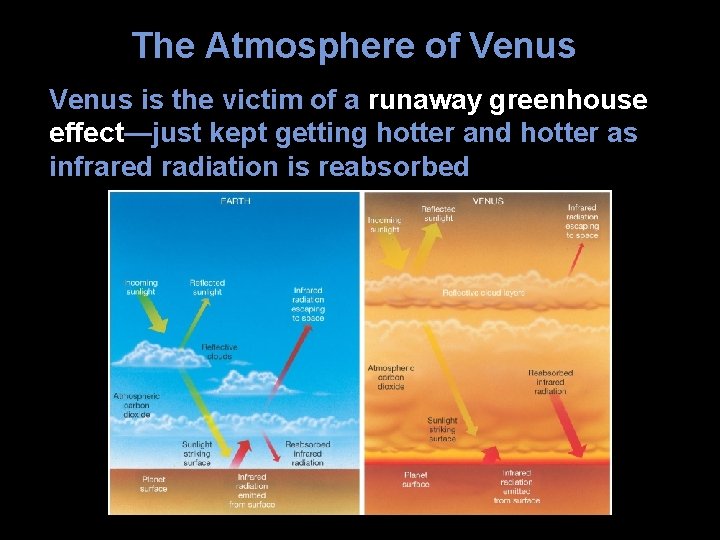
The Atmosphere of Venus is the victim of a runaway greenhouse effect—just kept getting hotter and hotter as infrared radiation is reabsorbed
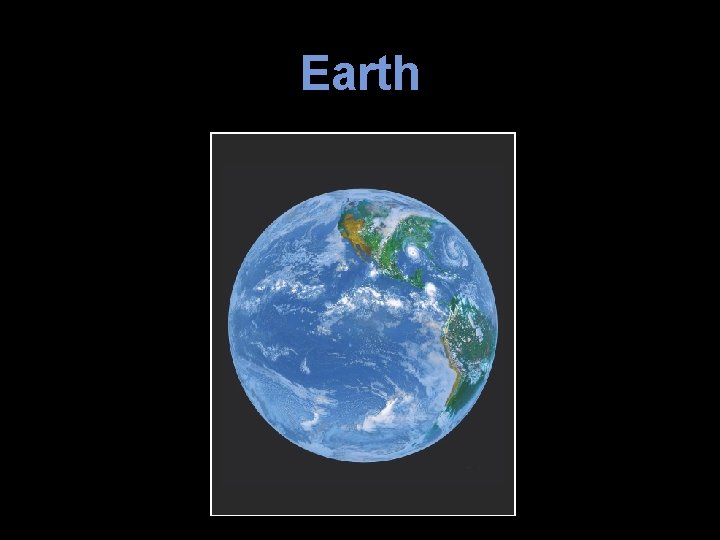
Earth
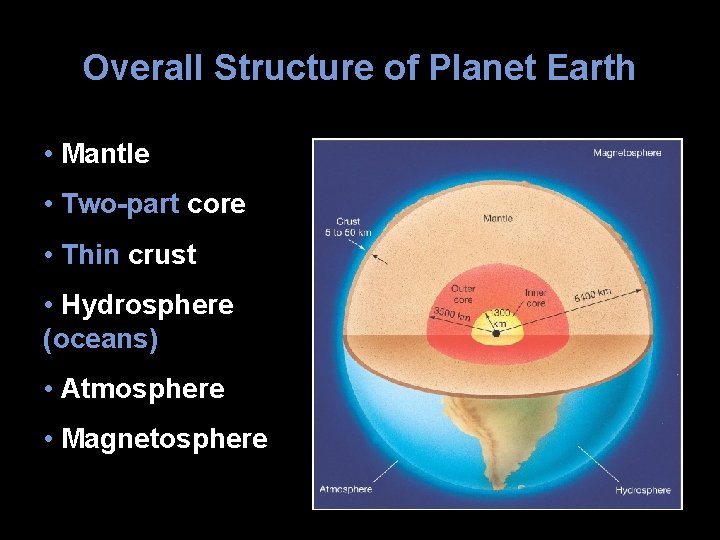
Overall Structure of Planet Earth • Mantle • Two-part core • Thin crust • Hydrosphere (oceans) • Atmosphere • Magnetosphere
Earth’s Interior Mantle is much less dense than core Mantle is rocky; core is metallic—iron and nickel Outer core is liquid; inner core is solid, due to pressure Volcanic lava comes from mantle, allows analysis of composition
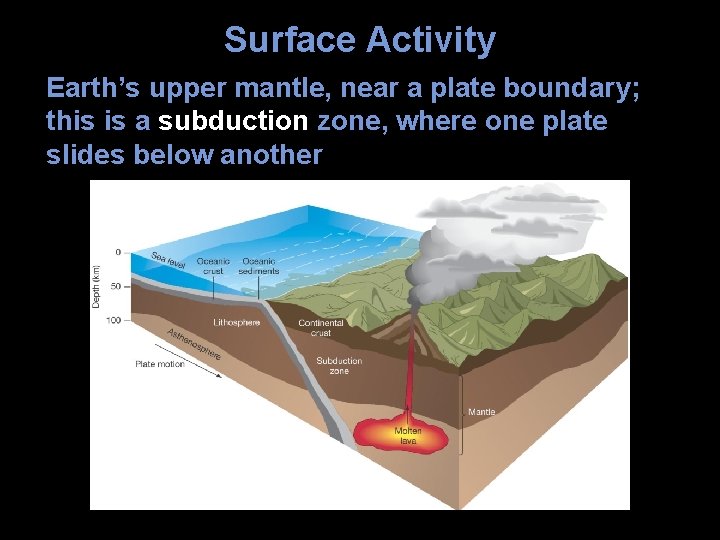
Surface Activity Earth’s upper mantle, near a plate boundary; this is a subduction zone, where one plate slides below another
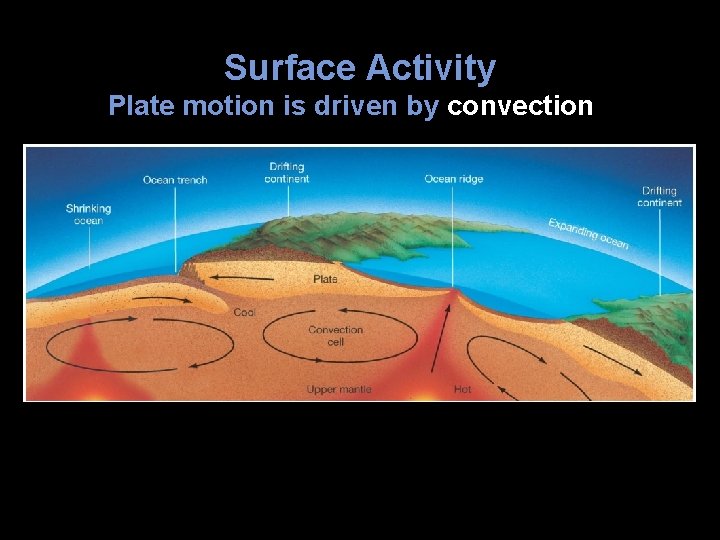
Surface Activity Plate motion is driven by convection
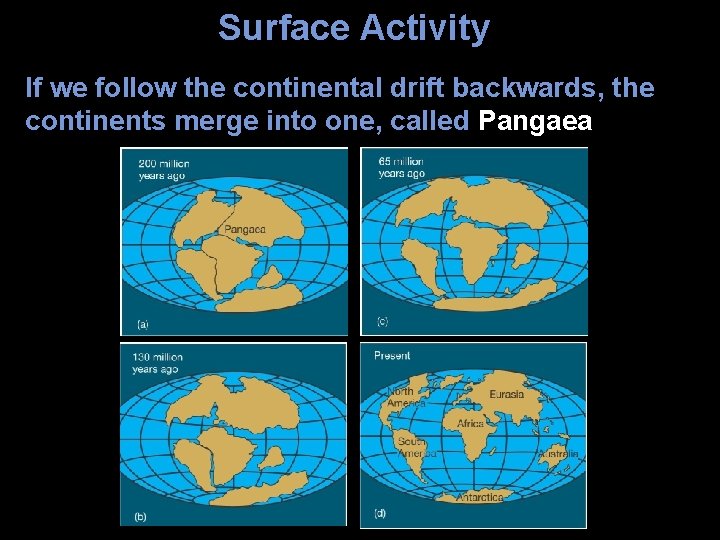
Surface Activity If we follow the continental drift backwards, the continents merge into one, called Pangaea
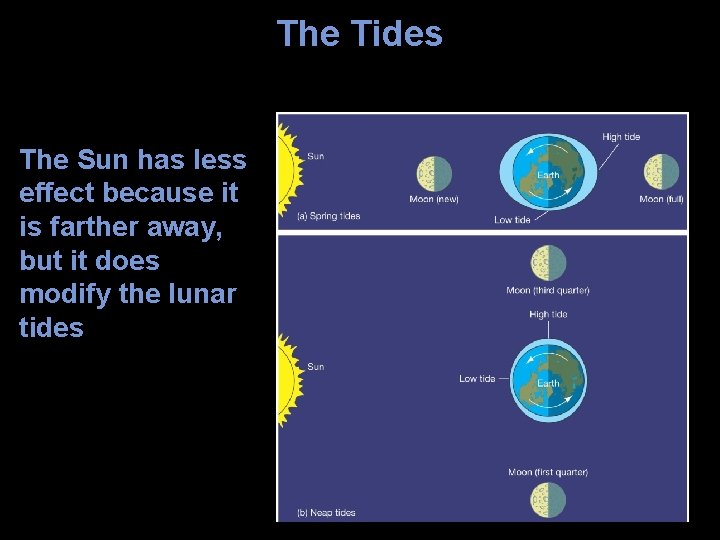
The Tides The Sun has less effect because it is farther away, but it does modify the lunar tides
Mars
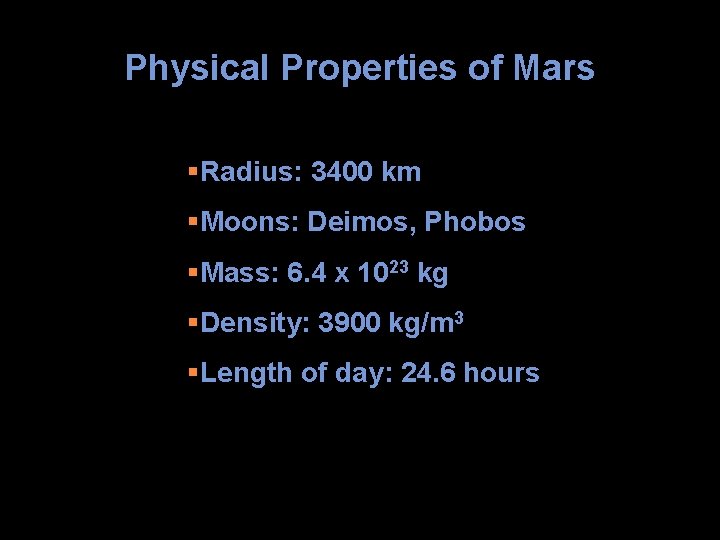
Physical Properties of Mars §Radius: 3400 km §Moons: Deimos, Phobos §Mass: 6. 4 x 10²³ kg §Density: 3900 kg/m 3 §Length of day: 24. 6 hours
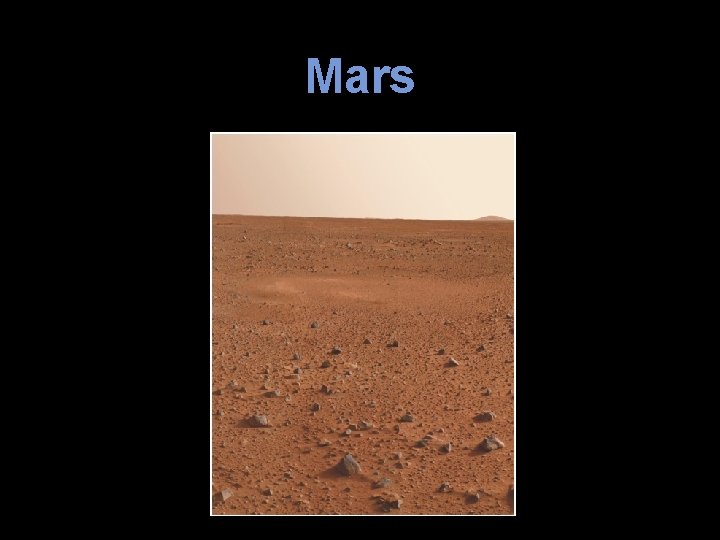
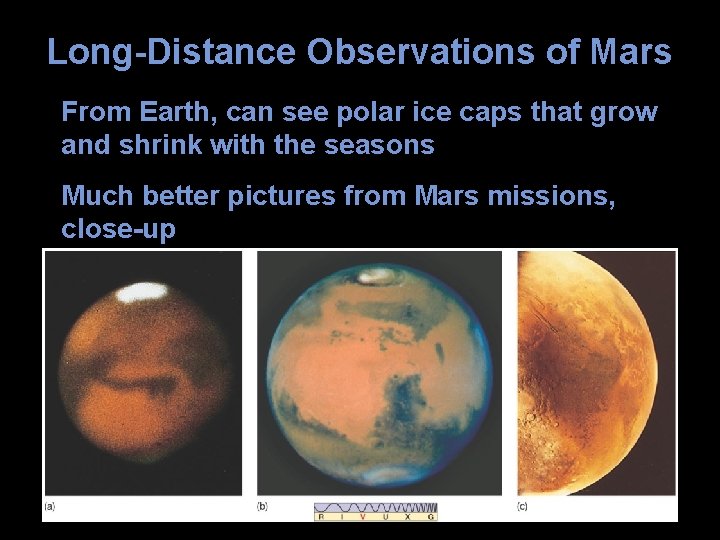
Long-Distance Observations of Mars From Earth, can see polar ice caps that grow and shrink with the seasons Much better pictures from Mars missions, close-up
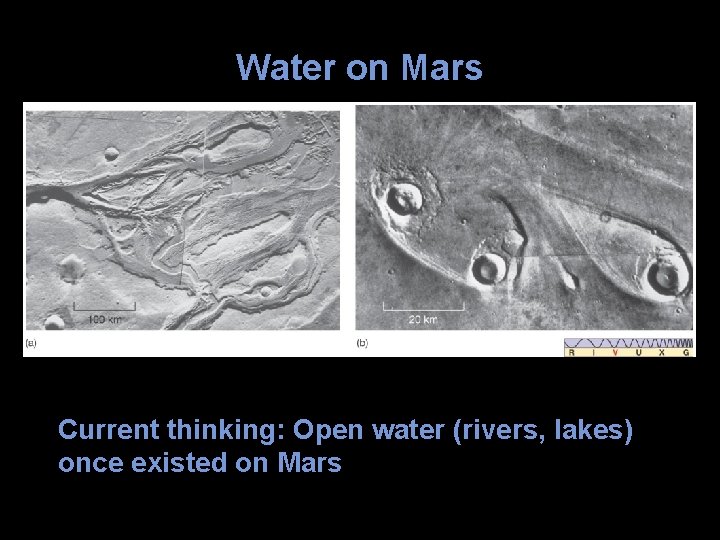
Water on Mars Current thinking: Open water (rivers, lakes) once existed on Mars
Jupiter
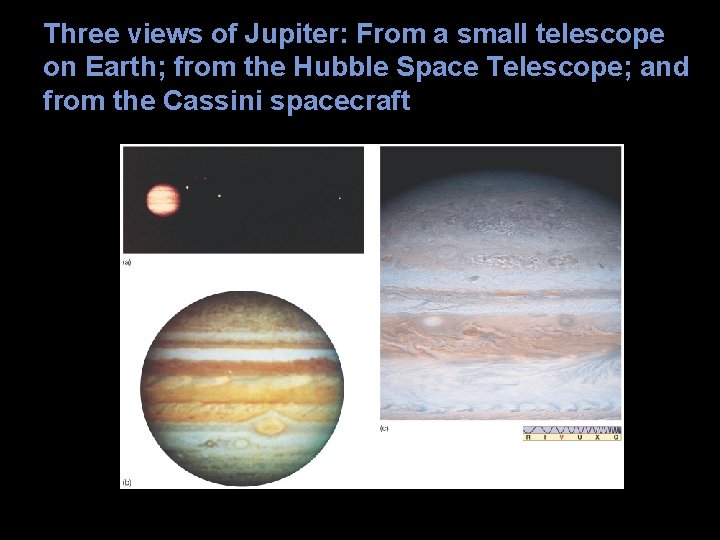
Three views of Jupiter: From a small telescope on Earth; from the Hubble Space Telescope; and from the Cassini spacecraft
Orbital and Physical Properties • Mass: 1. 9 × 1027 kg (twice as much as all other planets put together) • Radius: 71, 500 km (112 times Earth’s) • Density: 1300 kg/m 3—cannot be rocky or metallic as inner planets are • Rotation rate: Problematic, as Jupiter has no solid surface; different parts of atmosphere rotate at different rates • From magnetic field, rotation period is 9 hr, 55 min
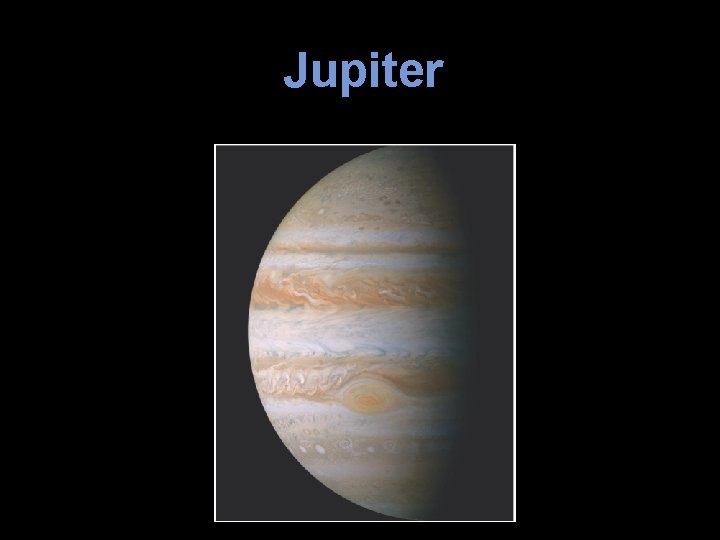
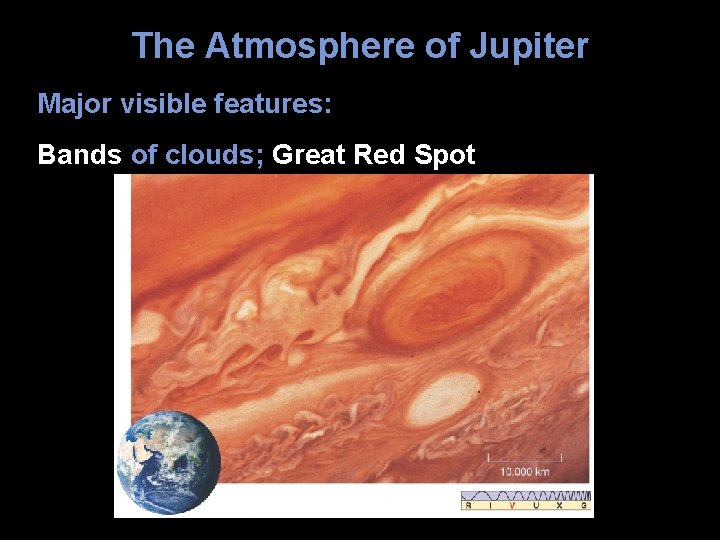
The Atmosphere of Jupiter Major visible features: Bands of clouds; Great Red Spot
Internal Structure Jupiter radiates more energy than it receives from the Sun: • Core is still cooling off from heating during gravitational compression Could Jupiter have been a star? • No; it is far too cool and too small for that. It would need to be about 80 times more massive to be even a very faint star.
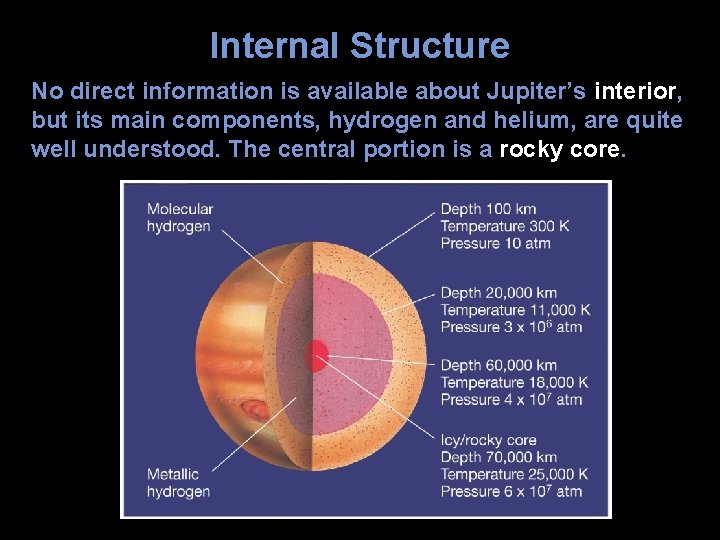
Internal Structure No direct information is available about Jupiter’s interior, but its main components, hydrogen and helium, are quite well understood. The central portion is a rocky core.
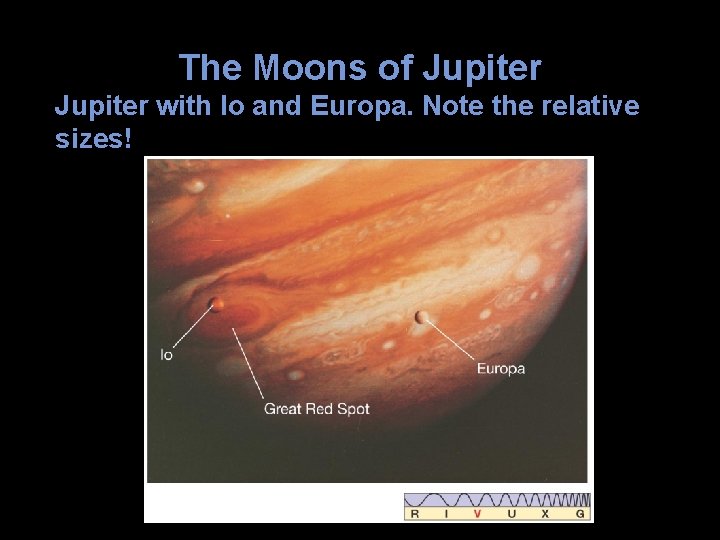
The Moons of Jupiter with Io and Europa. Note the relative sizes!
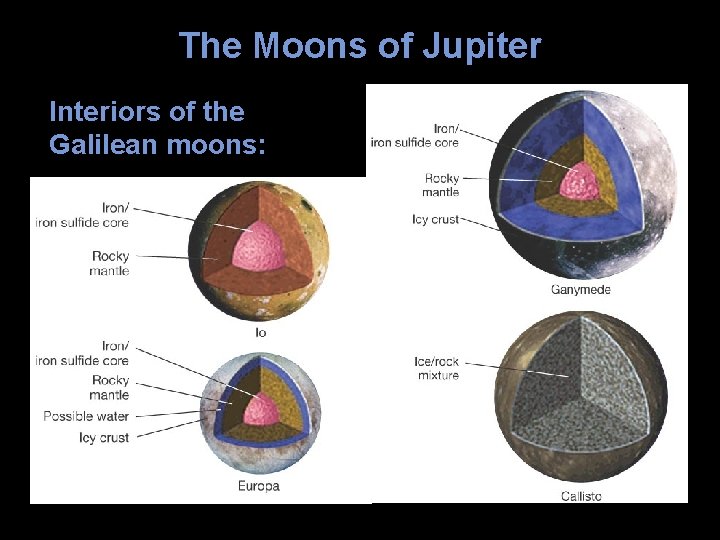
The Moons of Jupiter Interiors of the Galilean moons:
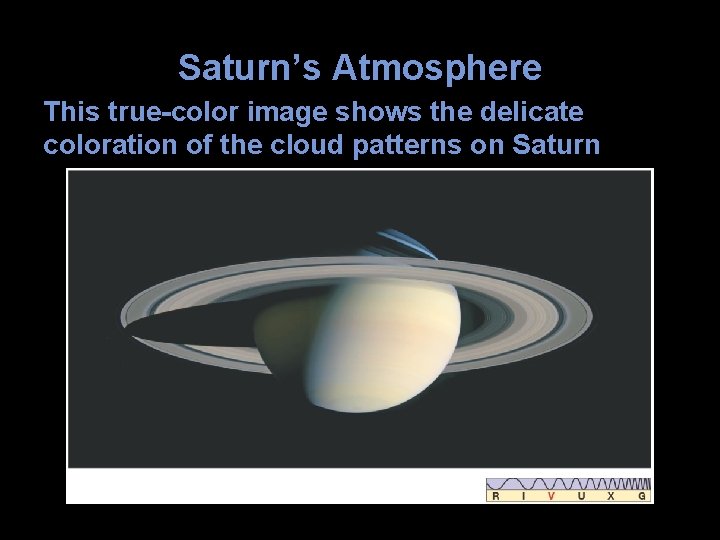
Saturn’s Atmosphere This true-color image shows the delicate coloration of the cloud patterns on Saturn
Orbital and Physical Properties Mass: 5. 7 × 1026 kg Radius: 60, 000 km Density: 700 kg/m 3—less than water! Rotation: Rapid and differential, enough to flatten Saturn considerably Rings: Very prominent; wide but extremely thin
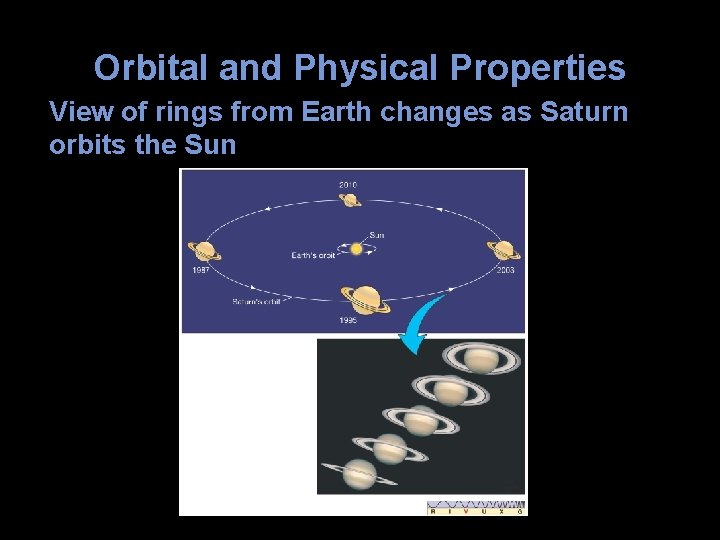
Orbital and Physical Properties View of rings from Earth changes as Saturn orbits the Sun
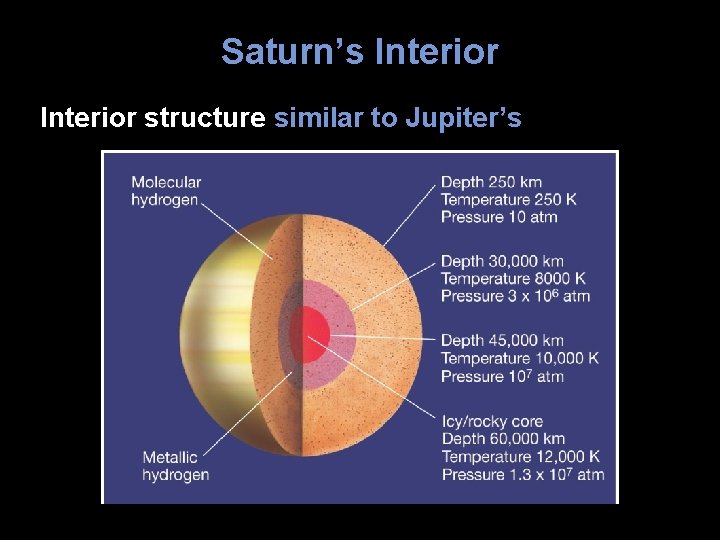
Saturn’s Interior structure similar to Jupiter’s
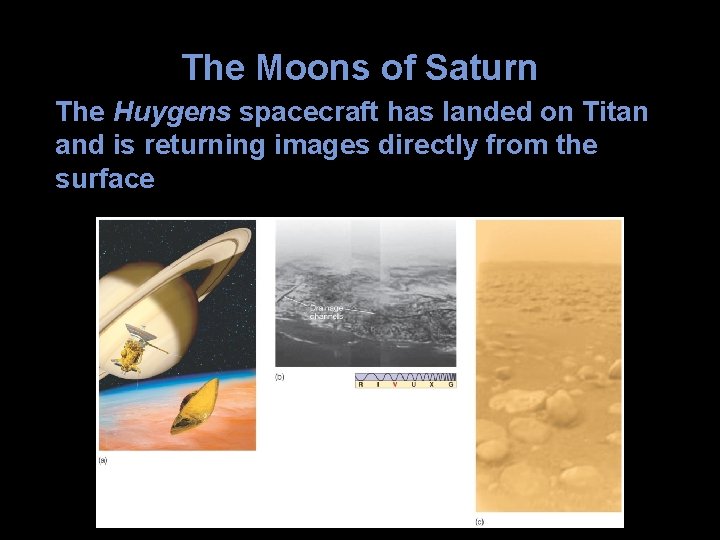
The Moons of Saturn The Huygens spacecraft has landed on Titan and is returning images directly from the surface
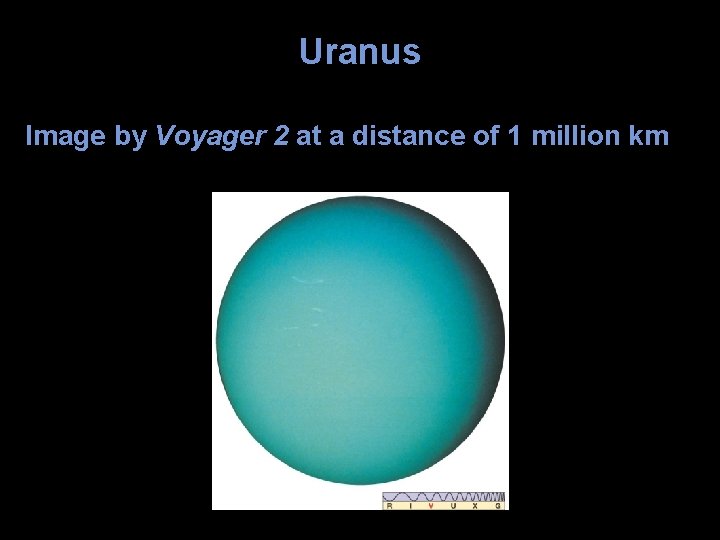
Uranus Image by Voyager 2 at a distance of 1 million km
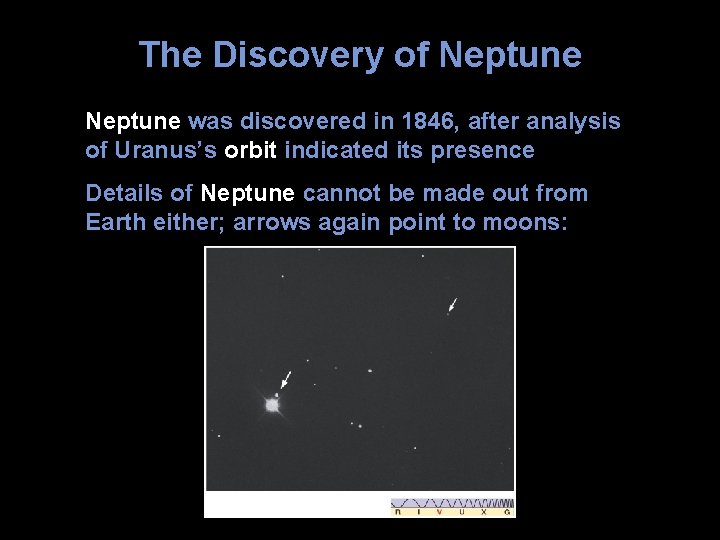
The Discovery of Neptune was discovered in 1846, after analysis of Uranus’s orbit indicated its presence Details of Neptune cannot be made out from Earth either; arrows again point to moons:
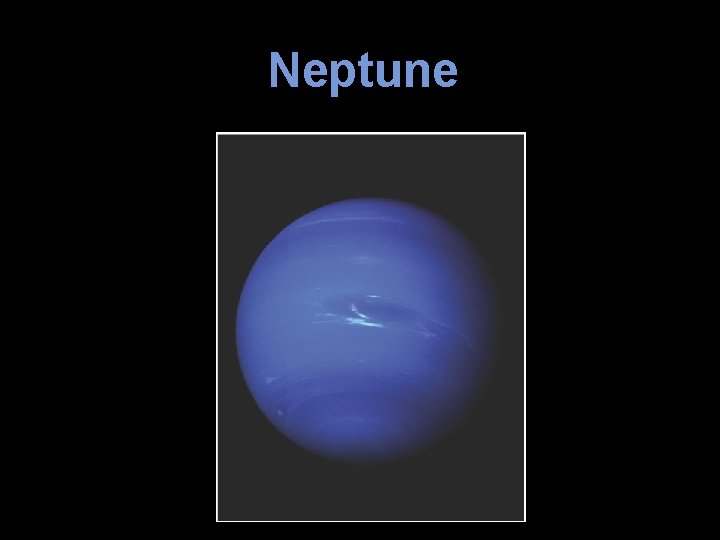
Neptune
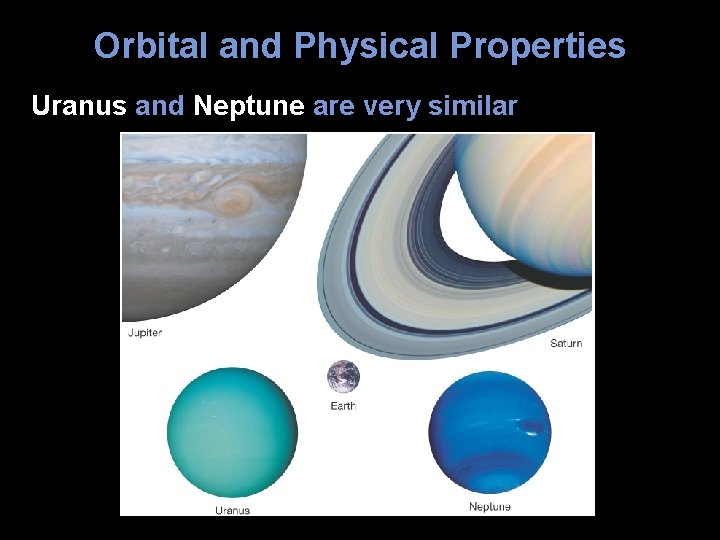
Orbital and Physical Properties Uranus and Neptune are very similar
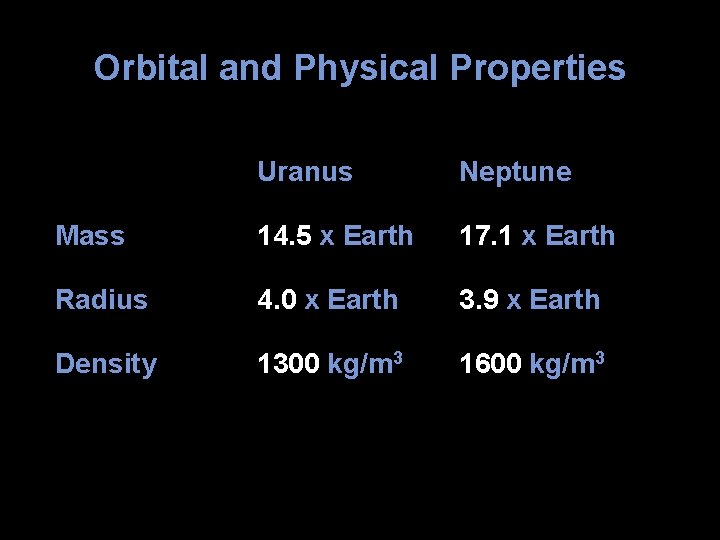
Orbital and Physical Properties Uranus Neptune Mass 14. 5 x Earth 17. 1 x Earth Radius 4. 0 x Earth 3. 9 x Earth Density 1300 kg/m 3 1600 kg/m 3