
Planet Earth Environmental Science Planet Earth 3 rd
- Slides: 33
Planet Earth Environmental Science
Planet Earth 3 rd planet from the sun. Planet Earth is the _____ We live on a unique planet in that it may be the only one in our solar system that has life on it. What do you think? Are we alone?
Living Creatures Living things are called? Organisms
Question Do organisms interact with non living components on the Earth? Examples: 1. Respiration 2. Water breaks down components 3. Rocks and Minerals for building/ tool making
Non-living components of Earth Are? Lithosphere Hydrosphere Atmosphere
The lithosphere …… Land on the Earth’s surface The hydrosphere…………. . That part of the Earth made up of water The atmosphere………… Air that surrounds the Earth
What characteristics make it possible for life to exist on the Earth? 1. Liquid water Why is it important? ? • Organisms are mostly water. • Nutrients need to be dissolved in water to be used • Most chemical activities occur in water.
What else is water needed for 2. To store heat Where is this going to happen? OCEANS
What characteristics make it possible for life to exist on the Earth? 1. The atmosphere Why? • Maintain a steady temperature • Gases are used by organisms
What characteristics make it possible for life to exist on the Earth? 2. The sun … All energy comes from the sun
oxygen Animals use _______ to carry out the process respiration of ____________ to make energy _______.
CO 2 Plants use _______ to carry out the process photosynthesis of ____________ to make energy _______ from sunlight.
Do plants need oxygen to make energy? Yes Plants use oxygen to make energy for them to grow and develop
The interaction between living and nonliving parts of the Earth are the subject of: ECOLOGY
The lithosphere is made of three types of rocks: 1. Igneous – liquid or molten rocks 2. Sedimentary – layers of sediment accumulate and are compacted or cemented 3. Metamorphic – formed under intense heat and pressure.
The atmosphere 1. 2. 3. 4. What gases make up the atmosphere? Nitrogen – 78% Oxygen – 21% Carbon dioxide -. 04% The rest includes: water vapor, dust, argon
Where does the CO 2 come from? Released from volcanoes. Produced when burning fossil fuels.
Air pressure is……. . Greatest at sea level. 14. 7 lbs/in 2 Becomes less as you gain altitude.
Atmospheric layers Thermosphere - highest Mesosphere Stratosphere Troposphere – nearest the Earth
Troposphere Weather occurs here Most of the Earth’s water vapor and gases are here
Stratosphere Ozone layer here O 3 you smell this after a thunderstorm Jet stream – weather controller
Mesosphere Meteors burn up here Coolest layer
Thermosphere Contains the ionosphere Ions become trapped and glow causing the northern lights Temperature is 2, 000 0 C – air molecules are very far apart.
Hydrosphere 97 % of the water on the earth is? Salt water Of the remaining water 2% is locked in ice. This leaves only 1% as usable freshwater.
Ocean water Is 35 ppt of salt Meaning 35 solid parts of salt for every 1000 parts of sea water. The major salt is Na. Cl
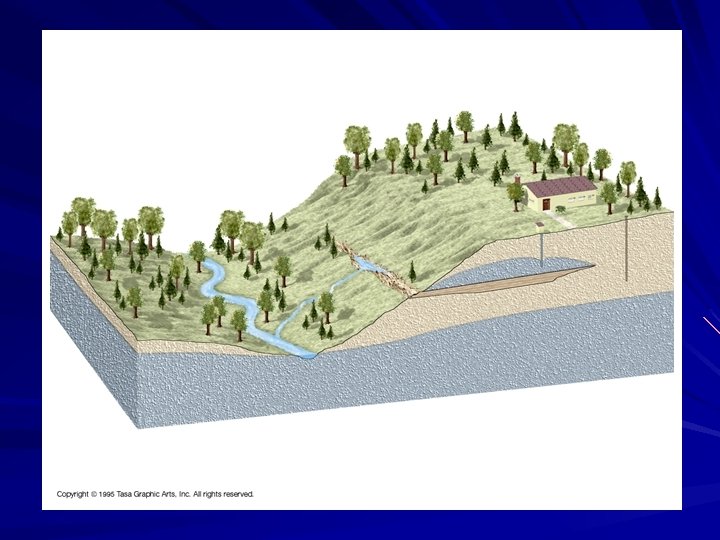
Freshwater Stored in: lakes, ponds, streams, rivers Ground water
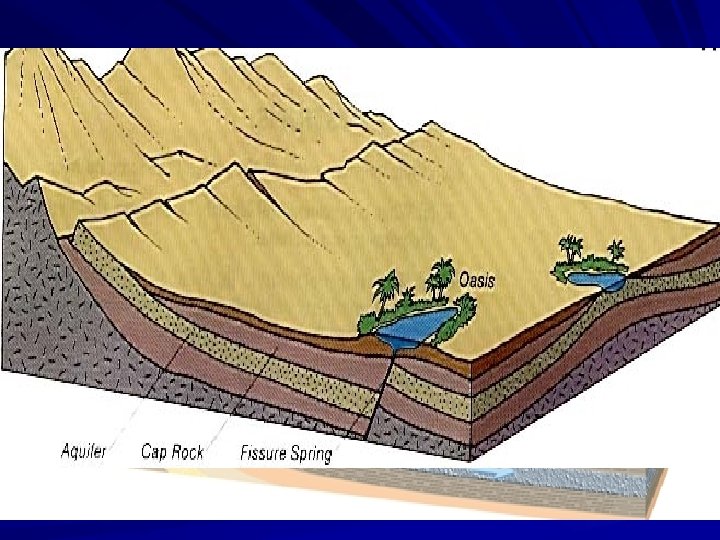
Ground water Is carried in porous rock (permeable) called an aquifer Ground water can reach the surface by way of a: spring
When ground water becomes “sandwiched” between two layers of impermeable rock and the rock above cracks, water can reach the surface by way of an oasis or artesian well.
Question Can rain re-fill the aquifers as fast as people can pump the water out? In most cases NO!!!!!! Most surface water runs off and continues to the ocean
Biosphere………… All parts of the Earth that contains and supports life…. . Most life prefers to live between 500 m. deep in the ocean to 6 km above sea level.
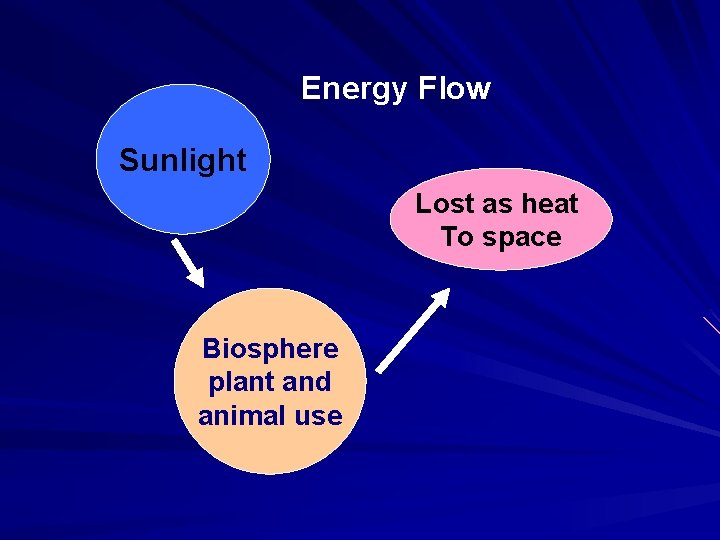
Energy Flow Sunlight Lost as heat To space Biosphere plant and animal use
Changes in the biosphere 1. 2. Affect organisms If we raise or lower the temperature of ocean water…. . Volcanic eruptions can……….
Organisms can change the biosphere What happens when a beaver dams a stream? Make a list of all the things that could happen. The biosphere is a very complex network