
Plane Mirror Reflection Normal imaginary vertical line where

- Slides: 27
Plane Mirror & Reflection
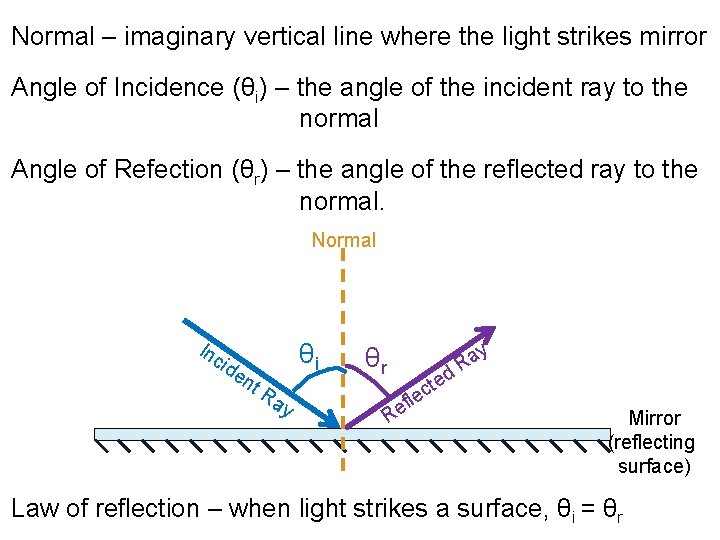
Normal – imaginary vertical line where the light strikes mirror Angle of Incidence (θi) – the angle of the incident ray to the normal Angle of Refection (θr) – the angle of the reflected ray to the normal. Normal Inc ide nt θi Ra y θr Re y a d. R te c fle Mirror (reflecting surface) Law of reflection – when light strikes a surface, θi = θr
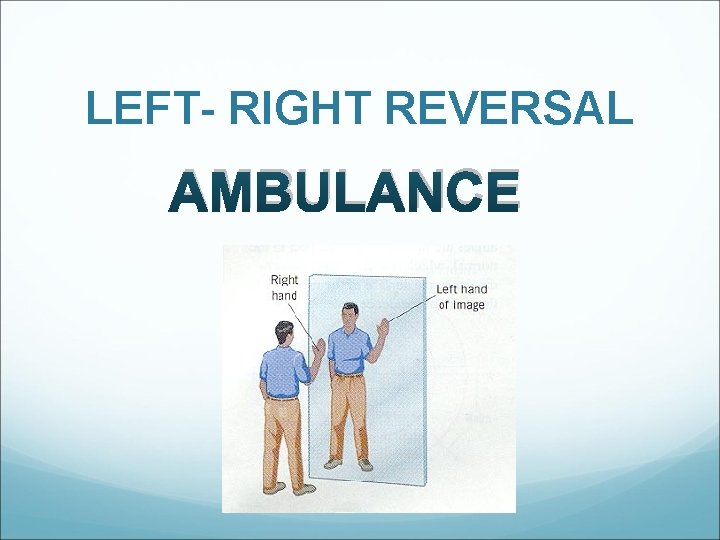
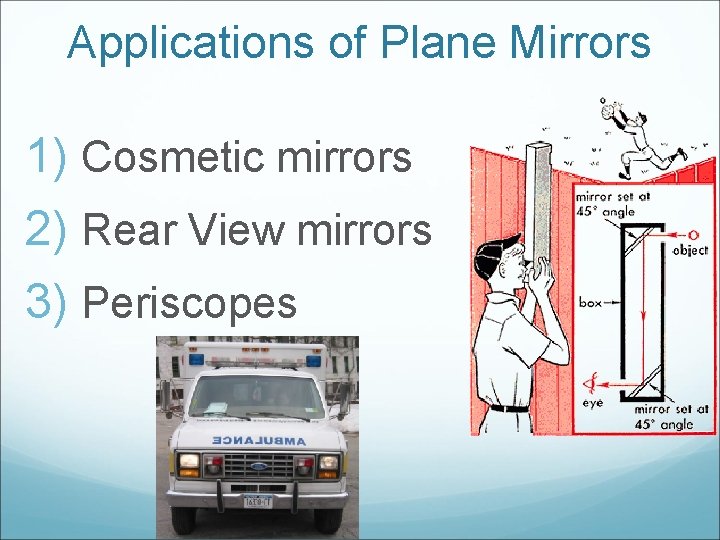
LEFT- RIGHT REVERSAL AMBULANCE
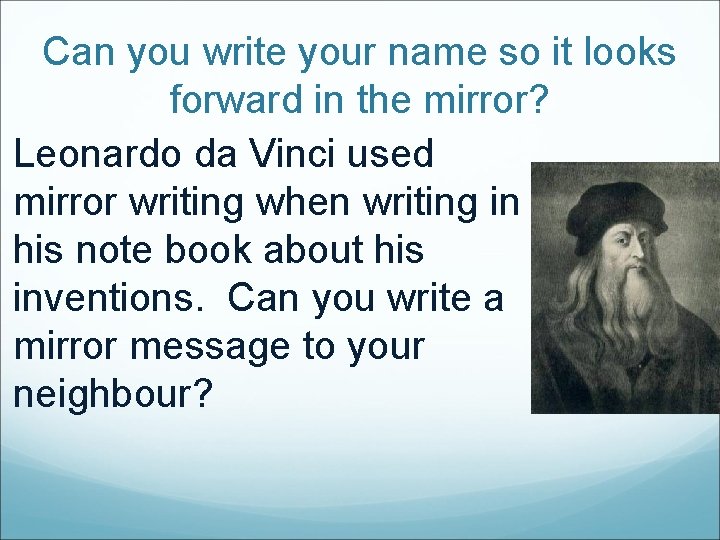
Da Vinci Writing Materials: plane mirror, paper, pencil Place the mirror on the paper and hold it there with your hand While LOOKING into the mirror, try and print you name on the piece of paper so that it appears correctly IN THE MIRROR not on the page You might need to practice. Try it with your non-dominant hand Try writing a secret message to a friend and have them decode it Check the accuracy of de-coding the message with the mirror
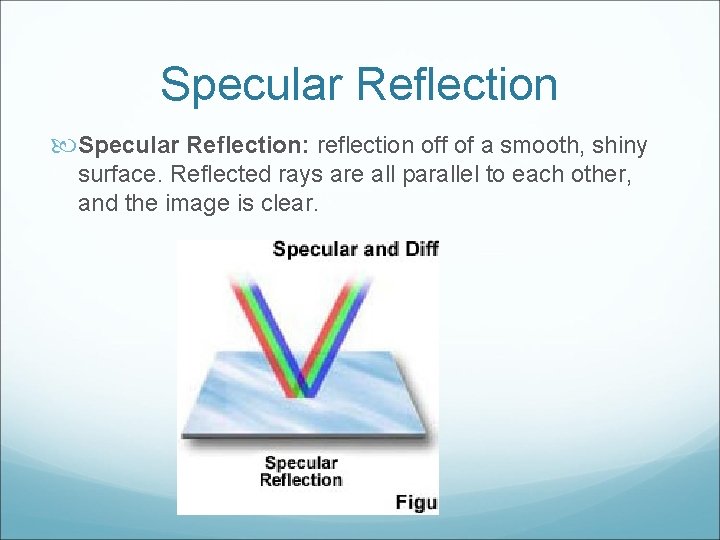
Specular Reflection: reflection off of a smooth, shiny surface. Reflected rays are all parallel to each other, and the image is clear.
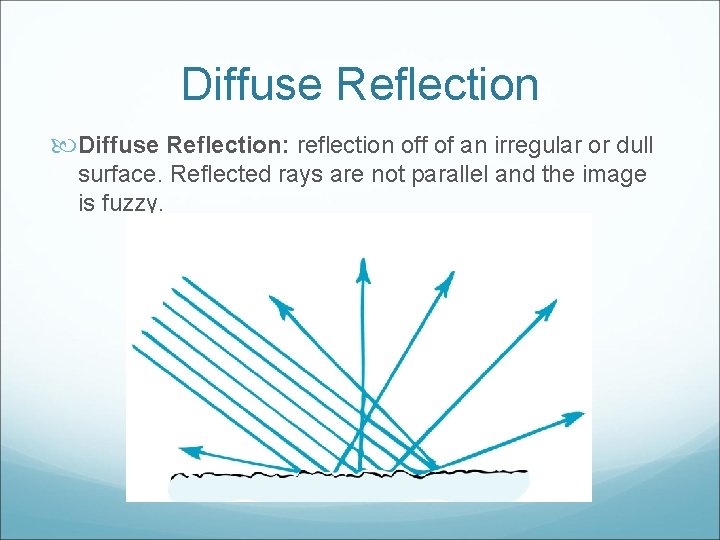
Diffuse Reflection: reflection off of an irregular or dull surface. Reflected rays are not parallel and the image is fuzzy.
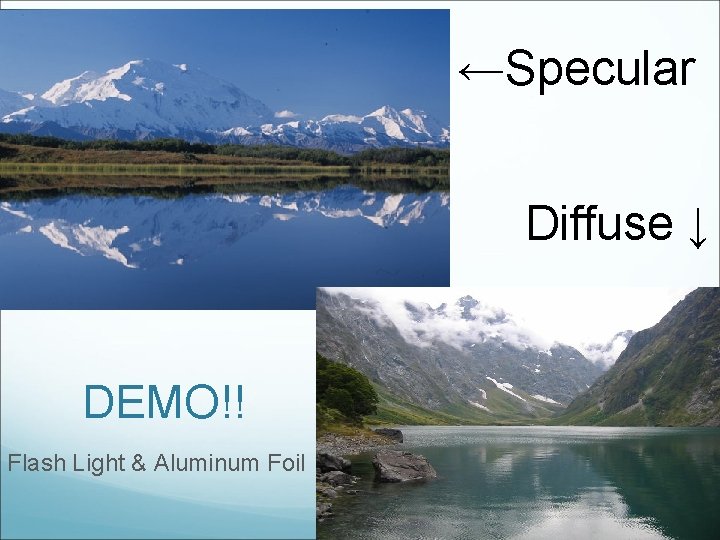
←Specular Diffuse ↓ DEMO!! Flash Light & Aluminum Foil
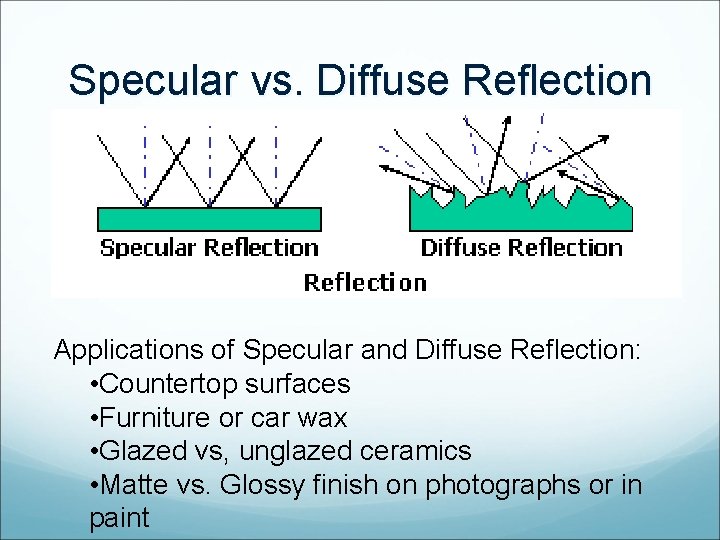
Specular vs. Diffuse Reflection Applications of Specular and Diffuse Reflection: • Countertop surfaces • Furniture or car wax • Glazed vs, unglazed ceramics • Matte vs. Glossy finish on photographs or in paint
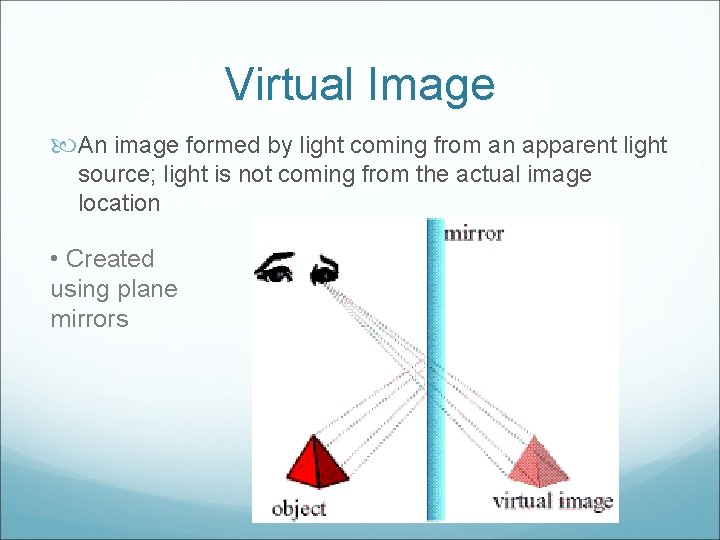
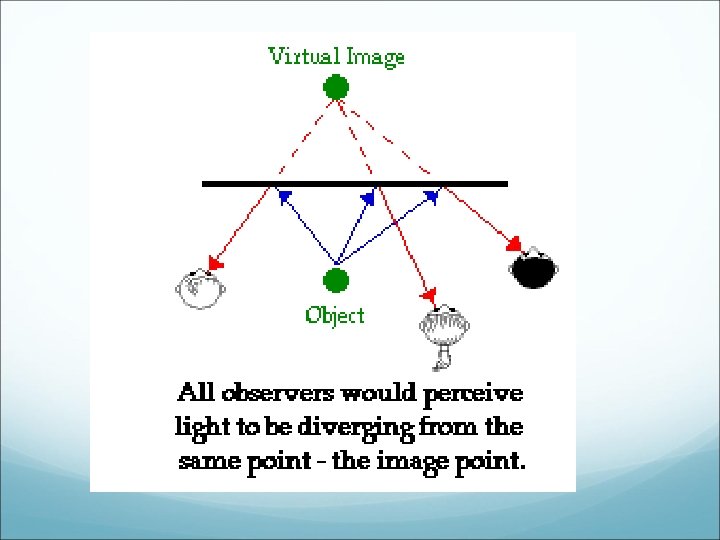
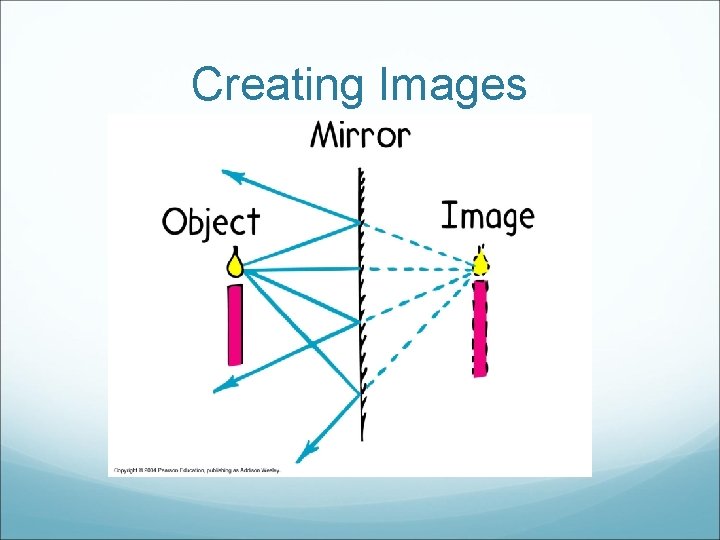
Virtual Image An image formed by light coming from an apparent light source; light is not coming from the actual image location • Created using plane mirrors
Real Image An image that can be seen on a screen as a result of light rays actually hitting (arriving) at the image location Pig Demo
Describing an Image When describing an image you need to consider 4 characteristics known as SALT: S= Size of image (compared to the object: same size, smaller or larger) A= Attitude of image ( which way the image is oriented compared to the object: upright or inverted)
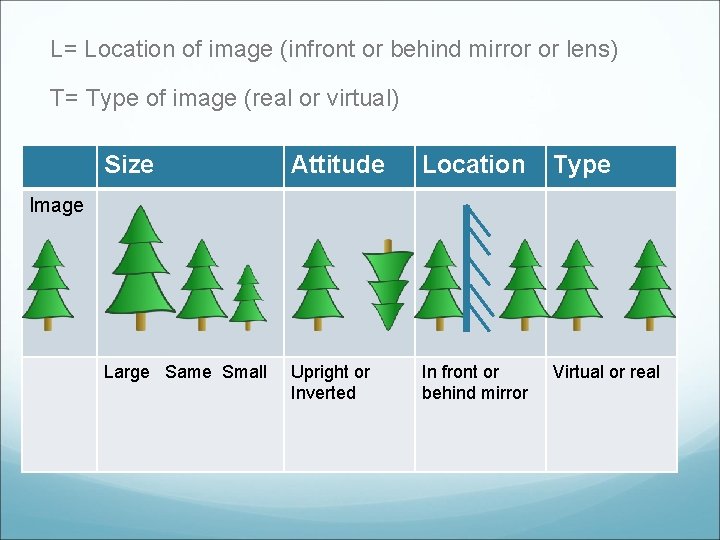
L= Location of image (infront or behind mirror or lens) T= Type of image (real or virtual) Size Attitude Location Type Large Same Small Upright or Inverted In front or behind mirror Virtual or real Image
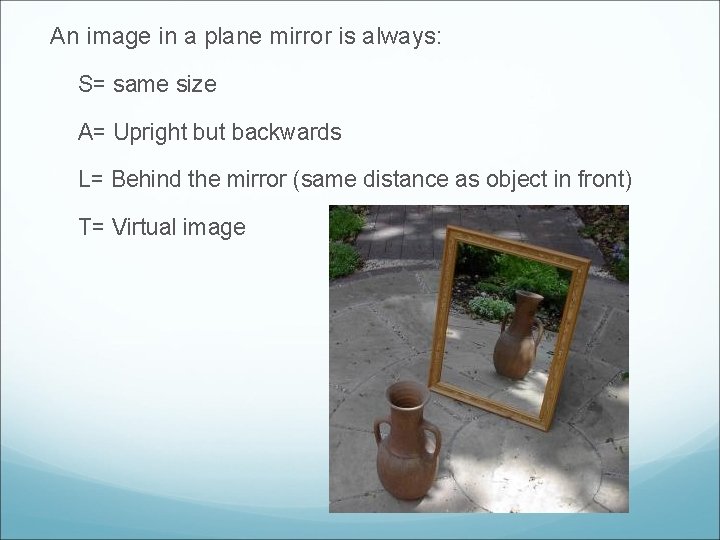
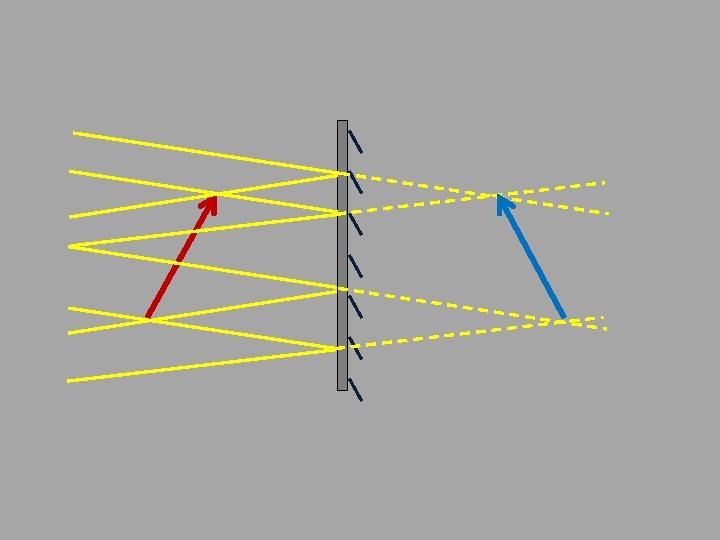
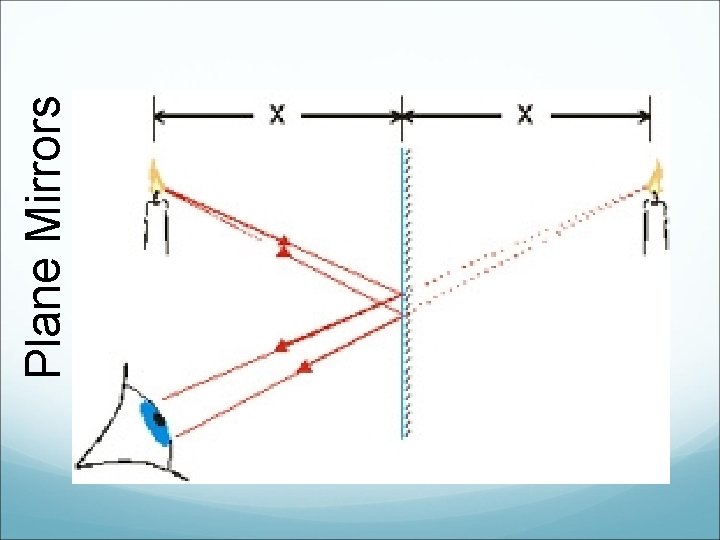
An image in a plane mirror is always: S= same size A= Upright but backwards L= Behind the mirror (same distance as object in front) T= Virtual image
Creating an Image
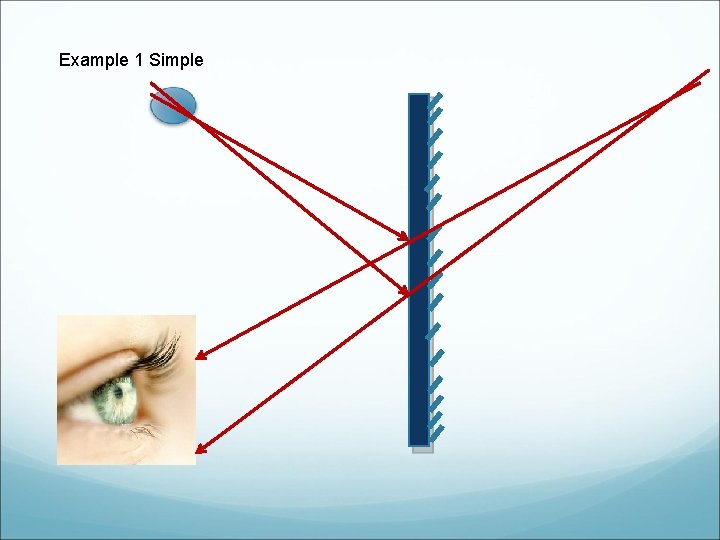
How to find an Image? 1. Draw the Plane mirror in correct location 2. Draw object on left side of the mirror 3. Draw a ray (incidence) through the object to the mirror and reflect the ray off the mirror 4. Change the angle and draw another ray through the object and reflect it off the mirror 5. Extend the Reflected rays “through” the mirror until the cross each other 6. Where the lines cross is where the object is located
Example 1 Simple
Creating Images
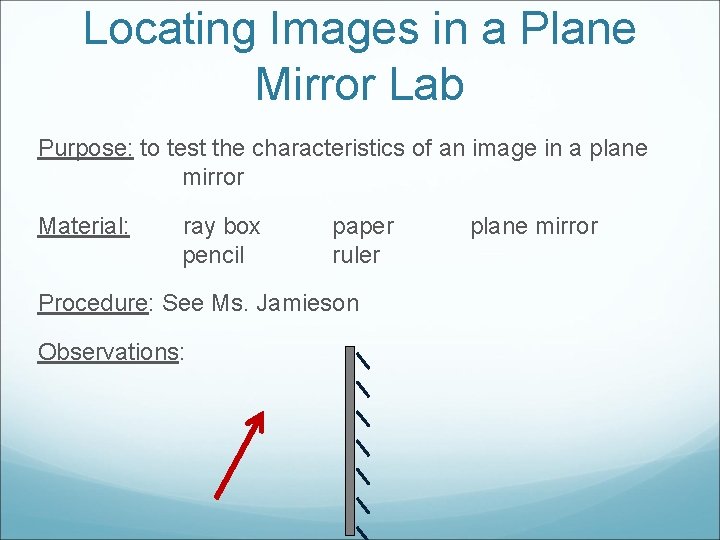
Locating Images in a Plane Mirror Lab Purpose: to test the characteristics of an image in a plane mirror Material: ray box pencil paper ruler Procedure: See Ms. Jamieson Observations: plane mirror
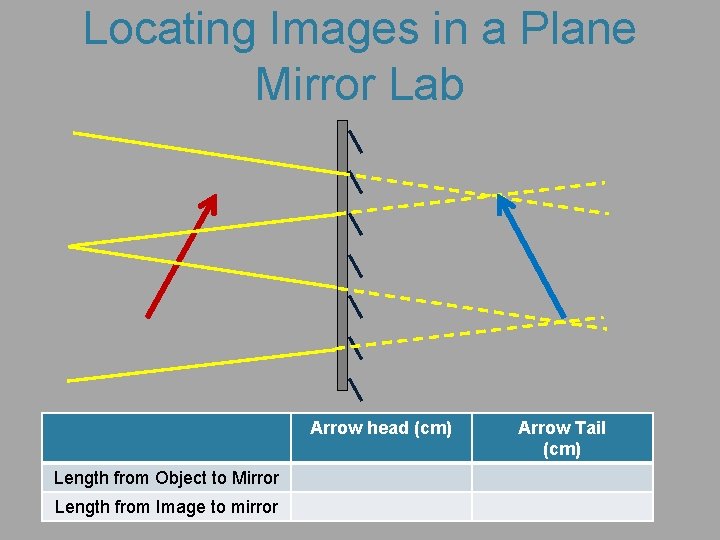
Locating Images in a Plane Mirror Lab Arrow head (cm) Length from Object to Mirror Length from Image to mirror Arrow Tail (cm)
Analysis: 1. Using your observations describe (SALT) the image that appeared in the plane mirror? 2. What can you predict about all images in plane mirrors? 3. Is there a simpler way to locate the image in a plane mirror without using light rays?
Plane Mirrors
Plane mirror worksheet
Applications of Plane Mirrors 1) Bathroom mirrors to see yourself 2) Rear View mirrors 3) Periscopes
Applications of Plane Mirrors 1) Cosmetic mirrors 2) Rear View mirrors 3) Periscopes
Can you write your name so it looks forward in the mirror? Leonardo da Vinci used mirror writing when writing in his note book about his inventions. Can you write a mirror message to your neighbour?