
PLANE A plane is a FLAT surface made

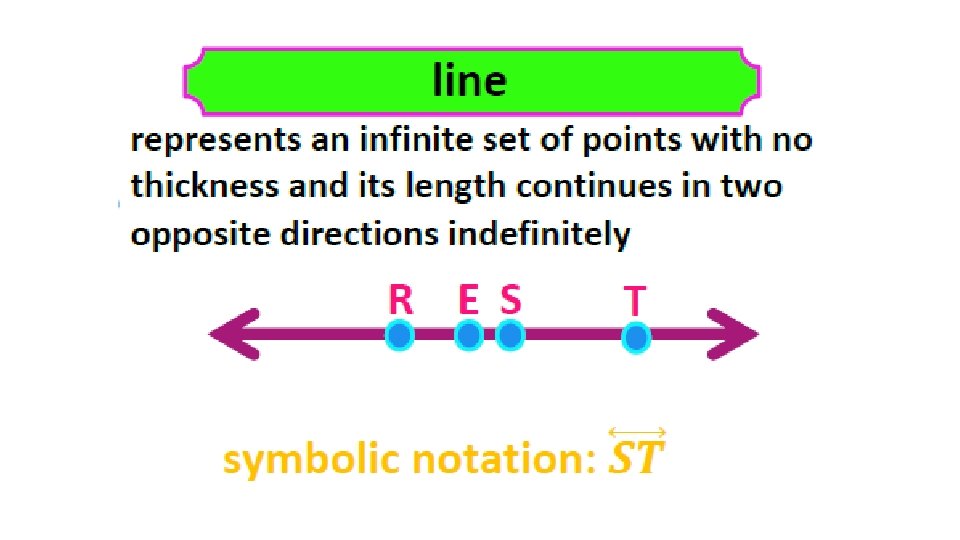
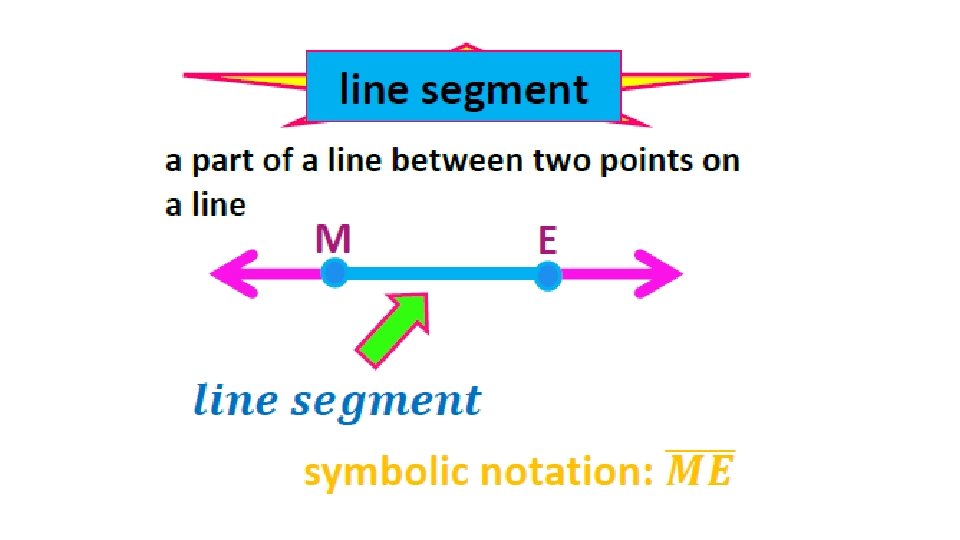
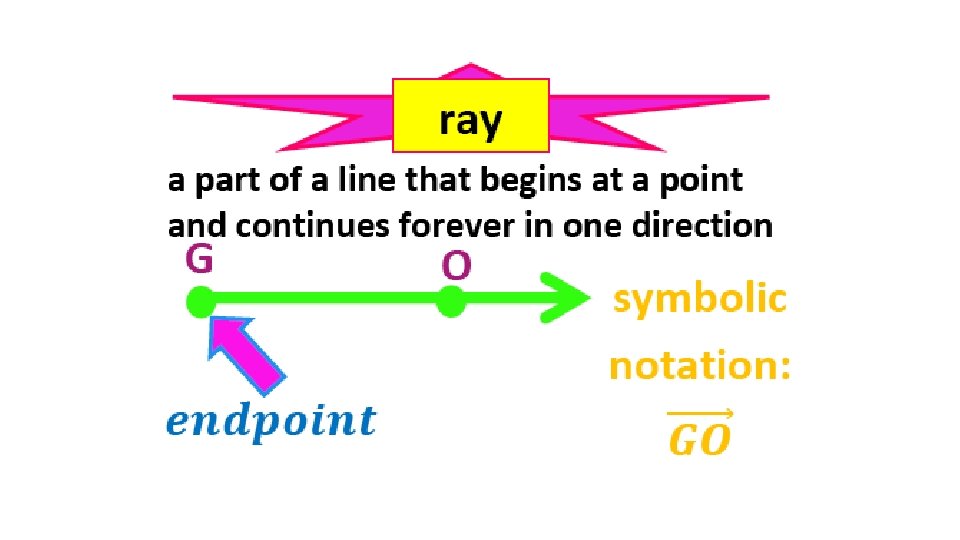




- Slides: 25
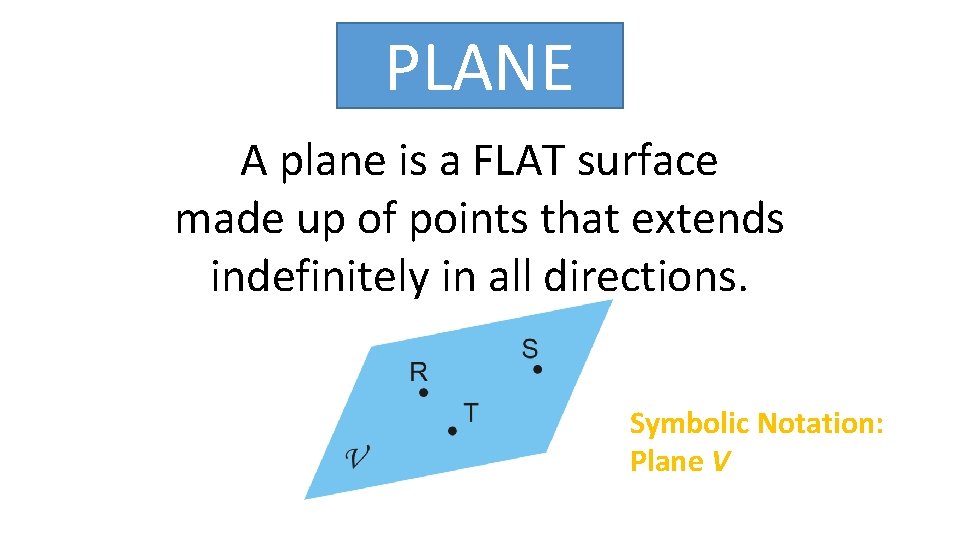
PLANE A plane is a FLAT surface made up of points that extends indefinitely in all directions. Symbolic Notation: Plane V
Symbolic notation: This angle could be read as either <B or <ABC or <CBA.
acute angle an angle whose measure is less than 90ᴼ A 40ᴼ symbolic notation: AWWW… Such a CUTE little angle!
right angle an angle whose measure is exactly 90ᴼ symbolic notation: B
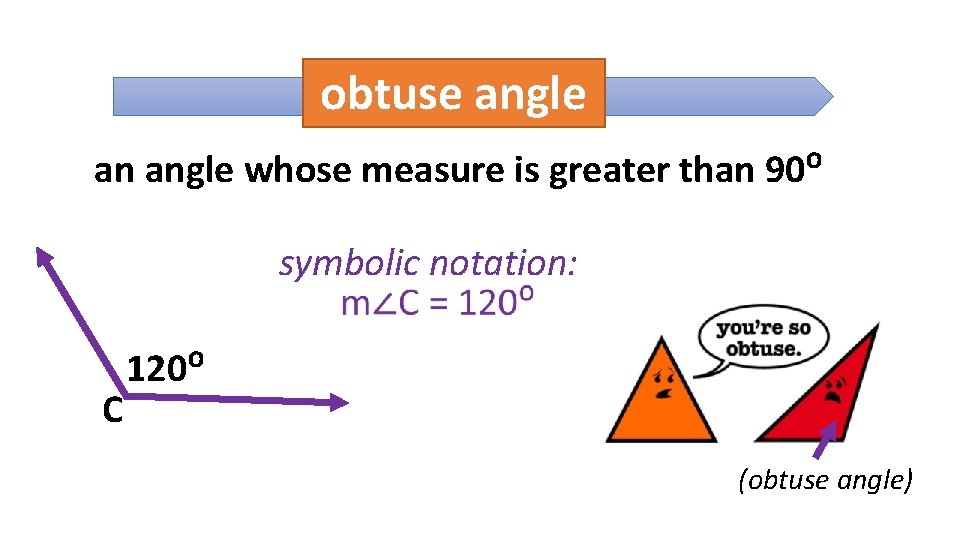
obtuse angle an angle whose measure is greater than 90ᴼ symbolic notation: C 120ᴼ (obtuse angle)
Congruent Angles Two angles that have the same measure symbolic notation:
Congruent Segments If two line segments have the same length, then they are congruent. symbolic notation
collinear a set of points that lie on the same line example: symbolic notation: P, Q, and R, are collinear Points P, Q, & R are collinear. Points X, Y, & Z are noncollinear.
PERPENDICULAR These lines are perpendicular.
COPLANAR Points that lie on the same plane.
Formula used to find the distance between two points on a coordinate plane.
ADJACENT ANGLES Two angles that share a common side and vertex. They are NEXT TO each other.
VERTICAL ANGLES Two angles directly across from each other on intersecting lines. Vertical angles are ALWAYS CONGRUENT!
COMPLEMENTARY ANGLES Two angles with measures that have a SUM of 90 degrees. They do not have to be adjacent (next to each other).
SUPPLEMENTARY ANGLES Two angles with measures that have a SUM of 180 degrees. They do not have to be adjacent (next to each other).
LINEAR PAIR ADJACENT ANGLES that are SUPPLEMENTARY. Angles that are next to each other that ADD to be 180 degrees.
ANGLE BISECTOR Bis ec to r An angle PIE-sector, I mean BISECTOR, is a line or ray that divides a PIE, I mean an ANGLE, into two equal parts.
MIDPOINT FORMULA Formula used to find the MIDPOINT between two endpoints.
A segment, line, or plane that intersects a segment at its midpoint.
The common endpoint of an angle… Where the sides intersect.