
Plain or Dictionary Form Verbs Created by Inge
Plain or Dictionary Form Verbs Created by Inge Foley
What is the ‘Plain’ or ‘Dictionary’ form? The ‘Plain’ form is the basic form of verbs (they don’t end in ~ます) The‘Plain’ form is used in casual situations (ie talking with friends, children, people of lower status than you etc. ) The ‘Plain’ form is also known as the ‘Dictionary’ form because dictionaries use this form.
3 verb groups There are 3 types of Japanese verbs: Ichidan 一だん verbs (simple verbs) 2. Godan 五だん verbs (complex verbs) 3. Irregular verbs 1.
SIMPLE ICHIDAN いちだん VERBS - ‘E’ SOUND BEFORE THE ます - ‘ONE HIRAGANA’ BEFORE THE ます
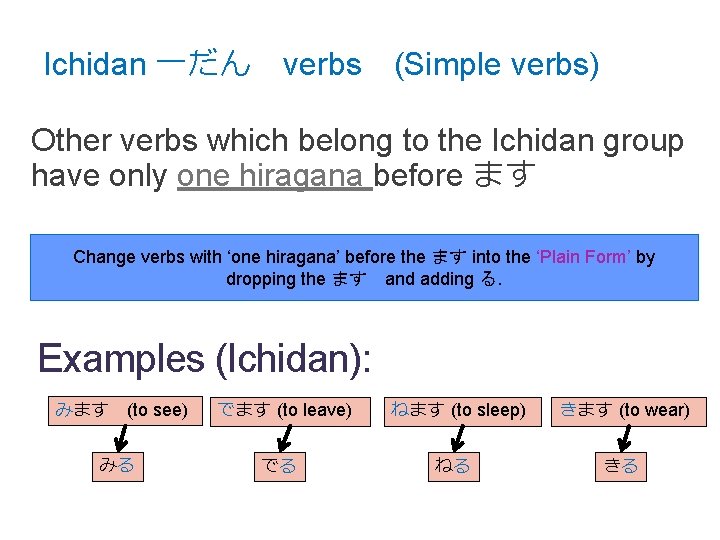
Ichidan 一だん verbs (Simple verbs) Other verbs which belong to the Ichidan group have only one hiragana before ます Change verbs with ‘one hiragana’ before the ます into the ‘Plain Form’ by dropping the ます and adding る. Examples (Ichidan): みます (to see) でます (to leave) ねます (to sleep) きます (to wear) みる でる ねる きる


IRREGULAR - します - きます - いきます - AND SOME EXCEPTIONS

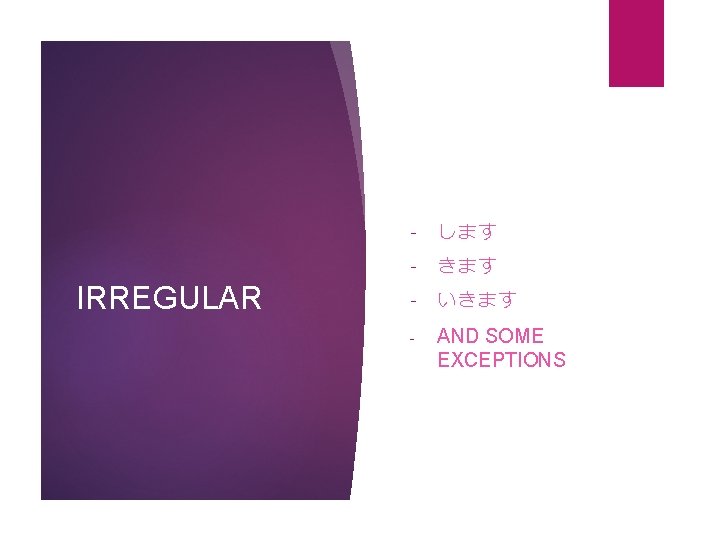
Irregular verbs and exceptions Verbs which belong to the Irregular group don’t follow the rules for Ichidan or Godan. (Learn them as exceptions. ) します (to do) きます (to come) いきす (to go) おきます (to get up) できます (can do) する くる いく おきる できる
Plain form Rule Summary
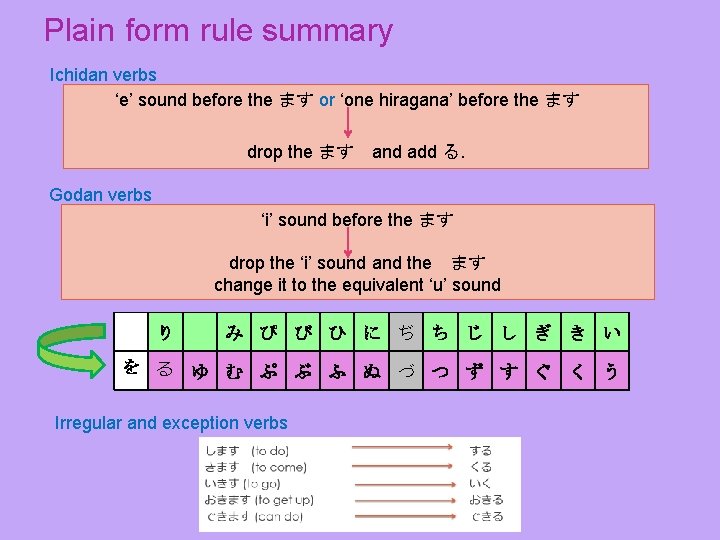
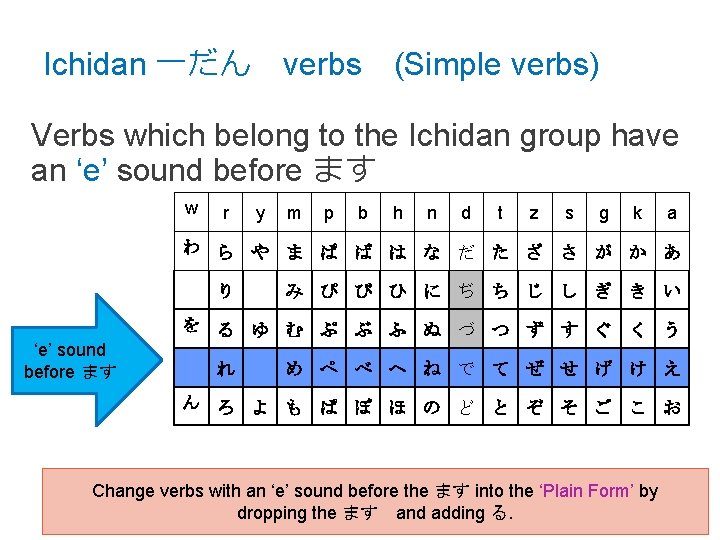
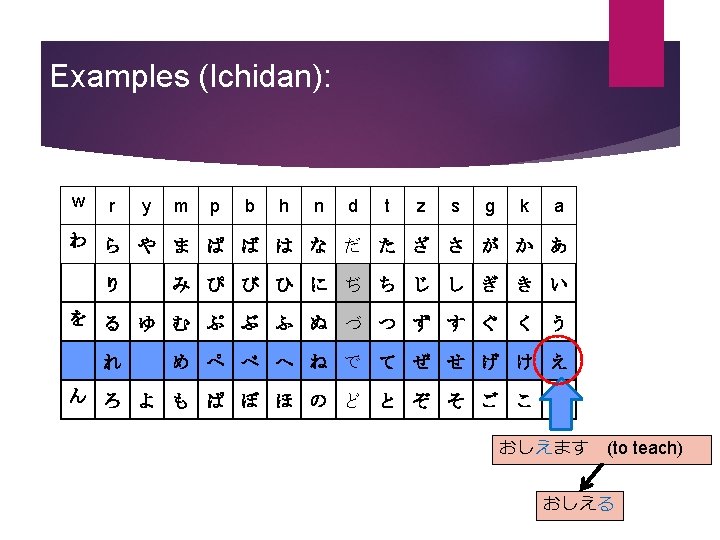
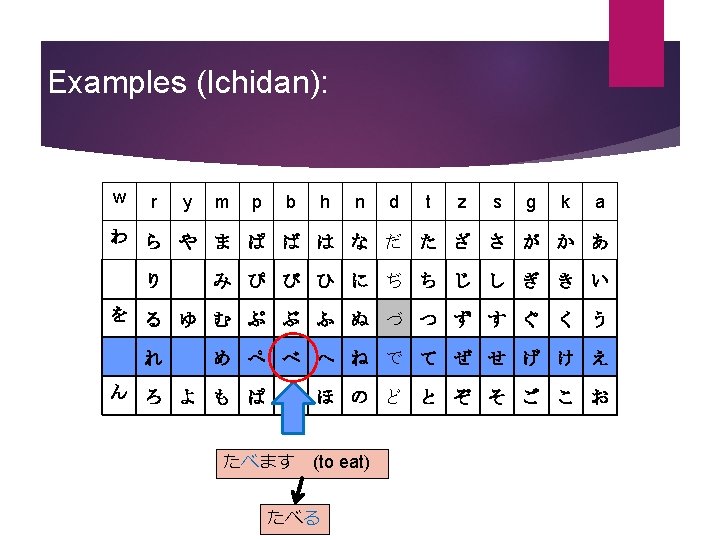
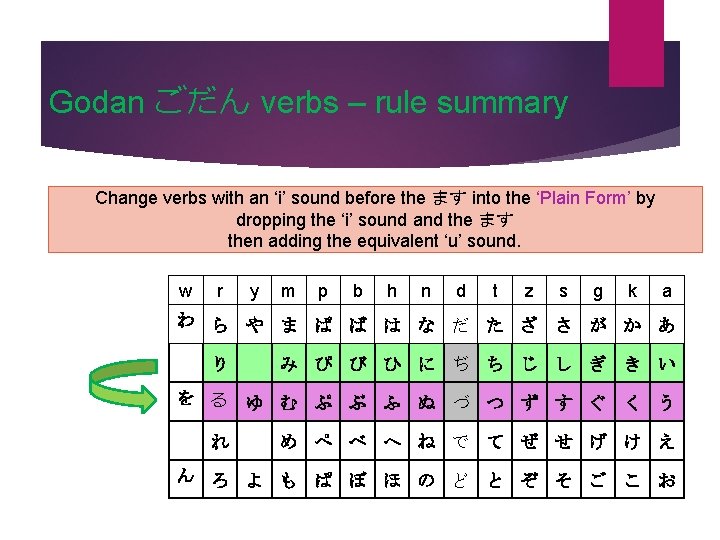
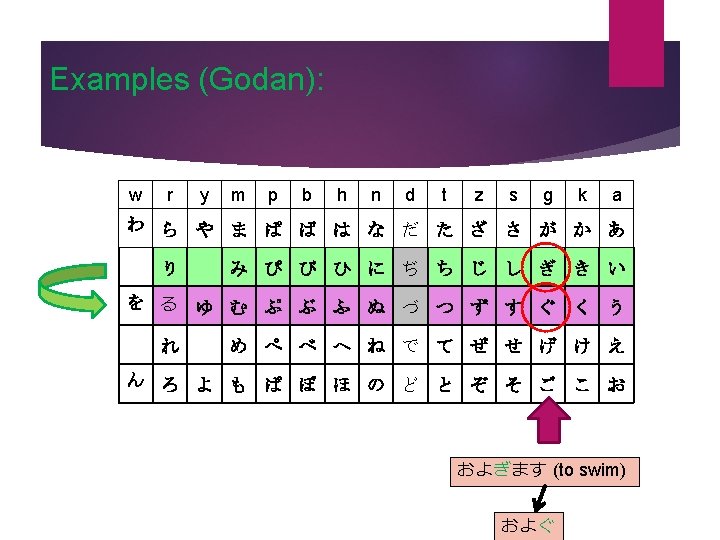
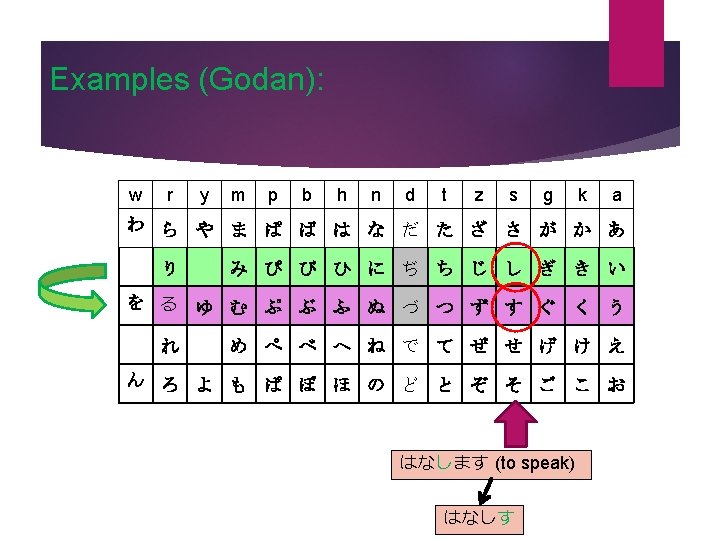
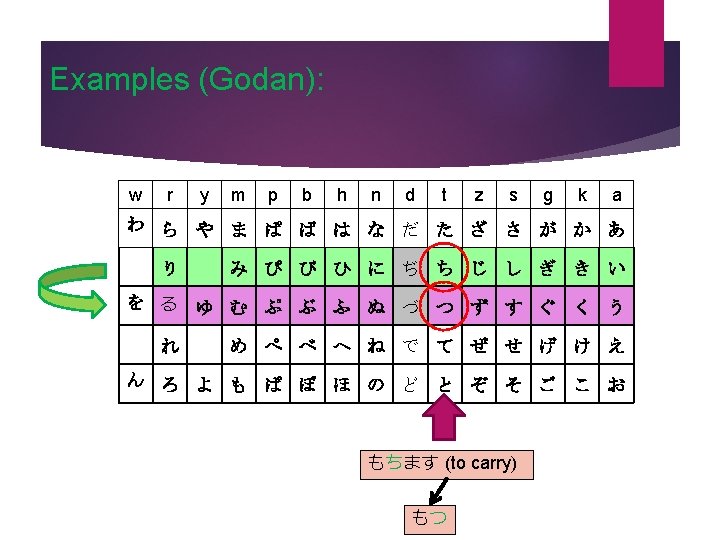
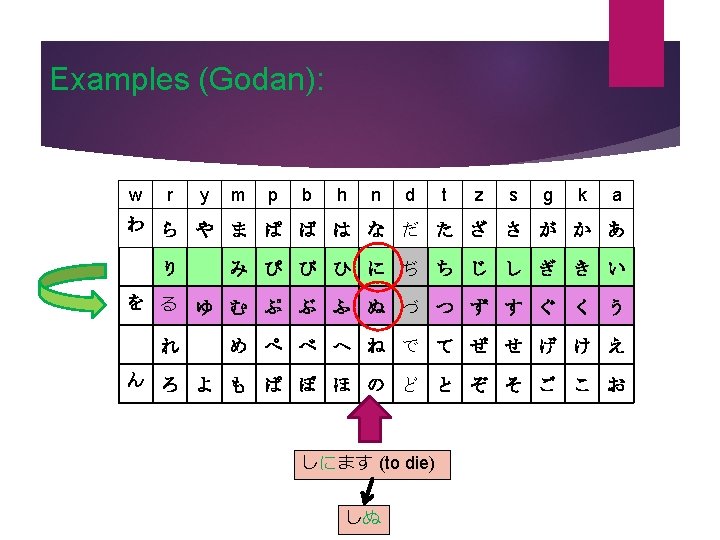
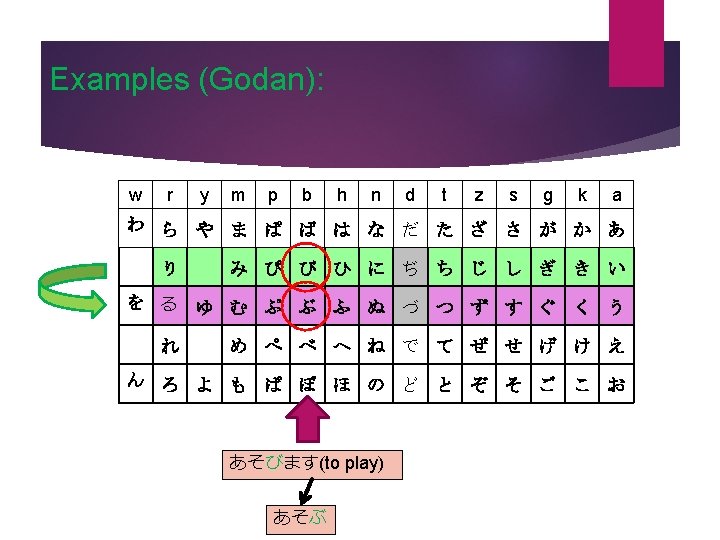
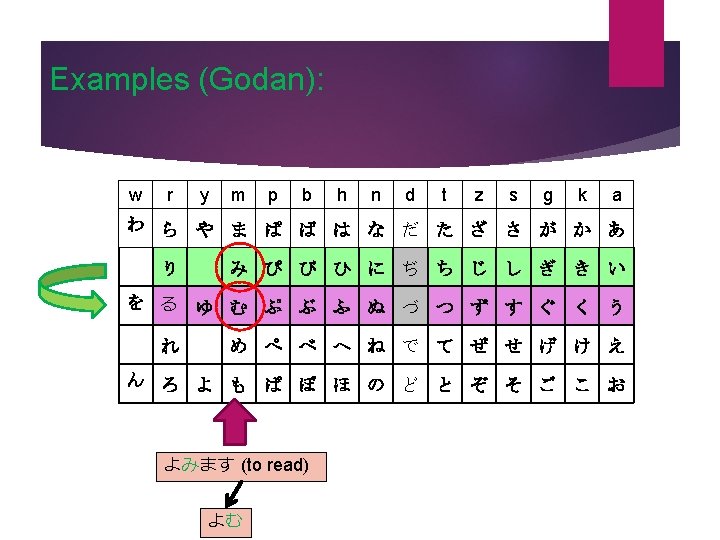
Plain form rule summary Ichidan verbs ‘e’ sound before the ます or ‘one hiragana’ before the ます drop the ます and add る. Godan verbs ‘i’ sound before the ます drop the ‘i’ sound and the ます change it to the equivalent ‘u’ sound り み ぴ び ひ に ぢ し ぎ き い を る ゆ む ぷ ぶ ふ ぬ づ つ ず す ぐ く う Irregular and exception verbs ち じ
Practise
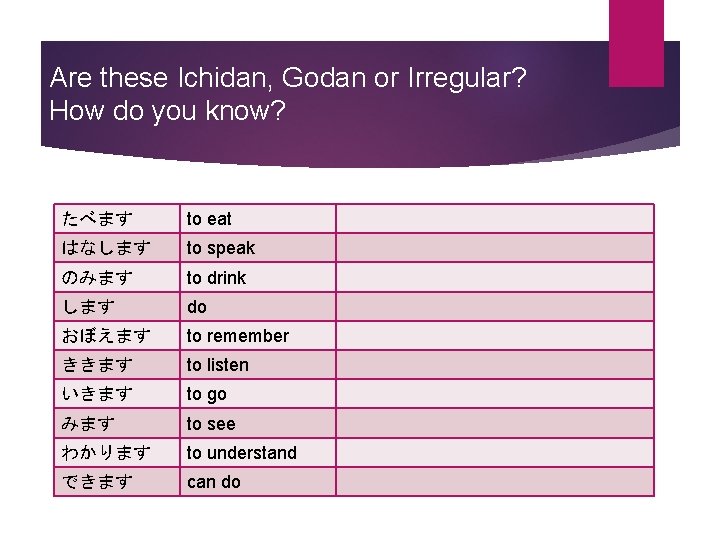
Are these Ichidan, Godan or Irregular? How do you know? たべます to eat はなします to speak のみます to drink します do おぼえます to remember ききます to listen いきます to go みます to see わかります to understand できます can do
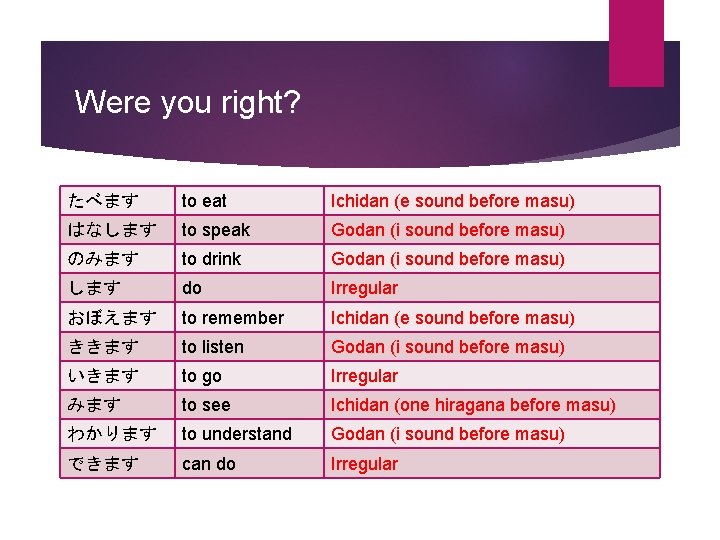
Were you right? たべます to eat Ichidan (e sound before masu) はなします to speak Godan (i sound before masu) のみます to drink Godan (i sound before masu) します do Irregular おぼえます to remember Ichidan (e sound before masu) ききます to listen Godan (i sound before masu) いきます to go Irregular みます to see Ichidan (one hiragana before masu) わかります to understand Godan (i sound before masu) できます can do Irregular

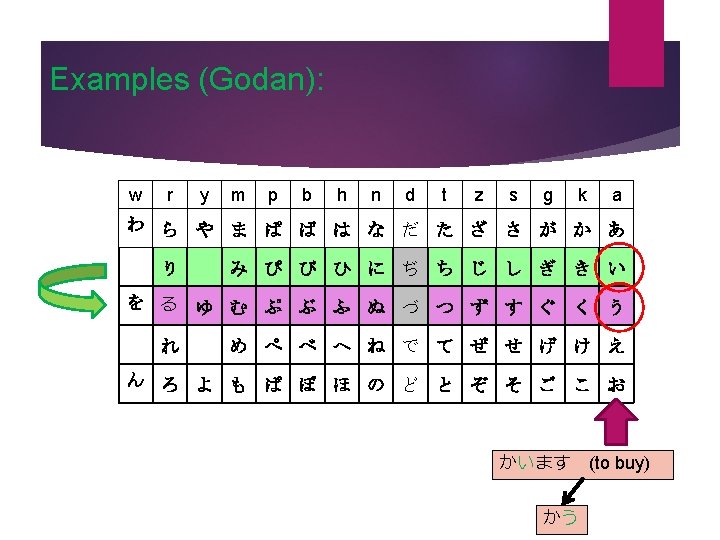
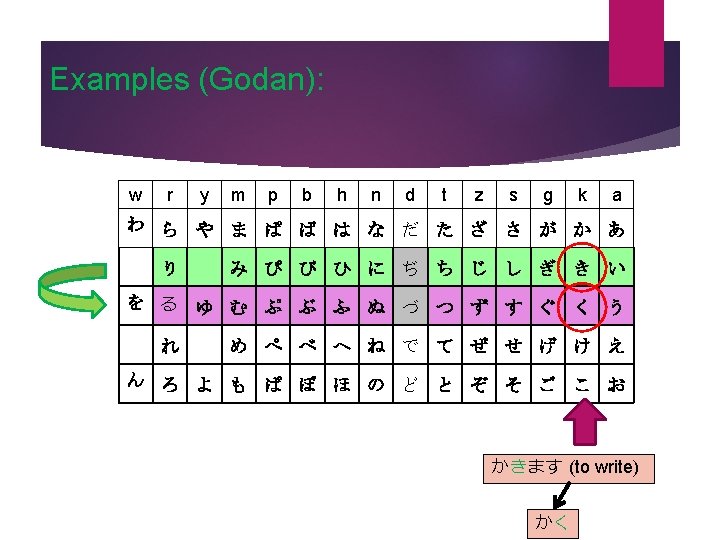
Change these verbs into the Plain form あります to be きます to come かいます to buy いきます to go みます to see はたらきます to work します to do います to exist (animals) つくります to make もってきます to bring
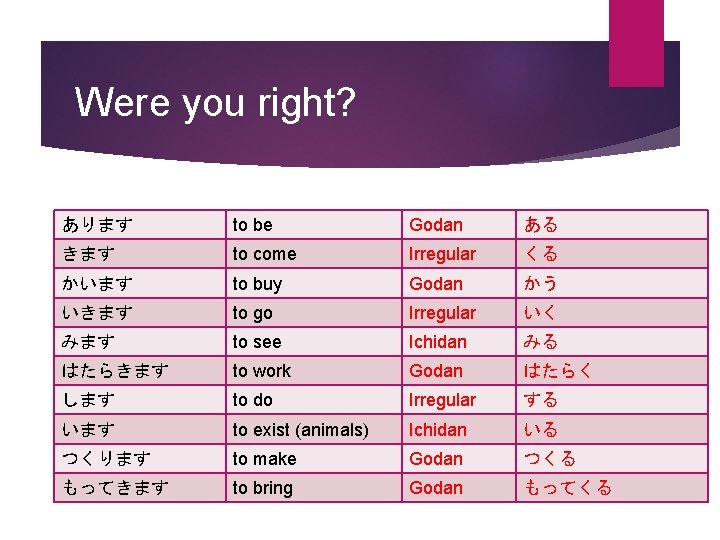
Were you right? あります to be Godan ある きます to come Irregular くる かいます to buy Godan かう いきます to go Irregular いく みます to see Ichidan みる はたらきます to work Godan はたらく します to do Irregular する います to exist (animals) Ichidan いる つくります to make Godan つくる もってきます to bring Godan もってくる
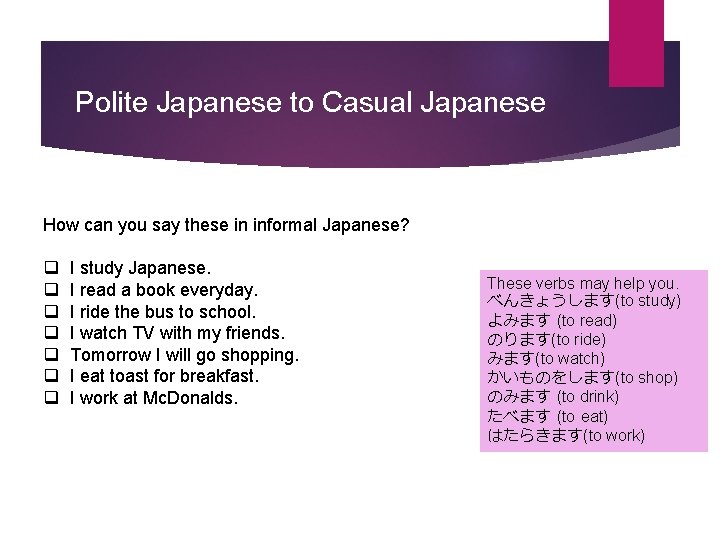
Polite Japanese to Casual Japanese How can you say these in informal Japanese? q q q q I study Japanese. I read a book everyday. I ride the bus to school. I watch TV with my friends. Tomorrow I will go shopping. I eat toast for breakfast. I work at Mc. Donalds. These verbs may help you. べんきょうします(to study) よみます (to read) のります(to ride) みます(to watch) かいものをします(to shop) のみます (to drink) たべます (to eat) はたらきます(to work)
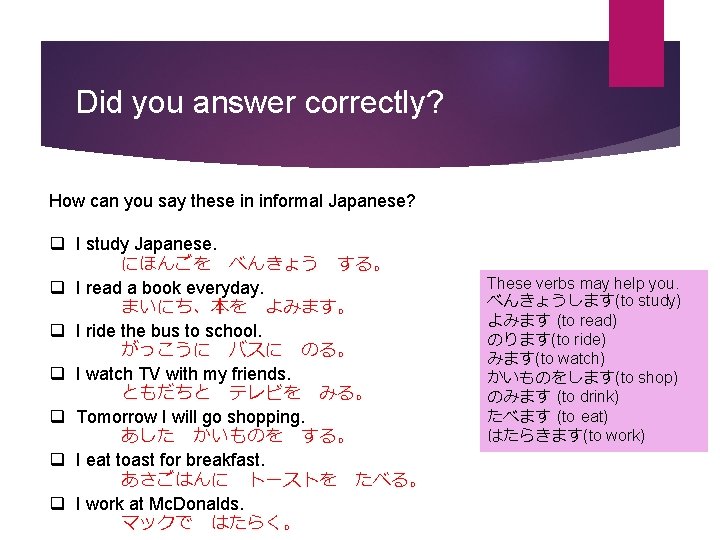
Did you answer correctly? How can you say these in informal Japanese? q I study Japanese. にほんごを べんきょう する。 q I read a book everyday. まいにち、本を よみます。 q I ride the bus to school. がっこうに バスに のる。 q I watch TV with my friends. ともだちと テレビを みる。 q Tomorrow I will go shopping. あした かいものを する。 q I eat toast for breakfast. あさごはんに トーストを たべる。 q I work at Mc. Donalds. マックで はたらく。 These verbs may help you. べんきょうします(to study) よみます (to read) のります(to ride) みます(to watch) かいものをします(to shop) のみます (to drink) たべます (to eat) はたらきます(to work)
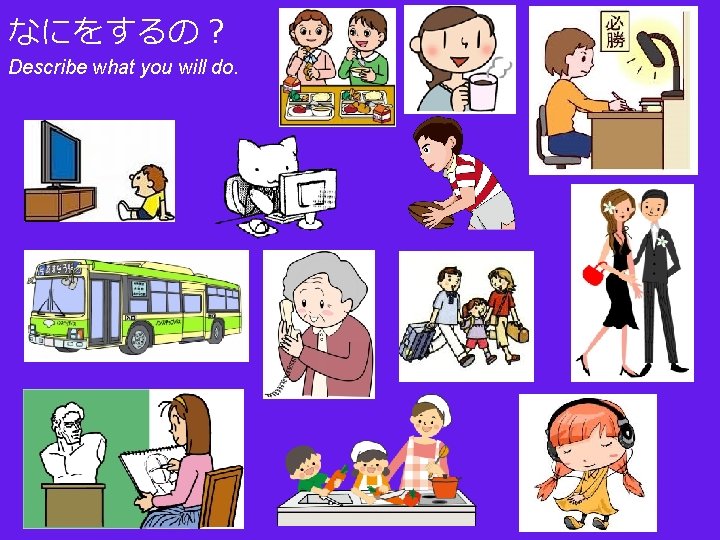
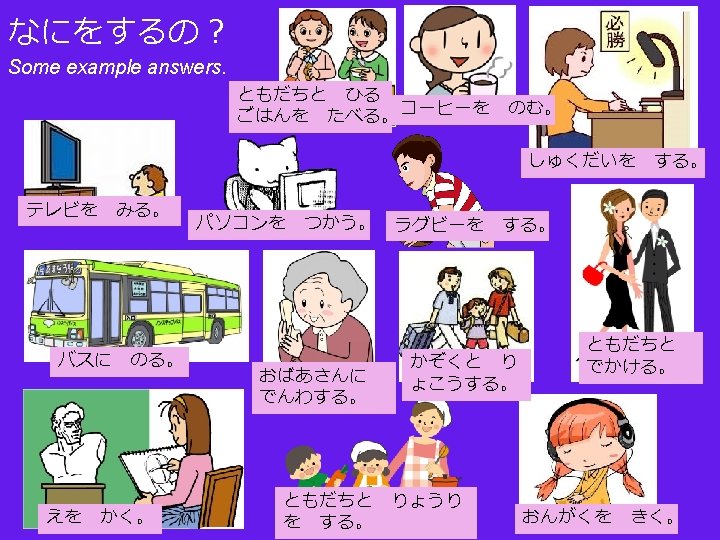
なにをするの? Describe what you will do.

Plain form Negative verbs
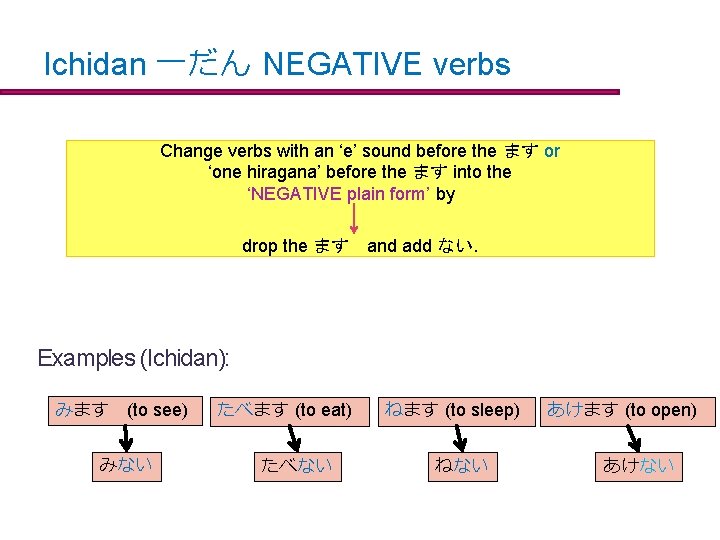
Ichidan 一だん NEGATIVE verbs Change verbs with an ‘e’ sound before the ます or ‘one hiragana’ before the ます into the ‘NEGATIVE plain form’ by drop the ます and add ない. Examples (Ichidan): みます (to see) みない たべます (to eat) たべない ねます (to sleep) ねない あけます (to open) あけない
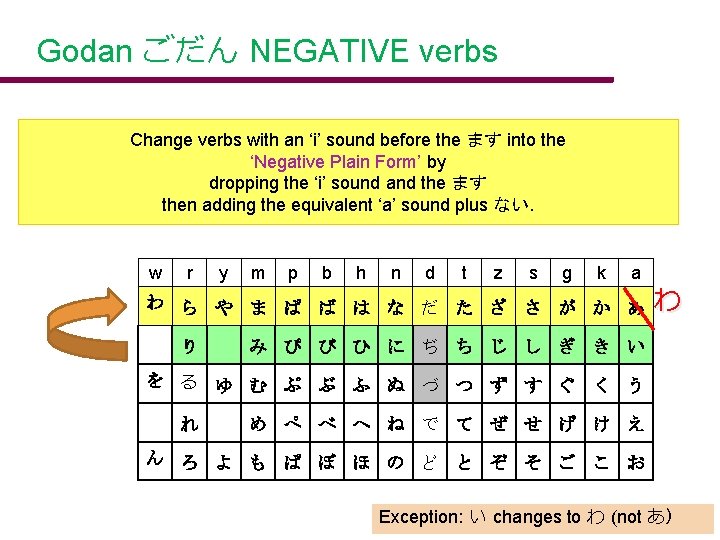
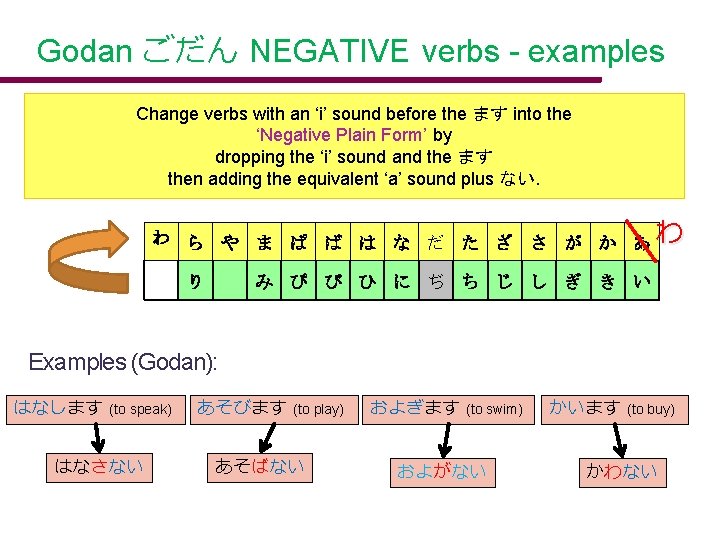
Godan ごだん NEGATIVE verbs - examples Change verbs with an ‘i’ sound before the ます into the ‘Negative Plain Form’ by dropping the ‘i’ sound and the ます then adding the equivalent ‘a’ sound plus ない. わ ら や ま ぱ ば は な だ た ざ さ が か あ り み ぴ び ひ に ぢ じ し ぎ ち き わ い Examples (Godan): はなします (to speak) はなさない あそびます (to play) あそばない およぎます (to swim) およがない かいます (to buy) かわない
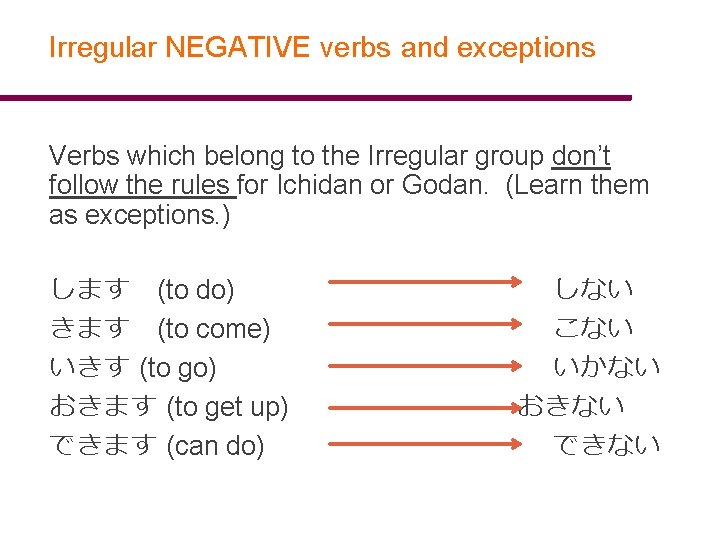
Irregular NEGATIVE verbs and exceptions Verbs which belong to the Irregular group don’t follow the rules for Ichidan or Godan. (Learn them as exceptions. ) します (to do) きます (to come) いきす (to go) おきます (to get up) できます (can do) しない こない いかない おきない できない
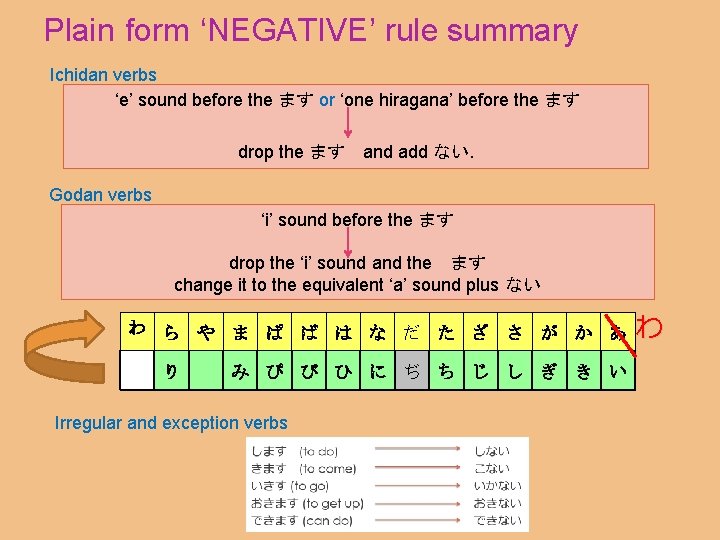
Plain form ‘NEGATIVE’ rule summary Ichidan verbs ‘e’ sound before the ます or ‘one hiragana’ before the ます drop the ます and add ない. Godan verbs ‘i’ sound before the ます drop the ‘i’ sound and the ます change it to the equivalent ‘a’ sound plus ない わ ら や ま ぱ ば は な だ た ざ さ が か あ り み ぴ び ひ に ぢ じ し ぎ Irregular and exception verbs ち き い わ
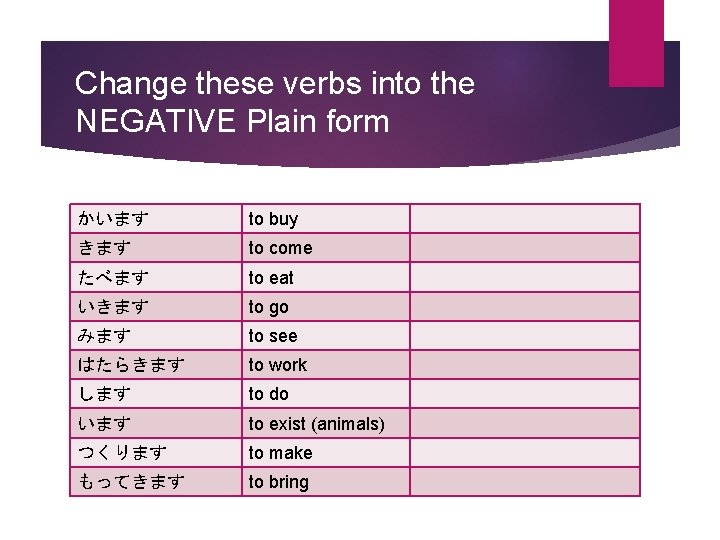
Change these verbs into the NEGATIVE Plain form かいます to buy きます to come たべます to eat いきます to go みます to see はたらきます to work します to do います to exist (animals) つくります to make もってきます to bring

Were you right? かいます to buy Godan かわない きます to come Irregular こない たべます to eat Ichidan たべない いきます to go Irregular いかない みます to see Ichidan みない はたらきます to work Godan はたらかない します to do Irregular しない います to exist (animals) Ichidan いない つくります to make Godan つくらない もってきます to bring Godan もってこない
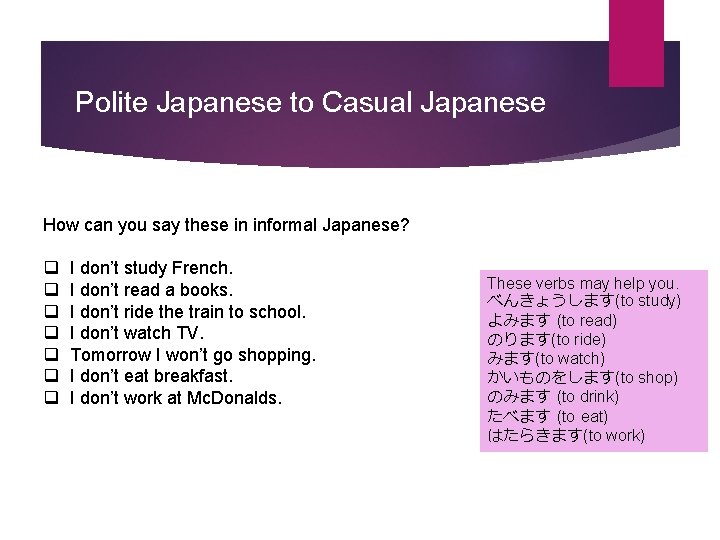
Polite Japanese to Casual Japanese How can you say these in informal Japanese? q q q q I don’t study French. I don’t read a books. I don’t ride the train to school. I don’t watch TV. Tomorrow I won’t go shopping. I don’t eat breakfast. I don’t work at Mc. Donalds. These verbs may help you. べんきょうします(to study) よみます (to read) のります(to ride) みます(to watch) かいものをします(to shop) のみます (to drink) たべます (to eat) はたらきます(to work)
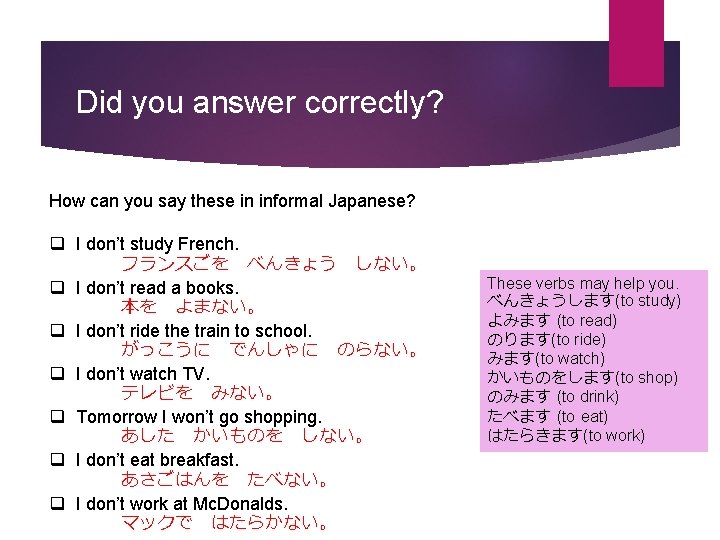
Did you answer correctly? How can you say these in informal Japanese? q I don’t study French. フランスごを べんきょう しない。 q I don’t read a books. 本を よまない。 q I don’t ride the train to school. がっこうに でんしゃに のらない。 q I don’t watch TV. テレビを みない。 q Tomorrow I won’t go shopping. あした かいものを しない。 q I don’t eat breakfast. あさごはんを たべない。 q I don’t work at Mc. Donalds. マックで はたらかない。 These verbs may help you. べんきょうします(to study) よみます (to read) のります(to ride) みます(to watch) かいものをします(to shop) のみます (to drink) たべます (to eat) はたらきます(to work)
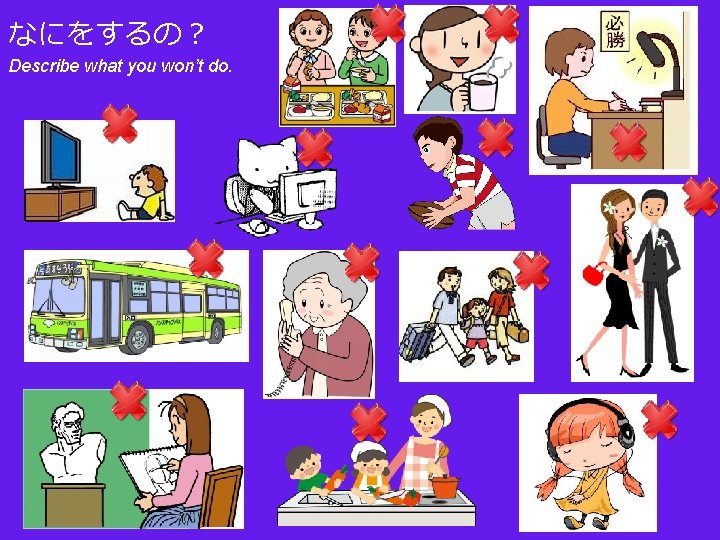
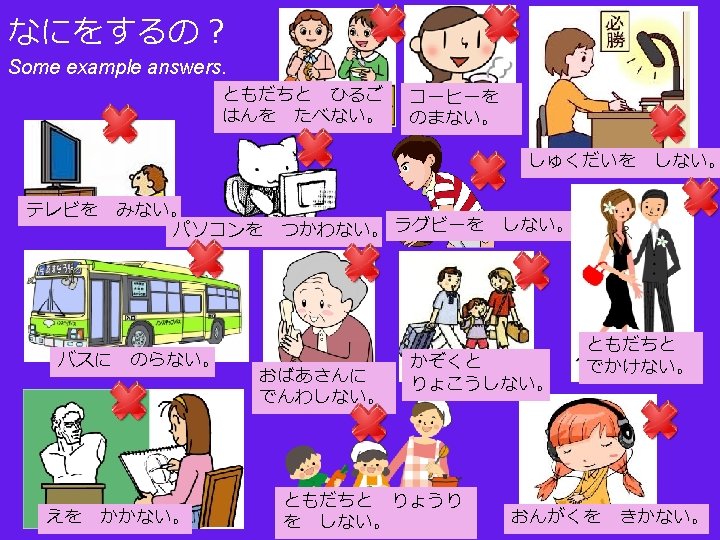
なにをするの? Describe what you won’t do.
- Slides: 45