
Plague SPECIFIC LEARNING OBJECTIVES To understand the epidemiology


Plague

SPECIFIC LEARNING OBJECTIVES �To understand the epidemiology of plague disease �To understand the clinical features of plague �To understand the prevention and control of plague

INTRODUCTION �Zoonotic disease �Causative organism – Yersinia Pestis �One of the oldest diseases known to man �Exits in natural foci – transmitted- infected flea bites
INTRODUCTION �Many forms - enzootically, epizootically, sporadically and in epidemics �Endemic in many parts of the world �Widely distributed in the tropics and subtropics �In SEAR, natural foci of plague- India, Indonesia, Myanmar and possibly in Nepal

PLAGUE PANDEMICS � Justinian plague: Sixth century-100 million victims � Black Death: 14 th century - 50 million deaths. � 3 rd pandemic: Hong Kong in 1894 � This pandemic resulted in 13 million deaths in India
PROBLEM STATEMENT � Plague outbreaks continued to occur- decreasing frequency �Globally in 2013 – 783 cases- human plague – 126 deaths �In India – 2004 - localized outbreaks – bubonic plague – 8 cases, 3 deaths- Dangud village- Uttarkashi
AGENT FACTORS � Gram - negative , non motile, coccobacillus � Bipolar staining with special stains – Wayson’s stain � Reclassified as Enterobacteriaceae �Non sporulating, non - lactose fermenting

AGENT: YERSINIA PESTIS

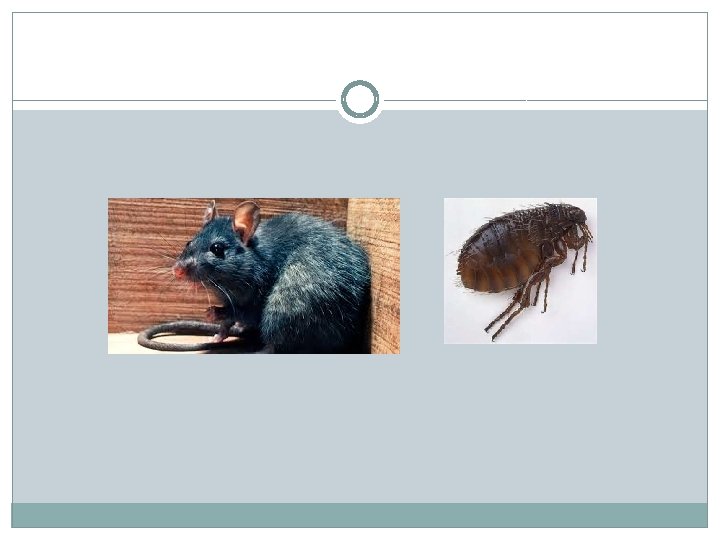
RESERVOIR OF INFECTION - Wild rat (Tatera Indica) - Field mice - Gerbils - Disease -Maintained and spread by resistant species of wild rodents (Rodents immune to plague)

SOURCE OF INFECTION �Infected rodents and flea �Case of pneumonic plague
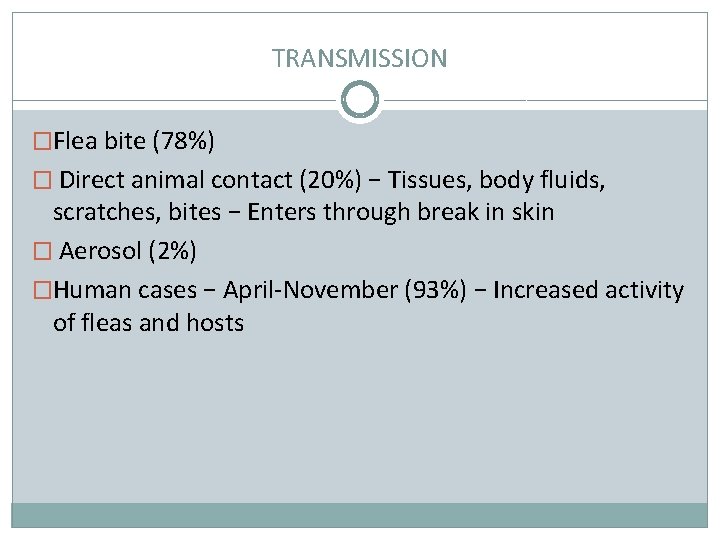
PLAGUE VECTORS �Xenopsylla cheopis (Oriental rat flea; worldwide) �Oropsylla montanus (United States) �Nosopsyllus fasciatus (Nearly worldwide) �Xenopsylla brasiliensis (Africa & India) �Xenopsylla astia (Indonesia and Southeast Asia) �Xenopsylla vexabilis (Pacific Islands)
TRANSMISSION �Flea bite (78%) � Direct animal contact (20%) − Tissues, body fluids, scratches, bites − Enters through break in skin � Aerosol (2%) �Human cases − April-November (93%) − Increased activity of fleas and hosts
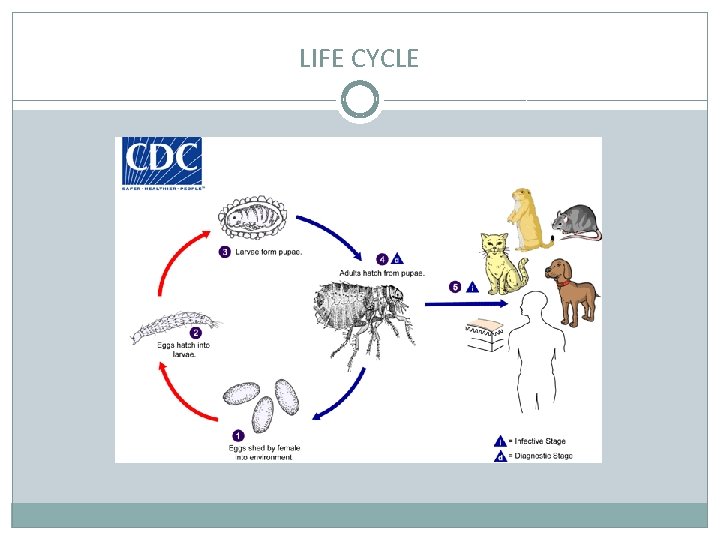
LIFE CYCLE
BLOCKED FLEA �Flea- ingest upto 0. 5 cu. mm of blood- 5000 plague bacilli. �Plague bacilli multiply enormously- gut of rat flea - may block the proventriculus- no food - blocked flea �Blocked flea- eventually faces starvation and dies as it is unable to obtain blood meal. �A blocked flea is an efficient transmitter of plague �A partially blocked flea is more dangerous then a completely blocked flea because it can live longer
HOST FACTORS �AGE and SEX : all ages and both sexes �HUMAN ACTIVITIES : activities – increases flea-man contact �MOVEMENT OF PEOPLE : cargo, sea or land �IMMUNITY : no natural immunity
ENVIRONMENTAL FACTORS �SEASON : north india – September – may South- no definite plague season �TEMPERATURE AND HUMIDITY : 20 -25 deg C humidity – 60% �RAINFALL : heavy rainfall – flood the burrows – protective factor �URBAN and RURAL AREAS �HUMAN DWELLINGS
PLAGUE IN RODENTS ü Primarily a disease of rodents ü Infection is maintained- natural foci of the disease in wild rodent colonies ü Enzootic (maintenance) hosts ü Epizootic (amplification) hosts
PLAGUE IN RODENTS �Enzootic hosts: Relatively mild illness and low mortality rates. Voles and mice �Epizootic hosts: High susceptibility and high mortality. Mice, rats, voles, gerbils, ground squirrels and marmots ü Rats have historically been a primary carrier
URBAN PLAGUE �Infected fleas or rodents move to urban area � Commensal (domestic) rodents infected � Rapid die off �Fleas seek new host − Domestic cats or humans � Poverty, filth, homelessness
HUMAN PLAGUE -CLINICAL FEATURES �Bubonic Plague �Septicaemic Plague �Pneumonic Plague
BUBONIC PLAGUE �Mode of entry: Flea bite �IP: 2 -6 days �Infection spreads to the regional lymph nodes �Headache, chills, fever, malaise and pain in the affected regional lymph nodes � Buboes: Inflammation and swelling in one or several nodes (Axillary and supraclavicular) �Mortality – untreated – 50 -60% and treated - <5%
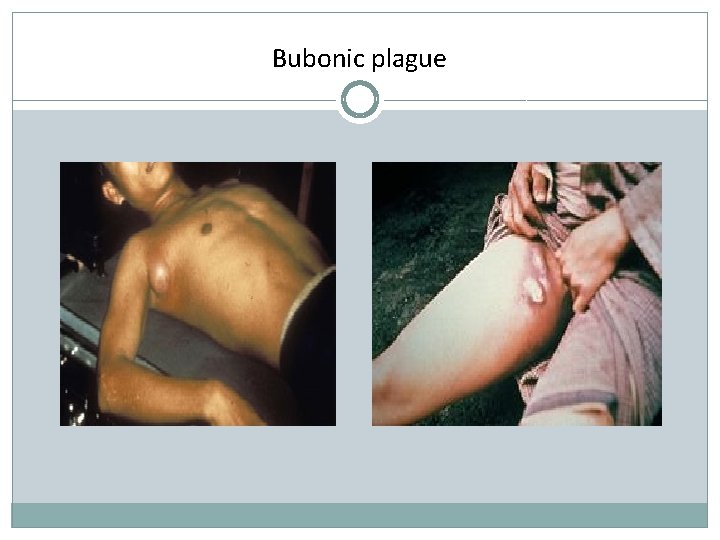
Bubonic plague
SEPTICAEMIC PLAGUE �Invades and continues to multiply in the bloodstream. �Secondary to bubonic plague or without detectable lymphadenopathy. �DIC, multiple organ failure and ARDS �Complications : Plague pneumonia, plague meningitis and hepatic or splenic abscesses �Mortality – untreated 100%
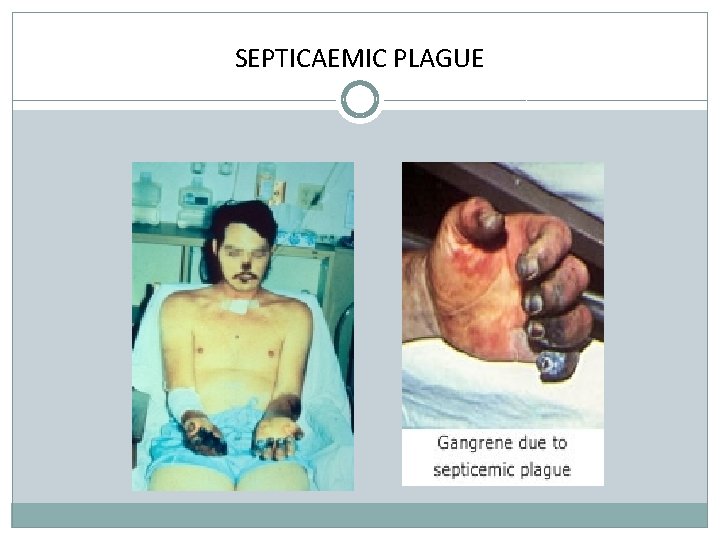
SEPTICAEMIC PLAGUE
PNEUMONIC PLAGUE • IP: 1 -3 days • Least common-most dangerous and fatal form • Primary – Inhalation of infected droplets – Y Pestis • Secondary complication of septicemic plague Chills, fever, headache, body pains, weakness and chest discomfort. • Person to person spread possible • Death if specific antibiotic therapy is not begun within 18 - 24 hours of onset
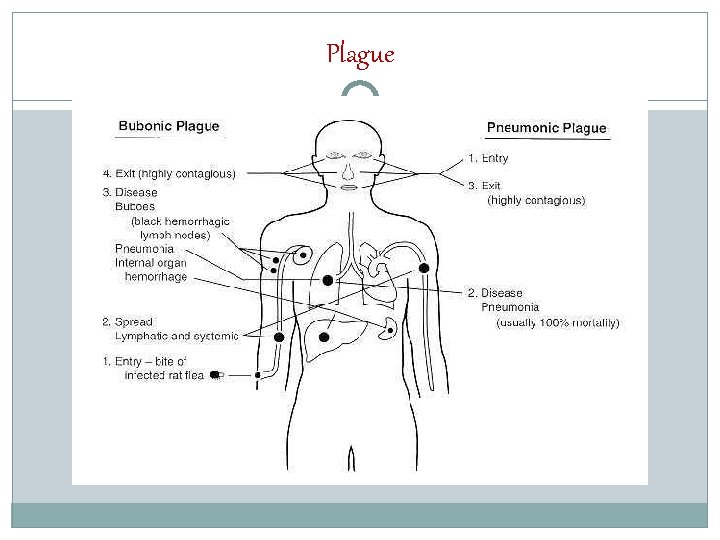
Plague
PREVENTION & CONTROL �Early diagnosis & Treatment �Chemoprophylaxis �Control of fleas �Control of rodents �Vaccination �Surveillance �Health education
DIAGNOSIS �Demonstrate the bacilli �Blood, sputum & aspirates from suspected buboes �Gram, Giemsa, Wright, or Wayson stain �Supportive but not confirmatory
DIAGNOSIS �Cultures: Specific phage lysis � 4 fold in titre to the Yersinia pestis F 1 antigen by passive haemagglutination test �ELISAs for detecting Ig. M and Ig. G antibodies
PREVENTION AND CONTROL �Early diagnosis and treatment �Notification: � Antibiotics: Streptomycin drug of choice – IM -2 divided doses – 7 -10 days ( 30 mg/kg/BW) �Others - Tetracycline, gentamycin �cephalosporins are NOT effective �Isolation �Disinfection

Plague Prophylaxis �Close contacts of cases- pneumonic plague �Persons suspected to have had direct contact with body fluids or tissues of - infected mammal in previous six days �Tetracycline and Chloramphenicol
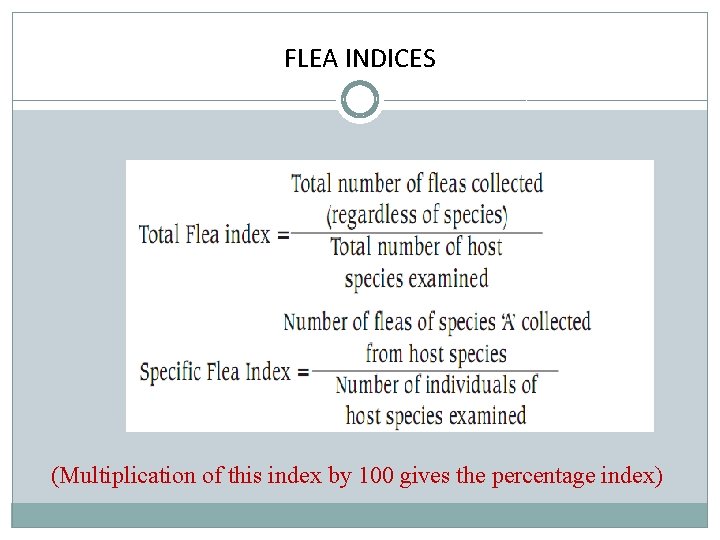
FLEA INDICES (Multiplication of this index by 100 gives the percentage index)
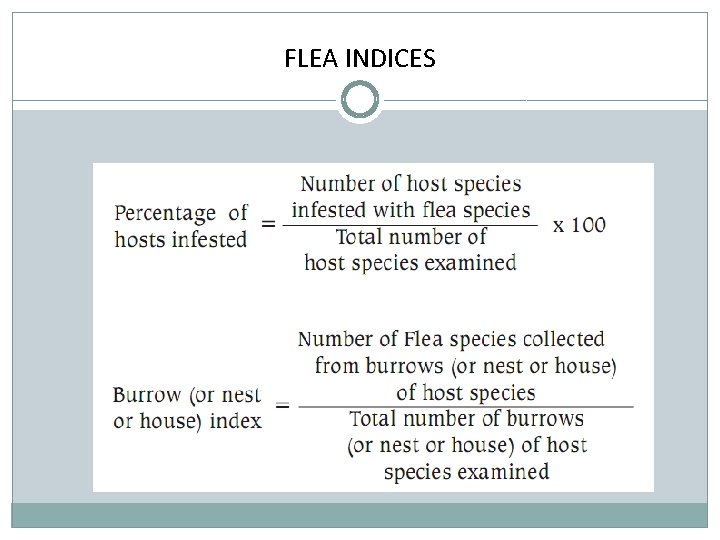
FLEA INDICES
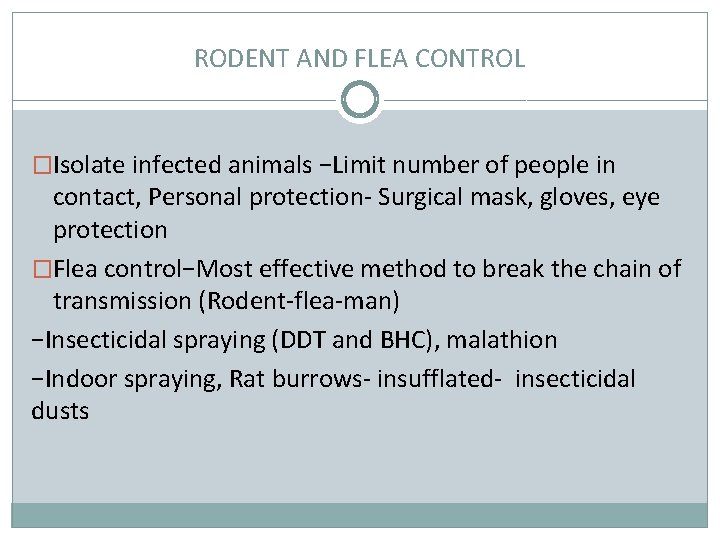
RODENT AND FLEA CONTROL �Isolate infected animals −Limit number of people in contact, Personal protection- Surgical mask, gloves, eye protection �Flea control−Most effective method to break the chain of transmission (Rodent-flea-man) −Insecticidal spraying (DDT and BHC), malathion −Indoor spraying, Rat burrows- insufflated- insecticidal dusts
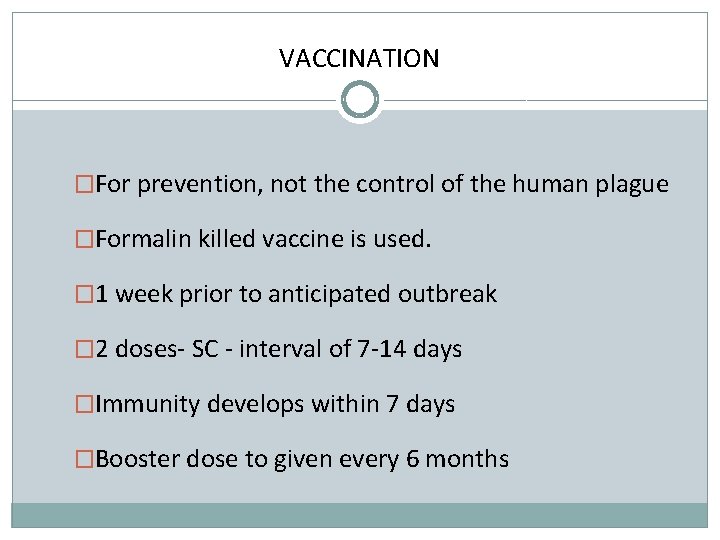
VACCINATION �For prevention, not the control of the human plague �Formalin killed vaccine is used. � 1 week prior to anticipated outbreak � 2 doses- SC - interval of 7 -14 days �Immunity develops within 7 days �Booster dose to given every 6 months
PREVENTION AND CONTROL �Public health education −Notification of dead rats and suspected plague case �Surveillance �Epidemiological investigation −To determine source of infection −Distribution −Prevalence −Potential spread to human population

SUMMARY ? ? ?

Thank you!
- Slides: 41