
PLACENTA Dr S Bhat Learning objectives To learn
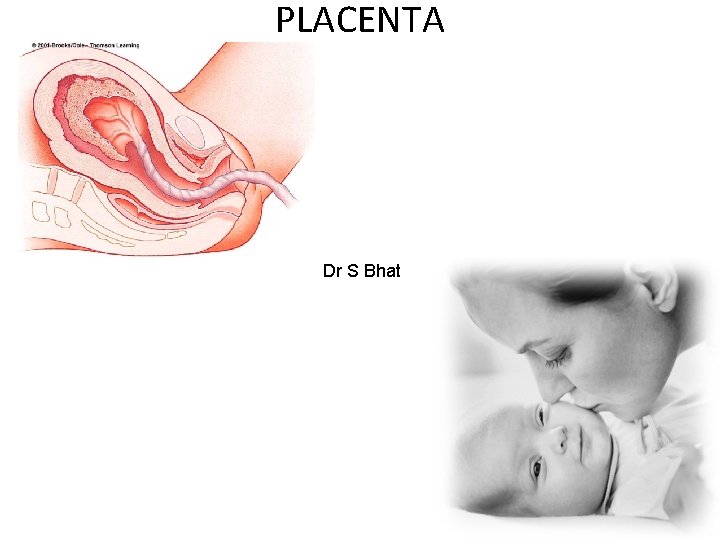
PLACENTA Dr S Bhat
Learning objectives • • To learn about the structure of placenta …. embryology of placenta …. placental circulation and placental barrier …. know about anomalies of placenta
Questions • Placenta development • Classification of placenta • Placenta previa • • Teriary villi Anchoring villi Chorion frondosum Placental barrier/membrane
Timeline of Events • • Cyto+syncytiotrophoblast -8 days Lacunae appear in syncytium -9 days Setting of embryo – 11 days Primary villi – 13 days Secondary & tertiary villi – 16 days Villi all around embryo – 2 nd month Definitive placenta – 4 th month Shedding of placenta – full term after half an hour of parturition.
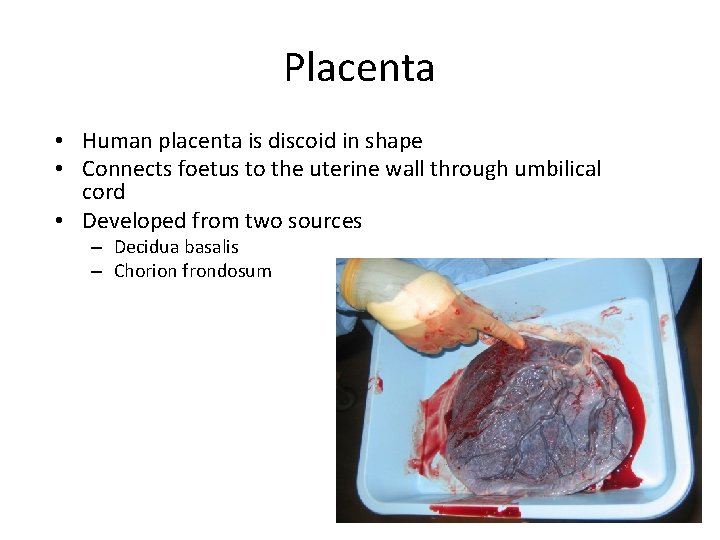
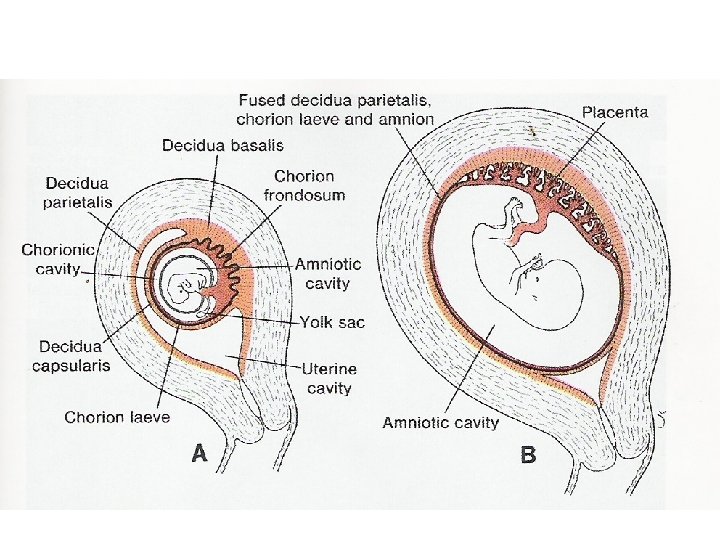
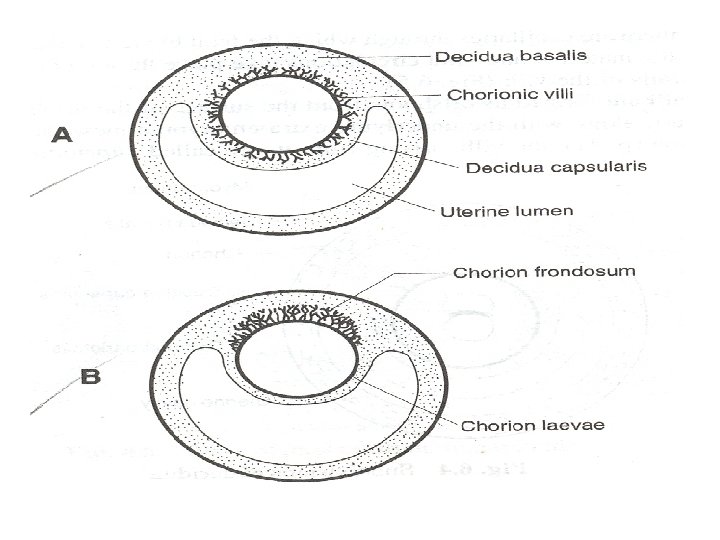
Placenta • Human placenta is discoid in shape • Connects foetus to the uterine wall through umbilical cord • Developed from two sources – Decidua basalis – Chorion frondosum
Placenta • Full term placenta – – Discoid in shape Diameter 15 – 25 cms Thickness – 3 cm Weight – 500 – 600 grams • Surface – Foetal surface • Amnion • Chorionic vessels • Attachment of umbilical cord • Maternal surface cotyledons – maternal and foetal
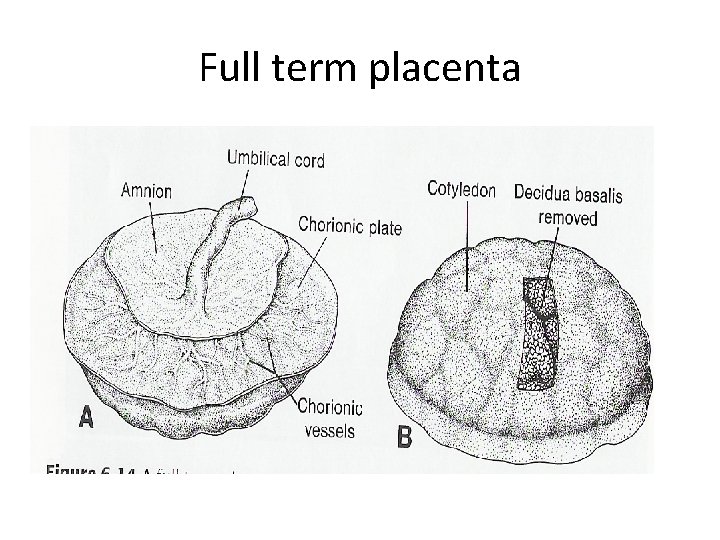
Full term placenta
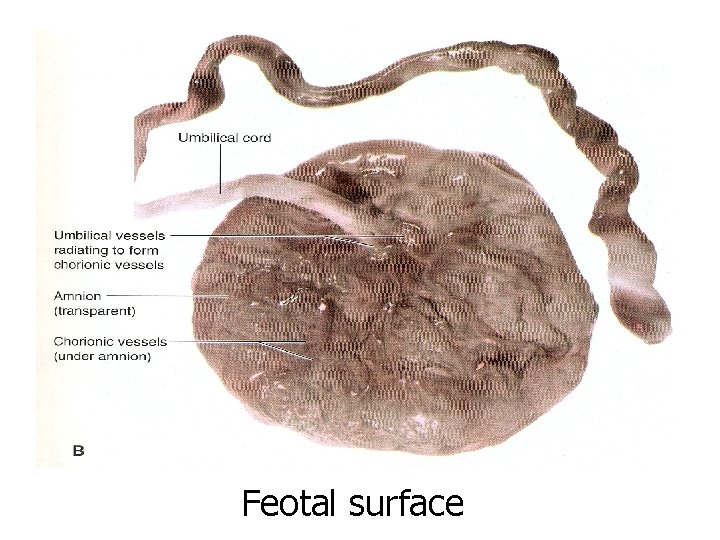
Feotal surface
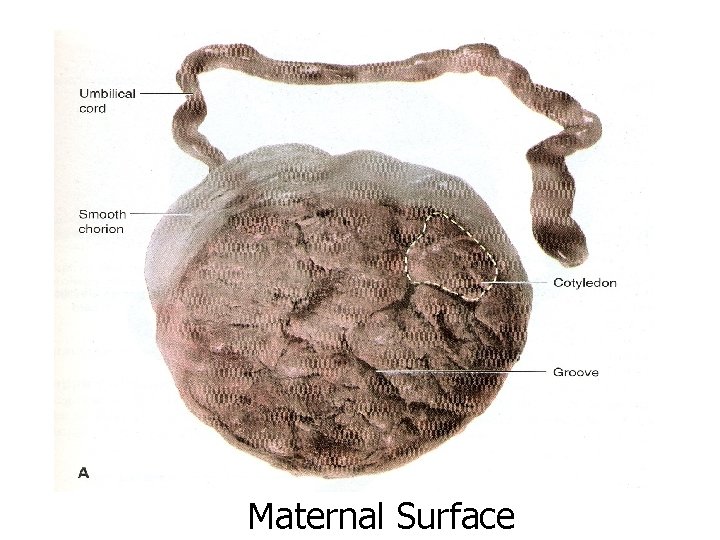
Maternal Surface
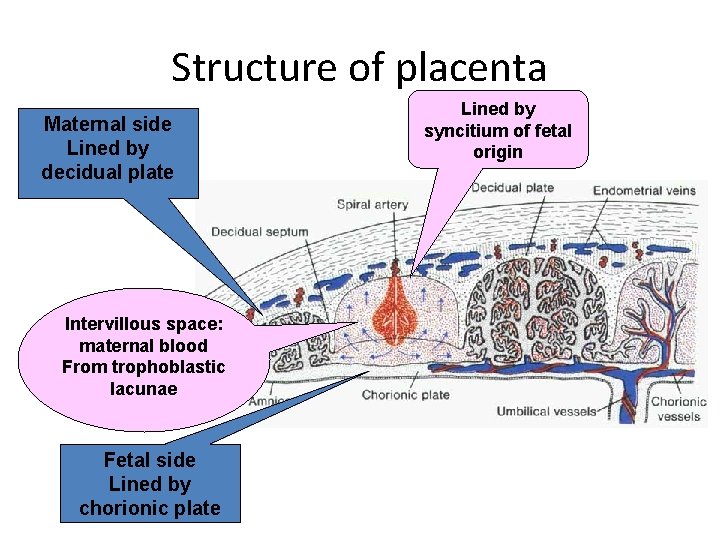
Structure of placenta Maternal side Lined by decidual plate Intervillous space: maternal blood From trophoblastic lacunae Fetal side Lined by chorionic plate Lined by syncitium of fetal origin
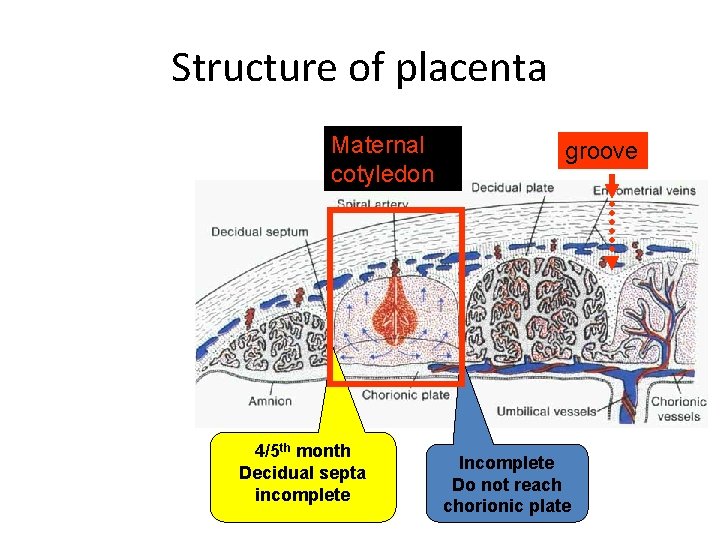
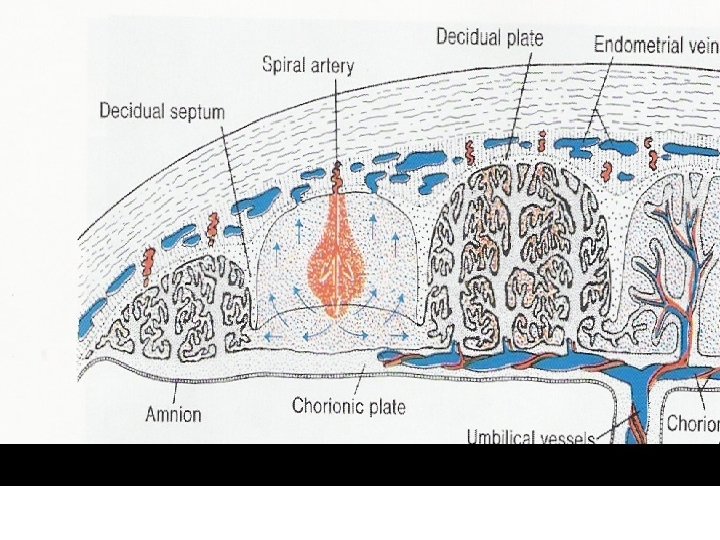
Structure of placenta Maternal cotyledon 4/5 th month Decidual septa incomplete groove Incomplete Do not reach chorionic plate
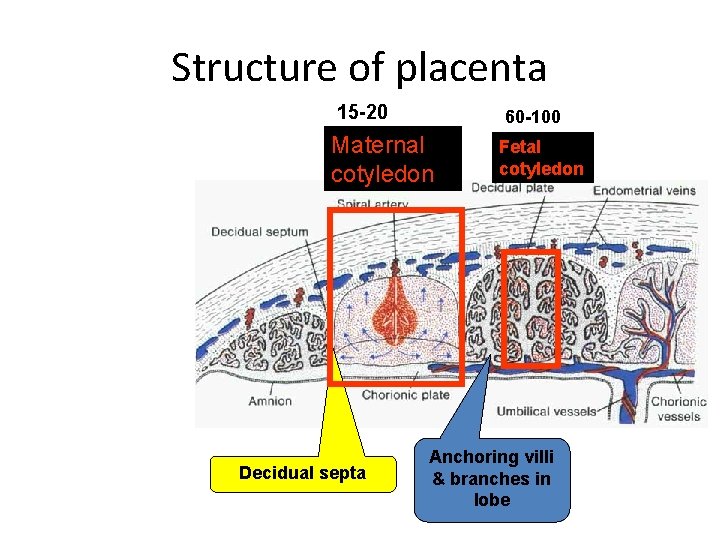
Structure of placenta 15 -20 60 -100 Maternal cotyledon Decidual septa Fetal cotyledon Anchoring villi & branches in lobe

Chorionic villi formation • • Decidua Lacunar stage Villi stage Mature placenta
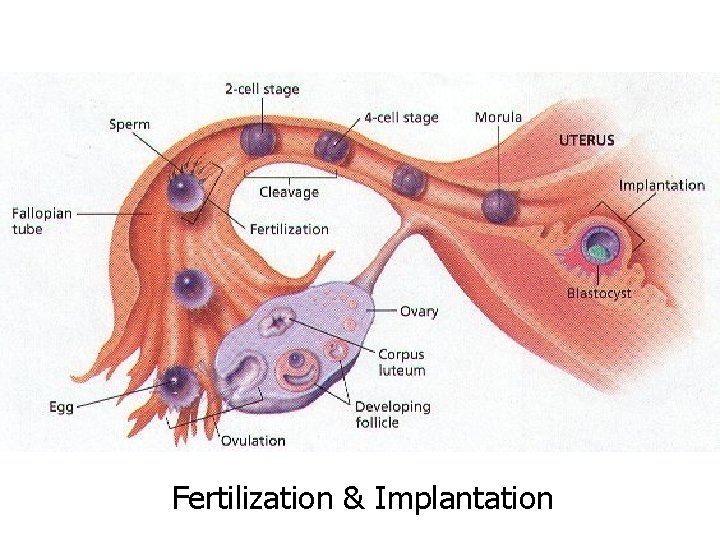
Fertilization & Implantation
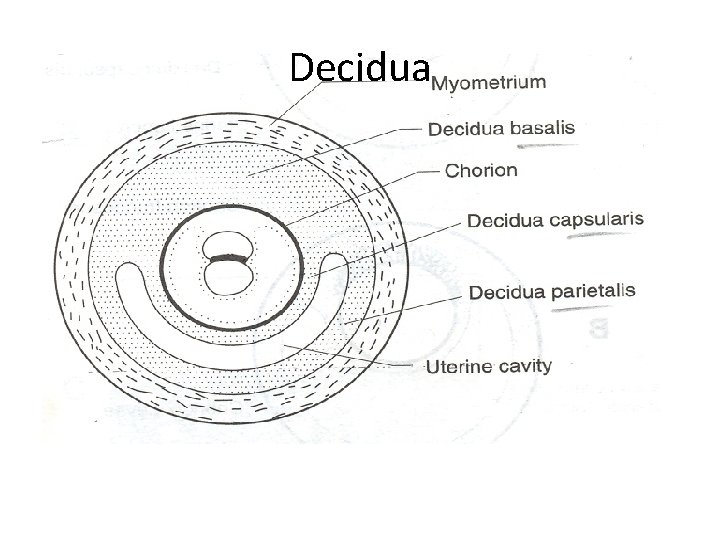
Decidua
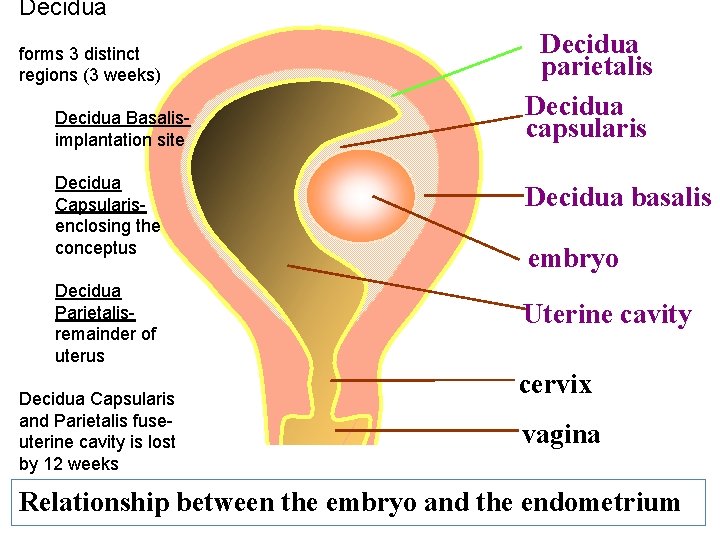
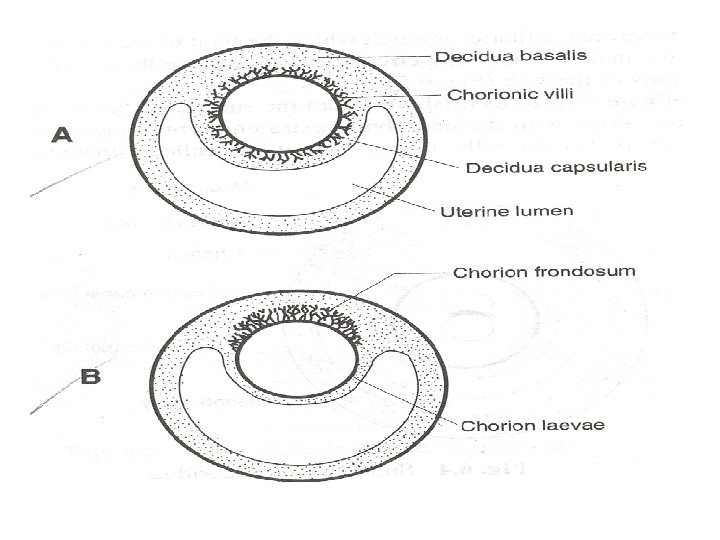
Decidua forms 3 distinct regions (3 weeks) Decidua Basalisimplantation site Decidua Capsularisenclosing the conceptus Decidua Parietalisremainder of uterus Decidua Capsularis and Parietalis fuseuterine cavity is lost by 12 weeks Decidua parietalis Decidua capsularis Decidua basalis embryo Uterine cavity cervix vagina Relationship between the embryo and the endometrium
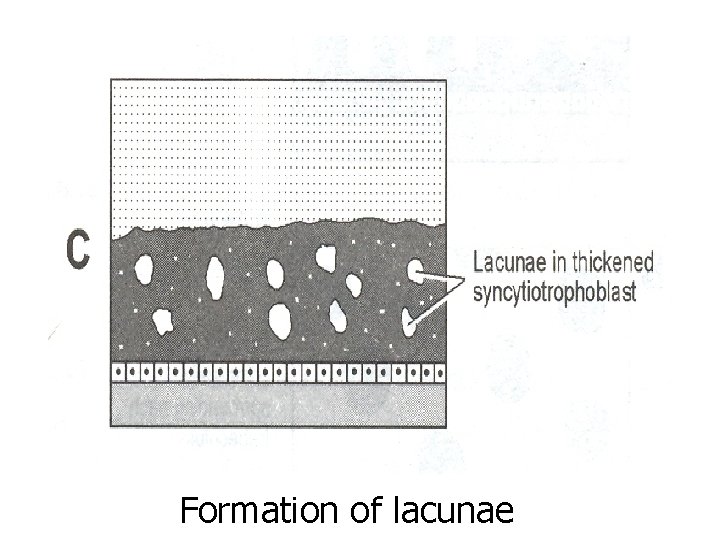
Formation of lacunae
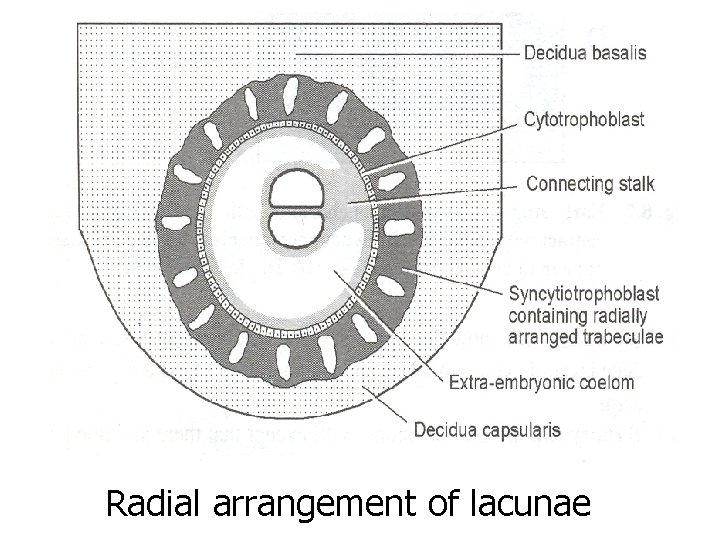
Radial arrangement of lacunae
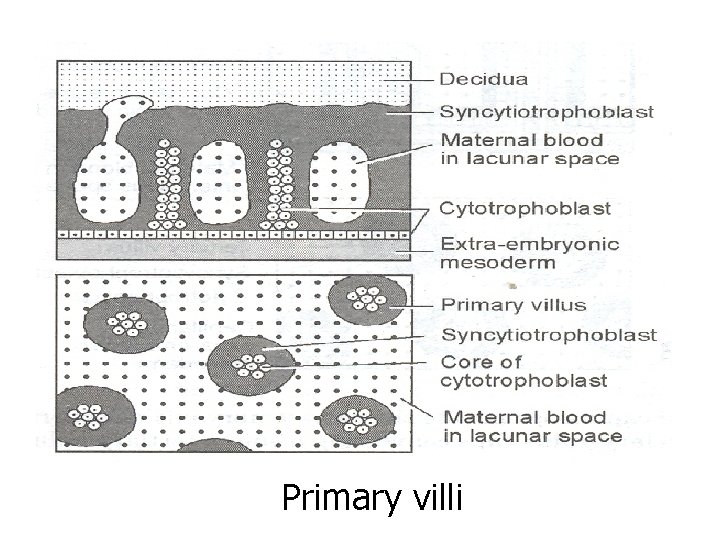
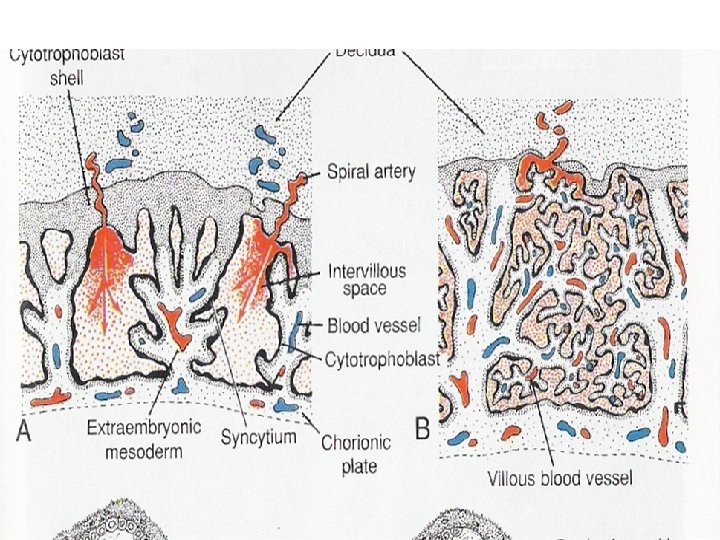
Primary villi
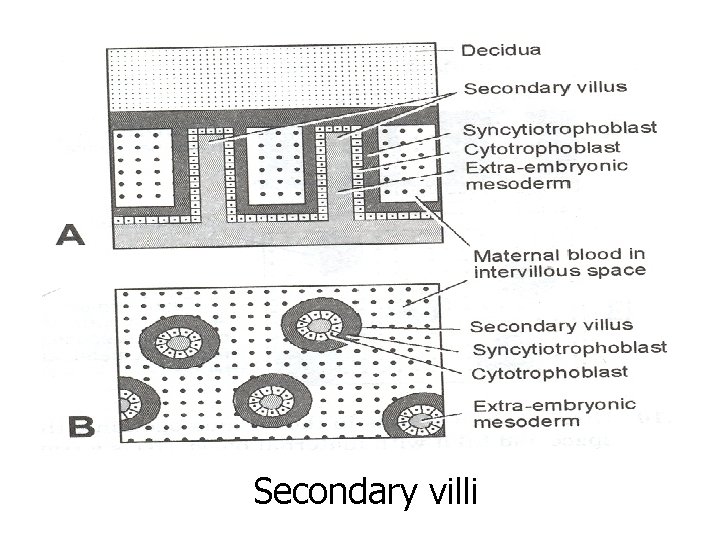
Secondary villi
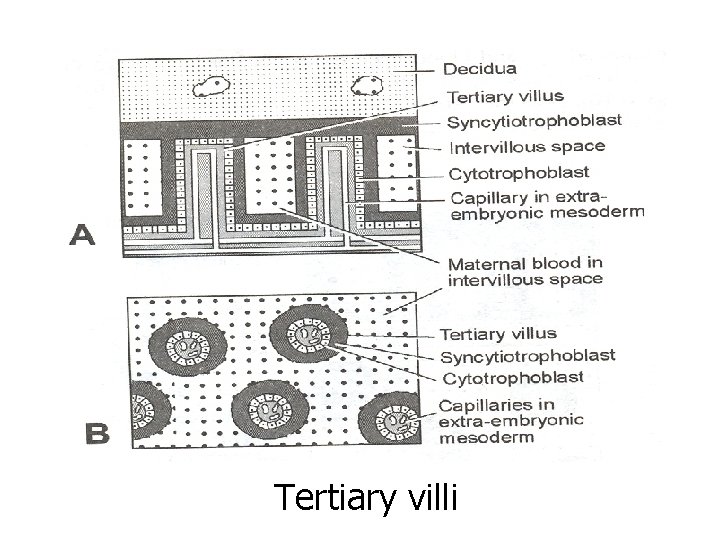
Tertiary villi
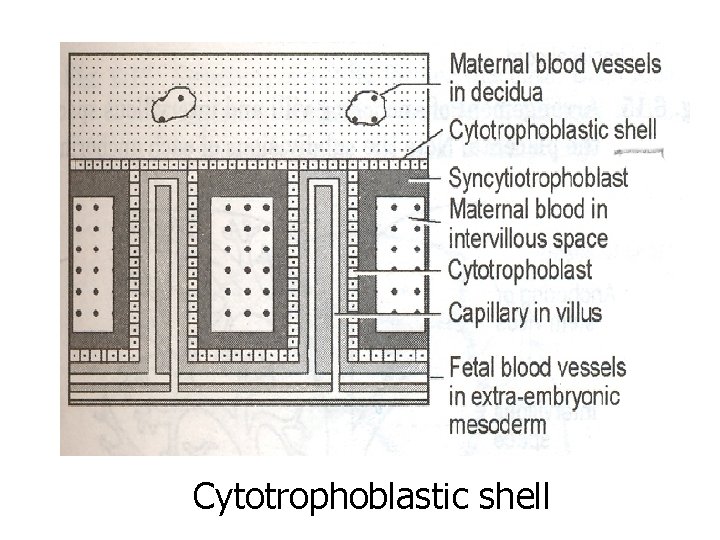
Cytotrophoblastic shell
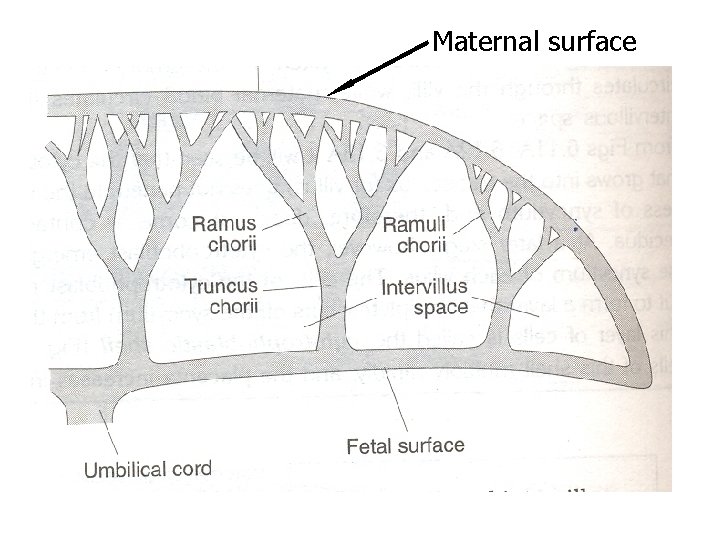
Maternal surface
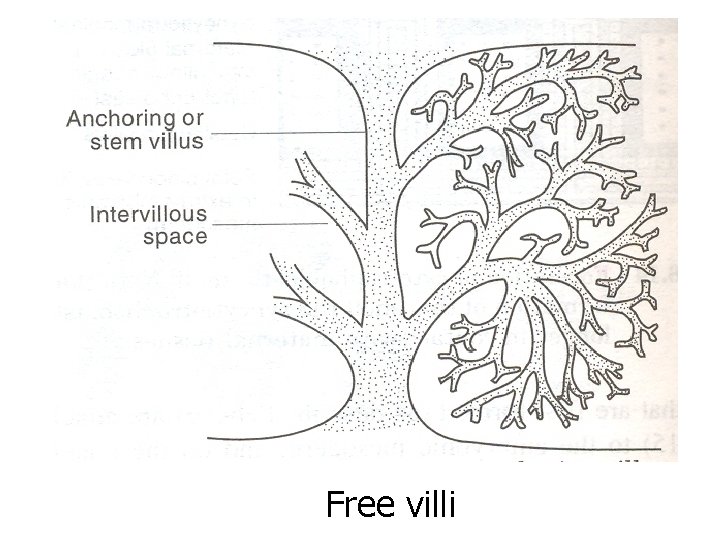
Free villi
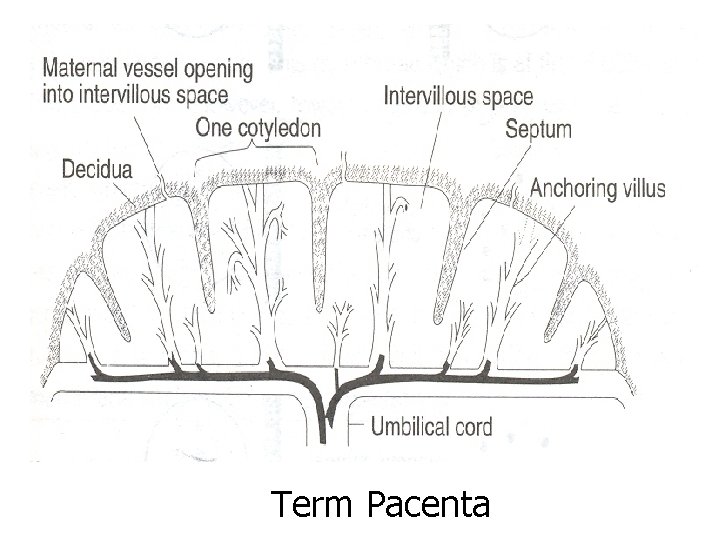
Term Pacenta
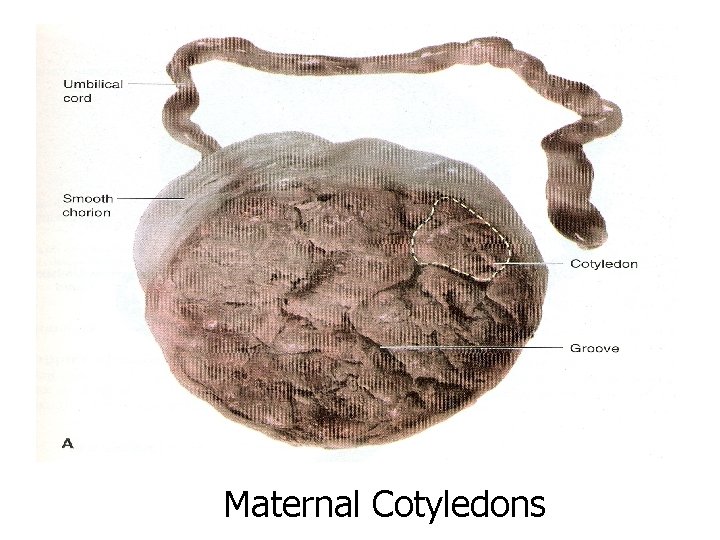
Maternal Cotyledons
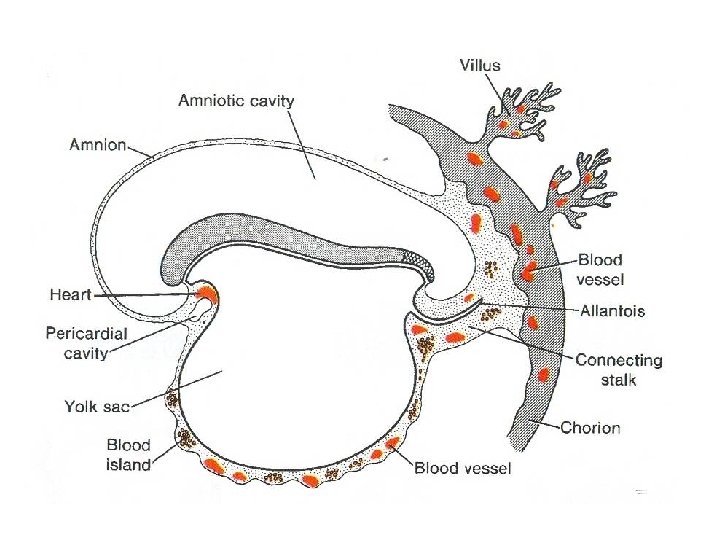
On the foetal side • • • Heart tubes Dorsal aortae Umbilical arteries Umbilical veins Somatic veins
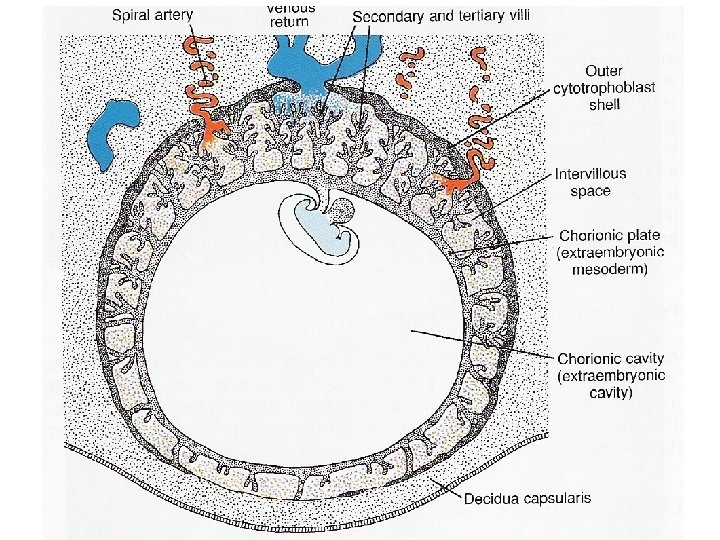
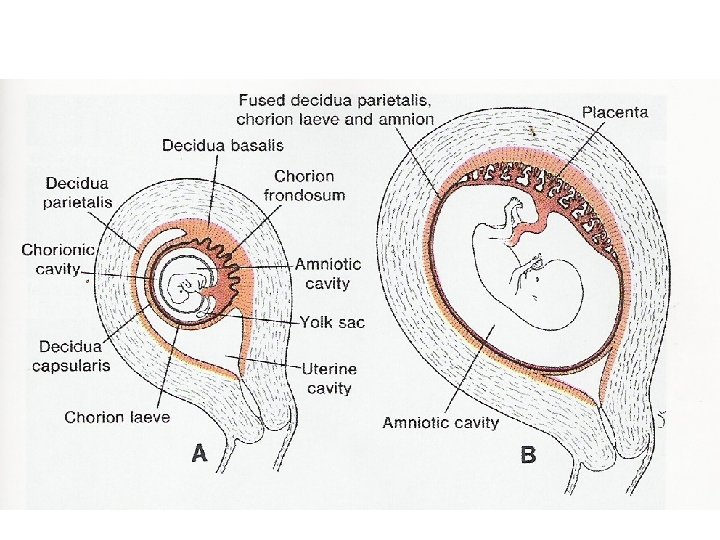
To c…. Placenta on maternal side • Development of decidua basalis – Endometrial stromal cells are modified during pregnancy – decidual cells – Contain abundant amount of lipids and glycogen – Decidual basalis, parietalis and capsularis – Development of decidual septa – 4 th month – Formation of 15 – 20 cotyledons ( Compartments)
To c…. . Placenta on foetal side • Development of chorionic frondosum – 2 nd week – uteroplacental circulation – 3 rd week – tertiary villi formation – 4 th week – heart begins to beat • Rapid growth of chorionic villi • Formation of outer cytotrophoblastic shell • Villi are anchored by chorionic plate and cytotrophoblastic shell • Rapid expansion of size and complexity opposite to the decidua basalis
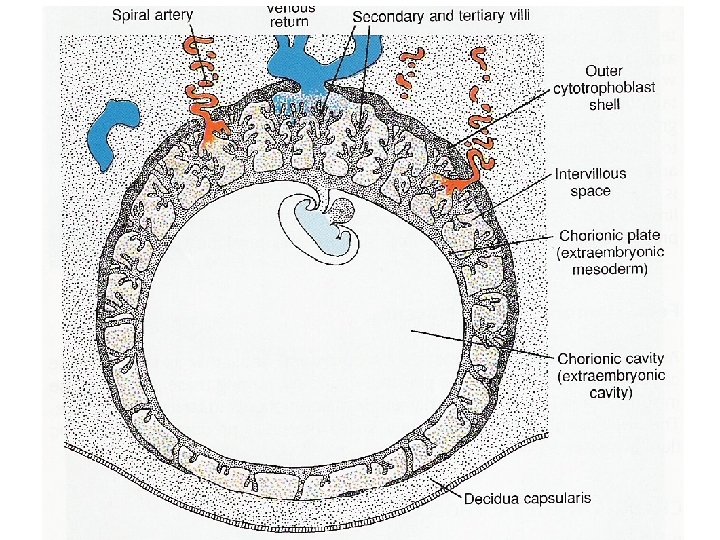
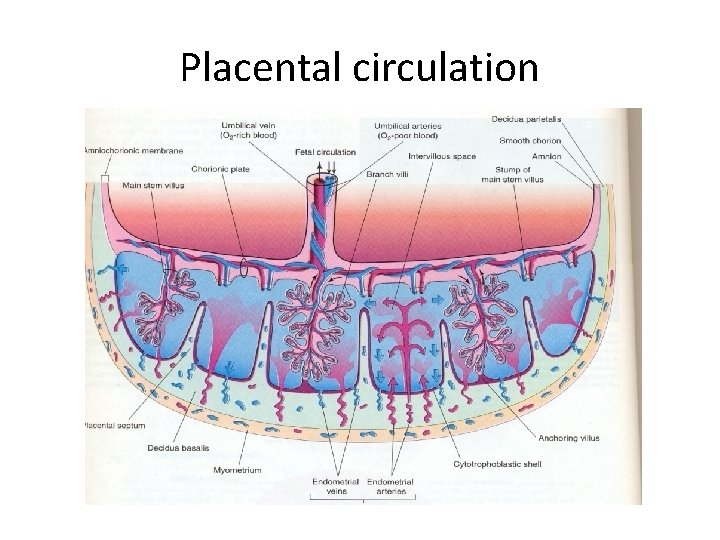
Placental circulation
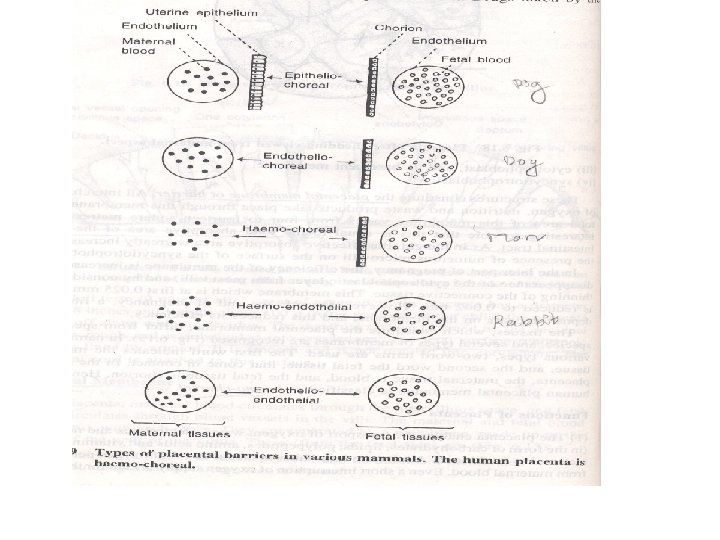
Human Placenta - type • According to dividing membrane between maternal and foetal circulation • Placental barrier is of haemochorial type
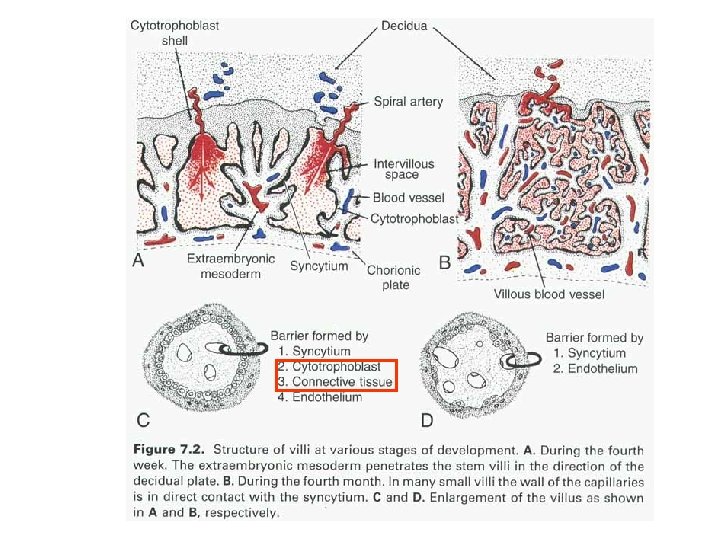
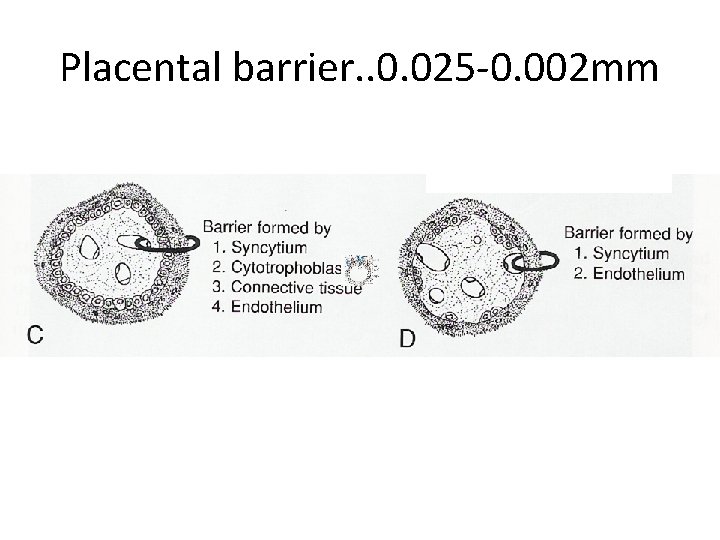
Placental barrier. . 0. 025 -0. 002 mm
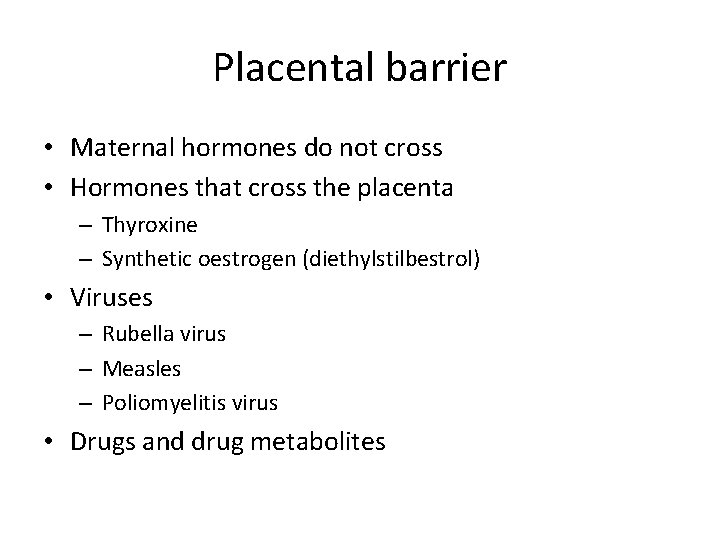
Placental barrier • Maternal hormones do not cross • Hormones that cross the placenta – Thyroxine – Synthetic oestrogen (diethylstilbestrol) • Viruses – Rubella virus – Measles – Poliomyelitis virus • Drugs and drug metabolites
Placenta • Functions – Exchange of metabolic and gaseous products – Exchange of nutrients and electrolytes – Production of hormones – Transmission of maternal antibodies – Drug transfer
Abnormalities Of The Placenta (A) Positions (B) Shapes (C) Attachment of cord (D) Degree of adhesion (E) Phylogenetic/ Placental barrier
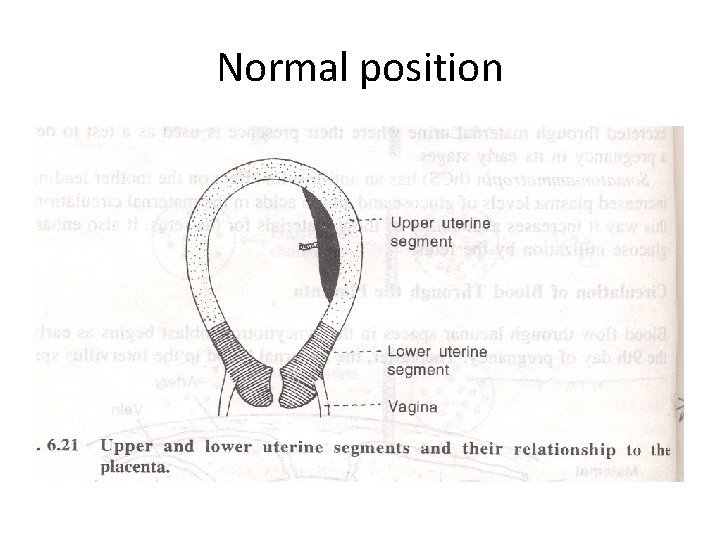
Normal position
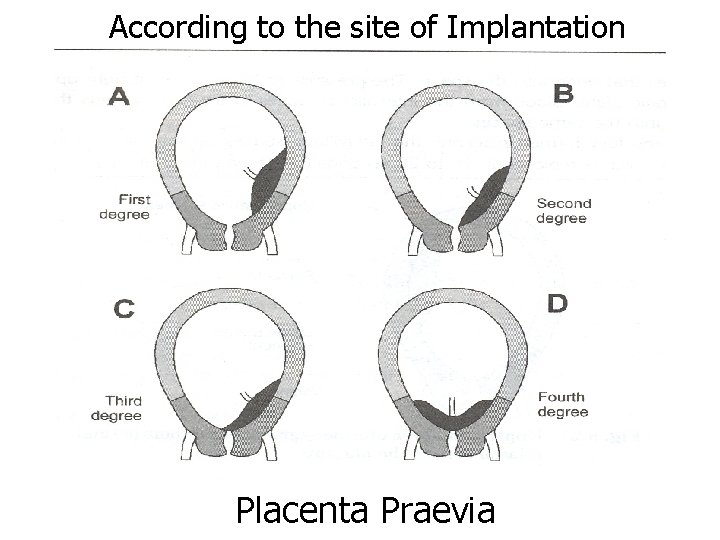
According to the site of Implantation Placenta Praevia
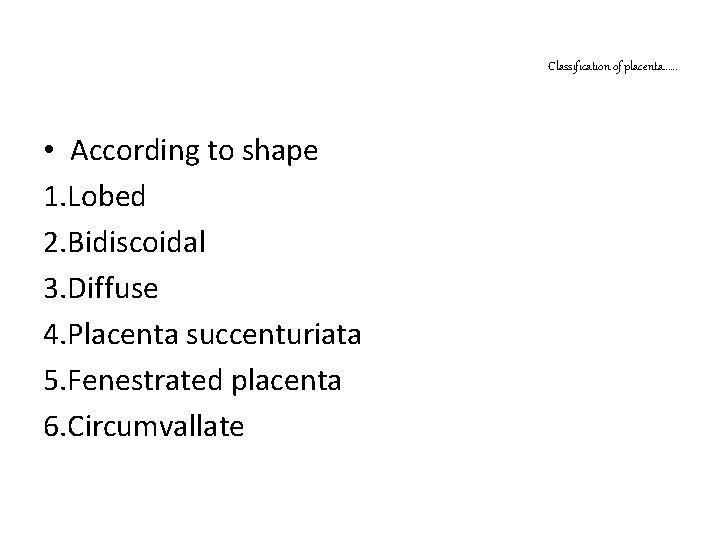
Classification of placenta…… • According to shape 1. Lobed 2. Bidiscoidal 3. Diffuse 4. Placenta succenturiata 5. Fenestrated placenta 6. Circumvallate
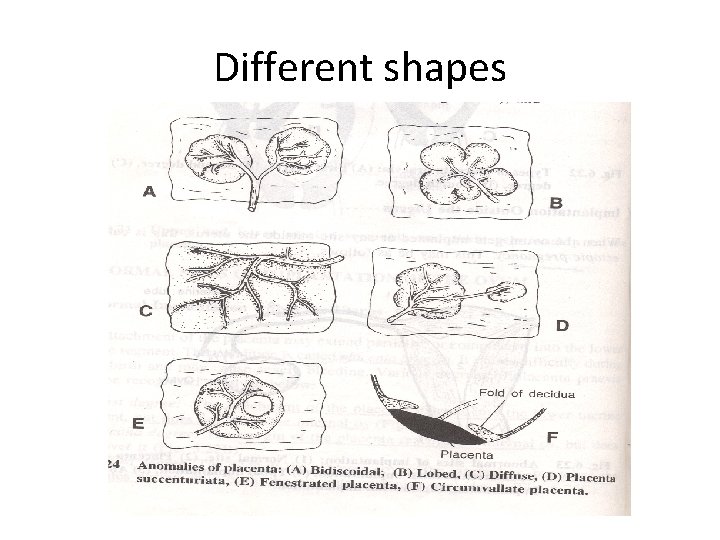
Different shapes
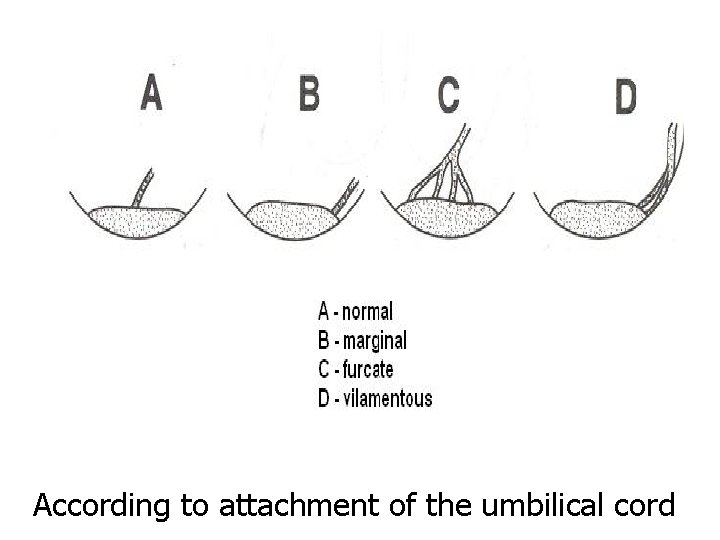
According to attachment of the umbilical cord
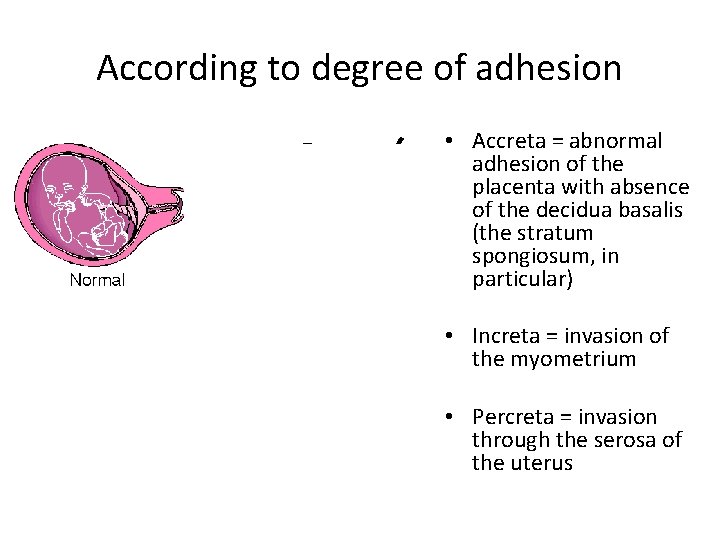
According to degree of adhesion • Accreta = abnormal adhesion of the placenta with absence of the decidua basalis (the stratum spongiosum, in particular) • Increta = invasion of the myometrium • Percreta = invasion through the serosa of the uterus
Phylogenetic Classificastion • • • Epithelio chorial eg; pig Syndesmo-chorial eg; bovine Endithelio-chorial eg; dog Hemo-chorial eg; human Hemo-endothelial eg ; rabbit
- Slides: 54