
Pipetting 360 For better accuracy and performance Part
Pipetting 360° For better accuracy and performance Part of the Good Pipetting Series of Seminars
Improving Pipetting Techniques § Definitions § Minimizing errors § Hands-on Workshop (optional) Internal usage only
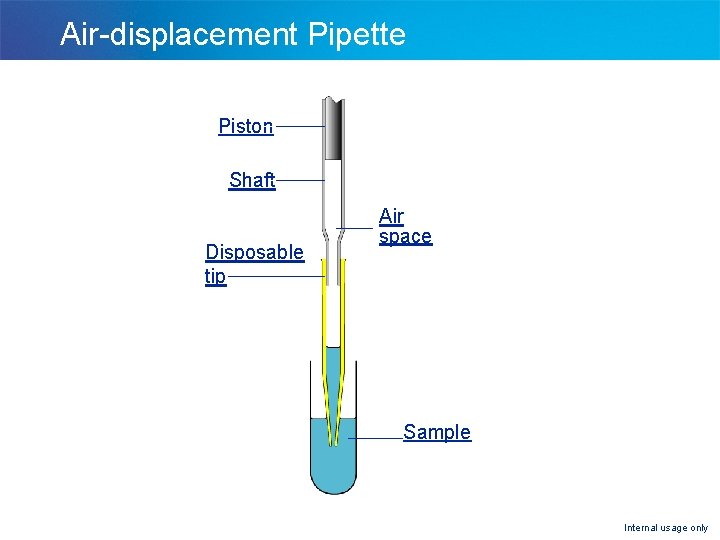
Air-displacement Pipette Piston Shaft Disposable tip Air space Sample Internal usage only
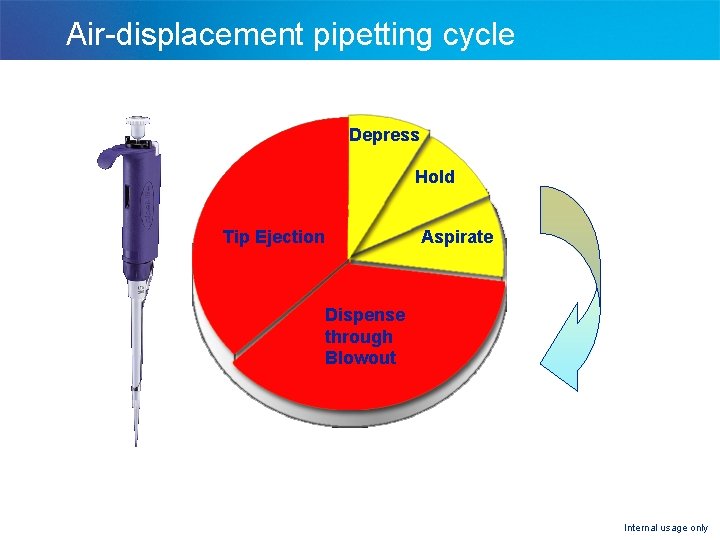
Air-displacement pipetting cycle Depress Hold Tip Ejection Aspirate Dispense through Blowout Internal usage only
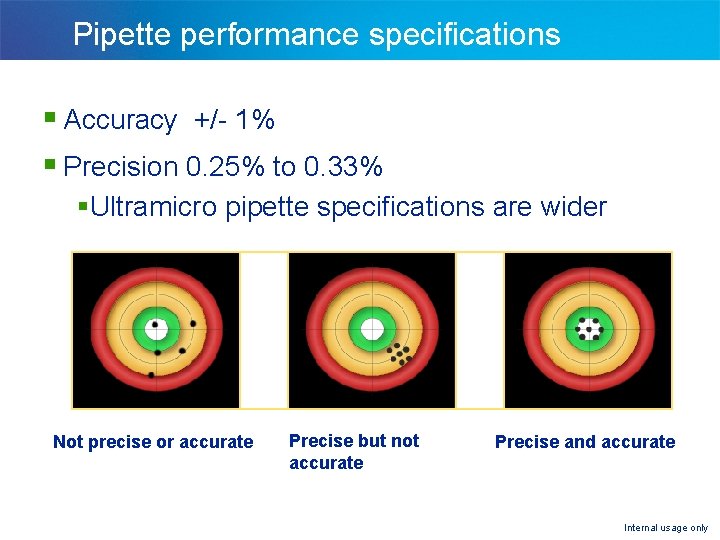
Pipette performance specifications § Accuracy +/- 1% § Precision 0. 25% to 0. 33% §Ultramicro pipette specifications are wider Not precise or accurate Precise but not accurate Precise and accurate Internal usage only

Basic techniques for minimizing errors § § § § § Optimizing volume range Setting the micrometer Tip immersion angle Tip immersion depth Tip immersion time Pre-rinsing pipette tips Aspiration rate Dispensing techniques Hand-warming effects Errors from poor technique can range from 0. 1% - 5% or more Internal usage only
Impact of errors in technique § Errors less than 0. 5% § Calibrators need to be aware as all errors can impact results § Errors 0. 6% - 1% § Normal users need to decide the importance of each error versus the extra time and effort required § Errors greater than 1% § Everyone needs to be aware of these errors Internal usage only
Optimizing volume range § Normal Range § 10% - 100% of volume § Operating at 10% range requires good technique § Optimized Range § typically 35% - 100% of volume § Less technique dependent § Assures accuracy and precision Optimizing volume range typically improves accuracy up to 1% Internal usage only
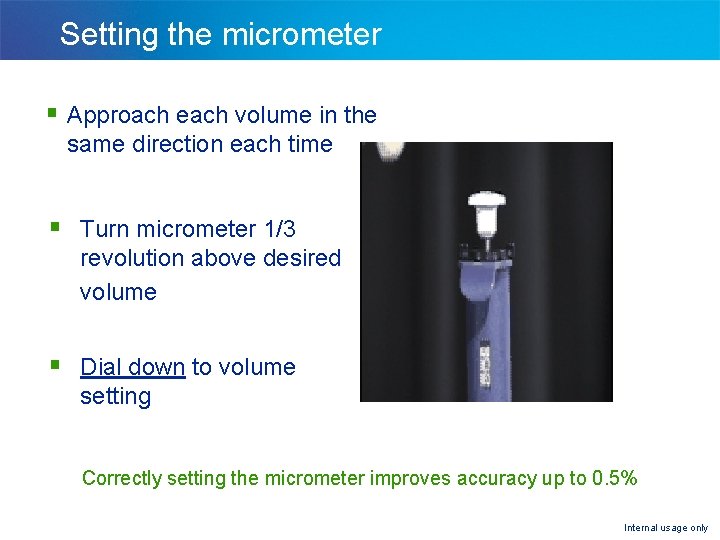
Setting the micrometer § Approach each volume in the same direction each time § Turn micrometer 1/3 revolution above desired volume § Dial down to volume setting Correctly setting the micrometer improves accuracy up to 0. 5% Internal usage only

Tip immersion angle Incorrect immersion angle Correct immersion angle Aspirating with the pipette perpendicular improves accuracy up to 0. 5%, ultramicro up to 2. 5% Internal usage only
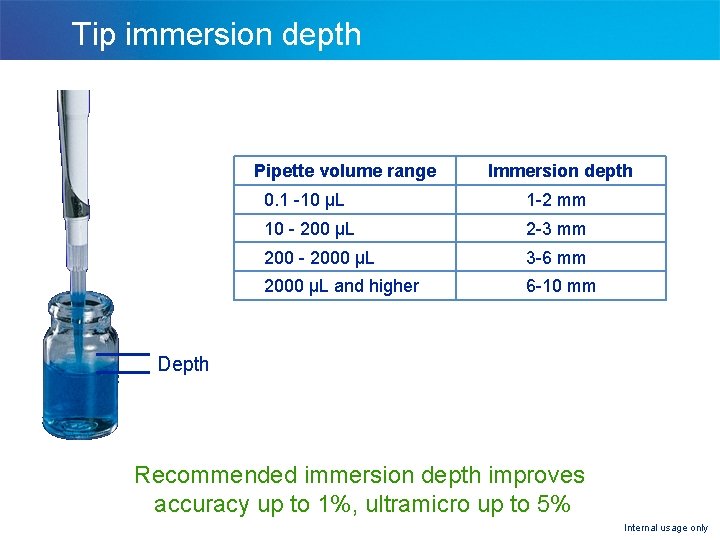
Tip immersion depth Pipette volume range Immersion depth 0. 1 -10 µL 1 -2 mm 10 - 200 µL 2 -3 mm 200 - 2000 µL 3 -6 mm 2000 µL and higher 6 -10 mm Depth Recommended immersion depth improves accuracy up to 1%, ultramicro up to 5% Internal usage only
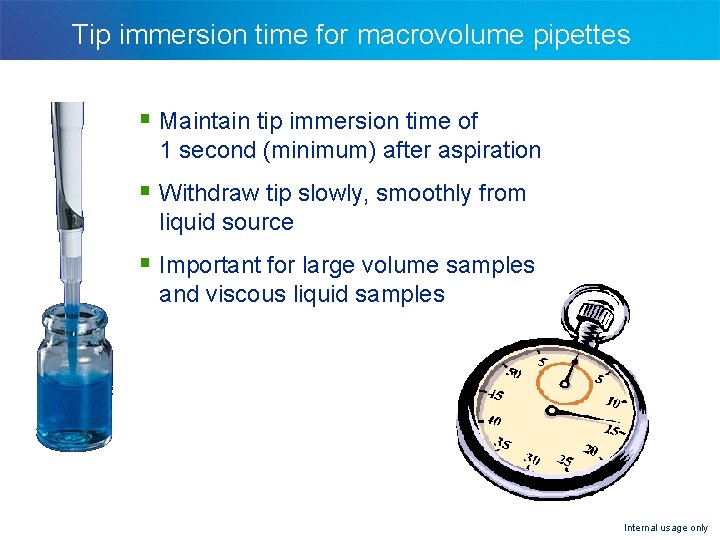
Tip immersion time for macrovolume pipettes § Maintain tip immersion time of 1 second (minimum) after aspiration § Withdraw tip slowly, smoothly from liquid source § Important for large volume samples and viscous liquid samples Internal usage only
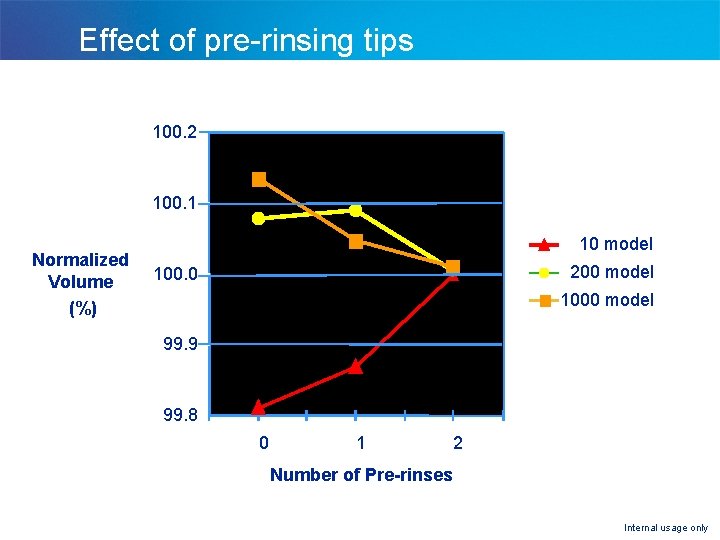
Effect of pre-rinsing tips 100. 2 100. 1 Normalized Volume (%) 10 model 200 model 100. 0 1000 model 99. 9 99. 8 0 1 2 Number of Pre-rinses Internal usage only

Pre-rinsing pipette tips § Pre-rinse tip with same liquid that is being dispensed § Aspirate sample into tip, and then dispense back into reservoir or to waste § Pre-rinsing provides identical contact surfaces for all aliquots Two pre-rinses provides up to 0. 2% greater accuracy when used with aqueous liquids Internal usage only
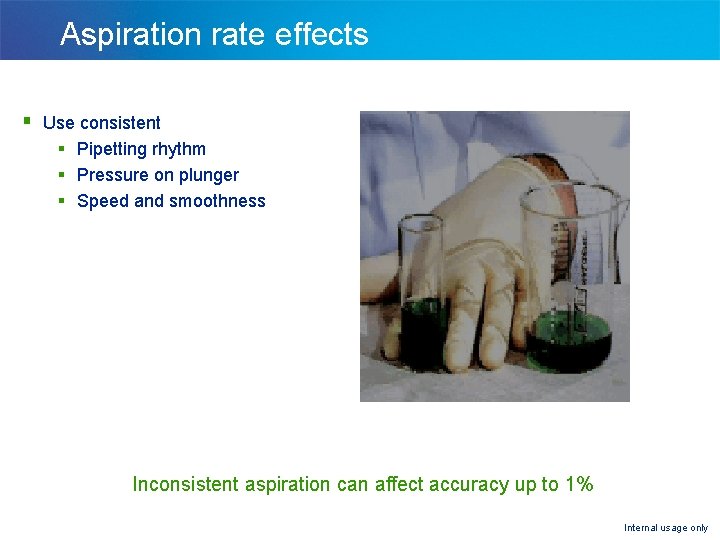
Aspiration rate effects § Use consistent § Pipetting rhythm § Pressure on plunger § Speed and smoothness Inconsistent aspiration can affect accuracy up to 1% Internal usage only
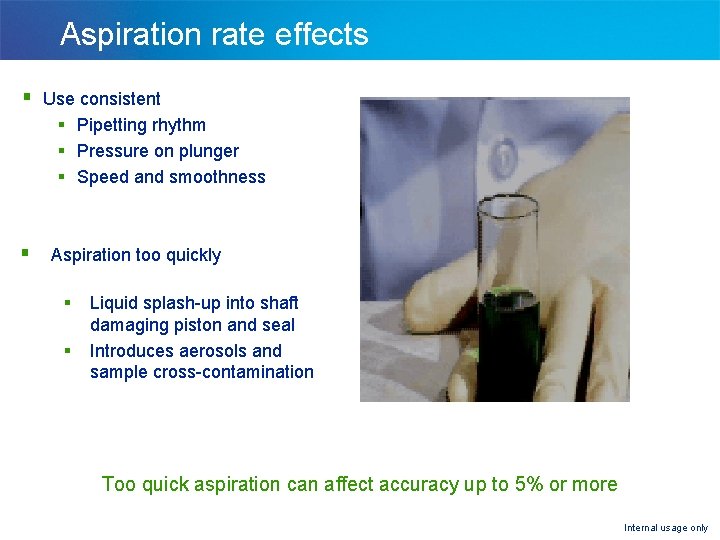
Aspiration rate effects § Use consistent § Pipetting rhythm § Pressure on plunger § Speed and smoothness § Aspiration too quickly § § Liquid splash-up into shaft damaging piston and seal Introduces aerosols and sample cross-contamination Too quick aspiration can affect accuracy up to 5% or more Internal usage only

Dispensing techniques § Thin-wall, Fine. Point TM tips provide maximum droplet dispensing § Three techniques 1) Along side-wall Internal usage only
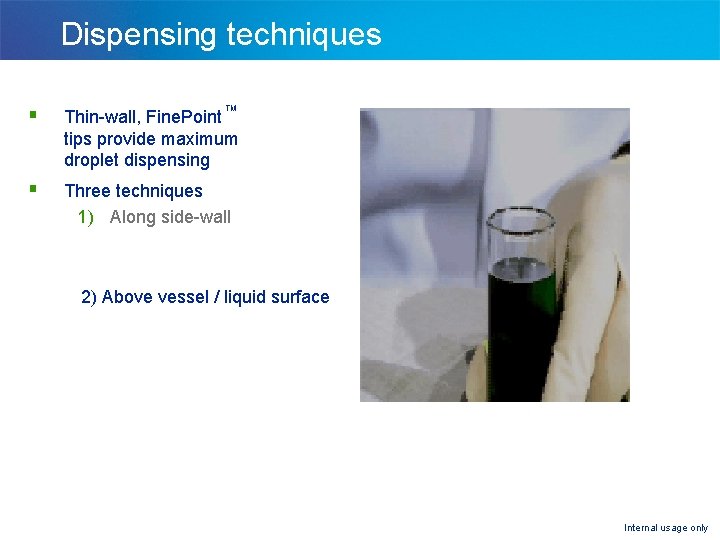
Dispensing techniques § Thin-wall, Fine. Point tips provide maximum droplet dispensing § Three techniques 1) Along side-wall TM 2) Above vessel / liquid surface Internal usage only
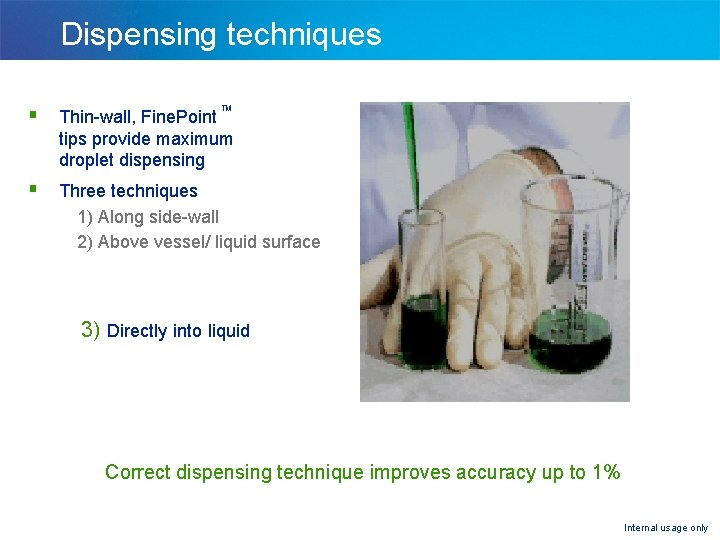
Dispensing techniques § Thin-wall, Fine. Point TM tips provide maximum droplet dispensing § Three techniques 1) Along side-wall 2) Above vessel/ liquid surface 3) Directly into liquid Correct dispensing technique improves accuracy up to 1% Internal usage only
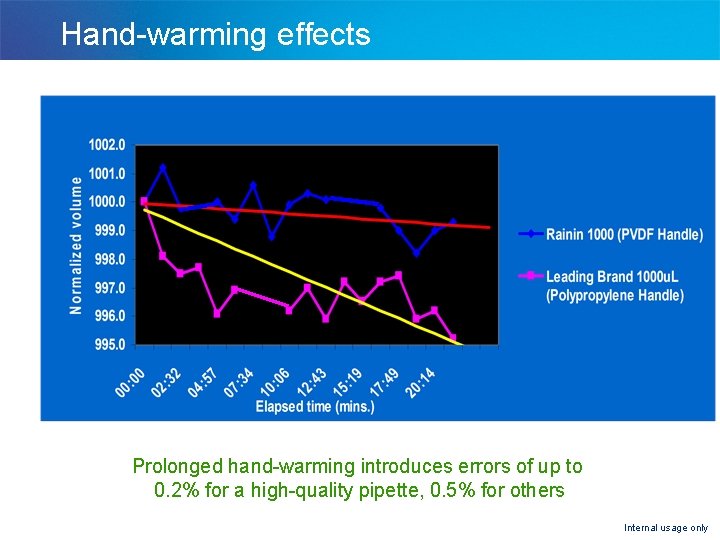
Hand-warming effects Prolonged hand-warming introduces errors of up to 0. 2% for a high-quality pipette, 0. 5% for others Internal usage only
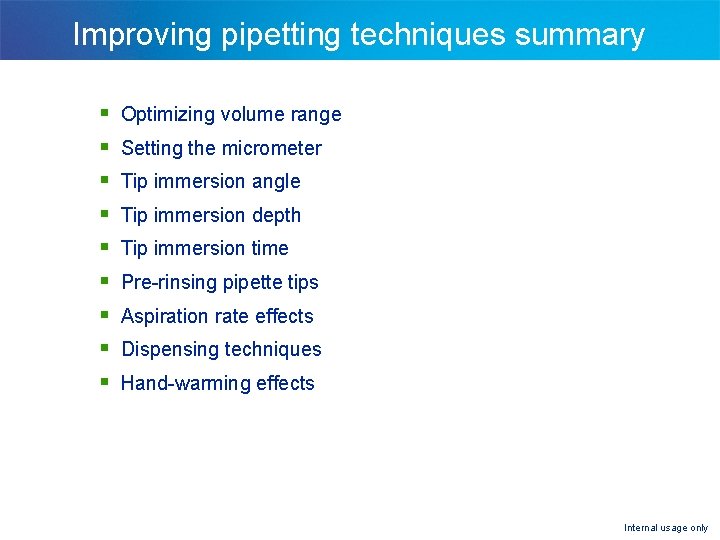
Improving pipetting techniques summary § § § § § Optimizing volume range Setting the micrometer Tip immersion angle Tip immersion depth Tip immersion time Pre-rinsing pipette tips Aspiration rate effects Dispensing techniques Hand-warming effects Internal usage only
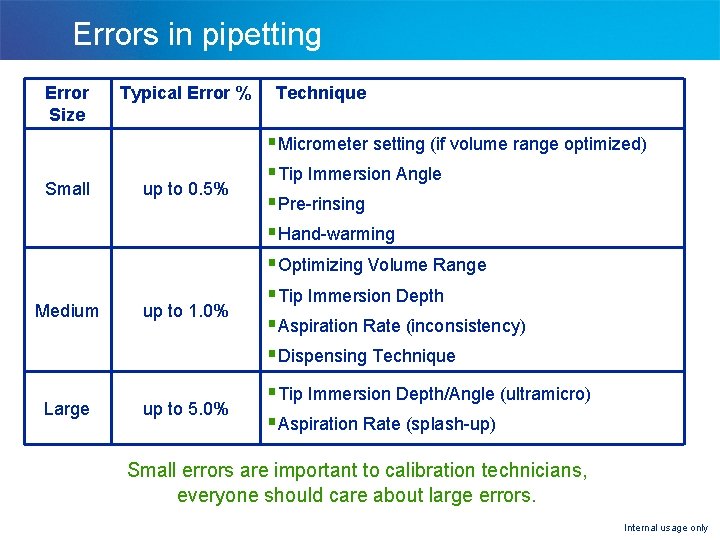
Errors in pipetting Error Size Typical Error % Small up to 0. 5% Medium up to 1. 0% Large up to 5. 0% Technique §Micrometer setting (if volume range optimized) §Tip Immersion Angle §Pre-rinsing §Hand-warming §Optimizing Volume Range §Tip Immersion Depth §Aspiration Rate (inconsistency) §Dispensing Technique §Tip Immersion Depth/Angle (ultramicro) §Aspiration Rate (splash-up) Small errors are important to calibration technicians, everyone should care about large errors. Internal usage only

Good Pipetting Technique = Minimal Errors = Good Performance Rainin Instrument, LLC a METTLER TOLEDO Company 800 -472 -4646 www. rainin. com pipets@rainin. com
- Slides: 23