
Pipette Calibration Pipette Calibration Procedure Pipette water and
Pipette Calibration
Pipette Calibration § Procedure § Pipette, water and balance § Test the maximum volume or minimum volume § Pre-wet tips § Test 5 volumes per setting
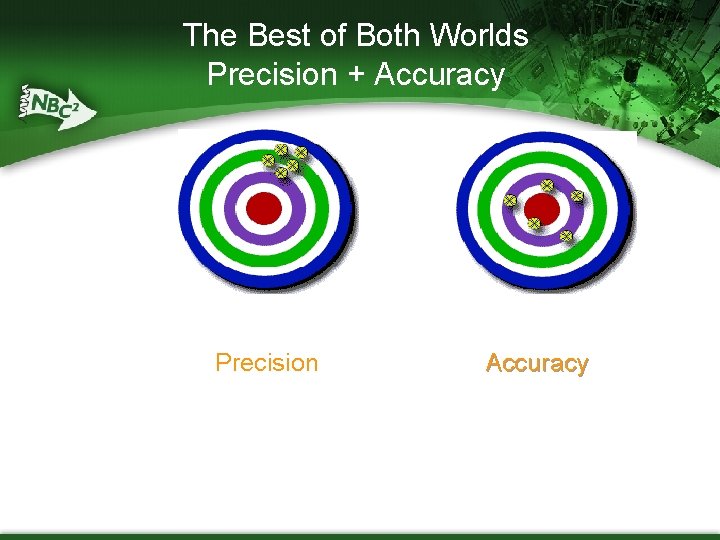
The Best of Both Worlds Precision + Accuracy Precision Accuracy
Pipette Calibration Criteria Calibration Acceptance Criteria Accuracy (mean error): How close a measurement is to an accepted value. Difference between the dispensed mass and the selected volume of a pipette Precision (random error): Indicates how close together or how repeatable the pipette volumes are. A precise measuring instrument will give very nearly the same result each time it is used.
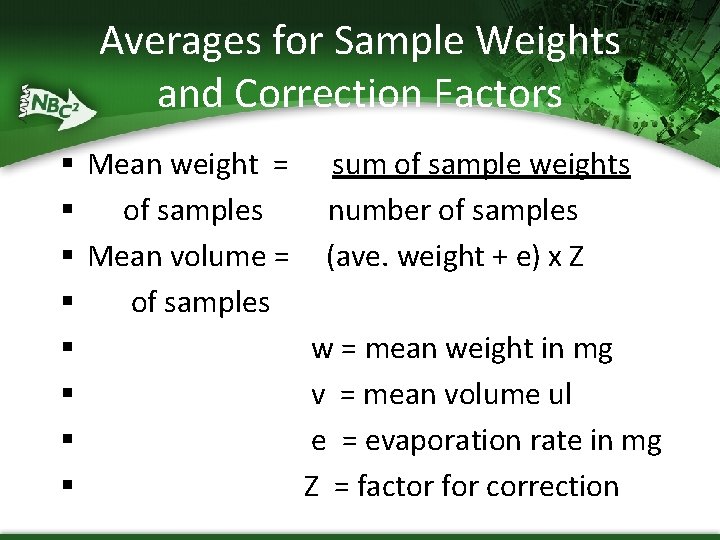
Averages for Sample Weights and Correction Factors § Mean weight = § of samples § Mean volume = § of samples § § sum of sample weights number of samples (ave. weight + e) x Z w = mean weight in mg v = mean volume ul e = evaporation rate in mg Z = factor for correction
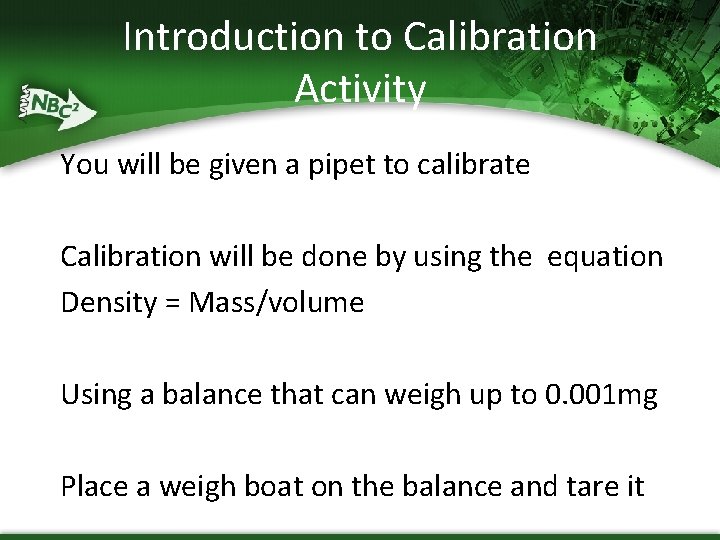
Introduction to Calibration Activity You will be given a pipet to calibrate Calibration will be done by using the equation Density = Mass/volume Using a balance that can weigh up to 0. 001 mg Place a weigh boat on the balance and tare it
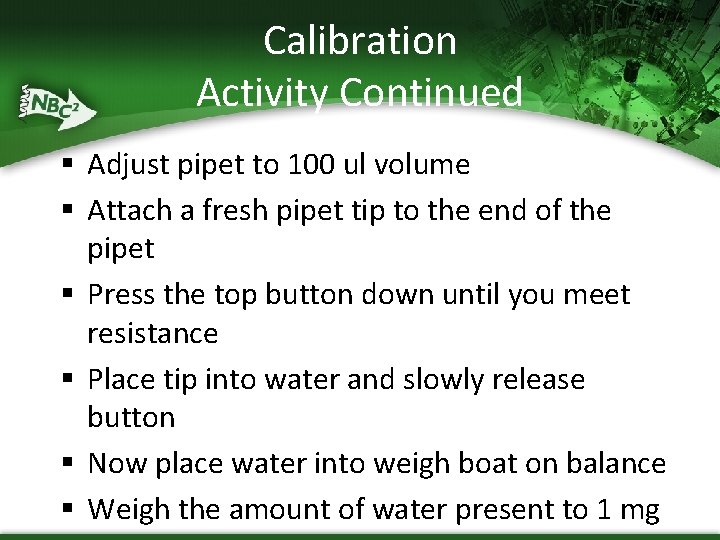
Calibration Activity Continued § Adjust pipet to 100 ul volume § Attach a fresh pipet tip to the end of the pipet § Press the top button down until you meet resistance § Place tip into water and slowly release button § Now place water into weigh boat on balance § Weigh the amount of water present to 1 mg
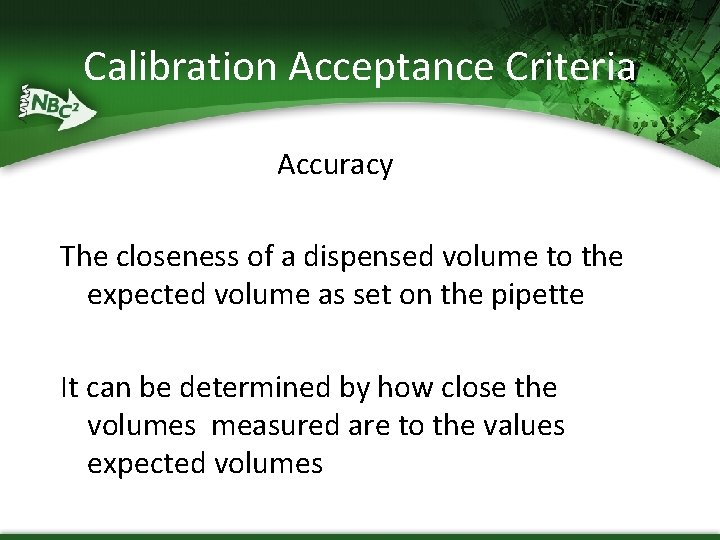
Calibration Acceptance Criteria Accuracy The closeness of a dispensed volume to the expected volume as set on the pipette It can be determined by how close the volumes measured are to the values expected volumes
- Slides: 8