
Pipelining Improve perfomance by increasing instruction throughput Ideal
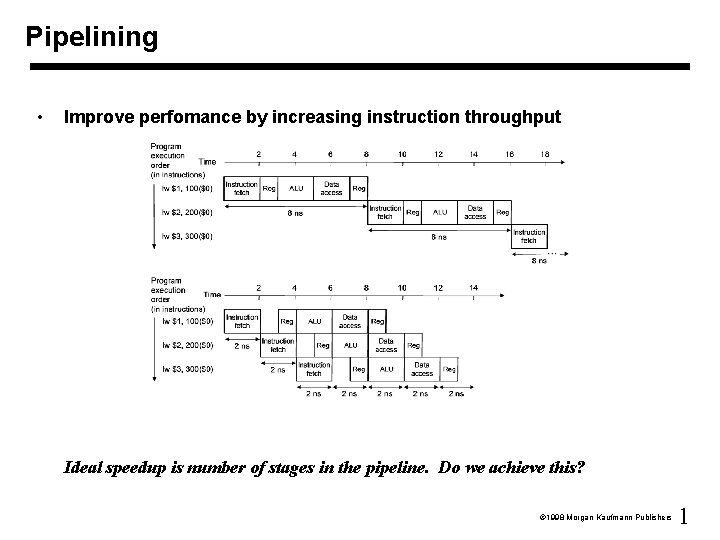
Pipelining • Improve perfomance by increasing instruction throughput Ideal speedup is number of stages in the pipeline. Do we achieve this? 1998 Morgan Kaufmann Publishers 1
Pipelining • What makes it easy – all instructions are the same length – just a few instruction formats – memory operands appear only in loads and stores • What makes it hard? – structural hazards: suppose we had only one memory – control hazards: need to worry about branch instructions – data hazards: an instruction depends on a previous instruction • We’ll build a simple pipeline and look at these issues • We’ll talk about modern processors and what really makes it hard: – exception handling – trying to improve performance with out-of-order execution, etc. 1998 Morgan Kaufmann Publishers 2
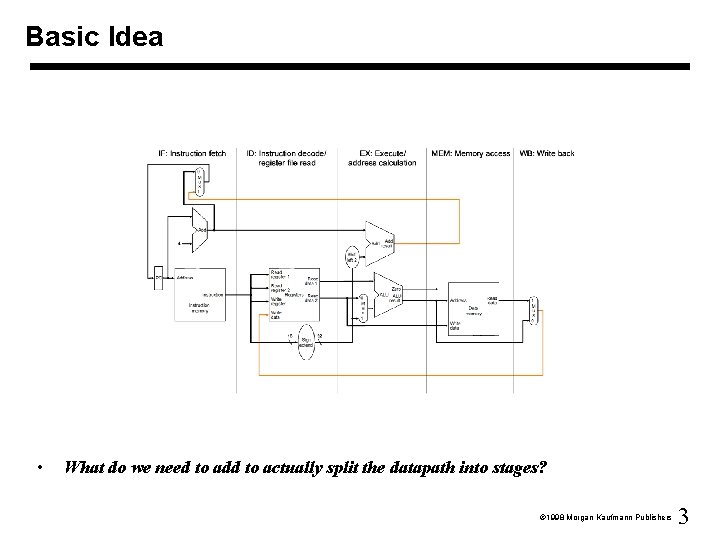
Basic Idea • What do we need to add to actually split the datapath into stages? 1998 Morgan Kaufmann Publishers 3
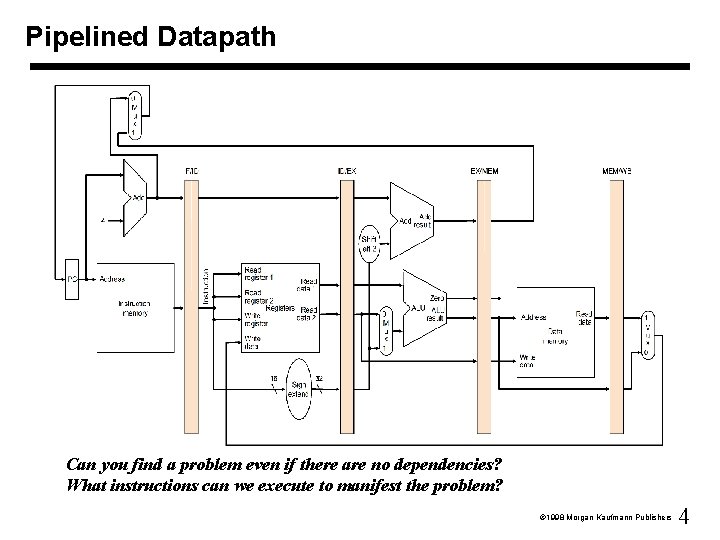
Pipelined Datapath Can you find a problem even if there are no dependencies? What instructions can we execute to manifest the problem? 1998 Morgan Kaufmann Publishers 4
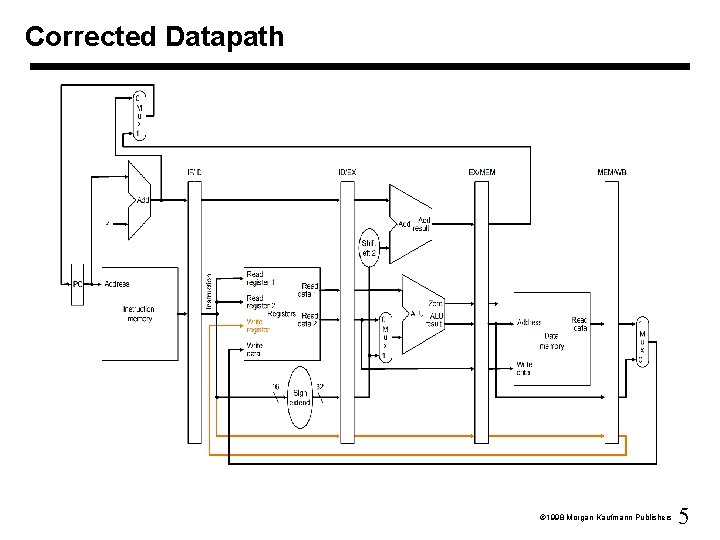
Corrected Datapath 1998 Morgan Kaufmann Publishers 5

Graphically Representing Pipelines • Can help with answering questions like: – how many cycles does it take to execute this code? – what is the ALU doing during cycle 4? – use this representation to help understand datapaths 1998 Morgan Kaufmann Publishers 6
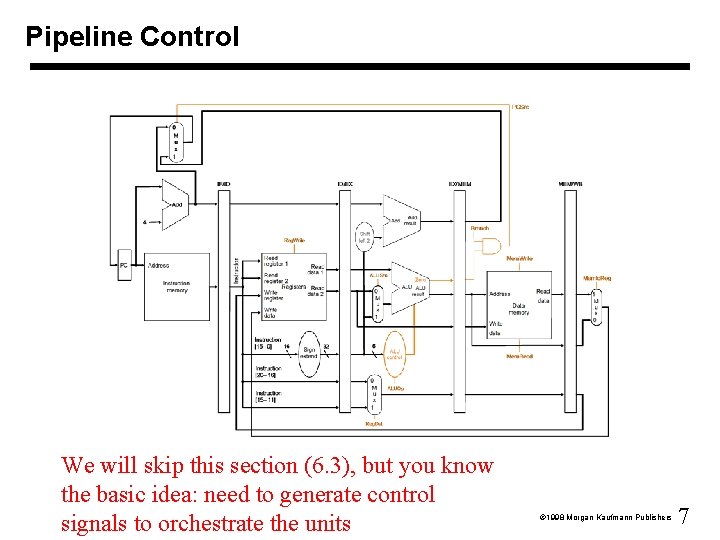
Pipeline Control We will skip this section (6. 3), but you know the basic idea: need to generate control signals to orchestrate the units 1998 Morgan Kaufmann Publishers 7
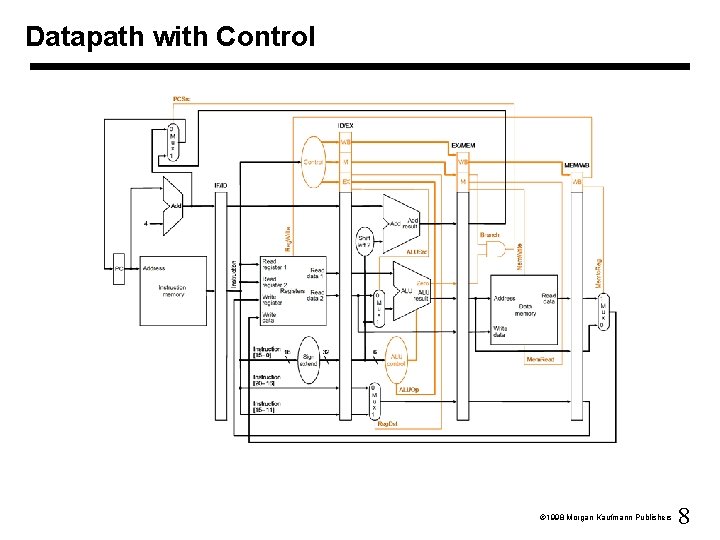
Datapath with Control 1998 Morgan Kaufmann Publishers 8
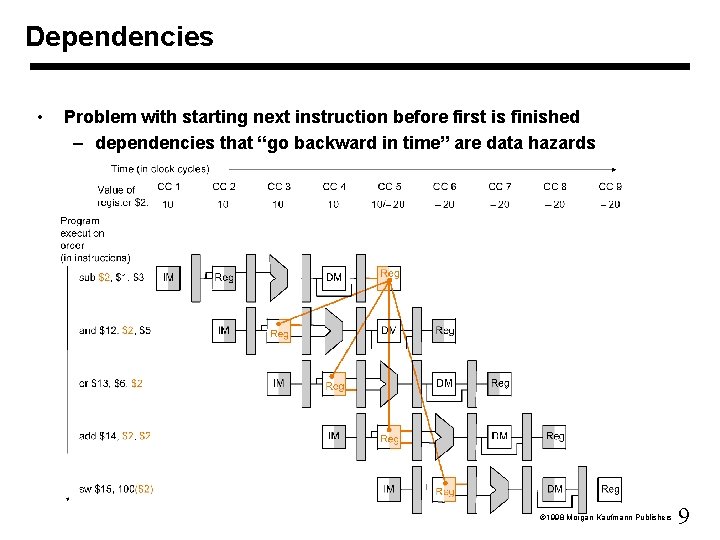
Dependencies • Problem with starting next instruction before first is finished – dependencies that “go backward in time” are data hazards 1998 Morgan Kaufmann Publishers 9
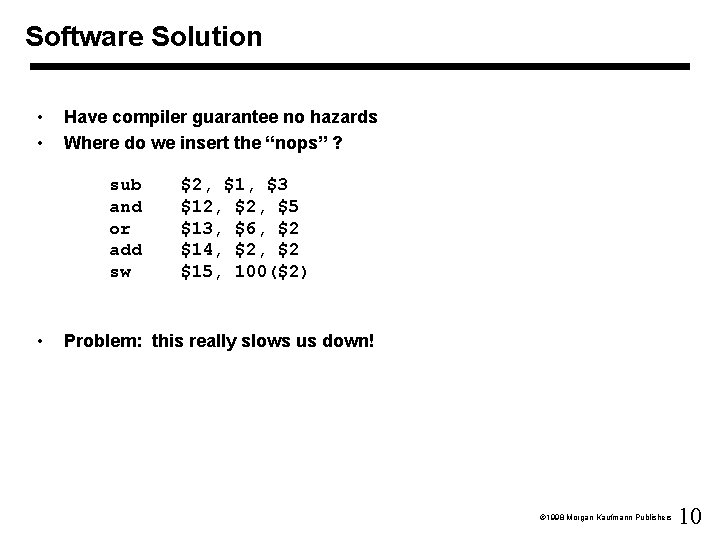
Software Solution • • Have compiler guarantee no hazards Where do we insert the “nops” ? sub and or add sw • $2, $1, $3 $12, $5 $13, $6, $2 $14, $2 $15, 100($2) Problem: this really slows us down! 1998 Morgan Kaufmann Publishers 10
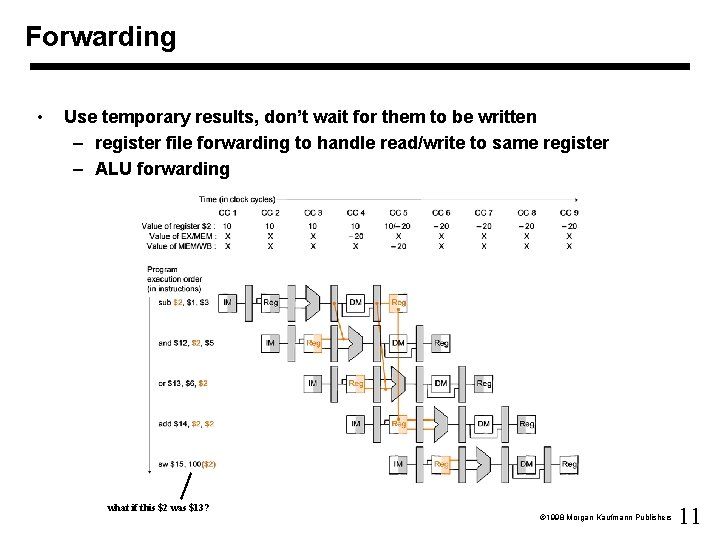
Forwarding • Use temporary results, don’t wait for them to be written – register file forwarding to handle read/write to same register – ALU forwarding what if this $2 was $13? 1998 Morgan Kaufmann Publishers 11
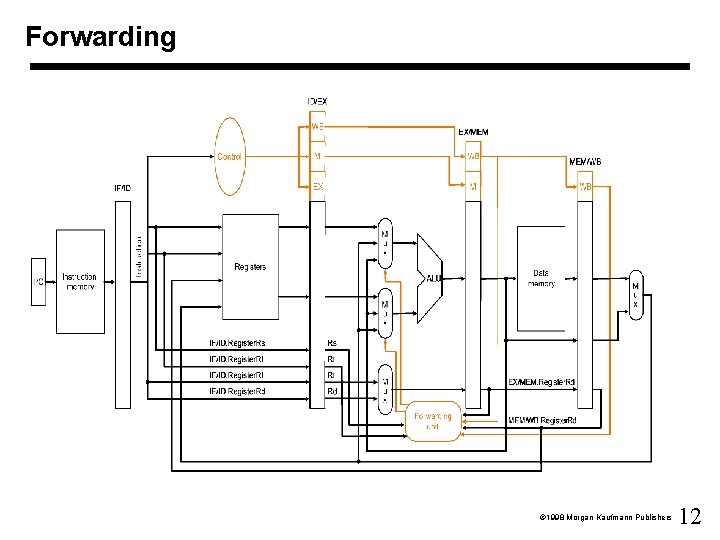
Forwarding 1998 Morgan Kaufmann Publishers 12
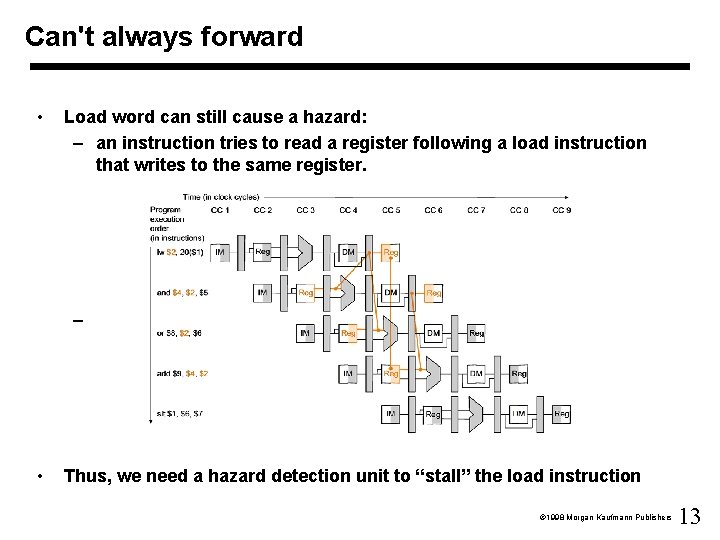
Can't always forward • Load word can still cause a hazard: – an instruction tries to read a register following a load instruction that writes to the same register. – • Thus, we need a hazard detection unit to “stall” the load instruction 1998 Morgan Kaufmann Publishers 13
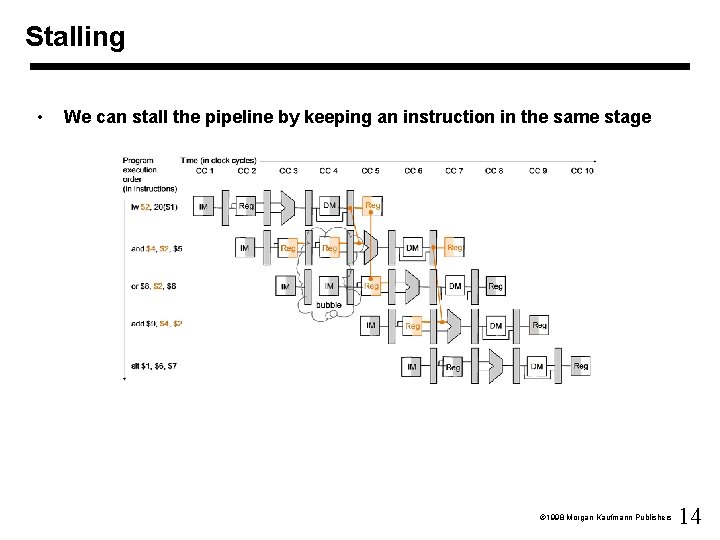
Stalling • We can stall the pipeline by keeping an instruction in the same stage 1998 Morgan Kaufmann Publishers 14
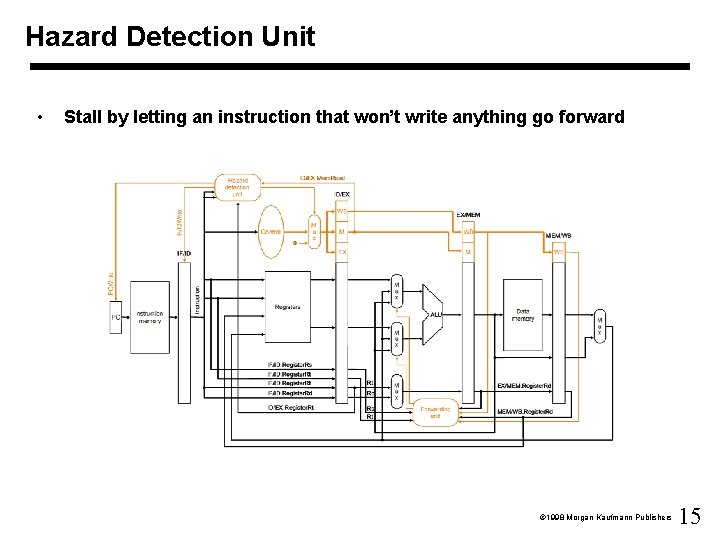
Hazard Detection Unit • Stall by letting an instruction that won’t write anything go forward 1998 Morgan Kaufmann Publishers 15
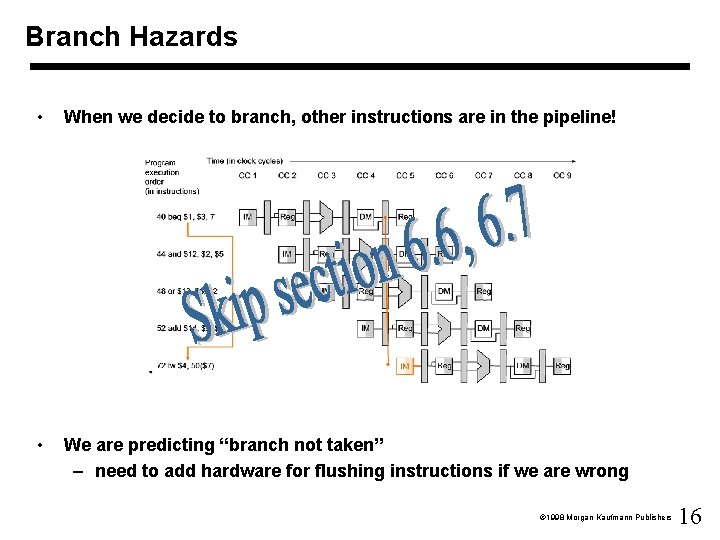
Branch Hazards • When we decide to branch, other instructions are in the pipeline! • We are predicting “branch not taken” – need to add hardware for flushing instructions if we are wrong 1998 Morgan Kaufmann Publishers 16
Improving Performance • Try and avoid stalls! E. g. , reorder these instructions: lw lw sw sw $t 0, $t 2, $t 0, 0($t 1) 4($t 1) • Add a “branch delay slot” – the next instruction after a branch is always executed – rely on compiler to “fill” the slot with something useful • Superscalar: start more than one instruction in the same cycle 1998 Morgan Kaufmann Publishers 17
Dynamic Scheduling • The hardware performs the “scheduling” – hardware tries to find instructions to execute – out of order execution is possible – speculative execution and dynamic branch prediction • All modern processors are very complicated – DEC Alpha 21264: 9 stage pipeline, 6 instruction issue – Power. PC and Pentium: branch history table – Compiler technology important • • Read section 6. 8 (and 6. 9 -6. 12 for your information) This class has given you the background you need to learn more 1998 Morgan Kaufmann Publishers 18
- Slides: 18