
Pipelining Bottomup Data Flow Analysis Qingkai Shi and

Pipelining Bottom-up Data Flow Analysis Qingkai Shi and Charles Zhang The Hong Kong University of Science and Technology, China July 10 th 2020 The 42 nd ACM/IEEE International Conference on Software Engineering

Outline • Background • Approach • Evaluation • Summary 2
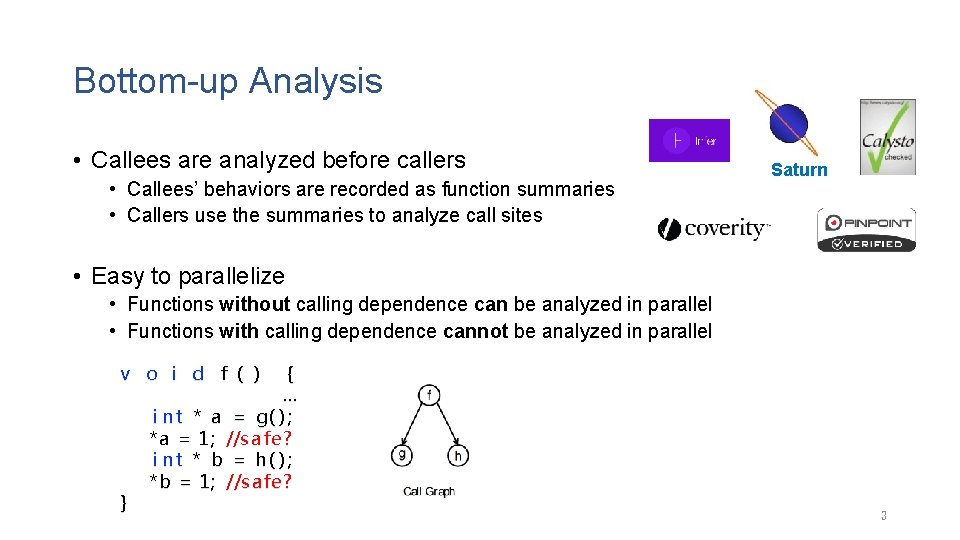
Bottom-up Analysis • Callees are analyzed before callers • Callees’ behaviors are recorded as function summaries • Callers use the summaries to analyze call sites Saturn • Easy to parallelize • Functions without calling dependence can be analyzed in parallel • Functions with calling dependence cannot be analyzed in parallel v o i d f ( ) } { … i n t * a = g( ) ; *a = 1 ; //s a fe ? i n t * b = h( ) ; *b = 1 ; //s a fe ? 3
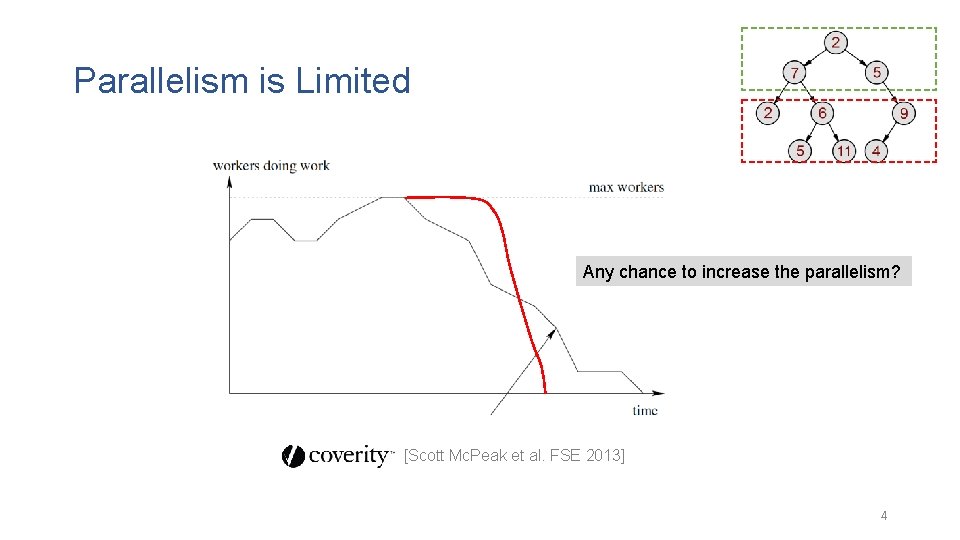
Parallelism is Limited Any chance to increase the parallelism? [Scott Mc. Peak et al. FSE 2013] 4
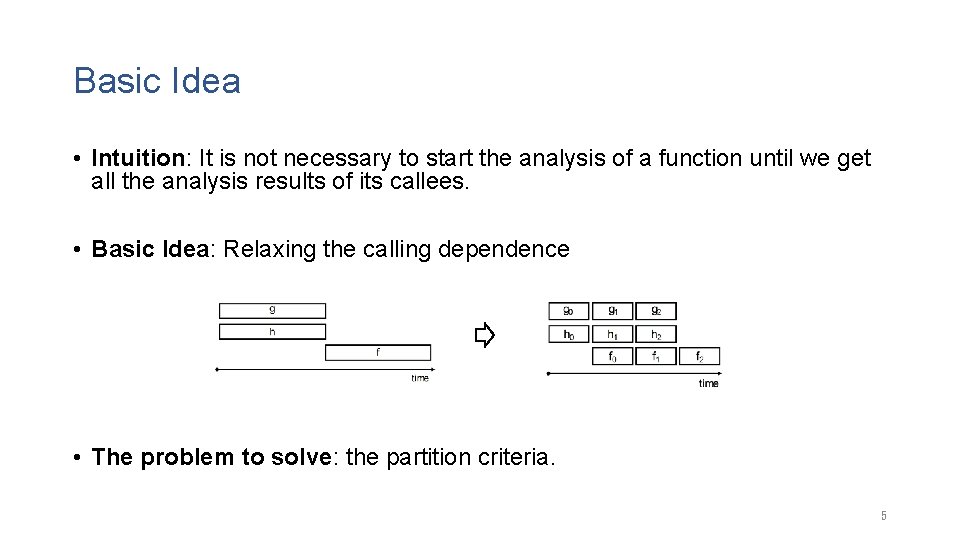
Basic Idea • Intuition: It is not necessary to start the analysis of a function until we get all the analysis results of its callees. • Basic Idea: Relaxing the calling dependence • The problem to solve: the partition criteria. 5
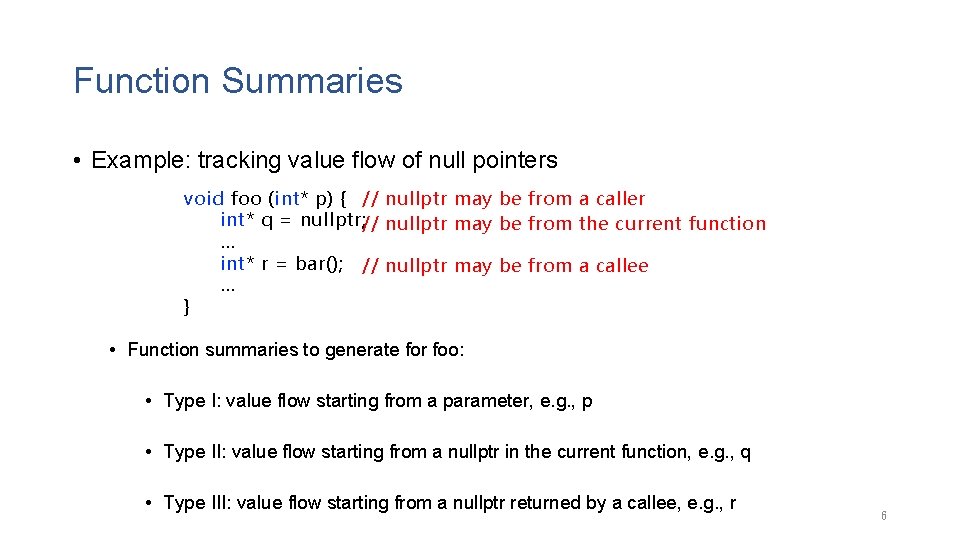
Function Summaries • Example: tracking value flow of null pointers void foo (int* p) { // nullptr may be from a caller int* q = nullptr; // nullptr may be from the current function … int* r = bar(); // nullptr may be from a callee … } • Function summaries to generate for foo: • Type I: value flow starting from a parameter, e. g. , p • Type II: value flow starting from a nullptr in the current function, e. g. , q • Type III: value flow starting from a nullptr returned by a callee, e. g. , r 6
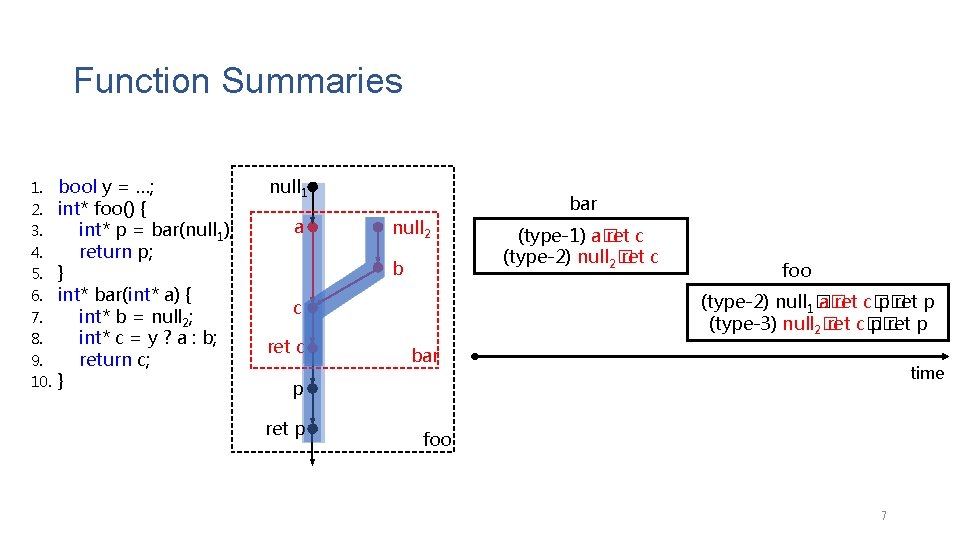
Function Summaries 1. 2. 3. 4. 5. 6. 7. 8. 9. 10. bool y = …; int* foo() { int* p = bar(null 1); return p; } int* bar(int* a) { int* b = null 2; int* c = y ? a : b; return c; } null 1 a bar null 2 b foo (type-2) null 1� a� ret c� p� ret p (type-3) null 2� ret c� p� ret p c ret c (type-1) a� ret c (type-2) null 2� ret c bar time p ret p foo 7
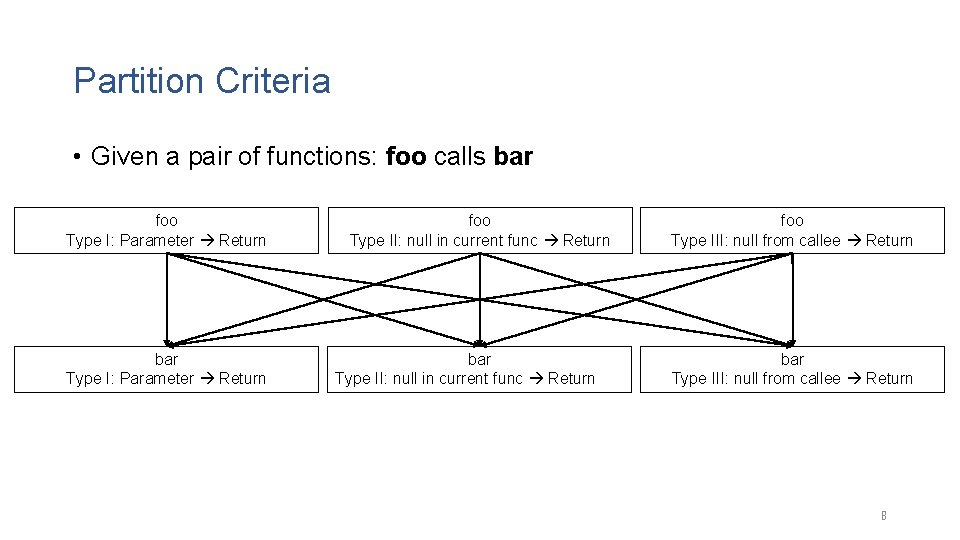
Partition Criteria • Given a pair of functions: foo calls bar foo Type I: Parameter Return bar Type I: Parameter Return foo Type II: null in current func Return bar Type II: null in current func Return foo Type III: null from callee Return bar Type III: null from callee Return • All the dependences are necessary? No! 8
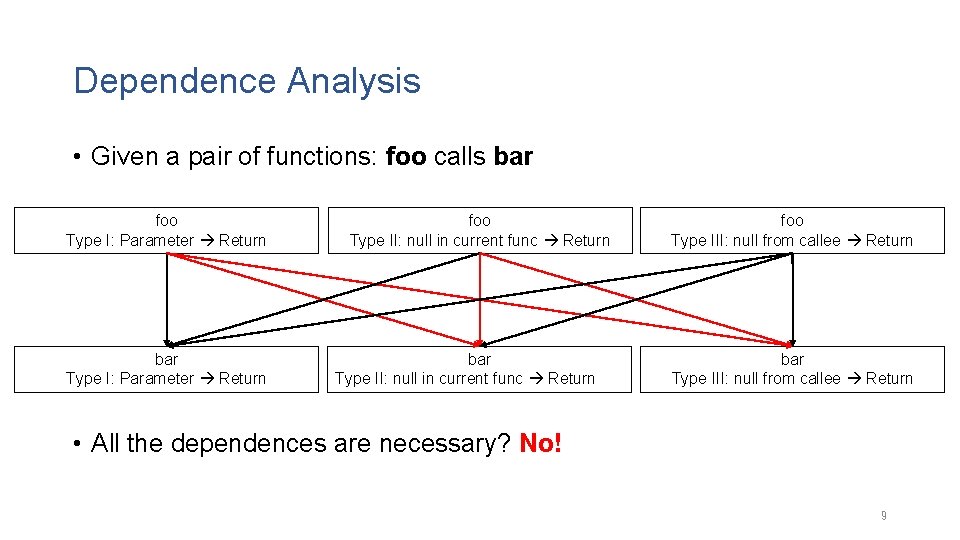
Dependence Analysis • Given a pair of functions: foo calls bar foo Type I: Parameter Return bar Type I: Parameter Return foo Type II: null in current func Return bar Type II: null in current func Return foo Type III: null from callee Return bar Type III: null from callee Return • All the dependences are necessary? No! 9
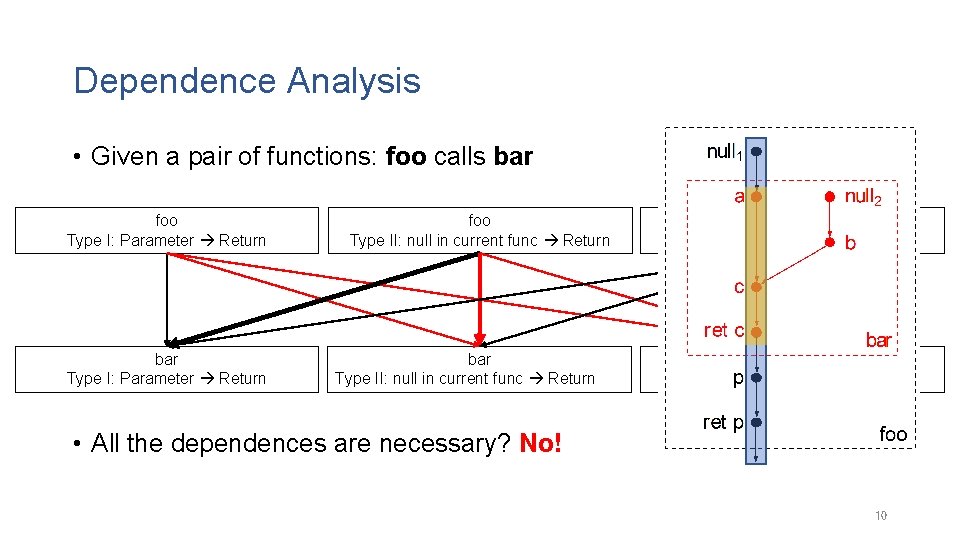
Dependence Analysis • Given a pair of functions: foo calls bar foo Type I: Parameter Return bar Type I: Parameter Return foo Type II: null in current func Return bar Type II: null in current func Return foo Type III: null from callee Return bar Type III: null from callee Return • All the dependences are necessary? No! 10
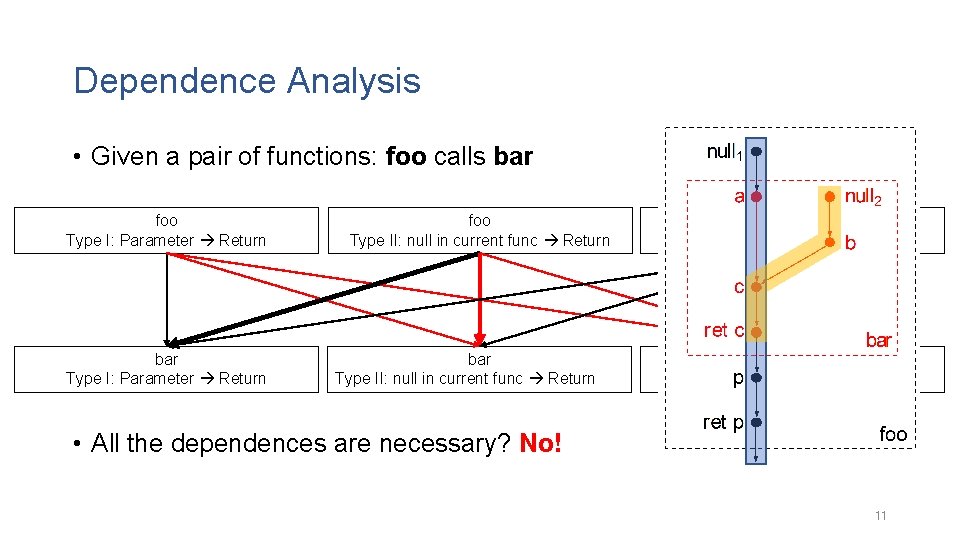
Dependence Analysis • Given a pair of functions: foo calls bar foo Type I: Parameter Return bar Type I: Parameter Return foo Type II: null in current func Return bar Type II: null in current func Return foo Type III: null from callee Return bar Type III: null from callee Return • All the dependences are necessary? No! 11
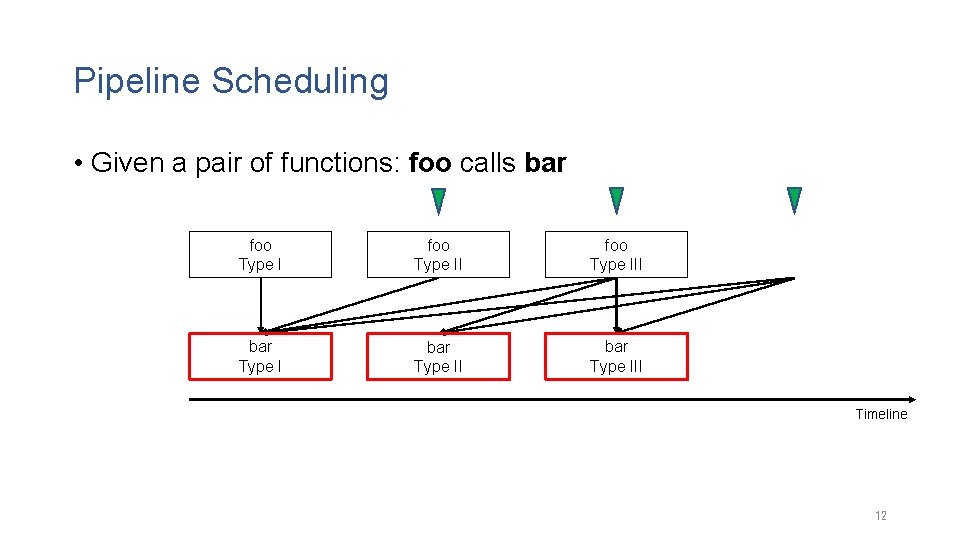
Pipeline Scheduling • Given a pair of functions: foo calls bar foo Type III bar Type III Timeline 12
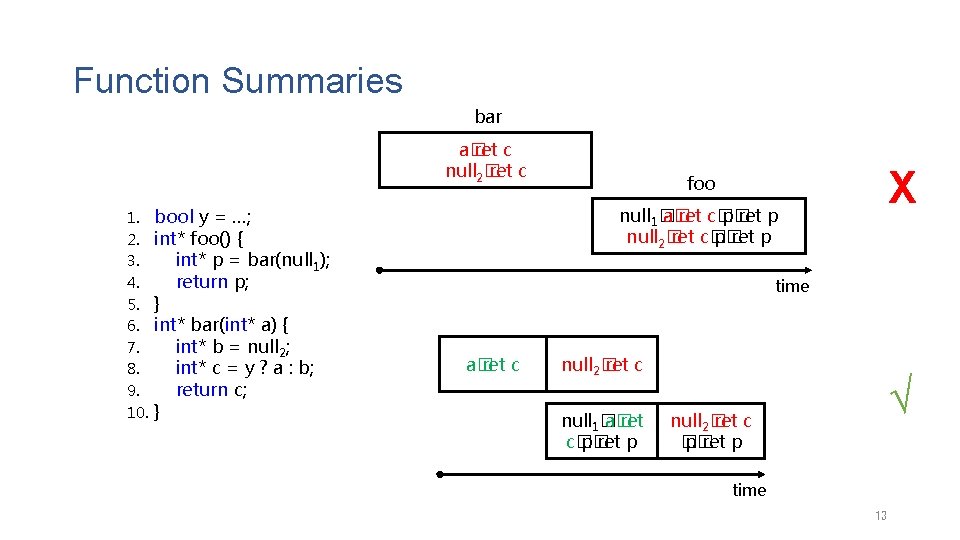
Function Summaries bar a� ret c null 2� ret c 1. 2. 3. 4. 5. 6. 7. 8. 9. 10. bool y = …; int* foo() { int* p = bar(null 1); return p; } int* bar(int* a) { int* b = null 2; int* c = y ? a : b; return c; } X foo null 1� a� ret c� p� ret p null 2� ret c� p� ret p time a� ret c null 2� ret c null 1� a� ret c� p� ret p √ null 2� ret c � p� ret p time 13
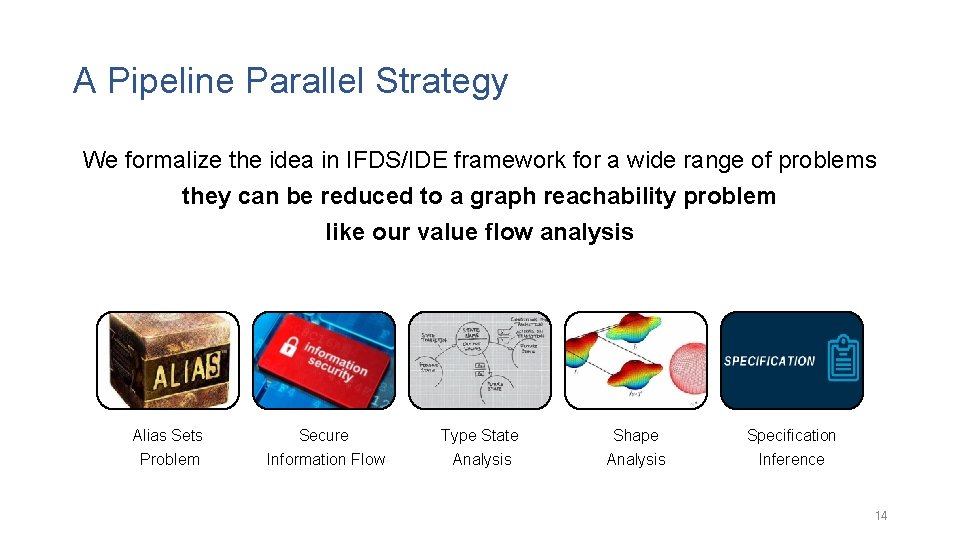
A Pipeline Parallel Strategy We formalize the idea in IFDS/IDE framework for a wide range of problems they can be reduced to a graph reachability problem like our value flow analysis Alias Sets Secure Type State Shape Specification Problem Information Flow Analysis Inference 14
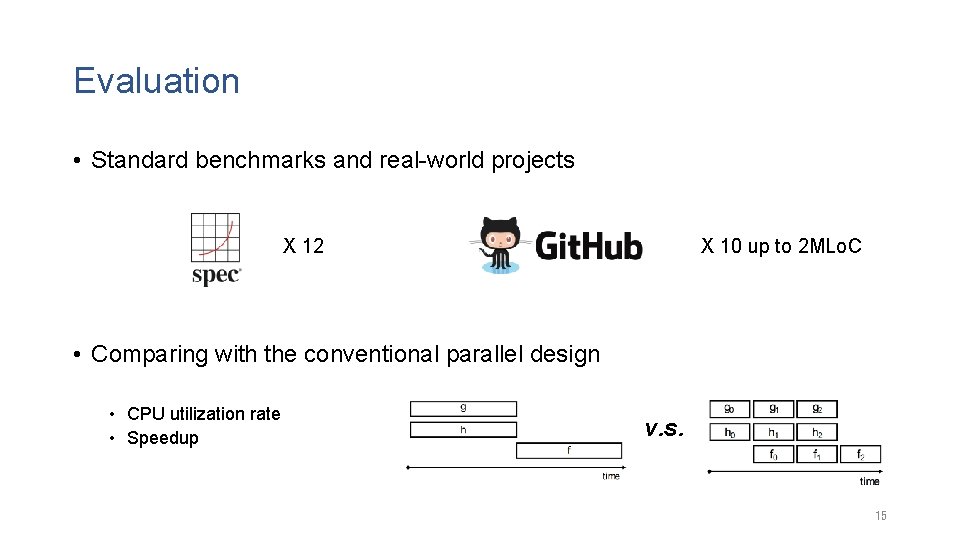
Evaluation • Standard benchmarks and real-world projects X 12 X 10 up to 2 MLo. C • Comparing with the conventional parallel design • CPU utilization rate • Speedup v. s. 15
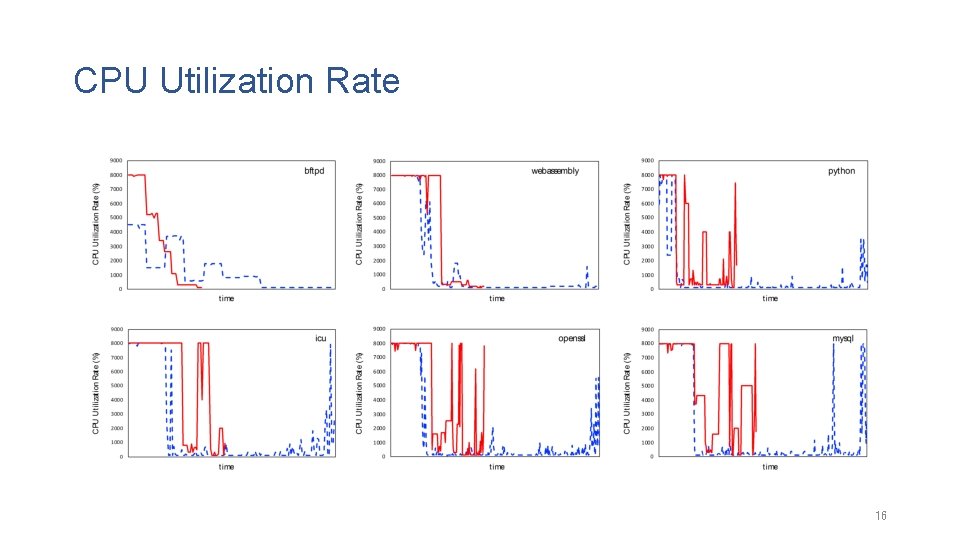
CPU Utilization Rate 16
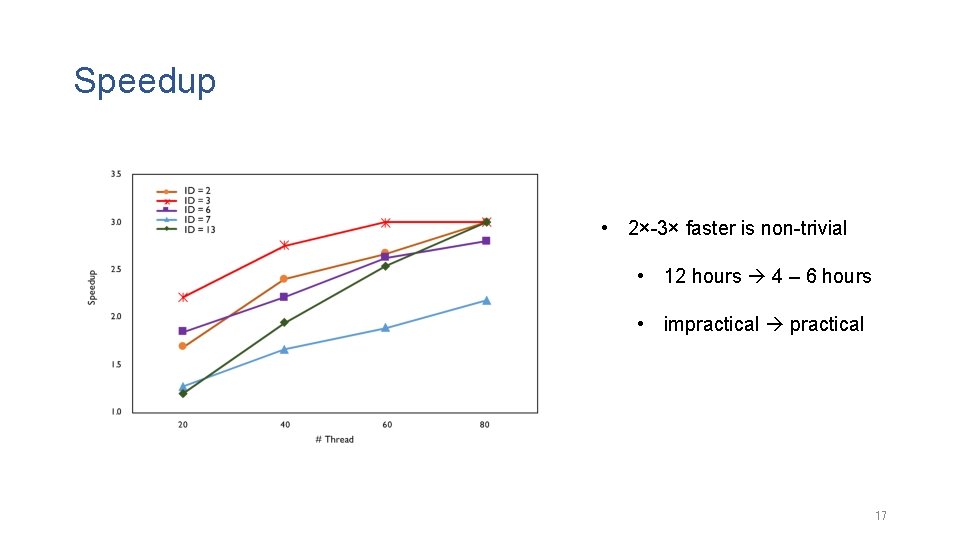
Speedup • 2×-3× faster is non-trivial • 12 hours 4 – 6 hours • impractical 17
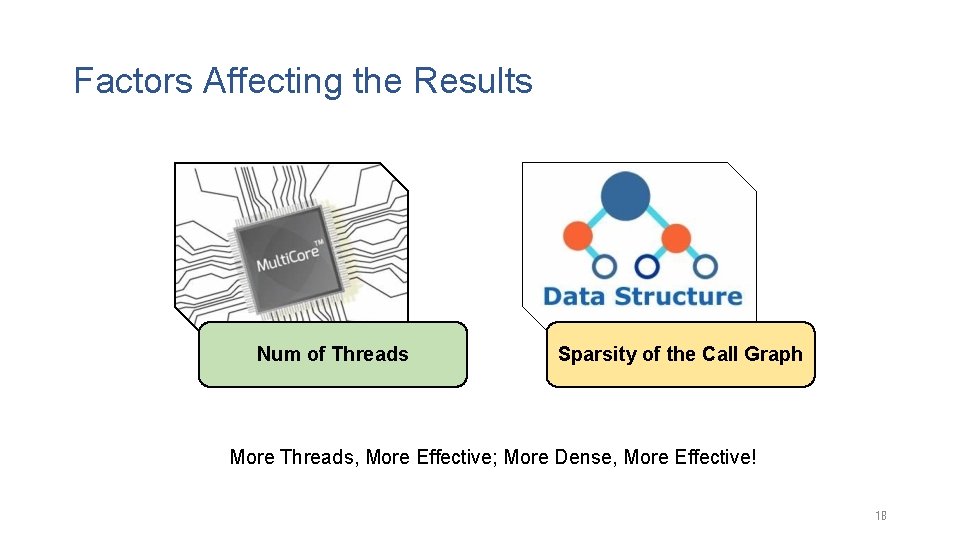
Factors Affecting the Results Num of Threads Sparsity of the Call Graph More Threads, More Effective; More Dense, More Effective! 18
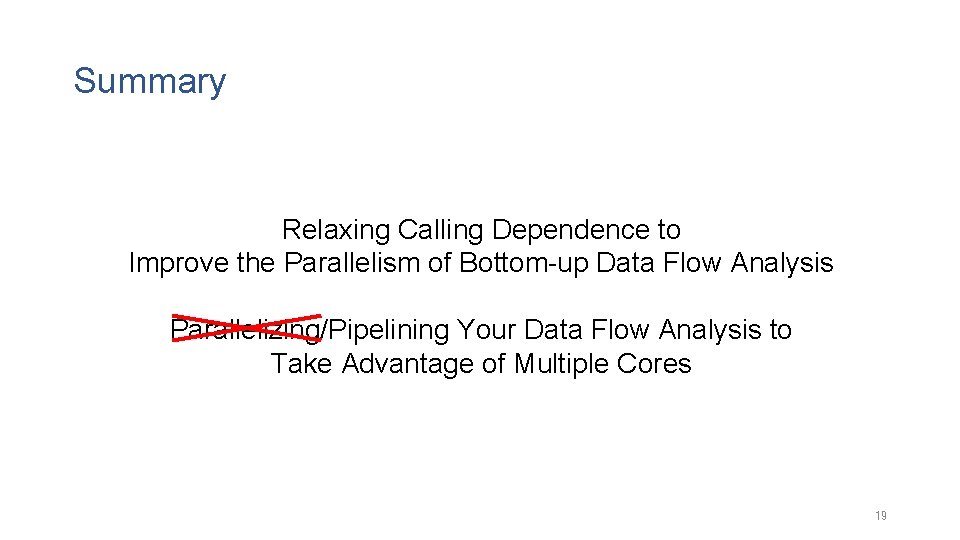
Summary Relaxing Calling Dependence to Improve the Parallelism of Bottom-up Data Flow Analysis Parallelizing/Pipelining Your Data Flow Analysis to Take Advantage of Multiple Cores 19

THANKS FOR YOUR TIME! Q&A
- Slides: 20