
Pipeline Onyx Coils Unruptured Aneurysms Jawad F Kirmani




- Slides: 58
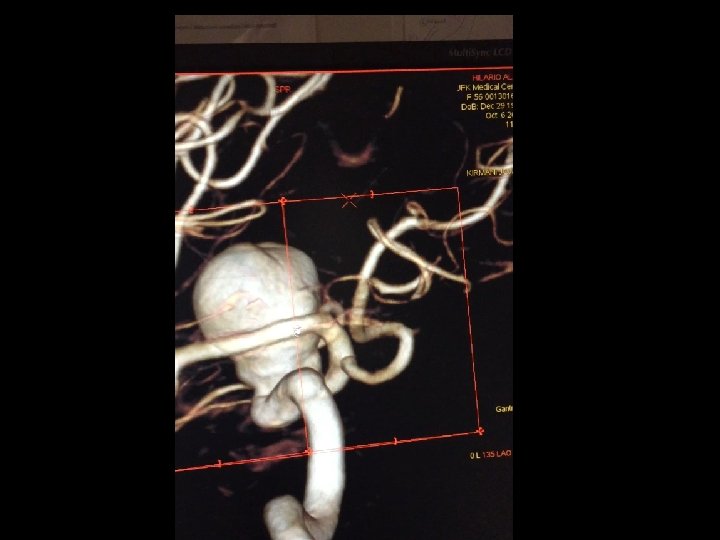
Pipeline Onyx Coils Unruptured Aneurysms Jawad F. Kirmani, MD
CREDITS • Adnan Qureshi, MD For content and some of the power point slides
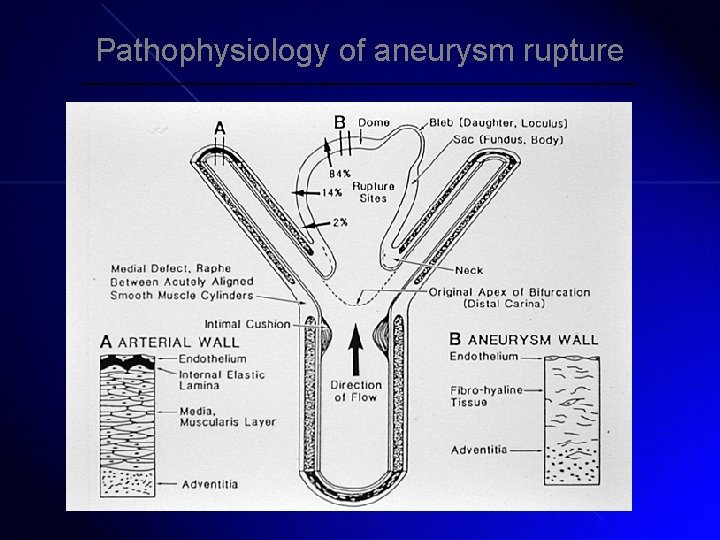
Pathophysiology of aneurysm rupture
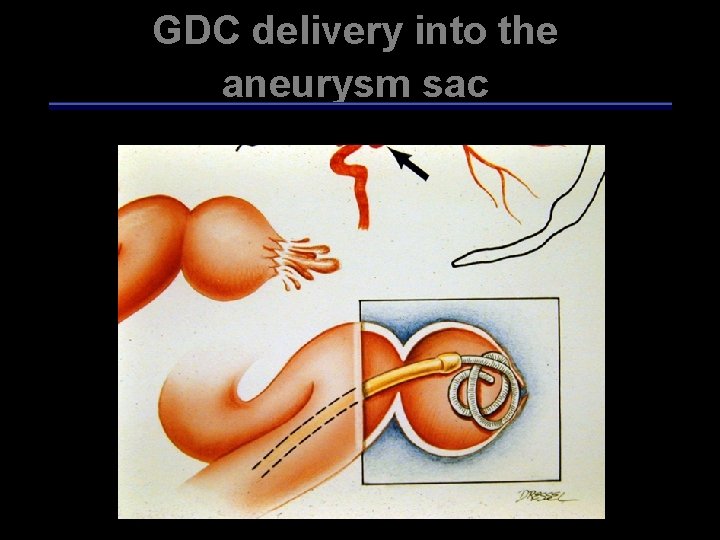
GDC delivery into the aneurysm sac
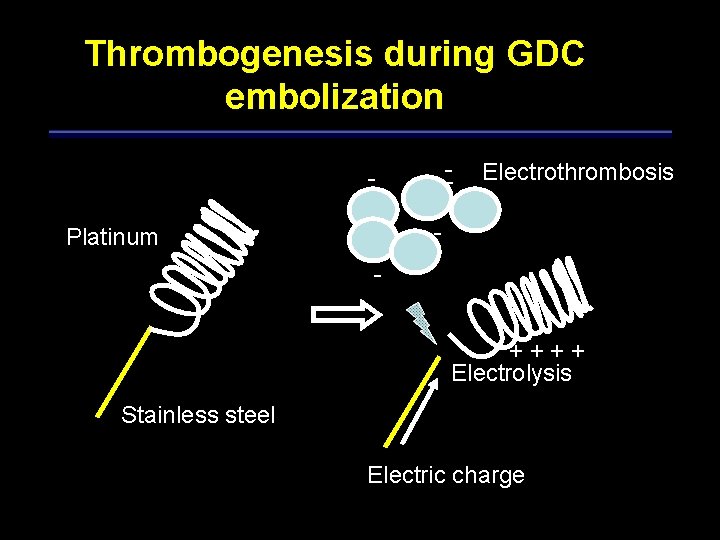
Thrombogenesis during GDC embolization -- - Electrothrombosis - Platinum - ++++ Electrolysis Stainless steel Electric charge
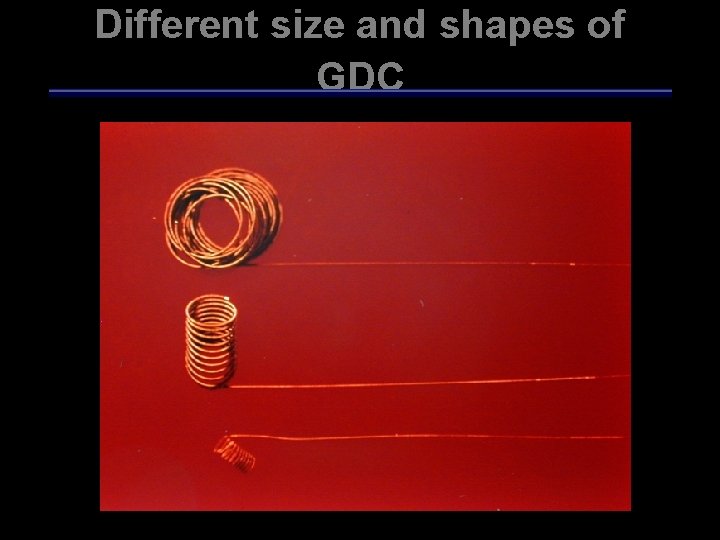
Different size and shapes of GDC
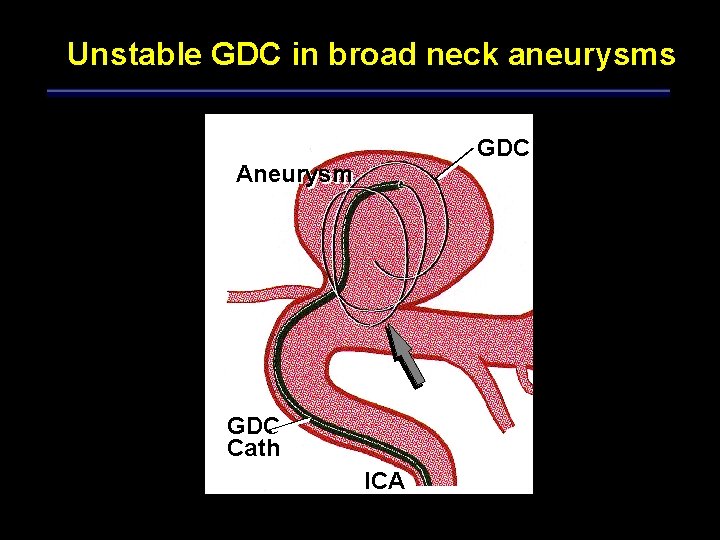
Unstable GDC in broad neck aneurysms GDC Aneurysm GDC Cath ICA
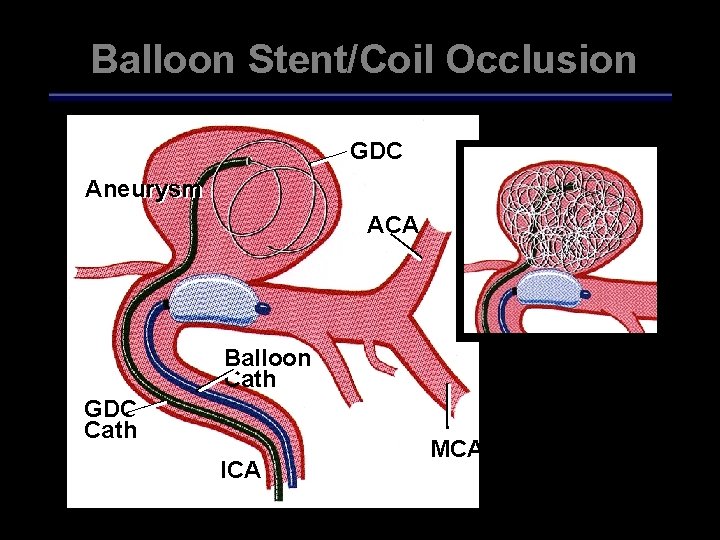
Balloon Stent/Coil Occlusion GDC Aneurysm ACA Balloon Cath GDC Cath ICA MCA
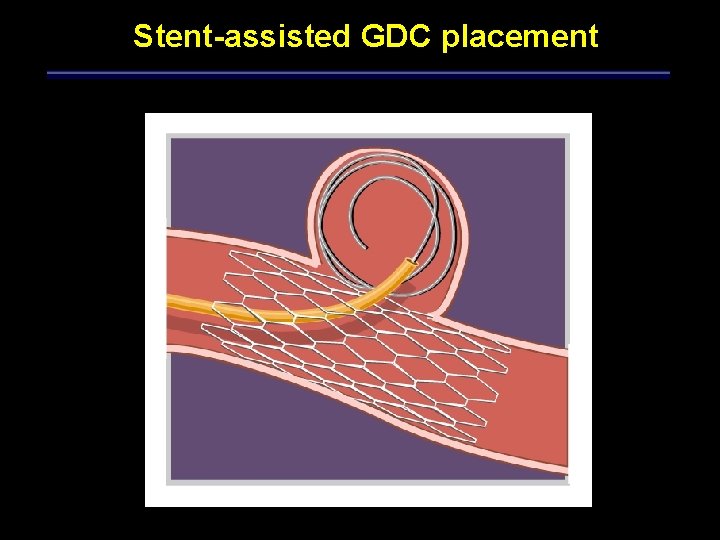
Stent-assisted GDC placement
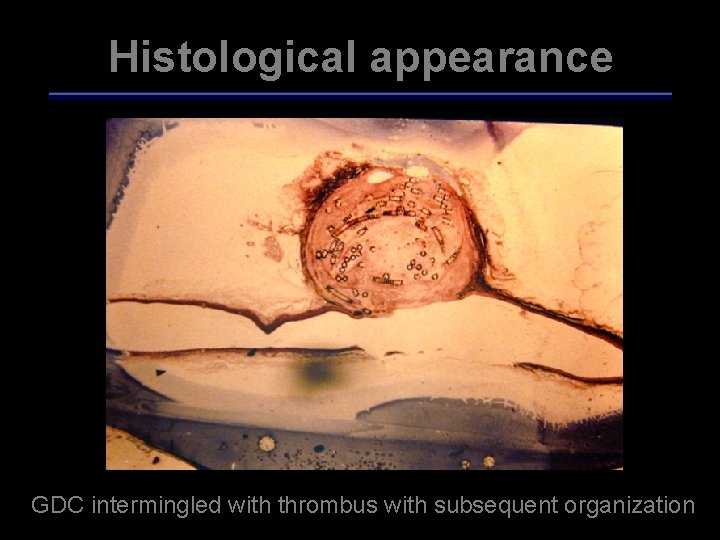
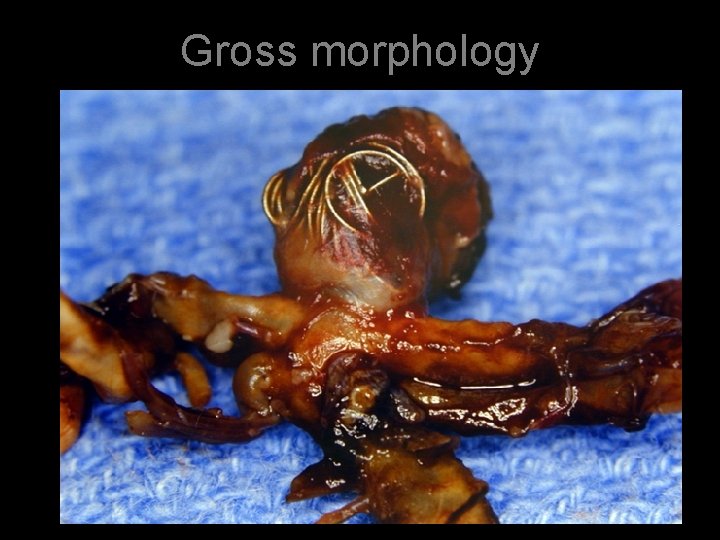
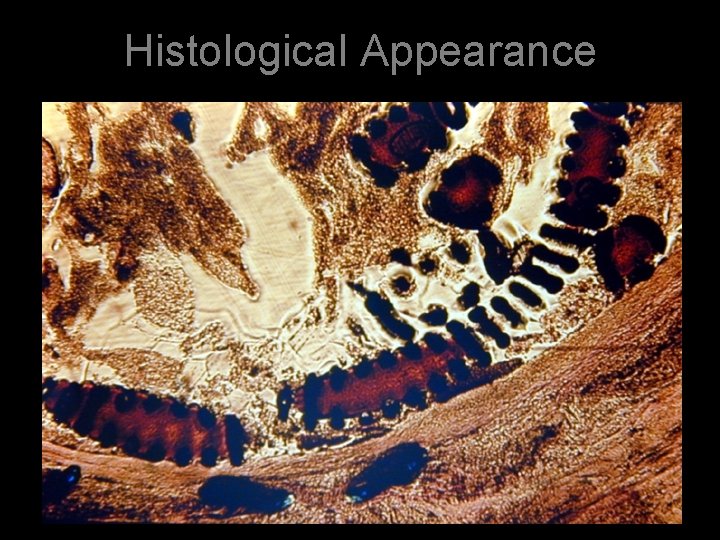
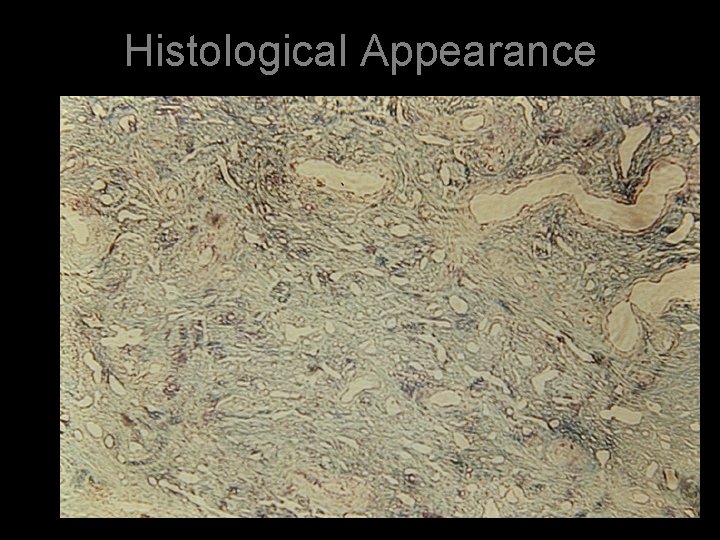
Histological appearance GDC intermingled with thrombus with subsequent organization
Gross morphology
Histological Appearance
Histological Appearance
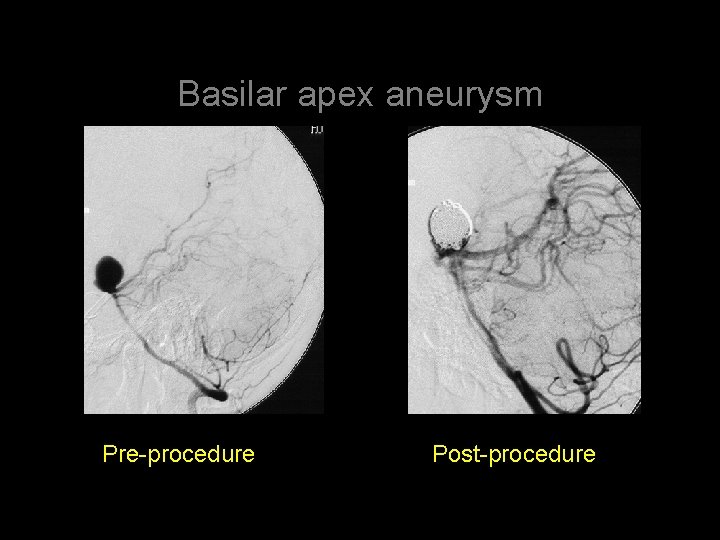
Basilar apex aneurysm Pre-procedure Post-procedure
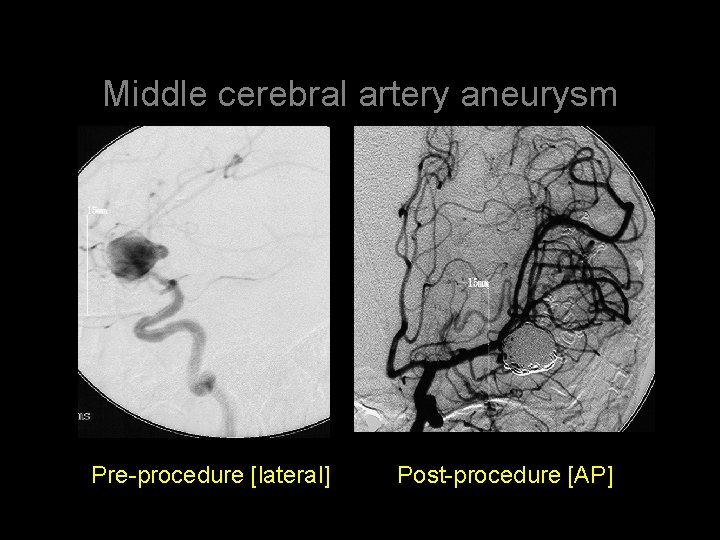
Middle cerebral artery aneurysm Pre-procedure [lateral] Post-procedure [AP]
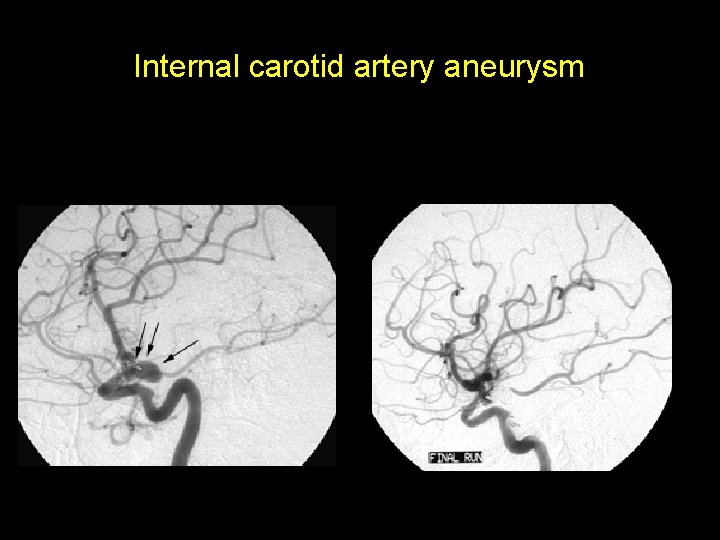
Internal carotid artery aneurysm A. Before Coil B. After Coil Treatment
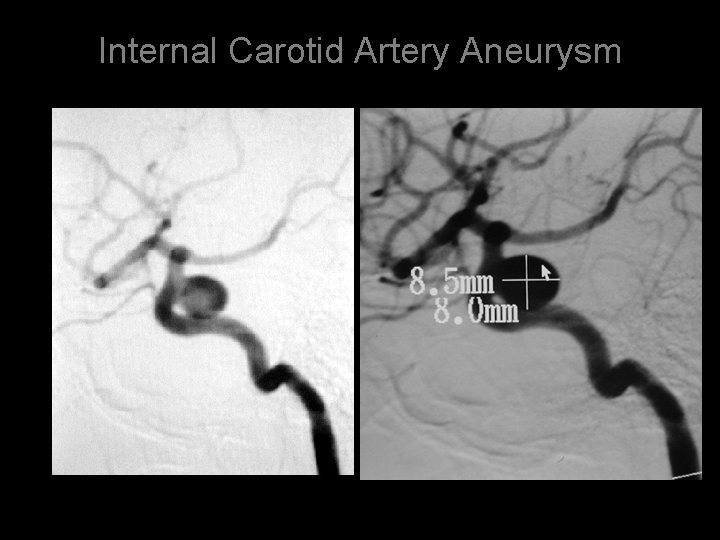
Internal Carotid Artery Aneurysm
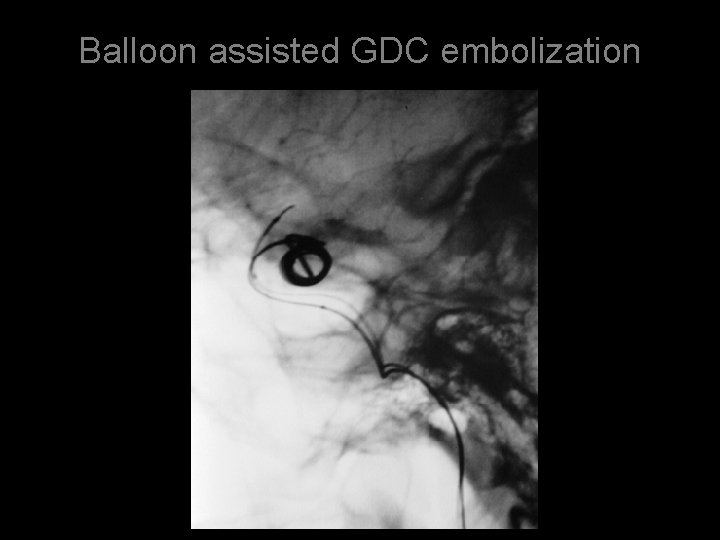
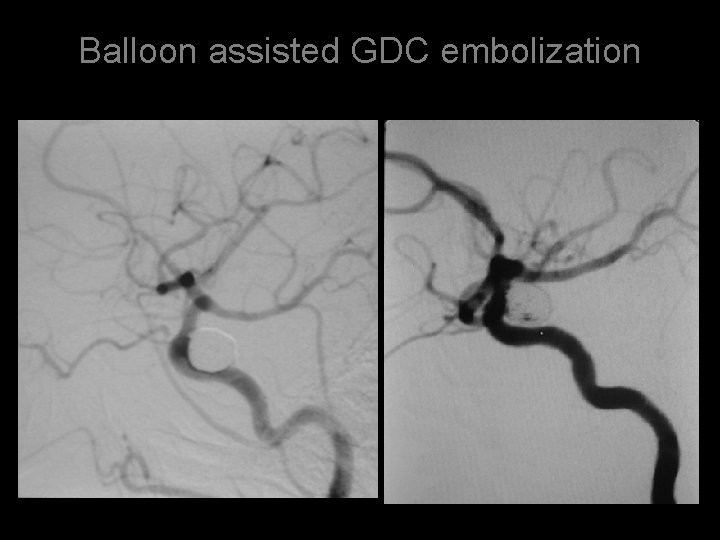
Balloon assisted GDC embolization
Balloon assisted GDC embolization
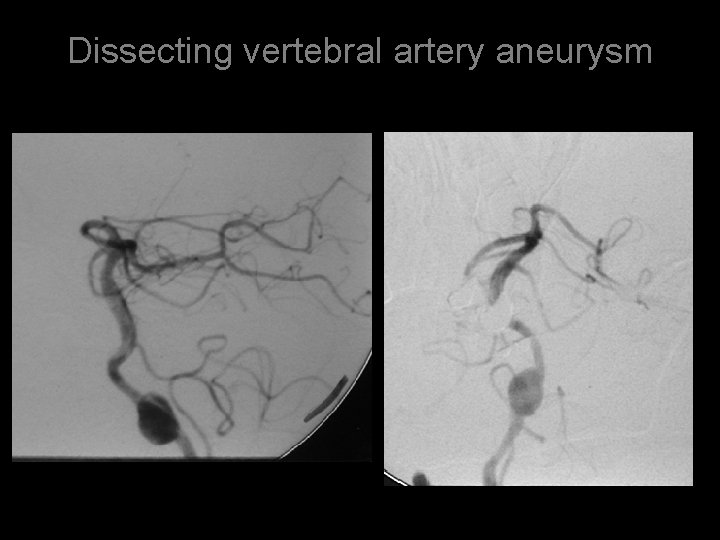
Dissecting vertebral artery aneurysm
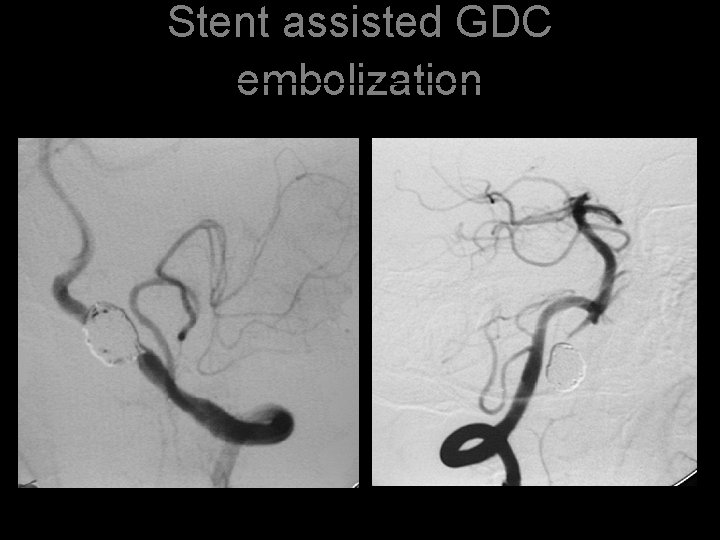
Stent assisted GDC embolization
Who to treat? • All ruptured intracranial aneurysms should be considered. • All unruptured intracranial aneurysms >10 mm should be considered. • Unruptured intracranial aneurysms >2 mm that are symptomatic may be considered. • Unruptured intracranial aneurysms>5 mm in patients with family history of subarachnoid hemorrhage or intracranial aneurysms or previous rupture of another aneurysm.
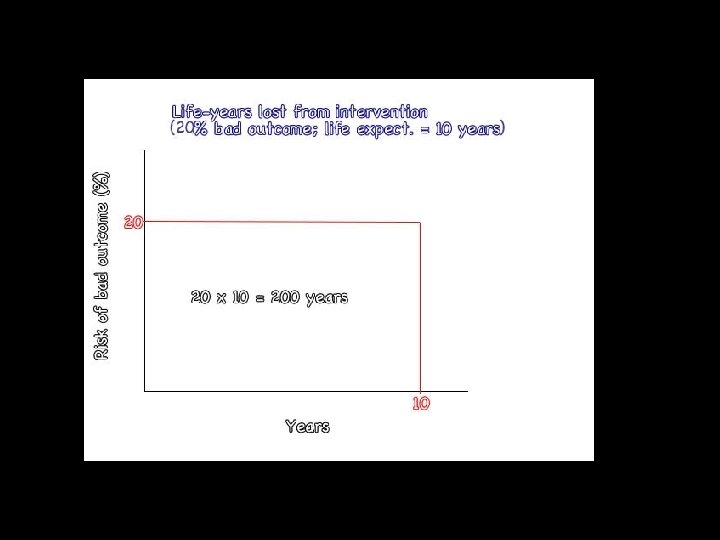
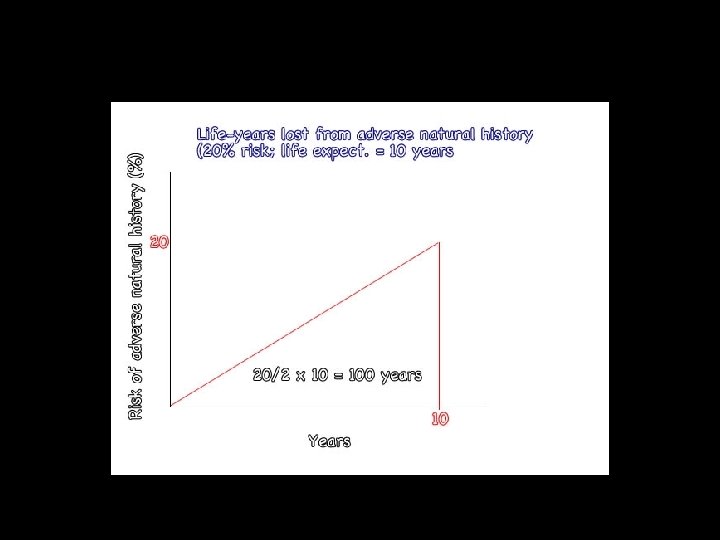
Tools for estimating the Life-time risk of rupture & Effect of intervention on life-expectancy
Unruptured aneurysms • Increasing numbers being diagnosed • 45% - 80% of patients with ruptured aneurysm may die • Not all rupture • Treatment morbidity 0 -16%; mortality 025% • Treat those at high risk of rupture
ISUIA 2003 • • Prospective Multi-centre 1692 patients did not have treatment Selection bias Not randomised Aneurysms < 2 mm not included Mean duration of follow-up was 4. 5 years Patients who subsequently underwent treatment excluded from analysis • Included only North America and Europe
ISUIA, 2003 • The best we have • Findings of ISUIA (2003), could be incorporated into the global view of UIA • Considered along with other data pertaining to the patient
Objective • Tools for calculating rapidly at: • Neurovascular MDT meetings • Clinics
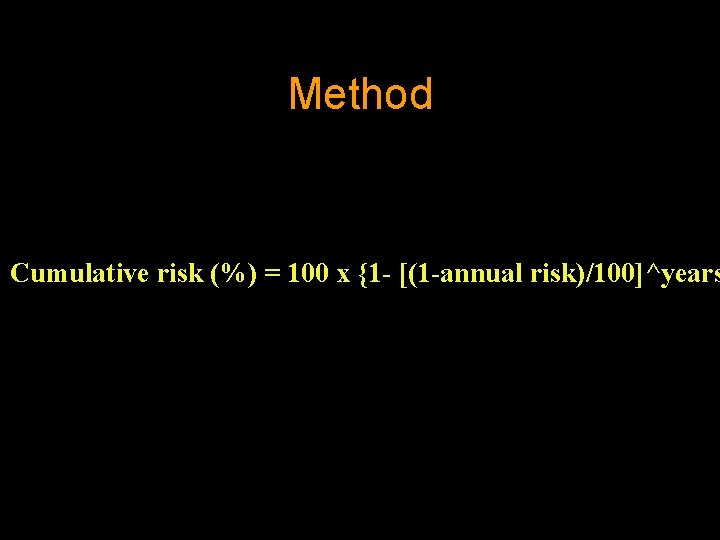
Method Cumulative risk (%) = 100 x {1 - [(1 -annual risk)/100]^years
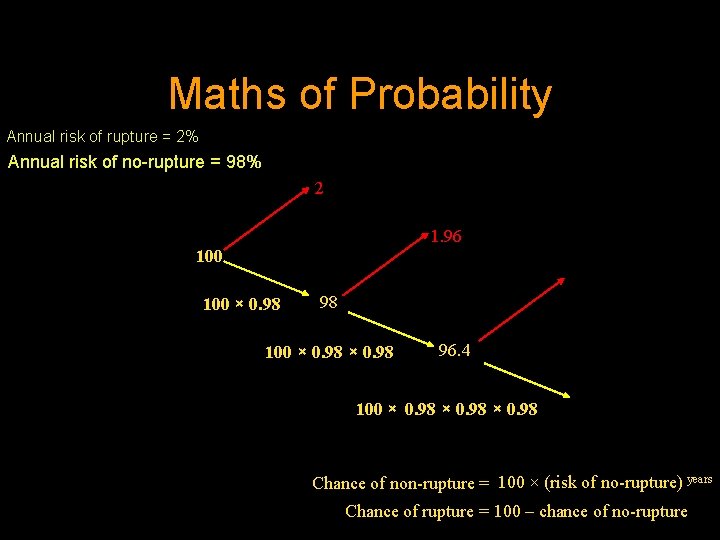
Maths of Probability Annual risk of rupture = 2% Annual risk of no-rupture = 98% 2 1. 96 100 × 0. 98 98 100 × 0. 98 96. 4 100 × 0. 98 Chance of non-rupture = 100 × (risk of no-rupture) years Chance of rupture = 100 – chance of no-rupture
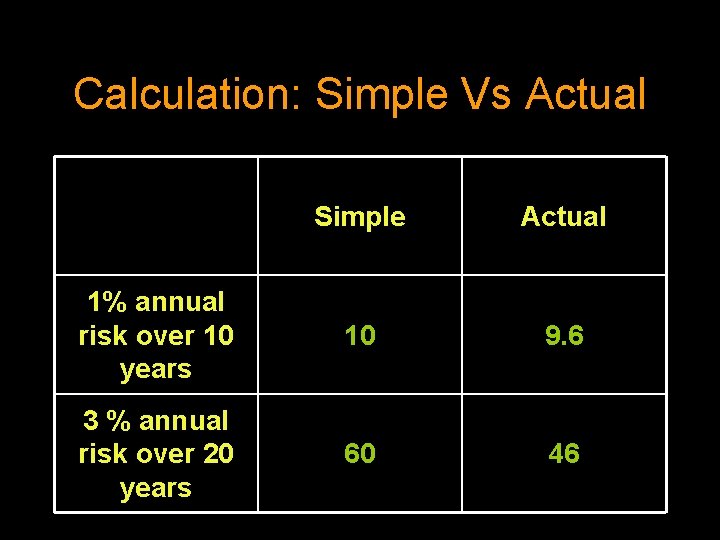
Calculation: Simple Vs Actual Simple Actual 1% annual risk over 10 years 10 9. 6 3 % annual risk over 20 years 60 46
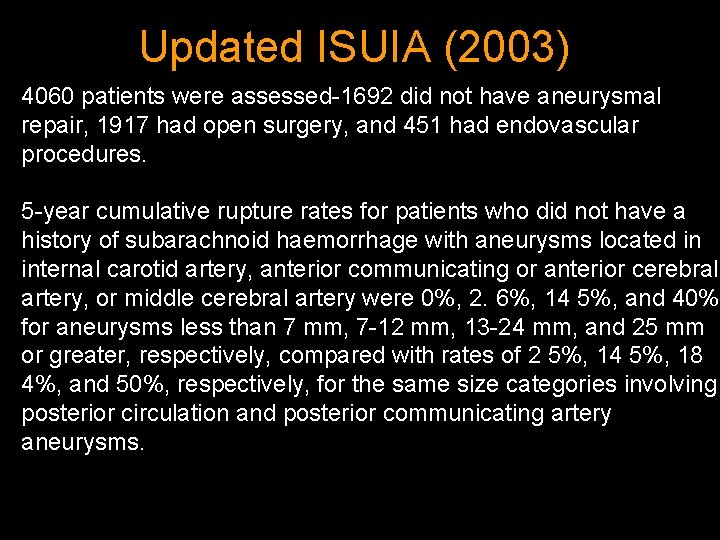
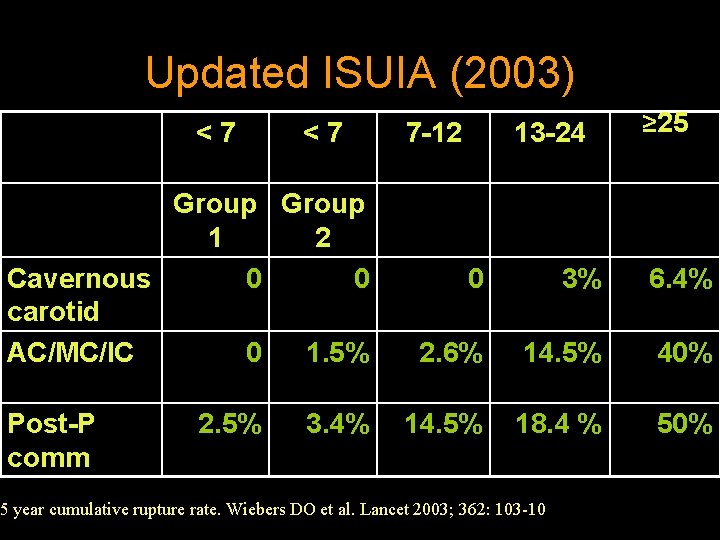
Updated ISUIA (2003) 4060 patients were assessed-1692 did not have aneurysmal repair, 1917 had open surgery, and 451 had endovascular procedures. 5 -year cumulative rupture rates for patients who did not have a history of subarachnoid haemorrhage with aneurysms located in internal carotid artery, anterior communicating or anterior cerebral artery, or middle cerebral artery were 0%, 2. 6%, 14 5%, and 40% for aneurysms less than 7 mm, 7 -12 mm, 13 -24 mm, and 25 mm or greater, respectively, compared with rates of 2 5%, 14 5%, 18 4%, and 50%, respectively, for the same size categories involving posterior circulation and posterior communicating artery aneurysms.
Updated ISUIA (2003) < 7 Group 1 2 Cavernous 0 0 carotid AC/MC/IC 0 1. 5% Post-P comm 2. 5% 3. 4% 7 -12 13 -24 ≥ 25 0 3% 6. 4% 2. 6% 14. 5% 40% 14. 5% 18. 4 % 50% 5 year cumulative rupture rate. Wiebers DO et al. Lancet 2003; 362: 103 -10
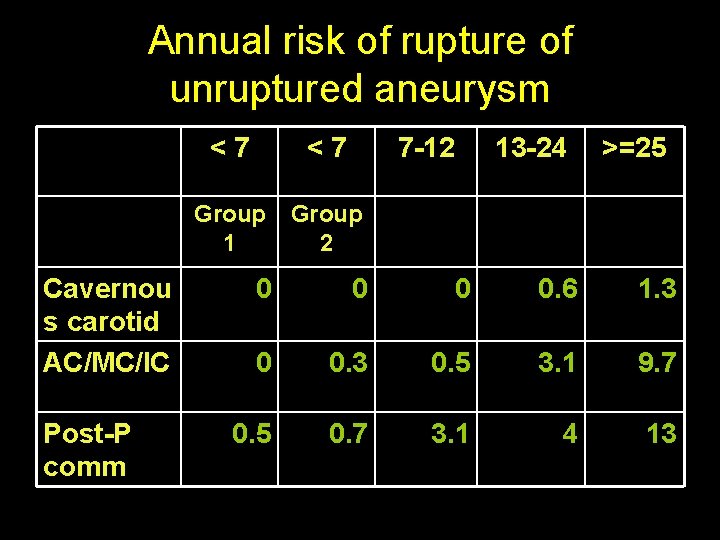
Annual risk of rupture of unruptured aneurysm < 7 7 -12 13 -24 >=25 Group 1 2 Cavernou s carotid AC/MC/IC Post-P comm 0 0. 6 1. 3 0 0. 3 0. 5 3. 1 9. 7 0. 5 0. 7 3. 1 4 13
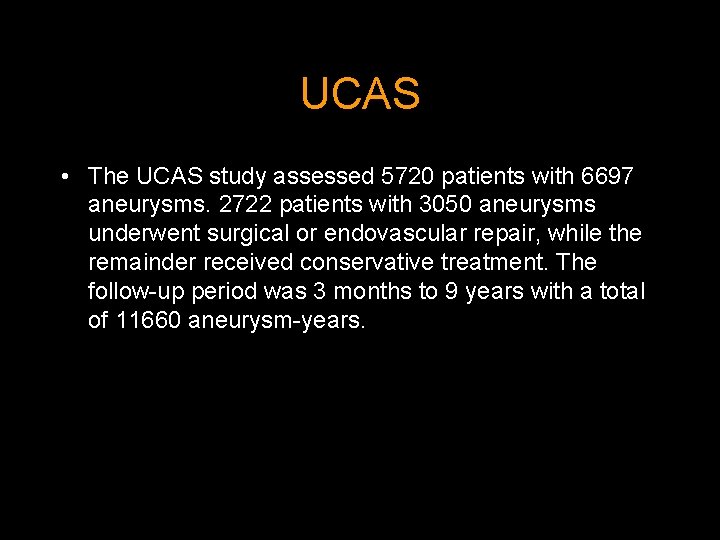
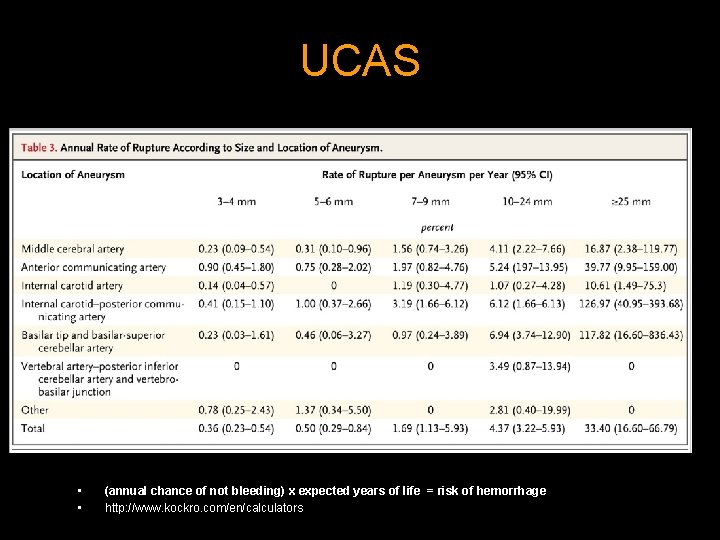
UCAS • The UCAS study assessed 5720 patients with 6697 aneurysms. 2722 patients with 3050 aneurysms underwent surgical or endovascular repair, while the remainder received conservative treatment. The follow-up period was 3 months to 9 years with a total of 11660 aneurysm-years.
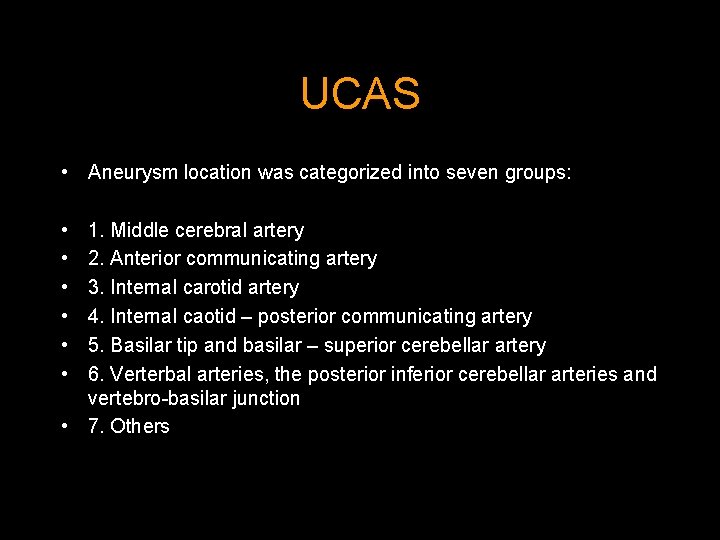
UCAS • Aneurysm location was categorized into seven groups: • • • 1. Middle cerebral artery 2. Anterior communicating artery 3. Internal carotid artery 4. Internal caotid – posterior communicating artery 5. Basilar tip and basilar – superior cerebellar artery 6. Verterbal arteries, the posterior inferior cerebellar arteries and vertebro-basilar junction • 7. Others
UCAS • The size of the aneurysms was categorized into five groups: • • • 1. 2. 3. 4. 5. 3 -4 mm 5 -6 mm 7 -9 mm 10 -24 mm ≥ 25 mm
UCAS • • (annual chance of not bleeding) x expected years of life = risk of hemorrhage http: //www. kockro. com/en/calculators
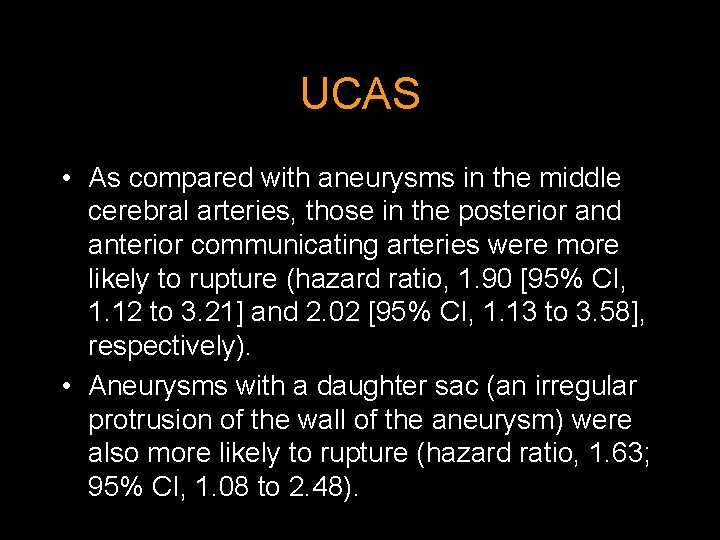
UCAS • As compared with aneurysms in the middle cerebral arteries, those in the posterior and anterior communicating arteries were more likely to rupture (hazard ratio, 1. 90 [95% CI, 1. 12 to 3. 21] and 2. 02 [95% CI, 1. 13 to 3. 58], respectively). • Aneurysms with a daughter sac (an irregular protrusion of the wall of the aneurysm) were also more likely to rupture (hazard ratio, 1. 63; 95% CI, 1. 08 to 2. 48).
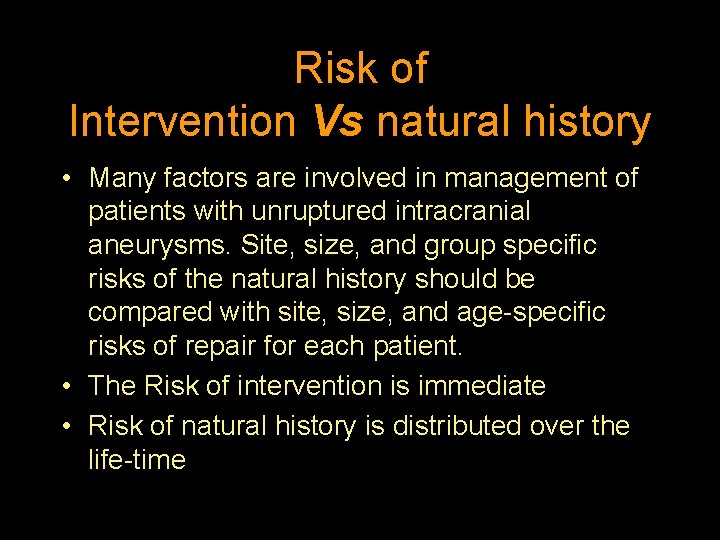
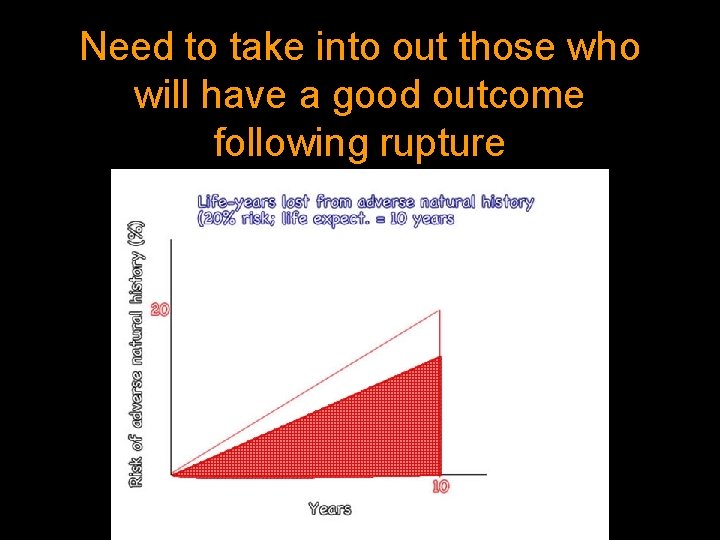
Risk of Intervention Vs natural history • Many factors are involved in management of patients with unruptured intracranial aneurysms. Site, size, and group specific risks of the natural history should be compared with site, size, and age-specific risks of repair for each patient. • The Risk of intervention is immediate • Risk of natural history is distributed over the life-time
Need to take into out those who will have a good outcome following rupture
Life table • Life-expectancy tables for 2001 -2003 • Constructed abridged life-tables
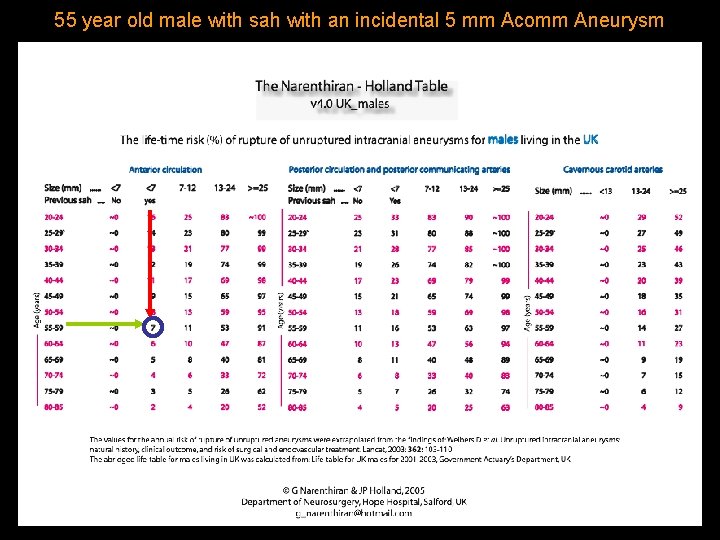
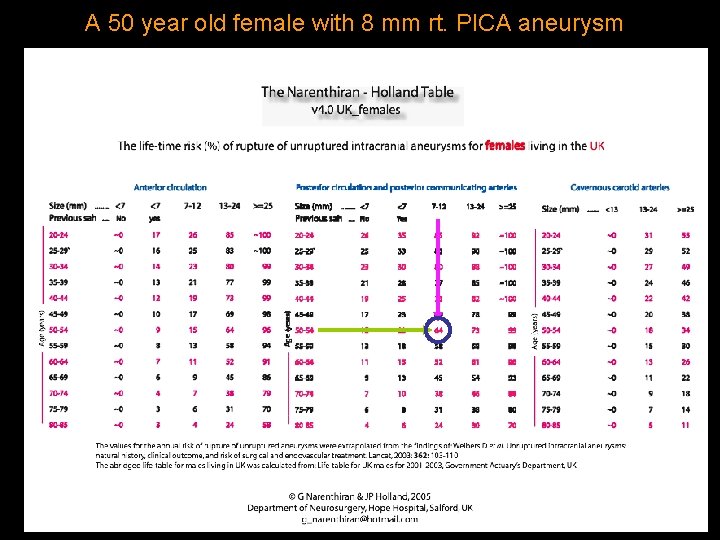
Look-up tables • ‘Actuarial-type’ table • Gender specific • Calculations performed using Microsoft® Excel® • Table laid out using Adobe® Illustrator CS 2® and Adobe® In. Design CS 2®
‘Hope’ calculator • Life-time risk of rupture of unruptured aneurysms • Effect of intervention on the lifeexpectancy • Software developed with Macromedia® Flash 8® • Both Windows and Mac compatible
55 year old male with sah with an incidental 5 mm Acomm Aneurysm
A 50 year old female with 8 mm rt. PICA aneurysm
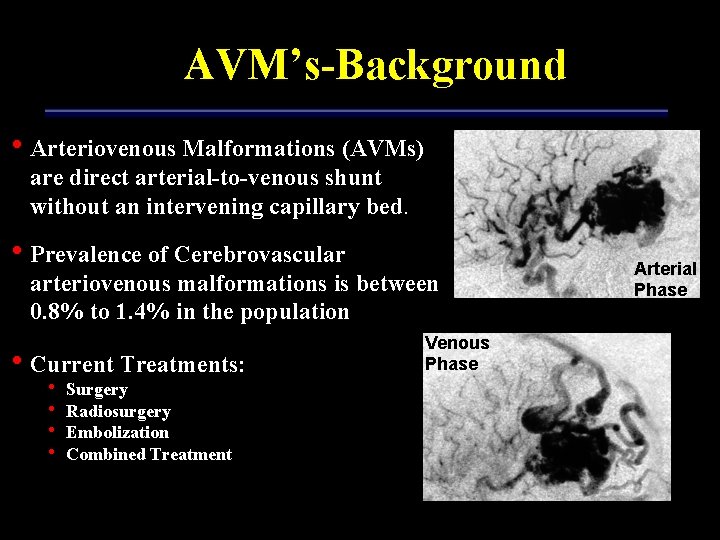
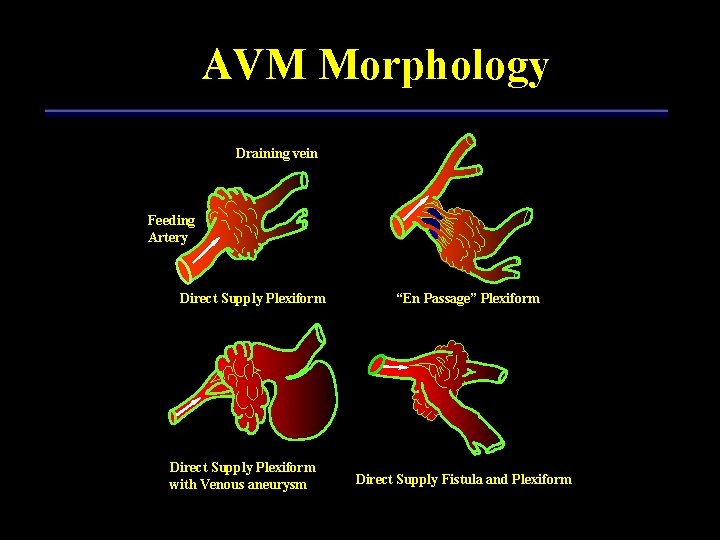
AVM’s-Background • Arteriovenous Malformations (AVMs) are direct arterial-to-venous shunt without an intervening capillary bed. • Prevalence of Cerebrovascular arteriovenous malformations is between 0. 8% to 1. 4% in the population • Current Treatments: • • Surgery Radiosurgery Embolization Combined Treatment Venous Phase Arterial Phase
AVM Morphology Draining vein Feeding Artery Direct Supply Plexiform with Venous aneurysm “En Passage” Plexiform Direct Supply Fistula and Plexiform
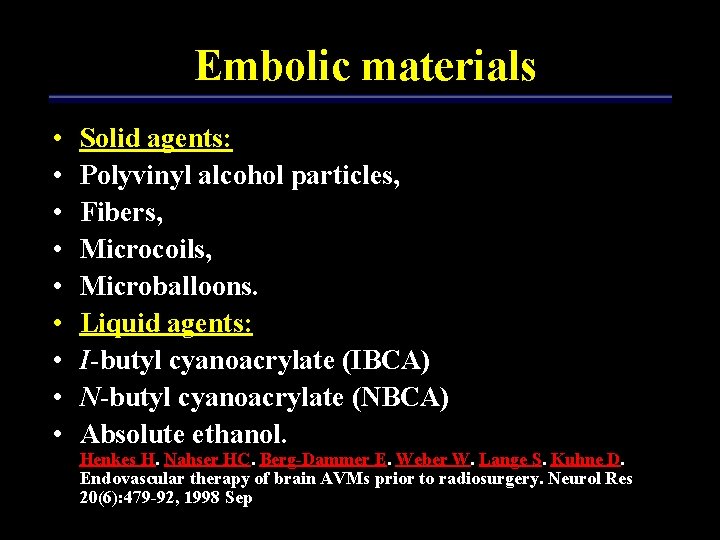
Embolic materials • • • Solid agents: Polyvinyl alcohol particles, Fibers, Microcoils, Microballoons. Liquid agents: I-butyl cyanoacrylate (IBCA) N-butyl cyanoacrylate (NBCA) Absolute ethanol. Henkes H. Nahser HC. Berg-Dammer E. Weber W. Lange S. Kuhne D. Endovascular therapy of brain AVMs prior to radiosurgery. Neurol Res 20(6): 479 -92, 1998 Sep
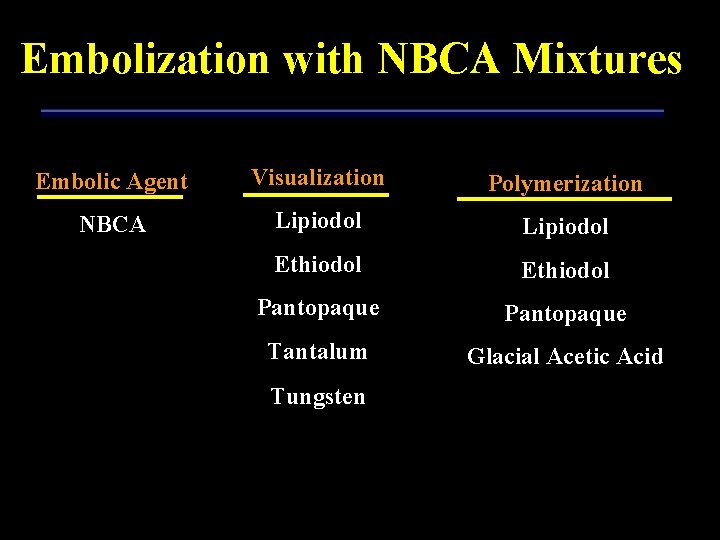
Embolization with NBCA Mixtures Embolic Agent Visualization Polymerization NBCA Lipiodol Ethiodol Pantopaque Tantalum Glacial Acetic Acid Tungsten
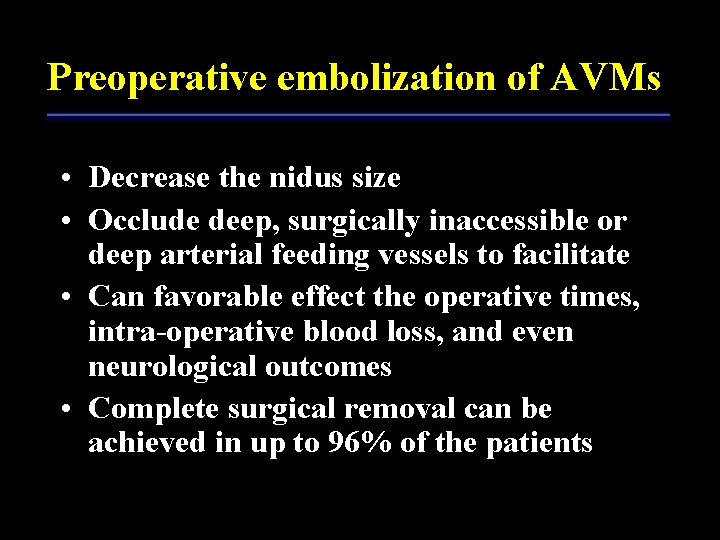
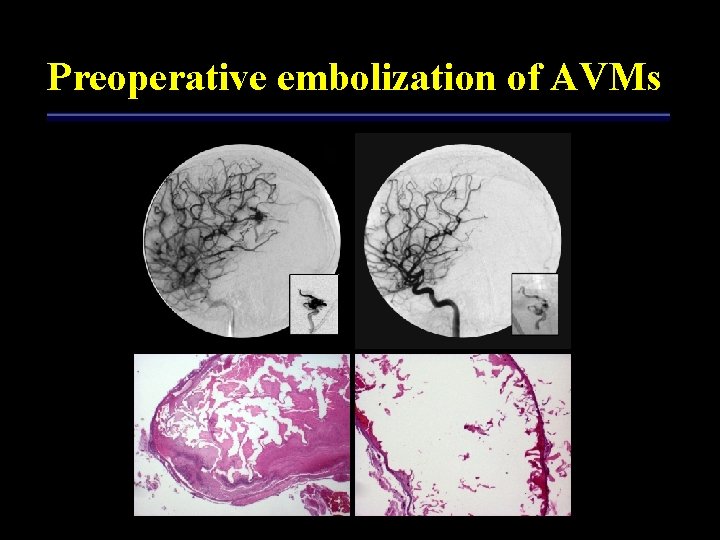
Preoperative embolization of AVMs • Decrease the nidus size • Occlude deep, surgically inaccessible or deep arterial feeding vessels to facilitate • Can favorable effect the operative times, intra-operative blood loss, and even neurological outcomes • Complete surgical removal can be achieved in up to 96% of the patients
Preoperative embolization of AVMs
Pre-radiosurgical intervention for AVMs • Reduce the lesion to less than 3 cm • Obliterate intranidal or venous aneurysms • Radiosurgery produces total occlusion in 65% of the partially embolized AVMs
Thank you!