
PIPELINE ENGINEERING MultiDiameter Pigging Factors affecting the design
- Slides: 15
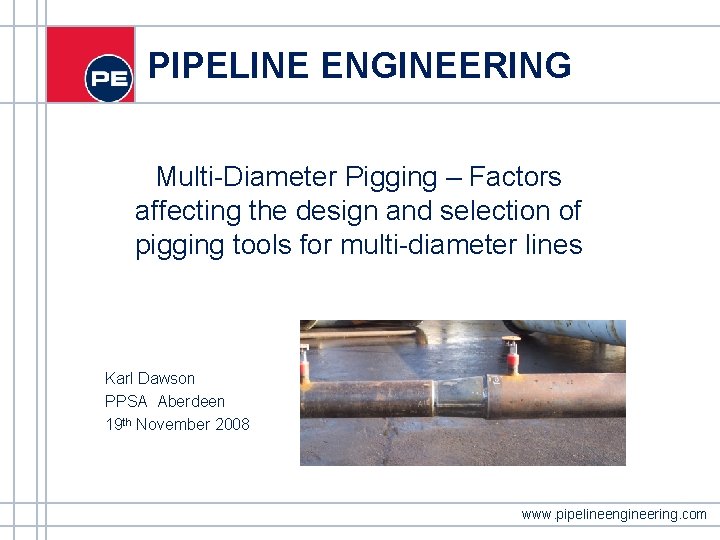
PIPELINE ENGINEERING Multi-Diameter Pigging – Factors affecting the design and selection of pigging tools for multi-diameter lines Karl Dawson PPSA Aberdeen 19 th November 2008 www. pipelineengineering. com
Agenda • • • Why Multi-Diameter Lines? Definitions Pig Selection Pig Design Provision of data for pig design Prototype Development and Validation Testing Case Study Summary Presentation End www. pipelineengineering. com
Definitions Industry Accepted Definitions: • Dual-diameter – Operates in 2 distinct diameters • Multi-diameter – Operates in two or more diameters and may operate in a range diameters or sizes in between www. pipelineengineering. com
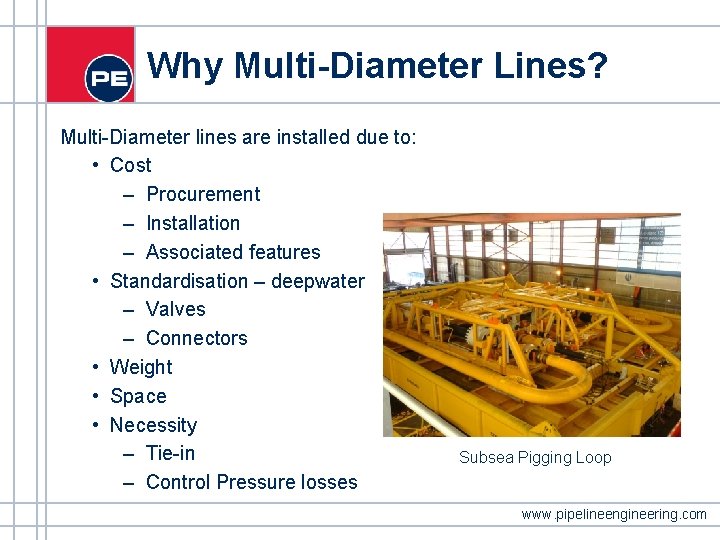
Why Multi-Diameter Lines? Multi-Diameter lines are installed due to: • Cost – Procurement – Installation – Associated features • Standardisation – deepwater – Valves – Connectors • Weight • Space • Necessity – Tie-in – Control Pressure losses Subsea Pigging Loop www. pipelineengineering. com
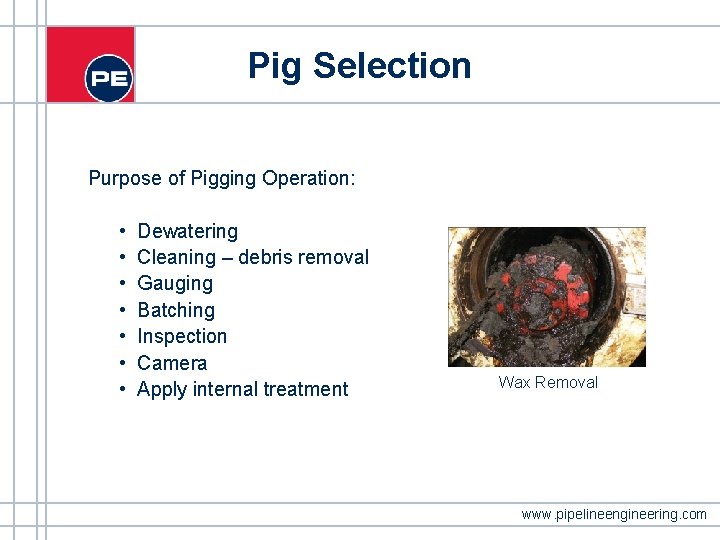
Pig Selection Purpose of Pigging Operation: • • Dewatering Cleaning – debris removal Gauging Batching Inspection Camera Apply internal treatment Wax Removal www. pipelineengineering. com
Pig Design Factors Affecting Pig Design: • Internal Diameters – Range of sizes • Bend Radii – 5 D, 3 D or 1. 5 D • Feature definition and configuration – Valve • Gate • Full bore ball • Check • Lengths of run • Transitions • Location of features – In relation to one another and specified diameters www. pipelineengineering. com
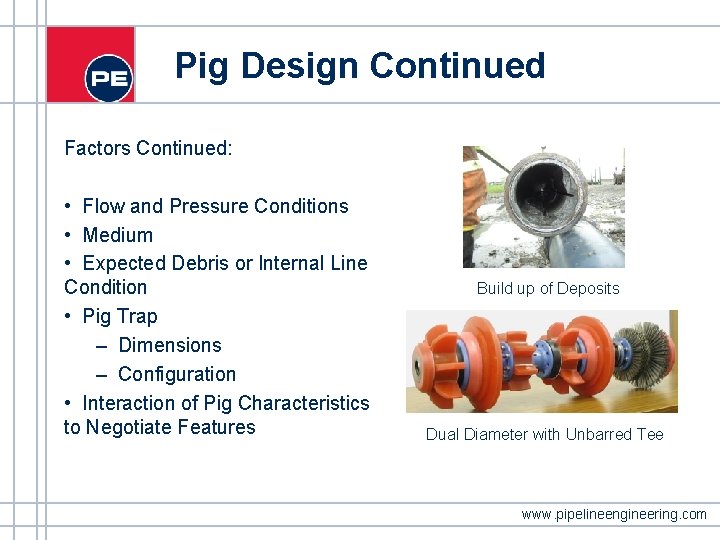
Pig Design Continued Factors Continued: • Flow and Pressure Conditions • Medium • Expected Debris or Internal Line Condition • Pig Trap – Dimensions – Configuration • Interaction of Pig Characteristics to Negotiate Features Build up of Deposits Dual Diameter with Unbarred Tee www. pipelineengineering. com
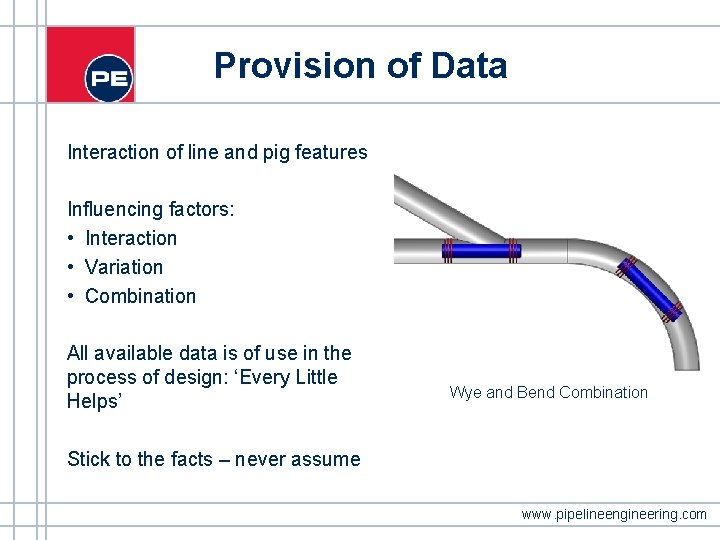
Provision of Data Interaction of line and pig features Influencing factors: • Interaction • Variation • Combination All available data is of use in the process of design: ‘Every Little Helps’ Wye and Bend Combination Stick to the facts – never assume www. pipelineengineering. com
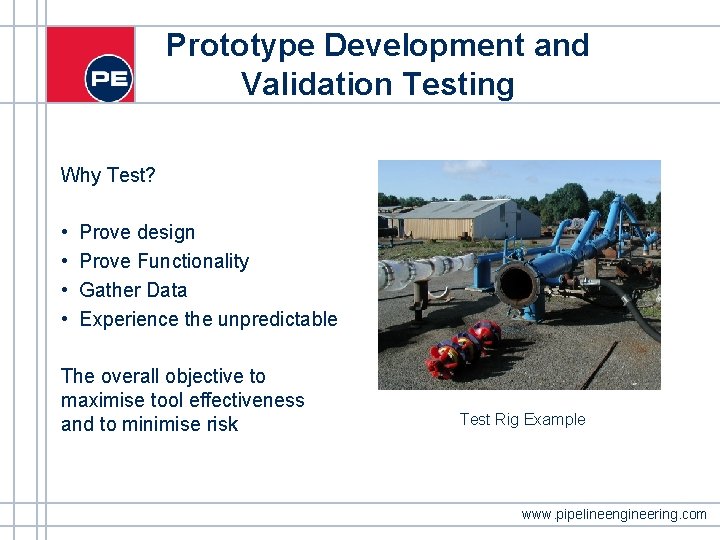
Prototype Development and Validation Testing Why Test? • • Prove design Prove Functionality Gather Data Experience the unpredictable The overall objective to maximise tool effectiveness and to minimise risk Test Rig Example www. pipelineengineering. com
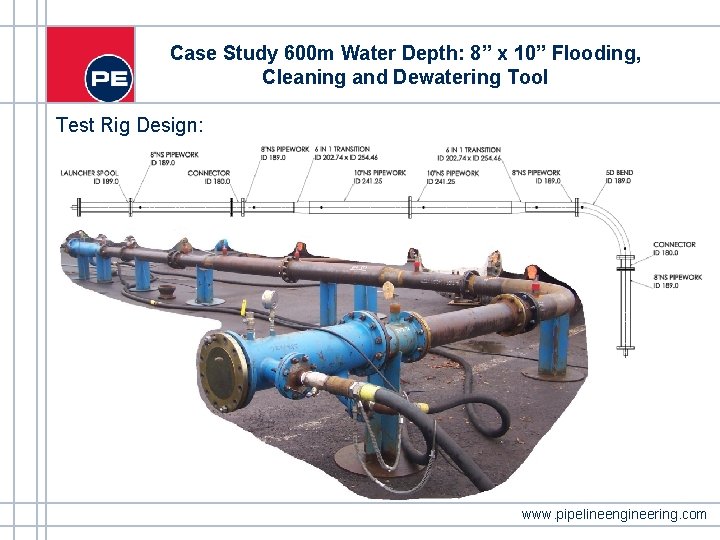
Case Study 600 m Water Depth: 8” x 10” Flooding, Cleaning and Dewatering Tool Operational Requirements: • 8” Launcher and pipe work ID = 190. 5 mm • Connector ID = 179. 8 mm • 5 D bend ID = 190. 5 mm • Tapered transition = 1 in 6 • 10” Line ID = 241. 3 mm • Buckle arrestor = 236. 5 mm • Length fixed at 400 mm due to laydown head • To be back loaded in to laydown head ID = 190. 5 mm • Bi-directional capability Functional Requirements: • Remove construction debris • Flood line for hydrotest • Dewater line www. pipelineengineering. com
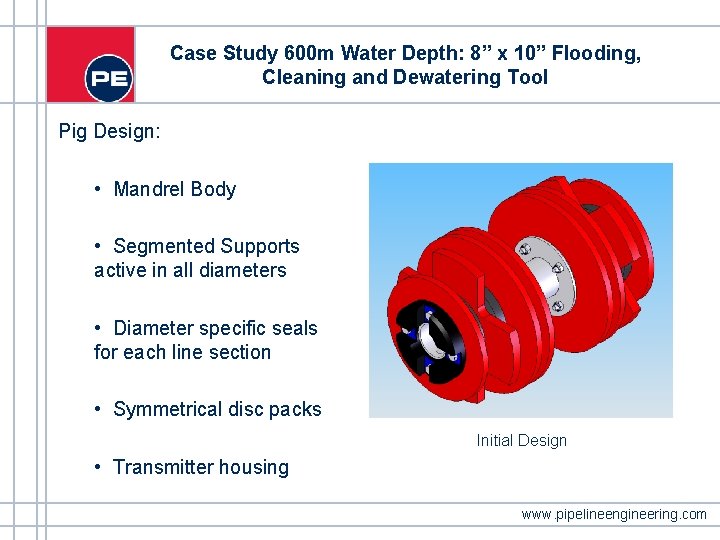
Case Study 600 m Water Depth: 8” x 10” Flooding, Cleaning and Dewatering Tool Pig Design: • Mandrel Body • Segmented Supports active in all diameters • Diameter specific seals for each line section • Symmetrical disc packs Initial Design • Transmitter housing www. pipelineengineering. com
Case Study 600 m Water Depth: 8” x 10” Flooding, Cleaning and Dewatering Tool Test Rig Design: www. pipelineengineering. com
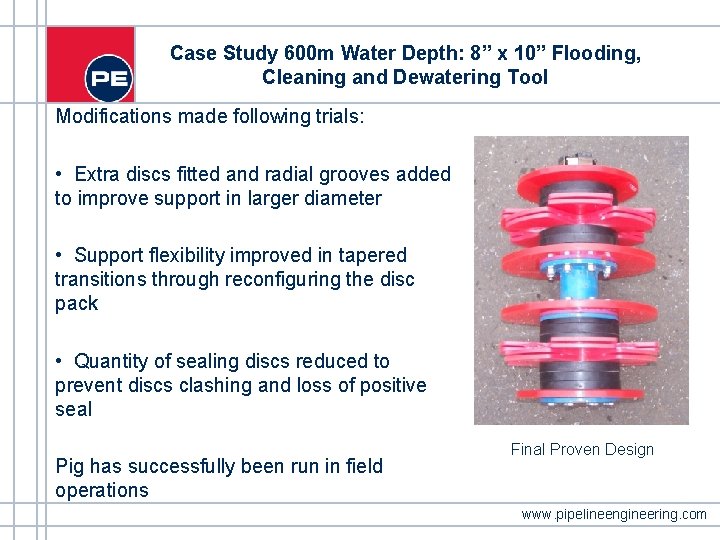
Case Study 600 m Water Depth: 8” x 10” Flooding, Cleaning and Dewatering Tool Modifications made following trials: • Extra discs fitted and radial grooves added to improve support in larger diameter • Support flexibility improved in tapered transitions through reconfiguring the disc pack • Quantity of sealing discs reduced to prevent discs clashing and loss of positive seal Pig has successfully been run in field operations Final Proven Design www. pipelineengineering. com
Conclusions • Involvement in the FEED stage is invaluable for both parties • Free flow of information is key to an effective and suitable design solution • Changes are ok, but the impact must be assessed • Testing of the intended design is essential at reducing the risk involved in field operations • With modern design capabilities and functional testing, multidiameter pigging need not be a subject to be avoided, instead with careful consideration even the most arduous of diametrical variations may prove piggable www. pipelineengineering. com
End Thank you kindly for listening Questions Welcome www. pipelineengineering. com