
PIPE AND BOX CULVERTS UNDER DEEP FILL Corey
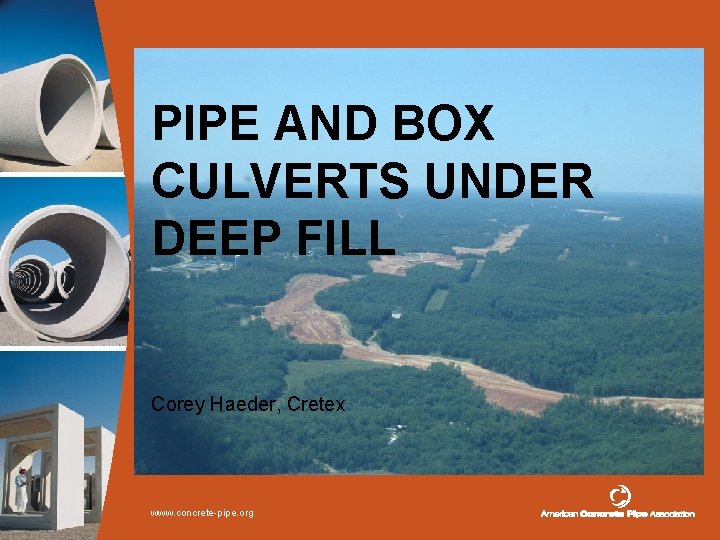
PIPE AND BOX CULVERTS UNDER DEEP FILL Corey Haeder, Cretex www. concrete-pipe. org
2 OUTLINE • • General Discussion – Risk Management Pipe Design Considerations DOT Specifications Box Design Considerations www. concrete-pipe. org
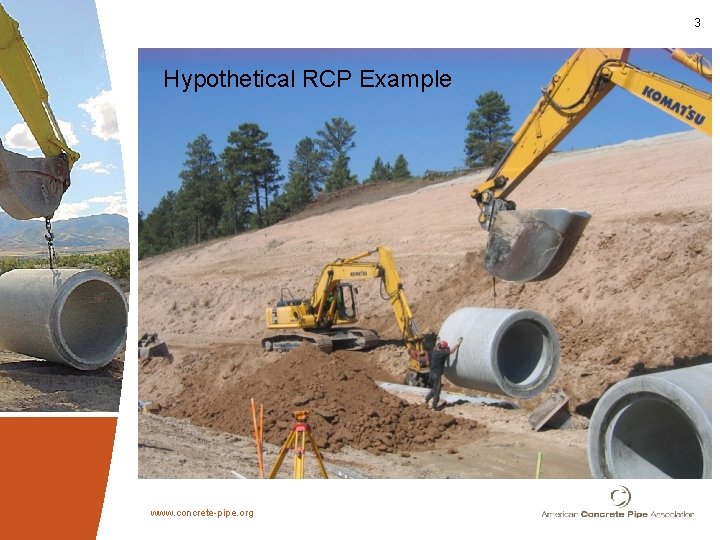
3 Hypothetical RCP Example www. concrete-pipe. org
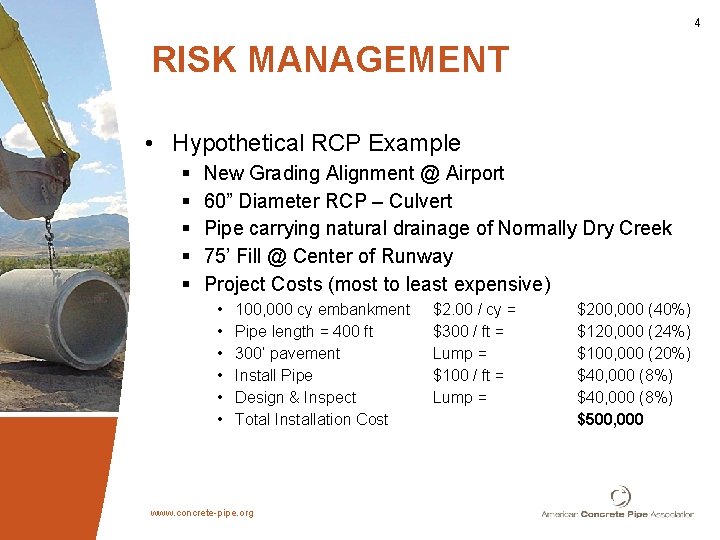
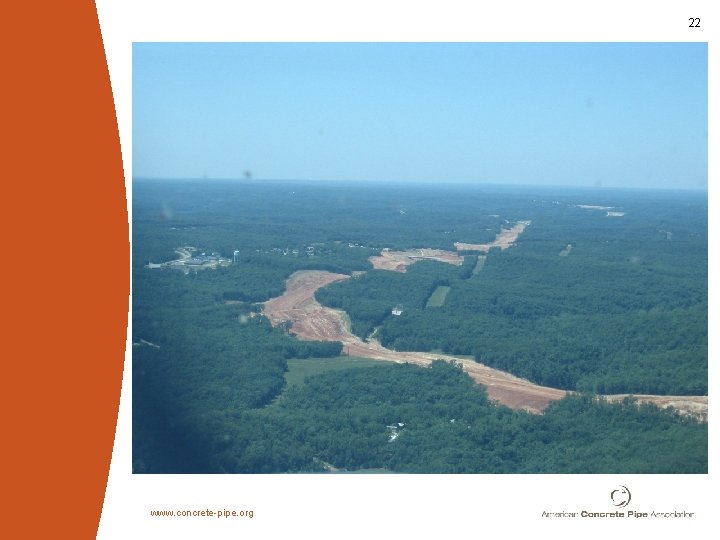
4 RISK MANAGEMENT • Hypothetical RCP Example § § § New Grading Alignment @ Airport 60” Diameter RCP – Culvert Pipe carrying natural drainage of Normally Dry Creek 75’ Fill @ Center of Runway Project Costs (most to least expensive) • • • 100, 000 cy embankment Pipe length = 400 ft 300’ pavement Install Pipe Design & Inspect Total Installation Cost www. concrete-pipe. org $2. 00 / cy = $300 / ft = Lump = $100 / ft = Lump = $200, 000 (40%) $120, 000 (24%) $100, 000 (20%) $40, 000 (8%) $500, 000
5 RISK MANAGEMENT • Factor of Safety § Embankment § Pipe • Indirect Design • Direct Design § § Pavement Installation Design (Geo) Inspect www. concrete-pipe. org 90% Compaction (1. 10) (1. 30) Dead Load (1. 3) + 3 EB (1. 1) Dead Load (1. 3) FAA Design (2. 00) 95% Compaction (1. 05) Varies (may reduce overall FS)
6 RISK MANAGEMENT • Scale of 1 to 3 (1 being low risk, 3 being high risk) • Project Risk (highest to lowest failure risk) § Design / Inspect / Installation (16% of cost) - 3 • Risk of Failure depends on § Installation details / existing soil conditions / compatibility § Contractor Experience § Level of Inspection § Pipe (24% of cost) - 2 • Risk of Failure depends on Precaster § Design assumptions § Experience § Product Quality § Embankment (40% of cost) - 1 • Risk of Failure is minimal (depends on above items) § Pavement (20% of cost) - 1 • Risk of Failure is minimal (depends on above items) www. concrete-pipe. org
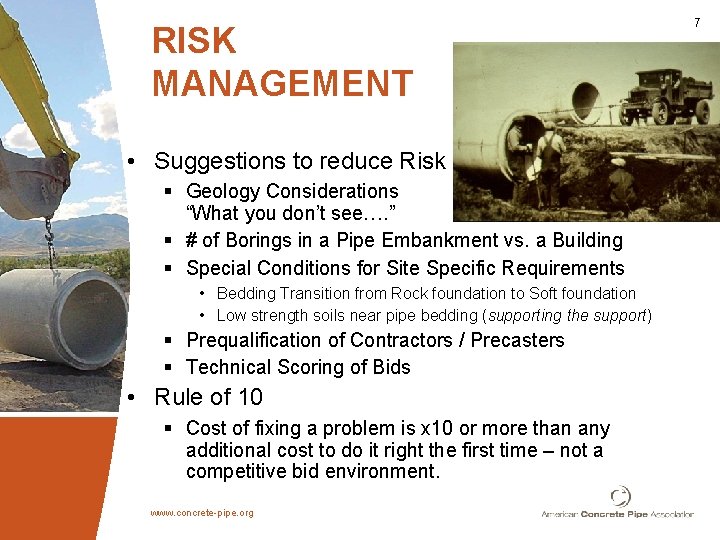
RISK MANAGEMENT • Suggestions to reduce Risk § Geology Considerations “What you don’t see…. ” § # of Borings in a Pipe Embankment vs. a Building § Special Conditions for Site Specific Requirements • Bedding Transition from Rock foundation to Soft foundation • Low strength soils near pipe bedding (supporting the support) § Prequalification of Contractors / Precasters § Technical Scoring of Bids • Rule of 10 § Cost of fixing a problem is x 10 or more than any additional cost to do it right the first time – not a competitive bid environment. www. concrete-pipe. org 7

PIPE DESIGN CONSIDERATIONS 8 • Direct vs. Indirect Design § Direct Design • Analysis based on loads in the installed condition vs. physical properties required to resist them • Pipe is designed to theoretical strength § Indirect Design • Analysis via Bedding Factor & 3 EB • Pipe class determined from tables www. concrete-pipe. org
INDIRECT DESIGN CONSIDERATIONS 9 • Strength gaps in Classes (Type 2) § § § 11 FT = CL 2 < 1000 D-Load 16 FT = CL 3 < 1350 D-Load (35% increase over CL 2) 25 FT = CL 4 < 2000 D-Load (50% increase over CL 3) 39 FT = CL 5 < 3000 D-Load (50% increase over CL 4) “Built In” FS reduces at upper end of class limit • Material variations provide additional FS in some designs § Compressive Strength (6 to 8 ksi) § Steel Yield Strength (70 to 80 ksi) • Deep Fill / Special Designs § Impact of Risk is Magnified § We want more “Knowns” and fewer “Unknowns” www. concrete-pipe. org

Historical Beddings (M-S) www. concrete-pipe. org 10
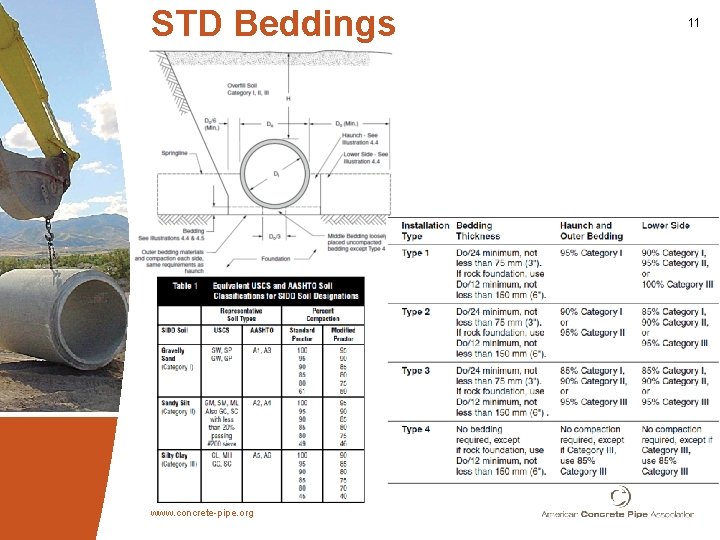
STD Beddings www. concrete-pipe. org 11

12 www. concrete-pipe. org
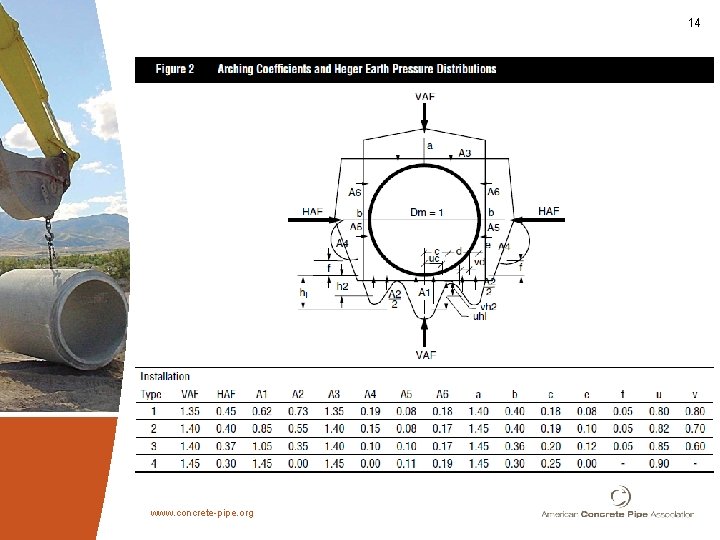
13 BEDDING CONSIDERATIONS • M-S Beddings § 0. 01” Crack = Maximum crack width for TESTED pipe § Lacks relative compaction levels / material control • STD Installations § 0. 01” Crack = Average crack width for INSTALLED pipe § Material / Compaction levels specified § Uncompacted middle 1/3 is important • RISK - STD Installations < M-S § Control of Material § Control of Compaction www. concrete-pipe. org
14 www. concrete-pipe. org
15 BEDDING CONSIDERATIONS • Flowable Fill § Uniform support § Not equivalent to a concrete cradle § “Supporting the Support” • Insitu Conditions § § Bedding provides foundation for pipe Existing Soils support the Bedding Which is the weakest link? How do you know? (# borings. . . ) • Compatibility of Materials § Granular bedding against clay. . . § Dewatering / Piping § Fabric Separation Layer www. concrete-pipe. org
16 www. concrete-pipe. org
17 PIPE DESIGN OPTIONS • Shear Steel vs. Thick Wall § Precaster / Contractor Preference § Shear Steel • Cracks / Serviceability • Heavy Flexural Steel (multiple layers) § Thick Wall • Freight / Contractor Capacity • Lighter Reinforcement (no shear) • Fewer or better controlled cracks § Consider Value, not cost (risk based) • Both are designed per code • One has fewer variables, more knowns • Chosen solution may vary by project www. concrete-pipe. org
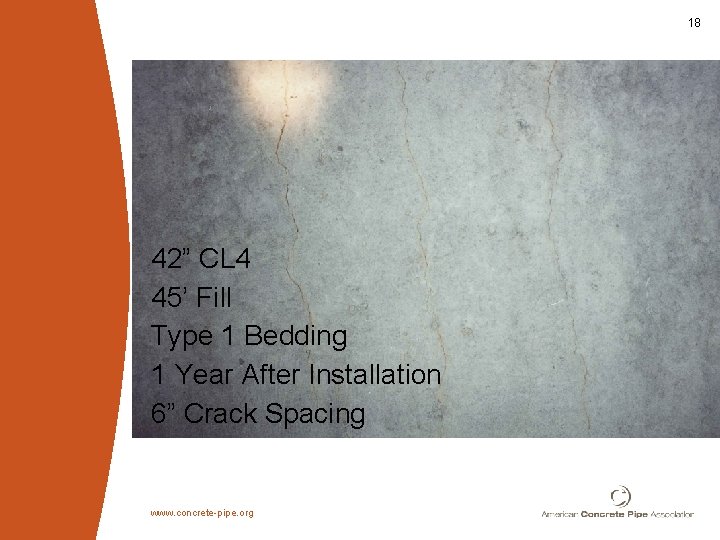
18 42” CL 4 45’ Fill Type 1 Bedding 1 Year After Installation 6” Crack Spacing www. concrete-pipe. org

19 PIPE DESIGN OPTIONS • Bedding Type § § Type 1 – “not for the faint of heart” Type 2 – Verify Performance & Geo Type 3 – Straightforward (verify) Type 4 – “Dumped bedding” • Material Compatibility § Open Graded against clay (fabric? ) § Granular – compact at haunches § Uncompacted center third • Consider Value, not cost (risk based) www. concrete-pipe. org
20 PIPE RECOMMENDATIONS • Designer § Geotech Investigation / # Borings § Material compatibility / Foundations • Precaster § Past experience / Q-Cast Certified § Technical Scoring vs. Least Cost • Contractor § Past experience / Technical Scoring • Inspection Staff (A-team) www. concrete-pipe. org
21 OWNER’S PERSPECTIVE (Mo. DOT) • Project Plans § § Plan / Profile Geotech Report RCP Standard Plate (bedding) Standard Specifications • Direct or Indirect? • Balance Risk with Lowest Bid Process www. concrete-pipe. org
22 www. concrete-pipe. org
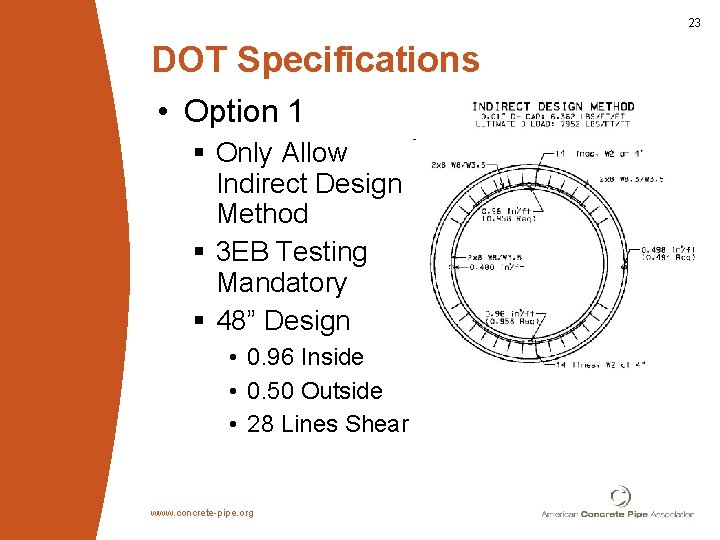
23 DOT Specifications • Option 1 § Only Allow Indirect Design Method § 3 EB Testing Mandatory § 48” Design • 0. 96 Inside • 0. 50 Outside • 28 Lines Shear www. concrete-pipe. org
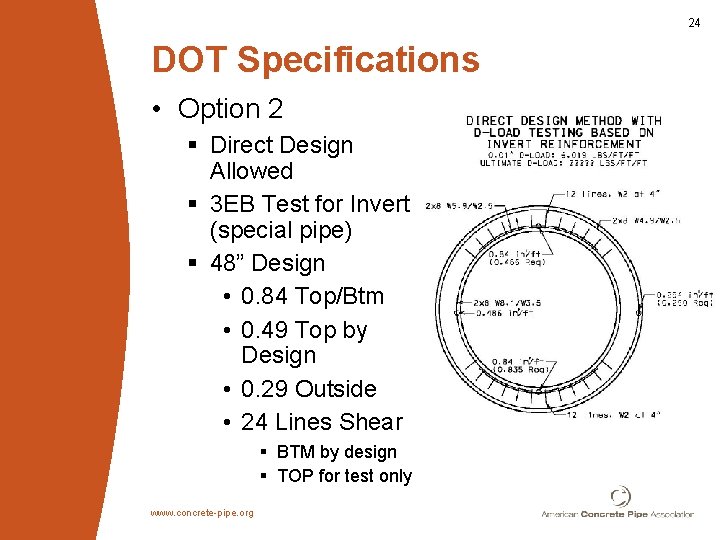
24 DOT Specifications • Option 2 § Direct Design Allowed § 3 EB Test for Invert (special pipe) § 48” Design • 0. 84 Top/Btm • 0. 49 Top by Design • 0. 29 Outside • 24 Lines Shear § BTM by design § TOP for test only www. concrete-pipe. org
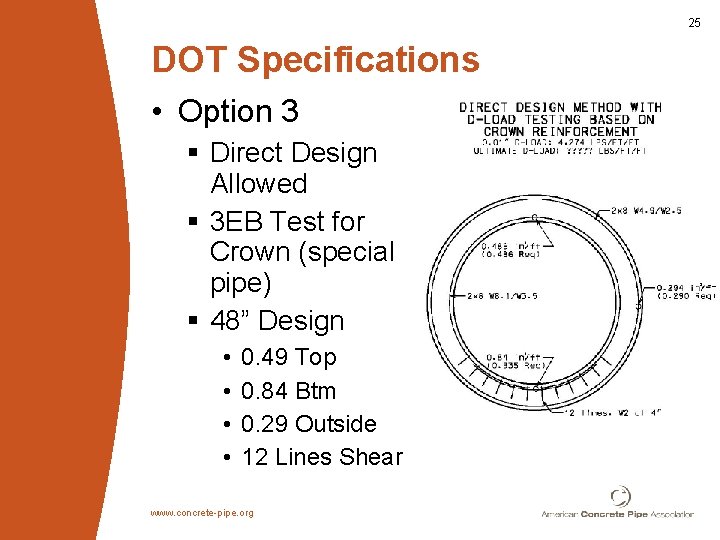
25 DOT Specifications • Option 3 § Direct Design Allowed § 3 EB Test for Crown (special pipe) § 48” Design • • 0. 49 Top 0. 84 Btm 0. 29 Outside 12 Lines Shear www. concrete-pipe. org
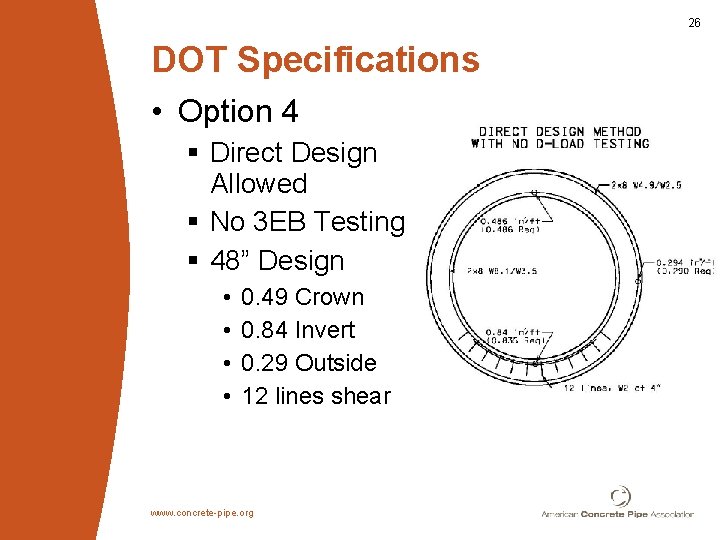
26 DOT Specifications • Option 4 § Direct Design Allowed § No 3 EB Testing § 48” Design • • 0. 49 Crown 0. 84 Invert 0. 29 Outside 12 lines shear www. concrete-pipe. org
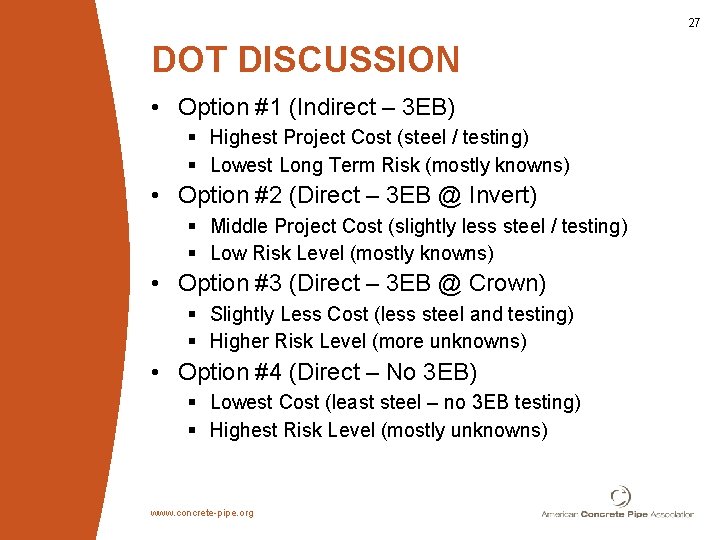
27 DOT DISCUSSION • Option #1 (Indirect – 3 EB) § Highest Project Cost (steel / testing) § Lowest Long Term Risk (mostly knowns) • Option #2 (Direct – 3 EB @ Invert) § Middle Project Cost (slightly less steel / testing) § Low Risk Level (mostly knowns) • Option #3 (Direct – 3 EB @ Crown) § Slightly Less Cost (less steel and testing) § Higher Risk Level (more unknowns) • Option #4 (Direct – No 3 EB) § Lowest Cost (least steel – no 3 EB testing) § Highest Risk Level (mostly unknowns) www. concrete-pipe. org
28 DOT CHOICE • Option #1 – Indirect Design § Physical Proof of Design (3 EB) – full pipe § Most conservative approach § Built in FS for Fabricator to pass test • Not the least cost option • Best Value option? www. concrete-pipe. org
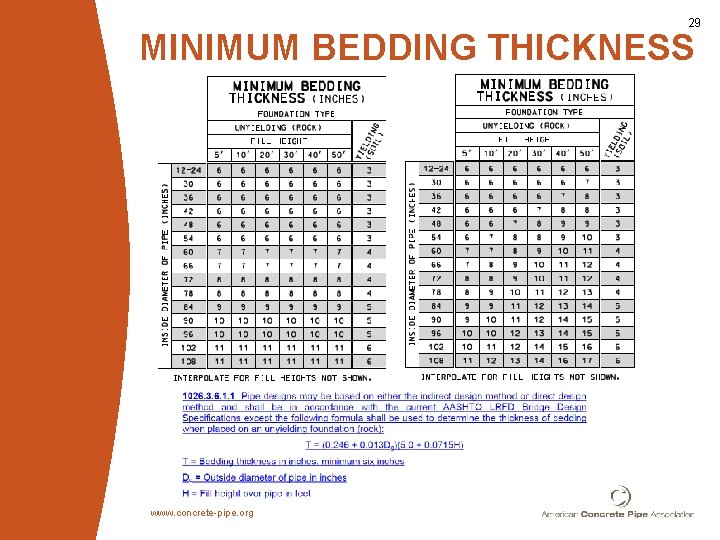
29 MINIMUM BEDDING THICKNESS www. concrete-pipe. org
30 OUTLINE • • General Discussion – Risk Management Pipe Design Considerations DOT Specifications Box Design Considerations www. concrete-pipe. org

BOX CULVERTS www. concrete-pipe. org 31

32 www. concrete-pipe. org

33 www. concrete-pipe. org
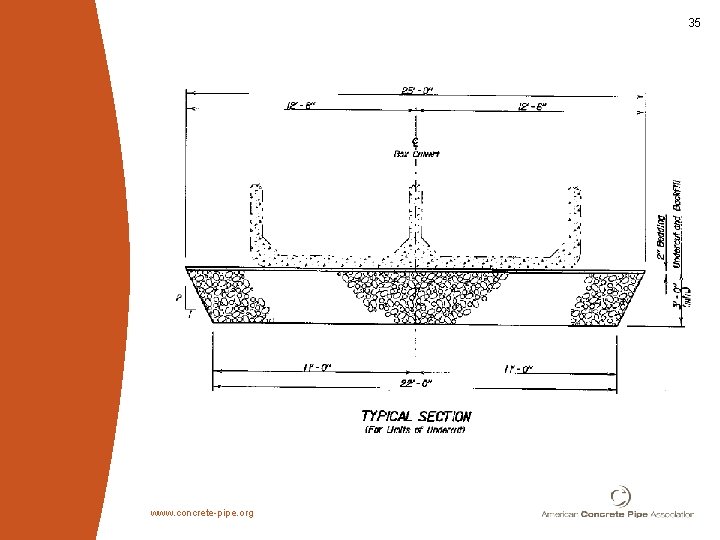
BOX CULVERTS 34 • Installation Details Up to Designer § No STD or M-S bedding § Consider as a Bridge § ASTM C 1675 • Standard Practice for Installation of Precast Reinforced Concrete Monolithic Box Sections for Culverts, Storm Drains and Sewers • Guidance for “Typical” Installations • Boilerplate Bedding Standards may not be adequate www. concrete-pipe. org
35 www. concrete-pipe. org

BOX CULVERTS • Bearing Pressure @ Deep Fills § 60’ fill = 7200 psf § Subgrade exploration • Qty of Borings • Depth of Borings • Desired Mechanical Properties § Subgrade improvement • Depth of Subcut • Design of Eng Fill / Use of Geotextile § Settlement Considerations • Staged Construction / Time Lapse • Joint Design www. concrete-pipe. org 36

37 BOX CULVERT JOINTS • Joint Considerations § Soil Tight – Possible – most sizes § Silt Tight – Maybe – some sizes § Water Tight ? ? • Differential Settlement (joint shear) § § § 7200 psf @ 60’ fill 12’ single cell (14’ out to out x 6’ long) 600, 000 lbs of potential joint shear Bedding Design is Critical Inspection becomes more important. www. concrete-pipe. org
38 BOX CULVERTS (cont) • Precast Design Options § Thicker Slabs vs. Shear Steel § Concrete Strength (limited by code) § Section Weight • Lay Length (4’, 5’, 6’, 8’, etc. ) • Contractor Crane Capacity • Shorter Pieces = More Joints § Design Dead Load Factor • ACI = 1. 4 • STD Code = 1. 3 • LRFD Code = 1. 25 / 1. 35 www. concrete-pipe. org
39 REVIEW • General Discussion – Risk Management § Rule of 10 • Pipe Design Considerations § § Investigation Bedding Design Pipe Design Installation • DOT Specifications § Success in a Lowest Bidder Environment • Box Design Considerations § Same as Pipe – Only Bigger § STD Installations not availble www. concrete-pipe. org
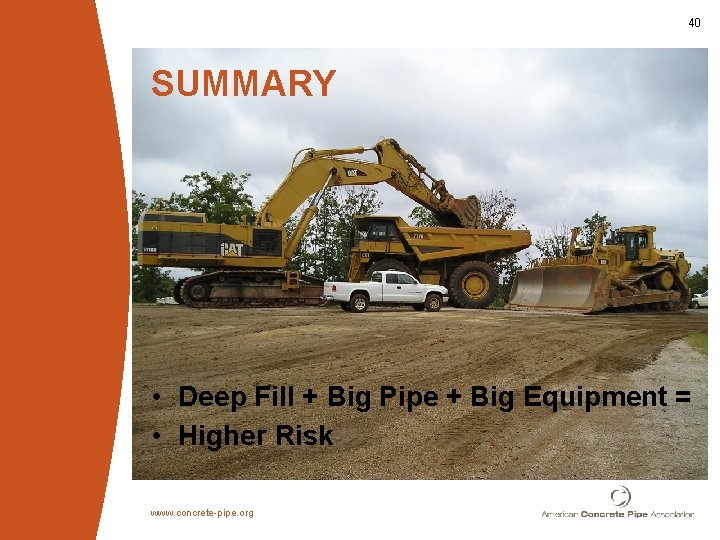
40 SUMMARY • Deep Fill + Big Pipe + Big Equipment = • Higher Risk www. concrete-pipe. org
- Slides: 40